Author: Agency Report

  • SDP’s Adebayo Accuses Tinubu of Interfering in Opposition Politics Ahead of 2027

    SDP’s Adebayo Accuses Tinubu of Interfering in Opposition Politics Ahead of 2027

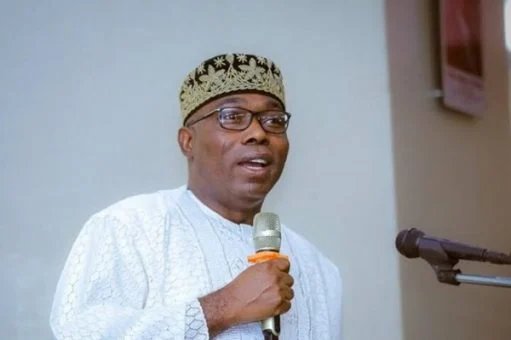
    The presidential candidate of the Social Democratic Party in the 2023 election, Adewole Adebayo, has accused President Bola Tinubu of attempting to manipulate opposition political parties and weaken democratic competition ahead of the 2027 general elections.

    Speaking during an interview on ARISE News on Tuesday, Adebayo alleged that the president was seeking to exert influence not only within opposition parties but also over institutions expected to remain independent in a democracy.

    “You can’t be candidate general of the opposition. You have to stick to your own party,” Adebayo said.

    “The president wants to belong to every political party, also act as the chairman of INEC, and the part-time chief justice of Nigeria.”

    The former SDP presidential flagbearer made the remarks while responding to reports of internal divisions within the party and claims by one Akinbola Atanda that he was also a presidential candidate of the SDP.

    Dismissing the claim, Adebayo said the party neither recognised Atanda as a member nor as an aspirant.

    “We don’t know him in the SDP. We don’t know him,” he stated.

    “Well, I could say I’m the Pope, but I’m not. You see, the Catholics know who’s the Pope.”

    Adebayo further alleged that the administration of President Tinubu was deliberately creating confusion within opposition parties as part of a broader political strategy ahead of the next election cycle.

    “I know President Tinubu is the author of all of this drama,” he said.

    According to him, the ruling All Progressives Congress was uncomfortable with genuine political competition and was instead attempting to orchestrate weak opposition structures.

    “The whole idea is not to have competition,” Adebayo said.

    “And they want to master that by having pseudo candidates in other political parties and have a coronation.”

    He also criticised the conduct of primaries within the APC, alleging that the party merely staged democratic processes rather than conducting genuine internal contests.

    The comments add to growing political rhetoric ahead of the 2027 elections, with opposition figures increasingly accusing the ruling party of attempting to dominate Nigeria’s political space. Neither the presidency nor the APC had officially responded to Adebayo’s allegations as of the time of filing this report.
  • Nigeria Defeats European Dynamics in $6.2m Arbitration Case

    Nigeria Defeats European Dynamics in $6.2m Arbitration Case

    Nigeria has secured a major legal victory after an arbitral tribunal dismissed in its entirety a $6.2 million claim brought against the country by European Dynamics UK Ltd, an international technology contractor, over a disputed national e-Procurement project.

    The ruling followed an arbitration initiated by the company against the Bureau of Public Procurement (BPP) and was delivered at the International Centre for Arbitration and Mediation, Abuja. The decision, which is final and not subject to appeal, was handed down by Mrs Funmi Roberts, the sole arbitrator.

    This development was disclosed in a statement issued by Mr Kamarudeen Ogundele, Senior Assistant on Communication and Publicity to the Lateef Fagbemi, the Attorney-General of the Federation and Minister of Justice.

    According to the statement, the tribunal dismissed all claims by European Dynamics, thereby relieving Nigeria of a potential financial exposure estimated at more than $6.2 million—equivalent to about ₦9.3 billion in claimed payments and damages.

    European Dynamics had sought approximately $2.4 million for alleged milestone completions, $3 million in general damages, and an additional $800,000 as settlement claims, all of which were rejected by the tribunal.

    Background to the Dispute

    The dispute arose from a contract for the design, development, customisation, supply, installation and maintenance of a national electronic Government Procurement (eGP) system. The project was financed with support from the World Bank and was designed to enhance transparency, accountability and efficiency in federal public procurement.

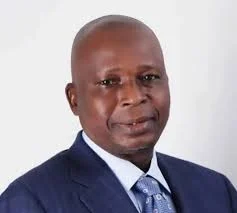
    Upon assuming office, the Director-General of the BPP, Adebowale Adedokun, inherited both a stalled technology project and ongoing arbitration proceedings. Although discussions had previously taken place regarding an out-of-court settlement, the bureau opted to proceed with arbitration, insisting that payments must be strictly tied to verifiable value delivered.

    Tribunal Upholds Nigeria’s Position

    Central to the dispute was the User Acceptance Test (UAT) conducted by the BPP, which revealed significant functional deficiencies in the system, including critical omissions and errors affecting performance.

    The bureau argued that unlike traditional supply contracts, software customisation projects require performance validation, with delivery deemed complete only after a successful UAT confirming compliance with technical, statutory and operational requirements.

    The tribunal agreed with Nigeria’s position, holding that the identified deficiencies were the contractor’s responsibility to remedy at no additional cost. It further ruled that European Dynamics, as the technical expert, bore full responsibility for ensuring compliance with contractual obligations, regardless of any earlier technical documents approved by the BPP.

    The arbitrator also found no contractual basis for the contractor’s claim that multiple project phases had been merged into a single phase, noting that payments under the contract were clearly structured in phases.

    A Landmark Signal for Public Sector Contracting

    Presenting the arbitral award to the Minister of Justice, Adedokun described the outcome as a landmark moment for public sector technology contracting in Nigeria.

    “This particular vendor has taken various African countries to court and won every single case. Nigeria is the first to defeat them,” he said, praising the confidence placed in Nigerian legal professionals.

    He expressed appreciation to the Attorney-General for authorising the proceedings, noting that the decision saved the country billions of naira that can now be redirected toward critical national development.

    Commending the BPP leadership and the legal team, Fagbemi described the victory as a strong signal to the international community.

    “By standing up to European Dynamics, Nigeria has instilled courage in other African nations to protect their own resources. It is no longer business as usual,” the minister said.

    Nigeria’s legal team was led by Johnson & Wilner LLP, a Nigerian business and technology law firm, with Basil Udotai, the firm’s founding partner, leading the arbitration alongside strategic partners and associates.

    The ministry noted that legal representatives for the BPP have encouraged the integration of lessons from the arbitration into ongoing e-procurement reforms, with the aim of strengthening contract performance oversight and reducing the risk of future disputes.

  • Nigerian Navy Seeks Advanced Maritime Platforms, Technology Transfer at DIMDEX 2026

    Nigerian Navy Seeks Advanced Maritime Platforms, Technology Transfer at DIMDEX 2026

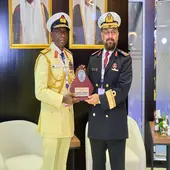
    The Chief of the Naval Staff (CNS), Vice Admiral Idi Abbas, has said the Nigerian Navy is pursuing advanced maritime platforms and enhanced technology transfer to strengthen its operational capacity.

    Abbas made this known at the 9th Doha International Maritime Defence Exhibition and Conference (DIMDEX 2026) held in Qatar.

    This was disclosed in a statement issued on Thursday in Abuja by the Director of Naval Information, Commodore Aiwuyor Adams-Aliu.

    According to the CNS, the Nigerian Navy has made significant progress in local shipbuilding, having constructed five seagoing platforms domestically. These include MV Sauka Lafia, NNS Andoni, NNS Karaduwa and NNS Oji.

    He noted that improved technology transfer would further reposition the Nigerian Navy as a leading manufacturer of warships on the African continent.

    DIMDEX 2026, held from January 19 to January 22 under the patronage of the Amir of the State of Qatar, Sheikh Tamim bin Hamad Al Thani, was hosted by the Qatar Armed Forces.

    The exhibition, regarded as the largest maritime defence and security showcase in the Middle East, offered the Nigerian Navy opportunities to explore cutting-edge maritime technologies and innovative naval platforms.

    During the four-day event, Vice Admiral Abbas engaged with leading global defence solution providers on emerging trends in shipbuilding, acquisition of naval platforms and technology transfer aimed at enhancing indigenous ship production.

    Several warships from partner nations were also berthed at Hamad Port and opened for inspection by dignitaries and participants.

    DIMDEX 2026 also enabled the Nigerian Navy to preview a range of precision-guided munitions suitable for maritime security operations and naval gunfire support within Nigerian waters.

    The CNS said the Navy’s participation aligns with his vision of building a modern, agile and professional naval force capable of securing Nigeria’s maritime interests in collaboration with other security agencies.

  • Starmer to Meet Danish PM After Trump Drops Tariff Threat Over Greenland

    Starmer to Meet Danish PM After Trump Drops Tariff Threat Over Greenland

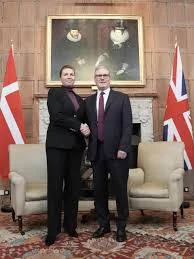
    UK Prime Minister Keir Starmer will meet Danish Prime Minister Mette Frederiksen on Thursday, a day after U.S. President Donald Trump withdrew his threat to impose tariffs on the UK and other NATO allies over their opposition to his ambitions concerning Greenland.

    Trump stepped back from the proposed tariffs on Wednesday evening following talks with NATO Secretary-General Mark Rutte on the sidelines of the World Economic Forum in Davos, Switzerland. The meeting, according to Trump, led to the formation of a framework for a future security agreement in the Arctic region.

    The development capped a turbulent day for NATO’s European members after Trump ruled out the use of force to secure Greenland, a self-governing territory of Denmark rich in critical minerals. He had earlier threatened to impose 10 per cent tariffs on eight NATO countries, including the UK, for opposing his stance on the territory.

    However, after what he described as a “very productive meeting” with Rutte, Trump indicated he had reconsidered his position.

    Writing on his Truth Social platform, the U.S. president said: “We have formed the framework of a future deal with respect to Greenland, and in fact, the entire Arctic Region. This solution, if consummated, will be a great one for the United States of America and all NATO Nations.

    “Based upon this understanding, I will not be imposing the tariffs that were scheduled to go into effect on Feb. 1.”

    Denmark’s Foreign Minister, Lars Lokke Rasmussen, welcomed the shift in tone, saying the day was “ending on a better note than it began.”

    “Now, let’s sit down and find out how we can address the American security concerns in the Arctic while respecting the red lines of the Kingdom of Denmark,” he said.

    Frederiksen’s visit to Britain is expected to include discussions with Starmer on Greenland’s sovereignty and wider Arctic security, although few details have emerged about the agreement reached between Trump and the NATO chief.

    Trump told reporters the arrangement would be a “long-term deal” and an “infinite deal,” but declined to say whether it would involve the United States gaining ownership of Greenland.

    UK government sources suggested there was quiet satisfaction in London that Starmer’s diplomatic approach—urging restraint and dialogue rather than direct confrontation with Trump—had paid off.

    Earlier on Wednesday, Starmer told the House of Commons he would “not yield” on the issue of Greenland’s sovereignty, marking his strongest public stance yet against the U.S. president and pledging to stand firm in defence of international law and allied unity.

  • China Pushes Back Against UN Replacement Talk, Vows to Defend UN-Led Global Order

    China Pushes Back Against UN Replacement Talk, Vows to Defend UN-Led Global Order

    China has reaffirmed its commitment to multilateralism and to safeguarding the international system with the United Nations at its core, as questions emerge over the future role of the global body following remarks by U.S. President Donald Trump.

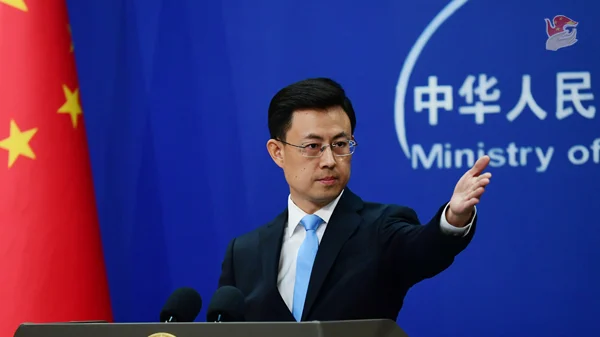
    Foreign Ministry spokesperson Guo Jiakun made the comments on Wednesday at a regular press briefing, responding to Trump’s statement a day earlier that the United Nations should continue because of its potential, while suggesting that a proposed “Board of Peace” could possibly replace the organization.

    Guo stressed that China’s position on the United Nations and the international order remains firm and unchanged. “No matter how the international situation evolves, China will resolutely safeguard the international system with the United Nations at its core,” he said.

    According to Guo, China has consistently advocated for true multilateralism and believes the UN plays an irreplaceable role in maintaining international peace and security, promoting development, and addressing global challenges.

    He emphasized that the UN-centered system reflects the collective will of the international community and should not be weakened or undermined.

    Guo further noted that China will continue to uphold the international order underpinned by international law, as well as the basic norms governing international relations based on the purposes and principles of the UN Charter.

    These principles, he said, remain the cornerstone of global governance and cooperation.

    The remarks come amid broader international debate over reforms to global governance institutions and concerns about unilateral approaches to international affairs.

    China, Guo added, supports strengthening the authority and effectiveness of the United Nations through cooperation and dialogue, rather than replacing existing multilateral mechanisms.

    “China will work with all parties to defend fairness and justice in international affairs, promote cooperation among countries, and contribute to a more stable and orderly international system,” Guo said.