Author: Chike Ozohili

  • Electricity consumers call for power sector overhaul

    Electricity consumers call for power sector overhaul

    Electricity Consumers in the Federal Capital Territory (FCT), have asked the new Minister of Power, Mr. Adebayo Adelabu to overhaul the power sector to ensure stable power supply.

    The consumers, who spoke in separate interviews in Abuja, said overhauling the sector would improve power supply.

    The President, Nigeria Consumer Protection Network, Mr. Kunle Olubiyo, said the minister should do a surgical overhaul of the regulatory institutions and ecosystem of the power sector.

    According to him, the minister should do an appraisal of the performances of all agencies in the last 10 years using benchmarks of Key Performance Indicators (KPIs).

    Olubiyo also urged Adelabu to engage the best hands as advisers and working team to enable him to achieve the Federal Government’s desire to give its citizens a stable and uninterrupted power supply.

    He also urged the minister to review the privatization of the sector which he described as long overdue.

    The minister said 10 years after the privatisation, the exercise had failed to deliver the desired results.

    He said the review should be done across the value chain of the electricity sector from generation and transmission to distribution.

    “By doing so, issues relating to increased expansion of the huge metering gaps, sector liquidity challenges and poor remittances culture, load rejection will be addressed.

    “Other issues such as market shortfalls, tariff shortfalls, payment of generation capacity, and low generation per capita, weak transmission infrastructure resulting in a decline in transmission wheeling capacity and incessant power system collapse and load shedding will also be addressed’’, he said.

     According to him, load rejection by electricity distribution licensees at the downstream sub-sector, poor quality of services, and near zero governance structure will be eliminated.

    Also, the President, the Association For Public Policy Analysis, Mr. Princewill Okorie, said the privatisation of the power sector was meant to break the control of electricity generation and distribution from the government.

    Okorie said the privatisation was to ensure an adequate, regular, and stable supply of electricity to the consumer at a reasonable cost.

    He said unfortunately, the implementation of privatisation policy in the sector began to exclude consumer groups whose interest, satisfaction, and willingness to pay was seen as the attraction of the policy.

    Okorie said tariff reviews have taken place severally since 2013 when the privatisation commenced, adding that consumer satisfaction impact evaluation and assessment was hardly carried out.

    “We are appealing to the minister of power to support the delivery of people-oriented and consumer-protective power policies to Nigerians in the electricity sector,” he said.

    On his part, an electricity consumer, Mr. Reuben Okoro, said Nigerians expect the minister to deliver stable electricity to enable them to do their businesses without relying on generators.

    Okoro, who is a welder resident in Lugbe, FCT, said the minister should overhaul the entire power sector starting from generation to distribution.

    A Fashion Designer in Area 3, Garki, FCT, Mrs Nosayaba Odigie, also wanted the minister to look into the issue of epileptic power supply.

    Odigie said if the country was able to address the challenges in the sector all other things would fall in place.

  • Local investors will drive Nigerian upstream sector— Tinubu

    Local investors will drive Nigerian upstream sector— Tinubu

    The Group Chief Executive, Oando Plc, Wale Tinubu, says indigenous investors will play a vital role in the future of Nigeria’s upstream sector.

    Tinubu, who made the assertion in a statement informing the Nigerian Exchange Limited (NGX) of Oando Plc planned acquisition of Nigerian Agip Oil Company Limited (NAOC Ltd) from ENI, said the deal shows the importance of local investors

    He noted that the acquisition of Agip, which will increase Oando’s ownership stake in all NEPL/NAOC/OOL Joint Venture assets and infrastructure, will unlock unparalleled opportunities for Oando.

    In the statement, Oando said its total reserves standing at 503.3MMboe as of 2021 estimates, will record a 98 per cent increase due to the deal to buyout ENI from the joint venture.

    Recall that Oando had on Monday agreed to acquire 100 per cent of Nigerian Agip Oil Company Limited. The deal will increase Oando’s stake to 40 per cent.

    The transaction also expands Oando’s exploration asset portfolio via the purchase of a 90 per cent stake in OPL 282 and a 48 per cent stake in OPL 135.

    NAOC’s participating interest in Shell Production Development Company Joint Venture (operator Shell 30 per cent, TotalEnergies 10 percent, NAOC 5 per cent, NNPC 55 per cent) is not part of the deal and so will be retained in Eni’s portfolio, Oando said.

    Presently, Oando and Agip have a 20 per cent stake each in the joint venture (NAOC JV) operated alongside the Nigerian National Petroleum Company (NNPC) E&P Limited, which has 60 per cent.

    Upon the completion of the deal, still awaiting Ministerial Consent and regulatory approvals, Oando will hold 40 per cent of the JV operating four onshore blocks (OML 60, 61, 62, 63).

    Oando will also have access to other enterprises Agip is involved in, “The synergies created by this acquisition will unlock unparalleled opportunities for us to re-align expectations, enhance efficiency, optimize resource allocation, and significantly increase production.

    “Furthermore, it is in alignment with our strategy of acquiring, enhancing, appraising, and efficiently developing reserves,” Tinubu said.

    The oil boss said the acquisition was “not just an important milestone for the future of Oando; it brings to bear the important role indigenous actors will play in the future of the Nigerian upstream sector.

    “Having achieved this significant milestone, we look forward to closing the transaction and harnessing the full potential of the enhanced platform to accrue value for our local communities, stakeholders and shareholders,” the statement quoted Tinubu.

    Shares in Oando, which has a secondary listing in Johannesburg, jumped by 9 per cent in Lagos at 10:56 WAT following the news.

    Last October, NNPC Limited acquired OVH Energy Marketing, owner and operator of Oando branded retail service stations, enabling the state oil firm to control Oando’s 380 filling stations across Nigeria.

  • Oando Plc agrees ENI acquisition of Nigerian Agip Oil shares

    Oando Plc agrees ENI acquisition of Nigerian Agip Oil shares

    Oando Plc, (Oando), has announced an agreement with ENI for the acquisition of 100 per cent of the shares of Nigerian Agip Oil Company Limited (NAOC Ltd). 

    The company which is listed on both the Nigerian Exchange Limited and Johannesburg Stock Exchange, is pleased to announce that the Completion of the transaction is subject to Ministerial Consent and other required regulatory approvals.

    The transaction is set to increase Oando’s current participating interests in OMLs 60, 61, 62, and 63 from 20 per cent to 40 per cent.

    Oando in a statement said that the arrangements will increases Oando’s ownership stake in all NEPL/NAOC/OOL Joint Venture assets and infrastructure which include 40 discovered oil and gas fields, of which twenty four are currently producing, approximately forty identified prospects and leads, twelve production stations, approximately 1,490 km of pipelines, three gas processing plants, the Brass River Oil Terminal, the Kwale-Okpai phases 1 & 2 power plants (with a total nameplate capacity of 960MW), and associated infrastructure.

    It said based on 2021 reserves estimates, Oando’s total reserves stand at 503.3MMboe and the transaction will deliver a 98 per cent increase.

    The transaction also grows Oando’s exploration asset portfolio through the acquisition of a 90 per cent interest in OPL 282 and 48 per cent interest in OPL 135.

    A Statement from the company said NAOC Ltd participating interest in SPDC JV like Shell Production Development Company

    Joint Venture – operator Shell 30 per cent TotalEnergies 10 per cent, NAOC 5 per cent, NNPC 55 per cent is not included in the perimeter of the transaction and will be retained in Eni’s portfolio.

    Commenting Wale Tinubu CON, Group Chief Executive, Oando PLC said: “The synergies created by this acquisition will unlock unparalleled opportunities for us to realign expectations, enhance efficiency, optimize resource allocation, and significantly increase production. 

    Furthermore, it is in alignment with our strategy of acquiring, enhancing, appraising, and efficiently developing reserves.

    Today’s announcement is not just an important milestone for the future of Oando; it brings to bear the important role indigenous actors will play in the future of the Nigerian upstream sector.

    Having achieved this significant milestone, we look forward to closing the transaction and harnessing the full potential of the enhanced platform to accrue value for our local communities, stakeholders and shareholders.”

  • Naira Devaluation: Dangote, 8 others take N113.63bn hit

    Naira Devaluation: Dangote, 8 others take N113.63bn hit

    Dangote Cement led eight other companies on the NGX in foreign exchange losses recording a significant foreign exchange loss of N113.63 billion, representing a 179.47 per cent year-on-year increase, the highest in the past five years as a result of the devaluation of the Naira.

    The Naira went from N465/$ at the end of May 2023 to N756/$ in June 2023, resulting in a net exchange loss of N116.1 billion on third-party loans and payables within the Nigerian entities.


    While some companies experienced significant declines in some performance indicators, others performed relatively better.

    A review of the financial performance of Berger Paints, Beta Glass, BUA Cement, CAP, Dangote Cement, MEYER, Notore, and WAPC, reveals that among these companies, Dangote Cement, Notore, and BUA Cement, reported a combined foreign exchange losses of -N129.811 billion, while Beta Glass, CAP, and WAPCO reported an aggregate foreign exchange gain of N3.49 billion.

    However, when considering the cumulative impact of foreign exchange fluctuations, it led to an overall reduction of 8.19 per cent in their total pre-tax profit, which amounted to N372.573 billion in the first half of 2023

    Dangote Cement led in foreign exchange losses recording a significant foreign exchange loss of N113.63 billion, representing a 179.47 per cent year-on-year increase, the highest in the past five years.

    According to the first half of 2023 financial notes, the net exchange loss on foreign-denominated transactions was primarily attributed to the sharp devaluation of the Nigerian Naira in June 2023.

    These losses had a direct effect on the decline in pre-tax profit, which decreased from N264.89 billion to N239.86 billion during the reviewed period.

    Notore also reported a substantial foreign exchange loss of N14.05 billion in the first half of 2023. Coupled with low revenue and a significant increase in finance costs, this contributed to a pre-tax loss of N38 billion, representing a 1,558 per cent decline.

    The company managed to generate revenue of N7.92 billion, a substantial decline of 68.97 per cent for the first half of 2023.

    BUA Cement reported a foreign exchange loss of N2.137 billion in the first half 2023, marking a significant year-on-year increase of about 103 per cent.

    Coupled with elevated interest expenses, this dampened pre-tax profit, resulting in only a marginal increase of 2.75 per cent to N76.425 billion when compared to the first half of 2022.

    WAPCO – Lafarge led the foreign exchange gainers, recording a N2.237 billion gain in foreign exchange. This contributed to a growth of 18 per cent in pre-tax profit.

    However, despite this positive performance, the company experienced a year-on-year decline of 5.16 per cent in profit after tax, primarily due to high-income tax expenses.

  • Nigeria tops global crypto data –Report

    Nigeria tops global crypto data –Report

    Nigeria is the most crypto-savvy nation ahead of the United States and European countries, a new survey has shown.

    According to a new report from YouGov and ConsenSys, Nigeria’s crypto awareness stands at 99 per cent as the country leads in digital asset knowledge and perceived investment drive.

    15,158 survey participants aged 18- 65 were polled from 15 countries to determine the global acceptance of Web3 and how its utility and “technicalities” have been broken down to give a clearer insight into the future.

    Per the data, 99 per cent were fully aware of cryptocurrencies while 70 per cent understood the value, operations, and fundamentals of blockchain technology.

    Nigerian participants (1,001) also view digital asset investments as viable with 90 per cent considering such investments over the next 12 months despite the country’s top bank’s uncertain crypto stance.

    The majority of Nigerians have turned to cryptocurrency as a hedge against inflation in recent years after a poor performance of the naira coupled with double-digit inflation.

    65 per cent of participants viewed virtual currencies like Bitcoin (BTC) and stable coins as tools against a weakening local currency. On regulation, 50 per cent of participants want the government to provide clarity in the industry with new rules amongst others while 40 per cent called for more laws to protect investors.

    On ownership, 76 per cent of Nigeria participants own or previously held top assets like Bitcoin (BTC), Ethereum (ETH), USD Tether (USDT), Litecoin (LTC), etc.

    Globally, both crypto awareness and adoption seem to have surged over the last 12 months. While 78 per cent of Nigerians were blockchain-savvy, South Korea indicated 63 per cent with South Africa at 61%. Brazil and India recorded 59 per cent and 56 per cent respectively.

    Overall, the survey indicates a positive perception of the digital asset market and related technologies amidst harsh market conditions.

    Despite the collapse of FTX and the Terra network last year which wiped off billions from the market cap, eight per cent of respondents viewed cryptocurrencies as related to scams while 31 per cent viewed it as the future of money and an alternative to traditional finance.

    Over 50 per cent of global respondents also view recent bankruptcy declarations by firms as market-induced without affecting their overall trust in the sector.

    In the United States, over 50 per cent have a clear understanding of digital assets while a similar percentage has owned assets in the past with 43 per cent on course to invest in the industry over the next 12 months.

    Figures were slightly lower in Germany with 40 per cent having explicit knowledge of the sector with 14 per cent as previous owners while 16 per cent currently own digital assets.
    Nigeria’s high numbers come against harsh positions from the government and an uncertain regulatory framework.

    In 2021, the Central Bank of Nigeria prohibited digital asset ownership citing investor protection concerns with the previous government issuing harsh statements on the market before floating its Central Bank Digital Currency (CBDC), the enaira.The recent amendment of the Financial Act (2023) recognizes virtual currencies as a taxable asset class leading to speculations on a potential change in regulatory approach.

  • Umahi warns contractors over use of asphalt for road construction

    Umahi warns contractors over use of asphalt for road construction

    The Minister of Works, Engr. David Umahi on Monday, read the riot act to contractors handling road constructions across the country over the use of asphalt for road construction.

    Umahi, an advocate of concrete road pavement, who spoke during a press briefing held in his office in Abuja, said any contractor who insists on asphalt road must sign an agreement that it will last for at least thirty years.

    The minister explained that his preference for concrete roads is because of their durability, saying that it has at least 50 years of shelf life.

    He said it would reduce the pressure on the naira, boost the economy of the country, and create employment since there are indigenous companies producing cement, unlike bitumen that is being imported for asphalt.

    Umahi also denied the allegation that he was sidelining the Directors of the ministry, disclosing that he carries along the Directors and accepts their opinions when they are better than his because he is open to advice and accepts superior arguments

    He said he was aware of the campaign of calumny by some individuals who are not ready to accept the fact that things must be done from the right perspective.

    Umahi, who noted that some detractors were set to frighten him so that he would not question some wrongdoings, said that no amount of blackmail could deter him.

    He revealed that a lot of work is not going on in the South East and announced that he will be going there on inspection and whoever has received money for a bad job or an undone job will be compelled to go back and do what he has been paid for.

    The minister challenged those who were threatening to go to court to do so because the Ministry had not done anything outside the limits of the law.

    He said the ministry has always engaged its contractors in agreement with the General condition of contracts which is the standard that all engineers are expected to abide by.

    Umahi also read out clause 51 of the agreement which empowers the Ministry to direct a contractor to change from asphalt to concrete layout.

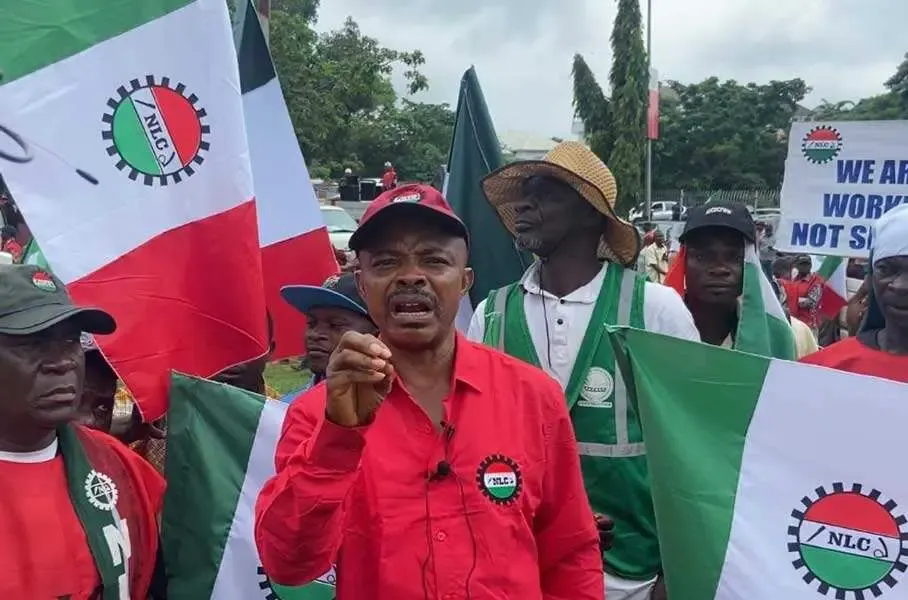
  • Banks to shutdown over planned NLC strike 

    Banks to shutdown over planned NLC strike 

    The National Union of Banks, Insurance and Financial Institutions Employees (NUBIFIE) has directed its members to withdraw services on Tuesday, 5th September, and Wednesday, 6th September in compliance with the warning strike of the Nigeria Labour Congress (NLC).

    This was disclosed in a letter to all Zonal Council and Domestic Committee organs of the Union.

    The letter signed by General Secretary of the Union, Mohammed I. Sheikh and dated September 2 stated that “In line with the communique issued after the meeting of National Executive Council (NEC) of the Nigeria Labour Congress (NLC) held on Thursday, 31st August 2023, that all affiliates should direct all its members to commence two days withdrawal of services from Tuesday & Wednesday the 5th & 6th September 2023.

    “The directives are imperative to get the needed attention of the government and warn it off its newfound love of meddling in the internal affairs of unions rather than address the punishing economic circumstances we find ourselves in.
    “We hereby direct all our organs to comply with this directive by ensuring all our members stay off duty for the two days.

    Reports say the Trade Union Congress (TUC) has backed out of the proposed strike.

  • GTCO’s H1 profit before tax increases by 217%

    GTCO’s H1 profit before tax increases by 217%

    Guaranty Trust Holding Company Plc, has reported a profit before tax of N327.4billion, representing an increase of 217.1 per cent over N103.2billion recorded in the corresponding period ended June 2

    The group released its Audited Consolidated and Separate Financial Statements for the period ended June 30, 2023, to the Nigerian Exchange Group (NGX) and London Stock Exchange (LSE).

    The Group’s loan book increased by 22.8 per cent from N1.89 trillion recorded as at December 2022 to N2.32 trillion in June 2023, while deposit liabilities grew by 37.0 per cent from N4.61 trillion in December 2022 to N6.32 trillion in June 2023.

    The Group’s balance sheet remained well structured and resilient with total assets and shareholders’ funds closing at N8.5trillion and N1.2 trillion, respectively. Full Impact Capital Adequacy Ratio (CAR) remained very strong, closing at 24.7 per cent, while asset quality was sustained as IFRS 9 Stage 3 Loans improved to 4.6 per cent in June 2023 from 5.2 per cent December 2022, however, Cost of Risk (COR) closed at 3.7 per cent from 0.6 per cent in December 2022 owing to worsening macros which caused significant increase in ECL variables.

    The Group Chief Executive Officer of Guaranty Trust Holding Company Plc, Mr. Segun Agbaje, said; “Our half year audited results reflect the strong business fundamentals underpinning the GTCO franchise, the quality of our past decisions in future proofing our balance sheet for challenging times, and the sound practices that guide our day-to-day operations.

    “Despite the challenges in the business environment, notably inflationary pressures and exchange rate fluctuations, we are starting to see the gains in the transformation of our businesses following our transition to a Holding Company structure. Improved profitability and a solid performance across key metrics reflect efficiencies and justify the investments we continue to make in technology, product development, and our people.”

     “We recognise the impact prevailing economic and market conditions have on people and livelihoods and we remain committed to seeking better outcomes for our customers by ensuring that our products and service offerings support our customers and their businesses through their evolving realities, whilst also taking every opportunity to optimise stakeholder value,” he added.

    Overall, the Group continues to post one of the best metrics in the Nigerian Financial Services industry in terms of key financial ratios i.e., Pre-Tax Return on Equity (ROAE) of 61.4 per cent, Pre-Tax Return on Assets (ROAA) of 8.8%, Full Impact Capital Adequacy Ratio (CAR) of 24.7 per cent and Cost to Income ratio of 27.7 per cent.

    GTCO is a leading financial services group with banking operations in Nigeria, West Africa, East Africa, and the United Kingdom alongside new businesses in payment, funds management and Pension Fund Administration.

    Its leadership in the banking industry and efforts at empowering people and communities has earned it many prestigious awards over the years.

  • Nigeria’s active mobile subscriptions hit 220.5m

    Nigeria’s active mobile subscriptions hit 220.5m

    Latest industry statistics released by the Nigerian Communications Commission (NCC) shows that active subscriptions across mobile networks MTN, Globacom, Airtel, and 9mobile rose by 0.4 percent to 220.5 million in July.

    An analysis of the operators’ data showed that the growth in the subscription database was buoyed by MTN, which gained 678,008 new subscriptions in the month under review.

    The marginal gain was recorded after four months of steady decline in subscriptions.

    As of June, active subscriptions across the mobile networks stood at 219.7 million, which shows that the country’s mobile subscriptions database grew by 770,889 in July.

    The NCC’s statistics show that MTN, the largest operator by subscriber number, boosted the total industry database with a 678,008 increase in its subscriptions.

    This brought its total active subscriptions to 85.3 million from 84.6 million it recorded in June 2023.

    9mobile also gained 176, 105 new subscriptions, which brought its total active connected lines to 13.7 million from 13.5 million in June. Similarly, Globacom added 23,565 new subscriptions in the month to record 61.4 million total subscriptions.

    However, Airtel, the third-largest operator by subscriber number, lost subscriptions in the month. Airtel’s database plunged by 106,789 in the month under review to 60 million.

    The slight gain in July indicated that the mobile operators may have completed the disconnection of lines registered by under 18 subscribers, which led to the steady decline in subscriptions between March and June this year.

    The NCC had in recent guidelines reviewed the age of owning a SIM upward from 16 to 18 years, which means that young Nigerians under 18 cannot register a SIM.

    Explaining why it revised the age of acquiring a SIM upward from 16 to 18, NCC in a statement released when the regulation was first announced in October 2021 said it was aimed at protecting minors in the country.

    The Commission said this was also in accordance with the Nigerian constitution, which recognizes 18 as the age at which a Nigerian can enter a contractual relationship.

    The Commission further explained that SIM acquisition is a contract between service providers and their subscribers, which requires the subscriber to have proper legal status, be of mature mind, and be rational enough to bear specific responsibilities, obligations, and liabilities imposed by a contract.

  • FG rakes in N412.9bn from Dangote’s tax remittances

    FG rakes in N412.9bn from Dangote’s tax remittances

    Dangote Cement Plc, a subsidiary of Dangote Industries Limited, (DIL), paid a total of N412.9 billion into the coffers of the Federal Government as tax for 3 consecutive years.

    A total of N97.24 billion was paid by Dangote Cement in 2020, N173.93 billion in 2021 and N141.69 billion in 2022.

    This huge tax payment from only one of the conglomerate’s subsidiaries, re-affirms Aliko Dangote’s position that prompt and accurate tax payment is a duty for everyone who wishes to witness real growth and development. He posited that the government cannot offer social services to the citizens without tax collection.

    Dangote also advised the government to automate the tax system in the county, while commending the inauguration of the Presidential Committee on Fiscal Policy and Tax Reforms

    “Maybe they should look at automating the tax system, just like what they did in India. If you go to India today, the country collects at least $1 trillion in various taxes. On petroleum products alone, India makes $100 billion yearly, because they charge 100 per cent on petroleum products. So, what I am suggesting is that people should pay tax and if you pay, you demand services from the government. I think it is a social contract.

    “Once people start seeing that the government is using the money to do infrastructure, fund education, healthcare, whereby the citizens don’t need to go out to India or other countries for medical attention, then people would settle down and start paying taxes,” the renowned entrepreneur added.

    Meanwhile, other listed companies of Dangote Industries Ltd, also paid huge taxes to the federal government during the period under review. Both Dangote Sugar Refinery Plc and NASCON Allied Industries Plc are listed on the Nigeria Exchange Limited.   

    Analysis of the yearly annual reports of Dangote’s three listed companies indicated that they paid N114.31 billion as tax in 2020; N187.17 billion in 2021 and N172.15 billion in 2022.

    During the three years, Dangote Cement paid a total of N412.86 billion as taxes; Dangote Sugar Refinery paid N55.38 billion, while NASCON Allied Industries paid N5.39 billion.

    A total of N97.24 billion was paid by Dangote Cement in 2020, N173.93 billion in 2021 and N141.69 billion in 2022. Dangote Sugar Refinery paid N15.85 billion in 2020, N11.97 billion in 2021 and N27.56 billion in 2022. For NASCON Allied Industries, it was N1.22 billion in 2020, N1.27 billion in 2021 and N2.9 billion in 2022. 

    The analysis indicated that companies from Dangote Group had remained major contributors to the nation’s economy with the volume of taxes paid in the period under review. The group has given Nigeria hope of earning income through economic diversification, implying that the nation can wean itself from dependence on export of crude oil as a major source of government income.

    Dangote Industries Limited is a diversified and fully integrated conglomerate as well as a leading brand across Africa in businesses such as cement, sugar, salt, beverages, and real estate, with new multi-billion-dollar projects underway in the oil and gas, petrochemical, fertiliser and agricultural sectors.

    Dangote Cement Plc is Sub-Saharan Africa’s largest cement producer with an installed capacity of 51.6Mta capacity across 10 African countries. The company operates a fully integrated ‘quarry-to-customer’ business with activities covering manufacturing, sales and distribution of cement. It has a production capacity of 35.3Mta in its home market, Nigeria.

    The Obajana plant in Kogi State, Nigeria, is the largest in Africa with 16.3Mta of capacity across four lines; the Ibese plant in Ogun State has four cement lines with a combined installed capacity of 12Mta, the Gboko plant in Benue state has 4Mta, while Okpella plant in Edo State has 3Mta.