Author: Chike Ozohili

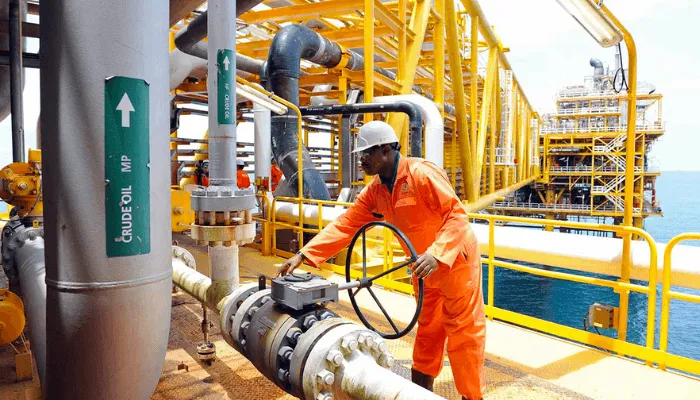
  • Global oil, gas capital expenditure to hit $797.6bn -Report

    Global oil, gas capital expenditure to hit $797.6bn -Report

    Global Capital Expenditure (Capex) in the oil and gas markets is expected to hit $797.58 billion before the end of this year, an industry report has said.

    The Oil and Gas CAPEX Market Report (2023-2028 says oil majors including Shell, TotalEnergies and ExxonMobil are key drivers of the market.

    The report estimates the market at $797.58 billion in 2023 and is expected to register a Compound Annual Growth Rate of 4.27 per cent during the forecast period.

    Capital expenditure (CAPEX) refers to the funds utilized by a company/organization to acquire, upgrade, and maintain physical assets, such as property, plants, buildings, technology, or equipment. 
    It is often used to undertake new projects or investments by a company. The global oil and gas CAPEX market considers the entire capital expenditure of international oil and gas operators annually.

    The report said the Chadian oil and gas market is expected to register a CAGR of more than 0.54 per cent during the forecast period, while the Chinese oil and gas midstream market is expected to witness a CAGR of more than 3.04 per cent during the forecast period.

    Investment in the upstream oil and gas industry grew after the rise in oil and gas demand amid the opening of the COVID-19 lockdowns.

    An expansion in demand recovered crude oil prices in 2022, while in 2020, crude oil prices were about $41.96 per barrel, and in 2022, the prices reached more than $110 per barrel, resulting in a surge in investment in the oil & gas industry.
    The CAPEX market is expected to witness noteworthy growth owing to factors such as strong profitability due to a trend toward reducing project costs and optimizing portfolios, leading to divesting of low-margin fields, as well as a greater emphasis on investments in higher-margin growth opportunities.

  • Staff Capacity Building: OAGF pledges collaboration with ASCON

    Staff Capacity Building: OAGF pledges collaboration with ASCON

    The Office of the Accountant General of the Federation (OAGF) is to work with the Administrative Staff College of Nigeria (ASCON) to provide the requisite capacity development training for treasury staff. 

    The Accountant General of the Federation, Dr. Oluwatoyin Madein dropped the hint when the Director-General of the Administrative Staff College of Nigeria (ASCON), Mrs. Cecelia Gayya led a delegation from the institution to her office Tuesday in Abuja. 

    According to a statement by Director (Press) Bawa Mokwa, Dr. Madein said capacity development is essential for effective performance, assuring that Office will sustain a deeper collaboration with ASCON in that regard.   

    She noted that, “Challenges abound in every position one occupies and every task has its own demands. The complexities will keep increasing and the ability to overcome and achieve the desired result will definitely rely more on the exposure, in terms of skills and knowledge of global trends”.  

    While reaffirming that staff training is a cardinal policy of her office, the AGF called on the management of ASCON to include Treasury staff in its capacity building programmes on any area within the civil or public service. 

    She applauded the management of ASCON for considering the Treasury Academy, in Orozo, Abuja as its study Centre, adding that the OAGF will provide all the necessary assistance to bring the idea to fruition. 

    On her appointment as the first female AGF, Dr. Madein acknowledged that the office comes with much expectation from the government and Nigerians, promising that she will put in her utmost effort to discharge the responsibility creditably. 

    In her remarks, the Director General of ASCON, Mrs Cecelia Gayya congratulated Dr. Madein on her appointment as the first female AGF and expressed optimism that she has the capacity and experience to succeed in the office.   

    Mrs. Gayya confirmed that ASCON was willing to partner with the OAGF on staff training and other areas as may be required of it, adding that the institute was working towards making the Treasury Academy in Abuja one of its study Centers. 

    She said the institute had commenced the training of Chief Executives of parastatals, agencies and commissions, and that the AGF will be included in the next session of the training which will commence in September.

  • Dangote, BUA Cements spend whopping N204.925bn on power

    Dangote, BUA Cements spend whopping N204.925bn on power

    Nigeria’s two biggest cement factories, Dangote Cement and BUA Cement spent a whopping sum of N204.925 billion on fuel and power during the half year ended June 30, 2023.

    A look at the financials showed that Dangote Cement spent the sum of N157.020 billion during the half year 2023 as against N129.957 billion in 2022 representing a growth of 20.82 per cent.

    Following the high cost of sales, profit after tax grew marginally by 3.77 per cent to N178.603 billion for the half year 2023 as against N172.104 billion in 2022. The cost of sales grew by 18.80 per cent to N383.088 billion from N322.461 billion.

    Similarly, BUA Cement spent N47.905 billion on energy in the first half of 023, representing an increase of 9.92 per cent over N43.580 billion reported in 2023.

    Profit after tax was N63.616 billion in 2023 as against N61.363 billion in 2022, accounting for an increase of 3.67 per cent while the cost of sales stood at N114.943 billion in the half-year of 2023 from N97.503 billion in 2022, representing a growth of 17.88 per cent.

    Dangote Cement on the other hand complained that it recorded lower volumes due to surging inflation.  

    According to the company’s six months of unaudited results, sales volume for pan-African operations was up 11.6 per cent compared to 4.9Mt in the first half of 2022. The total pan-African volume accounts for 40.4 per cent of Group volumes in the half year.

    Chief Executive Officer of Dangote Cement, Arvind Pathak said:  “Dangote Cement delivered positive results in the first half of the year. Our Nigeria operations achieved a 22.6 per cent recovery in sales over the first quarter, which was impacted by the general elections and the cash crunch. However, the steep currency devaluation in mid-June slowed this volume recovery and increased the already inflated operating cost.”

    According to data, the profit after tax of these companies stood at N242.219 billion from N233.467 billion in 2022 representing a 3.75 per cent increase.

    The profits were impacted by the rise in production cost of sales which was driven mainly by an uptick in raw materials cost and cost of energy.

    The rising cost of sales swallowed much of the earnings following rising inflation and high exchange rate. The cost of sales for the firms stood at N498.031 trillion for the half year 2023 as against N419.964 billion in 2021, accounting for a growth of 41.15 per cent.

  • Naira falls record all-time low of N900 at parallel market

    Naira falls record all-time low of N900 at parallel market

    The naira plunged to a record low of N900/$1 on the parallel market on Tuesday, as demand for foreign currency outstripped supply with traders quoting the exchange rate as high as N900/$1 for “inflows” and N895/$1 for cash trades.

    The peer-to-peer market, where cryptocurrency traders exchange forex, also saw the exchange rate soar above N900/$1.

    Meanwhile, in the official Investor and Exporter Window, the exchange rate closed at N774.78/$1 while the NAFEX rate was N776.

    The official market also faces supply constraints, with daily turnover averaging $80 million since July.

    Forex traders attributed the depreciation of the naira to supply constraints saying there were more buyers than sellers in the market and that the situation was unlikely to improve anytime soon.

    When asked about the source of the increased demand, traders mentioned a diverse set of buyers, including importers, foreign travellers, and speculators.

    There are concerns among some traders that the state of depreciation is unlikely to improve as demand continues to rise unchecked.

    Analysts explained that there was a huge backlog of unmet forex demand in the official market, estimated at $8-10 billion.

    Some of this demand also spills over to the parallel market, as buyers struggle to find enough supply to meet their needs in the official market.

    The exchange rate between the naira and dollar has weakened by 16 per cent since the reunification of the exchange rate windows. This compares to a depreciation of 2.5 per cent between January 1 and June 14th. The exchange rate weakened by 22.9 per cent in the whole of 2022.

    The naira has been under pressure in the parallel market for several weeks, as the supply of forex from official sources remains inadequate.

    On July 1st, the beginning of the second half of the year, the exchange rate in the parallel market was around N772/$1.

    However, a surge in demand from various segments of the economy, such as importers, foreign travelers and speculators, has triggered exchange rate volatility.

  • Nigeria’s equity market sheds N15bn

    Nigeria’s equity market sheds N15bn

    Trading activities on the floor of Nigerian Exchange (NGX) closed Tuesday depreciating by N15 billion.

    arket capitalisation of listed equities declined by 0.04 per cent to 63309.65 points from 65336.71 points traded the previous day.
    The NGX All Share Index also depreciated by 27.06 basis points to 65309.65 points from 65336.71 points recorded the previous day.
    A review of the transactions during the day showed that Guinness Nigeria Plc led gainers table in percentage terms, gaining 10 per cent to close at N60.50 per share, Gkaxosmith followed with a gain of 9.74 per cent to close at N10.70 per share, Chellaram added 9.73 per cent to close N3.72 per unit, TIP grew by 9.72 per cent to close at N0.79 per share while Universal insurance gained 9.09 per cent to close at N0.24 per share.
    On the contrary, NSLTech topped losers chart with 10 per cent to close at N0.27 per unit, Northern Nigeria Flour Mills followed with a drop.of 9.89 per cent to close at N12.30 per share, JohnHolt dipped by 9.52 per cent to close at N1.33 per unit, Tantalizer down by 8.33 per cent to close at N0.33 per share, Mutual Benefits fell by 7.69 per cent to close at N0.48 per unit.
    The volume of trades went down by 16.525 million, representing 4.94 per cent as investors traded 317.808 million shares valued at N4.471 billion in 6376 deals against 334.333 million shares costing N3.891 billion in 6940 deals.


    Transactions in the shares of AccessCorp led market activities with 49.355 million shares valued at N86.161 million, Sterling Bank followed with account of 43.823 million shares cost N153.936 million, Universal insurance traded 28.863 million shares cost N6.896 million, FCMB group traded 18.125 million shares worth  N112.162 million while FBNHoldings exchanged 14.301 million shares cost N261.734 million.

  • Google to update personal information control tool

    Google to update personal information control tool

    Google has announced plans to update its personal information control tool to allow users to keep track of their contact information in search.

    It stated that last year, it launched the ‘results about you’ tool to allow people to request the removal of search results that contain their personal phone number, home address, or email, from Search.

    It noted that it had now updated and improved the tool, helping users keep track of their personal contact information in Search and alerting them when it is found so that they can remove it.

    In a statement, the firm said, “In the coming days, we’ll be rolling out a new dashboard that will let you know if web results with your contact information are showing up on Search.

    “Then, you can quickly request the removal of those results from Google — right in the tool. We’ll also notify you when new results from the web containing your contact info pop up in Search, to give you added peace of mind.”

    According to Google, the tool is currently available in the United States and will be rolled out globally soon.

    Also, the firm announced that its SafeSearch blurring setting, which allows, and protects family members from encountering explicit imagery on Search, will be rolled out to users globally next month.

    It stated that the setting ensures that explicit imagery — such as adult or graphic violent content — will be blurred by default when it appears in Search results.

    It added, “We have long had policies that enable you to remove non-consensual explicit imagery from Search. Now, we’re building on these protections to enable people to remove from Search any of their personal, explicit images that they no longer wish to be visible in Search.”

    ends

  • MPC: Aligning fiscal, monetary policy for economic growth

    MPC: Aligning fiscal, monetary policy for economic growth

    The benefits of collaboration in any human endeavour cannot be over-emphasised. Every part jointly fitted together produces the whole.
    Monetary policy affects financial conditions and the level of bank reserves.

    Whereas, fiscal policy can put money directly into or out of people’s pockets. Without fiscal policy as a tool to fight inflation, the federal government is working with one hand tied behind its back.
    The fiscal approach is anchored by the Federal Government whose role is mainly to moderate the excesses of other operators in the economy, and provide law and order and enabling operating environments.
    The Central Bank acts alone when it hopes that its policies would change the economic dynamics without any input from the fiscal side.
    Fiscal policy can slow spending directly by raising taxes or reducing government direct payments without necessarily having the intermediate step of raising the unemployment rate.
    Modest upfront fiscal contraction would reduce the cumulative amount of monetary tightening necessary, thereby improving the odds of avoiding recession.
    In this regard, analysts opine that the CBN must not operate in isolation, but collaborate with fiscal authorities to achieve sustainable economic results.

    Ineffective policies
    Most economic policies were not as effective as they ought to be during the last administration due to the lack of collaboration on the part of fiscal and monetary authorities as everyone seems to be running their ‘own thing’ as it were.
    While the Finance Ministry appears to be focused only on borrowing from all possible quarters and increasing tariffs to raise more revenue for the government, the CBN was preoccupied with shielding the Naira from unnecessary pressure through rampant importation of items that could have been produced locally, thereby depleting the foreign reserves and spiking exchange rate.
    Analysts note that one of the dilemmas of Nigeria is fiscal indiscipline that is seen in the actions of the political office holders. In the last dispensation, while the CBN was trying to grow the economy through expansionary policies targeted at increasing capital flows (or credit) to the real sector, the fiscal authorities, on the other hand, were raising taxes on many items that affect their activities, which the CBN was trying to expand.
    And that was why at every opportunity, suspended CBN Governor, Godwin Emefiele always called for an alignment between fiscal and monetary policies.
    According to Emefiele, the country’s monetary and fiscal authorities must “collaborate and work in harmony to accelerate Nigeria’s economic development even as he added that “finding a sustainable solution requires a broadened participation of colleagues from the fiscal side.”
    Speaking at the 149th meeting of the Monetary Policy Committee of the Central Bank of Nigeria (CBN), the Apex Bank’s Acting Governor, Folashodun Shonubi, said there was a need for fiscal and monetary authorities to align together to be able to address present economic challenges.
    Reading the communiqué at the end of the two-day meeting, Shonubi noted that subsidy removal, exchange rate liberalization and disbursement of palliatives, would have pass-through effects on inflation. He therefore, called “monetary and fiscal authorities to sustain collaboration towards addressing the inflationary pressure and incentivize domestic investment to reduce unemployment and boost output growth.
    The Monetary Policy Committee “…enjoined the Federal Government to continue to explore policies to improve investor confidence in the Nigerian economy and pave the way for foreign and domestic investments.
    “Members emphasized the need to attract investments, particularly, to auto manufacturing, aviation, and rail industries to boost non-oil revenues.”
    Experts have continuously argued that all these can only happen when both of them work in harmony. For instance, from time to time, the Federal Government comes up with its fiscal policies based on national economic philosophy and objectives, to aid or readjust the economy.
    CBN then makes monetary policies to ensure availability of money at the right cost, adequate volume and appropriate type to facilitate the cost effectiveness of production and trade. However, we saw monetary authority make incursions repeatedly into the economic policy territory hitherto exclusively reserved for the fiscal authority in Nigeria.
    This has then made the CBN a punching bag for every frustration in the economy in regards to monetary and fiscal balancing of macroeconomic issues.

    Breaking from the past
    In trying to break away from the past mistakes, President Bola Tinubu quickly appointed seasoned economist Wale Edun as his Special Adviser on Monetary Policy. The objective was to have the two sides coming together to align policies before they become public document.
    And true to type, Nigerians did see it in the MPC decision as the monetary policy rate hike was by 25 basis points contrary to what analysts and industry players had projected.
    In arriving at the decision, the MPC considered the outlook for the domestic economy with the policy options to either hold or hike the policy rate to offset the moderate increase in headline inflation.
    With headline inflation still on the rise due to the effect of fuel subsidy removal and the naira float which is driving the prices of goods and service upwards, the Apex Bank new that raising rates like in previous times will be counter-productive to what the monetary authorities wanted to achieve with the policy reforms that has been embarked upon by the fiscal authorities.
    Knowing that when the palliatives begin to flow, there would be much liquidity in the system, the Committee had to be proactive in line with current thinking.
    According to the CBN Governor, “Considering the option to hold, the Committee reviewed the impact of the continued rise in inflation on various macroeconomic variables, noting the potential dampening effect on output growth. Members agreed unanimously that the previous series of rate hikes had indeed greatly moderated the pace of price increases.
    “The option to continue to hike the policy rate, albeit moderately, also presented a strong alternative. This is premised on the expected liquidity injections into the economy from the recent policy developments and the likely impact on inflation.
    “The Committee remained cautious in arriving at a policy decision as Members noted the need to continue to support investment which will ultimately lead to the recovery of output growth. The balance of these arguments thus leaned in favour of a moderate rate hike, to sustain efforts at anchoring inflation expectation, narrow the negative real interest rate gap, and improve investor confidence.”

    Achieving fiscal, monetary balance

    For economist Adefolarin Olamilekan, achieving economic growth requires a mixture of monetary and fiscal balance.

    According to Adefolarin, there is no universal rule when it comes to raising or lowering the interest rate, so far there is a targeted economic goal.

    “On the other hand, events happening in developed countries, where Central banks have been raising rates as measures to reduce inflation, is a case in point.

    “Moreover, the latest rate of 18.75% according to the CBN is to also fight inflation in the country.

    “Meanwhile, if this could mean alignment with fiscal policy, we can’t but agree with such, having suffered from a peculiar challenge of distorted and disconnected policy in the past that led to fiscal imbalance, huge government debt and poor revenues,” he said.

    Going forward, the political economist said the alignment must take cognizance of trade policy to further expand the economic growth, and significantly broaden the non-oil sector and expand export orientation.

    “We can’t afford inconsistent policies from the government, especially as successive administration failed to acknowledge the imperative of multi-sectoral advantage the alignment of fiscal and monetary authority could achieved.

    “Kind enough, we are indeed may be witnessing a broader and inclusive economic action from the government.

    “With economic policy instrument that considered the boosting Nigeria’s economic system, with a focus of linking all real sector together through fiscal and monetary measure.

    This, in our understanding, is to remove the disarticulations of previous years impending on our micro and microeconomics stability,” he proffered.
  • Nigeria’s equity market begins week positively with N76bn gain

    Nigeria’s equity market begins week positively with N76bn gain

    The Domestic equity market opened the week on a positive note, gaining N76 billion following gains recorded by small and medium stocks.

    The market capitalisation of listed equities increased by 0.21 percent to N35.555 trillion from N35.479 trillion reported on Friday.

    The NGX All Share Index also appreciated by 138.63 basis points to 63336.71 points from 65198.08 points traded the previous day.

    An analysis of the investment showed that Enamalwa led gainers table during the day, gaining 9.86 per cent to close at N19.59 per share Wema Bank followed with a gain of 9.77 per cent to close at N4.72 per share, UPL also appreciated by 9.73 per cent to close at M2.48 per unit, SUNU Assurance added 9.68 per cent to close at N1.02 per share Gkaxosmith gained 9.55 per cent to close at N9.75 per unit.

    On the contrary, Omatek topped losers chart during the day in percentage terms, shedding 8.82 per cent to close at N0.31 per unit, Prestige insurance trailed with a drop of 7.84 per cent to close at N0.47 per unit, Mcnichols fell by 7.35 per cent to close at N0.63 per share, Cornerstone Insurance declined by 7.22 per cent to close at N0.90 per share, Wapic Insurance dipped by 5.97 per cent to close at N0.63 per unit.

    Volume of trades declined during the day as investors traded 334.333 million shares valued at N3.891 billion in 6940 deals against 363.147 million shares worth N6.073 billion in 6644 deals.

    Transactions in the shares of Sterling Bank Plc led market activities during the day with 55.141 million shares valued at N197.266 million, FCMB group followed with account of 28.249 million shares cost N173.843 million, Fidelity Bank exchanged 18.842 million shares cost N150.847 million.

    Japaul Gold traded 17.355 million shares cost N17.018 million while AccessCorp exchanged 17.100 million shares cost N296.635 million.

  • Address good governance, alliance tells ECOWAS leaders

    Address good governance, alliance tells ECOWAS leaders

    The Alliance for Deepening Democracy (A4DD) has called on leaders of the Economic Community of West African States (ECOWAS) to take urgent measures to address challenges to democracy principles and good governance in the region in order to stem the scourge of unconstitutional takeover of governments now afflicting some of its member countries.

    In a statement issued Monday/ in Abuja, the alliance of organizations working to advance democracy in Nigeria, strongly condemned the July 28, 2023 coup in which President Mohamed Bazoum of Niger Republic was removed from power in a military takeover but noted that the failure of leaders in many ECOWAS member states to adhere to the universally accepted norms of democratic practice and good governance principles had become a ready justification for insurgents and coup plotters undermining democratic governance, peace and stability of the region.

    The Alliance identified some of the challenges to good governance in West Africa as the failure of some leaders to respect constitutional term limits in their countries, the manipulation of electoral processes leading to the emergence of governments with dubious legitimacy from such flawed elections, widespread violation of human rights and constriction of civic space in many countries, the high level of corruption, lack of independence of the Judiciary, and the inability of governments to deliver basic public services to their citizens in countries across the region.

    Noting that the coup in Niger was the seventh coup attempt and fourth successful military takeover of power in West Africa since 2020, the Alliance said it was deeply concerned that a region that was once celebrated as demonstrating the strongest political will and leadership in advancing democratic governance, peace and stability is now referred to as “the coup belt of Africa”.

    It said although some of the coups are greeted with jubilations on the streets of the different countries, the reactions were not necessarily informed by the people’s love for military regimes but are frequently motivated by a growing frustration among the people about democratic governance, especially the failure of leaders to meet the collective and individual aspirations of their citizens.

    Insisting that ECOWAS leaders had a duty to ensure good governance and adherence to sound democratic principles and practices, the Alliance contended that since they have always cited the violation of the region’s Supplementary Protocol on Democracy and Good Governance as the basis for their zero tolerance for military takeover of governments, it is imperative that they also abide by a key feature of the Protocol, which is the common and universal norms on democratic governance expected of member states through “constitutional convergence”.

    The Alliance argued that the failure of ECOWAS leaders to address other challenges to good governance and democracy while seeking to take decisive action against coups would only reinforce the impression that they are only interested in ensuring their continued stay in office and have no real desire to promote universally accepted democratic norms and good governance.

    The Deputy Chairperson of the Steering Committee of the Alliance, Ms Faith Waziri, who is also the Communications Officer of the Women in Politics Forum, said: “Sadly, experience from the past in some of the West African countries under military leadership has demonstrated that the military is no different to the political class they often claim to liberate the people from. Thus, if this dangerous precedent is not curtailed immediately, we are concerned that it may become an uncontrolled trend in the region, putting the freedom of the people at risk.”

    She said that “While we commend the region’s zero tolerance for military takeover, the conspicuous silence of ECOWAS leaders in the face of violations of the constitutional convergence principles as outlined in the Supplementary Protocol on Democracy and Governance has raised legitimacy concerns and doubts over the sincerity of ECOWAS in championing democracy and good governance in the region.”

  • Difficult but necessary reforms needed to ramp up tax revenue – JTB

    Difficult but necessary reforms needed to ramp up tax revenue – JTB

    For Nigeria to attain optimum tax revenue collection capacity across the Federal, States and Local Government tax authorities, the country must make hard but necessary reforms that would yield long term benefits.

    This was the position stated by the Chairman of the Joint Tax Board (JTB), Mr. Muhammad Nami, who is also the Executive Chairman of the Federal Inland Revenue Service (FIRS) at the 153rd Meeting of the Board which held today in Abuja with the theme: “Harmonization and codification of taxes at the National and Sub-national levels: Key to achieving a tax friendly environment in Nigeria.” 

    Nami, while delivering his address to the Board stated that for progress to be made in taxation, tax authorities must continue to explore and adopt measures and innovative initiatives that will lead to the optimisation of tax revenue for all levels of government. 

    “As the new administration’s attempt to address the many socioeconomic challenges facing the nation on many fronts, it becomes imperative for all the levers of State to shake-off any lethargic antecedents and focus on the goal of a national resurgence.

    “The unique and privileged offices we occupy as drivers of the nation’s tax administration processes presents us with a rare opportunity to take hard, but necessary decisions that are expected to yield long term benefits and add immense value to our collective prosperity as a nation.

    “In recent years, especially since the dawn of our current democratic dispensation, the importance of taxation has continued to be reiterated and reinforced by all, and the critical role that tax-revenue plays in funding government and governance cannot be over-emphasized. 

    “However, as we continue to make progress in our unique model of taxation, it is appropriate that we continue to explore and adopt measures and innovative initiatives that will lead to the optimization of tax revenue for all the levels of government, in more efficient, more effective, more inclusive, and more sustainable ways.

    “It is only by achieving this, that our efforts as tax administrators can trigger the manner of activity required in the productive sectors of our economy, towards achieving the immense economic potentials that we are capable of,” Mr. Nami said.

    The Chairman of the Joint Tax Board further assured Executive Chairmen of State Revenue Authorities present that given the thrust of the current administration’s tax policy direction, the country was on the pathway to eradicating multiplicity of taxes as a core of its overall economic regeneration objectives. 

    Chairman, Presidential Fiscal Policy & Tax Reforms Committee, Mr. Taiwo Oyedele, while delivering a presentation on the theme of the meeting highlighted that multiple taxation was causing low tax morale in the country, as well as discouraging investments, while creating room for corruption and making doing business difficult.

    The Presidential Fiscal Policy and Tax Reforms Committee Chairman further noted that the solution to the country’s revenue challenges is not to introduce more taxes, but to focus on the few taxes that are high yielding, noting that with these, tax authorities would be able to collect far more than is currently being collected. 

    Oyedele stated that for the government to raise more revenue, it needed to get to a point where the total number of taxes collected at the Federal, State and Local government levels would be at a single digit. 

    “We also need to clarify on taxing rights. We need to integrate tax collection functions—that is, all revenues that are to be collected must be collected by a single revenue agency. Government must also do well to fund our tax agencies well. We also need to harmonise revenue administration and simplify our approach to tax compliance,” Oyedele said.

    He further advocated for the country’s tax authorities to use more technology, review the country’s constitution and tax laws, as well revisit Nigeria’s concept of fiscal federalism.