Fidelity Bank Plc has announced plans to raise capital via a combination of a public offers and rights issue.
In a statement signed by the Company’s Secretary, Ezinwa Unuigboje and released on the NGX, the tier -2 bank revealed that at the current share price of N7.3, the sale could fetch the bank fresh capital of about N96.3 billion.
Fidelity Bank said it is to raise its share capital to N22.60 billion as the company looks to explore strategic growth.
“The issued share capital of the Company currently at N16,000,000,000.00, made up of 32,000,000,000 Ordinary Shares of N0.50 each, be increased up to N22,600,000,00.00 by the creation of up to 13,200,000,000 (Thirteen Billion, and Two Hundred Million) additional Ordinary Shares of N0.50 each.
“That the Company undertakes a capital raising exercise via a Public Offer for up to 10,000,000,000 Ordinary Shares and Rights Issue of up to 3,200,000,000 Ordinary Shares representing 1 (one) new share for every ten (10) shares held, to new and existing shareholders respectively.
“That the Board of Directors of the Company be and is hereby authorized to allot the shares issued in accordance with resolution (2) above, which shall rank pari-passu with the Company’s existing issued shares, subject to the receipt of relevant regulatory approvals.
“That the Board of Directors be and is hereby authorized to perform all such lawful acts that are necessary to give effect to the above-listed resolutions including but not limited to ensuring compliance with all regulatory procedures and requirements, obtaining all required approvals, and filing within time, all regulatory returns in relation to the above resolutions.”
The company noted that the decision to raise share capital is in view of strategic growth as the company aims for increased profitability, expansion (domestic and international), and enhancement of its digital capabilities.
The proposed resolutions are aimed at ensuring that the company can take advantage of emerging business opportunities and secure long-term profitability and competitive advantage while ensuring increased shareholder value.
The share capital increase is subject to adoption at the company’s Extra Ordinary General meeting and is being presented for shareholders’ approval.
Author: Chike Ozohili
-

Fidelity Bank targets N96.3bn share capital
-
Nigeria’s trade volume declines by 38.59%
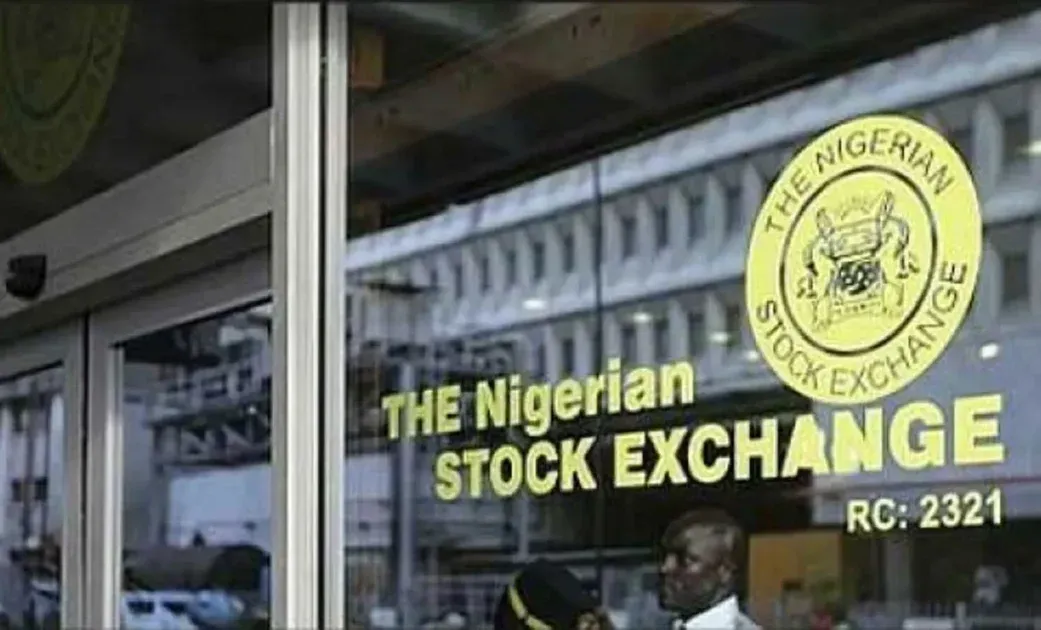
The volume of transactions on the floor of Nigerian Exchange (NGX) declined by 38.59 percent at the close of trading on Wednesday.
The NGX trading result showed that volume of activities went down by 335.310 million as investors traded 473.492 million shares valued at N10.081 billion in 7403 deals against 868.802 million shares worth N42.806 billion in 8970 deals.
Also the market capitalisation of listed equities declined by N5 billion, representing 0.01 per cent to N34.716 trillion from N34.721 trillion reported the previous day.
The NGX All Share Index also depreciated by 9.49 basis points to 63757.23 points from 63766.72 points reported the previous day.
An analysis HoneyWell Flour Mills led gainers table in percentage terms, increasing by 10 per cent to close at N3.63 per share, Eterna Plc followed with a gain of 9.98 per cent to close at N28.65 per unit, Academy Press gained 9.95 per cent to close at N2.21 per share, Skyways Aviation Handling also appreciated by 9.83 per cent to close at N16.20 per unit, RTBriscoe grew by 9.80 per cent to close at N0.56 per share.
On the contrary, Prestige Insurance and Geregu Power recorded the highest loss, declining by 10 per cent each to close at N0.45 and N315.00 respectively, FTNCocoa fell by 9.61 per cent to close at N2.07 per unit, Linkage insurance dipped by 9.09 per cent to close at N0.70 per unit, Jaiz Bank fell by 9.04 per cent to close at N1.71 per unit.The NGX trading result showed that transactions in the shares of Japaul Gold led market activities during the day with 77.983 million shares valued at N64.586 million, FCMB group followed with 36.622 million shares cost N221.830 million, Sterling Bank traded 31.239 million shares cost N109.046 million, Dangote Sugar sold a total of 30.704 million shares cost N845.901 million, Fidelity Bank exchanged 22.283 million shares cost N160.859 million.
-

Chinese Yuan weakens against dollar with 7.1486 central parity rate
On Wednesday, the Chinese currency renminbi, commonly known as the yuan, experienced a slight weakening against the US dollar, with the central parity rate set at 7.1486 by the China Foreign Exchange Trade System. This represents a decline of 33 pips compared to the previous rate.
In the spot foreign exchange market of China, the yuan is permitted to fluctuate by a maximum of two percent from the central parity rate on each trading day. This controlled flexibility allows for some level of market-driven movement while still maintaining stability and preventing abrupt or drastic fluctuations in the currency’s value.
The central parity rate of the yuan against the dollar is calculated based on a weighted average of prices provided by market makers before the interbank market opens each business day. Market makers are financial institutions that actively participate in buying and selling foreign currencies, contributing to the establishment of a benchmark rate that sets the tone for currency trading activities throughout the day.
The People’s Bank of China, as the country’s central bank, manages the exchange rate policy and closely monitors the currency’s movements. The central parity rate serves as a reference point for the yuan’s value against the US dollar and is an essential tool in guiding the currency’s overall stability.
Maintaining a stable exchange rate is a crucial aspect of China’s economic policies, as it helps bolster investor confidence, fosters international trade relations, and encourages foreign investments. However, the central bank also recognizes the importance of allowing the currency to reflect market demand and supply forces to some extent, hence the allowance for a controlled fluctuation of the yuan’s value.
In recent years, the yuan’s exchange rate has garnered significant attention on the global stage, particularly amid trade tensions and economic developments between China and the United States.
In the ever-evolving landscape of global economics, these incremental changes warrant careful observation to assess their potential impacts on international trade and financial markets.
-

NDA organises marksmanship training for Cadets
*Urges residents to exercise caution during the period
The Nigerian Defence Academy (NDA) in Kaduna has announced its plans to conduct marksmanship and precision training for the cadets of the 71 Regular Course. The academy also issued a precautionary advisory for residents to stay clear of the designated training area during the specified period.
In a statement released on Wednesday in Kaduna, Maj. Victor Olukoya, the Academy’s Public Relations Officer, disclosed the details of the upcoming training. The marksmanship and precision exercises are scheduled to take place at the NDA Open Range situated in the Afaka area of Kaduna.
As a safety measure, the NDA authorities strongly advise inhabitants of Mando, Tsamiya, Kauya, and the general Afaka area to avoid the Range vicinity during the period of the training, which is scheduled to occur from July 21 to September 28. This precautionary measure is aimed at ensuring the safety of both the cadets and the residents.
“During the marksmanship training, there is a possibility of hearing gunshots as the cadets undergo rigorous training to enhance their shooting skills and precision,” the NDA said.
By urging the residents not to panic in response to the sound of gunshots, the NDA seeks to minimize any potential concerns or unnecessary alarm that might arise during the training period.
Marksmanship training is a crucial aspect of military education, especially for future officers. It involves honing the cadets’ shooting abilities, teaching them to handle firearms safely and effectively, and ensuring they can hit targets with precision. Such training is essential in preparing the cadets for the challenges they may face in their military careers.
By issuing this advisory and urging residents to stay clear of the training area, the NDA demonstrates its commitment to conducting the exercises responsibly and minimizing any potential risks.
Residents in the vicinity are encouraged to cooperate with the academy’s guidelines and exercise caution during the designated period. Additionally, the NDA’s Public Relations Officer assures that the training exercises will be conducted with the utmost professionalism and adherence to safety protocols.
The NDA’s marksmanship and precision training for the cadets of the 71 Regular Course is a significant aspect of their military education. As the exercises take place at the NDA Open Range in the Afaka area of Kaduna, residents of nearby areas are urged to avoid the training site from July 21 to September 28. By working together to prioritize safety, both the Nigerian Defence Academy and the residents can ensure a secure and successful training period.
-

CBN, CBE collaborate to establish Nigeria-Egypt FinTech Bridge
The Central Bank of Nigeria (CBN) and the Central Bank of Egypt (CBE) have signed a memorandum of understanding (MOU) to establish a Nigeria-Egypt FinTech Bridge.
The signing ceremony, which took place at the Seamless North Africa 2023 conference at the Egypt International Exhibition Center, Cairo, on July 17 – 18, 2023, comes after a series of engagements on issues around payment systems, financial technology, and financial inclusion in Africa.
Speaking at the event, the CBN Deputy Governor, Financial System Stability, Mrs. Aishah Ahmad, who signed on behalf of the CBN, said that the Bank was extremely excited by the partnership with the Central Bank of Egypt, which followed several months of engagement on payments, fintech and financial inclusion.
“We look forward to cultivating an innovative space for fintech startups and entrepreneurs in Egypt and Nigeria to accelerate financial inclusion, deepen our payment systems and drive economic growth across the African Continent,” Mrs. Ahmad declared.
Also speaking, the Deputy Governor of the Bank of Egypt, Mr. Rami Aboulnaga, commended the MOU and expressed optimism that the partnership would yield the desired expectation.
The groundbreaking partnership between the apex banks of the two largest economies in Africa encompasses a broad range of collaborative initiatives, including joint regulatory innovation projects, coordinated licensing and supervisory frameworks, information sharing, fintech cross referrals and talent development.
The conference was hosted by the Central Bank of Egypt and had in attendance over 4,000 policymakers, payment service providers, financial institutions and technology startups from Egypt, Nigeria and across the African continent.
-
N617 Petrol Price Hike: Tinubu taking Nigerians for granted- CISLAC
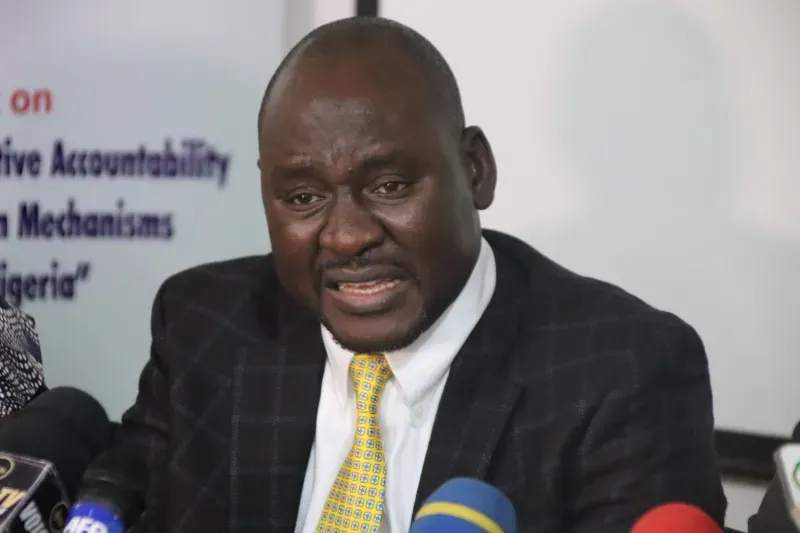
The Executive Director of Civil Society Legislative and Advocacy Centre (CISLAC) Auwal Ibrahim Musa Rafsanjani, has said that the President Bola Ahmed Tinubu-led federal government was taking Nigerians for a ride.
Rasfanjani, in a statement made available to journalists in Abuja on Tuesday, said the government is clearly insensitive to the plight of the growing number of Nigerians slipping into poverty daily as a result of its harsh policy directions.
During his inauguration ceremony, President Tinubu had declared petrol subsidy gone, leading to a quick increase in the pump price of fuel from N197 per litre to N537.
Auwal said the government has so far demonstrated by the very policy it has rolled out, that its programmes are not people-friendly.
According to him, the government has been inconsistent in the application of its “austerity measures” as it is pursuing outrageous, unsustainable, unjustifiable and reckless spending at the expense of the welfare of its citizenry.
He said Nigerians still remain the ultimate burden bearers of the government’s failure to take effective preliminary, decisive and demonstrable actions towards addressing oil and gas sector challenges.
He lamented that the citizens have been taken for a pain ride and lied to at every step of the way by various beneficiaries and stakeholders in the value chain.
He explained that on 1st June 2023, the Group Chief Executive Officer, Nigerian National Petroleum Company Limited, Mele Kyari, in response to the rising prices of PMS, alleged that competition among major players in the oil sector would force down the price of petrol as against the upward trends that have caused panic in the country.
He said similarly, in trying to allay the fears of citizens, the Independent Petroleum Marketers Association of Nigeria (IPMAN) on the 1st of July 2023, denied the alleged plan by the association to increase the pump price of Premium Motor Spirit (PMS), also known as petrol, to N700 per litre nationwide .
“The recent increase in petrol prices has been attributed to an increase in crude oil prices in the international market, with Brent crude benchmark price surpassing $80 per barrel; as well as the increase in the Dollar to Naira exchange.
“Why are there no corresponding adjustments in prices when these factors go in the opposite direction? So far, out of over 56 companies that applied for import licences to bring in petrol, only 10 made commitment to import, and only 3 have imported petrol into the country.
“What are the underlying drivers of this low investor response, that should drive competition and force down the price of petrol?
“In January this year, daily petrol consumption was 62 million litres; February, 62 million litres; March, 71.4 million litres; April, 67.7 million litres; May, 66.6 million litre; June, 49. 5 million litre; and now 46.3 million litres, a 35% reduction.
‘While this suggests reduced demand, it does not suggest a reduced dependence on it. Less people can afford petrol to meet their transportation, home-powering and other needs, and Small and Medium-sized Enterprises (SMEs) are facing difficulties in accessing affordable power.
“This has huge implications for businesses which rely on refined crude products like diesel and petrol, respectively. Petrol and Diesel prices negatively and significantly affect manufacturing output in Nigeria.
“There are at least 39.6 million micro, small and medium enterprises (MSMEs) operating in Nigeria as of December 2020, accounting for 96.7 percent of businesses, 87.9 percent of employment, and 49.7 percent of national GDP.
“Totaling about 17.4 million enterprises, they account for about 50% of industrial jobs and nearly 90% of activities in the manufacturing sector, in terms of number of enterprises.
“The trade deficit of $20 million recorded in November 2022 from the low crude oil export receipts signalled the urgency to jettison petrol subsidy, develop local production capacity and end fuel import dependency for a favourable balance of trade.
“While it is true that no nation has control over the price of crude oil, several measures can be put in place to mitigate the effect of oil price volatility on the country’s domestic economic productivity. The current underutilization of Nigeria’s refineries impedes the country’s ability to meet local demand and its economic potential.
“Nigerians are yet to receive firm commitments, actions and timelines on the delivery of our four moribund refineries to optimal operations. Furthermore, the private and modular refineries have a refining capacity that will strengthen Nigeria’s refining sector, eradicate dependency on imported oil products and lead to improved crude export earnings.
“A major effect of the subsidy removal is its knock-on effect on prices of goods and services. Increased transportation costs due to the high fuel prices, directly impact agricultural production and have implications for food security.
“The government must show real concern and take urgent actions to cushion the effect of its decision which is perpetuating poverty and inequality. This is widening the country’s already-existing income inequality with low-income citizens and vulnerable segments of society facing greater financial strain to meet their basic food needs.
“We must build a democracy centered on public trust and accountability. Unfortunately, we have a history, practice and tradition that has encouraged the misconception of the government as the public’s master and not its servant and this notion must be reversed,” He said.
On his part, Spokesperson of the Coalition of Northern Groups (CNG) Abdul-Azeez Suleiman said the sudden increase in fuel pump price to about N617 naira per litre is certainly bound to pinch Nigerians particularly with its multiplier effect on commodities.
He said Nigerians must not rush to judgment given that we patiently endured the past administration’s initial lapses even with evident symptoms of failure until the time when it became glaringly evident that it was downright clueless.
He said he thinks it is too early in the day to judge the present administration without waiting to see what it says it has up its sleeves.
“I think the nation should not be in too much hurry in assessing and judging the Tinubu administration against incredible expectations and hopes; against fair standards of judgment, including the judgment from his political opponents, against developments and circumstances that no one knew the nation will confront, and even against the failures and abuses the nation is having to pay for from the previous administration,” he said.
-

FG spends N2.8trn on electricity subsidy -NERC
The Federal Government has spent about N2.8 trillion subsidizing electricity in the last seven years, the Nigerian Electricity Regulatory Commission (NERC) has said.
The commission’s report for the month of July 2023 indicates N57 billion was spent subsidizing electricity between January and April this year.
NERC notes that the amount would have been higher but for the Service-Based Tariff scheme.
The NERC, in an attempt to justify a hike in tariff, claimed that past hikes in electricity tariffs by the DisCos saved the Government from paying an additional N1 trillion in subsidies to power firms annually.
The July 2023 NERC report was titled, ‘Overview of the Nigeria Electricity Supply Industry.’
Providing an update the commission stated that between January 2020 and January 2023, the tariff increased from 55 percent of cost recovery to 94 percent.
It added that between January and April this year, subsidies on electricity gulped N57 billion, adding that the Service-Based Tariff scheme helped in reducing the amount spent by the government on power subsidies.
“Annual subsidy reduced from N528 billion in 2019 to N144 billion in 2022. Subsidy in 2023 year-to-date (January to April 2023) stood at N57 billion.
“Service-Based Tariff was instrumental to the reduction of tariff subsidy. The financial burden of tariff subsidies between 2015 and 2022 stood at NGN2.8 trillion,” the NERC stated.
The yearly hikes in power tariffs by the Federal Government (FG) through the NERC have been targeted at ending subsidies on electricity.
According to the report, DisCos stated that their reasons for the rate review were premised on factors affecting the quality of service, operations, and sustainability of the companies.
-

Metre customers before increasing tariff, expert tells DisCos
The Convener of PowerUp Nigeria, Mr. Adetayo Adegbenle has called for the suspension of the planned tariff increase until consumers are fully metred.
Adegbenle, who gave the advice in an interview in Lagos, urged the Distribution Companies (Discos) to meet up to 70 percent metering gap within their network before contemplating tariff increase.
The DisCos are seeking the approval of the Nigeria Electricity Regulatory Commission before their planned upward review of tariff.
Adegbenle said all previous tariff reviews have never met its expectations despite all the promises on paper, made by the Discos and Nigerian Electricity Regulatory Commission (NERC).
“Therefore, all tariff reviews should be suspended until all DisCos meet up to 70 percent metering, and DisCos can increase collections by 50 percent of their present ability.
“They also need to meet up with a practical target of reducing their Aggregate Technical and Commercial Losses (ATC&C) by up to 60 percent. We must note that this is the first time the Multi-Year Tariff Order (MYTO) regulation is being followed by the Discos, by first applying for the tariff review.
He urged NERC to call up other conditions for tariff review, considering the present economic situation.
He said the recent removal of fuel subsidies and floating of the Naira has also impacted Nigerians.
On the federal government’s intention to commence importation of pre-paid, Adegbenle condemned the proposed impending displacement of local meter manufacturers.
According to him, its process was anti-local industry; it will not help our economy and would only help other nations build theirs at the expense of Nigerians, for a loan we will still have to pay.
“This FG’s intention is against the backward integration policy that we have been pursuing as a nation. Well, we will not call it “impending displacement” per se, but the move would not help local meter manufacturers.
“There is no way they will be able to compete with that bidding condition. They will have to come up with a bid security of $500,000, and a cash flow of over $5 million. We have not patronised them enough to expect that volume of transaction with them,” he advised.
He said one of the manufacturers was complaining of owing over $20 million to set up his factory, this manufacturer already even said he was ready to supply meters, all he needs is a payment guarantee from CBN.
On the alleged N37 billion investment project in free meter procurement and installation, the expert advised President Bola Tinubu to set up a committee to look into the allegation.
He said: “You can imagine we have N37 billion somewhere and we are still taking a World Bank loan.
-

Islamic New Year: Northern Christian Clerics felicitate with Muslims
Ahead of the upcoming Islamic New Year celebration in 2023 known as Muharram, marking the beginning of the Islamic lunar calendar, a team of Northern Christian Clerics has extended its warm wishes to all Muslims across the 36 states of the federation.
Its greetings also went to Muslims across Africa and the Arab world as they prepare to celebrate the arrival of the new Islamic Year.
Pastor Yohanna Buru conveyed this message when a team of Muslim youths and scholars visited him at his residence on Tuesday in Sabon Tasha, southern Kaduna, predominantly inhabited by Christians.
They urged Muslims to intensify prayers for peace and unity not only in the country but also in West Africa and the world at large.
He said the visit was to foster friendly relationships with him and other Christian youth organizations in the area, promoting peace-building.
Pastor Buru, known for sending thousands of peace messages through his Facebook page and social media platforms every year on Islamic New Year, emphasized on the importance of these messages in promoting peaceful coexistence and religious tolerance among Muslims and Christians.
He also extended his heartfelt wishes for a joyous Islamic New Year celebration to every Muslim in the state and around the world, urging residents of the state to continue living harmoniously and peacefully together to promote tolerance and understanding in support of government’s mission to foster peace and unity among its citizens.
Buru acknowledged that this year’s Muharram celebrations, beginning on Wednesday, July 19th, 2023, coincided with the high cost of living.
He called on Nigerians to demonstrate tolerance, forgiveness and support government’s efforts in addressing all forms of ethno-religious, political, and regional differences that disrupt peace and stability in the country.
Buru appealed to Muslims to remember the less-privileged in the society, encouraging assistance to orphans, widows and orphanages.
He also called on Muslims and Christians to engage in ceaseless prayers for an end to the security challenges affecting peace, stability and economic development.
He called on the federal government to declare every day of the new Islamic Calendar as a holiday, allowing Muslims to celebrate their day with joy and happiness.
Similarly, Pastor John Joseph of the Christ Evangelical and Life Intervention Ministry in Sabon Tasha, also emphasized the importance of peace and harmony in southern Kaduna and Nigeria as a whole.
Mallam Gambo Abdullahi, youth leader in the state, during the visit, emphasized that the celebration of the Islamic New Year is not limited to Muslims alone but extends to all of humanity.
He expressed gratitude to the Christian leaders for sending messages to Muslim youths, congratulating them on the new Islamic Year.
Abdullahi acknowledged Pastor Yohanna Buru and other pastors for visiting Muslims during Eid al-Kabir prayers and for their assistance in clearing grass for Muslims to pray.
He also appreciated Buru for the distribution of foodstuffs to thousands of poor Muslims during Ramadan, and prayed for the continued strengthening of the Christian-Muslim relationship for peace and unity in northern Nigeria.
The Muharram, the first month of the Islamic Calendar and the start of the new Islamic year, holds great significance for Muslims.
“They are instructed by the Prophet of Islam to observe voluntary fasting on the 9th and 10th days of the month, known as Tashua and Ashurah, which is Thursday 27 and Friday 28 July.”
-

Environmental activists tackle FG over Green Tax suspension
The Environmental Rights Action/Friends of the Earth Nigeria (ERA/FoEN) has bemoaned the suspension of Green Taxation on Single-Use Plastics by the federal government.
According to FoEN, the action by the federal government will turn Nigeria into a dumping ground for plastic waste products.
The federal government had last week suspended tax on Single-Use Plastics, including containers and bottles.
The government had said the suspension was in line with its commitment to create a business-friendly environment.
Green Tax was introduced as part of the government’s efforts to address the growing concern over the impact of plastic waste on the ecosystem.
The Executive Director, ERA/FoEN, Chima Williams said the new development will hasten the prediction that plastic products in the ocean will surpass the number of fish by 2040.
According to him, “the Nigerian government is supposed to enact policies that will put an end to the invasion of plastic on our oceans and water bodies, not promoting policies and laws that increases the production of more plastic.
“At a time like this when the world is set on improving the consciousness of the public on the need to end the use of plastic, it is unfortunate that our president is increasing the importance of plastic products, when Nigeria is being ravaged by a plastic tsunami.”
“Nigeria is supposed to be signing a law that promotes the phase out of plastic. This suspension may seem that the government is not committed to the implementation of the Paris Agreement on the reduction of the impact of climate change from the waste sector.”
He called on the government to deliberately program itself into a zero waste society where no waste is generated, or all waste generated are seen as resources.
Also speaking, the ERA/ FoEN Project Officer of Waste Management, Melody Enyinnaya pointed out that Green taxations are eco/environmental tax foisted on activities that pollute the environment, as Single-Used Plastics have become a major source of pollutants of the environment.
She said, Green taxation on SUPs incorporates the negative expanse of the adverse effects of SUPs on the environment and the idea surrounding green taxes is to increase production costs for corporations, thereby bringing about higher prices on plastics, which will have the effect of discouraging consumers from purchasing them, further reducing their pollution rate on the environment.
“The key implication here is that this suspension will impede the efforts in reducing SUPs pollution, especially for a country like Nigeria that do not have effective policies guiding SUPs production, consumption and disposal.
“The government should revisit the suspension of green taxation, while considering the environmental and health implications of such polices at heart,” she said.