Author: Chike Ozohili

  • Nigeria’s equity market transactions rise to 543.4%

    Nigeria’s equity market transactions rise to 543.4%

    The volume of activities on the floor of the Nigerian Exchange on Thursday increased by 543.4% following huge investments in the shares of FBNHoldings, FCMB, AccessCorp Japaul Gold and others.

    The volume of transactions rose by 4.596 billion, representing 543.14% as investors traded 5.443 billion shares valued at N95.005 billion in 9948 deals against 846.323 million shares worth N10.305 billion in 9815 deals.

    Also, market capitalisation of listed equities also increased by N270 billion, indicating growth of 0.81 per cent to N33.770 trillion from N33.500 trillion reported the previous day.

    The NGX All Share Index also appreciated by 496.31 basis points to 62019.88 points from 61523.57 reported on Wednesday.

    An analysis of the investment showed that five listed companies recorded 10 per cent gain at the close of transactions on Thursday. Learn Africa, Union Bank of Nigeria, Conoil Plc, MRS and Eterna Plc gained 10 per cent each to close at N3.52 per share, N8.25, N102.30 per unit, N91.30 and N25.85 per share respectively.

    On the contrary, Wapic Insurance topped losers chart, declining by 9.59 per cent to N0.66 per share, UPDC trailed with a loss of 9.24 per cent to N1.08 per unit, International Energy Insurance dipped by 9.09 per cent to close at N1.30 per unit, Chellaram down by 8.90 per cent to close at N1.33 per shares, HoneyWell Flour fell by 7.46 per cent to close at N3.35 per unit.

    Transactions in the shares of FBNHoldings led market activity with 4.691 billion shares valued at N87.808 billion,, FCMB group followed with account of 126.766 million shares worth N744.090 million, AccessCorp traded 56.481 million shares cost N1.018 billion, Japaul Gold traded 55.246 million shares cost N55.775 million while Transnational Corporation of Nigeria exchanged 49.184 million shares valued at N185.758 million.

  • New Executive Order’ll improve Nigeria’s business environment – Uwaleke

    New Executive Order’ll improve Nigeria’s business environment – Uwaleke

    As reactions continue to trail the Executive Orders signed by President Bola Ahmed Tinubu on Thursday, a Don of Finance and the Capital Market at the Nasarawa State University, Prof. Uche Uwaleke, has said the President’s action would improve Nigeria’s business environment.

    In an exclusive the NIGERIAN ANCHOR, also said it would moderate the country’s rising inflation.

    Nigeria’s inflation figures currently stand at 22.41% with the World Bank’s Nigerian Development Update report projecting that the rates may hit 25% by the end of 2023.

    Analysts have also said severally that the ease of doing business in Nigeria was stifling ventures, especially SMEs.

    “The recently signed Executive Orders represent a welcome development as they will no doubt enhance the business environment and consequently improve the country’s ranking in the Ease of Doing Business.

    “The suspension of the proposed import tax adjustment levy on certain vehicles and the Excise tax on telecommunications and other locally manufactured products will help to moderate the rising inflation and increase productivity.

    “Also, the Finance Act Variation Order 2023 is equal in order to enable taxpayers to adjust to the new provisions in line with the National Tax Policy,” Uwaleke said.

    The Don also called for the immediate rollout of palliatives to ease the pains being experienced by Nigerians since fuel subsidy was pronounced ‘gone’ by President Tinubu.

    “Much as these developments will help moderate rising inflation, more measures with direct impact on the population need to be put in place in order to significantly ameliorate the adverse consequences of the fuel subsidy removal. These should include the immediate rollout of palliatives promised by the government,” he added.

  • Executive Order: Tinubu suspends 5% tax on telecoms

    Executive Order: Tinubu suspends 5% tax on telecoms

    President Bola Tinubu has suspended the 5 percent excise duty on telecommunication services as well as the excise duties escalation on locally manufactured products.

    This is contained in four Executive Orders signed Thursday in Abuja.

    The four EO is part of President Tinubu’s pledge to address unfriendly fiscal policy measures and multiplicity of taxes that hamper business growth.

    According to the Special Adviser to the President on Special Duties, Communications and Strategy, Dele Alake at a press briefing at the State House further disclosed that President Tinubu also signed the Finance Act (Effective Date Variation) Order, 2023, which now defers the commencement date of the changes contained in the Act from May 23, 2023 to September 1, 2023.

    According to the presidential spokesman, this is to ensure adherence to the 90 days’ minimum advance notice for tax changes as contained in the 2017 National Tax Policy.

    President Tinubu also signed The Customs, Excise Tariff (Variation) Amendment Order, 2023, shifting the commencement date of the tax changes from March 27, 2023 to August 1, 2023 and also in line with the National Tax Policy.

    Tinubu also ordered the suspension of the newly introduced Green Tax by way of Excise Tax on Single-Use Plastics, including plastic containers and bottles as well as the suspension of Import Tax Adjustment levy on certain vehicles.

    Alake equally explained that the President issued these orders to ameliorate the negative impacts of the tax adjustments on businesses and chokehold on households across affected sectors.

    He however reiterated the President’s commitment to reviewing complaints about multiple taxation, local and anti-business inhibitions.

    He also noted that President Tinubu’s administration will, therefore, continue to give requisite stimulus by way of friendly policies to allow businesses to flourish in the country.

    The President assured Nigerians that there will not be further tax raise without robust and wide consultations undertaken within the context of a coherent fiscal policy framework.

  • Sterling HoldCo appoints Oduniyi as new GMD/CEO

    Sterling HoldCo appoints Oduniyi as new GMD/CEO

    Sterling Financial Holdings Company Plc has announced the appointment of Yemi Odubiyi as the new Group Managing Director/Chief Executive Officer of the company.

    The Holding Company also announced the appointment of Yemi Adeola as the new Chairman while Abubakar Suleiman and Shola Adekoya were appointed as Non-Executive Directors. In addition, Ms. Aisha Bashir and Mrs. Eniye Ambakederemo are to take up the role of Independent Non-Executive Directors, and Mr. Olayinka Oni as Executive Director. 

    In an official statement to the Nigeria Exchange Limited (NGX), the company said the appointments were approved by the Central Bank of Nigeria (CBN).

    Odubiyi started his banking career with the Nigeria unit of Citibank as an Operations & Technology Generalist serving across all its Operations and Technology functions and was thereafter enrolled in its Management Associate programme undertaking stints across all key units of the Bank. 

    He left Citibank to join the turnaround team of the then Trust Bank of Africa in 2003 as Head of Operations & Technology. Upon the consolidation of Trust Bank into Sterling Bank Plc, Yemi served as the pioneer Group Head, Trade Services.

    In 2008, he was mandated to build the Structured Finance Group and also assumed oversight for corporate strategy serving as Chief Strategy Officer.

    The new GMD served as the Executive Director, Corporate and Investment Banking at Sterling Bank Limited from February 2015 to June 2023. He holds a bachelor’s degree in Estate Management and a master’s in international law from the University of Lagos.

    He has undertaken senior public management/executive education programme in Risk Management, Finance, and General Management at leading international educational institutions including the London and Harvard Business Schools. 

  • Non-Oil Producing Commission Bill passes first reading

    Non-Oil Producing Commission Bill passes first reading

    A bill for an Act to establish the Non-Oil Mineral Resources Producing Communities Development Commission has passed its first reading.

    This is just as a Bill for an Act to establish the Federal College of Agriculture Agila, Benue State, also passed its first reading on the floor of the House of Representatives.

    The Bill seeks to create a federal institution dedicated wholly to agriculture with a tripodal mandate of teaching, research, and extension services in Agila, Ado local government area of the State

    The Bill sponsored by Hon. Philip Agbese (APC, Benue), representing Ado/Okpokwu/Ogbadibo federal constituency of Benue State, when passed into law, will seek to develop mining communities that have often suffered neglect over the years.

    The federal government has been unable to get the full benefits of the mining sector partly due to insecurity and lack of capacity.

    Some of the States to benefit from this proposed legislation include Zamfara, Plateau, Benue, Kogi, and Enugu.

    Agbese said the Non-Oil Mineral Resources Producing Communities Development Commission (Establishment) Bill, would help mining host communities reap the benefit of the resources in their locality.

    “We have some communities in the country where mining activities have taken place over five decades. We have Jos (Plateau State), Nkalagu (Enugu State), Obajana (Kogi State), Agila, Gboko (Benue State), and many others in Zamfara State.

    “All these places, limestone, gold, and other natural resources are harvested while the communities are neglected. Unfortunately, the Federal Government has rested the issue of corporate social responsibilities solely in the hands of companies.

    “Ultimately, these companies do nothing, and the communities don’t benefit after the government must have received taxes.

    “The essence of the agency is to thoroughly follow up with the welfare of these communities by tasking companies with a certain percentage of their profit. Just like the NDDC, this commission will, in turn, make sure that the communities are developed with better infrastructure.”

  • Developing nations need help to close $4trn energy gap, says UN

    Developing nations need help to close $4trn energy gap, says UN

    The UN Conference on Trade and Development (UNCTAD) has warned that a green future would remain out of reach if the world doesn’t help developing countries close a four-trillion-dollar gap in investment towards an energy transition.

    According to a new UNCTAD report, developing countries actually face a staggering four trillion dollar gap in sustainable development investments.

    The UNCTAD Secretary-General, Rebeca Grynspan, said that a significant increase in material support for renewable energy in developing countries was crucial for the world to reach its climate goals by 2030.

    While investment in renewables has nearly tripled since the adoption of the Paris Agreement almost eight years ago, poorer nations have been largely left out.

    Grynspan said more than 30 developing countries had not registered a single international investment in utility-size renewable energy generation since the landmark climate change treaty was adopted in 2015.

    According to UNCTAD, the amount of foreign direct investment in clean energy attracted by developing countries in 2022 stands at 544 billion dollars — well below needs.

    Some good news from the report is that energy companies among the top 100 multinationals have been increasingly turning toward renewables and divesting fossil fuel assets at about 15 billion dollars per year.

    However, the report shows an overall slower pace of investment in renewable energy in 2022, “as international project finance deals declined”.

    In developing countries, the largest gaps in Sustainable Development Goal (SDGs)-related investments were in energy, water and transport infrastructure, UNCTAD said.

    Foreign direct investment (FDI) is also on the decline, according to UNCTAD, as global flows fell by 22 per cent in 2022, to 1.3 trillion dollars, while in Least Developed Countries, the vast majority of which are in Africa, FDI inflows dropped by as much as 16 per cent.

    UNCTAD’s report says that the slowdown was driven by “overlapping crises”: the war in Ukraine, high food and energy prices and debt pressures.

    With these factors still in play during 2023, the agency said that it expects “downward pressure on global FDI” to continue this year.

    The report calls for series of policies and financing mechanisms to be put in place to help developing countries attract necessary investments.

    UNCTAD stressed the importance of debt relief for developing economies, to provide them with the fiscal space needed for clean energy spending and to help lower country risk ratings, a prerequisite for attracting private investment.

    The agency also recommended reducing the cost of capital for clean energy investment through partnerships between international investors, the public sector, and multilateral financial institutions – a measure that can reduce the spread of borrowing costs for energy investment projects in developing countries by up to 40 percent.

    Grynspan insisted that investment played a “huge part” in achieving the SDGs.

    She said they were simply “too big to fail”, calling them “the only game in town” which requires collective action and global solidarity. 

  • Nigeria can achieve zero emission through carbon pricing – NCCC

    Nigeria can achieve zero emission through carbon pricing – NCCC

    National Council on Climate Change (NCCC), has affirmed that the climate change challenges can be addressed through carbon pricing.

    Speaking at a workshop on the assessment of carbon pricing initiatives in Nigeria which was held on Wednesday in Abuja, NCCC Director-General, Mr Salisu Dahiru, said the workshop would give Nigerians a better understanding of carbon pricing and how Nigeria can benefit from it.

    “As far as Nigeria is concerned, the carbon trading scheme is an aspect of our national policy, and also a national priority to put in place all the measures needed to address all our mitigation challenges.

    “Carbon pricing is one of the foundational work that is needed to be done in order to prepare Nigeria for participating in the emissions trading scheme for which the process had begun,’ the D-G said.

     “A situation where the ongoing carbon trading schemes are all over the place are being done without recourse to the designated national authority for the United Nations Framework Convention on Climate Change (UNFCCC) in Nigeria has to stop.

    “We will ensure that every opportunity for harvesting emissions reduction certificates from ongoing activities in Nigeria is linked to our NCCC.

    “Carbon trading is not going to be limited only to the NCCC but to all the MDAs or sectors that are interested in pursuing projects that can end carbon credit.

    Dahiru expressed optimism that the workshop would facilitate one of the robust carbon trading systems in Africa and also lay the foundation for stakeholders in Nigeria to work towards achieving this target.

    Coordinator of the West African Alliance on Carbon Market and Climate Finance, Ousmane Sarr, said that the objective of the West Africa Alliance was to harness the coordination of West African negotiators on the carbon market.

    Represented by the Director General, African Energy-Environment, El Hadji Diagne, Sarr, said carbon taxes are one of the effective means to achieve a reduction in carbon emissions.

    “This is why most of the developed countries that have agreements with the Paris Club consider zero carbon emissions.

    “Carbon pricing may also support adaptive nature and also contribute to poverty reduction from the revenue that comes from it,” Sarr said.

  • TCL launches new C645 QLED TV

    TCL launches new C645 QLED TV

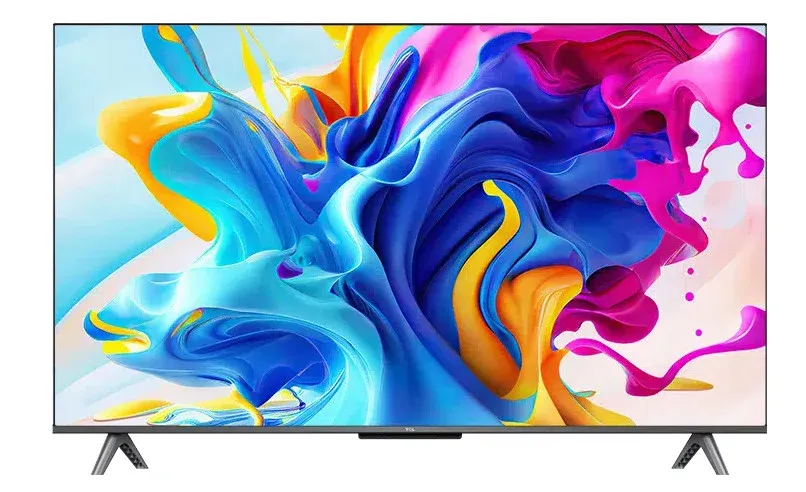
    TCL Electronics has launched its new TCL 4K QLED TV C645 which is an excellent value for those who want high-quality, interactive home entertainment to enjoy any HDR movies, sports, and games, as part of a connected and smart lifestyle.

    TCL Electronics is the global top 2 TV brand and top 1 98-inch TV brand.

    Founded in 1981, the company is a fast-growing consumer electronics company and a leading player in the global TV industry that operates in over 160 markets globally.  The company specializes in the research, development and manufacturing of consumer electronics products ranging from TVs, audio and smart home appliances.

    Thanks to state-of-the-art Quantum Dot Technology, the TCL C645 delivers genuine cinematic colour made from over a billion colours and shades (all of the colours that cinema cameras can capture). It delivers an enjoyable level of brightness that even in midsummer when the sun shines into the room, users still can see clear pictures with vivid colours.

    In addition, C645 is equipped with HDR10+ for a superior High Dynamic Range (HDR) experience delivering great contrast, vivid accurate colours, but also shadow and finest details.

    When combined with assortment of visual features the QLED TV can achieve its best performance.

    With Dolby Vision, C645 enhances the demonstration of Dolby exclusive contents, by displaying a greater number of colours, increasing contrast, and boosting brightness levels, as if in a theater rather than just at home.

    To complete the image quality, featuring high quality speakers, users can enjoy immersive Dolby Atmos sound quality or pass it through TCL soundbar, to enjoy a sound that moves all around with breathtaking realism.

    TCL C645’s MEMC, advanced motion enhancement algorithm, steps up to the plate while users are watching sports or fast-paced movies or video games, to help reduce motion display blur and keep motion trails to a minimum.

    C645 is also a smooth and responsive screen offering an optimized gaming experience: with HDMI 2.1 and ALLM, gamers will experience lowest latency and the best picture settings for gaming, automatically. On C645, 120Hz Game accelerator is achieved via unique algorithms and TCL technology.

    This new TCL QLED 4K TV comes with Google TV, meaning that users will get endless content options (movies, shows, TV, and more) aggregated across streaming services. Users will also discover new movies and shows with suggestions based on what they have watched and what interests them. They can even add to their Watchlist right from their phone, so their recommendations are always up to date. This new Series is also equipped with advanced and integrated Hands-free voice control combined to Google Assistant built-in, to make users’ life smarter and easier.

  • Technical glitch delaying June salary, OAGF tells civil servants

    Technical glitch delaying June salary, OAGF tells civil servants

    The Office of the Accountant-General of the Federation (OAGF) has said that delay in the payment of June salaries to some civil servants is due to some technical glitches.  

    Director of Press, OAGF, Mr Bawa Mokwa, who made this known Wednesday in Abuja said, the delay was caused by technical challenges with the Government Integrated Financial Management System (GIFMIS), one of the salary platforms.

    Mokwa, however, said the office is making efforts to resolve the challenge.

    “As we speak, the Directors and the consultant in charge of the platforms are in a crucial meeting, working round the clock to resolve the problem.

    “Anytime from now, the salaries will start dropping,” he explained.

    Many civil servants have not been paid their June salaries, making some unable to enjoy the recent Eid-el-Kabir celebrations.

  • Int’l Atomic Agency wants more access to Ukraine’s Nuclear Power Plant

    Int’l Atomic Agency wants more access to Ukraine’s Nuclear Power Plant

    The International Atomic Energy Agency (IAEA) has said that it needs access to Ukraine’s Zaporizhzhya Nuclear Power Plant to confirm the absence of mines or explosives at the site.

    IAEA’s Director General Rafael Mariano Grossi, who said this on Wednesday, added that the Agency has been conducting regular walk-downs across the site without observing any visible indications of mines or explosives.

    The Zaporizhzhya Nuclear Power Plant has been under the control of Russia, with both countries claiming that the other has plans to attack the power plant.

    According to Grossi, the Agency’s personnel should in particular be able to have access to the rooftops of reactor units 3 and 4 as well as access to parts of the turbine halls and some parts of the cooling system at the plant.

    The IAEA Director General Grossi stressed the importance of the Agency’s team checking all parts of the ZNPP to monitor full compliance with the five basic principles for protecting Europe’s largest nuclear power plant during the current military conflict, following opposing statements and allegations in recent days regarding the military situation at the site.

    “With military tension and activities increasing in the region where this major nuclear power plant is located, our experts must be able to verify the facts on the ground. Their independent and objective reporting would help clarify the current situation at the site, which is crucial at a time like this with unconfirmed allegations and counter allegations,” Director General Grossi said.