The Rural and Electrification Agency (REA) has started implementing the productive use of equipment and appliances (PUE) for rural and underserved communities.
The Agency said the PUE would ensure unhindered access to energy-efficient and electric-productive equipment for rural communities.
The PUE would also encourage the use of low-cost productive appliances in unserved and underserved communities to improve rural productivity, economic growth, and also rural development.
REA, through its Nigeria Electrification Project (NEP), aims to provide 24,500 Micro, Small, and Medium Enterprises (MSME) with energy-efficient productive use appliances, while ensuring that 1,050,000 people have improved access to energy services.
Mr.
Speaking at the grant agreement signing for the productive use of the equipment and appliances, Managing Director of the REA, Ahmad Salihijo Ahmad, said the support from African Development Bank Group AfDB would drive the sustainability of off-grid energy infrastructure across communities in the country.
“We are here for the Grant Agreement Signing for the Productive Use Appliances Component of the Nigeria Electrification Project (NEP) under the African Development Bank funding stream.
“At REA, our mandate is to provide access to electricity to unserved and underserved households and MSMEs in rural communities of Nigeria. The Agency from inception, has continued to collaborate and support private-sector participation in our dedication and commitment to achieve this mandate.
“Beyond keeping the lights on, we are very deliberate about the optimization of productive use equipment and appliances to catalyze socio-economic development in off-grid communities,” he said.
The Organization of Petroleum Exporting Countries and its allies (OPEC+) members have agreed to maintain their current supply curbs to the end of 2024, following a weekend of intense oil meetings in Vienna.
Similarly, quotas for 2024 were lowered for production strugglers, Nigeria, Angola, Azerbaijan, Malaysia, Congo and a few more countries.
Under the arrangement Nigeria’s quota was lowered to 1.38 million barrels a day in 2024.
The alliance’s total quota cuts were deepened to 4.7 million barrels a day b/d for July some five per cent of global capacity though in reality, many members have failed to hit their targets for years, making the actual physical reductions far less.
Under the agreement Saudi Arabia will slash its crude output by an extra 1 million b/d for at least July on top of its existing production cuts, energy minister Prince Abdulaziz bin Salman announced June 4 in a deal with OPEC+ counterparts, under the kingdom’s latest aggressive bid to reverse a tide of bearish trade sentiment and tighten the oil market.
The cuts come as many forecasts including OPEC’s own predict much higher global oil consumption in the months ahead, but Prince Abdulaziz described the decision as “precautionary.”
“We’re hedging,” he said at a press briefing. “We’re using the fundamentals to hedge. We will continue to hedge as long as we don’t see clarity and stability in the market.”
Analysts at S&P Global Commodity Insights expect 2.3 million b/d of annual demand growth in 2023, much of it back loaded to the second half of the year.
The OPEC’s latest monthly oil market report projects 2.3 million b/d of increased demand as well.
The deal also involves a complicated rebalancing of the alliance’s 2024 production baselines from which quotas will be calculated, redistributing allocations in favor of the UAE, with its higher spare capacity.
The UAE will now be permitted to pump 200,000 b/d more in 2024 than it is restricted to in 2023, satisfying its long-standing complaints about having to hold so much of its production capacity offline.
Independent upstream analysis from three organizations, including S&P Global, will be used to assess production capacities to set baselines going forward, the alliance said.
The next OPEC+ meeting is scheduled for November 26, though a nine-country monitoring committee co-chaired by Saudi Arabia and Russia will continue to gather every two months, with the authority to call for an emergency OPEC+ session if needed.
The OPEC Seminar, a usually triennial industry conference that has been delayed for two years due to the pandemic — is also due to be held July 5-6, providing another potential opportunity for ministers to review the decision and readjust quotas.
The 23-country OPEC+ coalition is currently holding production quotas 2 million b/d below October levels. In April, nine members, including Saudi Arabia, Russia, Iraq, the UAE and Kuwait, also pledged voluntary additional cuts totaling some 1.7 million b/d, which will now remain in place through the end of 2024.
Prince Abdulaziz said the new extra 1 million b/d Saudi cut deemed a “Saudi lollipop” as a sweetener to fellow producers could be extended beyond July, though he declined to say when that might be announced.
“We’ll do whatever is necessary to bring stability to this market,” he said.
“We are there to do as things progress and more certainty comes out.”
The decision is the culmination of two days of furious negotiations in Vienna, in the group’s first in-person meeting since October.
Ministers had to weigh desires by some countries to fight for greater market share against the fiscal pressures many members face from slumping prices. OPEC+ officials have been frustrated by what they feel is negative sentiment in the market that does not reflect actual fundamentals.
Platts, part of S&P Global, assessed Dated Brent at $76.06/b on June 2, down from a four-month high of $88.21/b on April 12.
Prince Abdulaziz had signaled at an industry conference on May 23 that short-sellers in the market should be on guard, raising market speculation that a production cut could be in order.
But getting to a deal required delicate diplomacy. Bilateral and multilateral talks went overnight into the early hours of the morning to hash out the quota math and find political appeasement for all sides.
Timings for the June 4 OPEC+ meeting were repeatedly changed to accommodate a flurry of negotiations on the sidelines, starting some six hours after originally scheduled.
The UAE, in particular, has felt aggrieved at how much production capacity it has been forced to hold offline over the past few years of the OPEC+ agreement, people familiar with the matter have said. Capable of pumping more than 4 million b/d but held to a quota of just 3.02 million b/d, it was rewarded with the 2024 quota boost to 3.22 million b/d after heavy lobbying.
Meanwhile, many African members have struggled mightily to reach their production targets, the result of underinvestment, civil unrest or internal dysfunction. They saw their baselines chopped significantly, a harsh pill for many to swallow. Angola and Nigeria proved the toughest countries to convince, sources said.
“We have discussed this before, to adjust the production of the UAE,” Emirati energy minister Suhail al-Mazrouei told reporters, adding that the decision was equitable to all members. “All accepted a level of production that is representative, and also they have been given … the chance by the end of November to demonstrate a [higher] level of production.”
Nigeria’s Gabriel Tanimu Aduda, for his part, said Nigeria’s reduced baseline reflected a “very realistic assessment” of its current production capacity, which it hopes to improve with more investment.
War-embroiled Russia, the key non-OPEC producer in the group, also came under pressure to improve its compliance with its pledged 500,000 b/d cut, with its recent crude exports hitting record highs to maximize its oil income in the face of western sanctions and a price cap.
Brokering it all was OPEC kingpin Saudi Arabia, the world’s largest crude exporter, and Prince Abdulaziz, who has been tasked with managing the kingdom’s enormous oil wealth to support major economic diversification efforts and investments championed by his half brother, Crown Prince Mohammed bin Salman.
“This is a market that needs stabilization,” Prince Abdulaziz said.
Residents of Enugu State have defied the state government’s directives on the Monday compulsory sit-at-home order issued by the proscribed Indigenous People of Biafra (IPOB), as roads, schools, banks, markets and other public places were completely deserted.
The state governor, Peter Mbah had on June 1 declared “no more sit-at-home in Enugu,” effective Monday, June 5, asking individuals and corporate organisations to ensure full-scale business activities in the state.
Mbah stated that his government would be ready to engage in dialogue with people who have genuine grievances so as to foster lasting peace and security in Enugu State, adding that the order dwindles creativity and productivity of the people.
It is not uncommon for residents in the state to wake up to stories of the untimely death of some who disobeyed the unauthorised sit-at-home order.
It is however not clear if commercial activities will pick up before noon.
The governor’s ban on the sit-at-home order came last Thursday with a call on President Bola Tinubu to release IPOB leader Nnamdi Kanu.
After his first security council meeting with the heads of all the security agencies at the Government House, Enugu State, Mbah told journalists that the sit-at-home declared in the South-East to press for Kanu’s release had impeded economic activities.
“Consequently, from Monday, June 6, 2023, there will be no observance of any sit-at-home in all nooks and crannies of Enugu State,” he said on Thursday.
The Peoples’ Democratic Party (PDP) in Sokoto State has expressed sadness over the recent attacks by bandits on some communities in Tangaza and Gwadabawa Local Government Areas (LGAs) of the state.
The state PDP Chairman, Alhaji Bello Goronyo, in a statement on Monday issued to newsmen by Hassan Sanyinnawal, the party’s spokesman, described the attacks as callous and dastardly.
Goronyo also expressed sadness over the deaths and injuries recorded during the attacks.
“As a party, we want to express our heartfelt condolences to the immediate families of those who lost their lives and pray Allah to forgive the deceased and give the families the fortitude to bear the losses.
“More so, we appeal to the Sokoto State Government to take necessary measures to address insecurity in the state and also assist the families of the victims,” he added.
Gunmen on Saturday killed no fewer than 30 people during the attacks, while many others were injured.
“If you possess the stuff of a champion, you can’t stay too long in the abbys of the minnows”.
The above aphorism is a terse formulation of a truth that captures the fate of Gombe State Governor, Muhammadu Inuwa Yahaya, CON, when his colleagues across the northern region unanimously elected him to chair the highly influential Northern States Governors’ Forum (NSGF).
Governor Inuwa took over from the immediate past governor of Plateau State, Simon Bako Lalong, with effect from May 29, 2023. The former chairman of the forum had, while handing over to the new chairman, said Governor Inuwa was elected to chair the NSGF in view of his experience, sterling leadership qualities and commitment to good governance.
That Inuwa was unanimously accepted to lead the governors from Northern Nigeria under the auspices of the Northern States Governors’ Forum is not fortuitous at all. It was a deliberate consensus of a people who have come to recognise the sterling leadership ambience of the man who shines in tandem with the slogan of his state, Jewel in the Savannah.
The Gombe governor has been consistent in terms of performance. He has been outstanding in political dynamism. He has been persistent in the delivery of quality projects that have drawn the binoculars of writers and historiographers to Gombe State across the globe. He has become an epitome of political altruism. He stands shoulder high among political promise keepers, and among nobilities he is a super power. All these attributes cannot be overlooked.
The governors from Northern Nigeria are, therefore, not toying with the destiny of this great zone in anyway. They needed a man that is capable of taking the region to the next level of infrastructural advancement.Yes; in Inuwa they found worthy treasures. The Gombe governor has crossed the threshold of history in governance and performance. and he is creditably recording superlative achievements in his State to merit the historic position.
Inuwa symbolises tangible hope, palpable progress and capable leadership. With him in the saddle, there is now a new horizon of industrial transmogrification of Northern Nigeria. Under the chairmanship of the Dan Majen Gombe, I see the North shining so brilliantly as the true Northern Star.
While taking over the mantle of leadership from Lalong, Governor Inuwa did not mince words when he said, “We will work hard to ensure that we catch up with the rest of the country, possibly with the developed parts of the world so that our people will feel the impact of good governance we all pursue”.
He also said that the NSGF will continue to work with past leadership of the forum in order to consolidate on the gains so far recorded to properly place it on the smooth trajectory of social cohesion, economic emancipation and infrastructural development.
Governor Inuwa Yahaya expressed delight with the commencement of drilling activities in the Lake Chad Basin which has brought to three drilling sites in the North, including Kolmani in Gombe and Bauchi as well as the one in Nasarawa State. He assured that the forum will see to the actualisation of the exploration of the large oil and gas deposits in the North for the benefit of the people.
Inuwa is a born leader who does not joke with his beat at all. He may look unassuming, but he’s a serious minded personality who cannot stand mediority. He has no patience with non-perfomers.You have to be downright hardworking and finicky in your delivery of assignments to earn membership of his team. He thinks on his toes and philosophises upstairs about the best option always and settles for it.
If you look at the rapturous applause Inuwa Yahaya has been receiving, with awards for quality output, you cannot but agree with the governors from Northern Nigeria that they have found a worthy leader in the Dan Majen Gombe. Afterall, governance is all about people and what their needs are. Inuwa stands so tall at the roll call of promise-keeping governors in Nigeria.
Like a performance generalissimo, Inuwa always has a chart handy where he keeps gazing at the list of promises he made to the electorate. He keeps all and stick to delivery timelines.
Talking about development and infrastructure, Inuwa Yahaya has a ready blueprint that any state in Northern Nigeria will gladly love to replicate. When the issue of stopping nomadic herdsmen’s movement across Nigeria came to the national fore, Inuwa Yahaya was the one who went to the presidency and put down Gombe State’s 144,000 hectares Wawa-Zange Grazing Reserve as a panacea for the debacle.
His infrastructural pursuit is worthy of emulation. In Inuwa’s Gombe, all the eleven local government areas have at least a hundred kilometers of road network under the Network 11-100 Project. The ease with which people and goods move in Gombe State is quite fascinating.
He initiated a 10-year Development Plan for Gombe State, the first in the 26-year history of the state called the Jewel in the Savannah. He itemized the timelines for attainable landmarks and put capable individuals in charge of each task, monitoring them like a farmer monitoring his very first harvest.
Go-Health is an initiative that brought quality healthcare to the high and low in Gombe State. Governor Inuwa’s exemplary execution of the COVID-19 programme and subsequent commendations by WHO and UNICEF merited his invitation to the world acclaimed Chartham House to share his Universal Health Coverage with the whole world. Under him Gombe now boasts of three specialist hospitals and 114 functional primary healthcare centers among other healthcare facilities.
His education and public service reforms are huge.
GOINVEST, the first ever investment summit in Gombe State, has turned the Jewel in the Savannah to investment destination at the moment. Both local and international development partners and investors are falling head over heels to have a taste of Nigeria’s investment bride.Yes, you can say this about Gombe State without equivocation.
Gombe State has won Nigeria’s Best State in the Ease of Doing Business award back to back, in 2021 and 2023. You can do your business with a modicum of equanimity, requisite business speed and expected pace.This is an empirical evidence about Gombe State.
Talking about safety, Gombe State is the safest in Northern Nigeria at the moment. The topography of the state is such a scenic picturesque which also serves as a security buffer against unwanted intruders. This is an advantage for the peaceful Gombe.
Gombe State is blessed with the Kolmani Oil project which Governor Inuwa Yahaya worked tirelessly to see that Muhammadu Buhari flagged off during his tenure.Gombe has oil that can benefit Northern Nigeria.
What is more, under the focused, dynamic and dedicated leadership of Inuwa Yahaya, the Dadinkowa Hydro Electricity Powerplant stunted for over 40 years was commissioned in the last week of the Buhari administration. Power generation into the national grid and its cascading effects among the states in Northern Nigeria have received a big boost by the commissioning of the Dadinkowa Power Plant. Gombe is indeed a beacon of hope for the northern states.
Most importantly, the industrial revolution going on in Jewel in the Savannah cannot be overlooked. The 1000 Hectares Muhammadu Buhari Industrial Park is an industrialisation bravado whose chain reaction in employment and development of the region cannot be overemphasised.
The choice of Governor Inuwa Yahaya for the position of Northern Governors’ Forum chairman is therefore a good vehicle on a smooth road. A beautiful destination is in sight for the Northern region.
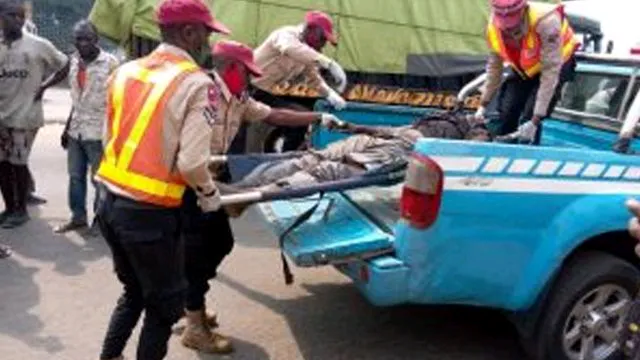
Eighteen passengers were killed in an auto crash at the weekend at Zakirai town on Kano-Ringim Road in Gabasawa Local Government Area of Kano State.
Twelve other persons were also injured in the crash while five escaped unhurt, FRSC Sector Commander in the state, Mr. Ibrahim Abdullahi, has said.
Some of the corpses were given mass burial at the accident scene, while others were handed over to their relatives.
Abdullahi confirmed in a statement issued by the sector’s spokesman, Mr. Abdullahi Labaran that the accident involved two commercial vehicles.
“We received a call about the accident at about 8:35 p.m. on Friday and dispatched our personnel to the scene to rescue the victims,” Abdullahi said.
He blamed the accident on excessive speeding, dangerous driving and overloading which led to a head-on collision and the bursting into flames of one of the vehicles.
“The accident involved a total of 35 passengers in two buses, out of which 18 were burnt beyond recognition while 12 others sustained serious injuries,’’ he said.
Ibrahim said the injured victims were taken to Murtala Mohammed General Hospital, Kano.
He advised motorists to avoid over speeding, overloading, wrongful overtaking, dangerous driving and any infraction that could lead to road crashes.
The sector commander expressed regret at the magnitude of avoidable road crashes recorded in Kano State in the past week.
During a visit to the crash scene on Saturday, he warned motorists, particularly intercity and inter-state drivers to desist from overloading, excessive speeding, wrongful overtaking and other traffic violations.
Abdullahi assured that the FRSC would intensify public enlightenment and undertake stringent patrol interventions, including operation of mobile courts to stem the rising tide of intercity auto crashes.
Unity Bank PLC has recorded sustained improved performance in its first quarter of 2023.
In its unaudited financials for the first quarter of 2023, the bank stated that it recorded a Profit after Tax of N1.04 billion, a 21 percent growth against N869.2 million it earned in the corresponding period of 2022.
Its gross earnings for the quarter were put at N15.9 billion, a 17 per cent growth from N13.6 billion generated in the corresponding period of 2022.
Managing Director/Chief Executive Officer, Unity Bank Plc, Mrs Tomi Somefun, said that the bank would remain laser-focused on its strategic choices and key growth drivers to push all the indices and elevate growth to double-digit territory.
“The performance posted for Q1’23 in terms of the PBT, gross earnings, and other key indicators are strong reinforcement of adequate measures being adopted and a testament of our resolve to sustain and equally improve upon the fundamental initiatives adopted to strengthen growth throughout the course of the financial year.
“Since late 2022, the bank has begun significant investment in technology and innovation in line with its strategic pursuits to win in the retail space with our focus on digital and lifestyle banking, dynamic product development, and accelerated onboarding.
“As part of our transformation journey, we will double down on these investments in the coming months in order to achieve our aspirations of significantly reducing customer pain points and simplifying customer experience.
“We will increase the rate of customer acquisition; expand the frontiers of partnerships; and ultimately develop new and sustainable income lines for the Bank,” she said.
Somefun said that the bank would further give attention to fast-paced process automation, cost and resource efficiency, targeted value chain relationships, and brand visibility as it expands the range of products and services to meet the evolving needs of its esteemed customers.
She said also that the bank’s focus on building back momentum had continue to reflect in the key performance indicators despite economic headwinds and volatilities that characterised the operating environment in the 2022 financial year.
“There are highs and lows as we look at the gross earnings, with 13.7 per cent growth, increase in liquid assets by 7.5 per cent and deposits recording moderate growth of 1.6 per cent, while maintaining steady growth in profitability.
“Overall, the financial statement thus threw up both strong and less optimal points which inform the outlook for our business”, she said.
A major highlight of the financial year ended Dec 2022, is the growth in total comprehensive income, which rose by 262.1per cent to N1.2 billion from N744 million in the corresponding period of 2021.
The bank grew Profit before Tax (PBT) by N1.1 billion, while Profit After Tax stood at N941.4 million.
With the loan book sustaining an expansion by 7.5 per cent to N289.4 billion from N269.3 billion within the period under review, the interest and similar income consequently witnessed significant growth rising 7.5 per cent to close at N48.9 billion compared to N43.2 billion in the corresponding period of 2021.
Similarly, income from fees and commissions recorded significant growth, rising by 25.7per cent to N7.68 billion from N6.1 billion within the period under review.
More so, deposits from customers saw marginal growth, increasing by 1.6 per cent to N327.4 billion from N322.2 billion in the corresponding period of 2021 as the bank pushes for deeper penetration of its retail footprint with the rollout of products targeting different segments of the market.
The power sector that is the livewire of any economy has refused to work efficiently in Nigeria. This has rubbed off on the manufacturing sector as many have had to close shop due to the high cost of alternative energy. Experts are in consensus that except the power sector works efficiently, getting the manufacturing sector back to its feet would be a herculean task, BENJAMIN ORISEMEKE writes.
Once a manufacturing hub in the West African sub-region, that has not been the case for over two decades as a sector that once stood strong is now lying prostrate due to several factors that still hold the Nigerian economy down.
From the days of the Electricity Company of Nigeria (ECN) through the numerous attempts to commercialise the sector to when it was changed to the Power Holding Company of Nigeria (PHCN) and finally unbundled and privatized, one thing still remains constant, which is that the same structural issues continue to dug the sector.
There was, however, a glimmer of hope when in November 2013, the Goodluck Jonathan administration sold the generation and distribution part of the sector. Many thought the sector would be able to achieve its potentials but alas, despite all the promises by investors of turning the sector around, it has been the same old stories.
Dire Straits
Current operating figures reveal that Nigeria’s power sector is in dire straits. The sector experiences many broad challenges related to electricity policy enforcement, regulatory uncertainty, instability in gas supply, transmission system constraints, and major power sector planning shortfalls that have kept it from reaching commercial viability.
In 2022, the Nigerian Electricity Regulatory Commission (NERC) numbers showed that independent power plants (IPPs) accounted for 31.2% of total Generating Companys’ (GenCos) capacity. This indicates a 300 basis points decline from 2021 due largely to gas constraints and faulty machinery. In addition, on average, only five IPPs: Azura-Edo (26%), Odukpani (19%), Okpai (16%), Afam VI (15%), and Rivers IPP (8%) jointly accounted for circa 84% of the power generated from the 12 independent power producers in the last four years, due partly to gas constrain.
The World Bank’s 2020 Ease of Doing Business report showed that 47 percent of Nigerians lack access to electricity supply. This drastically reduced the contribution of the private sector to the economy
As of 2021, the African Development Bank (AfDB) in a report put Uganda’s electricity sector as the continent’s best-regulated sector.
According to AfDB’s 2021 Electricity Regulatory Index, other strong performers included Kenya and Tanzania, Namibia, and Egypt.
Nigeria placed 23rd on the ranking, South Africa (10th), and Ghana (17).
Grid performance data from the Federal Ministry of Power in March showed that electricity generation on the national grid was 4,456.8MW.
An analysis of randomly picked figures from the grid performance data indicated that power generation had stayed above the 4,000MW mark for months, while the country had yet to record any total grid collapse this year, unlike in 2022.
Also, according to the data, on March 2 and 3, 2023, power generation on the grid was 4,859.8MW and 4,962.7MW respectively, while it was 4,753.9MW on February 23, 2023.
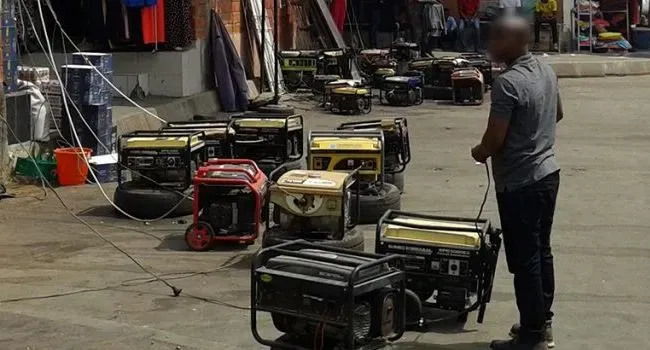
A recent report by the electricity Think tank Group, comprising the Society for Planet and Prosperity, GCA Capital Partners Climate Advisors, indicates that about 75 percent of electricity consumed in Nigeria, comes from diesel and petrol-powered generators.
The Manufacturing sector bears the brunt
The lack of adequate power supply in Nigeria is crippling the economy. That significantly explains why many manufacturing companies have relocated to other countries in West Africa, where the power supply is stable.
Recent data from the Manufacturers Association of Nigeria (MAN) revealed that between 2015 and 2019, 320 manufacturing companies shut down operations and others left the country due to unstable power supply. Diesel and petrol-powered generators are reported to account for about 25,000MW, while the national grid provides about 4,000MW, far less than what is needed for economic growth and development.
Available records indicate that business owners spend about N6.05 trillion on generators.
Experts say economic loss due to grid collapse is 2 per cent of Nigeria’s Gross Domestic Product (GDP).
Also, most of the MSMEs have identified unreliable electricity as a major challenge to their businesses. Even MSMEs are willing to switch to renewable energy.
Figures from the Nigeria Electricity Regulatory Commission (NERC) show that in one year, electricity consumers paid N750 Billion as tariffs, while the national grid reportedly suffered system collapse up to 50 times.
According to a World Bank report, as a result of poor power supply in Nigeria, businesses lost an excess of N96.4 trillion in the last nine years. This amounts to an average yearly estimate of $29billion.
Small and big businesses that depend on diesel for their operations are struggling to survive due to the high cost of the product.
Changing the narrative
Already, the epileptic power situation has caused quite a number of small businesses to close shops resulting in job losses. Creditors such as banks and other private equity also share in the losses when they can’t get their money back.
The high cost of running manufacturing plants on generators is one of the reasons most local companies have failed to be competitive or carry out new employment.
In spite of the scary scenarios, it is not all gloom and doom for the country’s manufacturing sector. Experts are confident that with the massive work in the sector in the last 8 years, it is bound to experience a new lease of life.
This is coupled with the legislation that now empowers States to establish their own power plants.
During his inaugural speech Monday in Abuja, President Bola Ahmed Tinubu, said “his administration shall continue the efforts of the Buhari administration on infrastructure. Progress towards national networks of roads, rail and ports shall get priority attention”, he said.
Experts have opined that to get the country’s manufacturing sector working again, the present administration must fix the power sector.
Experts Speak
Regional Director for Infrastructure West & East at the World Bank, Ashish Khanna said Nigeria needs about $100 billion for the next 10 years to fix its power challenge.
“In our estimation, it would be difficult for the government or the World Bank to plug that hole.
“And the private sector will do a lot of funding and will look out for whether the sector is financially viable. But they will ask if I set up a plant will they pay for it? Is the pricing and regulatory environment for the sector certain,” he queried.
Identifying some of the challenges of the manufacturing sector including energy, forex, and insecurity, Gabriel Idakolo, MD/CEO of SD&D Management Limited, said the government needs to utilize the opportunity provided by the coming on stream of Dangote refinery to address some of the manufacturing sectors’ challenges.
Idakolo told our correspondent that the “new government has an opportunity with the new Dangote refinery to be able to generate enough forex for imports. And the refinery, I gather, also has capacity to generate over 1,200 megawatts of electricity to the national grid.
“These capabilities should be explored by the government to intervene in the manufacturing sector by providing the tools they need to improve production and in turn boost the economy,” he added.
In a chat with Nigeria Anchor, an Abuja-based Chartered Management Consultant, Prosper Ahworegba, noted that over the years, poor power supply has led to a progressive deindustrialization in the past three decades leading to closure of many industries and/or emigration to other African countries.
He said that this has resulted in unacceptably high levels of unemployment.
According to him, the country needs not generate all the 50,000 to 65,000MW of power which it needs before it can power relevant sectors or industrial clusters.
He said: “The industrial clusters should be established in areas where Nigeria has economic and strategic advantage. Lagos State under Asiwaju Bola Ahmed Tinubu set worthy examples in this regard with Industry or Social Service-specific IPPs. This model needs to be replicated at the Federal level to drive industrialization in clusters.
“In addition, the government should explore and invest in renewable energy sources like the wind, sun and bio-energy sources. International companies that specialize in these areas should be encouraged with incentives to set up factories in Nigeria. For too long we have relied on non-renewable sources of energy like coal and gas.”
The Board of Directors of the African Development Bank (AfDB) Group, has approved an equity investment of $20 million to mobilise private capital for infrastructure development across the continent.
The fund, according to the Bank in a statement, is part of Africa’s 50 Infrastructure Acceleration Fund I. The Fund is a pan-African infrastructure private equity fund that is mobilising up to $500 million for investment. It is also meant to ensure value creation in strategic infrastructure sectors which include power, energy, digital and social infrastructure, transportation, logistics, and water and sanitation.
According to the statement, the fund is sponsored by Africa50, an infrastructure investment platform established by governments and the bank.
The AfDB’s Director for the Industrial and Trade Development Department, Abdu Mukhtar, said the Bank’s investment in the Fund underlined its strategic nature.
“Africa50 brings infrastructure project development and financing under one umbrella. It has a strong track record of investments in the private sector and of projects undertaken under the Public Private-Partnership (PPP) framework.
“The mobilisation of private capital is critical to closing the infrastructure financing gap in Africa.
The approval, Mukhtar said, is an indication that the Bank prioritises investment in strategic infrastructure sectors that will ensure the continents’ bridges its infrastructure financing gap.
The AfDB’s Director for Energy Financial Solutions, Policy and Regulations, Wale Shonibare, said the Bank’s support for the Africa50 Infrastructure Acceleration Fund I aligned with its High Five objectives.
“It also strengthens the Bank’s already existing partnerships with the Africa50 Group on initiatives such as the African Sovereign Investors Forum and the Alliance for Green Infrastructure in Africa,” Shonibare added.
The Chief Executive Officer (CEO) of the Africa50 Group, Alain Ebobissé, said: “We are highly appreciative of the AfDB’s support for the Africa50 Infrastructure Acceleration Fund I.
Ebobissé said the fund is projected to create 3,278 full-time equivalent jobs over the period 2023-2035, including 1,676 jobs for women.
“By leveraging private capital for infrastructure investment, the Africa50 Infrastructure Acceleration Fund I can help create jobs, strengthen healthcare access, and improve education access through digital technologies.
The Permanent Secretary, Federal Capital Territory (FCT), Mr Adesola Olusade, has described plastic waste as a major threat to human health.
Speaking during a road show to commemorate this year’s World Environment Day, with the theme: “Beat Plastic Pollution”, Olusade, said that the production, usage and disposal of plastic materials were not only polluting ecosystems, but endangering human and animal health.
Represented by Mr Osi Braimah, Director of AEPB, the Permanent Secretary added that plastic pollution also destabilize the climate
World Environment Day is marked on June 5 of every year.
He further stated that globally, the plastic waste situation had assumed a worrisome dimension.
“It has also become endemic, with drainage channels, canals and waterways littered with various plastic wastes.
“This contributes significantly to climate change, which results in short term damage, such as erosion and flooding, due to blockages of streams and waterways.
“This is why the matter is of utmost priority, as the world marks yet another World Environment Day in 2023,” Olusade said.
The Permanent Secretary said that it was pertinent to bring to the fore the awareness of plastic management as an adaptation strategy to climate change.
“Only an integrated systemic shift from a linear to a circular economy can keep plastics out of our ecosystems and bodies.
“The recent United Nations Environmental Report laid out key elements of the required market transformation, rethinking and redesigning products, reusing, recycling, reorienting and diversifying markets,” he said.