Author: Doris Israel Ijeoma

  • Fed Govt Begins Payment of New Minimum Wage

    Fed Govt Begins Payment of New Minimum Wage

    The federal government has commenced payment of the new minimum wage to civil servants on its payroll, effective Thursday, September 26.


    Bawa Mokwa, the spokesperson for the Office of the Accountant-General of the Federation, confirmed this in an interview, earlier today, Thursday September 26.


    He assured that workers will start receiving alerts for their new salary payments from Thursday.


    Recall that on Tuesday, the National Salaries, Incomes and Wages Commission said that the payment of the new minimum wage will commence from July 2024.


    The NSIWC Chairman, Ekpo Nta, made the disclosure during a press briefing in Abuja.


    The commission stated that this was because the date in question was when the President approved the bill after the National Assembly passed


  • Governor Hyacinth Alia Conflates Ukum and Oju/Konshisha Crisis in Recent Interview

    Governor Hyacinth Alia Conflates Ukum and Oju/Konshisha Crisis in Recent Interview


    Governor Hyacinth Alia Mistakenly Conflates Ukum and Oju/Konshisha Crisis in Recent Intervie


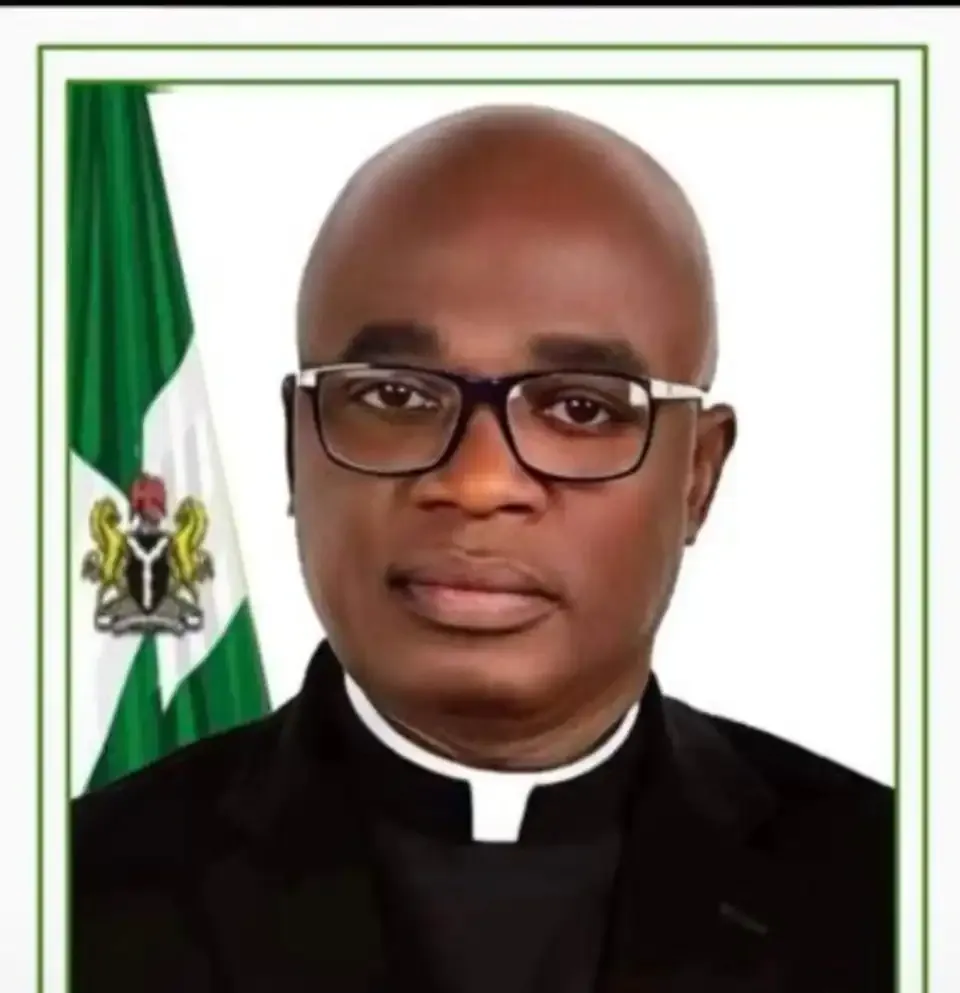
    In a recent interview, Governor Rev. Fr. Hyacinth Alia mistakenly interchanged the ongoing crisis in Ukum Local Government Area (LGA) with the Bonta-Ukpute conflict, leading to widespread criticism from local leaders.


    This marks the first public comment from the Governor regarding the Ukum crisis, which has persisted since July 5, 2024.


    Local leaders expressed concern that the Governor’s remarks indicated a lack of accurate information.


    In a statement signed by Chief Mike Ube the Ukpute youth leader of Uju LGA, it was emphasized that there has been no “relative peace” between Bonta and Ukpute since hostilities escalated. Continuous attacks from Bonta militia have caused significant suffering and displacement in the Ukpute community.


    Furthermore, the leaders challenged the Governor’s assertion of a prompt response to the crisis, pointing out that no actions have been taken to protect the community from ongoing violence.


    They highlighted the efforts of Deputy Governor Sam Ode and former Deputy Governor Benson Abounu in delineating boundaries between the warring factions, stressing the importance of government records dating back to before Nigeria’s independence.


    In response to the Governor’s comments about the Awajir-Oju road being open for traffic, local representatives claimed that the road has been abandoned due to constant harassment by militia members.


    They reiterated the need for improved security and the establishment of an IDP camp for displaced persons.


    Local leaders are calling on the Governor to prioritize resolving the boundary disputes and to provide essential social amenities to affected communities.


    They urge representatives in both state and national assemblies to ensure the Governor receives accurate information regarding the Bonta-Ukpute crisis.


  • FG increases NYSC members monthly allowance to N77,000

    FG increases NYSC members monthly allowance to N77,000

    The Federal Government has approved the increment of Corps Members’ monthly allowance from N33,000 to N77,000 with effect from July 2024.
    This was disclosed in a statement shared on the Instagram handle of the National Youth Service Corps (NYSC), on Wednesday, September 26.
    According to the statement, the increase was in line with the enactment of the National Minimum Wage (Amendment) Act 2024.
    The statement reads: “The Federal Government has approved the increment of Corps Members’ monthly allowance to Seventy-Seven Thousand Naira (N77,000) with effect from July 2024.
    “This is in line with the enactment of the National Minimum Wage (Amendment) Act 2024.
    “This was contained in a letter from the National Salaries, Incomes and Wages Commission, dated 25th September 2024 and signed by the Chairman, Mr. Ekpo Nta.
    “Prior to this, the Director General, NYSC Brigadier General YD Ahmed, had paid an advocacy visit to the Chairman in which he solicited for a robust welfare package for Corps Members.
    “The NYSC Boss is thankful to the Federal Government for the timely gesture and is optimistic that it will not only bring much needed succour to the Corps Members, but also boost their morale and motivate them to do even more, in their service to the nation.
    “Before this increment, the monthly allowance for Corps Members was Thirty-Three Thousand Naira (N33,000).”
  • Kwara LG Elections: Its a shame – Saraki

    Kwara LG Elections: Its a shame – Saraki

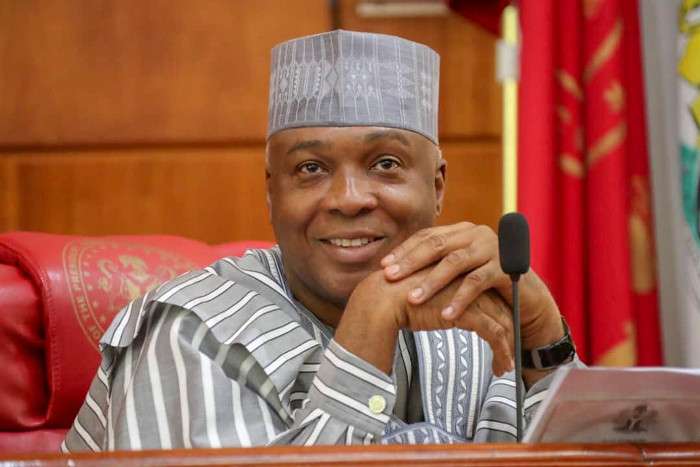
    Former Senate President, Bukola Saraki has stated that it is a shame that the 16 local government areas in Kwara State now have chairmen and councilors who would be in office without legitimacy and people’s mandate.

    He said this while reacting to the announcement by the Kwara State Independent Electoral Commission (KWSIEC) declaring the candidates of the All Progressives Congress (APC) as the winners of the local government elections held in the state.

    The chairman of the KWSIEC, Baba Okanla, who announced the results, said APC won all 16 local government area chairmanship positions and secured all 193 councillorship seats.

    Speaking on the development in a post on his X handle on Wednesday, Saraki argued that the people have sent a message to the government that it has not made any significant, positive impact on their lives after 64 months in office.

    The ex-governor maintained that the people mobilised themselves to the polling units for Saturday’s local government election but met the absence of electoral officials and shoddy preparations by the electoral body.

    He, therefore, hailed the people for standing firm against what he described as deliberately concocted frustrations.

    He wrote, “Last Saturday, in a manner that went beyond partisan consideration and gave expression to the protection of community interests, people from Kwara mobilised themselves to the polling units and met the absence of electoral officials and shoddy preparations by the electoral body.

    “Whatever results the electoral body eventually declared, our people have sent a clear signal to a government that has not made any significant, positive impact on their lives after 64 months in office. It is a shame that the 16 local government areas now have chairmen and councilors who would be in office without legitimacy and people’s mandate.”

  • BREAKING: Senate begins screening of Kudirat Kekere-Ekun as CJN

    BREAKING: Senate begins screening of Kudirat Kekere-Ekun as CJN

    The Senate has begun with the screening of Honourable Justice Kudirat Kekere-Ekun as the Chief Justice of Nigeria, CJN.
    Before the commencement of the screening on Wednesday, the Senate leader, Senator Opeyemi Bamidele, APC, Ekiti Central moved that there should be a re-order of the Legislative Business of the day to make the screening of Kekere-Ekun be the first matter to be addressed.
    Kekere-Ekun who is going to be screened in the Committee of the Whole of the Senate, arrived at the hallowed Chamber at 12.30.
    She entered with other Justices of the Supreme Court, Court of Appeal, and others after Order 12 of the Senate standing Order was cited by Senator Bamidele to allow for her and other visitors enter the Chamber. It was seconded by the Deputy Minority Leader, Senator Oyewumi Olalere, PDP, Osun West.
    The Acting CJN was led by the Special Adviser to the President on the Senate, Senator Basheer Lado.
    President Bola Tinubu had on Tuesday written the Senate, seeking the screening and subsequent confirmation
    of Honourable Justice Kudirat Kekere-Ekun as the Chief Justice of Nigeria, CJN.
    President Tinubu’s letter was read by the President of the Senate, Senator Godswill Akpabio upon resumption from the annual break the Upper Chamber embarked upon since July.
    The letter read, “Pursuant to 231(1) of the constitution of the Federal Republic of Nigeria of 1999 as amended which gives the power to the president powers to appoint the chief justice of Nigeria (CJN) on the recommendation of the National Judicial Commission (NJC) and subject to confirmation of the Nigerian senate.
    “I have the honour to forward the nomination of Honourable Justice Kudirat Kekere-Ekun CON for confirmation as CJN.
    “While I hope that this request will receive the expeditious consideration and confirmation of the senate, please, accept distinguished senate president the assurances of my highest consideration and personal regards.”
    Recall that Justice Kudirat Kekere-Ekun was on 23rd August 2024 sworn-in as the 23rd Chief Justice of Nigeria (CJN) by President Bola Ahmed Tinubu at the State House, Abuja.
    With the swearing-in, Kekere-Ekun was expected to operate in an acting capacity until confirmation by the Senate.
    She took her Oaths around 11:38 am. She’s the second female Justice to hold the position.
  • FEC approves economic stabilisation bills, proposes 10 changes to spur economic growth

    FEC approves economic stabilisation bills, proposes 10 changes to spur economic growth

    The Federal Executive Council has approved the Economic Stabilisation Bills (ESB).
    These bills, driven by recommendations from the Presidential Fiscal Policy and Tax Reforms Committee, chaired by Taiwo Oyedele, mark a critical step in the government’s Accelerated Stability and Advancement Plan.
    President Bola Tinubu presided over the 18th meeting of the Federal Executive Council at the Aso Chambers of the State House, Abuja.
    The ESB aims to amend over 15 tax, fiscal, and establishment laws, paving the way for enhanced economic stability.
    The proposed amendments are expected to reduce inflation, strengthen the naira, and boost job creation while promoting fiscal discipline and poverty alleviation.
    Oyedele took to his X account on Tuesday night to outline the 10 key amendments proposed by the ESB.
    He noted that these efforts are in a bid to stabilise Nigeria’s economy and lay the groundwork for long-term inclusive growth.
    These reforms, according to him, are set to shape the future of Nigeria’s fiscal landscape.
    Here are the 10 proposed changes:
    Amendments to income tax laws to facilitate employment opportunities for Nigerians in the global value chain, including the digital economy.
    Zero-rated VAT and improved incentive regime to promote exports in goods, services, and intellectual property.
    Amendments to facilitate investment in the gas sector and simplify local content requirements to ensure competitiveness.
    Reform of the foreign exchange regime to enhance the regulatory powers of the CBN, unlock more forex liquidity, strengthen the naira, and sustain rates convergence.
    Tax reliefs for private sector employers in respect of wage awards and transport subsidies provided to their employees.
    Tax relief to companies that generate incremental employment and retain such employees for a minimum of three years.
    Fiscal discipline and enhancement of remittances from government agencies and corporations to the Consolidated Revenue Fund of the Federal Government.
    Collaboration with states to suspend certain taxes on small businesses and vulnerable populations, including road haulage levies and other charges on transportation of goods.
    Introduction of a “Tax Identification Consolidation and Collaboration (TICC)” initiative to expand the tax base and create a level playing field for businesses.
    Provision of additional funding for the Students Loan Scheme.
    With these groundbreaking reforms approved by the FEC, “the Economic Stabilisation Bills are set to be transmitted to the National Assembly for passage into law.”
    If enacted, these changes will play a pivotal role in stabilizing Nigeria’s economy and fostering long-term sustainable growth
  • President Tinubu’s UNGA79 Address: Some Key Points

    President Tinubu’s UNGA79 Address: Some Key Points

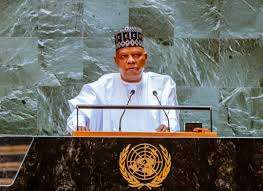
    In Nigeria’s national statement delivered at the 79th session of the United Nations General Assembly (UNGA) late Tuesday, President Bola Tinubu, made an appeal to global leaders, urging them to prioritize debt forgiveness for Nigeria and other developing nations.
    The president emphasized the need for relief from multilateral financial institutions and creditors during the 79th Session of the UNGA in New York.
    Represented by Vice President Kashim Shettima, Tinubu stressed that the nations of the Global South cannot achieve meaningful economic progress without concessions on their overwhelming debt burdens.
    His call for debt relief and reforms came amid the pressing economic challenges these nations face.
    In a press release issued by Stanley Nkwocha, Senior Special Assistant to the President on Media and Communications (Office of the Vice President), the Nigerian leader highlighted to the UN how the global debt crisis is crippling countries’ abilities to address the needs of their citizens.
    He also pointed out that trade barriers and protectionist policies are shattering nations’ aspirations, while unchecked competition is stifling motivation and obstructing global investment opportunities.
    The Debt Management Office, in its Q1 2024 report, revealed that Nigeria’s total domestic and external debts amounted to ₦121.67 trillion ($91.46 billion).
    With state governments seeing a 122% increase in external debt servicing in the first half of 2024, the economic strain has been severe, with Kaduna and Lagos states paying the highest servicing costs.
    During the first half of 2024, Nigerian states witnessed a 122% rise in external debt servicing, reaching ₦139.92 billion, up from ₦63.06 billion in 2023.
    This increase was driven by escalating borrowing costs due to currency depreciation, which has severely affected state-level spending and fiscal stability.
    Addressing world leaders, Tinubu stated, “We must ensure that any reform of the international financial system includes comprehensive debt relief measures, to enable sustainable financing for development.
    “Countries of the global South cannot make meaningful economic progress without special concessions and a review of their current debt burden.”
    The Nigerian leader also called for the recovery of funds lost through corruption and illicit financial flows.
    He urged international cooperation to recover and return stolen assets, noting that the return of such funds to their countries of origin is essential under the United Nations Convention against Corruption.
    “Therefore, the international community must promote practical measures to strengthen international cooperation to recover and return stolen assets and to eradicate safe havens that facilitate illicit flows of funds from developing countries to the developed economies,” The Nigerian leader said.
    Tinubu expressed concerns over rising nationalism and unilateralism, warning that these trends threaten global peace and cooperation.
    He argued that such an inward focus detracts from efforts to tackle pressing issues like terrorism, climate change, poverty, food crises, inflation, and growing debt.
    The President also underscored that multilateralism, rooted in inclusivity, equality, and cooperation, remains the surest path toward addressing these challenges.
    Reflecting on global conflicts and other ongoing crises, Tinubu highlighted the UN’s failure to achieve its core objectives, stating that billions of dollars are funneled into wars and conflicts rather than resolving issues such as poverty, hunger, and inequality.
    “Today, these pillars of our organisation are threatened. They risk being broken by the relentless pursuit of individual national priorities rather than the collective needs of the nations that are assembled here today.
    “While commitment to multilateralism offers us the surest guarantee of global action to address the existential challenges we face, singularity and nationalism are undermining the aspirations towards the peaceful and collective resolution of such challenges.
    “From last year’s summit, and indeed from previous years, we have carried over the numerous challenges of terrorism, armed conflict, inequality, poverty, racial discrimination, human rights abuses, food crises, hunger, irregular migration, piracy, global pandemics, hyper-inflation, nuclear proliferation, grinding debt burden, climate change, and a host of other vexations.
    “The continued manifestation of these challenges testifies to our failings rather than to any lofty achievements on our part. Billions of dollars are being committed to the prosecution of wars and the fanning of the embers of conflict,” he said.
    Tinubu reaffirmed what he termed “Nigeria’s steadfast commitment to the deepening of multilateralism,” just as it did 65 years ago when it joined the United Nations as the 99th member-state.
    “We remain committed to that desire to remain friendly with all nations and participate actively in the works of the United Nations, as expressed by our founding Prime Minister, Sir Abubakar Tafawa Balewa,” he said.
    Speaking on Africa, Tinubu expressed deep concern over the resurgence of military coups and unconstitutional changes in governance.
    He explained that these events underscore the fragility of democracy when not accompanied by economic development, peace, and security.
    These challenges, he said, must be a central focus of deliberations at the UNGA, as the lack of development and security fuels dissatisfaction among African citizens.
    “Our people need employment. They need decent livelihoods. They desire good and affordable education and healthcare for their children and families. They need to live in healthy, safe and secure environments. They need hope and they need opportunity,” he added.
    Tinubu also called for reforms in the global financial system and a fair, transparent multilateral trading regime.
    He urged that the “Pact for the Future” be used to reposition developing economies and implement concrete measures to overcome their unique challenges.
    “It is for this and other reasons that we reiterate the call by countries, especially of the global South, for reform of the international financial architecture and promotion of a rules-based, non-discriminatory, open, fair, inclusive, equitable and transparent multilateral trading system,” he noted.
    Addressing the issue of insecurity, Tinubu highlighted how it has driven citizens into extreme hardship, eroding their trust in democracy.
    He emphasized that restoring confidence in democratic governance and constitutional order is a responsibility that rests with the global community.
    He stated, “We cannot build durable societies with the threat of terrorism, banditry and insurgency growing in our countries and regions. Indeed, violent extremism remains an existential threat to both national and international peace, security and development. We are making concerted efforts to contain and roll back this threat.”
    Tinubu reassured world leaders that the “High-Level African Counter-Terrorism Meeting” hosted by Nigeria in April 2024, along with its outcome—The Abuja Declaration—aims to offer practical solutions to address the challenges posed by terrorism and insurgencies.
    Tinubu also warned of the growing risks posed by climate change, citing the devastating floods in Nigeria that submerged parts of the country, including Maiduguri.
    He called for the international community to honor their commitments made at various Conference of the Parties (COP) meetings, arguing that the consequences of climate inaction would affect every nation.
    The President also spoke on the role of the United Nations in conflict prevention, lamenting the normalization of global conflicts.
    Tinubu pointed out that conflict prevention was a core objective of the United Nations at its inception. However, he expressed regret that this mission has become increasingly difficult, as conflicts have become normalized.
    “When even the condemnation of violence, civilian casualties, and calls for a ceasefire are viewed as controversial,” he remarked, it becomes clear how challenging the task has become.
    He went on to outline key root causes of global conflicts, including poverty, hunger, ignorance, inequality, exclusion, and other forms of injustice.
    He referenced specific conflicts, such as those in Sudan and the war in Gaza and other Palestinian territories, as examples.
    “What this tells us is that the international community has failed to live up to the spirit and aspirations of the United Nations to rid the world of inequality, violence and domination of one people by another. Justice is antithetical to revenge,” he emphasized.
    The President also called for significant reforms in the United Nations Security Council, advocating for permanent seats for Nigeria and other African nations.
    He stressed the urgency for the UN to enhance its relevance and credibility in an increasingly fast-paced global landscape.
    The United Nations Security Council (UNSC) is one of the six key organs of the UN, responsible for maintaining international peace and security. It comprises 15 members, with the five permanent members holding veto power.
    The Security Council plays a critical role in recommending the admission of new members to the UN General Assembly and approving amendments to the UN Charter.
    Additionally, the UNSC has the authority to initiate peacekeeping missions, impose international sanctions, and authorize military actions when necessary to address global security threats.
    Tinubu said, “Some permanent members of the United Nations Security Council have offered encouraging, if tentative, indications of support on the issue of reform of the Council. We welcome the change in tone and urge an acceleration in momentum to the process.
    “The Security Council should be expanded, in the permanent and non-permanent member categories, to reflect the diversity and plurality of the world. We fully support the efforts of Secretary-General Guterres in this regard.
    “Africa must be accorded the respect that it deserves in the Security Council. Our Continent deserves a place in the permanent members category of the Security Council, with the same rights and responsibilities as other Permanent Members.”
    Tinubu concluded by urging the UN to accelerate the momentum toward Security Council reform, pointing out that some permanent members had expressed tentative support.
    He reaffirmed Nigeria’s commitment to multilateralism and cooperation, stressing that only through collective action can the world hope to resolve the existential challenges it currently faces.
  • #EDODECIDES2024: ‘There Are More APC In PDP NWC’ – Dino Melaye

    #EDODECIDES2024: ‘There Are More APC In PDP NWC’ – Dino Melaye

    The dust and angst generated by the outcome of the September 21, 2024 may take some time to abate, especially amongst leading members of the opposition parties and the mass of their supporters.
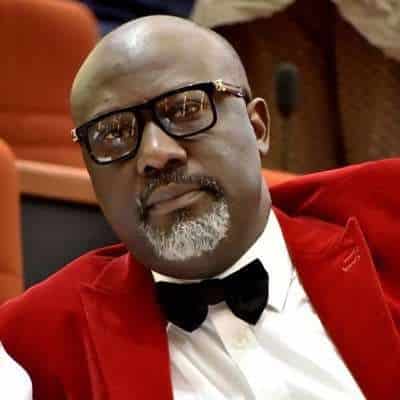
    One such member is the former Senator representing Kogi West, Dino Melaye, who has alleged that the All Progressives Congress (APC) has infiltrated the National Working Committee (NWC) of the Peoples Democratic Party (PDP), under the leadership of acting National Chairman, Umar Damagun.
    Melaye made this statement in response to the recently concluded Edo State governorship election.
    Taking to the social media platform X, the former lawmaker expressed concern about the outcome of the election and the direction in which the PDP is heading under Damagun’s leadership.
    He remarked, “With the destroyer called Damagun on the wheels, PDP is in the departure lounge waiting for the boarding pass. Edo experience will be a joke, there are more APC in the NWC than PDP.”
    His comments follow the defeat of the PDP’s candidate, Asue Ighodalo, in the Edo State governorship race.
    Ighodalo secured 247,274 votes but was ultimately defeated by the APC’s Monday Okpebholo, who garnered 291,667 votes.
    The results were declared by the Independent National Electoral Commission (INEC), with Professor Faruk Adamu Kuta serving as the Returning Officer.
  • Tinubu Asks Senate To Confirm Kekere-Ekun As Substantive CJN

    Tinubu Asks Senate To Confirm Kekere-Ekun As Substantive CJN

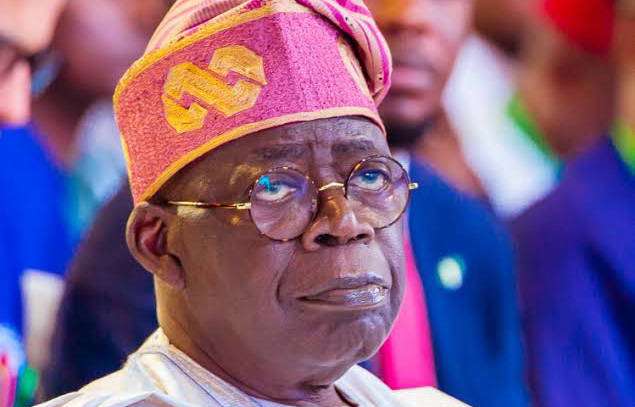
    President Bola Tinubu has formally requested the Nigerian Senate to confirm Justice Kudirat Kekere-Ekun as the substantive Chief Justice of Nigeria (CJN).
    This request was communicated through a letter, which was read aloud by Senate President, Godswill Akpabio during a session on Tuesday.
    Justice Kekere-Ekun has been serving as the Acting Chief Justice since August, following the retirement of her predecessor, Justice Olukayode Ariwoola. President Tinubu had earlier sworn her into the acting role.
    In his letter, the President referenced Section 231(1) of the Nigerian Constitution.
    Tinubu stated, “Pursuant to 231(1) of the constitution of the federal republic of Nigeria of 1999 as amended which gives the power to the president powers to appoint the chief justice of Nigeria (CJN) on the recommendation of the National Judicial Commission (NJC) and subject to confirmation of the Nigerian senate,” the number one citizen said.
    “I have the honour to forward the nomination of Honourable Justice Kudirat Kekere-Ekun CON for confirmation as CJN.
    “While it is my hope that this request will receive the expeditious consideration and confirmation of the senate, please, accept distinguished senate president the assurances of my highest consideration and personal regards.”
    Following the presentation, Senate President Akpabio referred the matter to the Committee of the Whole for further consideration, with deliberations set to take place on Wednesday.
  • Why I Regret Not Buying Arsenal – Dangote 

    Why I Regret Not Buying Arsenal – Dangote 

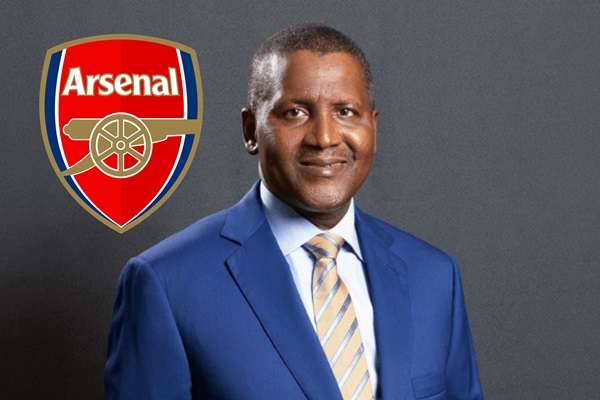
    The President and Chief Executive of Dangote Group, Alhaji Aliko Dangote, has expressed his regret over not seizing the opportunity to purchase Arsenal Football Club when it was valued at approximately $2 billion.
    In an interview with Bloomberg’s Francine Lacqua, the billionaire businessman shared his aspirations of owning a football club, noting that he wished he had acted sooner on his interest in acquiring the English side.
    Dangote revealed that his decision to focus his resources on a major refinery project ultimately led him to miss out on the chance to invest in Arsenal, a move he now reflects on with disappointment.
    He said, “I think that time has passed. The last time when we had this interview, I told you as soon as I finish with the refinery, I am going to try and buy Arsenal.
    “But you know everything has gone up and the club too is doing very well, Arsenal is doing extremely well right now. That time Arsenal wasn’t doing well.
    “I think I don’t have that kind of excess liquidity to go and buy a club for $4 billion so to speak and use it as a promotional something.
    “But what I will do is to continually be the biggest fan of Arsenal. I watch their games anytime they are playing. So, I will remain a major supporter of Arsenal but I don’t think it makes sense today to buy Arsenal.”
    When asked if he regretted not buying when Arsenal’s value was lower, he said, “Actually, I regret not buying it before but you know my money was more needed in completing my project (Dangote refinery) than buying Arsenal. I would have bought the club for $2 billion but you know I wouldn’t have been able to finish my project. So, It was either I finish my project or go and buy Arsenal.”