Author: Agency Report

  • Amachree Petitions Tinubu, Warns of Rivers Instability

    Amachree Petitions Tinubu, Warns of Rivers Instability

    Abuja — A serious political confrontation is unfolding over Rivers State following a blistering petition submitted to President Bola Ahmed Tinubu by political scientist and international executive Kio Amachree, who has accused the Federal Government of reckless interference, selective justice, and actions capable of destabilising the Niger Delta.

    The petition, dated 8 February 2026, was formally addressed to the President through his Chief of Staff and copied to Nigeria’s top security chiefs, the Attorney-General of the Federation, and the leadership of the country’s anti-corruption agencies. In it, Amachree warned that the federal posture in Rivers State is “dangerous, provocative, and unnecessary,” and risks igniting a crisis in one of Nigeria’s most economically vital regions.

    Amachree rejected any suggestion that Rivers State constitutes a security emergency, arguing that the state is being treated as though it were an insurgency zone despite facing none of the terrorism or banditry challenges afflicting other parts of the country. Rivers State, he said, is neither Boko Haram territory nor a bandit stronghold, yet is experiencing what he described as disproportionate federal pressure and political manipulation.

    He warned that the Niger Delta, which remains the backbone of Nigeria’s oil-dependent economy, cannot be governed through intimidation or manufactured political crises without severe national consequences. According to the petition, Abuja’s current approach risks undoing years of fragile stability in the oil-producing region.

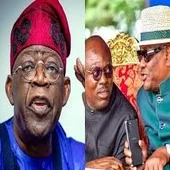
    At the centre of the petition is a direct demand for the immediate removal of Minister Nyesom Wike from federal office pending investigation. Amachree described Wike’s continued presence in federal power as a destabilising factor in Rivers State and a matter of national concern.

    The petition calls for full-scale investigations by the Economic and Financial Crimes Commission and the Independent Corrupt Practices and Other Related Offences Commission into allegations of corruption, abuse of office, diversion of public funds, and unexplained wealth. It further demands a comprehensive asset and lifestyle audit, including scrutiny of luxury vehicles, overseas properties, and alleged proxy holdings.

    Amachree argued that the absence of visible accountability in high office fuels public cynicism and erodes confidence in the rule of law. “Selective justice destroys nations,” the petition stated.

    The document also raises questions over a widely circulated audio recording shared across social media platforms, allegedly capturing Wike making threats of violence against a political opponent. Amachree questioned why, despite the recording’s widespread circulation, no public arrest, interrogation, or formal investigation has been announced by security agencies.

    He warned that the apparent reluctance to act in such a high-profile case sends a damaging signal that power, rather than law, determines accountability in Nigeria.

    Beyond current politics, Amachree framed his intervention within the longer history of Rivers State and the Niger Delta. He identified himself as the son of Chief Godfrey Kio Jaja Amachree, a former Solicitor-General of the Federation, Acting Attorney-General of Nigeria, and senior United Nations official who played a central role in the creation and early administration of Rivers State.

    Amachree stressed that his petition was not driven by party politics or personal ambition, stating that he does not belong to any political party and holds no political office. He described his action as a civic intervention motivated by concern for constitutional order, justice, and regional stability.

    The petition also demands renewed action on the killing of Amachree’s cousin, Miss Ibyami Amachree, allegedly by a soldier. He called for the identification of the soldier involved, disclosure of the unit and chain of command, and prosecution where evidence supports it. According to the petition, unresolved killings involving security personnel deepen public anger and lay the groundwork for future unrest.

    As of the time of this report, the Presidency and the federal agencies copied on the petition have not issued an official response, and no indication has been given as to whether the allegations raised will be investigated. Attempts to obtain comments from representatives of the minister named in the petition were unsuccessful.

    Political analysts say the petition now places the matter squarely at the feet of the President. According to them, the silence or response of the Presidency will be read as a signal — either that allegations of corruption and intimidation at the highest levels will be confronted, or that political expediency will prevail over accountability.

    They warn that failure to act decisively could deepen mistrust in federal authority across the Niger Delta and reinforce perceptions that power shields allies from scrutiny. In a region historically sensitive to marginalisation and coercion, analysts say, such a signal carries consequences far beyond Rivers State.

    For President Tinubu, the petition represents an early and defining test of leadership in the Niger Delta. Whether he orders investigations, distances the presidency from the allegations, or allows the matter to fade into silence may determine not only the immediate political temperature in Rivers State, but Nigeria’s credibility in claiming commitment to justice, federal balance, and the rule of law.
  • Nigeria, Saudi Arabia Reaffirm Partnership on Hajj, Umrah Administration

    Nigeria, Saudi Arabia Reaffirm Partnership on Hajj, Umrah Administration

    Abuja — Nigeria and the Kingdom of Saudi Arabia have reaffirmed their commitment to strengthening cooperation in the administration of Hajj and Umrah, following a historic high-level engagement held in Abuja.

    The reaffirmation was disclosed in a statement by Ahmad Muazu, Technical Assistant (Media) in the Office of the Chairman and Chief Executive Officer of the National Hajj Commission of Nigeria (NAHCON), Prof. Abdullahi Usman.

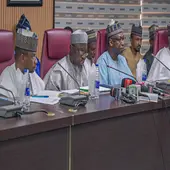
    According to the statement, the commitment was expressed during talks between Nigerian authorities and a Saudi delegation led by the Kingdom’s Minister of Hajj and Umrah, Tawfiq Al-Rabiah.

    Welcoming the delegation, Prof. Usman described the visit as a landmark in Nigeria–Saudi relations and a strong signal of the Kingdom’s continued partnership with Nigeria in serving the “Guests of Allah.” He commended Saudi Arabia’s sustained investments in pilgrim welfare, infrastructure, safety, and service delivery.

    Usman said Saudi Vision 2030 had significantly improved the efficiency and quality of Hajj and Umrah operations globally. He also acknowledged challenges related to Umrah visa access for Nigerians, particularly overstaying by a segment of pilgrims.

    He said Nigeria was working with Saudi authorities to address the issue through stricter regulation of licensed operators, improved data accountability, and community-based sensitisation to ensure compliance and timely return.

    Usman reaffirmed NAHCON’s readiness to comply fully with all guidelines issued by the Saudi Ministry of Hajj and Umrah, stressing Nigeria’s resolve to protect the integrity of Hajj and Umrah operations while safeguarding pilgrims’ interests.

    Speaking at the meeting, Nigeria’s Minister of Foreign Affairs, Yusuf Tuggar, described the visit as historic, noting that it was the first time a Saudi Minister of Hajj and Umrah was visiting Nigeria.

    “This is the first time ever that a Minister of Hajj and Umrah of the Kingdom of Saudi Arabia is visiting Nigeria. It is history in the making,” Tuggar said.

    He conveyed the goodwill of President Bola Tinubu to the Custodian of the Two Holy Mosques, King Salman bin Abdulaziz Al-Saud, and to the Crown Prince and Prime Minister, Mohammad bin Salman bin Abdulaziz Al-Saud.

    Tuggar said cooperation in Hajj and Umrah administration remains a key pillar of Nigeria–Saudi relations, rooted in faith, mutual respect, and long-standing people-to-people ties. He also called for future discussions on quota expansion in view of Nigeria’s growing population.

    In his remarks, Al-Rabiah reaffirmed Saudi Arabia’s commitment to institutional cooperation with Nigeria, aimed at ensuring a safe and seamless experience for Nigerian pilgrims.

    He disclosed that about 89,000 Nigerians performed Umrah in 2025, with 92 per cent arriving on Umrah visas, supported by approximately 420 flights through King Abdulaziz International Airport in Jeddah.

    Al-Rabiah expressed optimism about preparations for the 1447 Hijri Hajj season, with emphasis on operational readiness, safety, service quality, and procedural efficiency.

    “Insha Allah, Hajj 2026 will be the best ever,” he said.

    Both sides agreed to sustain close coordination, strengthen regulatory compliance, and pursue practical solutions to enhance the experience of Nigerian pilgrims while preserving the integrity of Hajj and Umrah systems.

  • Naira Extends Weekly Rally, Appreciates to ₦1,386.55/$ on CBN Reforms

    Naira Extends Weekly Rally, Appreciates to ₦1,386.55/$ on CBN Reforms

    he naira closed the week on a stronger note on Friday, appreciating further against the U.S. dollar at the official market to trade at ₦1,386.55/$1.

    Data published on the official website of the Central Bank of Nigeria (CBN) showed that the local currency gained ₦10.43, representing a 0.7 per cent appreciation compared with Thursday’s closing rate of ₦1,396.99/$1.

    The naira has remained relatively stable in recent days, buoyed by ongoing CBN reforms, recording a week-long appreciation trend.

    Earlier in the week, the currency traded at ₦1,418.95 on Monday, ₦1,401.22 on Tuesday, and ₦1,400.47 on Wednesday.

  • Lagos Assembly in 2025: Between Institutional Crisis and Legislative Productivity

    Lagos Assembly in 2025: Between Institutional Crisis and Legislative Productivity

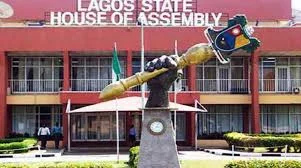
    The Lagos State House of Assembly in 2025 presented a study in contrasts: a legislature shaken by a profound leadership crisis, yet paradoxically productive in lawmaking and oversight. The events of the year exposed both the fragility and resilience of legislative institutions in Nigeria’s most politically influential state.

    At the centre of the crisis was the dramatic removal of Speaker Mudashiru Obasa on Jan. 13 by 36 lawmakers, followed by the election of Deputy Speaker Mojisola Meranda. Lawmakers justified the action as a corrective step aimed at addressing alleged misconduct and abuse of power, and as an attempt to reset the leadership culture of the Assembly.

    However, the decision to remove a sitting Speaker while he was abroad created a legitimacy problem that quickly escalated into a full-blown institutional crisis. Rather than stabilising the House, the move deepened internal divisions, weakened cohesion among lawmakers, and opened the Assembly to intense political pressure from outside forces.

    The failure of party mechanisms to swiftly resolve the dispute was particularly instructive. Interventions by senior figures of the All Progressives Congress (APC), including former governors Chief Bisi Akande and Chief Olusegun Osoba, failed to restore unity. Even the Governance Advisory Council (GAC), traditionally regarded as the party’s ultimate authority in Lagos politics, proved unable to impose a settlement. That some stakeholders openly suggested that only President Bola Tinubu could resolve the crisis underscored the limits of institutional autonomy within the state’s political structure.

    The crisis reached its most dramatic point on Feb. 17, when Obasa returned to the Assembly complex with security operatives and declared himself the lawful Speaker. His brief occupation of the Speaker’s Office symbolised not just a personal power struggle, but a broader contest over authority, legality and control of the legislature. The episode further polarised lawmakers and exposed the Assembly to public embarrassment.

    Mrs Meranda’s short tenure as Speaker unfolded in an atmosphere of instability, culminating in a clash between officials of the Department of State Services (DSS) and legislative workers. The arrests that followed raised concerns about the encroachment of security agencies into legislative affairs and further highlighted the erosion of internal order within the Assembly.

    Ultimately, the resolution of the crisis on March 3 — through the intervention of President Tinubu, the resignation of Meranda and the reinstatement of Obasa — reinforced perceptions that political power, rather than legislative process, remains decisive in resolving elite conflicts. While the intervention restored surface stability, it left unresolved questions about legislative independence, internal democracy and succession norms within the House.

    Yet, beyond the political drama, the Assembly’s legislative output in 2025 tells a more complex story. Despite internal discord, lawmakers continued to function, passing several significant bills that have long-term implications for governance in Lagos State.

    The swift passage of the N3.37 trillion 2025 Appropriation Bill early in the year demonstrated institutional continuity amid crisis. The “Budget of Sustainability,” with its emphasis on infrastructure, economic diversification and social inclusion, reflected policy consistency between the legislature and executive, even as leadership battles raged within the House.

    Similarly, the passage of the Local Government Administration Bill signalled an effort to modernise governance at the grassroots by harmonising existing laws and aligning state frameworks with national reforms. The E-GIS Bill, aimed at improving land administration and transparency, addressed long-standing structural weaknesses in land management — a critical issue in a rapidly urbanising state like Lagos.

    The Assembly also showed responsiveness to social pressures through bills such as the Tenancy and Recovery of Premises Bill. By seeking to regulate rent practices, curb illegal evictions and reduce agency fees, the House positioned itself as an arbiter in the increasingly contentious landlord–tenant relationship. If effectively implemented, the bill could significantly alter housing dynamics in the state.

    In the health sector, the bill establishing the Lagos State University of Medicine and Health Sciences reflected a strategic attempt to address chronic manpower shortages, while other proposed laws on correctional services, cancer treatment and policing pointed to a broader agenda of institutional reform.

    Oversight activities further demonstrated that legislative functions did not completely grind to a halt. Committees continued to scrutinise ministries, departments and agencies, reviewed executive appointments and monitored policy implementation, reinforcing the Assembly’s constitutional role despite internal divisions.

    Stakeholder assessments of the Assembly’s performance reflect this dual reality. Civil society actors and former lawmakers acknowledged the damaging effect of the leadership crisis but also credited the House with passing impactful legislation and sustaining debate and oversight. Public reactions, particularly from residents and community leaders, suggest that constituency-level interventions and empowerment programmes helped buffer the reputational damage caused by the crisis.

    In sum, the Lagos State House of Assembly in 2025 illustrated the tension between politics and institution-building in Nigeria’s democratic practice. The leadership crisis exposed vulnerabilities in legislative governance and party control, while the volume and substance of legislative work highlighted the Assembly’s underlying capacity to function.

    Whether the House builds on its legislative gains or remains vulnerable to future power struggles will depend on lessons drawn from the crisis — particularly the need for clearer internal processes, stronger institutional autonomy and mechanisms for resolving leadership disputes without external intervention. The trajectory of 2026 will test whether the Assembly can move from crisis management to genuine institutional consolidation.