Author: Romanus Azuka

  • Chief Solomon Enuma Azuka: Here Was a Soul in Whom No Guile Did Dwell

    Chief Solomon Enuma Azuka: Here Was a Soul in Whom No Guile Did Dwell

    By

    Romanus Ikechukwu Azuka

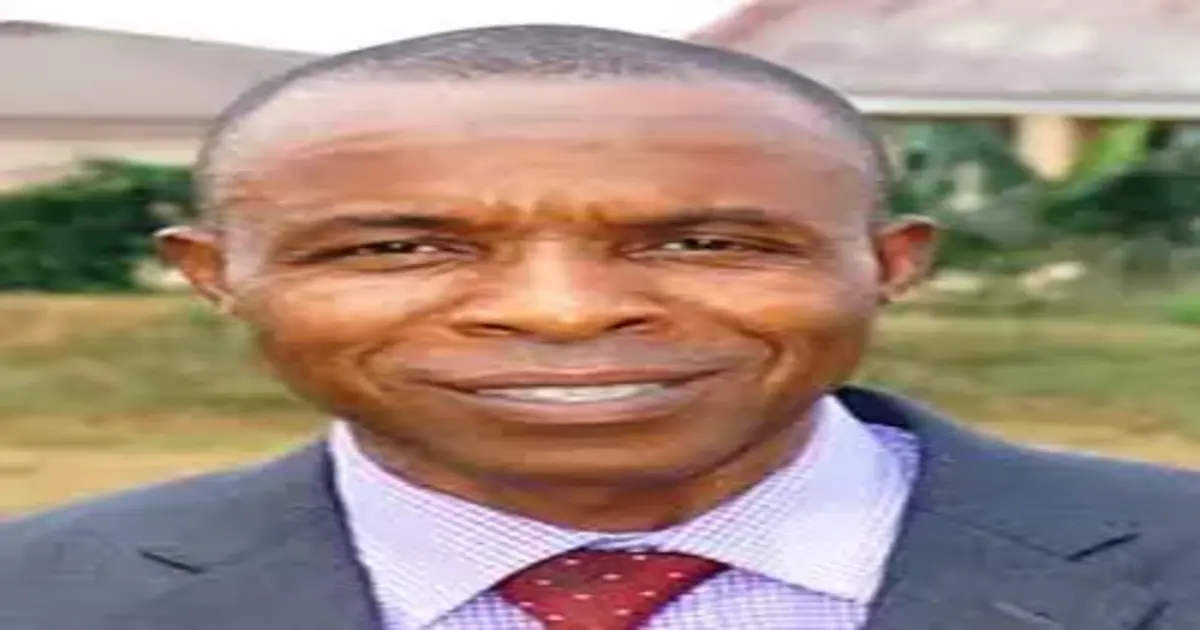
    In the annals of quiet heroism, few lives shine as steadily as that of my brother, my boss, my second father, my brother sui generis. The third of five siblings and the firstborn son of the first wife, Mrs. Lucy Nwamgbeke Azuka, he became the moon among all the stars of the family, illuminating every path without ever casting a shadow of favoritism or pride. He took care of everybody: family members, relatives and beyond, yet never abused that central privilege. No one can claim exemption from his benevolence; he was a true man of the people, amiable par excellence, with no enemies. He loathed flashlights and spotlights, preferring the gentle glow of quiet service. He never hurt a fly, lived without pretense, and set his house, and the extended family’s, in perfect order long before the world demanded it. Jordan Peterson’s rule resonates eternally here: ” Set your house in perfect order before you criticize the world.” He did precisely that, with magnanimity, generosity and resolute altruism—and left a legacy that outlasts tragedy. He was a man without cants.

    Born on December 31, 1936 in humble circumstances in Ojoto, he carried forward a chain of resolve forged in pain and providence, becoming the architect of equity for his family and beyond.

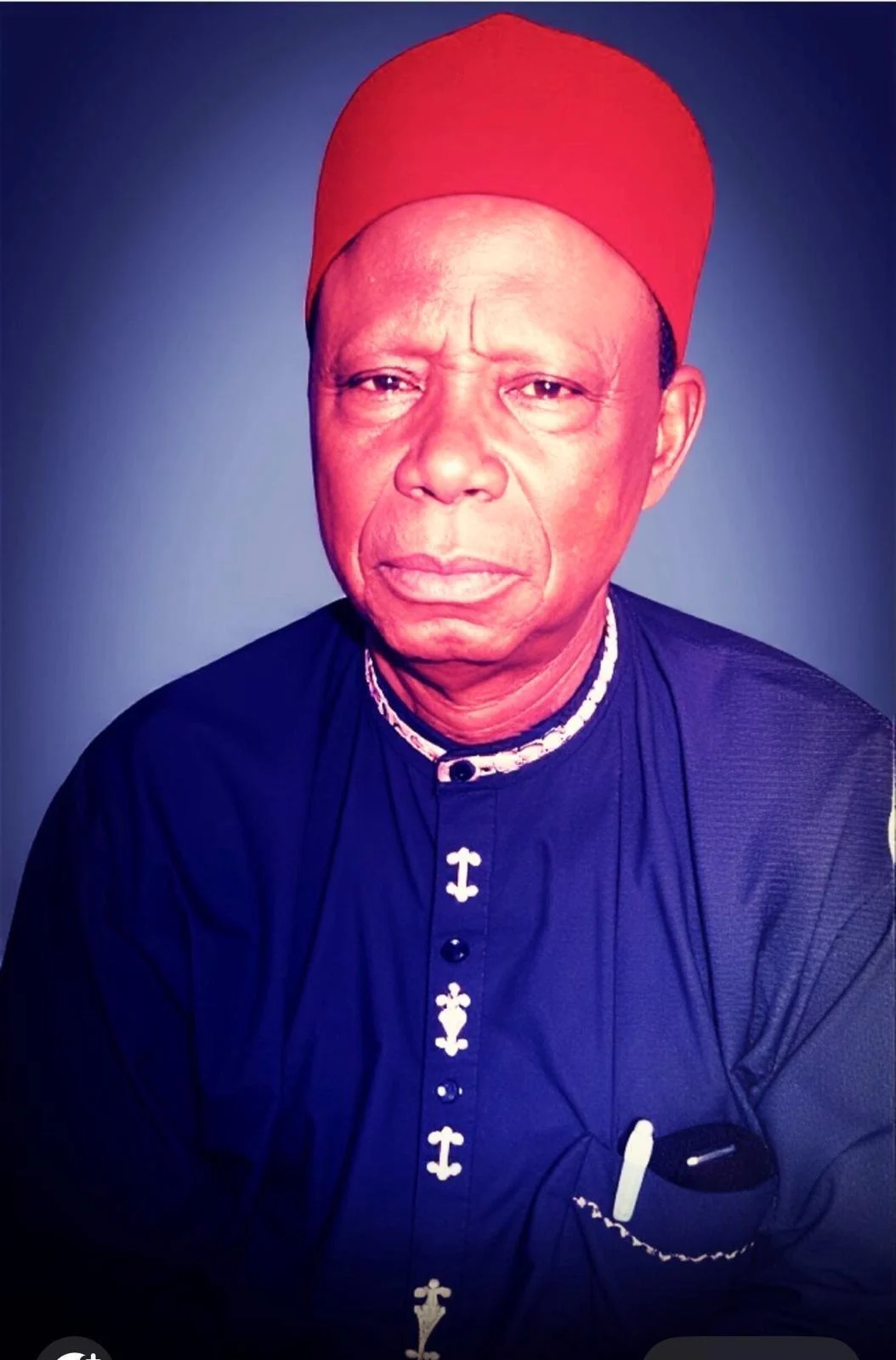
    The roots trace to our father, Chief Francis Okeke Nnaoma Azuka ( Kwaji-Kwaji), a man of unlettered depth whose rage at humiliation became the family’s unbreakable vow. With only one sibling, a strong-willed younger brother. Stubborn. Fearless. He lived far away, in Ahoda, Rivers state, with an older cousin. Their relationship was turbulent, often marked by quarrels. One day, a letter arrived. It was from that distant city. A letter our father could neither read nor reply to. Approaching a literate man from our village for aid, he met cruelty: the man demanded he cultivate cocoyam on massive land just to read it, and again for the reply. Twice he toiled in insult, fetching tools, laboring under mockery, all for words that should have been free. Rage consumed him; shame scarred him. He swore then: no child of his would suffer such degradation. Education would shield them forever.

    Had our father been schooled, he would have been a historian or lawyer, his stories never rushed, always dressed in rich preambles, layered with context and flair. Instead, his illiteracy fueled determination: every child would read, write , and rise. He kept that oath.

    This vow propelled my boss to the Merchants of Light Secondary School, Oba (1956 set), founded in 1946 by the renowned Dr. Enoch Ifediorah Oli–lde Oba, Oxford -educated. As the only one among his peers to attend secondary school, he arrived worst-dressed, sandals perforated, sleepy from 8-mile treks after dawn farming. Exhaustion often overtook him; he would nod off in class, head resting on folded arms amid the murmur of lessons. On a fateful day during one such “sleeping session”, the principal and owner of the school, Dr. Oli himself, approached quietly and touched him awake. The great man inquired gently: Who is your father? From which town? The neighboring one, came the reply. What does he do for a living? The truth poured out: a farmer who carried palm wine on his head over 10 miles to sell at Onitsha markets. Dr. Oli , marvelled at such humble sacrifice in an era when education was a rare luxury, extended a personal invitation to our father. Our father, deeply honored, went and shook hands with the great Oli of Oba, one of his lifelong boasts, recounted with pride again and again, as if the touch of that hand carried the weight of possibility itself. In those days, excelling in studies earned comparisons to Zik or Oli himself, such was the principal’s fame as a beacon of learning. He completed his studies in 1956, carrying away a creed of education as equalizer, opportunity without favoritism.

    Upon finishing school, like many educated Nigerians, he sought the Post Office, the coveted civil service prize. The forms were exhausted. Dejected on the balcony, frustration settling heavy, he prepared to leave. Then a stranger beckoned from the side. The man, observant and ordinary, called him over and spoke with simple directness: ” Why don’t you try Customs and Excise? It’s a new department. Not every person should work at the Post Office.” My boss, ever quiet and agreeable, listened. He took the form, filled it out. That single act—prompted by a stranger’s gentle nudge, proved one of the best decisions of his lifetime. In 1959, he joined the Department of Customs and Excise; postings followed from Lagos to Port Harcourt ( his golden peak), Jos ( during my UniJos days), Aba , and then back to Lagos where he retired in 1994. In 1971, he married madam Veronica Nwogo Azuka, beginning a shared journey of dignity and care.

    Por Harcourt proved providential. Had his influence not anchored me there, l might have missed becoming a Dengramite.

    After passing Common Entrance in Primary 5, my boss refused premature advancement: “Finish primary six, earn your First School Leaving Certificate.” Then: “Attend a grammar school.” I searched; DMGS was my first choice. It was the last published in the state newspaper, if unseen, I’d have left Port Harcourt for Ojoto to repeat primary six. Returning from Ojoto that evening, he yelled my name in anger, assuming failure. Quietly, l approached. He declared that l should be returning to Ojoto to repeat primary six since I had failed. I said that l made it. “What school?” I revealed: “the exact grammar school you wanted. DMGS.” He stepped forward and shook my hands. “Congratulations!” -the first and last such gesture from a reserved man. I knew then I made him proud.

    He was my second father, training me identically to his children—no discrimination despite my mother as second wife.

    Two deeds he performed stand as monuments to his magnanimity and generosity, teaching me , until this day, to detest discrimination in family and to recognize the purest form of altruism.

    My mother, Mrs.Florence Ego Azuka, was the second wife. Custom and tradition imposed no obligation on him to build a house for her. Yet he did—not merely a house, but one identical in every detail to the one he built for his own mother. The same design, the same structure, the same time of construction, the same dignity. That perfect sameness struck me deeply then and echoes in me still. It was no small gesture; it was a deliberate, silent declaration that no one in the nfamily would be treated as lesser, no matter the circumstances of birth or marriage. In that act of equity, he taught me the ugliness of favoritism and the beauty of impartial love.

    Another deed, equally luminous, occurred in the middle 1970s, when electricity was still a luxury in our town. Not for us. He purchased a giant Lister generator and ensured that each of the five clustered family compounds ( out of the six grand branches) received reliable power. Wires were run, connections made, light brought to homes that had known only darkness. The sixth branch lived far away, but the five he could reach—he reached. Whenever l read Jordan Peterson’s words about putting one’s house in order before attempting to rule the world, these memories flood back. He ordered not just his own home, but the homes of his relatives, lending a brother’s hand when no one else could or would. That was generosity in its purest form—altruism without fanfare, a quiet lending of strength to those bound by blood.

    Amid the Nigerian Civil War( 1967-1970) when Biafra conscripted aggressively—men stopped on roads, pulled from travels—divine providence intervened. Returning from a Nnobi meeting on a bicycle, he was forcibly enlisted. In camp queuing recruits, a bomb landed. The man ahead died instantly, stomach emptied in the blast. It could have been him. One step, one shift—and no further story: there might not be DMGS, no UniJos, and maybe not even Uninove, São Paulo, and by extension, Brazil. Six children across continents would not be. Providence spared him, allowing light to spread.

    Yet in quiet flashes, the question arises: Was the dementia —-the slow extinguishing we witnessed in Lagos the price for that salvation? Why grant escape from the bomb, only to claim mind and dignity in age? The man who ordered chaos into comfort, who never harmed, reduced to frozen helplessness.

    This enigma ignited fully last year during my mother’s burial. One of my cousins, Mr. Linus Ilonze, knowing how deeply l cherished him, warned me before I even left São Paulo: it would not be advisable to go upstairs to see him, given my emotional nature. I normally stayed in his Lagos home. When I arrived, his last son, Chibuzor, a lawyer, told me to go up and see him. I refused, relaying the cousin’s caution. He insisted that it didn’t matter. Almost immediately, my brother’s wife came downstairs and urged me again. I refused once more, explaining why. She gave almost the same reassurance. I thought the cousin had exaggerated. After a few minutes, l summoned courage and climbed the stairs.

    Behold—the exact moment: the paid caregiver and my boss’s wife were carrying him from the shower to the living room. His body frozen, mouth wide open, no flicker of consciousness, no recognition—the unmistakable signs of advanced dementia had taken him completely. I froze. The peak sensation overwhelmed—no movement, only shock. When awareness returned, rage consumed me wholly. Why my beloved boss? Why that generous man who couldn’t hurt a fly? Just why him? I refused to accept it.

    That moment in the living room became my own funeral oration—not spoken, but felt. Like Mark Antony standing over Caesar’s body, l could only say to myself what he declared to the plebeians: “My heart is in the coffin there with Caesar, and l must pause till it comes back to me.” I found myself undone by what l saw—not slain by daggers, but by something far more merciless: the slow erasure of a man l loved. In Lagos, l met silence, and my heart stayed upstairs in that room, entombed with the man who had once brought light to us all. It has never fully returned; it lingers there still, pausing the world whenever memory revives the sight.

    Those memories of that Lagos encounter still haunt me. That image haunts as Duncan’s death haunts Macbeth. Macbeth slays innocent, sleeping Duncan—grace and order—unleashes curse: “Sleep no more! Macbeth does murder sleep.” Guilt invades relentlessly—blood no ocean washes, hallucinations, Paranoia. Though there is no blood shed here, the parallel is merciless: seeing my boss—embodiment of order, equity, harmless goodness—murdered in dignity by dementia, consciousness extinguished—shattered inner peace irrevocably. Sleep flees in memory; the sight replays, provoking unquenchable anger at injustice.

    That was when the question began: Why do good people suffer?

    Fyodor Dostoevsky, in The Brothers Karamazov’s “Rebellion,” voices this torment through Ivan. Confining anguish to innocents—the blameless untainted by sin—Ivan protests any harmony purchased with unavenged tears: “If even one child’s suffering is required to make the grand design of truth or justice complete, l reject it completely. That kind of truth isn’t worth the price of a single innocent tear. I give God back my ticket—l won’t accept a world built on such cruelty.” No mother has the right to forgive the person who tortured her child just so the universe can have its supposed harmony. My boss’s decline—harmless, upright—evokes that innocent affliction. Ivan’s rebellion mirrors my Lagos rage: the price too high; no explanation suffices when goodness fades without cause.

    In the same Dostoevskian spirit, another profound moment from The Brothers Karamazov resonates here: in Ivan’s parable, “The Grande Inquisitor”, Christ returns to Earth during the Inquisition. The old Inquisitor arrests Him and delivers a long speech: “You offered people freedom, but they can’t bear it. They want bread, not choice; they want miracles and mystery, not responsibility. The Church has fixed Your mistake—we give them security and control instead of freedom, and that’s what they truly need for happiness.” Christ offers no words, no defence, no rebuttal. He remains silent. Then, in that silence, He steps forward and kisses the lnquisitor gently on his withered lips—an act of pure, forgiving love that burns in the old man’s heart, yet changes nothing of his resolve. Dostoevsky draws on the Gospel of John, where Christ is often silent before accusers ( as before Pilate), answering not with argument but with presence and compassion—the seed of love’s wordless power, as in the foot-washing humility.

    So too, in the face of the unanswerable—why the harmless, benevolent man who illuminated so many lives should fade into Frozen silence—there may be no verbal resolution. The question “Why him?” echoes Ivan’s rebellion, yet the kiss whispers a different possibility: love persists beyond explanation, forgiveness meets injustice without justification, and quiet presence endures where words fail. My boss’s life was that kiss— wordless benevolence to all, never abusing privilege, loathing the flashlights and spotlights. In Lagos, l met silence; perhaps the enduring response is the same: to kiss the memory with reverence, to let love burn on in protest and gratitude.

    The Book of Job confronts the enigma starkly: blameless Job loses all, yet “Why” remains a mystery. It tells of a truly good man who loses everything—children, wealth, health—for no apparent reason. His friends insist he must have sinned. Job refuses: “I did nothing to deserve this.” He demands answers from God. God does not give a reason. Instead, God speaks from whirlwind, showing the vastness of creation: ” Where were you when l laid the foundations of the earth?” Job is humbled, not explained to. He accepts the mystery and is eventually restored— not because the pain made sense, but because faithfulness endures.

    Ecclesiastes echoes futility: time and chance befall all. Theologically, in a fallen world, tragedy touches the innocent and guilty alike. Philosophically, life’s tragic structure—entropy, fragility—claims even the great. Jordan Peterson framed it: tragedy inherent, response voluntary responsibility amid chaos. For him, tragedy isn’t something that happens to some people— it’s the basic condition of being alive. Everything breaks down, people hurt each other, death waits. The only real answer is to step up anyway: willingly carry your share of the suffering , take care of what you can control, and build meaning out of the mess.

    My boss lived that response: equal homes for his mother and mine ( no obligation, yet identical structure—teaching detest of discrimination); giant Lister generator in mid -1970s powering five of six family branches when electricity rare. Great leadership, foresight, collective well-being.

    An ancient Greek tale, too, casts its light on this tension. Democritus, the Laughing Philosopher, laughed at everything—the follies of men, the vanities of power, the absurdities of existence. His constant laughter so alarmed his fellow citizens that they summoned Hippocrates, the great physician, to examine him for madness. After spending time with him, Hippocrates declared: this is not madness; this is the wisest man on earth. Democritus saw clearly enough to laugh where others despaired.

    Heraclitus, his near-contemporary, was the opposite —-the Weeping Philosopher. He wept at the injustices, the endless flux, the strife that defines the world. “War the father of all,” he said; everything changes and suffering woven into the fabric. His tears were not despair but honest recognition of life’s tragic current.

    My brother lived between these two postures. In his daily deeds, he was Democritean—quietly amused at life’s pretensions, ordering chaos with steady hands, bringing light without seeking applause, laughing in the gentle way of one who knows the absurdity of discrimination and chooses equity anyway. Yet in Lagos, when l saw him carried, frozen, mouth agape, the victim of advanced dementia, l met the Heraclitean river full force. The tears—my tears, my rage—came unbidden, as they came to Heraclitus, before the injustice of a good man extinguished.

    Neither laughter nor weeping alone suffices. Wisdom, perhaps, lies in bearing both: to order the house while the world burns, to laugh at folly while weeping for the innocent who suffer. My second father bore that tension without complaint. Hippocrates might have examined him and said the same: here is a wise man.

    The question—Why do good people suffer?”—-persists, unconditional and raw. No tidy resolution erases pain; anger is love’s protest. Yet his legacy endures: light brought where darkness reigned, education extended without bias, family ordered with magnanimity. From cocoyam’s humiliation, Merchants of Light Secondary School,Oba, to the admission to the department of Customs and Excise, to the bomb’s near-miss to Lagos’s revelation, his life testifies: goodness multiplies beyond suffering. In any next world, bonds renew—l choose him again.

    Our father called him Enuma.
    His mother called him the same.
    His devoted wife called him Solo.
    His folks called him collector.
    His friends called him okaa Customs.
    His extended kin, in playful mischief, called him “Bunker”—for his quiet, recluse ways.
    In school, he was Solomon.
    His colleagues in the office called him chief Azuka.
    His younger sibling called him Obieze
    And l—l called him my boss.

    Different names. The same man.

    He passed on January 23, 2026.

    He left behind six children— Chinwe, Obiageli, Ifeanyi, Benji, Nwike and Chibuzor. Three live in Nigeria, and the other three live in the United States.

    His light shines on.
  • US-Based Nigerian Media Expert Establishes Media and Digital Centre at IMT Enugu

    US-Based Nigerian Media Expert Establishes Media and Digital Centre at IMT Enugu

    Enugu, Nigeria – Dr. Uchenna Ekwo, a US-based Nigerian media expert and alumnus of the Institute of Management and Technology (IMT), Enugu, has established a Media and Digital Centre at the Mass Communication Department of the institute.

    The initiative was aimed at equipping staff and students with essential digital and media literacy skills.

    The News Agency of Nigeria (NAN) reports that Ekwo, who is also the President of the Consortium for International Education and Development (CIED), New York, presented certificates to staff members who completed a training on media and literacy.

    He urged participants to embrace digital skills to adapt to the rapidly changing global landscape and to combat misinformation.

    “As an alumnus, I felt compelled to give back to my alma mater by establishing this centre. Digital and media literacy is no longer optional; it is a civic skill, a professional competency, and increasingly, a survival skill,” Ekwo said.

    He emphasized that citizens must learn to critically evaluate information, question content, and use media responsibly for empowerment rather than manipulation.

    Ekwo explained that the certificates awarded represented commitment, responsibility, and relevance in a digital era. Of the 13 staff enrolled, five successfully completed the rigorous training, marking the first cohort of graduates.

    Prof. Gozie Ogbodo, Rector of IMT, lauded the initiative as aligning with the institution’s goal of ensuring students acquire practical skills alongside academic qualifications. “We expect our students to take advantage of these opportunities to graduate not only with a diploma but also with life-sustaining skills,” he stated.

    A beneficiary of the programme, Mr. Jonah Mamah, described the training as “life-changing” and noted that the digital skills gained would be valuable in their professional and personal lives.

    Ekwo commended CIED for its vision in bridging education, local realities, and global opportunities, and thanked IMT for its intellectual partnership and support in nurturing digitally empowered citizens.

  • Enugu Gov. Mbah Appoints 13 PermSecs, Insists, No Honeymoon Period

    Enugu Gov. Mbah Appoints 13 PermSecs, Insists, No Honeymoon Period

    Enugu State Governor, Peter Mbah, on Monday swore in 13 newly appointed permanent secretaries, charging them to immediately align with his administration’s delivery-oriented governance model.

    The swearing-in ceremony took place at the Government House, Enugu, where the governor emphasized accountability, performance, and service delivery across the state civil service.

    List of Newly Appointed Permanent Secretaries in Enugu State

    The newly sworn-in permanent secretaries are:

    • Mr. Chigbogu Nnaji
    • Mrs. Phoebe Edeh
    • Mr. Philip Arum
    • Mr. Jeremiah Egbonwonu
    • Mrs. Ifeoma Igwe
    • Mrs. Ngozi Egbo
    • Mrs. Nkiru Ede-Ogunnaike
    • Mrs. Pamela Ikpa
    • Mr. Canice Ngene
    • Mr. Anyaora Okereke
    • Mrs. Adaobi Nwodo
    • Mr. Ikechukwu Ezenwukwa
    • Mr. Paul Nwabuisi

    Appointments Based on Merit — Gov. Mbah

    Governor Mbah said the appointments were strictly merit-based, following a rigorous and transparent selection process. He noted that the exercise also filled existing vacancies in the Enugu State civil service to promote fairness, inclusion, and efficiency.

    According to the governor, there would be no honeymoon period for the new permanent secretaries, stressing that greater responsibility comes with higher office.

    “I believe you worked very hard to get to this level in your careers and went through a very rigorous process to be selected. It is well deserved,” Mbah said.
    “But the honeymoon is over. To whom much is given, much is expected.”

    Permanent Secretaries Are Engine Room of Government

    Mbah described permanent secretaries as the engine room of government and custodians of institutional memory, adding that his administration is implementing far-reaching reforms across all sectors of the state.

    He urged the appointees to support the government’s reform agenda and ensure effective policy implementation.

    New Permanent Secretaries Pledge Commitment

    Speaking on behalf of his colleagues, the Solicitor-General and Permanent Secretary, Ministry of Justice, Mr. Ikechukwu Ezenwukwa, thanked Governor Mbah for the confidence reposed in them.

    Ezenwukwa acknowledged the administration’s achievements in revenue generation and infrastructural development, pledging their full support.

    “We pledge to add value to these achievements and assure you that you will not be disappointed in appointing us,” he said.

  • Threat of military rule looms in Africa – CDD

    Threat of military rule looms in Africa – CDD

    A Civil Society Organisation, the Centre for Democracy and Development (CDD-West Africa) has expressed concern over the looming threat and normalisation of military rule in West and Central Africa.

    The organisation warned that the trend posed a major threat to democracy, stability and regional integration, especially with the rise of ‘military populism’ in Francophone Africa.

    Dr Dauda Garuba, Director of CDD-West Africa, stated this in Abuja on Wednesday while releasing the organisation’s background paper titled “Militarism Reloaded: The Rise of Military Populism in Francophone West Africa”.

    According to him, recent coups in Mali, Burkina Faso, Niger and Guinea are not simply reversions to old authoritarian patterns but expressions of a more sophisticated, ideologically packaged form of militarism.

    “Far from being isolated disruptions, these military interventions present themselves as national corrections, cloaked in the language of sovereignty, anti-imperial resistance, and Pan-African revivalism.

    “But beneath the surface of patriotic slogans and digital virality lies a strategic attempt to consolidate power, silence dissent, delay transitions, and reconfigure what legitimacy means in postcolonial Africa,” Garuba said.

    He explained that the appeal of military populism is rooted in public frustration with democratic failures, insecurity and inequality.

    However, he warned that its allure was deceptive as regimes increasingly postponed elections, suspended constitutions, and curtailed civil society under the guise of national security.

    Read Also: Contextualizing the lovefest between Presidents Lula of Brazil and Tinubu

    Garuba added that in the Sahelian states of Burkina Faso, Mali and Niger, military juntas were now manipulating digital platforms to spread disinformation and mobilise support.

    He said the regimes also cultivate parallel narratives in which the army is portrayed as the “saviour of the state”.

    He stressed that this evolving phenomenon carries serious regional implications.

    “ECOWAS, once a bulwark of democratic norms, now struggles to enforce its own red lines.

    “The weakening of regional institutions, coupled with a geopolitical pivot away from traditional allies, threatens to undermine decades of democratic progress across West Africa,” he said.

    According to him, CDD-West Africa, in partnership with regional organisations, will over the next eight months conduct in-depth research on how military populism spreads and is sustained.

    He said the centre would monitor digital propaganda, analyse ideological framing, and assess the threats posed to elections, civic space and regional cohesion.

    “The goal is to generate evidence-based insights and practical recommendations to safeguard West Africa’s information environment and strengthen democratic resilience,” he added.

    Garuba urged African governments, civil society, regional bodies and citizens not to mistake military populism for genuine reform.

    “Coups are not answers to civilian failures; they are only accelerators of fragility. The time to act is now.

    “It is essential to underscore this before narratives harden, institutions crumble, and another generation of citizens grow up believing that the gun, not the vote, is the legitimate path to power in Africa,” he said.

  • Nigeria’s shadowed cave, cont’d

    This is a continuation of the article of above caption published last Friday, June 27th

    The most painful aspect of the avoidable war is the belief by many that it was “a personal war and collision of egos” between Gowon and Ojukwu. ” There are a number who believe that neither Gowon nor Ojukwu were the right leaders for that desperate time, because they were blinded by ego, hindered by a lack of administrative experience, and obsessed with interpersonal competition and petty rivalries,”( There was a country, 2012). As a consequence, continued Achebe, they failed to make appropriate and wise decisions throughout the conflict and missed several opportunities when compromise could have saved the day.” According to Raph Uwechue( Biafra’s envoy to Paris up until 1968 and then later Nigeria’s ambassador to Mali),”In Biafra, two wars were fought simultaneously. The first was for the survival of the Igbo as a race. The second was for the survival of Ojukwu’s leadership. Ojukwu’s error, which proved fatal for millions of Igbo, was that he put the latter first”( There was a country, 2012). The ethnic cleansing was real. But the two major actors were proved to be incapable of administering the delicate and complex situation. Nigeria’s cave at its deepest and its shadow at its darkest.

    Tribalism’s Lasting Chains

    Tribalism’s poison endures and its tools persist in Nigeria’s quota system, federal character, catchment areas and state of origin policies( The Cable, 2023; Punch, 2022). JAMB’s skewed cut-offs for Northern States (120 vs 160), and NYSC’s cohort postings, ministerial slots by states, University admissions favoring locals, and origin certificates deepen division and chain talent to ethnicity, not merit. Thomas Sowell, American economist, slices through: ” When people are treated as members of groups, rather than as individuals, the result is often a loss of both efficiency and fairness”( Wealth, Poverty and Politics, 2016). These policies, like Awo’s dagger, infantilize tongues, sow dependency, breed resentment, and spit on Zik’s dream (Vanguard, 2023).

    The “Giant of Africa” Lie

    Nigeria is a hollow giant. Suffice it to say that Nigeria’s “giant of Africa” boast is a lie—-its U$253 billion GDP (4th) lags behind South Africa’s U$373 billion(1st) and pales in per- capita wealth (U$1.150) against Mauritius’s U$12.973 (Web: 21). Oil-chained, Nigeria’s 24.5% inflation and naira’s 95.6% fall dwarf South Africa’s diversified stability( mining, banking) and Mauritius’s tourist-driven wealth( Web:23). South Africa’s U$ 6.250 per-capita GDP and Mauritius’s high Human Development Index expose Nigeria’s hollow giant of Africa claim, her 230 million chained by corruption and insecurity( World Bank, 2024). Nigeria’s ” biggest economy” is cancelled by inflation.

    Nigeria’s Security Crisis: A Path Beyond the Shadows

    Nigeria’s security landscape is a battleground of chaos—- Boko Haram’s insurgency in the Northeast, rampant banditry in the Northwest, and kidnappings that paralyze daily life. Added to the illegal stay-at -home imposition every monday on all Southeastern States of the Federation by illegal political and social groups, leading to incalculable economic losses incurred by the region’s business class. These treats choke economic progress, deter investment, and erode trust in governance. Some claim that Nigeria’s diverse, federal structure demands a nuanced approach, preaching a “soft glove” strategy to weaken Boko Haram by addressing root causes: invest in education to counter radicalization, empower communities through local policing, and expand deradicalization programs like Operation Safe Corridor. Addressing poverty and illiteracy counters extremist recruitment..They espouse that Nigeria must blend firm security measures with socioeconomic reforms, ensuring stability without sacrificing democracy, an indirect shot at Nayib Bukele, the president of El Salvador. Too romantic. Bukele’s approach has since proved effective and deserves to be implemented in Nigeria. You don’t treat terrorists with a soft glove, but iron-fisted crackdowns. Our law enforcement agents deserve better and decent security apparatuses.

    The Inertia of Followership: Nigeria’s Silent Complicity in Stagnation

    The awakened consciousness of ordinary citizens has repeatedly altered history’s course. In 44 BCE, Rome’s plebians, roused by Mark Anthony’s fiery oration beside Julius Caesar’s slain body, unleashed protests that shook the Republic, paving the way for the Second Triumvirate’s rise. In 1929, the Aba Women’s Riot in Nigeria saw Igbo women rise against colonial taxes and warrant chiefs, compelling British reforms and marking a pivotal anti-colonial stand. The Arab Spring, ignited in Tunisia in 2010 by Mohamed Bouazizi’s self-immolation, sparked mass protests that toppled President Ben Ali and inspired region-wide demands for democratic change. These movements, driven by collective resolve, highlight the power of followership to change oppression and reshape political landscapes, offering lessons for Nigeria’s struggle against tribalism, corruption and aparthy.

    Nigeria’s followership inertia in politics and society stems from deep-rooted factors. Tribalism plays a significant role in that. Ethnic loyalties, exploited by the profligate elite, deepen divisions and prioritize group interests over national unity, stifling collective action. Politicians leverage tribal identities to secure votes, fostering apathy as citizens align with ethnic patrons rather than demand accountability. Poverty and illiteracy limit civic awareness, making citizens vulnerable to manipulation through ethnic and religious appeals. Fear of reprisals from state or non-state actors stifles political and social activism. Patronage systems, where the elite distribute favors for loyalty, entrench apathy and discourage dissent. Weak institutions and rampant corruption erode trust, fostering resignation among the populace. Colonial legacies and divisive politics further weaken social cohesion, perpetuating passive followership. Grassroots education, economic empowerment, stronger civic institutions and inclusive governance are essential to break this inertia and spur active political and social engagement and galvanize active citizenship.

    Romanus Ike Azuka, Poet, law graduate and Sociologist, writes in from Sao Paulo, Brazil

  • Nigeria’s Shadowed Cave

    By

    Romanus Ike Azuka

    Imagine a cave, shrouded in darkness, where prisoners, chained since birth, gaze at a blank wall. A fire behind them casts shadows of objects; puppets, tools, carried by unseen figures. These flickering shapes are the prisoners’ only reality, their names and tales woven into a false truth. One prisoner breaks free, his chains clattering to the stone floor. Stumbling toward the cave’s mouth, he is blinded by sunlight, a searing truth revealing real objects, the sun itself, a world of intelligence and knowledge beyond the shadows of ignorance. Returning, he pleads with his fellows to escape, but they recoil, mocking his madness, clinging to their familiar illusions. This is Plato’s allegory of the cave, from Book VII of The Republic, a timeless clash of ignorance versus enlightenment. Nigeria, my homeland, languishes in such a cavern, her leaders and followership entranced by tribal shadows, blind to the ideas that forge nations. Like the wanderers in Samuel Beckett’s Waiting for Godot, yearning for a savior who never arrives, Nigeria pines for unity unpromised. Across the Atlantic, America’s Founding Fathers, ignited by John Locke’s vision, crafted a republic where ideas triumphed over factionalism. Nigeria, rich in oil and diversity, stumbles for want of such light. When will Nigeria find her Godot, or must we shape him ourselves?

    Locke’s Second Treatise of Government – ruling by consent, safeguarding life, liberty, property – lit the Founders’ path(1690). They shunned democracy for REPRESENTATIVE GOVERNMENT, crafting a system where the Senate equates Wyoming’s(an infinitesimal state) voice to California’s (the biggest state) and the Electoral College ensures no presidential candidate, sweeping big states like Texas, New York and California, silences smaller states (Federalist Papers, No.68). Alexis de Tocqueville, in 1835, praised this decentralized genius, a rebuke to France’s rigid centralism (Democracy in America). Nigeria’s leaders, unlike Julius Caesar, who chose his great-nephew Augustus over his son with Cleopatra, Caesarion, ushering in the Pax Romana, a 200- year era of peace and prosperity, and Rome’s 1,000- year dominion (Suetonius, The Twelve Caesars, 20 CE; Encyclopedia Britannica, 2025), cling to tribal loyalties, worshipping shadows on the cave’s wall.

    Nigeria’s 1914 Amalgamation Flaw: Myth or Reality?

    Nigeria’s 1914 amalgamation branded a union of “incompatibles,” is no fatal flaw; it is no curse. Switzerland blends German ,French, and Italian voices; Jordan’s weaves tongues into one and unites under a shared Crown; Singapore and the UAE weave diverse threads into harmony (BBC, 2023). Nigeria’s curse is not diversity; our rot festers in visionless leaders, and to some extent, inertia of the followership. In Miguel de Cervantes’ Don Quixote, a delusional knight chases chivalric dreams, tilting at windmills mistaken for giants. Nnamdi Azikiwe embodied this Quixote-like spirit, dreaming of a de-tribalized ” One Nigeria,” a centripetal force pulling ethnicities toward unity (Vanguard,1949). Born in Zungeru (1904), fluent in Hausa, Igbo, and Yoruba, Zik’s cosmopolitan soul, forged in Lagos, Onitsha, Calabar, and America’s universities( 1925-34), embrace Garveyism and Pan-Africanism (Iweala, 2012). In Ghana (1934-37), editing the African Morning Post, he mentored Kwame Nkrumah, igniting Ghana’s independence fire (1957). Spurning Nigeria’s tribal mire, Zik’s bid for Liberia’s foreign service, though rejected, and his book Liberia in World Politics (1934) reflect a quest to elevate Africa globally. He chased a Pan- African utopia. Mocked by group, Igbo for his NCNC’s universalism and especially for his One Nigeria mantra, Zik faltered, ousting Dr. Eyo Ita, a Calabar leader, in 1953, echoing Quixote’s noble but impracticable idealism.

    In Cervantes’ tale, Sancho Panza, Quixote’s squire, governs the fictional island of Barataria with pragmatic wisdom. Obafemi Awolowo, a Sancho-like figure, ruled the Western Region (1952-59) with similar deftness, delivering free education to a million children and building a Cocoa House. Yet his Achilles’ heel, his unrivaled tribalistic zest, flared in his 1951 carpet- crossing (Vanguard,2001) and, cruelly and callously, the Civil War’s 20-pound disgrace and humiliation of the Igbo. His tribalistic instinct became nude. That immoral policy capped Igbo savings, crushing their post-war recovery. Despite defenses, his intent to stymie Igbo economic recovery and development stands: Eppur si muove. Ahmadu Bello’s Nothernization enthroned Hausa-Fulani, fueling Igbo resentment and the 1966 coup, spiraling into pogroms ( BBC,1966).

    The Civil War’s Betrayal and the Intellectuals’ Role

    The Civil War (1967-70) tore Nigeria’s soul, leaving scars of fury and betrayal. Gowon’s “no victor, no vanquished” slogan, meant to heal, was a cruel humiliation for the Igbo, masking the devastation of Awo’s policies (BBC,1970; There Was a Country, 2012). The slogan was a vile lie, cloaking the Igbo’s crucifixion; homes stolen, lives erased, their wealth gutted by Awo’s 20-pound policy, a tribal daggar plunged with Yoruba zest. Christopher Okigbo, poet turned Biafran soldier, died in Nsukka, his zeal questioned by Ali Mazrui: Should intellectuals wield pens or rifles? (The Trial of Christopher Okigbo,1971). Wole Soyinka, rejecting war’s carnage, sought peace, enduring 22 months in solidary (The Man Died, 1972. Zik, Quixote-like, backed Biafra (1968) but switched to Nigeria (1969), seeing war’s futility, shaping UN resolutions (There was a Country, 2012; Britannica, 2025). The German intellectuals took a different path. Thomas Mann’s exiled broadcasts, Sophia Scholl’s White Rose leaflets, defied Hitler at mortal cost (NYT, 1940; Holocaust Encyclopedia,1943. Nigeria’s thinkers lit sparks, but the Igbo’s trust lay shattered, as Chinua Achebe mourned (There was a Country).

    Romanus Ike Azuka, Poet, law graduate and Sociologist, wrote in from Sao Paulo, Brazil

  • Dr. Alex Chioma Otti: The titan of Abia’s rebirth

    By

    Romanus Ike Azuka

    Government, in its noblest form, is a sacred trust, ordained to uplift the governed, as John Locke decreed: “The end of government is the good of mankind” ( Two Treaties of Government). In Abia, Dr. Alex Chioma Otti redeems this covenant, reigning as the state’s apotheosis, a sui generis steward whose two years have sculpted a New Abia from the ruins of neglect. With Promethean zeal and an economist’s precision, this hors concurs governor has paved roads and lit skies, transmuting despair into a citadel of hope. As Abraham Lincoln declared, “The best way to predict the future is to create it” ( attributed). Otti, architect of Abia’s destiny, forges a future where faith in governance is reborn. For me, a diaspora son of Anambra whose heart beats for Aba, his feats are a personal redemption. My frequent sojourns in Aba and Port Harcourt; summers lost in Ariaria Market’s frenetic bustle, dodging Ngwa Road’s treacherous craters, navigating nights cloaked in Osisioma’s oppressive darkness, revealed a city strangled by misrule. From abroad, I marvel at Otti’s alchemy, conjuring resources for structural magic that shames Nigeria’s profligate elite. His love for Abians, etched in every asphalt vein and electric pulse, ignites a political awakening, daring us to ask: could Nigeria’s leaders, blessed with abundant means, restore the nation’s glory, yet choose to plunder its soul? Behold the marquee of excellence, a presidential beacon whose legacy restores Aba to glory.

    Roads: Paving Pathways to Prosperity

    Abia’s roads,once a labyrinth of ruin,now gleam as Otti’s testament to progress. As Nelson Mandela averred, “A leader is like a shepherd…letting the most nimble go out ahead”( Long Walk to Freedom). Otti, Abia’s shepherd, declared a road emergency on May 29, 2023, unleashing a renaissance. Over 40 roads shine anew, with Aba’s Port Harcourt Road—-where my treks to Eziukwu Market and my travels to Port Harcourt faltered amid axle- snapping potholes—-reborn under Julius Berger’s mastery. Cemetery Road, Umuimo Road,and MCC/Old Express Road boast smooth asphalt,while Ossah Road in Umuahia,aglow with solar lights, rivals global capitals. Beyond Aba( my Enyimba City), Umuahia-Uzoakoli and Umuokomiri-Obehie knit communities together. My memories of Ngwa Road, where traders cursed rutted paths, haunt me; Otti’s roads erase that shame. Unlike past Abia governors, whose 24- year PDP reign left 50 roads forsaken, Otti’s 16 rehabilitated and six new projects dazzle. Compared to Nigerian leaders, whose vows dissolve, Otti embodies Machiavelli’s dictate: “A Prince must build on solid foundations”( The Prince). His roads are arteries of commerce, binding Abians to dignity.

    Electricity: Illuminating Abia’s Future

    Otti’s conquest of darkness crowns Abia a beacon of power. As Ronald Reagan proclaimed, “Government’s first duty is to protect the people”( Inaugural Address,1981), and Malcolm X affirmed, “A man who stands for nothing will fall for anything”(Speech,1963). Otti stands resolute,protecting Abians from years of darkness through the Abia Electricity Law,seizing 60% of Enugu Electricity Distribution Company’s assets. The Alaojii Power Station revival energizes Aba, while the Geometric Power Plant, ignited February 26, 2024, delivers 141 megawatts to nine local governments. Solar initiatives, like Solar for Health, light hospitals, and Independent grids ensure steady supply. I recall Aba’s nights, where kerosene lanterns cast flickering shadows over Osisioma’s stalls; Otti’s 24-hour power banishes that gloom. Past governors let Aba’s industries wither, but Otti outshines their inertia. Unlike Nigerian incompetent leaders, mired in power quagmires, Otti’s electric pulse is a love letter to Abians, fuelling dreams.

    The Alchemy of Resources: A Political Awakening

    How does Otti conjure funds for this structural magic? Abia’s revenue soared from N19.8 billion in 2022 to N24 billion in 2023,fueled by transparent e-taxation. He cleared N72 billion in debt, paid arrears,and axed ghost workers, borrowing only for progress. Unlike predecessors who plundered,or Nigerian political leaders whose budgets vanish, Otti heeds Immanuel Kant: “Act so that you treat humanity—-always as an end and never as a means only”( Groundwork of the Metaphysics of Morals). His fiscal wizardry stuns,raising Rousseau’s query: “Why are the people so often deceived by their leaders?”( The Social Contract). As a boy from Anambra, my frequent sojourns to Aba saw Ariaria’s chaotic stalls, Eziukwu’s traders haggling under dim lamps, Ngwa Road’s ruts jolting my steps; Otti revives those hopes. From abroad, I see his transparency —- publishing budgets,scrapping ex-governors’ pensions—- shame Nigeria’s political elite. Otti’s governance, rooted in love, stirs a political consciousness,echoing Marcus Garvey: “A people without the knowledge of their past…is like a tree without roots”( Philosophy and Opinions). He proves Nigeria’s salvation lies in will, not wealth

    Governance: A Meritocratic Maestro

    Otti’s meritocracy—- appointing technocrats,irrespective of state of origin,not kin—-defines his administration,unlike Tinubu’s nepotistic plunder. His court, wise and bold, echoes Lee Kuan Yew’s advisors, shaming Nigeria’s political and professional sycophants. His 2023 Road Revolution, rebuilding Port Harcourt Road with Julius Berger, sparked no scandal, unlike Tinubu’s Rivers State charade. Montesquieu’s maxim, “The spirit of moderation should be that of the legislator”( Spirit of the Laws,1748),exalts his integrity. My Anambra heart, stirred by Port Harcourt Road’s beauty, rejoices in his virture, like Trump’s brash accountability.

    A Legacy of Glory

    Age is no barrier to leadership,for wisdom may crown the old or vigor the young, as history attests. Abia’s governor, Dr. Alex Chioma Otti, a political titan at 60, proves brilliance transcends time. He soars where his Nigerian political contemporaries stumble. Aristotle declared, “Excellence is never an accident”(Nicomachean Ethos); Otti embodies this, his vision a lodestar for Nigeria’s political firmament. Unlike lesser men, he joins political giants like Konrad Adenauer, rebuilding Germany at 87; Lee Kuan Yew, forging Singapore at 42; Javier Milei, slashing Argentina’s deficit at 54; Nayib Bukele, securing El Salvador at 40; Ibrahim Traore, defying empires at 37.

    A Legacy of Love and Leadership

    Dr. Otti is Abia’s cynosure, his roads and lights a hymn to his people. As Rotimi Amaechi lauded, his works are “incredible”(The Guardian, June 7, 2025). Unlike past governors, whose legacies are potholes, or Nigerian political leaders chasing headlines, Otti builds with purpose, embodying Winston Churchill’s maxim: “Success is not final…it is the courage to continue that counts”(Speech,1941). My Aba memories: Ariaria’s pulse, Eziukwu’s lanes, Osisioma’s dark nights, Nnamdi Azikiwe’s neglected Road—-once spelt decay; Otti’s Abia is glory reborn. His structural magic indicts Nigeria’s political wastrels, proving, as Martin Luther king Jr said, “The ultimate measure of a man is […] where he stands at times of challenge”( Speech,1963). Otti stands tall,a presidential titan, beckoning Nigeria toward a boundless future.

    Romanus Azuka is a law graduate and Sociologist.

  • Memories of my beloved Mum, Mrs. Florence Ego Azuka

    Memories of my beloved Mum, Mrs. Florence Ego Azuka

    By: Romanus Ike Azuka

    “I don’t know why people are mortal and fated to die,” muses Harold S. Kushner, “nor why they die at the time and in the way they do. Perhaps we can try to understand it by picturing what the world would be like if people lived forever.” In this contemplation lies a profound truth: mortality shapes our existence, lending it urgency and meaning.

    There are but three events in a man’s life: birth, life and death, as Jean de La Bruyère postulates, a stark reminder that we are born to die. Yet, have we ever paused to ask: What if we lived forever? In Homer’s Odyssey, Ulysses encounters Calypso, an immortal divine being untouched by death’s shadow. Fascinated by this mortal man, she envies him, not for his longevity, but for his finitude. His life, bounded by time, brims with significance; every choice he makes bears weight precisely because it is fleeting, a genuine act of will.

    Contrast this with Jonathan Swift’s Gulliver’s Travels, where ,in the land of the Luggnaggians, a rare child is born with a red circular mark upon its forehead, a sign it shall never die. Gulliver first imagines these Struldbrugs as the most fortunate of beings, ” exempt from that universal calamity of human nature. “Yet, upon meeting them, he finds them pitiable beyond measure. They age into frailty, their companions perish, and they linger on, burdened by ailments, grievances, and an unrelenting weariness. Bereft of death’s release, they endure a life grown unbearable. Homer reveals an immortal envying our mortality; Swift bids us pity those who cannot die, urging us to see that while the knowledge of our end may be tragic, an endless existence would be insufferable.

    Were humanity to live forever,one of two fates would ensue: the world would grow impossibly crowded,or procreation would cesse to prevent it. In either case,we would lose the renewal a child’s birth brings—-the promise of a fresh start,a new dawn under the sun. Indeed,in a world of immortals,we ourselves might never have come to be.

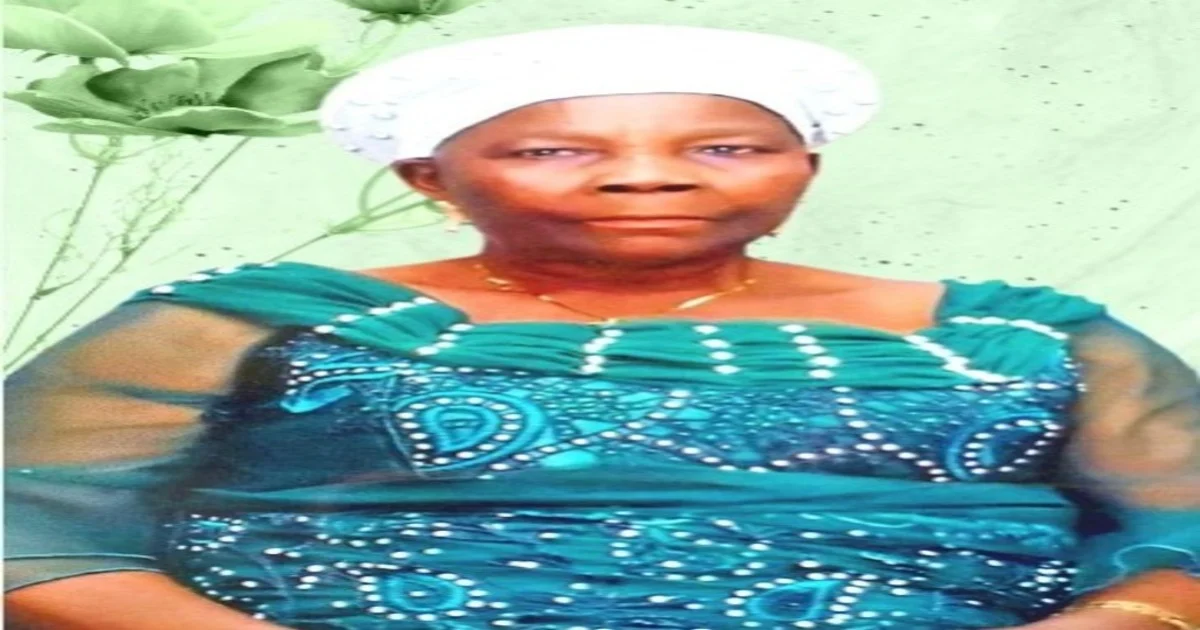
    Our mum was not of Homer’s world, nor of Swift’s. Suffice it to say, she was mortal,bound by those three immutable events: birth, life, and death. Her name was Mrs. Florence Ego Azuka, fondly known as Fashion.

    Born to humble Ezeoke parents in Ire Village, Ojoto, in present day Anambra state, she entered the world 85 years ago as the eldest of six siblings (four sisters and a brother). Her parents gave her the name Nwakueke, a title later reshaped to Ego, derived from Ego-Oyibo, in the home of her matrimony. With her conversion to Christianity, she embraced the name Florence, a beacon of her faith.

    From her tender years, she bore a spirit of determination, compassion and tenderness, ever placing family and others before herself. This disposition was forged by a singular event, her mother, Nne Omesie, fell gravely ill. Thrust into a motherly role for her younger siblings, Florence Ego Azuka ‘s character was moulded amid life’s early vicissitudes, preparing her for the trials to come.

    In 1962, she got married to our late patriarch, Chief Okeke Nnaoma Azuka (Kwaji-Kwaji). A union that bore nine children, though two, the second and the third, died during the period of the civil war. With a blend of tenderness, love, and tenacity, Mama raised us, her equanimity a steady light through life’s tempests. She faced each challenge with calm and grace, her faith in love, perseverance, and divine mercy unshaken.

    Life’s sternest test came twenty-five years ago with the loss of her beloved husband. Yet,in the shadow of his passing,she did not falter—she rose. With quiet resolve and a heart fortified by love,she became our family’s pillar,carrying our dreams,bearing our burdens,and guiding us forward with unfaltering grace.

    Mama was no woman of cant; her words rang true,unmarred by hollow platitudes. She spoke with sincerity and conviction,her lessons wrapped in gentle honesty,her wisdom,a compass for her brood

    For decades, she bore a persistent affliction of the leg, a burden known to all in Enugo Village. A silent companion that shadowed her through the years. What began as a trial in the beginning grew graver with time, its weight deepening as her steps faltered. Yet she met this relentless foe with unwavering fortitude, her spirit unbowed. Though it clung to her until her final days, she fought fiercely to live, defiant, resolute, never permitting it to dim the radiance of her love or the fire of her devotion.

    For everything there is a season, declares Ecclasiastes, and a time appointed unto every purpose under Heaven: a time to be born, and time to die. If, then, there be but three events in mortal’s life: birth, life, and death, as Jean de La Bruyère observed, it suffices to say that human being is, in essence, a postponed corpse that begets as Fernando Pessoa so starkly noted. Herein lie the twin certainties of humanity: birth, the dawn of existence, and death, its inevitable twilight. This truth finds echo in the words of Julius Caio Caesar, who proclaimed, “Death, a necessary end, will come when it will come.” A stoic resignation to fate’s unyielding decree.

    So it was with our mum, whose race in this earthly realm drew to its close on September 14, 2024. Yet, amidst our grief, we find solace in the immortal wisdom of Albert Einstein, “Our death is not an end if we can live on in our children and the younger generation. For they are us; our bodies are but wilted leaves on the tree of life. Thus, the life of the departed is enshrined in the memory of the living, a testament to how the cherished endure through the hearts of those who loved them.

    And so, Mama’s spirit abides, radiant and undimmed, within the souls of her children and grandchildren, whom she left behind.

    We love you, Mama

    Romanus Ike Azuka, a Sociologist and Attorney in training, wrote in from Sao Paulo, Brazil