Category: National

  • NIPSS D-G calls for inter-agency data harmonisation to address challenges

    NIPSS D-G calls for inter-agency data harmonisation to address challenges

    The Director-General, National Institute for Policy and Strategic Studies (NIPSS), has called for harmonisation of data for all agencies of government to utilise in addressing national security and developmental challenges.

    Omotayo made the call at the opening of the Leadership Course in Data Mining and Geospatial Intelligence, organised by the institute in collaboration with Peace Building Development Consult (PBDC), on Monday Abuja.

    The course was being hosted by the Defence Space Administration (DSA).

    He lamented that there were different organisations holding large and fertile sets of data that were not connected with any other organisation making it difficult to readily have access to needed data at a given time.

    According to him, we find ourselves looking for data that already some people have gathered and that they surely have, that they can easily use.

    Omotayo said the course was designed to build an ecosystem of data miners to conserve resources, and be able to interrogate things.

    “Our research efforts have shown that a whole lot of data in Nigeria is sitting in isolation. That is, we have data centers that are lonely and have important data on Nigerian citizens on the space and the rest of it.

    “So we decided to run this course because we feel that there is a need for synergy amongst the agencies that gather data.

    “If you have data sitting at different critical spaces in Nigeria, there should be a need for us to link this data together for the security of the nation.

    “Your NIN number should follow you anywhere you go so that whatever you do in the Nigerian space, we can find you at that point, wherever you interact on any space, economic or social.

    “We believe that for those who engage in nefarious activities, it will be easy to find them,” he said.

    The NIPSS boss said the course was also designed to develop leadership skills in bringing together those who run data centres and those who took critical decisions concerning Nigerian citizens, growing the economy in the business world and everywhere.

    He said the institute was partnering with the Defence Space Administration as a critical data centre for Nigeria.

    On his part, Mr Kayode Bolaji, Executive Director of PBDC, said the course helps participants to understand their strengths and weaknesses with a view to combining strengths to be able to provide security for the nation.

    Bolaji said that data was not just about security and intelligence gathering but also about geo-locating where resources were and knowing which agency or industry to connect with, to be able to assess a particular resource.

    He said the current course, being the second in the series, had participants for the private sector, as well from security, intelligence and other government agencies.

    He said the course would take advantage of the DSA’s facilities to conduct study tours of all its units to broaden the knowledge of the participants.

    “We also expect that they will find a way to connect with security agencies to be able to use some of the data that they have to help in security management.

    “That is not something that is common in Nigeria,” he said. 

  • FG Unveils 180-Day Emergency Plan to Tackle Rising Food Prices

    FG Unveils 180-Day Emergency Plan to Tackle Rising Food Prices

    In a bid to address the escalating food prices in Nigeria, the Federal Government has rolled out a series of immediate measures aimed at stabilizing the cost of food commodities across the country.

    The announcement was made by the Minister of Agriculture and Food Security, Senator Abubakar Kyari, who outlined the government’s strategy on his official X account.

    A key aspect of the plan is the introduction of a 150-day duty-free import window for critical food commodities, including maize, husked brown rice, wheat, and cowpeas.

    This initiative will suspend tariffs, duties, and taxes on these imports, easing the cost burden on both consumers and traders.

    Kyari emphasized that the government is committed to tackling high food prices over the next 180 days through a combination of importation and local production strategies.

    As part of the plan, 250,000 metric tons of both wheat and maize will be imported, with these goods to be distributed to small-scale processors and millers to boost local supply.

    To ensure affordability, the minister confirmed that the imported food will be subject to a Recommended Retail Price (RRP), aiming to prevent price gouging.

    Kyari reassured the public that despite concerns over the quality of imported goods, stringent quality controls will be maintained to guarantee food safety.

    In addition to these immediate actions, the government plans to ramp up local agricultural production by strengthening support for smallholder farmers.

    The ongoing wet season farming will be bolstered through existing government initiatives, and efforts will be made to accelerate dry-season farming.

    The government will also prioritize agricultural mechanization to reduce production costs and increase overall productivity.

    Kyari further mentioned the government’s engagement with relevant stakeholders to set a Guaranteed Minimum Price (GMP) for surplus food commodities and replenish the National Strategic Food Reserve.

    This comprehensive approach seeks to stabilize food prices, support farmers, and enhance the nation’s agricultural capacity in the coming months.

  • Reps Propose Removal of NECO, UI, Police from 2025 Budget

    Reps Propose Removal of NECO, UI, Police from 2025 Budget

    The House of Representatives has put forward a proposal to exclude several ministries and agencies from the 2025 national budget due to their failure to comply with financial reporting requirements. 

    Among the affected entities are the National Examinations Council (NECO), the University of Ibadan (UI), and the Nigeria Police Force. 

    The recommendation came after repeated invitations to these bodies, which failed to attend hearings or provide necessary documentation for scrutiny.

    The Public Accounts Committee made the decision following concerns about the non-compliance of these agencies, which included hospitals, universities, and other institutions. 

    The committee emphasized that these bodies should be excluded from the budget until they provide clarifications on their past financial activities. 

    Other institutions in question include the Federal Ministry of Labour and Employment, Ahmadu Bello University Teaching Hospital, and the Federal Medical Centre in Bida. 

    The committee’s move aims to enforce greater accountability for the use of public funds.

  • PRESIDENT TINUBU Appoints Eight New Permanent Secretaries

    PRESIDENT TINUBU Appoints Eight New Permanent Secretaries


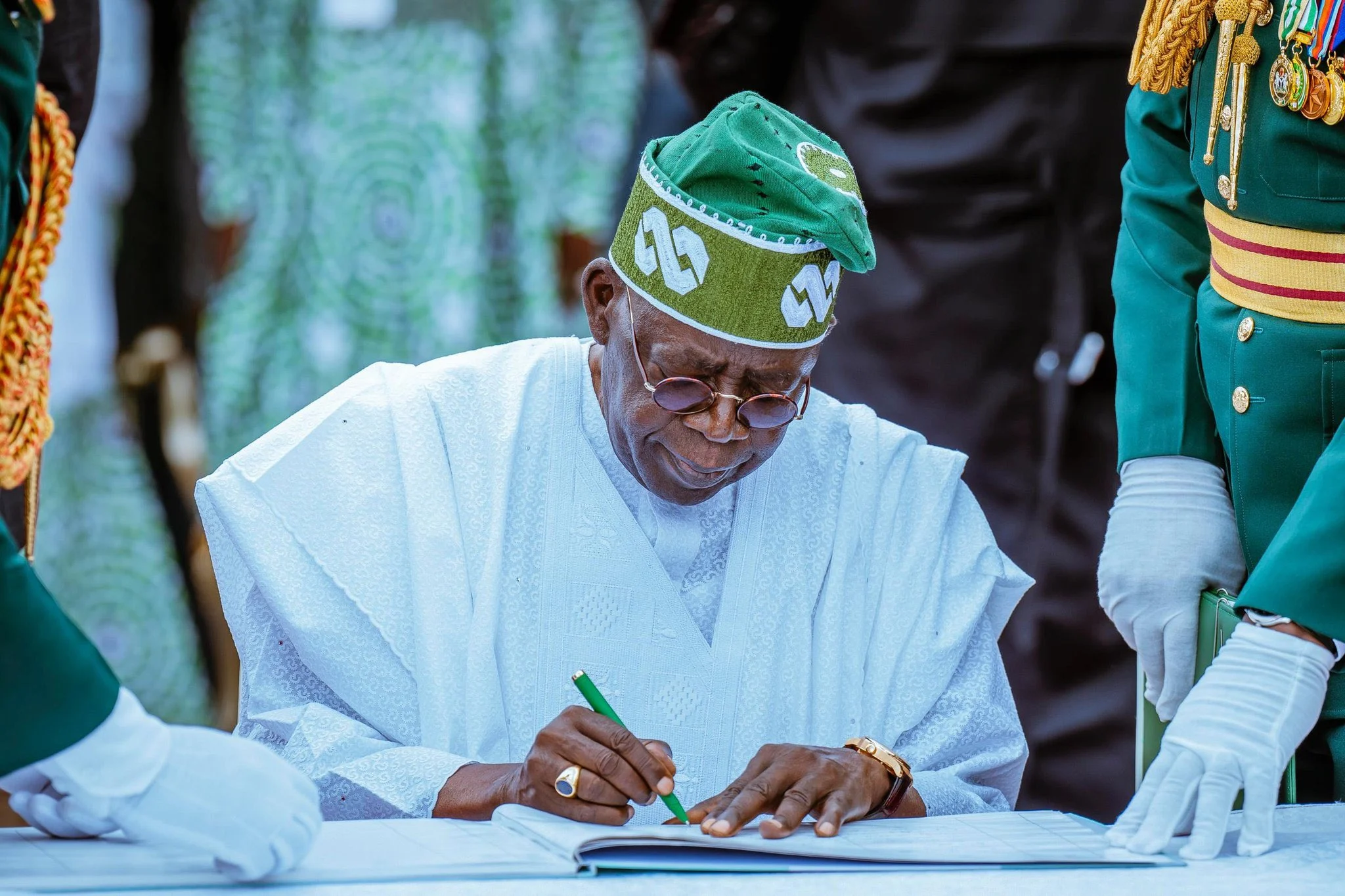
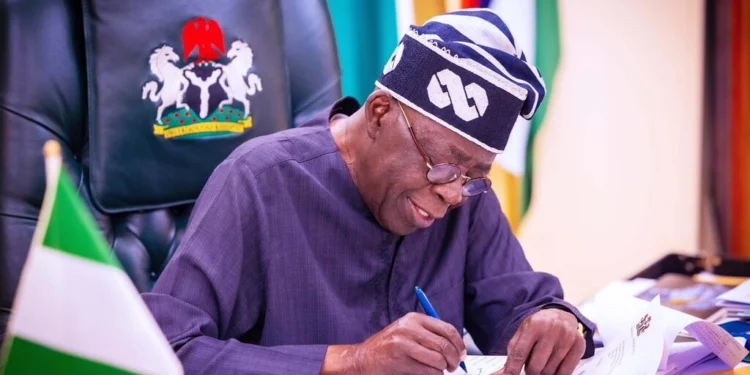
    President Bola Ahmed Tinubu has appointed eight permanent secretaries in the federal civil service.

    The move is to create adequate manpower to fill existing and impending vacancies in some states and geopolitical zones. 
     
    A statement by Mr. Bayo Onanuga, the President’s spokesperson said this is the second set of eight permanent secretaries appointed by the president, after those appointed last June.

    He said the states covered by the June appointment were Akwa Ibom, Anambra, Bauchi, Jigawa, Ondo, Zamfara,  South East and South-South. 
     
    In the statement, it was disclosed that the “Office of the Head of the Civil Service of the Federation recommended that the new permanent secretaries be appointed after diligent selection.” 
     
    They  are:
     
    1.        Onwusoro Maduka Ihemelandu (Abia State) 
    2.        Ndiomu Ebiogeh Philip (Bayelsa State) 
    3.        Anuma Ogbonnaya Nlia (Ebonyi State)
    4.        Ogbodo Chinasa Nnam (Enugu State) 
    5.        Kalba Danjuma Usman (Gombe State) 
    6.        Usman Salihu Aminu (Kebbi State) 
    7.        Oyekunle Patience Nwakuso (Rivers State) 
    8.        Nadungu Gagare (Kaduna State) 
     
    Mr. Onanuga said the “President Tinubu urges the new permanent secretaries to demonstrate greater commitment, diligence, and innovation in serving the nation.”

  • INEC Suggests Change to Voter Accreditation for 2027 Elections

    INEC Suggests Change to Voter Accreditation for 2027 Elections

    Despite informed counsel that what it needs is attitudinal change rather than technological adaptation, the Independent National Electoral Commission (INEC) recommends altering the current system of voter accreditation for the 2027 elections. 

    The proposal focuses on expanding options beyond the Permanent Voter Card (PVC) by allowing computer-generated slips or downloadable credentials from INEC’s website to verify voters on Election Day.

    The Election Management Body insists that this suggestion follows lessons learned from the 2023 general election and subsequent polls. INEC hopes to reduce costs and prevent the manipulation of PVCs, a common tactic used to disenfranchise voters. 

    The change could also streamline the accreditation process, making it easier for citizens to vote.

    Meanwhile, observers of the Nigerian electoral system advise that what both politicians and INEC officials required was deliberate attitudinal change or character reformation to enable actors to subordinate themselves to the rule and laws governing the game.

    INEC plans to present its recommendations to the Nigerian Senate and House of Representatives in the coming months as part of broader efforts to reform the country’s electoral system. 

    The commission has outlined numerous areas for improvement, including voter management, election security, and the use of technology in voting.

  • House of Reps Advances Bill to Amend ICPC Act

    House of Reps Advances Bill to Amend ICPC Act

    Part of the amendment, when approved would require a convicted looter of public fund to undergo mandatory counselling to tackle mental attitudes that predispose some public officials to obscene accumulation of illicit wealth, hoping that such measure may help to curb corruption at its root.

    The bill which will aim to revise the Corrupt Practices and Other Related Offences Act, 2000, has passed its second reading in the House of Representatives.

     Sponsored by Hon. Akiolu Moshood Kayode of Lagos Island, the proposed amendment focuses on introducing mandatory counselling and training for those convicted of corruption-related offences.

    During the debate, Kayode explained that the bill seeks to update Section 67 of the law by adding new provisions. 

    These would require judges and magistrates, in addition to sentencing offenders to prison or fines, to mandate a period of anti-corruption counselling and training.

    The bill aims to address the link between mental attitudes and the accumulation of illicit wealth, proposing that such measures will help curb corruption at its root.

    In another matter, the House also agreed to probe the activities of Nigeria Customs Service officers after allegations surfaced involving smuggling.

     This came after a motion was raised by Rep. Oluwaseun Whingan, who cited an incident in Badagry, Lagos, where a journalist was assaulted while filming in a suspected smuggling area. 

    Smugglers beat a Journalist to stupor in Badagry, Lagos, State

    The investigation will focus on the legal framework of the Nigerian Customs Service and its officers’ conduct. 

    The motion has been referred to the Committee on Customs and Excise.

  • Tinubu Revises South East Development Commission Board

    Tinubu Revises South East Development Commission Board

    President Tinubu has presented a revised list of the leadership nominations for the South East Development Commission for Senate approval.

     The reshuffle, revealed on December 6, replaces several key nominees while retaining some from the initial lineup.

    Notable changes include Dr. Emeka Nworgu replacing Emeka Atuma as chairman.

     The board now features Stanley Ohajuruka as Executive Director of Finance, Toby Okechukwu as Executive Director of Projects, and Chief Sylvester Okonkwo as Executive Director of Corporate Services. 

    Two new executive directors, Chidi Echeazu and Dr. Clifford Ogbede, have also joined the board.

    While the managing director position remains with Mark C. Okoye, former board member Donatus Eyinnah Nwankpa has been removed. 

    The revised list increases the board’s size from 15 to 16 members, signaling a broader scope for development initiatives.

    The nominations await Senate confirmation, marking the next phase in establishing the Commission as a platform for regional growth.

  • Nigeria to Conduct Population Census in 2025

    Nigeria to Conduct Population Census in 2025

    The National Population Commission (NPC) has revealed plans to hold Nigeria’s next population and housing census in 2025, nearly two decades after the previous count in 2006. 

    Nasir Kwarra, the NPC chairman, shared the update during the 2024 Nairobi Summit anniversary in Abuja, addressing the need for accurate data to support better decision-making. 

    Kwarra acknowledged the challenges posed by the long delay, which have impacted resource distribution and policy planning.

     The census was initially set for 2023 but was postponed to allow the incoming government to manage the process. 

    He emphasized the importance of timely data in tackling issues such as gender-based violence, reproductive health, and rural development.

    The upcoming census is seen as crucial for addressing gaps in healthcare, education, and economic development, particularly for vulnerable groups like women and youth. 

    Kwarra also stressed that access to sexual and reproductive health rights is not just a healthcare issue but a matter of social and economic equality.

    Toyin Saraki, founder of the Wellbeing Foundation Africa, expressed support for ongoing advocacy and called for greater collaboration across sectors to advance the goals of the International Conference on Population and Development (ICPD).

  • Tinubu postpones FEC meeting in honour of late COAS Lagbaja

    Tinubu postpones FEC meeting in honour of late COAS Lagbaja

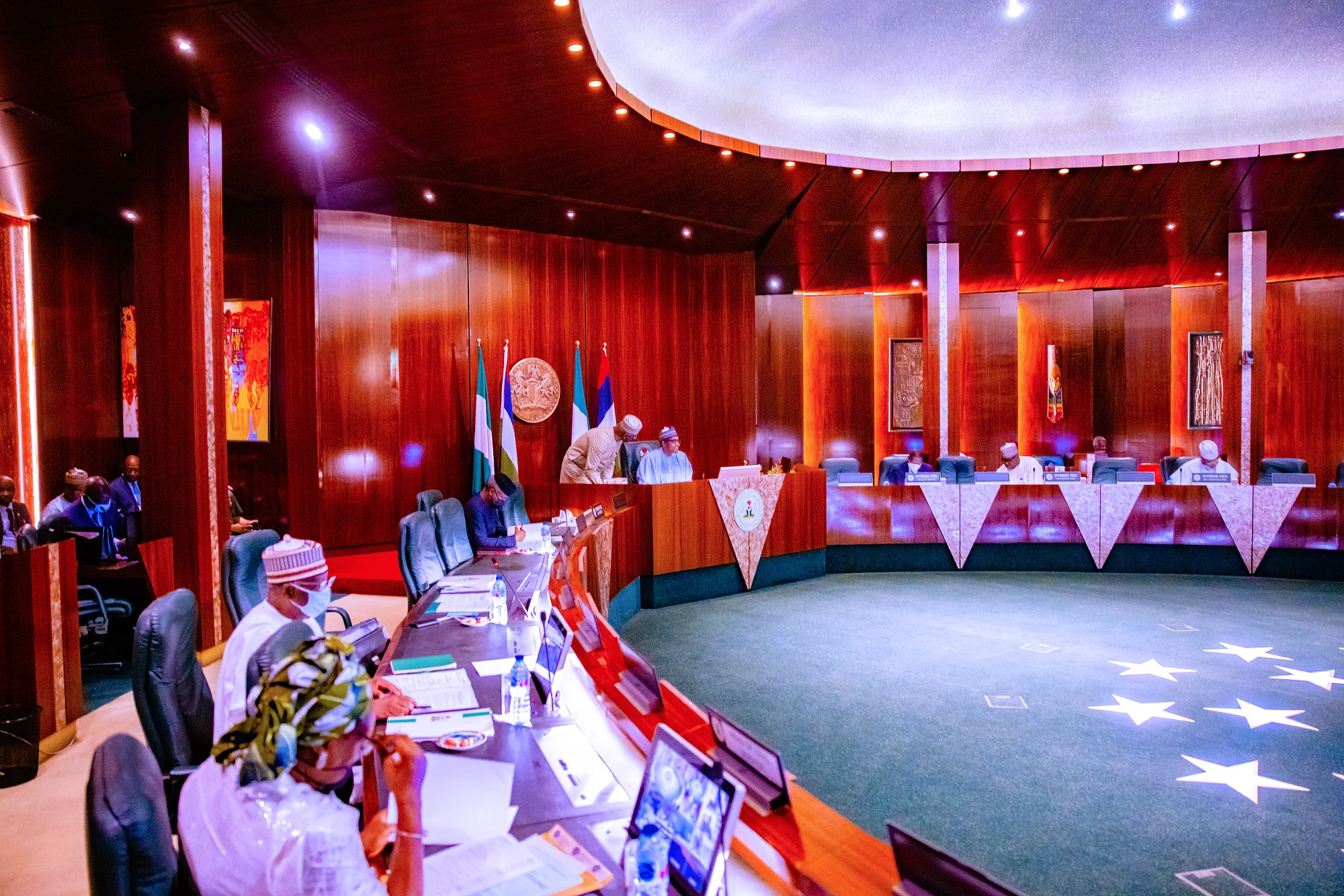
    President Bola Ahmed Tinubu has postponed the Federal Executive Council (FEC) meeting in honour of the late Chief of Army Staff, Taoreed Lagbaja, who passed away on Tuesday night.

    Tinubu also ordered flags to be flown at half-staff nationwide for seven days in honour of the departed general.

    Lagbaja served as Chief of Army Staff from June 19, 2023, till his death on November 5, 2024.

    The postponement of the FEC meeting was contained in a statement by the Special Adviser to the President on Information and Strategy, Bayo Onanuga, on Wednesday, November 6.

    The statement reads: “President Bola Ahmed Tinubu, commander-in-chief of the Armed Forces, has ordered rescheduling the Federal Executive Council meeting till another date to be announced.”

    Initially scheduled for today, the council meeting was postponed in honour of Lt. General Taoreed Lagbaja, the Chief of Army Staff, who passed away on Tuesday night.

    “General Lagbaja served as the Chief of Army Staff from June 19, 2023, till his death on November 5, 2024.”

    President Tinubu also ordered flags to be flown at half-staff nationwide for seven days in honour of the departed general.”

    Earlier today, President Tinubu expressed his heartfelt condolences to the Lagbaja family and the Nigerian Armed Forces.

    “He wished Lt. General Lagbaja eternal peace and honoured his significant contributions to the nation.”

  • Senator Kashim Shettima upscales Nigeria’s Human Capital Development Programme

    Senator Kashim Shettima upscales Nigeria’s Human Capital Development Programme

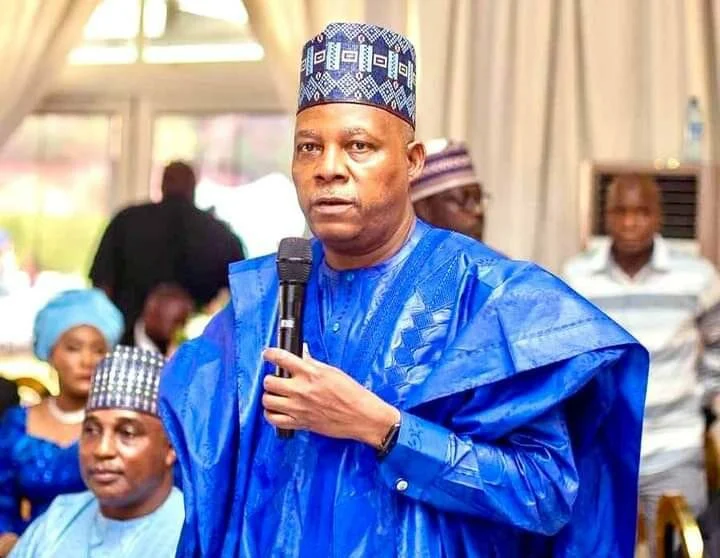
    Vice President Kashim Shettima upscales Nigeria’s Human Capital Development (HCD) agenda with the launch of the second phase of the critical development strategy, November 1, Abuja.

    He inaugurated the second phase, christened as HCD 2.0, during a meeting of the Human Capital Development Programme Steering Committee at the Presidential Villa in Abuja.

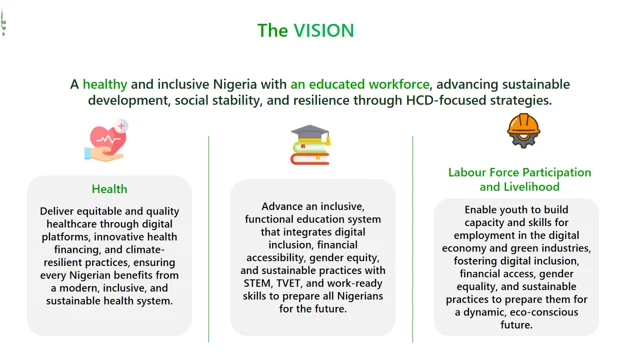
    The launch marks a renewed commitment to enhancing healthcare, education, and economic inclusion across Nigeria, building upon efforts initiated in 2018.

    Vice President Shettima acknowledged the progress made since the initial HCD 1.0 strategy, which laid essential groundwork to improve Nigeria’s global human capital rankings. 

    Recognizing critical gaps in health, education, and employment, HCD 1.0 united national and state-level stakeholders in a shared goal to strengthen Nigeria’s health and education sectors by 2030. 

    “Today, we are not only assessing our journey but setting a new path with HCD 2.0,” Shettima stated, describing the initiative as more than a program, but rather a “national commitment” aimed at creating a healthier, more educated, and inclusive Nigeria.

    HCD 2.0 introduces an expanded focus on equitable healthcare access, including digital health solutions, innovative financing, and climate-resilient practices to ensure all Nigerians receive essential services. 

    Another key aspect of HCD 2.0 is bridging the digital divide and advancing financial inclusion, with measures to promote online banking, digital payment systems, and fintech solutions, allowing broader participation in the economy.

    Shettima emphasized that HCD 2.0’s success relies on support from federal and state leaders, private sector partners, and civil society, urging all stakeholders to embrace this shared vision for a sustainable future.