Category: News

  • Senate Approves  Death Penalty for Drug Traffickers

    Senate Approves Death Penalty for Drug Traffickers

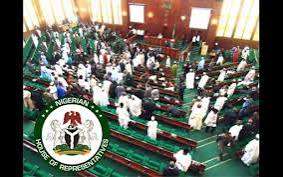
    The Nigerian Senate has made a bold move by approving a bill that mandates the death penalty for individuals found guilty of drug trafficking within the nation’s borders. The decision, which followed a presentation by Senator Tahir Monguno representing Borno North.

    The bill, which passed its third reading in the Senate chamber, seeks to modernize existing laws governing drug offenses and strengthen the operations of the National Drug Law Enforcement Agency (NDLEA).

    Key provisions include updates to the list of prohibited substances and the enhancement of drug testing laboratory facilities.

    The decision to introduce the death penalty came as an amendment to Section 11 of the current NDLEA Act, which previously stipulated a maximum sentence of life imprisonment for drug trafficking offenses.

    Senator Ali Ndume spearheaded the amendment, arguing for tougher penalties to deter drug-related activities effectively.

    During deliberations, Deputy Senate President Barau Jibrin oversaw a clause-by-clause examination of the bill. Despite objections from Senator Adams Oshiomhole regarding the gravity of the decision, the amendment to impose the death penalty was put to a voice vote and passed with a majority in favor.

    While Senator Oshiomhole expressed concerns about the weightiness of matters concerning life and death, the decision had already been made, as no immediate call for division was made following the ruling.

    The Senate’s endorsement of the bill underscores Nigeria’s commitment to combating drug trafficking and related offenses. Proponents argue that stricter penalties are necessary to stem the tide of illicit drug activities, while critics warn of the potential for miscarriages of justice and human rights violations.

    With the bill cleared by the Senate, it now awaits further deliberation and potential amendments in the House of Representatives before it can be enacted into law, pending the President’s approval.

  • Cybersecurity Levy Not Punitive – Sen Buba,

    Cybersecurity Levy Not Punitive – Sen Buba,

    The Chairman of the Senate Committee on National Security and Intelligence, Senator Shehu Umar Buba, has addressed the controversy surrounding the proposed implementation of the Cybersecurity levy by the Central Bank of Nigeria (CBN). The levy is provided for in the Cybercrimes (Prohibition, Prevention, etc) (Amendment) Act, 2024.

    He clarified that the levy is not punitive as it has numerous exemptions to protect and relieve ordinary citizens, particularly the poor. According to him, the exemptions include salary payments, intra-account transfers, loan disbursements and repayments, and other financial transactions.

    Senator Buba said the amendments to the Cybercrimes Act were a collaborative effort with the National Assembly’s ICT and Cyber Security Committee. The committee also underwent a transparent public hearing process, receiving contributions from various stakeholders. Both Houses of the National Assembly unanimously passed it before President Bola Ahmed Tinubu signed it into law.

    Senator Umar emphasised that the provisions for the cybersecurity levy have been in place since 2015 but were delayed due to unclear interpretations and applications.

    “The Cybercrimes Act of 2015 has provisions for imposing a cybersecurity levy since its enactment, but the vagueness of Section 44 led to different interpretations until the 2024 amendments. The levy is 0.5%, equivalent to half a per cent of the value of all electronic transactions by businesses specified in the Second Schedule to the Act.

    “The amendments addressed crucial gaps in the Act and empowered the nation to implement the National Cybersecurity Programme effectively. They also seek to realign and empower the country to combat the inadequate funding and disruptive effects of cyber threats on national security and critical economic infrastructures,” he said.

    Senator Umar underscored the criticality of the cybersecurity levy’s implementation, stating that its prudent utilisation will bolster the nation’s capacity to evaluate, execute, upgrade, and fortify the security of national critical economic infrastructure, thereby safeguarding the nation’s cyberspace.

    The Committee commended the Office of the National Security Adviser and the Central Bank of Nigeria (CBN) for initiating the operationalising the cybersecurity levy, highlighting its benefits far outweigh its drawbacks.

    He expressed appreciation to the leaders and representatives of MDAs at the federal and state levels, as well as to all stakeholders who contributed to this effort’s success.

    While maintaining that the Committee’s mandate is to create laws that align with the aspirations of Nigerians, he appealed for public support, assuring that the policy will yield maximum benefits for citizens in the shortest possible time.

    Following the enactment of the Cybercrime (Prohibition, Prevention, etc) (Amendment) Act 2024 and under the provision of Section 44 (2)(a) of the Act, a levy of 0.5 per cent (0.005) equivalent to half per cent of all electronic transactions value by the business specified in the Second Schedule of the Act is to be remitted to the National Cybersecurity Fund, which the Office of the National Security Adviser shall administer.

    Though the announcement created controversy, the circular exempted some transactions from cybercrime levy.

    The exemptions included loan disbursements and repayments, salary payments, intra-account transfers within the same bank or between different banks for the same customer, intra-bank transfers between customers of the same bank, and Other Financial Institutions (OFIs) instructions to their correspondent banks.

    The exemption also applies to interbank placements, banks’ transfers to CBN and vice versa, inter-branch transfers within a bank, cheque clearing and settlements, and Letters of Credit (LCs).

    Others include banks’ recapitalisation-related funding only bulk funds movement from collection accounts; savings and deposits including transactions involving long-term investments such as treasury bills, bonds; and commercial papers; government social welfare programmes transactions, e.g. pension payments; non-profit and charitable transactions including donations to registered non-profit organisations or charities; educational institutions transactions, including tuition payments and other transaction involving schools, universities, or other academic institutions.

     

  • Tinubu’s appointees are misfits and weak- Dikwa

    Tinubu’s appointees are misfits and weak- Dikwa

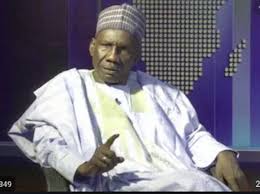
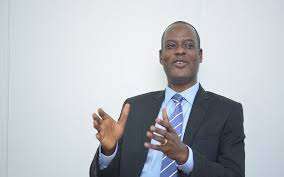
    The Dean of Borno Elders Forum, Prof Khalifa Dikwa, says members of the elite in the northern region of the country are unhappy with President Bola Tinubu because of his “misfit and weak appointees” as well as his “anti-people policies”.

    The political analyst, who featured on Channels Television’s Politics Today programme on Wednesday, said northern elite are “not happy because each of these policies affect the north entirely”.

    “Most of the appointees are either misfits or weak or to the wrong places,” the elder statesman said, adding that the appointments by the Tinubu administration are “lopsided”.

    Prof Dikwa said even “the southern elite should be annoyed because Nigeria is more than Lagos”.

    He further described as “provocative”, the 0.5% cybersecurity levy on electronic transactions recently introduced by the Central Bank of Nigeria (CBN), and asked the President to immediately order the apex bank to suspend the implementation of the new policy.

    “This is not the time, it’s wrong timing. Why are they provoking the people of this country? They have taken enough,” he said.

  • 2027: Mega Party Prepares to Unseat Tinubu

    2027: Mega Party Prepares to Unseat Tinubu

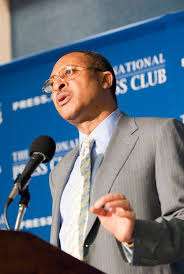
    Renowned political economist and former presidential candidate, Professor Pat Utomi, has announced plans for the formation of a new mega-political party aimed at unseating the ruling All Progressives Congress (APC) in the 2027 general elections. 

    Utomi, who criticized the current political landscape for its failure to deliver effective governance, emphasized the need for a drastic change. 

    The proposed party will merge two distinct groups: the ‘mea culpa’ cohort, consisting of former politicians acknowledging past failures, and the ‘new value’ cohort, comprising forward-thinking individuals from various political backgrounds. 

    Utomi highlighted the importance of promoting value-driven citizenship, integrity, and respect for the dignity of people. 

    “The nature and the structure of our politics is such that even good people, when they enter these existing political parties, will play to their interests,” Utomi explained.

  • Review of Judges salary: Bill passes second reading

    Review of Judges salary: Bill passes second reading

       
    A bill seeking to increase the salaries and allowances of judges at all levels has passed second reading in the senate.

    The bill was considered after Lola Ashiru, deputy majority leader, led the debate during plenary on Thursday.

    Ashiru said the bill, which was sent by the executive, will enhance the integrity of the judicial arm of government.

    Contributing to the debate, Tahir Monguno, senator representing Borno north, said improving the welfare of judges will insulate them from corruption.

    “There is a need to bring up the remuneration of judicial officers that have stagnated over the years,” Monguno said.

    “This will insulate judicial officers from corruption and give them courage to deliver judgments that are just and fair.”

    On his part, Orji Uzor Kalu, senator representing Abia north, said increasing the salaries of the judges is the right thing to do.

    “No right thinking Nigerian will not think that it is right to keep the judiciary comfortable. I want to thank the executive for deeming it fit to increase salaries of judges at all levels,” Kalu said.

    “We should not stop at the judiciary but look at other sectors of the economy.”

    Emmanuel Udende, senator representing Benue north-east, said judges have had their morale dampened over the years because of poor remuneration.

    “For the past 15 years, judicial officers have remained on meagre salaries,” he said.

    “When you interact with them as a lawyer, you see their morale is dampened, and when the morale is dampened the work will be.”

    The bill passed second reading after it was put to a voice vote by Senate President Godswill Akpabio.

  • Alleged N2.7bn Fraud: Fmr Aviation Minister, Sirika, Daughter, others arraigned …granted 100m bail each

    Alleged N2.7bn Fraud: Fmr Aviation Minister, Sirika, Daughter, others arraigned …granted 100m bail each

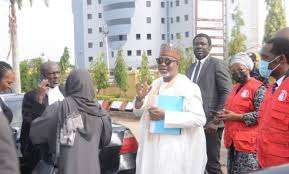
    The Economic and Financial Crimes Commission (EFCC) Thursday, arraigned and granted bail of N100 million each to a former Minister of Aviation, Hadi Sirika, his daughter, Fatima and two others.

    Justice Sylvanus Oriji of High Court of the Federal Capital Territory, Maitama, ordered the defendants be remanded in the Correctional Centre should they failed to meet the bail conditions.

    Sirika, who served under President Muhammadu Buhari administration
    alongside Jalal Sule Hamma and Al-Durag Investment Ltd was docked on a 6-count amended criminal charge over abuse of office to the tune of N2.7 billion.

    Before plea taking, the prosecution counsel, Rotimi Jacobs SAN, informed the court of an amended charge by the EFCC dated May 7, and filed on May 8, which was not opposed by counsel to the defendants.

    The defendants had pleaded not guilty, and Jacobs urged the court for expeditious hearing of the case.

    Sequel to not guilty plea, Kanu Agabi SAN, counsel for Sirika (1st defendant) informed the court of his client’s bail application dated May 6.

    Reacting, Jacobs told the court that all the defendants are on administrative bail and urged the court to grant bail on the condition that will make them appear for their trials.

    Meanwhile, ruling on the bail application, Justice Oriji granted bail to each of the defendants in the sum of N100m with two sureties each.

    The court held that the sureties must own landed property within the FCT with valid land titles and must depose to an affidavit of means.

    The court also restricted the defendants from traveling abroad without its permission.

    Justice Oriji ordered that the defendants should be remanded in prison custody if they fail to meet up with the bail conditions.

    Meanwhile, the matter has been adjourned till 10, 11, and 20 June for commencement of trial.

  • Nigerian Army Agrees to Withdraw Troops from Okuama Community

    Nigerian Army Agrees to Withdraw Troops from Okuama Community

    The  Nigerian Army has reached an agreement with Delta State Governor Rt Hon Sheriff Oborevwori to withdraw military personnel from the troubled Okuama community in Ughelli, South local government area.

    This decision, announced in a press release by Governor Oborevwori, comes after discussions with the Chief of Army Staff, Lt. Gen. Taoreed Lagbaja. 

    The withdrawal is effective immediately.

    The community had been under military siege following the tragic killing of 17 soldiers, including high-ranking officers, on March 14. 

    Governor Oborevwori expressed gratitude to President Muhammadu Buhari, the Chief of Army Staff, and the Nigerian Army hierarchy for their understanding and cooperation in a peaceful resolution ofthe crisis.

    He also thanked members of the National Assembly, traditional rulers, and other leaders for their support during this challenging time. 

    Governor Oborevwori reassured the people of Okuama of the Delta State Government’s commitment to assisting them in returning to their homes and rebuilding their lives.

  • More Woes For Nigerians As Presidency Moves To Increase VAT Rate

    More Woes For Nigerians As Presidency Moves To Increase VAT Rate

    The current financial woes of the Nigerian is set to get worse as the Presidential Committee on Fiscal Policy and Tax Reforms has put forth a proposal to increase the current Value Added Tax (VAT) rate. 

    Mr. Taiwo Oyedele the chairman of the committee, has highlighted the need for this change during a policy exposure session. 

    Currently set at 7.5 per cent, the proposed adjustment aims to restructure the revenue-sharing formula, with states and local governments set to receive a larger portion. 

    Oyedele stressed the importance of ensuring transparency and neutrality in VAT collection, emphasizing that the burden should fall on the ultimate consumer. 

    To mitigate the impact on small businesses and the underprivileged, certain essential goods and services would remain exempt from VAT. 

    He said, “We are proposing that the federal government’s portion should be reduced from 15 per cent to 10 per cent. States’ portion will be increased, but they would share 90 per cent with local governments.

    “In 1986, we had sales tax collected by states. The military came up with VAT in 1993 and stopped sales tax, so they said it would collect VAT and return 15 per cent as cost of collection, and that is the 15 per cent charged today came about. But we think it is too much.

    So we must make it transparent and neutral, and this is what over 100 countries where they have VAT are doing.

    “Nigeria’s economy is more than 50 percent in services and if I just stop at this, many states will be broke because VAT collection will go down by more than 50 percent and it won’t even fly.

    “So we, therefore, need to adjust the VAT rate upward. We would ensure that it doesn’t affect businesses. The only thing is to look at basic consumption from food, education, medical services, and accommodation will carry zero per cent VAT. So, for the poor and small businesses, no VAT.”

  • ALGON support call for Fubara’s impeachment

    ALGON support call for Fubara’s impeachment

    The crises in Rivers state is beginning to take a new dimension after the state chapter of the All Progressives Congress, APC, called for the impeachment of Governor Siminalayi Fubara yesterday.

    In support of the call, the Rivers State chapter of the Association of Local Government Areas of Nigeria, ALGON, has accused Governor Fubara of withholding funds allocated for the 23 LGAs in the state.

    According to the state chapter of ALGON, the Governor’s action has hindered their ability to carry out their duties, saying it amounts to abolishing local government councils in the state.

    The LG Chairmen also indicated that they are in support of the call for impeachment of the Governor by the Caretaker Committee Chairman of the All Progressives Congress, APC, Tony Okocha, who had asked the Martins Amaewhule-led State House of Assembly to initiate impeachment proceedings against the Governor.

    Addressing journalists on Wednesday, Allwell Ihunda, the State ALGON Chairman and Chairman of Port Harcourt City Local Government Area said, “It has come to the notice of the Association of Local Governments of Nigeria, Rivers State chapter, that the Rivers State Government, under the leadership of His Excellency, Sir Siminalayi Fubara, has neglected, failed, and deliberately refused to hold the statutory Joint Account Allocation Committee Meeting which is the prerequisite for the release and disbursement of funds due to the local government in the State Joint Local Government Accounts.

    “And has continued to withhold the statutory allocations due to the 23 local government councils of Rivers State since April 2024.

    “And in the case of Emuoha LGA since March 2024 till date for no just course, thereby starving the third tier of the government of the funds required to discharge its statutory functions in the administration of the local government areas.”

  • TUC Threaten Nationwide Strike Over Cybersecurity Levy 

    TUC Threaten Nationwide Strike Over Cybersecurity Levy 

    The Trade Union Congress (TUC) has threatened a massive protest that will shut down the Nigerian economy should the Federal Government fail to cancel the controversial cybersecurity levy recently introduced by the Central Bank of Nigeria.

    The TUC in a statement signed by its President, Festus Osifo, on Wednesday, slammed the directive by the CBN to banks imposing a 0.5 per cent cybersecurity levy on almost all electronic transactions.

    This is after the Nigeria Labour Congress (NLC) had heavily criticised the levy which it described as another burden on Nigerians.

    Adding to the deluge of condemnations that have greeted the introduction of the levy which the CBN said will take effect in two weeks from May 6, the TUC said it is illogical that this is coming at a time that Nigerians are grappling with the high cost of living that is imposed by the devaluation of Naira, hyper hike in the cost of Petrol, supersonic increment in the cost of electricity tariff, etc.

    The union said it is disturbed that since the inception of the President Bola Tinubu-led administration, government policies have brought pain, anguish and sorrow to Nigerians.

    It lamented that account holders in Nigeria are already dealing with multiple taxation from both the Federal Government and the banks.

    The TUC berated the National Assembly for “colluding” with “elements in the executive” to “exploit” the citizens they ought to be protecting.

    Saying that all Nigerians are interested in right now is the urgent conclusion of discussions around the minimum wage and not a “vexatious policy”, the TUC urged the Federal Government to immediately direct the CBN to withdraw the circular to banks and cancel the levy forthwith.

    It said that it will be left with no option but to mobilize all its members, stakeholders and indeed the entire masses “to embark on the immediate protest that would culminate into the total shutdown of the Nigerian economy as this is one exploitation too many.”