Category: News

  • New Health Insurance for FCT Residents

    New Health Insurance for FCT Residents

    In a move aimed at enhancing healthcare accessibility and reducing financial barriers, the Federal Government has introduced the Federal Capital Territory (FCT) Health Insurance Scheme (FHIS) to residents across the FCT’s six area councils.

    The scheme, designed to prioritize the healthcare needs of marginalized groups, offers subsidized enrollment and free registration for the poor and vulnerable.

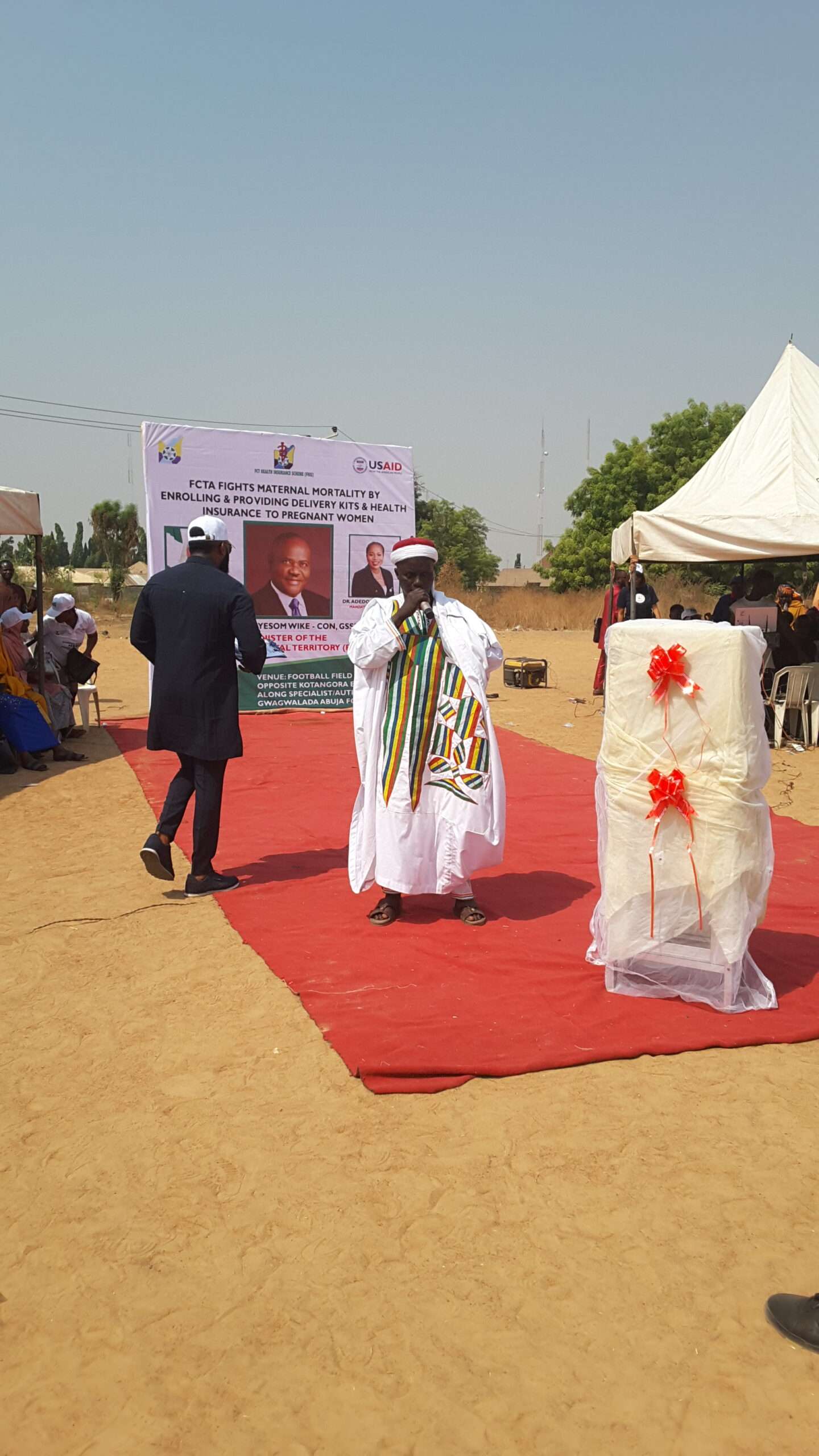
    Dr. Mohammed Danfulani, Director of the FCT Health Insurance Scheme, announced the commencement of enrollment during a sensitization drive held in Gwagwalada for Abaji, Kuje, Kwali, and Gwagwalada area councils. Residents can enroll in the scheme for an annual fee of N13,500, with provisions in place for those unable to afford the cost.

    “The Federal Government’s commitment ensures that every individual, irrespective of financial status, gains access to essential healthcare services through the FHIS,” stated Dr. Danfulani, highlighting the nationwide implementation of similar initiatives.

    Addressing concerns regarding service delivery, Pharmacist Adedeji Fatai, Head of the Monitoring and Evaluation Unit at FHIS, assured the public of stringent quality control measures to uphold standards across healthcare facilities.

    Community leaders, including Estu Sule Dobi, the District Head of Dobi in Gwagwalada area council, praised the scheme’s introduction and advocated for comprehensive awareness campaigns to reach remote communities.

    Grace Johnson, a beneficiary of the scheme, commended the FCT leadership for the efficient enrollment process, signaling widespread acceptance among residents.

    Additionally, as part of its support measures, the Federal Health Insurance Scheme distributed delivery kits to expectant mothers in the FCT, underscoring its commitment to maternal and child healthcare.

    The launch of the FCT Health Insurance Scheme represents a significant stride towards achieving universal healthcare coverage and improving health outcomes for FCT residents. With its emphasis on inclusivity and quality assurance, the scheme is poised to address healthcare disparities and promote well-being across the region.
  • INEC Partners Foreign Bodies to Launch Guidelines for Digital and Social Media Use in African Elections

    INEC Partners Foreign Bodies to Launch Guidelines for Digital and Social Media Use in African Elections

    In a concerted effort to enhance electoral processes across Africa, the Independent National Electoral Commission (INEC) of Nigeria has partnered with the Association of African Election Authorities (AAEA) and the Independent Electoral Commission (IEC) of South Africa to introduce comprehensive guidelines for the effective utilization of digital and social media during elections.

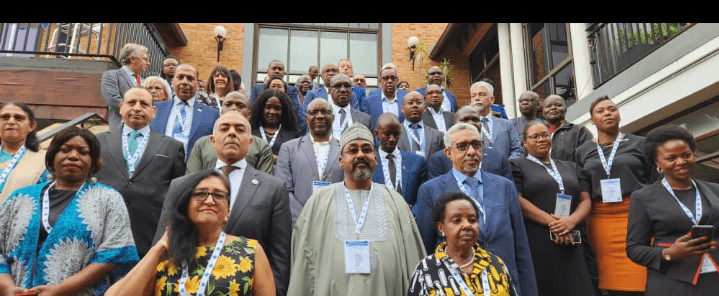
    The unveiling of the Principles and Guidelines for the Use of Digital and Social Media in Elections in Africa occurred over a three-day period, from Tuesday, 27th February to Thursday, 29th February, 2024, in Johannesburg, South Africa.

    Dr. Sa’ad Umar Idris, the Director-General of INEC’s Electoral Institute, represented the Nigerian electoral body at the event, which brought together stakeholders to deliberate on strategies for leveraging social media while mitigating potential risks associated with evolving digital technologies.

    The genesis of these guidelines can be traced back to the inaugural Continental Conference for Election Management Bodies held in Cape Town, South Africa, in March 2020. Themed “Safeguarding Electoral Integrity in the Digital Age: Strategies for Combatting Digital Disinformation,” the conference, jointly organized by the Electoral Commission of South Africa, the African Union Commission (AUC), and the United Nations Development Programme (UNDP), laid the groundwork for extensive consultations with EMBs and electoral stakeholders across Africa to formulate a robust framework.

    The newly introduced principles emphasize the pivotal role of social media in bolstering the credibility of Election Management Bodies (EMBs) and fostering public trust during electoral processes.

    Additionally, they underscore the importance of responsible journalism and accountability among social media platform owners and users to counteract the risks of misinformation and manipulation.

    The collaborative endeavor between INEC, AAEA, and IEC signifies a proactive approach towards addressing the evolving challenges of electoral integrity in the digital era. By advocating for responsible digital engagement, African EMBs aim to uphold democratic principles and promote transparent electoral practices across the continent.

  • Senate Advocates Introduction of Food Stamp Program to Combat Food Insecurity

    Senate Advocates Introduction of Food Stamp Program to Combat Food Insecurity

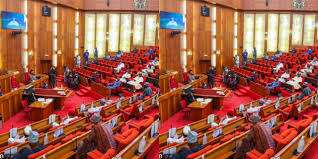
    In response to the growing incidence of food insecurity in Nigeria, the Senate has proposed the implementation of a food stamp program akin to what obtains in the United States. The resolution, put forth during Tuesday’s plenary session, emphasizes the need for immediate action to mitigate the impact of various factors contributing to the crisis, including conflicts, climate change, inflation, and currency devaluation.

    Senator Ali Ndume (APC, Borno South) spearheaded the motion titled, “Introduction of food stamps in Nigeria as an interim measure to address imminent food insecurity in the country,” with co-sponsorship from Senator Saliu Mustapha (APC, Kwara Central). Ndume underscored the urgency of the situation, citing projections from the October 2023 Cadre Harmonisé Analysis indicating that approximately 26.5 million Nigerians could face severe food insecurity in 2024.

    Highlighting the multifaceted nature of the issue, Ndume pointed to ongoing conflicts, adverse effects of climate change, skyrocketing inflation rates, and the devaluation of the national currency as key drivers of food insecurity. In response to these challenges, the Senate advocated for the adoption of a food stamp program modeled after the successful initiative in the United States.

    Senator Sani Musa (APC, Niger East) echoed Ndume’s sentiments, drawing parallels between the proposed Nigerian food stamp program and its American counterpart. He emphasized the potential of such a program to provide crucial assistance to vulnerable segments of society.

    To operationalize this initiative, the Senate directed the Federal Ministry of Agriculture to collaborate with development partners and relevant stakeholders, notably the Lagos Food Bank Initiative. The latter organization gained recognition for its Temporary Food Assistance Programme (TEFAP) in previous years, offering valuable insights and expertise in the implementation of food assistance programs.

    The Senate’s proactive stance on addressing food insecurity through the introduction of a food stamp program reflects a concerted effort to safeguard the well-being of the populace. By leveraging partnerships and drawing inspiration from successful models, Nigeria aims to bolster its resilience against the challenges posed by food insecurity.

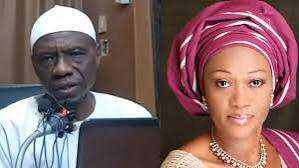
  • Islamic Cleric Apologizes To Remi Tinubu Days After He Called For Her Death

    Islamic Cleric Apologizes To Remi Tinubu Days After He Called For Her Death

    An Islamic cleric based in Katsina, Idris Tenshi, has apologised to the wife of the President, Oluremi Tinubu, over his recent comments.

    Recall that the cleric, in a sermon preached in the Hausa language which went viral, described the First Lady as an “infidel” who should be killed.

    He had said: “Tinubu’s wife is an unbeliever, and even among the unbelievers, she is a leader.

    “She is among those that Allah has instructed us to kill because she is among the leaders of the unbelievers.”

    Following the development, the cleric came under fire as individuals and groups demanded his immediate arrest and prosecution.

    However, in a new video, Tenshi apologised to the wife of the president over his comments, saying that everything he said was “a mistake”.

    The cleric also revealed that he had withdrawn his earlier comments after other clerics properly explained the verse he quoted.

    He said: “I would like to pass this message to Nigerians regarding a video I did which is circulating on social media.

    “All the things I said were a mistake, and I don’t stand by the words I said. Other clerics have given me a proper explanation of the verse that I quoted.

    “As a human being, I am prone to making mistakes. I am apologising to Her Excellency Remi Tinubu for the comments I made and for taking back the words I said.

    “I am also apologising to Nigerians because she (Remi Tinubu) is like a mother to us. The season of politics is over. I made those comments during the time the campaign was taking place.

    ‘Now that God has given Bola Tinubu power, we have no other option than to support him and wish him and his family well. Whoever felt offended by the things I said, I am sorry.”

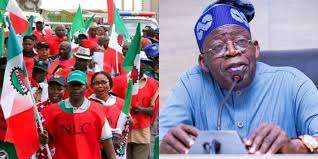
  • Hunger Protests: NLC, FG Trade Tackles

    Hunger Protests: NLC, FG Trade Tackles

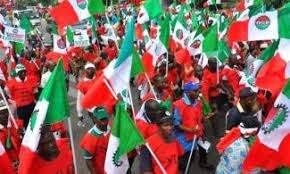
    The Nigeria Labour Congress (NLC) has reacted to the presidency’s claim over the ongoing protests.

    The organized labour said the nationwide protest is not about minimum wage but hunger and economic hardship.

    Contrary to the Presidency’s claim that the protest revolves around the minimum wage review, NLC’s National President, Joe Ajaero, emphasized that the union is addressing broader issues.

    Speaking on TVC, presidential spokesperson, Ajuri Ngelale described the demonstrations by the NLC as needless.

    Ajaero accused the Federal Government of neglecting the union’s demands since the removal of fuel subsidy, resulting in an increased cost of living. 

    Expressing concerns about the minimum wage, he stated, “What will be the minimum wage that will remove hunger?”

    Highlighting the impact of deregulation, Ajaero pointed out that the rising expenses, especially in transportation, have worsened the already dire situation.

    The NLC proposed various solutions, including the introduction of CNG buses, but lamented the lack of implementation.

    Notable figures such as Oyo State governor, Seyi Makinde, NLC president Joe Ajaero, Omoyele Sowore, Deji Adeyanju, and Lawyer Femi Falana actively participated in the protest in Abuja. 

    The demonstrations have unfolded across all states in Nigeria, signaling a widespread concern for the economic well-being of the citizens.

  • NECO Releases 2023 November/December SSCE Results 

    NECO Releases 2023 November/December SSCE Results 

    The National Examinations Council (NECO) has unveiled the results of the external 2023 November/December Senior School Certificate Examination (SSCE), revealing a commendable 67.35% of candidates achieving five credits and above in English Language and Mathematics.

    The official announcement was made by NECO’s Registrar and Chief Executive, Professor Dantani Wushishi, at the headquarters in Minna, Niger State, on Monday. 

    The results, accessible on the official NECO website, www.neco.gov.ng, were released just 67 days after the conclusion of the examination held from November 20 to December 20, 2023.

    Out of the 74,950 candidates who registered, 39,213 were males (52.31%) and 35,737 were females (47.68%). Notably, 50,066 candidates secured five credits and above, including English Language and Mathematics, representing 67.35%. 

    Furthermore, 84.11% of candidates, totaling 62,530, achieved five credits and above irrespective of English Language and Mathematics.

    Professor Wushishi also highlighted a decline in examination malpractice cases, with 8,518 reported cases, reflecting a 25.4% reduction from the previous year. 

    Notable actions were taken, including blacklisting one centre each in Kaduna and Ogun States for whole centre cases, blacklisting two supervisors in Oyo and Lagos States for poor supervision, and blacklisting a Borno State centre for aiding and abetting through sharing WhatsApp messages.

    In a significant development, NECO introduced the e-Posting Software to streamline staff posting, addressing historical challenges such as lopsidedness and favoritism. 

    The Registrar emphasized that this digitalized process would provide staff with notifications about eligible assignments at the beginning of each year, enhancing transparency and fairness.

  • Police Denies Sealing NLC Lagos Office

    Police Denies Sealing NLC Lagos Office

    Lagos State Police command has denied a report of sealing the secretariat of the Nigeria Labour Congress, NLC, in Yaba, Lagos, on Monday.

    State’s Police spokesman, SP Benjamin Hundeyin, described the report as rumour, saying the Commissioner of Police Adegoke Fayoade only went to the NLC secretariat to address protesters.

    The police spokesman stated this in reaction to the rumour, and giving reasons for heightened security upgrades in hotspots around Lagos on Monday.

    Hundeyin told newsmen that the police proactively arrived at the NLC secretariat and other hotspots to ensure adequate security for planners of the strike and to prevent their procession from being hijacked by hoodlums.

    “The Commissioner of Police, Mr Fayoade addressed the protesters before the procession took off in his presence.

    “The procession was peaceful and without any untoward incident,” Hundeyin said, adding that CP Fayoade monitored the security operation and the protest, ” he said.

    He stated that the protesters neither caused traffic obstruction nor got involved in violent activities.

    Heavily armed police operatives were seen at Gani Fawehinmi Park, Ojota, and other parts of Lagos on Monday, in readiness for a planned protest by organised labour.

    The NLC and the Trade Union Congress, TUC had scheduled a nationwide strike for February 27 and 28 to protest what they called hardship currently faced by Nigerians.

  • Cost of Governance: FG Lists Agencies to be scrapped

    Cost of Governance: FG Lists Agencies to be scrapped

    The federal government announces the list of Ministries, Departments, and Agencies (MDAs), either to be eliminated, merged or prunned as part of the implementation of the Oronsaye report that has been pending for more than a decade. 

    This decision, announced after Monday’s Federal Executive Council meeting, stems from a report initiated by former President Goodluck Jonathan in 2011. 

    Led by Steve Oronsaye, the committee identified overlapping agencies causing competition and wasteful expenditure, recommending the reduction of 263 statutory agencies to 161, abolishing 38, and merging 52.

    Additionally, 14 agencies are proposed to revert to departments within ministries, aiming for a more streamlined government structure.

    Below are government agencies set to be merged or scrapped.

    – 38 Federal Agencies to be abolished – Public Complaints Commission, National Poverty Eradication Programme, Utilities Charges Commission, National Agency for the Control of HIV/AIDS, National Intelligence Committee, etc.

    – 14 agencies to be fused into ministries where they were created e.g Debt Management Office to the Federal Ministry of Finance

    – Public Health Department back to the Federal Ministry of Health

    – National Information Technology Development Agency to be fused into the Ministry of Communication Technology

    – Reduction of statutory agencies from 263 to 161

    – 52 institutions to be merged: NTA, FRCN & VON into the Federal Broadcasting Corporation of Nigeria (FBCN)

    – NCC & NBC into Communication Regulatory Authority of Nigeria (CRAN);

    – CCB, EFCC & ICPC to be merged into the Anti-Corruption Commission.

    – Another key recommendation of the committee was to discontinue government funding of professional bodies and councils. Consequently, there is a need to amend the Professional Bodies (Special Provisions) Act, of 1972 which mandates the government to provide financial support of various kinds to such bodies. – They include the Teachers Registration Council of Nigeria (TRCN); Computer Professionals Council of Nigeria (CPRCN); Advertising Practitioners Council of Nigeria (APCON); Nigeria Press Council; Architects Registration Council; Council for Registered Engineers of Nigeria (COREN); Estate Surveyors’ Registration Board (ESRB); Town Planners Council (TPC); Nigerian Builders Council (NBC; Quantity Surveyors’ Registration Board of Nigeria (QSRB); Nigerian Builders Council (NBC); and Council of Nigerian Mining Engineers and Geoscientists (COMEG).

    Institute for Peace and Conflict Resolution to be scrapped and its functions to be transferred to the Department of Strategic Studies in the Nigerian Institute for International Affairs (NIIA).

    The committee recommended that the Petroleum Products Pricing Regulatory Authority (PPPRA) and Petroleum Equalisation Fund be merged with Petroleum Equalisation Fund (PEF).

    Based on the White Paper, the Fiscal Responsibility Commission (FRC) would be abolished and its enabling law repealed as its functions are being performed by the Revenue Mobilisation Allocation and Fiscal Commission. A similar fate awaits the Salaries and Wages Income Commission.

    – The trio of the Nigerian Airspace Management Agency (NAMA), Nigerian Civil Aviation Authority (NCAA) and the Nigerian Metrological Agency (NIMET) were recommended to be merged into a new body to be known as the Federal Civil Aviation Authority (FCAA) and their respective enabling laws amended accordingly to reflect the merger.

    – Nigerian Investment Promotion Council (NIPC), the Committee recommended that it be merged with the Nigerian Export Promotion Council (NEPC) to synergize for management and utilization of resources.

    – The Committee recommended that the enabling law of the National Commission for Nomadic Education be repealed and the Commission’s activities taken over by the Universal Basic Education Commission.

    – National Oil Spill Detection and Response Agency (NOSDRA) and National Environmental Standards and Regulations Enforcement Agency (NESREA).

  • IPOB: Kanu knows fate on fresh bail application, March 19

    IPOB: Kanu knows fate on fresh bail application, March 19

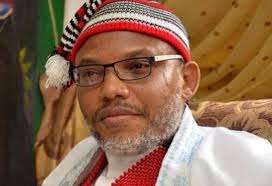
    Nnamdi Kanu, the self acclaimed leader of the proscribed Indigenous People of Biafra (IPOB), will on March 19, know fate on his fresh bail application in the terrorism charges against him by the federal government.

    The trial judge, Justice Binta Nyako, fixed the date after taking arguments from his counsel, Alloy Ejimakor, praying for his bail, while counsel to the FG, Adegboyega Awomolo SAN objected to granting of bail.

    In his argument, Kanu prayed for bail to enable him to have unfettered access to his lawyers for his defense.

    He also claimed to be suffering from acute hypertension and acute heart disease, among other diseases.

    Responding, FG objected to the application on the ground that Kanu was once granted bail but jumped and fled the country.

    Awomolo posited that all the bail conditions set by the court were breached and violated and pleaded with the court to dismiss the request.

    On another motion before the court, Kanu prayed the court not to allow continuation of his trial until certain conditions were met by the federal government.

    Among others, he requested that Department of State Security (DSS)operatives be barred from interfering with his lawyers during visitation.

    He also asked that the court should compel the federal government to wear the clothes of his choice.

    Reacting, the federal government objected to the request on the ground that he has no right under any law to dictate how his trial should be conducted.

    Consequently, Awomolo asked the court to dismiss the motion on the ground that it was a gross abuse of the court process that must not be allowed.

    In the meantime, the matter will continue March 19 for ruling on the bail application.

  • Nigeria Police Seal NLC Office in Lagos Ahead of Planned Protest

    Nigeria Police Seal NLC Office in Lagos Ahead of Planned Protest

    In a move to thwart the Nigeria Labour Congress (NLC) planned nationwide protest against hunger and hardship, the Nigeria Police Force has sealed the NLC office in Lagos State. 

    The protest, scheduled for February 27 and 28, is aimed at address economic challenges faced by Nigerians.

    Hassan Taiwo, national coordinator of the Education Rights Campaign (ERC), shared an image on Monday morning revealing armed police personnel stationed in front of the NLC headquarters in the Yaba area of Lagos State. 

    Some individuals within the building remain uncertain about the unfolding developments.

    The NLC had issued a 14-day ultimatum to the Nigerian government regarding widespread hardship, leading to the organization of the protest. 

    Despite warnings from the Department of State Services (DSS) and the Attorney General of the Federation, Lateef Fagbemi (SAN), urging cancellation, the NLC remained steadfast in its decision.

    Accusing the government of planning to attack peaceful rallies and alleging involvement of certain groups in causing violence against protestors, the NLC President emphasized the right to peaceful protest. 

    The statement also expressed concerns about potential deployment of state-sponsored terror, highlighting the NLC’s determination to proceed with the protest despite government warnings and concerns from various quarters.