Category: News

  • Fossil fuel subsidies surge to record $7trn

    Fossil fuel subsidies surge to record $7trn

    The International Monetary Fund (IMF) has said that subsidies on fossil fuel surged to a record $7 trillion in 2022.

    The Fund in its chart of the week, which focused on climate change, said the impact of the Russia-Ukraine war as governments globally supported consumers and businesses as energy prices spiked.

    As the world struggles to restrict global warming to 1.5 degrees Celsius and parts of Asia, Europe and the United States swelter in extreme heat, subsidies for oil, coal and natural gas are costing the equivalent of 7.1 percent of global gross domestic product.

    The World Meteorological Organization says July was the hottest month on record.

    Data shows that fossil-fuel subsidies rose by $2 trillion over the past two years as explicit subsidies (undercharging for supply costs) more than doubled to $1.3 trillion.

    Consuming fossil fuels imposes enormous environmental costs—mostly from local air pollution and damage from global warming. The vast majority of subsidies are implicit, as environmental costs are often not reflected in prices for fossil fuels, especially for coal and diesel.

    “If governments removed explicit subsidies and imposed corrective taxes, fuel prices would increase. This would lead firms and households to consider environmental costs when making consumption and investment decisions. The result would be cutting global carbon-dioxide emissions significantly, cleaner air, less lung and heart disease, and more fiscal space for governments.

    “We estimate that scrapping explicit and implicit fossil-fuel subsidies would prevent 1.6 million premature deaths annually, raise government revenues by $4.4 trillion, and put emissions on track toward reaching global warming targets. It would also redistribute income as fuel subsidies benefit rich households more than poor ones.

    “Yet removing fuel subsidies can be tricky. Governments must design, communicate, and implement reforms clearly and carefully as part of a comprehensive policy package that underscores the benefits. A portion of the increased revenues should be used to compensate vulnerable households for higher energy prices. The remainder could be used to cut taxes on work and investment and fund public goods such as education, healthcare, and clean energy,” the global lender said.

  • Tinubu pledges comprehensive overhaul of criminal justice reform

    Tinubu pledges comprehensive overhaul of criminal justice reform

    President Bola Tinubu has reaffirmed his administration’s unwavering dedication to implementing an extensive revamp of the criminal justice system.

    This commitment was expressed as he met with the leadership of the Nigerian Bar Association (NBA), headed by its president, Yakubu Maikyau (SAN), at the Presidential Villa in Abuja on Thursday.

    In a statement released on Friday by Ajuri Ngelale, Special Adviser to the President on Media and Publicity, it was disclosed that President Tinubu emphasized the importance of reevaluating the compensation provided to judicial officers across the nation, especially in the context of the ongoing battle against corruption.

    The President recognized that addressing this issue requires careful consideration of both salaries and allowances, drawing from his significant achievements in reforming the justice and administration sectors during his tenure as the governor of Lagos State.

    “We cannot truly combat corruption within the Judiciary without addressing the revision of remuneration. We will assess the costs and consequences of this endeavour,” President Tinubu responded to a request made by the NBA president.

    Furthermore, President Tinubu acknowledged the necessity of resolving existing vacancies within the Supreme Court. He stressed that these obligations must be met in accordance with recommendations from the National Judicial Council, stating, “Once the majority of them return from their current vacation, we will thoroughly evaluate their recommendations and proceed to fill the vacancies. This is an essential obligation we intend to fulfill.”

    The President expressed gratitude for the invitation extended by the NBA to inaugurate the association’s 63rd Annual General Conference (AGC), scheduled to take place in Abuja from August 25 to September 1.

    He expressed satisfaction in having legal experts as close advisors, including Chief of Staff Femi Gbajabiamila, State Chief of Protocol Victor Adeleke, and his Principal Private Secretary, Prince Damilotun Aderemi.

    In his remarks, the NBA president lauded President Tinubu for appointing esteemed members of the bar to his cabinet, specifically highlighting Lateef Fagbemi, the Attorney-General of the Federation and Minister of Justice.

    The upcoming annual NBA conference, themed “Getting It Right, Charting the Course for Nigeria’s Nation Building,” will convene legal professionals, experts, and stakeholders to engage in discussions concerning critical issues pertaining to Nigeria’s national development.

  • COAS, Matawalle present as military lays 22 slain officers to rest

    COAS, Matawalle present as military lays 22 slain officers to rest

    A somber atmosphere enveloped the National Military Cemetery in Abuja as military personnel, led by the Chief of Army Staff (COAS) Maj.-Gen. Taoreed Lagbaja, along with grieving family members and friends, gathered to pay their final respects to fallen comrades who lost their lives in Niger State.

    The burial ceremony held special significance as it paid tribute to 36 officers who were tragically killed in action, including an air mission, on August 14, as reported by the Defence Headquarters (DHQ).

    The solemn event commenced with the arrival of Bello Matawalle, the Minister of State for Defence, who arrived at approximately 9:46am.

    In attendance alongside him were Major General Christopher Gwabin Musa, the Chief of Defence Staff, and several other service chiefs.

    The combined presence of high-ranking officials, military personnel, and the bereaved families underscored the gravity of the occasion.

    It is noteworthy that some of the deceased officers had already been laid to rest by their families.

    The ceremony included a roll call of the military personnel who were to be interred, commemorating their dedication and sacrifice.

    The list includes:

    LATE MAJOR SA ONI

    LATE FLIGHT LIEUTENANT ANTHONY DURYUMSU

    LATE FLIGHT LIEUTENANT IBRAHIM ADAMU

    LATE LIEUTENANT GM ODUSAMI

    LATE LIEUTENANT US ALKALI

    LATE SERGEANT FARUK MOHAMMED

    LATE CORPORAL IBRAHIM GARBA

    LATE CORPORAL CIROMA POGU

    LATE CORPORAL ADAMA ISAAC

    LATE CORPORAL HARUNA JAMILU

    LATE CORPORAL SAMAILA BASHIRU

    LATE ABLE SEAMAN SULEIMAN MK (NIGERIAN NAVY)

    LATE CORPORAL JAURU AMOS (NIGERIAN AIR FORCE)

    LATE LANCE CORPORAL SUNDAY OKOPI

    LATE LANCE CORPORAL EKPANYO EDET

    LATE LANCE CORPORAL ABARIBE DANIEL (NIGERIAN AIR FORCE)

    LATE LANCE CORPORAL BRIGGS STEPHEN (NIGERIAN AIR FORCE)

    LATE LANCE CORPORAL YAKUBU AYUBA

    LATE LANCE CORPORAL NURA MOHAMMED

    LATE PRIVATE HABIB ALIYU

    LATE PRIVATE TANKO WAJE

    LATE AIRCRAFTMAN ABUBAKAR ABDULRAHAMAN (NIGERIAN AIR FORCE)

    The ceremony stood as a poignant reminder of the sacrifices made by these brave individuals in the line of duty. Their commitment and dedication to Nigeria will forever be remembered, as their names echo in the hearts of those who gathered to honour their memory. May their souls rest in perfect peace. Amen.

  • Subsidy Removal: Extend palliatives to all industries, NACCIMA appeals to FG

    Subsidy Removal: Extend palliatives to all industries, NACCIMA appeals to FG

    The Nigerian Association of Chambers of Commerce Industry, Mines and Agriculture (NACCIMA) has appealed to the Federal Government to extend palliatives to all productive industries to cushion the effects of the removal of fuel subsidy.

    Its National President, Otunba Dele Oye, made the appeal at the 3rd Quarterly Council meeting of the association in Abuja.

    The Federal Government had announced N5 billion palliative for each state of the federation, including the Federal Capital Territory to ameliorate the rise cost of living arising from the removal of the petrol subsidy.

    Oye said that the removal of petrol subsidy was not only affecting consumers but also the productive industries.

    According to him, the removal of the petrol subsidy and the floating of the Naira currency have in one way or the other affected industries.

    “These affected both consumers and industries because every new policy has its own casualties.

    “So, in the long term, it is good for the country, but in the short term, you have to consider people who are wrongly affected so that the prices do not cause unusual inflation.

    “It is important that the government ensures that the palliatives also go to the industries,’’ Oye said.

    He added that it would take time for businesses to adjust to the new policy of Naira floating.

    “The short term is always a bit difficult for a lot of people, because it takes time to adjust for businesses to get to know the new policy and also to work with it.”

    NACCIMA boss said that providing loans at a single digit rate could provide certain cushioning effects to industries affected in the short term.

    “This is because it is from us we generate the money from the tax to sustain the economy.

    “So, government must focus and find a way to make sure that the palliative goes to every sector,’’ he said.

    In his remarks, Dr Al-Mujtaba Abubakar, President, Abuja Chamber of Commerce and Industry (ACCI) said that the business community also needed incentives to cushion the effects of the fuel subsidy removal and the depreciation of the Naira.

    Abubakar, who was represented by the Director-General of ACCI, Victoria Akai, also emphasised the need for stable power supply and harmonisation of tax to enable businesses thrive.

    According to him, the business community is in dire need of incentives that will cushion the effect of the fuel subsidy removal and the depreciation of the Naira.

    He urged NACCIMA president to liaise with relevant government agencies to press home the association’s demands such as stable power supply and harmonisation of tax among others.

    “I will like to commend the determination of the NACCIMA President to further deepen the relationship of NACCIMA and policymakers which I believe will go a long way to bring the much-needed relief to the business community,’’ Abubakar said.

  • Nigeria’s unemployment rate drops 4.1% -NBS

    Nigeria’s unemployment rate drops 4.1% -NBS

    Nigeria’s unemployment rate dropped to 4.1 percent in the first quarter of 2023 from 5.3 percent in the fourth of 2022.

    Mr Adeniran Adeyemi, the Statistician-General of the Federation and Chief Executive Officer of the National Bureau of Statistics (NBS), said this during the inauguration of the New Nigeria Labour Force Survey (NLFS) in Abuja.

    Adeniran said that the drop in NLFS from 33.3 percent in the Fourth quarter 2020 to its present rate was based on change in methodology adopted and not government performance.

    The new NLFS unveils a set of labour force indicators designed to provide unparalleled insights into the dynamics of the workforce in Nigeria.

    The NLFS was conducted by the NBS in collaboration with the World Bank (WB) and the International Labour Organisation (ILO) in response to the labour market dynamics

    Adeniran said “let me at this point clearly state that this methodology review has nothing to do with whitewashing the image of any government or political party.

    “This process is routine for any responsible statistical office, and we have no reason to continue to ignore the adoption of new methods, when the evidence clearly indicates the need for it.

    “As a national statistical office, our responsibility is to provide government and all users with accurate data for evidence-based decision making, adhering to the highest possible standards, and our commitment in this regard is unwavering.”

    According to Adeniran, the new method which indicates that not less than 73 per cent of Nigerians are engaged in one form of work, recognises all forms of engagements from which individuals earn income.

    He said using the new ILO definition, the survey showed that the unemployment rate for the fourth quarter of 2022 stood at 5.3 per cent and 4.1 per cent for the first quarter of 2023.

    “This figure aligns perfectly with neighbouring countries around Nigeria. Ghana (3.9per cent), Niger (0.5 per cent), Chad (1.4per cent), Cameroon (4.0per cent), Togo (4.1per cent), Benin Republic (1.7per cent) amongst others.

    “In responding to the shifting global landscape and the ever-changing data ecosystem, it is imperative for us to continuously adapt the way in which we collect and analyse data.

    “This is to ensure that we are producing data that reflects reality and the experiences of Nigerians.

    “These changes also include a revision to the design and methodology applied in the conduct of the actual survey.

    “Which is the survey that produces commonly known headline Unemployment and Underemployment rates, as well as other labour market indicators that guide policymakers, researchers, and other users,” he said.

    According to him, the results indicate a scarcity of Wage-employment, as the share of those employed in Wage-employment during the reference quarters was 13.4 per cent in Q4 2022 and 11.8 per cent in Q1 2023.

    Adeniran said that the working age population which was defined previously as persons aged 15-64, is now defined as persons aged 15 and above.

    He said this was a very important change particularly in the Nigerian context as it recognises the labour contributions of persons above the age of 64 which was not done previously.

    The NBS boss said the unemployed appeared to be the most controversial amongst the changes announced under the review.

    According to him, the new standard defines the unemployed as persons within the Labour force, who within the reference period did not work for pay or profit for a minimum of 1 hour.

    “In the real sense, nobody works 1 hour a week and then sits down and does nothing else when there are opportunities for more hours of work.

    “The statistics show that only 7.1 per cent of those working, work between 1 – 19 hours per week. So, 1 hour is just a benchmark and nothing more than that,” he said.

    The survey revealed that about three quarters of Nigerians in the working age population, 73.6 per cent in Q4 2022 and 76.7 per cent in Q1 2023 were engaged in some form of work for pay or profit in the quarters under review.

    Earlier, the World Bank’s Country Director, Shubham Chaudhuri pledged the continued support of the bank to ensure a robust, regular national LFS data for the country.

    Chaudhuri said a reliable data provided the government with knowledge about the nation’s welfare and ensured the right intervention and programs needed to address it’s challenges.

    The Minister of Budget and Economic Planning, Abubakar Bagudu, said data was key to national planning and development.

    According to Bagudu, President Bola Tinubu believes in reliable data for planning and will support anything that will lead to production of appropriate data.

    “To create jobs for youths, we need this kind of data, a lot needs to be done to address the high rate of unemployment in the country. The President is desirous of reducing unemployment.

    “Nigeria is one of the countries with absorptive capacity, so what we need is to provide better environment and more incentives,” he said.

    While commending efforts of NBS and its partners in revising the methodology, Bagudu said the ministry would from 2024 use of the revised data more practically.

    Meanwhile, the Acting CBN Governor, Mohammed Tumala said labour statistics was one of the most important inputs to economic policy and business decisions.

    Tumula said labour was the most important of the factors of production and determined both the quantity and quality of utility of other factors.

    While commending efforts of the NBS, he stressed the need for synergy with communication experts to ensure proper linkage and dissemination of data to the public.

    Similarly, Prof. Mike Obadan, Non-Executive Director and member MPC, CBN also reiterated the need for NBS to ensure robust strategy for communicating its survey findings to the public in simple language.

    Abuja-Kaduna Road project to be completed by Q1 2024, says Umahi

    The Minister of Works, Mr David Umahi,has again given the assurance that the reconstruction work on the Abuja-Kaduna-Kano highway will be completed by the first quarter of 2024.

    Umahi made this known while inspecting the project on Thursday to assess the progress made so far by Julius Berger Nigeria Plc, the contractor handling the project.

    The minister however frowned at the slow pace of work on the project, which was awarded in 2017.

    Umahi noted that insecurity and poor funding were the major challenges affecting the timely completion of the road.

    “Work on the 375.9 km dual-carriage Abuja-Kaduna-Zaria-Kano Road is in three phases, with phase three (Zaria-Kano) at 100 per cent completion.

    “The phase two (Kaduna- Zaria) was at 60 percent completion and Phase one (Abuja-Kaduna) was only at 20 percent completion level,” he said.

    He assured that the President Bola Tinubu was committed to ensuring that all impeding factors are sorted out to ensure that the contractor delivers the project in 2024.

    “I am here on the directive of Mr President, who has directed that I must be on site to see most of this ongoing project before I can put figures together.

    “Mr president has asked me to assure Kaduna people and everyone that   this road is very important to him as part of his renewed hope agenda for Nigerians.

    “He is committed to finishing the road, in 2024, and not 2025 as stated in the contract earlier, and we will match his word with action.

    “We are satisfied with the quality of work, but we are not satisfied with the pace of work, so we have to find out what are the problems.

    “This road is very important, if it is security we will tackle it and provide security in each section where they are working and we also want to deploy solar lights on the roads,” the minister said.

    The minister expressed satisfaction with the quality of work on the road but urged the contractor to increase the pace of work.

    He directed the contractor to ensure that more men and equipment are moved to other sections of the road to ensure that work goes on simultaneously.

    He also called on the contractor to introduce concrete in parts of the road in order to deliver a more durable and lasting road to Nigerians.

    The minister, therefore, appealed to Nigerians to be patient with the government in its commitment to deliver a durable road that would stand the test of time.

  • Armed robbers kill soldier in Benin heist

    Armed robbers kill soldier in Benin heist

    A soldier has been killed in a robbery attack in Benin on Wednesday, the police confirmed on Thursday.

    Spokesman of the police in Edo, SP Chidi Nwabuzor, told newsmen that the robbery took place at the First Eastern Circular and Akpakpaba Roads intersection in the Edo capital.

    She said the soldier was shot dead by suspected armed robbers who attacked the patrol van conveying the soldier and two of his colleagues.

    The patrol van itself was escorting another van loaded with “Ghana-Must-Go’’ bags presumably loaded with cash.

    Nwabuzor said investigation to unravel the circumstances surrounding the attack was ongoing.

    “Edo State Police Command can confirm that a soldier was killed in Benin on Wednesday. A good Nigerian reported the incident at the police station covering that neighbourhood.

    “The hoodlums carted away the `Ghana-Must-Go’ bags believed to have been loaded with cash from the van.

    “Since they were in their patrol vehicle, they should be armed. The assailants acted on information, Nwabuzor added.

    An eyewitness said that the assailants, numbering four, drove in an unmarked Toyota Camry car against traffic flow as they headed towards the army vehicle.

    He said two of the assailants alighted from the vehicle and opened fire on the soldiers.

    “The soldiers jumped out of the vehicle but one of them was hit by bullets and could not escape from the scene.

    “Many people would have died if the soldiers had responded to the hail of bullets shot at them as the area is a busy spot for business activities,’’ the witness said. 

  • Oil thieves scamper as troops destroy illegal refineries in Delta

    Oil thieves scamper as troops destroy illegal refineries in Delta

    Troops of 6 Division, Nigerian Army have destroyed eight active ovens used for refining of stolen crude oil around Ogbokoko and Atu in Warri South Local Government Area of Delta on Wednesday.

    The troops also destroyed 14 reservoirs containing an estimated 200,000 litres of stolen crude oil and 90,000 litres of diesel, the Director, Army Public Relations, Brig.-Gen. Onyema Nwachukwu, stated on Thursday in Abuja.

    He stated that the destruction was conducted in a swoop on the area by troops conducting anti-oil theft operations.

    Nwachukwu added that the oil thieves fled upon sighting the advancement of troops.

    “The illegal refining site was destroyed in line with extant guidelines of `Operation Delta Safe’. Investigation is ongoing to arrest the fleeing criminals.

    “Members of the public are implored to report any suspected act of sabotage or criminality to security agencies to enhance on-going operations to curb economic sabotage in the country,’’ Nwachukwu stated.

  • Abuja Building Collapse: Wike orders landlord’s, as victims assess losses

    Abuja Building Collapse: Wike orders landlord’s, as victims assess losses

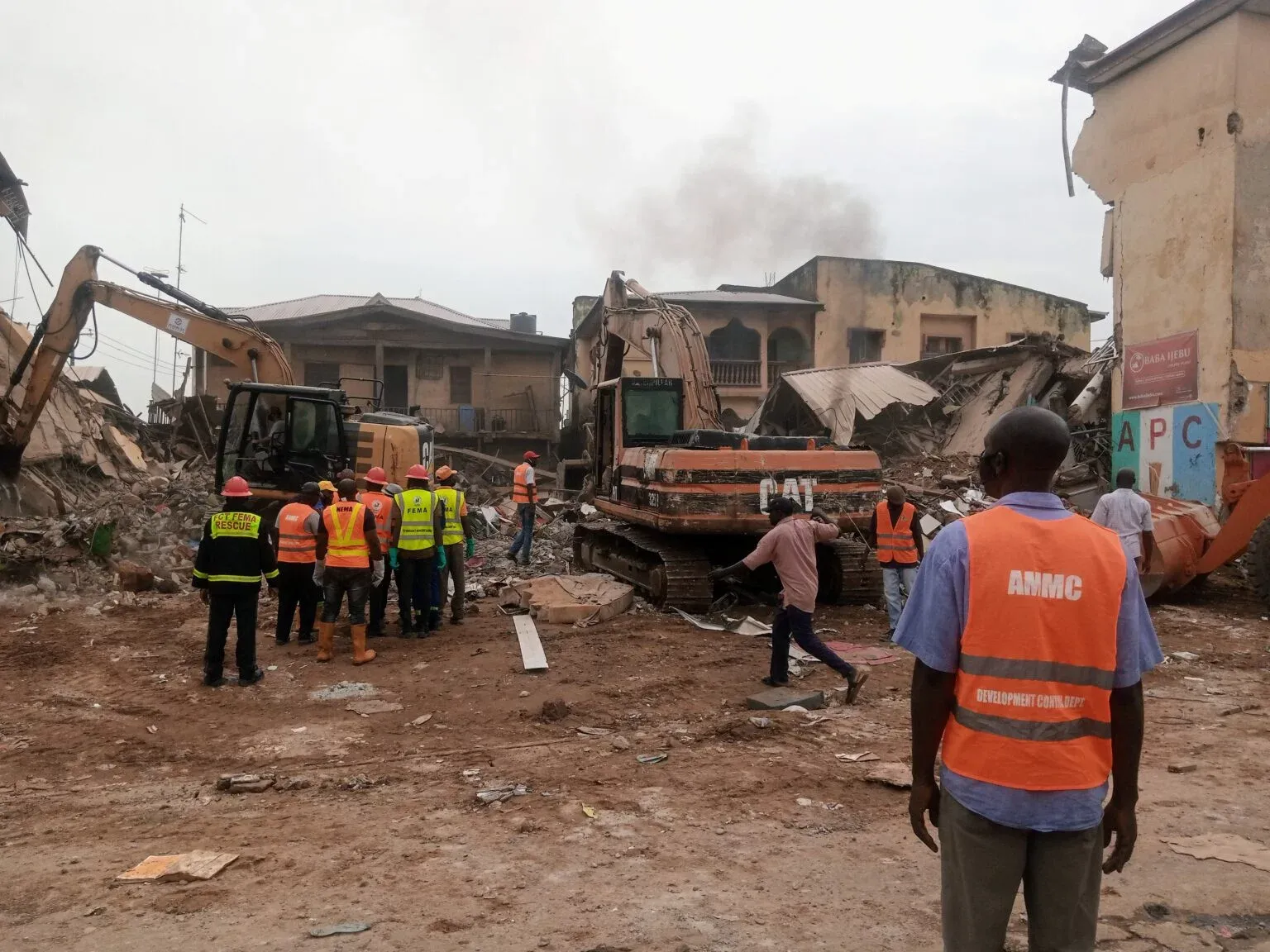
    Following the collapse of a two-storey building on Lagos Street, Garki Village, Abuja, on Wednesday night, the Minister of the Federal Capital Territory (FCT), Mr. Nyesom Wike, has directed the apprehension of the building’s owner.

    The incident resulted in the loss of two lives, with 37 individuals successfully evacuated and transported to medical facilities, according to a statement issued by the FCT Emergency Management Agency (FCT FEMA).

    During his visit to the collapse site on Thursday, Wike issued the order and emphasized the significance of accountability.

    Additionally, he instructed the Permanent Secretary of FCT Administration, Mr. Adesola Olusade, to cover the medical expenses of those who were hospitalized due to the collapse.

    Recognizing the urgency of the situation, Wike also called upon the Department of Development Control under the FCT Administration to swiftly relocate the affected residents of the community.

    He underscored the importance of collaboration between stakeholders and government officials, emphasizing their shared responsibility to ensure the well-being of all concerned.

    The aftermath of the building collapse has prompted a swift response from authorities, reflecting the gravity of the incident and the commitment to safeguarding lives and property.

    “This is what we are talking about; people just built houses without due diligence to minimum standards.

    “This is why cities are planned – forestall this kind of incidents.

    “I sympathise with those who lost their lives while the medical bills of those in the hospitals will be paid immediately,” he said.

    Earlier, the Director, Development Control, Mr Mukhtar Galadima, had explained that the area was unplanned and houses an indigenous community.

    Galadima said that the two-storey building was multipurpose and was for both residential and commercial use.

    The permanent secretary commended security agencies and some contractors who came out in their numbers to render support in evacuating the rubbles and search for more victims.

    Also, the Director-General, FCT FEMA, Dr Idriss Abass, said that relevant agencies had been on ground since the occurrence of the incident, to rescue the victims.

    Abass said that efforts were still ongoing “to ensure that no one is left under the rubbles”.

    Meanwhile, some of the victims, who spoke with newsmen said that they lost their investments and properties to the incident, and called for government support.

    One of them, Ms Glory Perekeme, who operates a restaurant and a bar at the building, said she lost about N5 million as she could not take anything from her restaurant.

    “I closed for business around 10:00 p.m. and was on my way home when I received a call that the building had collapsed and my investment gone.

    “I am still in shock; and I don’t even know where to start from.

    “I really need assistance. Government should come to our aid so we can start all over again,” she said.

    Another victim, Mrs Ann Anyi, who owned a laundry and sells shoes, said that she lost everything to the incident.

    “I have been crying since I got the news of the incident in the midnight.

    “I am just hoping that when the rescue operation is over, I will be able to salvage something from the rubbles,” she said.

  • ASUU bemoans delay in releasing 8-month salaries, other issues

    ASUU bemoans delay in releasing 8-month salaries, other issues

    The Academic Staff Union of Universities (ASUU) has raised concerns regarding the prolonged withholding of university academics’ salaries for nearly eight months due to the fallout from the 2022 strike action.

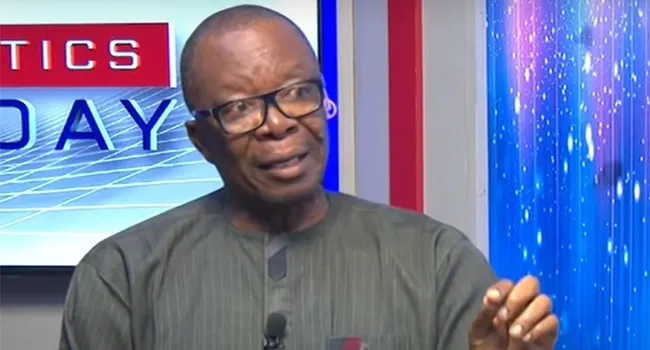
    The President of ASUU, Emmanuel Osodeke, highlighted this issue in a statement. The matter was discussed during the union’s National Executive Council meeting held at the University of Maiduguri, Borno State, from August 19th to August 20th, 2023.

    Osodeke noted that this challenge is just one among several plaguing the Nigerian University System (NUS), as deliberated during the meeting. He emphasized that the application of the ‘No-Work-No-Pay’ policy to academics fails to consider that only the teaching aspect of their work was suspended during the strike action.

    Moreover, he highlighted the diligent efforts made by academics to make up for lost time under extremely challenging economic conditions, following the suspension of the strike through interventions by key figures including Rt. Hon. Femi Gbajabiamila, who is now Chief of Staff to the President and Visitor to Federal Universities.

    The statement acknowledged the resilience of Nigerian academics, commending their unwavering determination and courage in enduring economic, social, and emotional hardships due to the non-payment of their salaries.

    ASUU attributed past strike actions to successive governments’ failure to honour agreements and memoranda established through the collective bargaining principle endorsed by the International Labour Organisation (ILO) and adopted in Nigeria’s labour laws.

    ASUU called upon the government led by President Bola Tinubu to expedite the renegotiation of the 2009 ASUU/FGN Agreement based on the recommendations of the Professor Nimi Briggs Committee. This move is essential to restore the credibility of the NUS.

    The union recognized ongoing efforts to secure the release of the withheld salaries and urged national leadership, including the Nigeria Labour Congress (NLC), to actively pursue this matter.

    ASUU underlined the significance of releasing the withheld salaries in boosting the morale of Nigerian university educators.

    The statement also lamented the accumulation of promotion arrears owed to members due to disruptions stemming from the enrollment of academics in the Integrated Payroll and Personnel Information System (IPPIS).

    Despite numerous attempts by the union and university administrations, the Office of the Accountant-General of the Federation (OAGF) has yet to address this issue.

    Consequently, ASUU appealed to the OAGF to promptly resolve the backlog of promotion arrears, considering the impact on industrial harmony and peace.

    The union’s concerns highlight the challenges faced by academics in Nigeria and the urgent need for comprehensive resolutions to safeguard their welfare and the integrity of the education system.

    The statement further read, “NEC was disturbed by reports of massive employment racketeering perpetuated by operators of the discredited IPPIS, including scandalous revelations at the recent sittings of House of Representatives Probe Panel on IPPIS.

    “NEC observed that the unsavoury trend has eroded university employment tradition in violation of the provisions of the Universities (Miscellaneous Provisions) Act 2003, and Guidelines for Appointments and Promotions of individual universities. ASUU rejects all illegal appointments sponsored by the IPPIS and its agents in Nigerian public universities.

    “NEC observed with dismay the Government’s moves to further erode the autonomy of universities as contained in the Universities Miscellaneous Provisions Act in respect of the dissolution of Councils. ASUU had cause to protest to the immediate past Federal administration over the same matter in 2015, and the decision was accordingly reversed.

    “Dissolution of Governing Councils of federal and state universities before they serve their full terms does not only violate extant laws on university autonomy, but it also adversely impacts operations of the universities. NEC therefore calls for the reversal of the recent dissolution of councils of federal universities to ensure their smooth operations and stability.

    “NEC reviewed the strenuous efforts of the National Universities Commission (NUC) to impose the Core Curriculum and Minimum Academic Standard (CCMAS) on Nigerian universities, despite well-founded criticisms and rejection by members of university senates and academic associations. NEC subsequently directed the leadership of ASUU to pursue the Union’s rejection of CCMAS to its logical conclusion.

    “Painfully, NEC reviewed reports of mass exit of experienced academics and professionals from Nigeria’s public universities owing to disabling working and living conditions. NEC submits that a salary regime that places the professor- at-bar on four hundred and sixteen thousand Naira (N416,000.00) or less (no thanks to amputation by IPPIS) for more than ten years is disconcerting, debilitating and dehumanizing for scholars.

    “NEC, therefore, advises governments at the federal and state levels to urgently arrest the growing ‘Japa’ syndrome on university campuses to reposition Nigerian universities for competitiveness in the global knowledge economy.

    “NEC noted with dismay the continued onslaughts on ASUU members at the Federal University of Technology, Owerri (FUTO), by the Vice-Chancellor, Prof (Mrs.) Nnenna N. Oti, and her agents over the questionable appointment of Dr. Isa Ibrahim Ali Pantami as a Professor at the University.

    “NEC reaffirms its earlier position that the promotion of Dr. Isa Ibrahim Ali Pantami as a Professor in FUTO while serving as a minister of the Federal Republic of Nigeria was a breach of the University’s Appointments and Promotions Guidelines.

    “NEC further reaffirms its recognition of the ASUU-FUTO Executive Committee (EXCO) led by Comrade Chinedu Ihejirika, currently being subjected to unwarranted attack and persecution in the University. NEC subsequently resolves that ASUU would hold the FUTO Vice-Chancellor, Prof. (Mrs.) Nnenna Oti, liable should any harm come the way of Comrade Ihejirika and other committed members of our Union in FUTO as well as those of their respective families.

    “NEC was grieved by the deepening crisis of governance occasioned by the mindless acceptance and crude implementation of neo-liberal socio-economic policies of the international money lenders by successive governments since the birth of Nigeria’s Fourth Republic. NEC sadly noted the recent anti-people, draconian policies of the government that have brought millions of Nigerians to their knees and crippled businesses.

    “We note that the expectation of democratic dividends which heralded civilian rule in 1999 has almost evaporated, as more Nigerians are daily gasping for breath under the suffocating grips of an insensitive, parasitic, corrupt and rent-seeking ruling class.

    “NEC restates its avowed view that democratic culture can only take roots in an atmosphere of deliberate efforts to make life more meaningful for the citizenry, not a situation that daily expands the army of the poor, the unemployed, the hungry, and the miserable Nigerians.

    “Lastly, ASUU calls on the new administration to save our nation by rejecting the pervasive neo-liberal policies that have brought untold hardship on academics, the working class, and all underprivileged Nigerians since the days of the Structural Adjustment Programme (SAP) of the military regime in the 1980s. Nigeria must prioritize human development through adequate funding of education and health without meddlesome dictations of the World Bank and IMF.

    “And, beyond palliatives, the Federal Government must immediately develop local capacities in the up and downstream sectors of the oil and gas industry as well as renovate the old refineries and construct new ones because of their multiplier effects on the entire economy and the nation.”

  • 58 deceased policemen’s families get N22.5m in Kaduna 

    58 deceased policemen’s families get N22.5m in Kaduna 

    In a gesture of recognition and support, the Commissioner of Police for Kaduna State Command, Mr. Musa Garba, presented a total of N22.5 million in cheques to the families of 58 police officers who lost their lives while serving on duty within the state.

    The poignant ceremony, reflecting the appreciation for the sacrifices made by these officers, was conveyed on behalf of the Acting Inspector General of Police, Dr. Kayode Egbetokun.

    The Deputy Public Relations Officer of the command, ASP Mansir Hassan, disclosed in a statement on Thursday that the symbolic presentation aimed to offer financial assistance to the bereaved families in the wake of their profound loss.

    Commissioner Garba underscored that the emotional weight of the officers’ sacrifices goes beyond the monetary value of the cheques handed out, reiterating that it was a tangible expression of the Acting IGP’s compassion and support.

    Garba emphasized that the intention behind the financial aid was to alleviate the challenges faced by the families due to their loved ones’ untimely demise. He urged the recipients to utilize the funds judiciously, recognizing the profound impact it could have on their lives during this challenging time.

    “The pains associated with the loss of our fallen heroes are incomparable to the value of the cheques issued to the families.

    “It is the Acting IGP’s way of showing support and concern to those families,” Garba said.

    He added that it was meant ameliorate the hardships being experienced by the families, and urged them to use the money wisely.

    Mr Pius Luka who spoke on behalf of the beneficiaries, thanked the police management for the gesture, saying it will help reduce some of the hardships they face since the demise of their loved ones. 

    One of the beneficiaries, Mr. Pius Luka, conveyed gratitude on behalf of the families for this thoughtful gesture extended by the police management. He acknowledged that the financial support would significantly alleviate the hardships that the families had encountered since losing their beloved officers.

    This poignant initiative, marked by the presentation of N22.5 million in cheques, demonstrates the commitment of law enforcement to honor the dedication and sacrifices of officers who have fallen in the line of duty. Beyond the monetary value, the gesture holds a deeply empathetic message of support and solidarity with the families left behind, recognizing the challenges they face and aiming to provide some measure of relief.