Category: News

  • Nigeria’s children of the dump sites

    Nigeria’s children of the dump sites

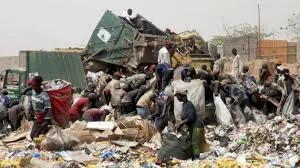
    Our children are now chasing out the adults from the business. But in their own case they are mainly foraging for foods that are often not there. On Monday, January 20, a national newspaper published a news feature on the dire situation of some Nigerian children. Its finding was that not many children were currently privileged to have tea and bread for food at home. It said many of them now live off refuse dumps; they carry sacks filled with used cartons, empty drink cans, and discarded plastic bottles and bowls.

    WHAT’S unfolding presently will form part of the foundations for the future of our country. And the picture is not good. That the majority of the privileged and the ruling elite live in denial will not change it. What is looming and getting clearer as daylight is that this will be a future and a disaster that was foretold. Successive regimes, and especially those of the All Progressives Congress (APC) political party since 2015, had been leading Nigeria down a slippery slope. The 15 years or so of the former ruling People’s Democratic Party (PDP) are now being celebrated as the ‘golden years’ of Nigeria, to borrow from President Donald Trump’s so-called American golden age. But as disasters go the PDP as a ruling party was just a shade above this ruinous APC. PDP lived on borrowed robes. It started fairly well under President Olusegun Obasanjo (1999-2007) but quickly relapsed into bad ways, profligacy and the expressed feelings of invincibility. The party suffered from low crude oil prices at the beginning, as low as $15 per barrel at the start of this democratic dispensation, but later under President Goodluck Jonathan enjoyed a boom with prices surging beyond $120/barrel. It failed miserably in managing the bumper returns. And so got itself sacked ostensibly by voters in 2015.

    The APC, a hastily cobbled special purpose vehicle that passed as a political party, took power at the centre and in most of the sub nationals subsequently. This party over-promised in its quest for power during the campaigns in 2014. It promised everything under the sun except creating human beings. It even promised to recreate Nigeria and Nigerians. But under Muhammadu Buhari it started very poorly by first denying virtually all it promised, and disclaiming its own manifesto. Its candidate – turned – president Buhari was strident in distancing himself from the promises of the party, the so-called Contract with Nigerians. In terms of ineptitude the APC under Buhari turned out worse than the PDP. In corruption the party and its principal operatives were worse than eye-sores. It piled up debts from every source – offshore, domestic markets, and through Ways and Means which simply means minting Naira banknotes backed by nothing. Yes, nothing. Buhari fumbled and wobbled for eight years, and took the country back by 30 years. He was an affliction of unimaginable proportions.
    Buhari’s successor, Alhaji Bola Ahmed Tinubu, now going to 20 months on the saddle, appears to be no better in spite of claims to courage and to reforming the economy and the country. He came with a baggage of personal failings, certificates and names controversies, and a questionable electoral victory. So he was dogged by palpable legitimacy issues. Indeed, there was a recent report, which is yet to be refuted (unlike what is in the regime’s DNA), that a foreign lobbying firm was retained with millions of dollars to help burnish his image and to make him appear less a pariah among his supposed peers on the international stage. By some calculations, Tinubu jets out of the country after every 17 days of what now appears to be a visit to the country he is supposed to be governing to, according to his officials woo foreign investors. He cuts a forlorn and isolated figure in many of his trips abroad, especially when he is in the midst of other significant world leaders. Not a good comparison, anyway, but the US President Donald Trump who took office one week ago, yesterday, and without travelling out of his country, has attracted pledges of investments reported to be close to $3 trillion from around the world.

    Nobody needs to dig deep to find out how shallow this regime is and how desperately it looks for a win. Recently, the henchmen of the administration and their choristers started celebrating that the Naira, Nigeria’s national currency, has stabilised at N1,500 to $1USD. Are they for real? At the beginning of the so-called economic reforms and currency convergence, the consensus and the projection was that the rate would settle at N800/$. Rulers with a modicum of shame will not roll out the drums for the current exchange rate.

    The economic policies and programmes of the Tinubu regime are whimsical and his claimed political reforms are inchoate and haphazard. The jury is still out on his quest to make federating units out of the country’s 774 local councils by making them ‘autonomous’ and funding them directly from the federation account. He claims his actions were informed by Constitutional provisions. But that’s self – serving because this same man, in his earlier incarnation as Lagos state governor (1999-2007) fought tooth and nail for councils to be under the suzerainty of state governments. But not anymore today. The only thing that has changed is that Bola Tinubu is now the president. His actions are political and driven by 2027. He wants his fingers in every pie, and foot soldiers to ‘grab, snatch and run’ away with results of the 2027 election, that is, if there will be any elections in the true sense of the word. The same uncertainty is playing out in the economy. Tinubu says repeatedly that he is already seeing light at the end of the tunnel. He might be seeing a mirage. The World Bank has said it would take a minimum of 15 years of sustaining his punishing economic regimen for any impact to be noticed. The hallmarks of the Tinubu economic kalo kalo are that his policies and programmes are not measurable, they have no benchmarks, they have no timelines, and they have no publicly available templates for reviews should the need arise. They are more like the rural Nigerian children’s game of tumbom tumbom.

    Nobody needs to dig deep to find out how shallow this regime is and how desperately it looks for a win. Recently, the henchmen of the administration and their choristers started celebrating that the Naira, Nigeria’s national currency, has stabilised at N1,500 to $1USD. Are they for real? At the beginning of the so-called economic reforms and currency convergence, the consensus and the projection was that the rate would settle at N800/$. Rulers with a modicum of shame will not roll out the drums for the current exchange rate. But APC has no shame. The party’s serial misrule is on display. Poverty is becoming entrenched in our country. The other day the deputy speaker of the House of Representatives Benjamin Kalu celebrated the rise in diaspora remittances from $25 billion in 2023 to $28 in 2024, as a sign of confidence in Nigeria’s economy. No, it was not. It showed that Nigerians at home were in dire straits, and that the situation had increased the pressure on diasporans to up their remittances. How could it be otherwise with inflation running in the high 30s, the worst level in about one generation?

    The increased diaspora remittances could be the reasons why Nigerians are not yet widely dropping dead on the streets as Europeans predicted and wished would happen in Africa during the COVID pandemic; why some families are still managing to pay children’s school fees at all levels in spite of students’ loan scheme; why some families can still spare a little money for hospital bills; why there’s no widespread starvation; why erstwhile middle class citizens can afford transportation fares to their offices or business premises, or to repair and fuel their cars. If Tinubu’s friend whom he claimed had abandoned his four Rolls Royce limousines had been a destiny – helper, he probably wouldn’t have suffered humiliation brought upon him by friend, the president. A little dollar here and a little pounds sterling and euro there would have kept him going. He would not have been reduced to using a car whose front wheel is susceptible to breaking off in motion without notice on Nigerian roads. In spite of diaspora remittances and other mercies, the Tinubu and APC economic wizardry is taking a huge toll presently on a vulnerable segment of the population. And it presents a foreboding future for our country.

    WASTE to wealth is a fairly popular phrase. Ordinarily, it means a situation where some citizens out of choice visit dump sites to pick out supposed waste and recycle the same to create value and possibly wealth. And this used to be the exclusive preserve of adults. It is no longer the case. Our children are now chasing out the adults from the business. But in their own case they are mainly foraging for foods that are often not there. On Monday, January 20, a national newspaper published a news feature on the dire situation of some Nigerian children. Its finding was that not many children were currently privileged to have tea and bread for food at home. It said many of them now live off refuse dumps; they carry sacks filled with used cartons, empty drink cans, and discarded plastic bottles and bowls. The newspaper illustrated with the story of one Jacob Olorunfemi who claimed that the economy had crippled his parents, forcing him to drop out of school. “I don’t go to lesson(s) anymore because my parents said there is no money… I usually attend lessons like school, where I pay N500 per week. My mother usually sweeps and wash(es) clothes for customers . My father works at a bus park. I have a friend called Sule. He is twelve years old. He used to pick used plastics and condemned items and sell them. His mother beg(s) for alms for a living. He advised me to join him in this scavenging routine and I have been able to save N2,000 since I started”. Jacob is 10 years old.

    Yet there’s another child, Yekini Salam, 11 years old. His late father reportedly left him with a step mother who also had three other children of her own to care for. “I have not been in school for years”, he started. “I dropped out when I lost my father. I don’t know who my mother is but I have a stepmother and three step brothers. I usually hawk wares for my stepmother. But last year she asked me to stop. Sometimes I help people to run errands and they give me tokens in the form of food or cash (in) appreciation. Recently I had to join my friends who are a little above my age in the scavenging routine. I move around places sourcing for plastics, cans and bottles. There are people who I sell to. The materials are scaled (weighed) and I am paid. I want to save enough money to learn aluminium window and door frame construction skills”. The plights of Jacob and Yekini are not just urban phenomena. Children engaging in menial jobs and dropping out of school for various reasons are widespread. The figures for Nigeria’s out of school children range from between 18-20 million. The future is sadly not also bright for some of our children who are fortunate to be in school. The findings are depressing in schools in one of the country’s most populated states. Last Friday, the United Nations Children’s Fund (UNICEF) disclosed that only 9.6% of primary school pupils in Kano showed reading proficiency whilst only 11.2% had basic numeracy skills. The agency’s chief field officer for Kano, Rahama Mohammed further indicated that almost one million children (989,234) of primary school age (about 32% of the population), were “currently not enrolled in formal education in the state”.

    The depressing statistics in Kano could be the same across many states in the north of this country. And it will be myopic to blame the situation solely on the emphasis placed on Islamic or religious education in that part of Nigeria. Even if that were to be the case, a more sensitive ruling elite should know that in the fullness of time what’s happening in Kano and some other states would have a cataclysmic national impact, and would have taken steps to arrest the looming disaster. But how can the situation be redressed with no discernable and sustainable national policy on education with widespread buy-in, and with a miserable and miserly allocation to education in the 2025 national and sub nationals budgets. Even before the advent of the APC in governance at the federal level, infrastructure in public schools were dilapidated. They have only become worse. Not many teachers are in the profession out of choice. The teachers in public schools are badly trained or not trained at all, poorly remunerated, ill-equipped, and generally demotivated. Some of them are petty traders hawking their wares right inside school premises. The future of this country is not looking good. But do our rulers care?
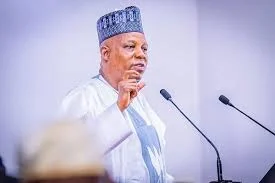
    UGO ONUOHA, a veteran journalist, was the Editor-in-Chief of Champion Newspaper

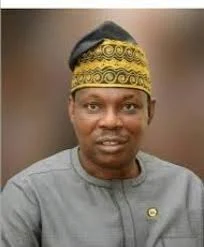
  • Breaking: Obasa stages comeback bid, says I remain Lagos Assembly Speaker

    Breaking: Obasa stages comeback bid, says I remain Lagos Assembly Speaker

    Trouble is brewing in President Tinubu’s Lagos as impeached speaker, Mudashiru Obasa told a mammoth crowd at his Ikeja residence on Saturday that he remains the Speaker of the Lagos House of Assembly.

    Mr. Obasa says his impeachment did not follow due process, neither did the election of Mrs Mojisola Meranda as his replacement follow the law.

    He told the gathering of  APC members from the Mandate Group at his official residence in Ikeja on Saturday, that he remained the speaker until  the House impeaches him through due process.

    He  alleged that a  fake mace was used to install Meranda as speaker and that hundreds of policemen invaded the House on the day of his removal in order to  intimidate his loyalists.

    Obasa also alleged  that some policemen invaded his official residence on the same day and prevented members of his family and every other person in the house from coming out.

    Obasa described all the alleged actions as illegalities,vowing to challenge his removal in court.

    He  also vowed to go back to the House and resume as speaker.

    ” The speakership is not Obasa’s title, it is like a general when you go to war, you may come out or you may not come back. So, I am not disturbed, perturbed or worried about the purported removal.

    “However, things must be done properly.The Lagos State Commissioner of Police led police officers to invade the State Assembly on the day of the removal, while over 200 policemen also invaded my private residence in Agege.

    “They also blocked the gate to my official residence, while they prevented members of my family from going out of the house.

    “I am not afraid of being removed, I have been  a member of the House for almost 22 years and  speaker for almost 10 years and I think i have contributed my quota.

    “But why did they have to break  the chamber and  use a fake mace to carry out  the removal?

    “If they say they don’t want me again it is fine , but let them follow due procedure.

    “My status in the House is that I believe strongly that I remain the speaker of the Assembly until the right procedure to remove  me is followed.”, he said.

    He debunked the allegation that spent N16 billion to  construct a gate at the Assembly complex ,describing the allegation as  ridiculous.

    According to him ,it is  not possible to construct any  gate with N16 billion.

    Obasa also debunked the allegation that he bought  40 Hilux vans  for N40 billion as speaker .

    The former speaker said he had not done anything wrong to warrant his removal ,adding he had lived up to expectations serving as lawmaker for over two decades.

    Obasa said he believed so much in the House Assembly and would never partake in its destruction.

    He appreciated members of the Governance Advisory Council (GAC) and Gov. Babajide Olusola Sanwo-Olu for the love for the party and the state.

    READ ALSO: FCT doctors suspend warning strike, following Wike’s intervention

    Obasa also thanked the First Lady, Mrs Oluremi Tinubu for her support  , and President Bola  Tinubu, who he said would always be his father.

    32 out of the 40 members on Jan. 13 removed Obasa at a plenary over allegation of gross misconduct and financial impropriety.

    The House immediately replaced him with Meranda .

  • Shettima inspects remodeled Kebbi central motor park, secretariat

    Shettima inspects remodeled Kebbi central motor park, secretariat

    Vice-President Kashim Shettima on Saturday inspected a renovated and remodeled Birnin Kebbi Central Motor Park and Bola Tinubu Ultra-Modern State Secretariat in Birnin Kebbi.

    Media reports indicate that the vice-president was in the state for some engagements and attended the wedding ceremony of the daughter of Rep. Bello Kaoje, representing Bagudo/Suru Federal Constituency.

    Earlier on arrival at Sir Ahamadu Bello International Airport, Birnin Kebbi, the vice-president was received by Gov. Nasir Idris of Kebbi, Gov. Ahmed Aliyu of Sokoto and other dignitaries.

    On the vice-president’s entourage were; Gov. Babagana Zulum of Borno, Chief of Staff to the President, Femi Gbajabiamila; Minister of Agriculture and Food Security, Abubakar Kyari and the All Progressives Congress Deputy National Chairman-North, Bukar Dalori. 

  • Why terrorism, Violent conflicts persist – CDS Musa

    Why terrorism, Violent conflicts persist – CDS Musa

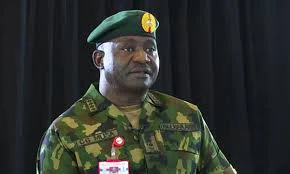
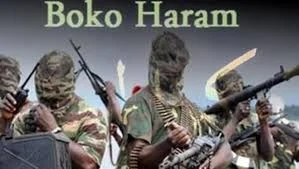
     The Chief of Defence Staff, General Christopher Musa, explained that the prolonged Boko Haram and other violent conflicts stem from their unconventional nature. 

    Speaking on a TV program, he noted that unlike traditional wars fought over territories, Boko Haram and operates based on ideology, making it harder to combat.  

    According to Musa, insurgents believe they gain rewards for their actions, making them fearless and difficult to distinguish from civilians.

     Their tactics, such as using human shields and blending with communities, further complicate operations. 

    The military’s adherence to international laws contrasts with the insurgents’ disregard, creating additional challenges.  

    Musa also highlighted improved transparency in arms procurement, thanks to collaboration with the National Assembly. 

    He mentioned progress in repairing and maintaining equipment locally, strengthening the military’s capacity. 

    Additionally, plans are underway to produce weapons domestically following a newly signed bill.  

    The military remains committed to ending the conflict and enhancing its operational effectiveness.

  • Buhari returns to Nigeria after testifying in $2.3bn corruption case  

    Buhari returns to Nigeria after testifying in $2.3bn corruption case  

    Former President Muhammadu Buhari is back in Nigeria following his testimony in a $2.3 billion arbitration case involving Sunrise Power.

     The case, heard at the International Chamber of Commerce (ICC) Court of Arbitration in Paris, France, centers on a dispute over the 2003 Mambilla power plant contract.

    A video shared on social media confirmed Buhari’s return, showing him stepping off an aircraft. 

    The presidency clarified that Buhari voluntarily testified to defend Nigeria in the ongoing case, dismissing claims of coercion.

    The dispute began in 2017 when Sunrise Power sought damages over alleged breaches of the 2003 agreement to construct the 3,050MW power plant in Taraba State. 

    The project, valued at $6 billion, faced setbacks, with the company also claiming the government failed to uphold a 2020 settlement agreement.  

    Former President Olusegun Obasanjo has also been involved, testifying in the same case. 

    Both leaders have denied authorizing any controversial agreements linked to the project.

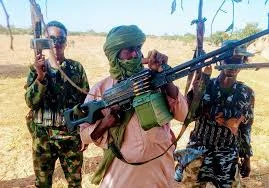
  • Troops neutralise Abu Mosaje, terrorist commander, gunrunner, 96 others

    Troops neutralise Abu Mosaje, terrorist commander, gunrunner, 96 others

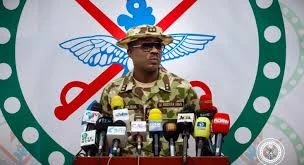
    Defence Headquarters says, in the last one week, troops have neutralised Abu Mosaje, identified as a notorious terrorist commander and gun runner in Plateau and 96 other terrorists nationwide.

    This is contained in a statement by the Director, Defence Media Operations, Maj.-Gen. Edward Buba, on Friday in Abuja.

    Buba said the military has intensified ongoing counter terrorism operations across the nation targeting not just the terrorist but their network of collaborators, informants and support base.

    According to him, Abu Mosaje was killed in Barkin Ladi Local Government Area of Plateau, adding that same troops apprehended a wanted kidnap kingpin, Babangida Usman in Sanga Local Government Area of Kaduna State.

    Buba said that Babangida had been on the security watch list.


    “Furthermore, troops arrested another notorious gunrunner and his son identified as Timothy Yusuf and Timothy Obadiah.

    “Meanwhile, in the South East, troops arrested seven IPOB/ESN terrorists including a notorious kidnapper and informants in Enugu North and Ehime Mbano Local Government Areas of Enugu and Imo States.

    “Nevertheless, during the week under review, troops neutralised 79 and arrested 224 persons.

    “Troops also arrested 28 perpetrators of oil theft and rescued 67 kidnapped hostages,” he said.

    Buba said the troops in the South-South denied the oil thieves of the estimated sum of N747m during the week.

    He added that troops also discovered and destroyed 215 crude oil cooking ovens, 26 dugout pits, 29 boats, 62 storage tanks, 20 drums and 42 illegal refining sites.

    He said the troops also recovered one barge, one tugboat, two pumping machines, two speedboats, nine outboard engines, two vehicles, 21 motorcycles, 11 mobile phones and eight vehicles among others.

    “Troops recovered 842,685 litres of stolen crude oil, 12,340 litres of illegally refined AGO and 200 litres of DPK.

    “Furthermore, across all the theatres of operations, troops recovered 104 assorted weapons and 1,953 assorted ammunition.

    “The breakdown is as follows: 53 AK47 rifles, 25 fabricated rifles, one FN rifle, 11 dane guns, two pump action guns, one fabricated SMG, four IEDs, seven RPG bombs, 30 magazines, four IEDs and three locally made butts.

    Abu Mosaje, terrorist commander

    “Others are: 1,186 rounds of 7.62mm special ammo, 417 rounds of 7.62mm NATO, 49 rounds of 12.7mm ammo, 190 rounds of 7.62 x 54mm ammo, 12 live cartridges, three bandoliers, one baofeng, 35 motorcycles, 22 mobile phones amongst other items.

    “Overall, troops remain steadfast in the destruction of terrorists across the country and remain committed to creating conditions in which the safety and security of citizens is guaranteed,” he added. 

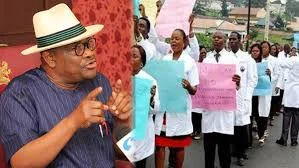
  • FCT doctors suspend warning strike, following Wike’s intervention

    FCT doctors suspend warning strike, following Wike’s intervention

    The Association of Resident Doctors in the Federal Capital Territory (ARD-FCT) has suspended its three-day warning strike after the intervention of the FCT Minister, Mr Nyesom Wike.

    The President of the Association, Dr. George Ebong, in a statement on Friday night said the Federal Capital Territory Administration (FCTA) under the minister had met their demands.

    The News Agency of Nigeria (NAN) recalled that ARD-FCT had on Wednesday, Jan. 22, commenced a three-day warning strike to press home some demands from the FCTA.

    The strike grounded most the government hospitals in the FCT, as the doctors claimed that some of them employed in 2023 were yet to received some arrears, allowances, and other benefits.

    The doctors also listed the deplorable conditions of some the hospitals in the FCT, manpower shortage among other demands.

    However, Ebong in the statement revealed that its members have started receiving the alerts of unpaid six-month salary arrears.

    The ARD-FCT President said that the Minister had approved, as well as ordered immediate payment of the accoutrement allowance owed members.

    He said that the Minister had also given approval for medical residency bonding training to 2 years; approval of immediate employment of doctors and allied health workers.

    Ebong said that the Minister had also given approval for payment of locum doctors and other health workers that were being owed, noting that “with the intervention of the Minister, doctors are expected to resume work with immediate effect.”

    He added that the intervention had also put an end to the impending indefinite shutdown of hospitals in Abuja, while urging the Minister to brace-up and meet other demands to avert future strike action.

    “On behalf of the executive members and the entire supreme congress of ARD-FCTA, I, Dr. George Ebong, deeply appreciate the Minister for his prompt and timely intervention in meeting our demands, thereby ending our warning strike.

    “We also humbly plead with the Minister to put a mechanism in place to avoid a repeat of this anomaly. We are hopeful that other demands will be attended to in due time,” Ebong said.

    The ARD-FCTA President expressed the association’s believes in the capacity of the Minister to turn the FCT health sector around as a stakeholder in the renew hope agenda.

    Ebong also used the opportunity to invite the Minister to all the district hospitals in the FCT, while assuring him of doctors continued support in the realisation of the administration’s renew hope agenda.

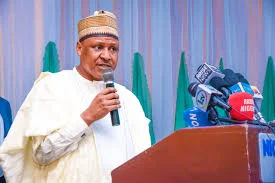
  • Information ministry partners with BPP

    Information ministry partners with BPP

    The Minister of Information and National Orientation, Alhaji Mohammed Idris, has accepted the partnership request from the Bureau of Public Procurement (BPP).

    Idris gave the approval when the Director-General of BPP, Dr Adebowale Adedokun, paid him a courtesy visit in Abuja.

    The minister commended Adedokun for reducing the time for procurement process at the bureau to 20 working days, adding that this was innovative.

    “I think BPP is showing us the way that things can be done in a transparent, accountable and efficient manner.

    “We sincerely feel happy and great that someone like you has been appointed to this position.

    “We are going to work with you to deliver on the mandate of the Renewed Hope Agenda of President Bola Tinubu.

    “I am pleased and note in particular your strategy to use procurement to reduce poverty in the country.

    ” I think this is key.

    READ ALSO: Minister warns Afrcian women against skin bleaching

    “Before now, people see procurement process or what they do at BPP as a stumbling block to getting contracts, supplies or whatever.

    ” I think that the procurement process that the BPP has put in place now will bring efficiency.

    “On the issue of asking us not to vet, actually, we don’t really vet here.

    ” We only rearrange. It is not the responsibility of the Information Ministry or anybody producing any journal to vet anything.

    “The agents, user, ministries, and agencies themselves know what they want.

    ” If they know what they want, someone should not tell them how they want it,” Idris said.

    The minister stressed that what was important was to ensure that needs were in line with guidelines set up by government to ensure transparency, accountability and efficiency.

    “The Ministry of Information and National Orientation will help to propagate your new strategies and innovations at the BPP.

    ” We can also do it via the regular ministerial press briefings.

    “Before now, issues of procurement have been shrouded in some form of mystery.

    ” I am glad that you are unravelling this now, making it public. There is really nothing to hide.

    “So our job is actually intertwined.

    ” While you are working to ensure efficiency in the procurement process, we are also working here to see that we give timely information and also help people to understand what you are actually doing.

    “We have platforms like the News Agency of Nigeria, Nigerian Television Authority, Voice of Nigeria, Federal Radio Corporation of Nigeria and the National Orientation Agency.

    ” You can leverage on them to propagate your good works,” Idris said.

    Speaking earlier, Adedokun, who was accompanied by his management staff, said the visit was to inform the minister of the change at BPP.

    “We are here to tell you that we are a tool for good governance.

    ” BPP is an instrument that can deliver timely and completed projects in any sector.

    “BPP is an institution that plays a critical role in ensuring that every single vision under the Renewed Hope Agenda comes to reality.

    “We see our responsibility not only to award contracts; in fact, our responsibilities
    are about 19 or more that the law allows us to perform.

    “So, we are determined under our leadership to promote good governance and ensure value for money, fairness, accountability and give
    opportunities to all levels of bidders in this country.

    “We intend to work closely with the media and this wonderful ministry to propagate all what government wants us to do by ensuring that procurement itself, which is the heartbeat of good governance, is allowed to thrive.

    “We want to deliver to Nigerians a  procurement process that will reduce poverty and improve work practice.

    ” This is a good procurement process that will improve employment generation and attract Direct Foreign Investment,” Adedokun said.

    He also said that BPP would migrate to electronic procurement to make the process easier.

    “From 2025 budget, we intend to ensure that all procurement processes are completed within the first half of the year.

    ” Together with the Information Ministry, we can go to the field to check what is being implemented.

    “So, it is no longer going to be people coming to us by the month of November to look for Certificates of No Objection; that will not happen again.

    “Everybody must complete their procurement processes within the first half of the year to enable us account to Nigerians.

    “We also intend to deploy categorisation and classification of consultants, contractors and service providers.

    ” What that means is we intend to grow the local contractors; we want them grow by moving from one grade level to another,” he said.

  • A Youth corps member dies, others injured while going to orientation camp

    A Youth corps member dies, others injured while going to orientation camp

    A corps member has died in a road crash while going to the National Youth Service Corps (NYSC) orientation camp in Ebonyi.

    The Federal Road Safety Corps (FRSC) Sector Commander in the state, Mr Henry Igwe, confirmed the incident to the News Agency of Nigeria (NAN) in Abakaliki on Thursday.

    Igwe said that the crash occurred on Wednesday at about 2 p.m. on Amasiri-Okigwe Road, Amenu village in Okposi, Ohaozara Local Government Area of the state.

    “It involved two vehicles – a 14-seater Toyota commercial bus, grey colour and a commercial Mercedes Benz tipper.

    “From our preliminary findings, it might have been caused by speeding on the part of the commercial bus.

    “The identities and details of the number of those injured have yet to be ascertained because the victims were actually rescued by bystanders in the area,” he said.

    The sector commander said that the injured had been taken to David Umahi Federal Hospital in Uburu, Ohaozara Local Government Area, adding that they were currently in stable condition.

  • Minister warns African women against skin bleaching

    Minister warns African women against skin bleaching

    Nigerian Minister of State for Health and Social Welfare Dr. Iziaq Salako, while speaking at the regional awareness-raising workshop on banning lightening cosmetics held in Gabon has warned against harmful beauty standard.

    He said that the “Black is Beautiful” movement needs to be revived in order to celebrate Afrocentric beauty. 

    In a speech made available to Nigerian Anchor on Thursday, the minister urged influencers, celebrities, and community leaders to promote natural beauty and self-acceptance while dispelling myths about lighter skin.

    “Through collaborative efforts, we can address the root causes of skin-bleaching practices and promote healthier and more inclusive attitudes toward beauty,” he said.

    He identified Nigeria as the “world capital” of skin bleaching, citing a World Health Organisation (WHO) report that 77 per cent of Nigerian women use skin-lightening products.

    He said that other studies and surveys corroborated the high prevalence of skin bleaching in Nigeria.

    He shared findings from the ministry’s Cosmetics Safety Management Programme (CSMP), which revealed that 52 per cent of manufacturers incorporate skin-lightening agents into their products.

    Salako pointed out that many individuals substitute the term “toning” for bleaching, mistakenly considering it less harmful or entirely safe.

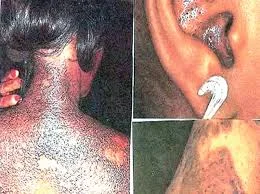
    He emphasised the severe health risks posed by Skin-Lightening Products (SLPs), which often contain hazardous substances such as mercury, hydroquinone, steroids, and heavy metals like arsenic, lead, and cadmium.

    “These substances can cause skin damage, organ toxicity, neurological complications, and cancer.

    “The widespread use of SLPs in Africa, particularly in Nigeria, highlights the urgent need for targeted public health campaigns, stricter regulatory enforcement, and community-driven advocacy to combat the practice,” he said.

    Burnt skin due to bleaching chemicals

    Salako commended the health ministry and the National Agency for Food and Drug Administration and Control (NAFDAC) for their proactive measures.

    He listed such measures to include  the 2019 Cosmetic Products (Prohibition of Bleaching Agents) Regulations, which prohibit harmful skin-bleaching agents like mercury, and limit hydroquinone concentration to two per cent.

    “The CSMP has carried out sensitisation  campaigns, grassroots advocacy, and training programmes to raise awareness about the dangers of skin bleaching.

    “The government is also developing a guideline on the safety assessment of cosmetic products to strengthen regulatory oversight and ensure that  all products meet international safety standards, ” he said.

    NAN reports that Africa is fast becoming a hotspot for the  usage of  skin-lightening product.

    According to a 2023 WHO fact sheet, the prevalence of skin bleaching among women varies across Africa.

    “25 per cent of women in Mali use  such  products; 32 per cent in South Africa, 39 per cent in Ghana, 50 per cent in Senegal, and 66 per cent in Congo-Brazzaville,” it said.

    The WHO report said that  77 per cent of women in Nigeria consumed  the products,  making it  the highest globally.

    This trend is driven by societal pressures linking lighter skin to beauty, success, and wealth.

    While several African countries, including Ghana, South Africa, and Mali, have banned SLPs, weak enforcement allows the products to flood markets across the continent.