Gombe State’s commitment to fiscal transparency and accountability has earned it a significant distinction in the 2023 Fiscal Transparency Index published by BudgetIT, a reputable fiscal policy tracking organization in Nigeria.
The state has been ranked an impressive 6th out of 36 states, with a commendable score of 74/100.
This achievement reflects Gombe State’s dedication to transparent budgeting, procurement practices, and online fiscal reporting.
The report underscores Gombe State’s accomplishments in various key areas, including budget transparency, procurement transparency, the integrity of the state’s website, and fiscal transparency online. Particularly noteworthy is the state’s Medium Term Expenditure Framework (MTEF), which has been recognized as comprehensive and well-structured. The report acknowledges that Gombe State’s approved budget met several stringent criteria, while its e-procurement portal stood out for its accessibility and navigability.
Governor Muhammadu Inuwa Yahaya’s administration has consistently demonstrated its commitment to fiscal transparency and accountability, earning Gombe State esteemed recognition both on a national and international level. Notably, the state recently secured the World Bank’s States Fiscal Transparency, Accountability, and Sustainability (SFTAS) award in multiple categories, a testament to the administration’s impactful efforts in prudent public resource management.
Furthermore, Gombe State achieved a remarkable 7th position in Nigeria and clinched the top spot in the North East sub-region in the Transparency and Integrity Index by the Centre for Fiscal Transparency and Integrity Watch (CETIW). This recognitions affirmed the state’s position as a role model in good governance, financial prudence, and fiscal integrity.
An associate professor and multi-disciplinary researcher, who also serves as the Director-General of Research and Documentation at the Government House, Dr. Mu’azu Shehu explained that based on his close monitoring of national and international open government and development ratings, Gombe State has performed credibly well in fiscal responsibility, transparency, and accountability. He noted that Governor Inuwa Yahaya’s leadership has been pivotal in fostering a culture of good governance and transparency, positioning Gombe State as one of the most transparent and well-governed in the nation.
The remarkable strides taken by Gombe State underscores Governor Inuwa Yahaya’s unwavering commitment to international best practices, as he continues to drive comprehensive reform to enhance the state’s public finance management structure.
President Bola Tinubu, as the Chair of the ECOWAS Heads of State and Government, has called upon the leaders of member countries to continue pursuing diplomatic solutions to the political turmoil in the Republic of Niger.
His remarks were delivered during the 2nd Extraordinary Summit on the Socio-Political Situation in Niger held in Abuja on Thursday.
Tinubu emphasized the importance of assessing the effectiveness of interventions undertaken and identifying any obstacles that may have impeded progress. He stressed,
“Only through this comprehensive assessment can we collectively chart a sustainable path toward lasting peace, stability, and prosperity in Niger.”
In his address, he reaffirmed the commitment to democracy, human rights, and the well-being of the Nigerien people. He underscored the necessity of prioritizing diplomatic negotiations and dialogue to reach a resolution.
“We must engage all parties involved, including the coup leaders, in earnest discussions to convince them to relinquish power and reinstate President Bazoum. It is our duty to exhaust all avenues of engagement to ensure a swift return to constitutional governance in Niger,” Tinubu asserted.
While urging the leaders to recognize the impact of the political crisis on Niger’s stability and the broader sub-region, he advocated adherence to democratic principles, good governance, and the rule of law to restore peace and prosperity.
Tinubu also regarded the summit as a momentous occasion to reinforce West Africa’s unity and resilience. “Let us seize this opportunity to make a lasting impact on the lives of our fellow Africans as we strive to build a future defined by peace, progress, and prosperity,” he remarked.
He commended the diplomatic envoys deployed to mediate in Niger, Libya, and other partner countries.
The summit attendees included Presidents Julius Maada Bio of Sierra Leone, Umaro Mokhtar Sissoco of Guinea Bissau, Everiste Ndayishimiye of Burundi, Alassane Ouattara of Cote d’Ivoire, Mohamed Ould Ghazouani of Mauritania, Nana Akofo-Ado of Ghana, Macky Sall of Senegal, and Patrice Talon of Benin Republic. Retired Gen. Abdulsalami Abubakar, Babagana Kingibe, and the Sultan of Sokoto, Abubakar Sa’ad III, were also present.
In response to the military coup in Niger, ECOWAS had implemented a no-flight zone over the country, aiming to curb the junta’s influence. Immediate financial sanctions were imposed, and the junta was given a week to relinquish power, with the possibility of a military intervention if necessary. ECOWAS maintained recognition of President Mohamed Bazoum and called upon member states and the international community to uphold these decisions to restore peace and stability.
Speaking at the emergency meeting, President Tinubu condemned the coup and asserted that Africa had reached a new level of maturity.
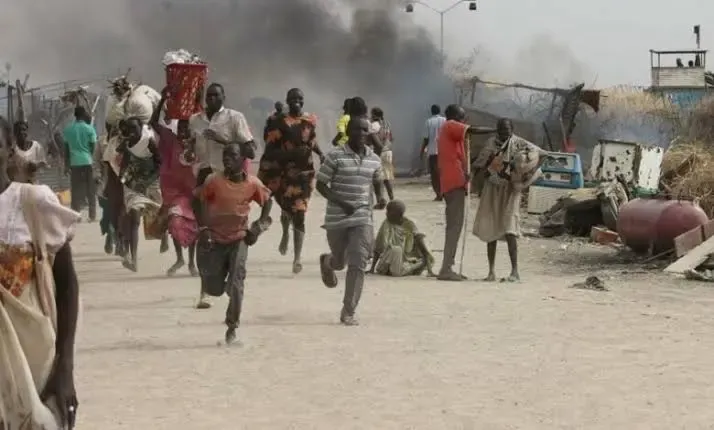
A tragic incident unfolded in the Heipang District of Barkin-Ladi Local Government Area in Plateau State, North Central Nigeria, resulting in the loss of twenty lives and leaving over ten individuals injured.
The distressing event took place during the early hours of Thursday when assailants launched an attack on the community while its residents were asleep.
Reports from the community reveal that the attackers demonstrated a significant degree of firepower, rendering the efforts of local vigilantes ineffective in repelling them.
Despite the valiant efforts of the vigilantes armed with Dane guns, the assailants maintained an upper hand.
This confrontation led to the unfortunate demise of four vigilantes. The attackers further exacerbated the situation by setting several houses ablaze, subjecting sleeping residents to a perilous fate from which they could not escape.
John Mark Pam, a deeply affected resident, shared the harrowing account of his personal loss. He disclosed that the attackers invaded his compound, setting his family’s dwelling alight and tragically claiming the lives of his brother Dung Mark, his wife, and their three children while they were asleep.
The Public Relations Officer of the Plateau State Police Command, DSP Alfred Alabo, verified the distressing incident. He confirmed that security measures have been escalated within the community, and law enforcement personnel are actively pursuing the attackers in an effort to bring them to justice.
President Bola Tinubu delivering his speech at the ECOWAS Summit on Thursday in Abuja.
High-level representatives hailing from the West African region have convened in Abuja for an emergency summit aimed at addressing the recent coup in Niger, subsequent to the military junta’s defiance of an ultimatum urging the restoration of elected President Bazoum.
The pivotal meeting took place in Abuja, Nigeria’s political capital, and was attended by several West African leaders, including President Bola Tinubu, who holds the role of Chairman within the Economic Community of West African States (ECOWAS).
Notable figures from the United Nations and African Union were also present at the event.
In his capacity as the convener, President Tinubu officially initiated the extraordinary gathering and emphasized the profound ramifications of the coup in Niger on the stability of democratically established governments within the sub-region.
He articulated the imperative of prioritizing diplomatic negotiations and open dialogue with the military junta in Niger to ameliorate the crisis.
President Tinubu expressed, “Reaffirming our unwavering commitment to democracy, human rights, and the welfare of the Nigerien people, it is of utmost importance that we place diplomatic negotiations and dialogue at the forefront of our strategy.
“We must engage all stakeholders, including the leaders of the coup, in sincere discussions aimed at persuading them to relinquish authority and reinstate President Bazoum. Our responsibility is to exhaust all possible avenues of engagement in order to ensure a swift return to constitutional governance in Niger.”
The President further expounded, “In a more specific context, as leaders representing our respective nations, we must acknowledge that the political turmoil in Niger not only jeopardizes the nation’s stability but also casts extensive reverberations across the entire West African region.
“Through unwavering adherence to the principles of democracy, effective governance, and the rule of law, we can reestablish tranquility, stability, and prosperity within the Republic of Niger, thereby cultivating an environment conducive to comprehensive growth and development for all.”
“More so, in reaffirming our relentless commitment to democracy, human rights, and the well-being of the people of Niger, it is crucial that we prioritize diplomatic negotiations and dialogue as the bedrock of our approach.
“We must engage all parties involved, including the coup leaders, in earnest discussions to convince them to relinquish power and reinstate President Bazoum. It is our duty to exhaust all avenues of engagement to ensure a swift return to constitutional governance in Niger.
“More specifically, as leaders of our respective nations, we must recognize that the political crisis in Niger not only poses a threat to the stability of the nation but also has far-reaching implications for the entire West African region.
“By remaining steadfast in our adherence to the principles of democracy, good governance, and the rule of law, we can restore peace, stability, and prosperity in the Republic of Niger, thereby fostering an environment conducive to growth and development for all.”
Following President Tinubu’s address, the summit transitioned into a confidential deliberation phase. The meeting, convened two weeks subsequent to the coup that ousted Mohamed Bazoum, who ascended to power in 2021, signifies ECOWAS’s proactive pursuit of a diplomatic resolution while keeping the prospect of employing force as a last resort.
Critical determinations are anticipated from the gathering held in Abuja, as ECOWAS endeavors to curtail the succession of coups among its member states that has been unfolding since 2020.
The coalition granted the military forces, which assumed control on July 26, a grace period until the prior Sunday to reinstate President Bazoum, aged 63, under the threat of potential military intervention.
In response to the crisis, Nigeria, among other measures including border closures, has suspended electricity supply to Niger as part of a series of economic sanctions.
Nonetheless, the leaders of the coup remained steadfast in their stance, and the deadline elapsed without any observed action.
Tinubu’s Full Speech at the Summit
Your Excellency, the President of the ECOWAS Commission;
Your Excellency, President of the African Union Commission;
Your Excellency, President of the UEMOA Commission;
The Special Representative of the Secretary General of the United Nations in West Africa and the Sahel; and
Distinguished Ladies and Gentlemen.
1. Let me commence by welcoming you all to the Second (2nd) Extraordinary Summit on the Socio-Political Situation in the Republic of Niger, within the space of ten days. Your presence here, despite the short notice, demonstrates the unwavering dedication of our esteemed community to finding a lasting solution to the political situation in the Republic of Niger.
2. Today, we gather with a profound sense of urgency and firm determination, building upon the commitments made during our first Extraordinary Summit, on the grave political crisis befalling our sister nation. During that initial meeting, we voiced our solidarity with the people of Niger and their democratically elected President, H.E Mohamed Bazoum, by condemning the military take over and the unjust detention of their democratically elected President.
Your Excellencies, Distinguished Ladies and Gentlemen,
3. As you may recall, we called on the junta to rescind its decision of toppling a legitimate government. We proceeded to impose sanctions with the hope that this resolute measure would serve as a catalyst for the restoration of the constitutional order in Niger. Regrettably, the seven-day ultimatum we issued during the first Summit has not yielded the desired outcome. We have also made diligent efforts through the deployment of various ECOWAS mediation teams, to engage the military junta for a peaceful resolution of the political situation. One of the facilitators, former Head of State of Nigeria, General Abdulsalami Abubakar, would update us on the outcome of his mission to Niamey.
4. Similarly, as part of a coherent diplomatic initiatives, Special Envoys were dispatched to non-ECOWAS nations, particularly Libya and Algeria. During these engagements, the Envoy designated for Libya had the privilege of an audience with the President of Libya. This discourse resulted in an unequivocal expression of support for the resolutions adopted by ECOWAS aimed at restoring constitutional governance in Niger. In Algeria, the Envoy was received by the Minister of Foreign Affairs on behalf of the President of the country. These initiatives are aimed at presenting a cohesive and united stance regarding the ongoing circumstances in Niger, thus showing a collaborative and concerted approach among African nations.
Your Excellencies, Distinguished Ladies and Gentlemen,
5. Following the resolution of our previous Extraordinary Summit to initiate a meeting of the ECOWAS Chiefs of Defense Staff, the meeting of the Chiefs of Staff Committee was duly held from 2nd to 4thAugust, 2023. The outcome of that meeting, as well as a Memorandum by the President of the ECOWAS Commission on current socio-political developments in Niger, will be presented during this Summit. These will offer critical insights that will inform our collective decision-making process at this meeting.
6. Today’s Summit provides a significant opportunity to meticulously review and assess the progress made since our last gathering. It is essential to evaluate the effectiveness of our interventions and identify any gaps or challenges that may have hindered progress. Only through this comprehensive assessment can we collectively chart a sustainable path towards lasting peace, stability, and prosperity in Niger.
Moreso, in reaffirming our relentless commitment to democracy, human rights, and the well-being of the people of Niger, it is crucial that we prioritize diplomatic negotiations and dialogue as the bedrock of our approach. We must engage all parties involved, including the coup leaders, in earnest discussions to convince them to relinquish power and reinstate President Bazoum. It is our duty to exhaust all avenues of engagement to ensure a swift return to constitutional governance in Niger.
7. More specifically, as leaders of our respective nations, we must recognize that the political crisis in Niger not only poses a threat to the stability of the nation but also has far-reaching implications for the entire West African region. By remaining steadfast in our adherence to the principles of democracy, good governance, and the rule of law, we can restore peace, stability, and prosperity in the Republic of Niger, thereby fostering an environment conducive to growth and development for all.
Esteemed Excellencies, Distinguished Ladies and Gentlemen,
8. I am confident that this 2nd ECOWAS Extraordinary Summit on the Socio-Political Situation in the Republic of Niger will be a defining moment in our journey towards a stronger, more resilient, and integrated West Africa. Let us seize this opportunity to make a lasting impact on the lives of our fellow Africans as we strive to build a future defined by peace, progress, and prosperity.
9. In conclusion, I extend my gratitude to each of you for your attention to this critical issue. I trust that our deliberations will be productive and fruitful, leading us to find an amicable solution to the political crisis in Niger. As we continue to work together in solidarity and harmony, we can ensure a prosperous future for the entire West African region.
10. With these remarks, I hereby declare this Extraordinary Summit open.
The Plateau State Government has taken a significant step in addressing the prevailing insecurity challenges within the region by inaugurating a Security and Information Centre (SIC).
This initiative aims to foster better communication between the government and the public while facilitating the reporting of security incidents by residents.
Governor Caleb Mutfwang emphasized the importance of the SIC in bridging the existing communication gap. The centre’s establishment is anticipated to enhance the flow of information between the general populace and the government, thus aiding in the swift resolution of security concerns. The governor’s remarks were made during the centre’s official inauguration event held in Jos.
In recent times, the Plateau State has grappled with an ongoing wave of attacks in several communities, particularly within the Mangu Local Government Area and other regions. Tragically, these attacks have resulted in the loss of over 300 lives.
In response to this distressing situation, the government has sought to proactively address security issues and provide a means for residents to engage actively in the reporting process.
Administered under the Plateau State Information and Communication Technology Development Agency (PICTDA), the SIC is equipped with a toll-free hotline to facilitate the sharing of vital security-related information.
Notably, the centre has already commenced operations, serving as a pivotal conduit through which the government can swiftly receive early warning signals. The primary goal is to enable the authorities to intervene promptly and effectively in situations that require immediate attention.
Moreover, the SIC holds the promise of being a two-way communication platform. While it empowers residents to report security developments, it also acts as a medium for citizens to provide feedback on developmental matters within the state.
This dual functionality contributes to a more holistic and proactive approach to governance, enabling the government to stay attuned to the needs and concerns of the people it serves.
In essence, the establishment of the Security and Information Centre represents a significant stride in Plateau State’s journey toward enhancing security and communication.
By integrating technology, public engagement, and timely interventions, this initiative stands as a testament to the government’s commitment to safeguarding its citizens and fostering a safer environment for all.
The Jigawa Government has rolled out palliatives to cushion the effects of the removal of fuel subsidy among people in the state, including entrepreneurs, Small and Medium Scale Business (SMEs) operators.
The State Commissioner for Information, Youths, Sports and Culture, Mr Sagir Musa, stated this when he addressed newsmen on the resolutions of the State Executive Council (SEC) meeting in Dutse.
Musa said the state government had approved N134 million for the purchase of five trucks of rice for distribution to less privileged people.
He explained that the approval was to complement the efforts of the Federal Government which donated five trucks of rice to the state government for distribution as palliative to cushion the effect of fuel subsidy removal.
“The executive council has deliberated on the Federal Government intervention with five trucks of rice, received through SEMA for distribution across the 27 LGAs as palliative to cushion the effect of fuel subsidy removal.
The removal has caused hike in the prices of food items and other commodities.
“The council has also approved the purchase of additional five trucks of rice at the cost of N134 million to cover more beneficiaries,” he said.
The commissioner added that the council also considered and approved another empowerment programme for 1,500 young entrepreneurs running existing businesses across the 27 local government areas of the state.
According to him, each of the beneficiaries will receive N50, 000 to enhance their businesses.
Musa said the programme would be executed by the Ministry of Information, Youths, Sports and Culture, in collaboration with the state Youths Employment and Employment Agency.
He further stated that the council approved to support 1,000 SMEs with N100,000 each, under its J-Cares, a World Bank supported programme.
The commissioner, however, pointed out that only those SMEs that made the World Bank’s criteria of being registered, have bank accounts, BVN and have at least two employees.
According to Musa, the state government will continue to initiate policies and programmes that will uplift the living standard of the people of the state.
The government, in its maiden executive council meeting on July 26, approved N50 million to empower 1,000 women traders, to cushion the effect of fuel subsidy removal on their businesses.
President Bola Tinubu on Wednesday received a delegation of Nigerian Muslim leaders led by Sheikh Dahiru Bauchi and accepted their mediation in the Niger conflict.
The leaders were at the State House to consult with the President on the situation in the Republic of Niger.
The President had on Tuesday declared that all options were still open to find an amicable resolution to the Niger political crisis.
Speaking to newsmen earlier, Sheikh Bala Lau, said the delegation pledged to find a lasting and peaceful solution in neighbouring Niger Republic.
“The delegation of Ulamah here in Nigeria met with Mr President on the issue of Niger Republic. We want to find a lasting solution. We want peace and harmony to reign not only in Nigeria but in the sub-Sahara region and globally.
“So, the whole Ulamah advised Mr President, that we want peace and reconciliation.
“Always if there is anything that happens between you and your neighbour, the Holy Qur’an commands you to reconcile. So, we want reconciliation.
“That’s why we’re here and our able leader and President accepted the offer that he wants us to intervene and to talk to our brothers over there in Niger Republic, the scholars as well on how we can come together and bring a lasting solution to this problem,’’ Lau explained.
Similarly, Sheikh Abdurrahaman Ahmed, confirmed that the president accepted their offer to mediate in the Niger imbroglio, adding that the mediation will start as soon as possible.
“Other than that, the president deplored coup d’état in the Sahel region, and as a democrat himself, said he will do everything to ensure that there is democracy, justice, freedom and peace in the sub-region.
“We as Ulamah are also committed to peace and justice, and the president will be enabling the Ulamah to mediate as it is appropriate.
“So this is why we’re here. And it is a mission accomplished because the President responded positively and in turn, he has given us an assignment to also mediate to ensure reconciliation between the warring factions in Niger Republic.’’
Recall that on July 26, soldiers from Niger’s presidential guard deposed President Mohamed Bazoum and closed the country’s borders.
Entrances to government ministries were also blocked by the presidential guard.
While the ECOWAS Heads of State and Government agreed on a number of resolutions against the military junta, another round of financial sanctions was on Tuesday imposed on entities and groups associated with the junta.
The former Emir of Kano, Mohammed Lamido Sanusi II, was also at the Villa to see the president on the Niger Republic issue.
Sanusi has reportedly spoken with the head of the military junta on Wednesday in Niamey in collaboration with the Emir of Damagaram, Niger Republic.
Speaking with State House Correspondents, Sanusi II said his mission was a private one not known to the government.
“I came to brief him on the details of my discussions with leaders of Niger.
“We’ll continue to do our best to bring the two parties together to improve understanding. This is the time for public diplomacy, it’s not a matter that we leave to governments.
“All Nigerians, all Nigeriens need to be involved to find a solution that works for Africa, a solution that works for Niger, that works for Nigeria and a solution that works for humanity,’’ he said.
The Ekiti State Government has approved palliatives to cushion the effect of fuel subsidy removal by the Federal Government.
Tagged “Ekiti State Subsidy Relief Programme’’, the government approved the consequential adjustment of the minimum wage to civil servants on Grade level 14 to Grade Level 17.
It approved the payment of leave bonuses for 2017 and the implementation and payment of 2020 and 2021 promotion arrears to its civil servants.
The government also approved the payment of N5,000 monthly conditional cash transfer to 10,000 indigent persons and most vulnerable households from August to December 2023.
The conditional transfer focuses on the aged; while another 10,000 residents and especially the aged would be considered for free medical attention under the Ekiti Health Insurance Scheme.
To cushion the effect of the high cost of transportation especially on workers and students, the government said it would also provide free mass transit buses.
It would also distribute free foodstuffs to the poor and most vulnerable households.
Government also approved payment of 90 per cent of Consolidated Health Salary Structure and 100 per cent Hazard Allowance for local government health workers and salary parity for clinical staff of the Hospitals Management Board.
Commissioner for Finance and Economic Development, Mr Akintunde Oyebode, made these known at Ado-Ekiti on Wednesday at a news briefing.
He assured that increased revenue accruing to the state from the removal of fuel subsidy would lead to improved service delivery from the government.
“In addition to the already mentioned interventions, the government will distribute inputs to farmers and give financial support to small businesses and to the informal sector,’’ Oyebode said.
Labour leaders at the news briefing took turns to appreciate the government’s efforts at alleviating the hardship of the citizenry.
An International Civil Group, Egalitarian Mission for Africa (EMA) has dragged President Bola Tínubu of Nigeria before the Economic Community of West African (ECOWAS) Court of Justice, invoking the Protocols of the Court to stop the planned military action against the Republic of Niger over coup plot.
The group, in the suit instituted on its behalf by a Nigerian lawyer, Dr Oluwakayode Ajulo, OON, is praying the Regional Court to invoke relevant ECOWAS treaties and international laws to stop the military invasion of Niger Republic being spearhead by the Nigerian Government.
The grouse of the Civil Group, among others, is that the planned military action or invasion will run foul of the obligations in the ECOWAS treaties and therefore amounting to illegality.
The suit marked ECW/CCJ/APP/3/23 emphasized categorically that ECOWAS treaties prohibit aggression among member States.
Apart from the Egalitarian Mission for Africa (EMA), other plaintiffs in the matter are a former Director General of the Nigerian Institute of the Internal Affairs (NIIA), Professor Bola Akinterinwa and a Nigerian Northern Region lawyer, Hamza Nuhu Dantani.
Defendants are ECOWAS, Authority of Heads of State & Government of ECOWAS, President of ECOWAS Mission, Federal Republic of Nigeria and Republic of Niger.
A military group led by General Abdourhamane Tchiani had on July 26 toppled the civilian and democratic government of President Mohammed Bazoun who has since been clamped into unlawful military detention.
Although the three plaintiffs in the regional suit described the coup detat as most unfortunate, they however warned that Nigeria should not travel the dangerous road of military hostilities that may further escalate the crisis in the Niger Republic.
According to them, over 300,000 refugees, mainly Nigeria citizens, have already fled the Niger Republic adding that military action against Niger Republic would lead to breach of fundermrntal rights to life, right to dignity of human persons and liberty to life.
The plaintiffs therefore prayed the ECOWAS Court of Justice for a restraining order against any form of military action in Niger Republic that may undermine the sovereignty and the territorial integrity of Niger Republic.
Besides the Court action, the plaintiffs’ Counsel, Dr Ajulo wrote a strongly worded letter to President Tinubu, notifying him of pendency of the suit and invoking the Protocol of the ECOWAS Court on the need to respect and obey the rule of law as well as to refrain from doing that will militate against the subject matter.
The letter is entitled “Notification of Pendency of case before the ECOWAS Community Court of Justice ; Call For Strict Adherence To The Protocol of the Honourable Court of the ECOWAS Commumity Court of Justice’.
It read in part “We are Counsel to the Plaintiffs/Applicants in the above case before the ECOWAS Community Court of Justice and it is on their firm and unequivocal instructions that we write.
Sequel to the Resolution and several sanctions imposed by the ECOWAS in the aftermath of the unfortunate and unconstitutional takeover of the democratically elected Government of the Republic of Niger, we have lodged a Case before the ECOWAS Community Court of Justice in an application for reliefs as the proposed military intervention in the Republic of Niger would be tantamount to aggression between ECOWAS Member States.
” The intervention will specifically violate Articles 1, 5, 15, 16, 17, 21, 22 & 24 of the African Charter on Human and Peoples’ Rights; Articles 1 (2), 2, 3, 4, 5, 6, 7, 8, 9, 11, 12, 13 & 14 of the International Covenant on Economic, Social and Cultural Rights; Articles 1, 3, 22, 23 (3), 25 (1) & 26 of the Universal Declaration of Human Rights 1948; Articles 1, 2, 3, 4, 5, 6, 7, 8, 9 & 10 of the Declaration on the Right to Development 1986; Articles 6, 15, 31, 63 & 64 of the Revised Treaty of the Economic Community of West African States; Article 10 of the Supplementary Protocol (A/SP.1/01/05) amending the Protocol (A/P.I/7/91) relating to the Community Court of Justice and Articles 10 (c), 22, 26, 27, 28, 56 of the ECOWAS Protocol Relating to the Mechanism for Conflict Prevention, Management, Resolution, Peace– Keeping and Security 1999.
“The Case, an official copy of which has been duly served on your Excellency through the ECOWAS Secretariat, 101, Yakubu Gowon Crescent, Asokoro, Abuja, has invoked the jurisdiction of the International Court to consider conventions, treaties, Protocols and regulations to which your Excellency and the Federal Republic of Nigeria are signatories and which override the resolutions, sanctions, domestic law and practices and which the ECOWAS Community Court of Justice has been called upon to declare illegal. Another copy of the Case is attached for your informed action.
“We wish to further draw your attention to Article 22(2) of the Protocol on the Community Court of Justice which mandates that “When a dispute is brought before the Court, Member states or institutions of the Community shall refrain from any action likely to aggravate or militate against its settlement”
“In the Case before the ECOWAS Community Court of Justice, The Economic Community of West African States (ECOWAS), Authority of Heads of State and Government (of which your Excellency is the Chairman), President, ECOWAS Commission, The Federal Republic of Nigeria (of which your Excellency is the President and Commander-in-Chief of the Armed Forces) have been sued as sovereign legal representatives of respective institutions including the Republic of Niger.
“It is your Excellency’s sacred duty as the Chairman of the Authority of Heads of State and Government of ECOWAS and the President and Commander-in-Chief of Armed Forces of Federal Republic of Nigeria under your hand to bring the institution of the Case before ECOWAS Community Court of Justice to the attention of the other Defendants and to insist, particularly in your Excellences’ subsequent meetings, that the Defendants refrain from taking any action in respect of the subject matter pending the determination of the case, in view of your Excellency and Nigeria’s protocol obligation under the Article above quoted.
“Your Excellency, it is our firm confidence that by your enviable knowledge of high international standard of due adherence to the rule of law and respect for the supranational judicial process obtainable in a Case of this nature, we need not further stress the need to ensure that all the Defendants concerned maintain the status quo presently obtaining, and restrain themselves from taking any step susceptible to being regarded by the ECOWAS Community Court of Justice and international Community as prejudicial to the interest of our client or any of the parties in court.
“Your Excellency would agree with us that as the law stands presently, the Resolution on proposed military actions be discontinued pending the determination of the Case by the ECOWAS Community Court of Justice.
The Sultan of Sokoto, Alhaji Sa’ad Abubakar III, has called for increased community representatives’ involvement in solving the lingering security challenges facing the nation.
Abubakar, who was represented by Dr Jabbi Kilgore, the District Head of Kingori made the call during a town hall organised by the Kukah Centre for Peace in collaboration with Global Right, an NGO on Tuesday in Sokoto.
The Sultan said that bad governance, injustice and inequality were some factors contributing to insecurity.
He enjoined leaders at all levels to be fair in dealing with their subjects and know that they would give an account of their stewardship after leaving this world.
In his keynote address, Bishop of Sokoto Diocese, Bishop Mathew Kukah also identified religious intolerance, fanaticism and injustice as some of the factors responsible for insecurity in the country.
Kukah also said that sectionalism, fanaticism, injustice and religious intolerance were responsible for insecurity in the country.
He urged stakeholders at the meeting to come together to form common front in curbing the menace saying insecurity know no religion.
Earlier, Governor Ahmad Aliyu of Sokoto state, represented by the Permanent Secretary Ministry for Religious Affairs, Alhaji Abubakar Torankawa rreiterated the commitment of the government to partner with groups and association in promoting peaceful coexistence in the state.
The Sokoto state commissioner of police, Ali Kaigama, also emphasised on the need for public support to community policing drives initiated by the Nigerian Police.
Kaigama said the police will continue to partner with the Nigerian army and other sister security agencies in tackling insecurity in the country.
In his presentation, Prof. Tukur Baba, the Dean Faculty of Social Sciences in Federal University Birnin Kebbi dwelled on factors that promoted insecurity from pre-independece.
Baba advised authorities to change the land use act, taxations and consider global, regional, national and community approaches to holistically deal with the problems of insecurity.
He described the assessment by the National Bureau of Statics revealing the poverty index as glaring.
”This is the effect of insecurity, maladministration and poor people attitude in the northwest,” he said.