Category: News

  • Elevator Tragedy: Sanwo-Olu hands installer over to police for questioning

    Elevator Tragedy: Sanwo-Olu hands installer over to police for questioning

    The Lagos State Government has handed the installer responsible for the faulty elevator that led to the death of medical doctor Vwaere Diaso at the General Hospital, Odan, Lagos Island, over to the police for questioning.

    NIGERIAN ANCHOR had reported that the incident occurred last Tuesday, prompting the government to initiate an inquiry into the accident.

    In a statement, the Permanent Secretary of the Ministry of Information and Strategy, Olumide Sogunle, stated that a panel has been set up to investigate the incident.

    The panel includes experts who will conduct a thorough mechanical and electrical examination of the elevator.

    The lift installer was immediately interviewed by the panel and handed over to the police for further interrogation to ensure his availability for additional questioning.

    Representatives of the medical associations and six house officers were appointed as witnesses and allowed to be part of the panel.

    The panel has been given 48 hours to complete their investigation, and a report of their initial findings is expected on Saturday. The appropriate authorities will take any necessary further actions based on the panel’s report.

    Meanwhile, the Lagos State chapter of the Nigerian Medical Association (NMA) has continued its indefinite strike in three hospitals to protest the death of their colleague.

    Further updates on the investigation and the strike are yet to be confirmed by the appropriate authorities.

  • Amotekun arrests suspected cultist, burglar in Osun

    Amotekun arrests suspected cultist, burglar in Osun

    Osun State Amotekun Corps, said it has arrested a suspected cultist in Osogbo and another suspected burglar in Ila-Orangun, Ila Local Government Area of Osun.

    Brig.-Gen. Bashir Adewinmbi, the State Commander of the corps, made this known in a statement on Friday, adding that the two suspects were arrested on Thursday.

    “Sodiq Adelabu, 20, a native of Osogbo, was arrested in Osogbo for allegedly being a member of a secret cult, engaging in cult-related activities and theft.

    “The suspect admitted to being a member of the Eiye Confraternity when interrogated.

    “The second suspect, Sunday Oluwasegun, 22, a native of Ila-Orangun, was arrested for breaking into a house and stealing in Ila-Orangun Town.

    “He was reported to have stolen some money and some home appliances before he was later arrested.”

    Adewinmbi said both suspects were arrested after complaints were lodged against them and their activities by patriotic residents of the state.

    He, therefore, called on residents of the state to always report suspicious activities and criminal suspects living among them to security agents.

    He assured them that their identity would be kept secret, encouraging them to join in the fight against crime and criminality in the state.

    He stated that the arrested suspects had, however, been handed over to the police for further investigation and prosecution. 

  • Police foil bandit attack on police station, Juma’at prayer in Zamfara

    Police foil bandit attack on police station, Juma’at prayer in Zamfara

    The police command in Zamfara said its operatives repelled bandits who attacked the Divisional Police Station in Zurmi Local Government Area of the state.

    The command said it also arrested a 35-year-old suspected female informant.

    The Command’s Public Relations Officer, ASP Yazid Abubakar disclosed this at the weekend at a media briefing in Gusau.

    Abubakar said police operatives attached to the police station acted on credible intelligence that a group of armed bandits was planning to carry out the attack.

    “The police operatives mobilised, confronted the bandits, and engaged them in a gun battle which lasted for hours.

    “As a result of this, one of the bandits was neutralised while the others escaped to the bushes spilling blood on their paths because of the wounds they sustained.

    “Police investigation that followed the incident resulted in the arrest of a 35-year-old female suspected to be an informant from Rukudawa village.

    “The suspect confessed that she has been working with bandit kingpin Dankarami Gwaska as his informant and has given her the task of monitoring activities at the police stations for him.

    “Two handsets containing bandits’ telephone numbers were recovered from her,” Abubakar said.

    “On July 28 Police Tactical Operatives attached to 34 PMF, deployed to Magarya community in the same Zurmi local government area acted on an intelligence report that suspected armed men were on their way to attack Muslims during Juma’at prayers at Kwata village in Magarya district.

    “The police operatives confronted them and succeeded in foiling the attack and the bandits escaped to the bushes.

    “Two AK47 rifles, four rounds of 7.62mm ammunition and Bajaj motorcycle were recovered at the scene while the command is still pursuing the suspects with a view to arresting and prosecuting them.

    “On July 27 at about 1330hrs, Police Tactical Team attached to Area Command Gusau acted on intelligence that led to the arrest of two suspected bandits and kidnappers terrorizing the Saminaka area in Gusau Metropolis,” the command’s spokesman added. 

  • Group decries lack of inclusion, calls for equity, representation in Benue

    Group decries lack of inclusion, calls for equity, representation in Benue

    The Benue Rebirth Movement (BRM), a non-partisan political pressure group, has advocated for political inclusion in Benue state.

    Led by Air Vice-Marshal Monday Morgan (rtd), the National Coordinator, BRM joined concerned elders from Benue South Senatorial District (Zone C) to voice discontent over the exclusion of non-Tiv-speaking ethnic groups from the state’s democratic gains.

    Since the state’s creation in 1976, ethnic groups like Idoma, Igede, Jukun, Etulo, and Nyinfo have been denied the opportunity to hold the position of Governor, while political leadership roles have been carefully zoned and rotated among Tiv-speaking areas.

    Currently, about 90 percent of key positions at federal and state levels are occupied by the Tiv, exacerbating the marginalization of Benue South.

    According to a statement signed by BRM PMC, non-Tivs have faced opposition from major political parties in the state, with accusations of being sponsored against them.

    “Despite the recent change in government, the issue of marginalization persists, prompting BRM to call for fairness and representation.

    “The movement seeks justice for Zone C, comprising the Idoma and Igede communities, representing one-third of the state’s local government areas and population. BRM, supported by various senatorial zones, emphasizes the need for inclusive politics and governance.

    “Air Vice-Marshal Morgan, a retired Air Force Fighter Pilot, and former Chief of Defence Intelligence, has been at the forefront of this agitation. He has engaged with prominent leaders and sub-unit leaderships across the state to campaign for inclusive representation,” the statement said.

    While BRM remains resolute in its pursuit of justice, it called on the state Governor, Rev. Fr. Hyacinth Alia, and the Secretary to the Government of the Federation, Senator George Akume, to address the existing imbalance in appointments and promote fair representation as BRM envisions a future where political emancipation is achieved for all the people of Benue state, regardless of their ethnic origins.

  • Niger: Tinubu writes Senate, highlights 7 resolutions to restoring democracy

    Niger: Tinubu writes Senate, highlights 7 resolutions to restoring democracy

    In a bid pursuant to restore democracy in the neighboring Niger Republic, President Tinubu has written to the Nigerian Senate, seeking their support in implementing seven crucial resolutions aimed at pressuring the military junta to relinquish power and reinstate civilian rule.

    These resolutions reflect the collective will of the Economic Community of West African States (ECOWAS) and underscore Nigeria’s commitment to regional stability and democratic values.

    The first resolution calls for a military buildup and deployment of personnel to Niger’s borders, with the intention of enforcing compliance with the military junta.

    The President emphasized that this measure is not an act of aggression but rather a deterrent to ensure the junta understands the seriousness of the international community’s stance on democratic governance.

    In another resolution, the President seeks the suspension of electricity supply to Niger Republic as a means of applying economic pressure. According to the President, this move sends a strong message to the military junta that their actions have consequences beyond their borders and aims to foster public discontent over the lack of essential services.

    President Tinubu also highlighted the importance of rallying international support for the implementation of ECOWAS provisions.

    Diplomatic efforts will be intensified to garner cooperation from other African nations and the global community, demonstrating a united front in the fight for democracy.

    To further isolate the military junta and disrupt their operations, the fourth resolution seeks from Tinubu seeks to prevent the operation of commercial and special flights to and from Niger Republic. This measure will curtail the junta’s mobility and impede their ability to sustain their rule.

    In a move to exert economic pressure, the President proposed a blockade of goods in transit to Niger, particularly from Lagos and eastern seaports. This tactic aims to disrupt the flow of goods and impact the junta’s access to essential supplies, further fueling discontent within the country,

    Recognizing the power of social media in shaping public opinion, the President urged the Senate to embark on a sensitization campaign, utilizing various platforms as this campaign will inform Nigerians and the international community about the necessity and importance of these actions, garnering support for the cause.

    The seventh resolution calls for the immediate closure and monitoring of all land borders with Niger Republic. Additionally, the border drilling exercise will be reactivated to tighten security and prevent any illicit activities that may undermine the resolution’s objectives.

    President Tinubu emphasized that these actions are not taken lightly and are in full accordance with ECOWAS’ commitment to upholding democratic principles in the region. The objective is to restore civilian rule, safeguard human rights, and pave the way for free and fair elections in Niger Republic.

    President Tinubu’s call for the implementation of these seven resolutions against Niger Republic marks a critical step in the restoration of democracy and the rule of law in the region.

  • Ministerial Nominees: Tinubu withdraws Shetty, lists Keyamo, Mahmoud

    Ministerial Nominees: Tinubu withdraws Shetty, lists Keyamo, Mahmoud

    President Bola Tinubu on Friday made an alteration to his list of ministerial nominees by replacing Maryam Shetty with two new candidates, Festus Keyamo (SAN) and Dr. Mariya Mahmoud.

    The Senate President, Godswill Akpabio, read the President’s letter containing this update during Friday’s plenary session.

    The announcement came just before the commencement of the fourth round of screening, which saw former Governor Adegboyega Oyetola take the podium at 12:14 pm.

    Among those waiting to be screened were former Governors Simon Lalong (Plateau), Bello Matawalle (Zamfara), and Atiku Bagudu (Kebbi), as well as Abdullahi Gwarzo, Bosun Tijani, Isiak Salako, Tunji Alausa, Yusuf Sununu, Ibrahim Geidam, Lola John, Shuaibu Audu, Tahir Mamman, Aliyu Abdullahi, Alkali Saidu, Heineken Lokpobori, Maigari Ahmadu, and Zaphaniah Jisalo.

    However, the name of Maryam Shetty was withdrawn from the supplementary list of ministerial nominees.

    This development followed three earlier screening sessions, beginning with the examination of 14 nominees from the first batch forwarded by the President the previous Thursday.

    The initial screening included individuals such as former Governor Nyesom Wike of Rivers State, Abubakar Kyari from Borno State, Nkiruka Onyejeocha (Abia State), Bello Muhammad (Sokoto State), Sani Abubakar Danladi (Taraba State), and Badaru Abubakar (Jigawa State), among others.

    On Tuesday, the Senate screened nine additional nominees, including former Governors Nasir El-Rufai (Kaduna) and Dave Umahi (Ebonyi), as well as Wale Edun, Uche Nnaji, Stella Okotete, Adebayo Adelabu, Ekperikpe Ekpo, Hannatu Musawa, and Musa Dangiwa.

    The screening process resumed on Wednesday with Dele Alake, presidential spokesman, Senior Advocate of Nigeria Lateef Fagbemi, Muhammad Idris, Ali Pate, and Doris Uzoka facing scrutiny.

    Moreover, Femi Gbajabiamila, Chief of Staff to the President, presented Tinubu’s supplementary ministerial list containing 19 additional nominees to the Senate.

    It is worth noting that Section 147 (3) of the 1999 Constitution mandates the President to appoint at least one minister from each of the 36 states. However, 11 states, including Adamawa, Bayelsa, Gombe, Kano, Kebbi, Kogi, Lagos, Osun, Yobe, Plateau, and Zamfara, are still without ministerial nominees as of now.

  • Man defiles 12-year-old girl in bush

    Man defiles 12-year-old girl in bush

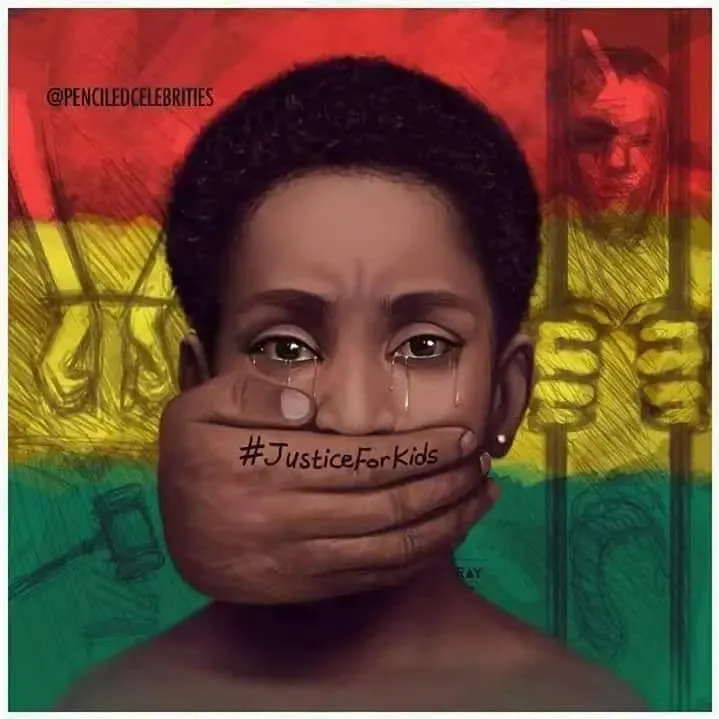
    The Lagos State Government has called for more mandated reporting in the case of alleged defilement of a 12-year-old girl in the Ikorodu area of the state by one Mr. Ife Adekoya.

    The Executive Secretary, Domestic and Sexual Violence Agency (DSVA), Mrs Titilola Vivour-Adeniyi, who made this known in a statement in Lagos on Friday, said the agency swung into action on receipt of the report.

    “The case was immediately reported at the Imota Family Support Unit Police Station for investigation and was subsequently transferred to the Gender Desk Department of the Lagos State Police Command,” she said.

    Vivour-Adeniyi said that the mother of the survivor narrated that on June 16, her neighbor called her to inform her that her 12-year-old daughter had been defiled by a neighbor who lives on the next street.

    “The mother of the survivor claimed that she was informed the following day, having just returned from a trip with her husband.

    “The mother also alleged that a neighbor alerted her of the incident after engaging the survivor and noticing the suspicious act of the perpetrator, who was spotted with blood stains on his trousers.

    “Further questioning by the neighbor revealed that the alleged perpetrator lured the victim into the bush, closed her mouth, and proceeded to sexually assault her by penetration,” she said.

    She further said that the matter was charged to court and the perpetrator was arraigned before Magistrate Amope Layinka on July 26.

    “The suspect was arraigned and remanded at Kirikiri Maximum Prison, pending the Director of Public Prosecutions (DPPs) advice, and the matter adjourned to Sept. 19,” she said.

    She noted that all forms of abuse, neglect, domestic, and sexual violence were crimes against the state, and that perpetrators would be made to face the full wrath of the law.

    Vivour-Adeniyi called on residents of the state to break the culture of silence by reporting all forms of abuse through its toll free line 08000-333-333, or visit its office at Novel House, Plot 3, Jobi Fele Way, Alausa, Ikeja.

  • Gov Alia inaugurates panel to audit Benue State Varsity

    Gov Alia inaugurates panel to audit Benue State Varsity

    Benue State Governor, Hyacinth Alia has inaugurated the Benue State University (BSU) Makurdi visitation panel to audit the institution from 2016 to date.

    Alia, who was represented by the deputy governor, Chief Sam Ode, also urged the members of the panel to investigate the application of funds allocated for specific projects and to also assess staff development problems.

    He equally tasked the panel to evaluate the relationship between the management and stakeholders of the institution, assess the conditions of physical infrastructure and instructional materials, and scrutinize student enrollment within the period.

    The governor further urged the panel to approach the assignment with the utmost diligence, thoroughness and to be impartial and called on the management of the University to give their full cooperation and support to the panel.

    In his response, the Chairman of the panel, Prof. Gabriel Moti promised transparency and fairness in its assignment.

    Mori urged stakeholders to cooperate with the panel.

    Other members of the panel are Prof. Kwaghkondo Agber, Mr. Peter Igyeigye, Prof. Christie Ekoja, Mr. Sam Yuhwa, Prof. Okpe Okpe, and Mr. Simon Orkuma (Secretary).

  • Niger Coup: Thousands march in solidarity in Niamey

    Niger Coup: Thousands march in solidarity in Niamey

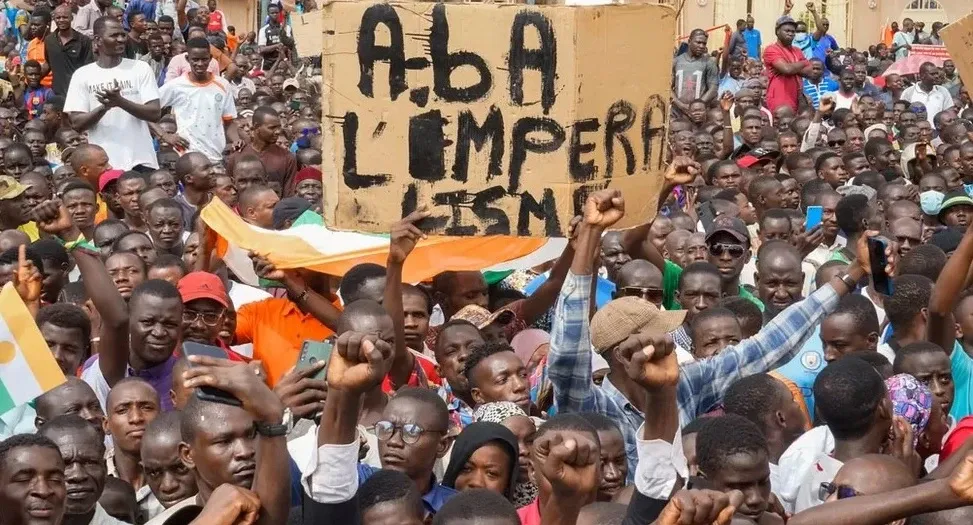
    Demonstrators took to the streets of Niger’s capital Niamey on Thursday in a show of support for the country’s new leadership, a week after a military coup in the West African country.

    People rallied on the streets of Niamey to signal their support for de facto president Abdourahmane Tchiani and his junta, a dpa correspondent in the capital reported.

    The demonstrations followed a call by civil society associations, according to reports.

    They came on the 63rd anniversary of Niger gaining independence from former colonial power France.

    According to local media, people also demonstrated in the city of Agadez, with posters seen expressing support for the putschists. Russian flags are also said to have been waved.

    Agadez is on the edge of the Sahara Desert, which many migrants pass through on their way through the desert to Libya and towards the Mediterranean.

    The coup plotters managed to ignite a “nationalistic fire” in the population within a week, said Olaf Bernau from the migration network Afrique-Europe-Interact.

    Part of the reason for this is the EU’s migration strategy in Niger.

    For several years, Niger, as an important transit country for migrants heading for Europe, has received financial support to limit migration. Since 2015, a law in Niger has criminalized illegal migration and its support.

    So far, Niger has not only been an important partner for the West in containing migration, but also in the fight against terrorism.

    In the Sahel, dozens of militias, some of whom have sworn allegiance to so-called Islamic State (IS) or the terrorist organization Al-Qaeda, regularly carry out attacks.

    Last week, officers of the presidential guard in Niger arrested the democratically elected president of Niger, Mohamed Bazoum, and declared him deposed.

    Tchiani, the commander of the presidential guard, appointed himself the new ruler on Friday, suspended the constitution, and dissolved all constitutional institutions.

    Bazoum used an opinion piece in the Washington Post on Thursday to call for the international world to help restore constitutional order.

    He was writing “as a hostage” and was “just one of hundreds of citizens who have been arbitrarily and illegally imprisoned,” Bazoum said in the piece.

    The coup had no justification and, if it succeeded, would have “devastating consequences for our country, our region, and the entire world,” Bazoum wrote.

    He used the piece to call on the US government and “the entire international community” to help restore order.

    “Fighting for our shared values, including democratic pluralism and respect for the rule of law, is the only way to make sustainable progress against poverty and terrorism. The Nigerien people will never forget your support at this pivotal moment in our history,” he wrote.

    Niger’s new rulers are looking for allies. The deputy head of the country’s military junta, General Salifou Modi, travelled to the neighbouring countries of Mali and Burkina Faso, which are also ruled by army officers who took power in military coups.

    Both have pledged their support to Niger, Modi said, particularly in the area of security.

    “We are happy about the closeness we have with our brothers in Mali,” the deputy head of Niger’s military junta, General Salifou Modi, said after a meeting with the government in the Malian capital Bamako on Wednesday.

    Burkina Faso’s military strongman Ibrahima Traoré also assured him of his support at a meeting in the capital Ouagadougou on Wednesday, Modi said.

    Pressure continues to mount on Niger, with Nigeria suspending electricity supplies and the World Bank freezing payments to the West African nation on Wednesday.

    Also, the Economic Community of West African States (ECOWAS) has given the putschists in Niger an ultimatum.

    If Bazoum is not reinstated by Sunday, ECOWAS will take action that could include sanctions and armed force, it declared.

    Meanwhile, in Paris, the French Foreign Ministry said the evacuation of its nationals from Niger has been completed, according to a statement on its website published on Thursday.

    French Defence Minister Sébastien Lecornu said on Twitter that 1,079 French and foreign nationals have been evacuated since Tuesday.

    There were four Paris-bound flights carrying 992 people including 560 French nationals.

    A fifth and final flight brought about 100 people to Chad, the French General Staff told dpa.

    Paris said the evacuation was needed because Niger had closed its airspace and there had been reported violence at the French embassy during pro-coup protests.

    Niger’s junta has accused France of planning a military intervention.

    French broadcasters France 24 and RFI have been banned from broadcasting in Niger.

    A statement issued on Thursday evening by France’s Foreign Ministry said it very firmly condemned the suspension of broadcasting.

    The measures taken against the press in Niger occurred in a context of authoritarian repression by those responsible for the coup, the ministry added.

    In Washington, President Joe Biden noted on Thursday on the occasion of Niger’s Independence Day, that the West African country “is facing a grave challenge to its democracy.”

    He repeated calls for the immediate release of Bazoum and his family and “for the preservation of Niger’s hard-earned democracy.” 

  • GSK to shut down operations in Nigeria

    GSK to shut down operations in Nigeria

    GlaxoSmithKline (GSK) has said it would shut down its operations in Nigeria as it plans to switch to outsourcing the distribution of its medicines and consumer goods.

    With increasing competition from local companies and imports from China and India, GSK Nigeria stated that its half-yearly sales fell to N7.75 billion from N14.8 billion naira in the same period.

    Its British parent company had in 2018 said it would scale down its operations in Africa and adopt a distributor-led model instead of marketing.
    GSK Nigeria said it was working with advisers to agree on the next steps and plans to submit a plan of settlement to the Nigerian Securities and Exchange Commission which, if approved, will return cash to shareholders for scrap.

    He also said Haleon Group had informed him of plans to terminate the distribution agreement and appoint an external distributor in Nigeria, which is facing a cost of living crisis, rising business costs, a shrinking consumer base.

    “For the above reasons, and after evaluating various other options with GSK UK, the management of GlaxoSmithKline Consumer Nigeria Plc has concluded that there is no alternative but to cease operations.”

    Shares of GSK Nigeria, in which British drugmaker GSK has a 46.4% stake and Nigerian shareholders the remaining 53.6%, closed at 8.10 naira, falling from a peak of 42.24 naira in 2014.

    Inflation in Africa’s largest economy, which has been in double digits since 2016, hit 22.79% in June and is expected to rise further after new president Bola Tinubu scrapped popular but costly gasoline subsidies and devalued the currency.
    Tinubu hopes the reforms will spur economic growth and attract foreign investment, which will help increase flows to the country, which suffers from chronic dollar shortages, making it difficult for companies to import raw materials.

    The dollar rate as of Thursday is $1 = 788.89 naira.