Category: News

  • ICPC vows to sanction corrupt state legislators 

    ICPC vows to sanction corrupt state legislators 

    By Doris Isreal Ijeoma

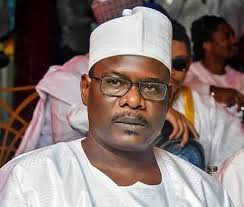
    The Independent Corrupt Practices and Other Related Offences Commission (ICPC) has pledged to address corruption among members of state Houses of Assembly.

    Musa Aliyu, the ICPC Chairman, made this statement on Tuesday in Abuja during the opening of a three-day workshop for Jigawa State legislators. The workshop, titled “Transparency and Accountability: Effective Legislative Tools Towards Successful Mandate Delivery,” focused on enhancing legislative effectiveness.

    Aliyu expressed concern about widespread corruption in the country and stressed the need for legislators to uphold integrity in all aspects of their roles. 

    He assured that the ICPC is committed to working with state legislatures to combat corruption effectively.

    “We are prepared to collaborate with the state legislatures to advance our fight against corruption, as we have with other branches and levels of government,” Aliyu said. “However, we will not hesitate to take decisive action when necessary.”

    He emphasized that the ICPC would continue to fulfill its mandate of enforcement, prevention, public education, and mass mobilization within the bounds of the law. Aliyu also highlighted the importance of prioritizing national interest over personal or collective interests, as demonstrated by President Bola Tinubu’s administration.

    “The principle of separation of powers must be upheld; any encroachment on the functions of the executive or judiciary undermines democracy and good governance,” Aliyu stated. 

    He added that the legislature has a crucial role in identifying waste, inefficiency, corruption, and mismanagement of public resources. Effective execution of these functions requires transparency and accountability, underscoring the significance of the workshop.

  • Reps demand arrest of WAEC officials for lack of accountability

    Reps demand arrest of WAEC officials for lack of accountability

    By Doris Isreal Ijeoma

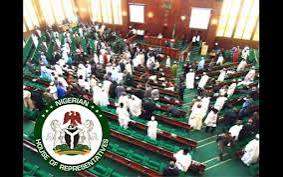
    On Wednesday, the House of Representatives Committee on Basic Examination Bodies demanded the detention of four West African Examination Council (WAEC) representatives over the lack of accountability.

    This followed a motion by a member of the committee, Uchenna Okonkwo, during an investigative hearing in Abuja.

    The committee was piqued that the officials failed to answer their questions to their satisfaction in Abuja.

    The officials are Amos Josiah Dangut, head of WAEC Nigeria, who represented the registrar; Angus Okeleze, senior deputy registrar; Victor Odu, acting director of finance; and Segun Jerumeh, deputy director of finance.

    During the hearing, the lawmakers argued with the WAEC officials about whether the examination body was accountable to parliament.

    Mr Dangut had earlier, in his presentation to the committee, posited that WAEC was not an agency of government and, therefore, not accountable to the parliament.

    However, the lawmakers insisted that WAEC Nigeria was a creation of an Act of the National Assembly and, hence, should account for all its activities to them.

    They pointed out that the National Assembly makes appropriation for WAEC.

    The lawmakers also pointed out that WAEC’s convention dictates that it must submit to the legislation of any of its member countries.

    Following the arguments, Mr Okonkwo said, “I will like to move a motion that while pending the investigation to look into the activities of WAEC Nigeria, the invited guest before us should be taken into custody.

    “They should be held at the police post while we seek for solutions for these issues they are bringing upon Nigerians.”

    Marie Ebikake seconded the motion.

    One of the WAEC officials kept shouting at the panel that it was being unfair to them.

    After that, officials were taken away by members of the sergeant at arms of the National Assembly, who detained them in one of the offices for about 15 minutes.

    However, after a brief closed-door session, the committee decided to allow them to return later with the relevant documents demanded from them.

    Oforji Oboku, the committee chairman, said they must bring the audited statement of accounts of the examinations body from 2018 to 2024. He also directed that they present relevant documents concerning a N5 billion loan that WAEC accessed in 2022 to buy a custom-made calculator among others.

    The chairman said WAEC could not operate outside the supervision of the National Assembly.

    “You are not different from any other agency by saying you are not an agency of government. We are not here to witch hunt you. WAEC is subject to Nigeria’s laws. We have reviewed the position and we have all the powers to oversight you. You cannot come here and say WAEC is not an agency of government,” he said.

    He said WAEC would be invited at a later date, insisting that failure to produce the required documents would attract sanctions. 

  • Plane crash kills 18 in Nepal

    Plane crash kills 18 in Nepal

    By Doris Isreal Ijeoma

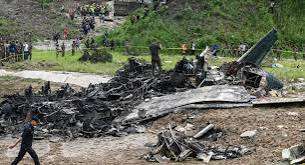
    An airplane has crashed in Nepal, claiming the lives of 18 people.

    The airplane on the fleet of Nepal’s Saurya Airlines caught fire after skidding off the runway while taking off at Tribhuvan International Airport in the country’s capital, Kathmandu, on Wednesday.

    Officials said the affected plane, carrying two crew members and 17 technicians, was going for regular maintenance to Nepal’s new Pokhara airport, which opened last January.

    “Only the captain was rescued alive and is receiving treatment at a hospital,” the spokesman for Kathmandu’s Tribhuvan International Airport, Tej Bahadur Poudyal, explained.

    Visuals have shown the plane flying a little above the runway and then tilting before it crashed.

    Nepal has a poor air safety record; a country often referred to as one of the riskiest places to fly, particularly because of its mountainous terrain.

    Also, the country, which is home to eight of the world’s 14 highest mountains, including Everest, has a weather pattern that can change suddenly, and airstrips are typically sited in difficult-to-reach, mountainous areas.

    It is on record that nearly 350 people have died in plane or helicopter crashes in the country since 2000.

    Just last year, 72 people died in a Yeti Airlines crash, an incident later blamed on the pilot who was said to have cut off power by mistake

    Before the year 2000, the deadliest incident occurred in 1992, when a Pakistan International Airlines Airbus crashed into a hillside while approaching Kathmandu, killing 167 people.

  • Economic hardship: FG slashes stranded foreign scholars’ allowances

    Economic hardship: FG slashes stranded foreign scholars’ allowances

    The Federal Government, through the Federal Ministry of Education, has announced a slash in allowances of foreign scholars who are currently stranded in Russia, Morocco, and Algeria, among others by 12.7%.

    The ministry attributed the development to economic crises.

     Nigerian students studying in Russia, Morocco, Algeria, China, Hungary, and other countries, on the Federal Government’s scholarship lamented their unpaid stipends for eight months running.

    The students are studying under the Federal Government’s Bilateral Educational Agreement Scholarship.

    The BEA scholarship is for the purpose of education exchange between Nigeria and the partnering countries.

    The Federal Scholarship Board is supervising the scholarship under the Federal Ministry of Education.

    The government’s decision to slash the scholars’ allowances was contained in a memo signed by the Director of the Federal Scholarship Board, Ndajiwo H.A., on behalf of the Minister of Education, Prof. Tahir Mamman.

    “After due consultations, the Federal Scholarship Board has come up with adjustments in line with budgetary provisions in the payment of BEA scholar’s supplementation allowances for the 2024 academic year,” the memo, dated July 23, 2024, and addressed to the scholars’ association, read.

    According to the memo, the monthly allowances were slashed from $500 to $220; the graduation allowance from $2500 to $2000; and the PG research allowance was slashed from $1,000 to $500, among others.

    The total for the payments initially paid was $5,650 per student but will now be $4,370

    “The Scholars’ Association is hereby notified that due to the prevailing economic situation, the payment mandate for the BEA scholars’ allowances will be as per the new adjustment.

    “The balances for the years 2023 and 2024 owed to scholars will be paid as soon as the funds are made available,” the ministry said.

  • Trump Assassination Attempt: US Secret Service Director Resigns

    Trump Assassination Attempt: US Secret Service Director Resigns

    The United States, US, Secret Service Director Kimberly Cheatle has resigned following backlash over the failed assassination attempt on former President Donald Trump, sources tell CNN.

    There have been calls for Cheatle’s resignation and a push by Republican lawmakers to impeach her.

    Lawmakers were particularly incensed after her appearance for public testimony in front of the House Oversight Committee on Monday, where she was unwilling to answer many of the committee’s questions.

    In the initial wake of the shooting, Cheatle was emphatic that she would not step down.

    Cheatle was appointed by President Joe Biden to lead the Secret Service in 2022.

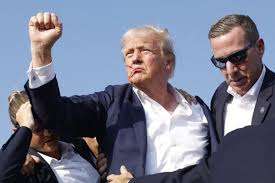
    A few weeks ago, a 20-year-old bypassed Secret Services agents and shot at Trump during his presidential campaign in Butler, Pennsylvania.

    The bullets only narrowly missed Trump’s head but hit him in the ear.

  • Ndigbo in the crosshairs of ‘Days of Rage’

    Ndigbo in the crosshairs of ‘Days of Rage’

    By UGO ONUOHA

    IT’S less than 10 days away. That’s if the planned protests against hunger, poverty, bad governance etcetera, were to materialize. The protests are scheduled for August 1-10. The organisers have a name for it: Days of Rage. The protests are designed to happen simultaneously across the country for 10 consecutive days. Unless Nigeria has changed, this project and especially its duration looks like a tall order.

    Nigeria of the 1960s, 1970s and 1980s appear to be a long gone era. The period has almost been blotted from our collective memories. During those epochs, Nigerian youths, led mostly by students of tertiary institutions were upfront in opposing any government policy or programmes considered not to be in the best interest of the country. They did so in 1962, just two years after Nigeria gained independence from Britain. They fought to ensure the scrapping of the obviously one-sided Anglo-Nigerian Defence Agreement.

    Alex Lennox -Boyd was the British secretary of state for colonies in 1958, two years before Nigeria was granted independence. In fact, by 1958 both the Eastern region and the Western region had
    attained self rule status from the colonizers. The Northern region, apparently fearing dominance by the more sophisticated regions of the south said it was not ready to govern itself and so opted to be under the suzerainty of Britain.

    The 1958 memo by Lennox -Boyd encapsulated the ingredients for the Anglo-Nigerian Defence Agreement which will be handed over to the government of an independent Nigeria to sign. There was no evidence that Nigerian nationalists who were jostling to replace the British made any input into drafting the so-called Agreement. But history has it that Chief Obafemi Awolowo, leader of the Action Group (AG) political party revolted against the pact when it came to his knowledge.

    So, in 1962 when Britain showed its hand for the execution of the pact by the leaders of our country, Nigerian students rose as one to march on their campuses and on the streets in the country’s major cities in opposition to the Agreement. They did not relent until Britain backed down and Nigeria backed out. There were not too many universities then nor higher institutions. And students’ leaders were not known to be acolytes of partisan politicians of the then dominant political parties such as the National Council for Nigeria and Cameroons (NCNC) and AG. The issues of ethnic or tribal affiliations were virtually non-existent.

    The vexatious issues in the pact were the granting by Nigeria to Britain overflying rights and testing by Royal Air Force aircraft; and whether Britain should still have any maintenance staff on ground in Nigeria. Nigerian youths said an emphatic no because they were persuaded that it amounted to an unequal relationship and moreover there was no evidence that Nigeria contributed in framing the so-called Agreement.

    Consequently, Britain and Nigeria were forced to release a statement abrogating the pact. The statement read: “The British and Nigerian Governments have been consulting together about the Anglo-Nigerian Defence Agreement. They have noted with concern that the scope and purposes of the Agreement have been widely misunderstood. In particular, fears have arisen that in consequence of the Agreement, Nigeria’s action might be impaired and that she might even be drawn into hostilities against her wishes.

    Continuing the statement said: “The text of the Agreement shows that these and other anxieties which have been expressed are wholly without foundation. Nevertheless, in order to end misunderstanding, the two governments have thought it wise to reconsider the need for a formal agreement.

    “As a result, they have decided to abrogate the Agreement. Each government will, however, endeavour to afford to the other at all times such assistance and facilities in defence matters as are appropriate between partners in the Commonwealth”. That was the Nigeria of the 1960s.

    By the 1970s, more higher institutions including universities had sprung up. And the win over the Anglo-Nigerian Defence Agreement had bolstered the resolve of youths and students that opposing real or perceived unjust policies of the government was right and winnable. And then came 1978. The regime of Gen. Olusegun Obasanjo who succeeded the assassinated Gen. Murtala Muhammed increased fees payable by students in the universities. Hell was let loose. Students would not take it and the military regime would not back down either. Col. Ahmadu Ali was the federal commissioner (minister) of education. He had the support of the hierarchy of the ruling junta to dig in. And he did. The protesting students were no less determined.

    The result was bloodshed on the streets, deaths and injuries mainly on the part of the students. The students revolt was appropriately tagged ‘Ali Must Go Protests’. The protests also known as the 1978 Students Crisis was for a long time regarded as one of the most violent student agitation in this country. It was also said to be responsible for the political crisis that dogged the Muhammed/Obasanjo military regime of 1975-1979.

    Apart from fees reversal, the protesting students who also boycotted lectures demanded return to democracy and rule by civilians; democratisation of government institutions; genuine independence of the country; and, the enhancement of the quality of life of the masses. Some commentators argue that the bloody confrontation ended in a stalemate but it must be noted that the military regime vacated office just 17 months after for democratically elected administration of President Shehu Shagari and Vice President Alex Ekwueme.

    ‘Ali Must Go’ was a turning point in relations between Nigerians and their rulers. A template was adopted by subsequent rulers to the effect that there won’t be any consequences in using brute force and deadly violence to put down protests of any type.

    Fast forward to October 2020. For decades, Nigerians were at the receiving end of the brutalities of the state security agents, particularly a branch of the Nigerian Police Force (NPF) called SARS- The Special Anti-Robbery Squad. SARS was notorious for bloodletting, visiting violence on hapless Nigerian youths, acting with impunity and as if its operatives were above the law.

    Any youngster they found with a laptop was automatically tagged as an Internet fraudster while those who wore braided hairs (dreadlocks) were treated as vagabonds and criminals. SARS dealt summarily with such young people by extorting or executing them. Even older people were not spared. Something had to give. And it did give from October 8, 2020 when the youths took a stand by protesting and demonstrating against police violence and brutality.

    The protests morphed into demands for good governance.By October 20, there was a repeat of the 1978 ‘Ali Must Go’ bloodletting but this time on a higher and unimaginable scale. There was a massacre. The world was repulsed. Voices of condemnation rent the air. Nigeria had finally perfected the art of killing its children who were protesting brutality, corruption and bad governance. They were only armed with patriotic songs, waving the national flag and singing the national anthem.

    First, the government, led by Maj.-Gen. Muhammadu Buhari, the affliction, a military dictator masquerading as a civilian ruler used thugs and street urchins to infiltrate the hitherto peaceful protests, to instigate violence, looting and destruction of public property.

    Then under the cover of darkness on October 20, the mindless regime ordered soldiers to shoot and kill our children in cold blood. The ghosts of the children who were massacred in one of the killing fields -the Lekki, Lagos toll plaza- on that particular day are still haunting the place and hunting their killers.

    They can pretend but they will have no peace. I believe the Good Book which says that there’s no peace for the wicked and that those who kill with the sword will die by the sword. It’s just a matter of time.

    In the four years since the ENDSARS Protests in October 2020, there has been a strident campaign by a section of the Yoruba nation, an insignificant number it must be acknowledged, to hold Ndigbo responsible for instigating the protests and spearheading the looting and burning of public buildings in Lagos in the aftermath of the riots.

    As Nigeria moves almost inexorably towards a fresh round of confrontations which could result from the planned Days of Rage from August 1, the narrative about the Igbo being responsible for past protests is resurfacing and gaining currency. And these false and wicked narratives have always had consequences for Ndigbo.

    The Igbo paid with livelihoods, limbs and life in 1966 after the July counter coup. July was the crescendo of the persistent peddling of lies and propaganda that the Igbo were the mastermind of the January 1966 military coup during which some political and religious leaders of the north died. It did not matter that it was a lie because the Igbo paid a huge price.
    *To be contd.
  • BREAKING:Reps pass bill seeking to raise 2024 budget by N6.2trn

    BREAKING:Reps pass bill seeking to raise 2024 budget by N6.2trn

    The House of representatives has passed a bill seeking to increase the 2024 budget by N6.2 trillion. 

    The bill passed third reading during plenary on Tuesday after Abubakar Bichi, chair of the committee on appropriations, moved a motion for consideration of the report at the “committee on supply”.

    The bill was introduced on July 17 following President Bola Tinubu’s request.

    This increases the 2024 budget to N35 trillion from an initial N28.7 trillion budget Tinubu signed into law on January 1.

    In December, the national assembly passed the 2024 appropriation bill, increasing its size from the N27.5 trillion proposed by Tinubu to N28.7 trillion.

    Out of the N6.3 trillion, N3.2 trillion is for infrastructure projects and N3 trillion is proposed for recurrent expenditure.

    Defending the president’s request before the house of representatives committee on appropriations on Monday, Atiku Bagudu, minister of budget and economic planning, said the N3 trillion is intended to cover the new national minimum wage.

    Bagudu said the proposed N3.2 trillion “renewed hope infrastructural fund” is “intended to provide equity contributions or counterpart contributions of the federal government projects designated as priority projects, as well as critical projects that needed more appropriation so that they would not suffer neglect”.

    The minister said the N3.2 trillion proposed for infrastructure projects will cover several road and rail projects, including the one linking Port Harcourt-Maiduguri, traversing Rivers, Imo, Abia, Enugu, Ebonyi, Anambra, Benue, Nasarawa, Plateau, Kaduna, Bauchi, Gombe, Yobe, and terminating in Borno state.

    The house also passed the 2023 Finance Act to impose a one-time windfall tax on banks’ foreign exchange (FX) gains.

    A windfall tax is a higher tax imposed by the government on sectors or businesses that have benefitted disproportionately due to favourable market conditions.

  • BREAKING: We Won’t Allow Violence Under Guise Of Copying Kenya Protests – IGP

    BREAKING: We Won’t Allow Violence Under Guise Of Copying Kenya Protests – IGP

    The Inspector-General of Police, Kayode Egbetokun, on Tuesday, warned against any violence under guise of replicating the protest which shook Kenya.

    Following some policies which aggrieved Kenyans considered anti-masses, young persons trooped to the parliament and strategic places across Kenya last month.

    The protest had led to some reforms, including cabinet reshuffle.

    Some groups are currently mobilising for protest under the theme #EndBadGovernance

    But speaking at the Force Headquarters in Abuja during a strategic meeting with top police officers from the rank of Commissioners of Police, Assistant Inspector-General of Police (AIG) and the Deputy Inspector-General of Police (DIG), on Tuesday, Egbetokun advised those planning the protest to jettison the idea, saying the police would not fold their arms watching them engaging in violence.

    The police boss said the force’s decision was based on what happened during the last #EndSARS protest nationwide, insisting that the police, particularly has not been relieved of the trauma they passed through.

    The top cop said, “Our position is that the proposed violent protests are ill-advised and should be jettisoned fortuitously. We have the responsibility to protect properties and everyone, irrespective of their race, colour, ethnicity, or tribe, who are lawfully embarking on their daily activities.

    “We will, therefore, not sit back and fold our arms to watch violent activities unleash violence on our peaceful communities or destroy any of our national critical infrastructure and assets again.”

    According to him, the police have run background checks on many of the organisers and sponsors of the protest, it was found out that many of them are not living in Nigeria, and that they are only out to instigate crisis in the country.

    He added, “Before concluding this address, it is important I address an issue of urgent national importance which appears to have gained some momentum, particularly on social media, in the past few weeks.

    “Some groups of people, self-appointed crusaders and influencers, have been strategising and mobilizing potential protesters to unleash terror in the land under the guise of replicating the recent Kenya protests.

    “While the force acknowledges the right to peaceful protest as enshrined in our constitution, we must ensure that these protests do not snowball into violence or disorder.

    “As a nation, we have had more than our fair share of violent protests, with rather dastardly consequences. The last #EndSARS protest led to one-tenth destruction of public assets, including police stations, courts, and transport infrastructure, and the loss of several lives.

    “Tales of sorrow, tears, and blood followed what was supposedly intended to be a well-intentioned exercise. Rather than lead to any positive outcome, EndSars merely aggravated crime rates and insecurity in several parts of the country.

    “Indeed, we are yet to fully recover from the huge economic losses and deep-seated psychological and emotional trauma inflicted upon our people by these protests.”

    Fielding questions from journalists, Egbetokun also said that measures are in place to ensure that any hoodlums attempting to disguise themselves as protesters will be apprehended.

    He stated, “We have mapped out plans to ensure that no individual or group succeeds in fostering a reign of terror and anarchy on other law-abiding and dissolving Nigerians.

    “Consequently, I want to seize this opportunity to sound the note of serious warning to hoodlums who may want to take laws into their own hands in the name of protests. Do not worry.”

  • Hardship: Why protest may get out of hand – Ndume

    Hardship: Why protest may get out of hand – Ndume

    Former Senate Chief Whip, Ali Ndume, has urged President Bola Tinubu to listen to Nigerians youths ahead of the planned nationwide protest.

    Ndume warned Tinubu that the planned protest might get out of hand, hence he should listen to the youths.

    Speaking on Channels Television on Monday, the Borno South Senator said the planned protest might get out of hand because there is no identified leader.

    According to Ndume: “My fear is, looking at what happened during the EndSARS. I hope it does not get out of hand, especially when you cannot identify the leadership, that makes it more difficult.

    “I second the motion of the NLC president that Tinubu should listen to Nigerians. The president should talk to the youth.”

    Popular activist, Omoyele Sowore had called for a nationwide protest against the Nigerian government in August due to the hardship in the country.

    This is coming when Ndume had accused Tinubu of shutting his doors against his Ministers and lawmakers over the hardship in the country.

    In October 2020, young Nigerians took to the streets to protest against the disbanded Special Anti-Robbery Squad (SARS).

    The protests took another turn after soldiers shot at demonstrators at the Lekki tollgate in Lagos.

  • Tinubu Sends ₦70,000 Minimum Wage Bill To NASS

    Tinubu Sends ₦70,000 Minimum Wage Bill To NASS

    President Bola Tinubu on Tuesday transmitted a national minimum wage bill to the House of Representatives in the National Assembly for consideration and passage.

    The President and the leadership of the Organised Labour had last Thursday agreed on ₦70,000 as the new minimum wage for Nigerian workers.

    Information Minister Mohammed Idris had said “the new national minimum that Mr President is expected to submit to the National Assembly is ₦70,000”.

    The truce between the government and labour sides followed a series of talks between labour leaders and the President in the last few weeks after months of failed talks between labour organs and a tripartite committee on minimum wage constituted by the President in January.

    The committee, which comprised state and federal governments and the Organised Private Sector, had proposed ₦62,000 while labour insisted on ₦250,000 as the new minimum wage for workers who currently earn ₦30,000 as minimum wage.

    Labour had said ₦30,000 was unsustainable for any worker going by the economic vagaries of inflation and high cost of living which followed the removal of petrol subsidy by the President.

    Despite its initial insistence on ₦250,000 as the new minimum wage, Labour accepted the President’s offer of ₦70,000 last Thursday.

    The President of the Nigeria Labour Congress (NLC), Joe Ajaero, said Labour accepted ₦70,000 and rejected a proposal by President Bola Tinubu to pay ₦250,000 minimum wage on a condition to increase petrol prices.

    He also said Labour agreed to the ₦70,000 offer because minimum wage won’t be reviewed once in five years anymore but once every three years.

    The transmission of the wage bill came about six weeks after the President said in his Democracy Day speech on June 12, 2024, that an executive bill on the new national minimum wage for workers would be sent to the National Assembly for passage.