Category: News

  • Dangote Refinery postpones supply of petrol to July

    Dangote Refinery postpones supply of petrol to July

    The Dangote refinery has said its plan to release premium motor spirit into the market this month will no longer be possible.

    The President of Dangote Group, Aliko Dangote, told newsmen on Monday that the petrol from the 650,000 barrels per day capacity refinery will be out in July.

    Dangote said this was due to some minor challenges, stating that the product would be out by July 10 to 15.

    “We had a bit of delay, but PMS will start coming out by 10 to 15 of July. But then we want to keep it in the tank to make sure that it settles. So by the third week of July, we’ll be able to come out to take it into the market,” Dangote had said.

    Speaking at the recent Africa CEO Forum Annual Summit in Kigali, Rwanda, Dangote expressed optimism about transforming Africa’s energy landscape.

    “Right now, Nigeria has no cause to import anything apart from gasoline and by sometime in June, within the next four or five weeks, Nigeria shouldn’t import anything like gasoline; not one drop of a litre,” he declared.

    “We have enough gasoline to give to at least the entire West Africa, diesel to give to West Africa and Central Africa. We have enough aviation fuel to give to the entire continent and also export some to Brazil and Mexico.

    “We have started producing jet fuel, we are producing diesel, and by next month, we’ll be producing gasoline. What that will do, it will be able to take most African crude,” Dangote told the panel.

    The words of Dangote appeared to have come as a soothing balm to marketers and Nigerians who are hopeful that the Dangote would crash the price of petrol from around N700 to N500 or below.

  • Emefiele’s trial: Buhari’s approval for Naira redesign tendered as exhibit

    Emefiele’s trial: Buhari’s approval for Naira redesign tendered as exhibit

    The approval of former President Muhammadu Buhari for the re-design of Nigeria’s currency, the Naira, was on Tuesday tendered and admitted as exhibit before the High Court of the Federal Capital Territory (FCT) in Abuja.

    The approval dated October 6, 2022 from the State House and personally signed by the former President was conveyed to the Central Bank of Nigeria (CBN) under Godwin Emefiele as governor to proceed with the project of redesigning and printing of the currency.

    The Chief of Staff to President Buhari was said to have transmitted the written Presidential approval to the CBN.

    Also tendered and admitted as exhibits are samples of the re-design currency as approved by Buhari.

    The documents were tendered by the Economic and Financial Crimes Commission (EFCC) through its witness and former Director of Currency Operations at the Central Bank of Nigeria (CBN), Mr Ahmed Bello Umar.

    The witness was led in evidence by EFCC’S lead counsel, Mr Rotimi Oyedepo, a Senior Advocate of Nigeria, SAN.

    Umar who claimed to have authored some memos in relation to the project, however revealed that Emefiele partly departed from the approval of the former President.

    Among others, the witness said that while the portraits in the samples endorsed by Buhari were on the right side, those printed have the portraits on the left side.

    The former Director of Currency Operations at the CBN also claimed that the numbering styles for the currency adopted by Emefiele were different from the modes adopted by CBN under Emefiele.

    Similarly, the witness said that while the approved samples have QR code, those printed did not have the features.

    Under cross examination by Mahmoud Magaji, SAN, counsel to Emefiele, the witness admitted that Buhari actually approved the Naira redesign project.

    He also admitted that Buhari on December 29, 2023 publicly launched the re-designed Naira currency for the use of Nigerians as legal tender.

    The witness also admitted that the re-designed currency has his own signature as Director of Currency Operations adding that no currency becomes legal tender without his own signature.

    The EFCC had on May 15, 2024 arraigned Emefiele on a four count charge before Justice Maryanne Anenih of the FCT High Court sitting in Maitama, Abuja.

    Emefiele however denied the charge and was admitted to bail in the sum of N300 million.

    In the four count charge, the anti-graft agency claimed that Emefiele embarked on the Naira redesign without the approval of the Board of the CBN as well as then President, Muhammadu Buhari.

    Specifically, the EFCC accused Emefiele of approving the printing of various quantities of the new Naira notes “without the recommendation of the Board of Central Bank and the strict approval of the President, Federal Republic of Nigeria which conduct of yours caused injury to the public and you thereby committed an offence”.

    While in count one he was accused of approving the printing of 375,520,000 notes at the cost of N11 billion, in count two he was accused of approving the printing of 172 million coloured swapped N500 notes at the cost of N4.4 billion.

    Also in count three, the former CBN boss was alleged to have approved for printing 137,070, pieces of coloured N200 notes at the cost of N3.4 billion.

    He was, in count four, alleged to have withdrawn the sum of N124, 860, 227, from the Consolidated Revenue Fund of the Federation in a manner not prescribed by the National Assembly.

  • Senate passes N98.5bn FCT supplementary budget

    Senate passes N98.5bn FCT supplementary budget

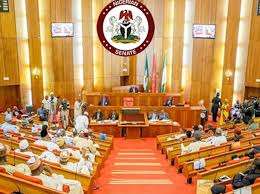
    The Senate on Tuesday, June 11, passed the sum of N98.5billion as the Federal Capital Territory (FCT) Supplementary Appropriation Bill, 2024.

    The passage of the Bill was a sequel to the consideration of the report of the Senate committee on FCT during plenary.

    The Senate had last week stepped down the Bill, saying the details of the budget needed to accompany it.

    The vice chairman of the committee, Senator Osita Ngwu (PDP-Enugu West) presented the report on behalf of the chairman of the Committee Senator Bomai Mohammed (APC-Yobe South) who was absent during the plenary.

    Details shortly…

  • NFF Blames Benin FA For Wrong Anthem Played Before Super Eagles’ 2-1 Defeat

    NFF Blames Benin FA For Wrong Anthem Played Before Super Eagles’ 2-1 Defeat

    The Nigeria Football Federation (NFF) has blamed the Benin Football Federation for the wrong national anthem that was played before the Super Eagles took on the Cheetahs on Monday, June 10.

    Super Eagles of Nigeria had to sing the old anthem, “Arise, O Compatriots” instead of the “Nigeria, We Hail Thee” ahead of their game against Benin at the Felix Houphouët-Boigny stadium in Abidjan, Benin Republic’s adopted home ground.

    Note that the “Nigeria, We Hail Thee” anthem was used from 1960 when Nigeria gained independence until it was replaced by “Arise, O Compatriots” in 1978.

    But the administration of President Bola Ahmed Tinubu reintroduced it in May 2024 to replace “Arise, O Compatriots”.

    The Super Eagles of Nigeria sang the reintroduced anthem before their 1-1 draw with the Bafana Bafana of South Africa on Friday, June 7. But they found themselves singing the just replaced “Arise, O Compatriots” before their 2-1 defeat to Benin Republic on June 10.

    However, while the Super Eagles were coming out for the second half of the game, the reintroduced anthem ushered them onto the pitch.

    After the disappointing defeat, NFF’s Director of Media and Communications, Ademola Olajire, explained that the football federation had handed a recording of the new national anthem to the Benin FA authorities at the Match Coordination Meeting in Abidjan on Sunday.

    Also, a statement from NFF’s Head of International Competitions, Dayo Enebi Achor, confirmed that the federation had given the recording of the new anthem to the Benin FA.

    “We gave them the recording of our new national anthem, only for them to play the wrong one at the beginning of the match. We protested strongly and insisted that the Super Eagles would not start the second half until the new national anthem of Nigeria was played,” he said.

  • Boko Haram Terrorists Kidnap Passengers Along Maiduguri-Kano Highway

    Boko Haram Terrorists Kidnap Passengers Along Maiduguri-Kano Highway

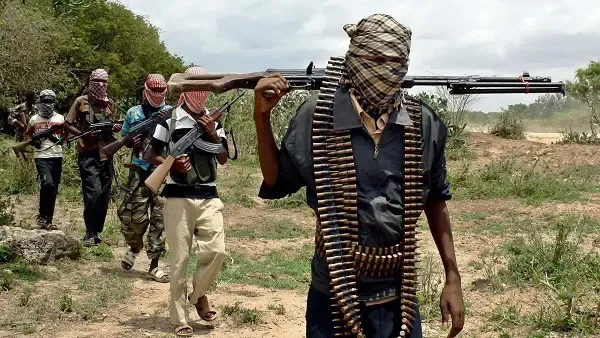
    Some passengers travelling along the Maiduguri/Kano highway have been kidnapped by suspected Boko Haram insurgents.

    Reports obtained on Tuesday morning revealed that the insurgents carried out the abduction between Garin Kuturu and Mannanari village near Auno, which is located along the Damaturu highway, at approximately 5:50 pm on Monday.

    Daily Trust quoted a source to have disclosed that the terrorists barricaded the highway and forcibly took away several passengers.

    As a result of this incident, numerous travellers and commuters found themselves stranded on both ends of the usually bustling road.

    Consequently, many of the commuters were left with no choice but to return to Benishek and Auno, respectively.

    “There was an incident between Mannanari and Garin Kuturu where some Boko Haram fighters came out to block the upcoming vehicles and some passengers were abducted.

    “We are not sure of the number as we speak but certainly there was an abduction on Monday evening,” the source noted.

    Some residents who spoke to journalists on the development narrated how many commercial drivers took refuge in their community momentarily when the insurgents were operating between Garin Kuturu and Mannanari villages.

    “They came out with three wheelbarrow and I believe they were looking for food stuff. We don’t know how many people abducted but some commercial drivers came back and later returned to Maiduguri before reinforcement of military arrived,” the residents noted.

    A passenger, who spoke on condition of anonymity, told reporters that he, alongside others were stranded for hours.

    “We were heading for Kano from Maiduguri when the driver got hinted about the attack and took a detour.

    “We have been waiting for the military to clear the road but we don’t know when. We are stranded here,” he said.

  • Strike: No Work, No Pay – OPS Threatens NLC, TUC

    Strike: No Work, No Pay – OPS Threatens NLC, TUC

    The ongoing dispute over the new minimum wage and electricity tariff hike in Nigeria is reaching a critical juncture as the Nigeria Labour Congress (NLC) and the Trade Union Congress (TUC) approach the end of their five-day strike relaxation period.

    The organized private sector, represented by the Nigeria Employers Consultative Association (NECA), has issued a stern warning to its workforce about the potential enforcement of the ‘No Work No Pay’ rule if the strike action resumes.

    The Director General of NECA, Adewale Smatt-Oyerinde, highlighted this position while speaking at the International Labour Conference (ILC) in Geneva, Switzerland.

    He emphasized that employers are legally backed by the Trade Dispute Act, Section 43, which allows for the withholding of pay for days not worked during strikes.

    “The employers in the Trade Dispute Act Section 43 have the right not to pay for work not done. It is part of our law,” Smatt-Oyerinde stated.

    This announcement comes amidst heightened tensions as the labour unions have provided the Federal Government with a five-day ultimatum to meet their demands, which include an acceptable new wage for workers and a retraction of the new electricity tariffs.

    However, the government’s offer of a ₦62,000 minimum wage has not satisfied union leaders, prompting threats of renewed strike action.

    Smatt-Oyerinde questioned the practicality of paying employees during a strike, especially when no production activities are taking place.

    “Where would the employer get the money to pay when work is not done? It is a rule of justice. Where do I get the money to pay from?” he queried.

    Moreover, the NECA director general pointed out that both international and local industrial laws regulate the right to strike. He mentioned that the issue of strike rights is currently being contested at the International Labour Organisation (ILO) level and has been referred to the International Court of Justice (ICJ) for further interpretation.

    “The context of ultimatum, context of strikes, these rules were guided by law, were guided by framework, in the ILO, it is the convention. In Nigeria, it is the Trade Dispute Act. We will wait for ICJ to come back.”

    He said all parties must work within the legal framework, adding that a subsisting order exists at the National Industrial Court (NIC).

    “We saw the letter by the attorney general of the federation, and our view is this, if you don’t align with it, you will go back to the court where he gets the order to contest it, but the moment I don’t context it, then I have gone way beyond the legal framework,” he said.

    He said all parties must work within the legal framework to have an equilibrium society devoid of anarchy.

    According to him, the International Labour Convention 87 gives the right to organise, “but workers felt it includes the right to strike and that is what we are demanding interpretation from the ICJ.

    “Our position is that we cannot be party to rubbish those institutions created to regulate the industrial process, we have the NIC and the Industrial Arbitration Panel (AIP), we must follow those institutions before escalating issues.”

    The NECA boss said the employers aligned with the Federal Government on N62,000 because that is what is feasible for the members of the OPS.

    “After going back and forth, the employers painfully came to N62,000. I say painfully, judging by the current state of employers in the country, business closing shops, business relocating. Two objectives inform our decision, can we afford to pay, jobs and create jobs and three, it is a deeper economic reason for us.

    “Even in the ILO, the importance is to make sure that the developing economy is not left behind. This is done through transiting those in the informal to formal sector.”

    Oyerinde said anything above N62,000 would be detrimental to the Small and Medium Entrepreneurs (SMEs) that form the bulk of the informal economy.

    He said though both the governors’ forum and organised l

  • Federal High Court Begins Vacation July 23

    Federal High Court Begins Vacation July 23

    The Chief Judge of the Federal High Court of Nigeria, Justice John Tsoho, has declared the court’s annual vacation for 2024, set to begin on Tuesday, July 23, and conclude on Friday, September 13, 2024.

    This announcement was made public through a statement released in Abuja by Catherine Christopher, the Assistant Director of Information and ICT at the Federal High Court.

    The vacation period, established under Order 46, Rule 4 (d) of the Federal High Court (Civil Procedure) Rules 2019, is a customary practice aimed at providing judges with a well-deserved break to rejuvenate before the commencement of the new legal year.

    Regular court sessions are scheduled to resume on Monday, September 16, 2024.

    During the vacation, the judiciary has designated specific judges to handle urgent cases at the three principal divisions of the court located in Abuja, Lagos, and Port Harcourt.

    In Abuja, Justice Emeka Nwite and Justice Peter O. Lifu will attend to such urgent matters. Meanwhile, in Lagos, Justice Akintayo Aluko and Justice Isaac Dipeol will be available, and in Port Harcourt, Justice A. T. Mohammed and Justice P. M. Ayua will oversee urgent litigation matters.

    The Chief Judge emphasized that this arrangement ensures that the judiciary continues to function efficiently, handling cases of extreme urgency even during the vacation period.

    The public and litigants are advised to approach the designated courts nearest to them for any urgent judicial matters during this time.

  • Rivers crisis: Court affirms 27 defected legislators as PDP Members 

    Rivers crisis: Court affirms 27 defected legislators as PDP Members 

    A Rivers State High Court sitting in Port Harcourt has affirmed that 27 members of the Rivers State House of Assembly, who defected to the All Progressives Congress, APC, are still members of the Peoples Democratic Party, PDP. 

    Justice Okogbule Gbasam of the Rivers State High Court in Port Harcourt stated on Monday that the claimants were unable to demonstrate that Martin Amaewhule and the 26 other legislators had switched to the APC.

    Justice Gbasam emphasized that party membership is established through being on the party’s register or possessing a membership card, stating that televised events or verbal declarations were insufficient proof.

    The PDP had requested to be part of the case and was included as the fourth defendant.

    Additionally, Justice Gbasam emphasized that the Rivers State government must adhere to all laws enacted by the Assembly since the members are still part of the PDP, and their inclusion in the party’s membership register is the determining factor.

    He also mentioned that the state government must follow the laws created by the Assembly since the members are still part of the PDP and have not forfeited their positions.

  • Tinubu Govt To Probe Activities Of National Petroleum Company Under Buhari As Audit Reveals NNPCL Inflated Subsidy Claims By ₦3.3Trillion

    Tinubu Govt To Probe Activities Of National Petroleum Company Under Buhari As Audit Reveals NNPCL Inflated Subsidy Claims By ₦3.3Trillion

    A renowned global accounting firm, KPMG, has conducted a forensic audit revealing a notable inconsistency in the fuel subsidy claims filed by the Nigerian National Petroleum Company Limited (NNPCL). According to a report from iWitnessLive, the audit uncovered that NNPCL had inflated its fuel subsidy claims by a staggering ₦3.3 trillion. At first, NNPCL reported spending ₦6 trillion on fuel subsidy, with the former President Muhammadu Buhari’s government covering a significant portion of the expenses. NNPCL’s Group CEO, Mele Kyari, claimed that the federal government still owed the company ₦2.8 trillion for petrol subsidy payments, a statement made shortly after President Bola Tinubu’s declaration of the subsidy’s removal
    As per the May 2024 report, the government has not yet reimbursed NNPCL for this amount.

    “Since the provision of the ₦6tn in 2022, and ₦3.7tn in 2023, we have not received any payment whatsoever from the Federation.

    “That means they (the Federal Government) are unable to pay and we’ve continued to support this subsidy from the cash flow of the NNPC. We are waiting for them to settle up to ₦2.8tn of NNPC’s cash flow from the subsidy regime and we can’t continue to build this,” he said.

    In light of KPMG’s reconciliation, which reduced the claims to ₦2.7 trillion, the Nigerian Government intends to undertake a fresh audit of NNPC Limited’s ₦2.8 trillion fuel subsidy claim.

    The audit, spanning from 2015 to 2021, seeks to authenticate NNPC’s claims.

    The Office of the Auditor-General for the Federation (OAuGF) will spearhead the audit, with the possibility of enlisting an external firm for supplementary assistance.

    The resolution was reached at a Federal Account Allocation Committee (FAAC) session in March 2024, where participants deliberated on the necessity of an impartial audit to mitigate conflicts of interest.

    Minister of Finance and Coordinating Minister of the Economy, Wale Edun, reiterated President Tinubu’s commitment to the forensic audit.

    KPMG’s initial audit prompted the need for further investigation.

  • FG moves to sanction hospitals rejecting emergency patients

    FG moves to sanction hospitals rejecting emergency patients

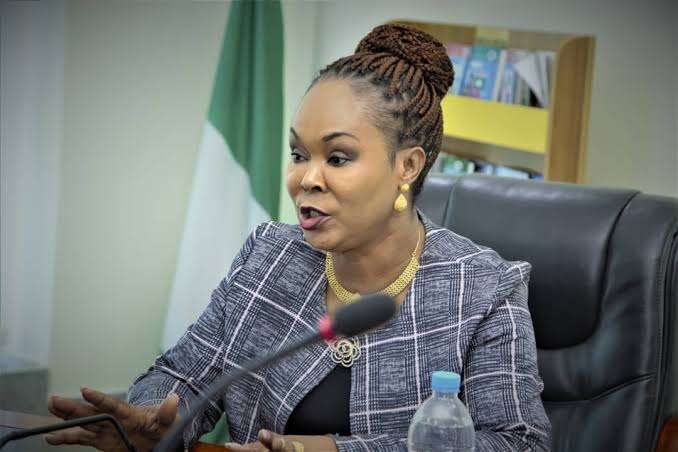
    The Minister of Women Affairs, Uju Kennedy-Ohanenye, has issued a strong warning to hospitals rejecting emergency patients.

    The Minister reiterated the Federal Government’s stance to go after the management of any hospital that refused to attend to patients rushed into their facilities in an emergency.

    Kennedy-Ohanenye gave the warning at the ‘Unlock Grants Award’ ceremony in Abuja on Sunday.

    In October 2023, the media was awash with the viral report of how a victim of a road traffic robbery popularly called ‘one chance’, Greatness Olorunfemi, died after being denied treatment when she was rushed to Maitama Hospital in Abuja.

    A similar thing happened a few years ago when two gunshot victims were rejected at a Lagos hospital, leading to their eventual death.

    The growing concerns compelled the House of Representatives earlier this year to task the Federal Ministry of Health to take decisive action against hospitals and healthcare facilities that refused to treat accident or gunshot patients without a police report.

    But Kennedy-Ohanenye said the FG would no longer allow such incidents to go unpunished, saying hospitals have been directed to start putting out signposts reflecting ‘No more rejection of emergency patients’ outside their facilities.

    The minister also revealed that a mobile court has been set up to start adjudicating on such cases.

    She said, “Our hospitals will also put a sign of ‘No more rejection of emergency patients.’ These are some of the major issues we have in this country. I am in touch with Maitama Hospital. But now, I have a mobile court for any hospital that does that. I use this opportunity to call on all Nigerians to be vigilant.

    “Let me also say that I am proud of Nigerians. I love the way they are using social media to tackle issues. But focus and continue to tackle the main issues as you are doing. Keep it up. But this is the time for action.

    “Let all of us buckle up to prevent emergency patients from being rejected. I am still going to keep calling on Nigerians. This fight is not for one person alone. It is for all of us.”