Category: Opinion

  • Yes, painfully the boy died

    Yes, painfully the boy died

    A distressing video trended on social media last weekend. If you love children your heart will sink while watching it. It was about a boy-child who was choking and struggling for life in a footage of about 12 seconds. There were other videos associated with the tragedy. Though his age and name were not given, the boy must certainly be less than 10 years-old. He had tubes passed through his nostrils ostensibly to aid his breathing. But the tubes were crude. And so his breathing came across like sounds from a snoring adult. Every breath in the short video hits the heart like an evil arrow from the bowstrings of a shooter who is adept at shooting to kill. The image was haunting. And then the boy died. It was shattering. He must be the child of a nobody. He may already have been buried in an unmarked grave. In my Igbo part of Nigeria, and probably elsewhere in Africa, no parents would want to behold and be constantly reminded of the burial spot for a child who died so young, almost while still in the cradle.

    This depressing incident reportedly happened in Ebonyi state in the south east of our country. It was posted on social media by a netizen who goes by the title of Asiwaju of Igboland. This person may be mimicking the Asiwaju of Yorubaland who happens to be the current president of Nigeria, Alhaji Bola Ahmed Tinubu. Because this netizen and the president share a title, it may just be necessary for  the president’s aides to bring the video of the boy that eventually died to the attention of the president. Why? We will return to the ‘why’ presently. The sad story was that no hospital in Ebonyi state including federal government health institutions could readily provide appropriate tools to attempt saving the life of the stricken boy. The father of the child was reported to have lamented moments before the kid died: “God don’t let anything happen to my son! Ebonyi state is your forefathers home, nothing will happen to you. Since 12pm, it’s now they are accepting to treat you. The whole of Ebonyi state does not have a tracheostomy tube to suck out groundnuts… I came back home to Ebonyi with my family, putting everything behind to start a new life but today I regret my decision. Since 12pm I have been running round Abakaliki (Ebonyi state capital) to do an X-ray for my son that swallowed something that has been affecting his breathing and no hospital can tend (attend) to us. I am currently at FETHA (and) they are referring us to UNTH ( University of Nigeria Teaching Hospital), Enugu”. And that’s the summary of how Nigeria happened to an innocent child and his ostensibly grief-stricken young parents.

    Needless death

    Ordinarily, an object such as a groundnut lodged in a child’s throat, if that was what happened, should not be a death sentence. Some medical professionals said that such objects can be dislodged within hours with the availability of appropriate equipment and personnel, and the patient discharged from the hospital in hours, at most in 24 hours. Not here. Because we do not care. Francis Nwifuru is the governor of Ebonyi state who was anointed and installed by his predecessor David Umahi, the current federal minister of works. Umahi was alleged to have transformed Ebonyi state in terms of infrastructure which included the establishment of a medical university. It appears the closest thing to achievement by Governor Nwifuru in the health sector was his discovery and arrest late last year of some workers in a primary health facility who were engaged in the business of selling the facility’s branded stationery. The video of the governor’s unscheduled visit and discovery made the rounds on social media.

    There’s no intention here to isolate Umahi and Nwifuru, not even Ebonyi state, for the purpose of calling them out or making them the fall guys, and an errant state. No. To varying degrees, what happened to this kid and his parents in Ebonyi state could happen anywhere else in our country. Like Umahi and Nwifuru, the dividends of democracy for our rulers are defined by the construction and provision of infrastructure and facilities that the eyes can see such as roads and white elephant projects like airports. The 700 km Lagos – Calabar coastal highway and the Badagry(Lagos)-Sokoto 1,068 km desert highway are two of such ongoing projects. Whenever our rulers manage to grudgingly construct school classrooms and build hospitals, they barely bother to furnish them with requisite tools and equipment. Once they are done with the aspects that eyes can see which, by the way, are often poorly executed, they leave us to our own devices. Classrooms are hardly equipped with teaching and learning tools, and hospitals are usually bereft of the latest health gadgets and trained, skillful and dedicated professionals and ancillary staff. Our rulers get away with murder because we do not hold them to account. We do not hold them to account because our rulers have systematically and radically weaponised poverty. They make us scramble for crumbs. They make us feel extremely grateful to them whenever they use a little portion of our common patrimony to minister to our basic needs.

    Systemic failure

    A preponderant majority of Nigeria’s rulers are not just insensitive, they are thoroughly wicked. They offer us run down schools while they send and keep their own children abroad for quality education in safe environments. They leave us with hospitals that are actually morgues, worse than ‘mere consulting clinics’ while they and their families travel abroad on medical tourism to treat headaches and toothaches. They throw us to the dogs to contend with death traps called highways as they fly across the country in scheduled commercial aircraft and private jets. While on the roads, if we do not die through inevitable accidents caused by the poor state of the highways, we will fall into the hands of terrorists who kidnap for ransom, or to kill. This is the 21st century, yet more than 70% of Nigerians do not have access to public electricity power supply. We still grope in darkness. The fortunate few who have access grapple with unstable power supply. Businesses and households are in the same dire straits. The miserable electricity supply is routinely priced out of the reach of consumers. Electricity tariffs go up virtually on a weekly basis. Our public universities, research institutions, museums, highways etc. operate in darkness. The University of Nigeria Nsukka and the University College Hospital Ibadan, two premier academic institutions in our country are prime examples of what a country should not be.

    READ ALSO: Natasha, senate and enforcers of the cult’s code of silence

    Back to Ebonyi state and how Nigeria happened to an innocent child and his now grieving parents. We lost a child because of a medical procedure that involves creating an opening in the neck and inserting a tube into the trachea (windpipe) to provide an airway for breathing. There are many reasons for tracheostomy but in this instance the procedure would have been to bypass an obstruction in the upper airway probably caused by a foreign object. Such a procedure on this child could have provided a secure airway, and bought the medics time to find and remove the suspected foreign object. And everybody would have gone home rejoicing. But no, this one ended in tragedy. And pain. The greater tragedy is that it will happen again. And again. And again.
    Ugo Onuoha was the Managing Director/Editor-in-Chief, Champion Newspapers Limited

  • Africa At Crossroads: power,progress, And The AI Revolution

    Africa At Crossroads: power,progress, And The AI Revolution

    By Uzo Owunne

    Politics, especially in emerging democracies with weak institutions, often becomes the art of disguising personal interest as national interest.

    In many African countries—including Nigeria, Uganda, Zimbabwe, Cameroon, and Equatorial Guinea, amongst others, individuals frequently wield more power than the very institutions meant to govern them. This allows politicians to manipulate state structures for personal gain while presenting their actions as being in the interest of the people.

    At the same time, the Artificial Intelligence (AI) revolution is transforming industries, economies, and global power structures. Unfortunately, Africa is nowhere near the starting line, and if urgent steps are not taken, the continent risks being permanently left behind.

    While countries like China, South Korea, and the United States are investing billions into AI research, automation, and future technologies to secure economic dominance, Africa still grapples with outdated notions of development, prioritizing short-term political control over long-term economic and technological strategy.

    To compete in the future, Africa must abandon its reliance on reactionary governance and adopt a proactive, united approach that brings together government, the private sector, and civil society. The time for excuses is over—Africa must wake up, take initiative, and actively shape its future in this new era of technological advancement. Without a mindset shift, the continent will remain a passive participant in the global economy rather than a driver of innovation.

    Crisis of Governance: When Leaders Become Bigger Than Institutions

    In Uganda, President Yoweri Museveni has perfected the art of consolidating power at the expense of democratic institutions. Since taking office in 1986, he has systematically weakened opposition, extended his rule through constitutional amendments, and militarized governance. The violent suppression of opposition figures like Bobi Wine demonstrates how state institutions—originally designed to protect democracy—have been repurposed to serve personal rule rather than national development. His justification is always framed around stability and security, yet in reality, it entrenches autocracy and economic stagnation.

    In Nigeria, the recent political clash between Senate President Godswill Akpabio and Senator Natasha Akpoti-Uduaghan highlights the deep-rooted institutional decay. Akpabio, leveraging his influence, has been accused of manipulating Senate proceedings and using political machinery to undermine a vocal advocate for transparency and accountability. This case is emblematic of a broader trend where state institutions are weaponized to silence dissent, control narratives, and protect political elites rather than serving the people.

    Beyond individual cases, Nigeria’s broader governance failures further expose its institutional weaknesses:

    • The government’s refusal to disclose terrorism financiers, despite intelligence provided by international partners, raises concerns about selective justice and the protection of vested interests.
    • Anti-corruption agencies are used selectively, targeting opposition figures while shielding political allies, undermining their credibility.
    • Electoral processes are controlled by a small elite, reducing democracy to a mere facade where power struggles dominate rather than genuine representation.
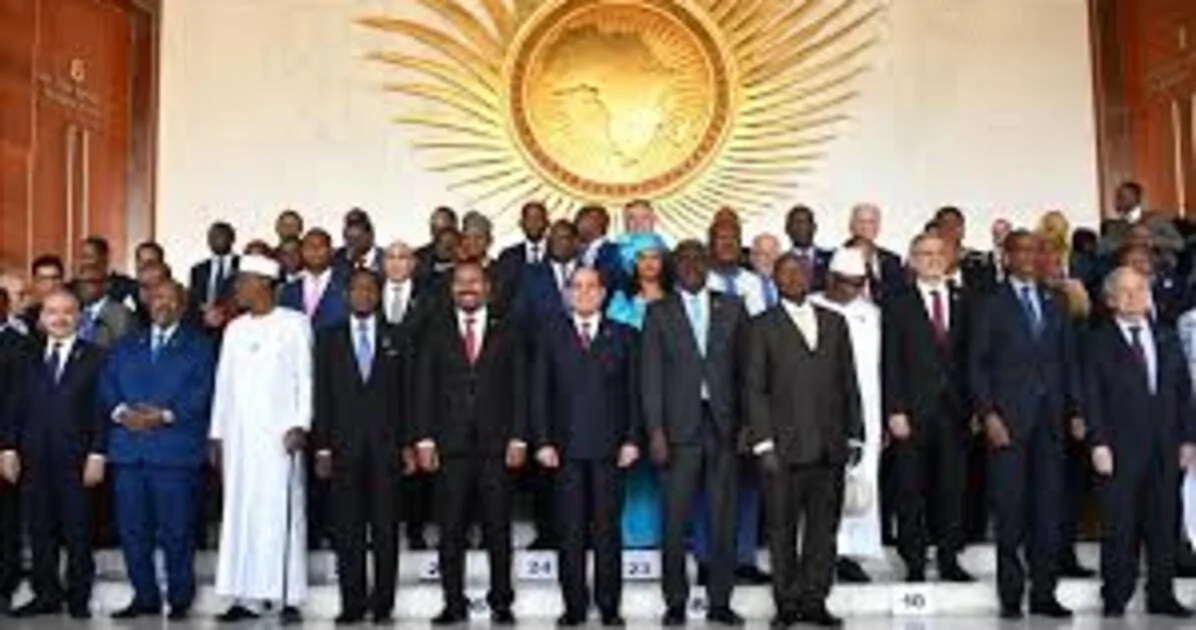
    African Leaders at 33rd AU Summit

    The Way Forward is to break the cycle

    Africa’s crisis is not just political—it is also economic and technological. Without institutional reforms, judicial independence, and genuine electoral integrity, African nations will remain trapped in a political loop where governance is dictated not by principles, but by personalities.

    At the same time, Africa must actively invest in AI, digital infrastructure, and future technologies to remain competitive in the global economy. The debate must move beyond politics—African governments and private sector leaders must align their interests to create a framework for sustainable growth.

    The world is moving forward. Without these changes, Africa risks remaining in a political and economic loop, where governance is dictated not by principles, but by personalities. The choice is clear: either Africa wakes up and takes control of its future, or it continues being left behind in the global race for progress.

    • Ambassador Owunne writes from UK

    https://guardian.ng/news/world/african-union-expresses-deep-concern-over-crisis-in-ethiopias-tigray/

  • Natasha, senate and enforcers of the cult’s code of silence

    Natasha, senate and enforcers of the cult’s code of silence

    THE Nigerian Senate is far more than the upper legislative chamber in our bi-camera parliament. In more respects than one, the senate is also a cult which thrives in occultic practices especially on matters pertaining to the conducts and utterances of senators. Other run-of-the-mill cults operate in secret and subscribe to strange codes known only to their members. The members of the senate also operate through codes that are not entirely secret. Their own codes are printed in what senators call Standing Orders. Practicing senators are expected to inscribe the contents of their Standing Orders in their hearts. For some senators the Standing Orders trumps the 1999 Constitution of Nigeria as amended. The Standing Orders is their own holy grail or writ the contents of which must never be breached no matter how anachronistic they may be. Some senators especially their presiding and principal officers are wont to believe that their Standing Orders ranks above every other document in the land. Every senator is mandated to come to work especially plenary clutching the Standing Orders pamphlet. It’s not the same requirement for the Constitution of the Republic.

    So, as a senator, when you take the oath of office and allegiance to the Constitution, you would also invariably be subscribing to senate’s peculiar code. The difference is that you may breach the Constitution and go scot-free or get away with a slap in the wrist. But if you break their code, the hammer of the cult leaders would fall on you heavily, swiftly, and fast. The hammer can be devastating and ruinous. Except perhaps for former senator Shehu Sani, no senator aligns with the offending senator. Last weekend, senator Sani said he was saved from what appeared to be an inevitable suspension from the senate for nothing less than six months but for the intervention of presiding officers, senators Olusola Saraki and Ike Ekweremadu, respectively senate president and deputy senate president at the time. What was senator Sani’s offence: he publicly disclosed the salaries and allowances of senators during his time. In Nigeria salaries and allowances of senators, members of the House of Representatives, and some other public officers could be likened to the Constitution of Malawi under their former president, the late Hastings Kamuzu Banda. Legend has it that when Banda had his vice grips on Malawi, it was a criminal offence for any other person except the president to quote or reference any provisions in the Constitution. It was also forbidden that any Malawian should speculate on the age of the president. So senator Sani was set to be sacked from the senate by those who did not elect him.

    Nigerian senate was part of making a law to encourage whistle-blowing and protect whistle blowers, but it loathes whistle blowers from amongst its fold, and especially if the whistle blowing has to do with its activities, actions and operations. The most important operating code for our senators is that “nga – aha eri anaghi eri onwe ha” or dogs don’t eat dogs. Except for the aspect of accusation of sexual harassment against the current president of the senate, Obong Godswill Akpabio, by  senator Natasha Akpoti-Uduaghan, nothing that has happened in the past two weeks was strange. At the minimum no less than six senators had been suspended from the senate since the advent of civil rule about 26 years ago. To be candid less than 10 suspensions could not by any imagination be said to be too much. So on this score kudos to the senate. However, a closer examination of some of the reasons for the suspensions of senators should be concerning. Some of them speaks to the lawlessness of the presiding officers of the senate, and the inclination to enforce a culture of silence in the senate. The same applies to the House. One senator Abdul Ningi was suspended from the senate last year for three months for blowing the whistle on the padding of the national budget by some lawmakers in the national assembly to the tune of N3trillion. He further alleged that two distinct budgets were being operated – one approved by the national assembly and the other procured by the Executive arm of government for itself. He was humiliated and hounded out in the guise of suspension. As it later turned out senator Ningi spoke the truth. The budget in question was mindlessly padded and two budget documents were being executed. But there were no consequences. Not from the Executive, not from the Legislature. The culprits went scot-free. The majority of senators and representatives respected the cult’s code of silence. The only code in the presidency is the president who obviously cannot go to equity. So the evil doers walked away with their financial heists. And the country muddled along in the journey to nowhere.

    Ovie Omo-Agege was once a senator. In 2018 he was accused of opposing a bill for election reordering. His name was also mentioned when some thugs stormed the senate chamber and stole the mace, the legislative house’s symbol of authority. That burglary was captured on live television. The action of badging into the senate to disrupt proceedings and seize the mace was said to have been ignited by sundry leadership disputes. Omo-Agege was suspended from the senate, and denied the privileges and appurtenances of office. He went to court and the court struck down his suspension. The presiding judge ruled that the action of the senate was illegal. A similar fate befell senator Ali Ndume. He was the majority leader of the current senate (the 10th senate). Last year he spoke out about the grinding poverty in the land occasioned by the economic policies of the ruling All Progressives Congress (APC) political party of which he is a ranking member. He spoke to other issues as well. He was swiftly suspended and stripped of his principal officer’s role. The office of the majority leader was quickly handed over to another party man, foreclosing any possibility of it being restored to him at the end of his suspension. He was coerced to apologise before his sacking was lifted. The same Ndume was suspended in 2017 when he demanded the probe of senators Saraki and Dino Melaye over allegations that Saraki who was senate president had a bulletproof car seized by the Nigerian Customs Service, and that Melaye had forged his academic certificates. Saraki appeared before the ethics panel and later stepped aside for his deputy to preside over the committee of the whole house where the ethics committee report was considered. He was cleared of the charge. On his part Melaye obtained a certified true copy of his university diploma and was also cleared. Ndume is a veteran lawmaker having been in the national assembly since the return to civil rule, moving from the House to the senate. He shoots from the hips, and routinely talks himself into trouble.

    Other senators who have talked themselves into trouble were Arthur Nzeribe who in 2022 was suspended indefinitely during the senate presidency of Pius Anyim Pius over allegations of a N22 million fraud, and senator Joseph Waku who was suspended in 2000 after suggesting that a military coup would be preferable to allowing the then president Olusegun Obasanjo to continue in office. Senator Femi Okurounmu suffered a similar fate in 1999 after he alleged that some senators were plotting to impeach Obasanjo.

    Though suspension of senators is as old as this fourth republic but none has generated so much controversy as the recent sacking of the Kogi central senator Natasha Akpoti-Uduaghan. It started with the removal of Natasha from her sitting position in the senate chambers. She refused to move in spite of pleas from her colleagues. On this score she failed because the allocation and reallocation of seats is the exclusive preserve of the senate president. It does not matter that she was not pre-informed as courtesy would demand. However, the failure to inform her of the change did not violate any rules. She eventually yielded and then claimed she was being victimised because she rejected the sexual advances of Akpabio. She listed times and occasions when Akpabio made sexual overtures to her, including telephone calls. Natasha followed up with a petition to the relevant committee of the senate. The petition was initially rejected for procedural errors. One thing led to the other and Natasha was swiftly suspended for allegedly breaching senate rules including refusing to stand up whenever Akpabio was ushered into the chamber. She just managed to submit her reworked petition before she was walked out of the senate to begin her draconian and illegal six months suspension.

    Since Natasha’s suspension the senate has been in overdrive to justify her sacking ostensibly because of the backlash it has generated. Senate leader Opeyemi Bamidele said at the weekend that Natasha was suspended for violating senate rules and for ‘unparliamentary behaviour’. He said that ‘Rather than submitting to the authority of the senate, Akpoti-Uduaghan had been misinforming the unsuspecting public that she was suspended because she accused the senate president of sexual harassment’. Obviously the senate leader takes Nigerians for fools. But he’s not alone in his hubris. Akpabio himself weighed in on the matter in which he is the prime accused. He said while receiving a group from his south south region that Nigerians are ignorant of the processes and procedures of the senate, and so lacked the capacity to make reasonable judgement on the matter. The interesting thing is that the real morons among Nigerians are in government – the Executive, Legislature, and Judiciary. Often the selection of the key officers in our governments at all levels are not based on merit or capacity. The tragedy is that when they get there, by hook or crook, they think themselves as the best and the brightest. If they are what they think that they are, our country will not be the mess it is today, and butt of jokes in the commity of nations.

    If the current senate is not a cult there’s no other universe where Akpabio would be presiding over anything concerning Natasha who accused him of sexual harassment. The ethical thing to do would be for him to recuse himself from the sentencing without fair hearing of Natasha even if her kangaroo trial was for the alleged breach of senate rules, and ‘unparliamentary behaviour’. Akpabio had no scruples of being a judge in a case which involves him by association. Furthermore, senate by suspending Natasha has demonstrated that it is a lawmaking body that takes delight in breaking the law. Or how do we explain the fact that there’s a subsisting judgment from a court of competent jurisdiction that suspending a lawmaker for six months was illegal.

    UGO ONUOHA was the Managing Director/Editor-in-Chief, Champion Newspapers Limited

  • How the courts stopped illegal suspension of legislators in Nigeria

    How the courts stopped illegal suspension of legislators in Nigeria

    By Femi Falana, SAN

    1.In 2010, our law firm (Falana & Falana’s Chambers) handled the case of Hon Dino Melaye & 10 other legislators who were suspended for accusing the Dimeji Bankole-led House of Representative of wallowing in corruption The Federal High Court declared the suspension of the legislators illegal and unconstitutional and ordered the payment of their withheld salaries and allowances.

    2.In 2012, our law firm also handled the case of Honourable Rifkatu Danna, the only female member of the 31-member Bauchi State House of Assembly. Danna was suspended in June 2012 for allegedly making uncomplimentary remarks when she challenged the lawmakers’ decision to approve the relocation of the headquarters of Tafawa Balewa Local Government Area of Bauchi State. But the Bauchi State High Court declared her suspension illegal and ordered the Bauchi State House of Assembly to reinstate her and pay her withheld salaries and allowances.

    3.In 2017, the Court of Appeal dismissed the appeal filed against the judgment of the Bauchi State High Court in respect of the illegal suspension of Honourable Rifkatu Danna. The Court upheld our submission to the effect that the suspension of the legislator constituted a breach of the right of the Bogoro Constutuency to be representated by her in the state house of assembly. The Court equally held that the decision of the House to withhold the salaries and allowances of the legislator was illegal as she was not an employee but an elected member of the Bauchi State House of Assembly.

    4.In 2018, our law firm equally handled the case of Honourable Abdulmumin Jibrin, a member of the House of Representatives who was suspended for 180 days for accusing the Yakubu Dogara-led House of padding the 2016 national budget. The Federal High Court nullified the suspension and ordered the payment of the withheld salaries and allowances of the legislator.

    5.Based on the case of the Speaker, Bauchi State House of Assembly v Honourable Honourable Rifkatu Danna (2017) 49 WRN 82 which is the locus classicus on the subject matter, the 2017 suspension of Senator Ali Ndume by the Bukola Saraki-led Senate was annulled by the Federal High Court. The case filed on behalf of the Senator his lawyer, Marcel Oru Esq.

    6.In the same vein, the 2020 suspension of Senator Ovie Omo-Agege was declared illegal and unconstitutional by the Federal High Court. The case was filed on behalf of the Senator by Edward Omaga Esq.

    7.Sometime in 2020, the Jigawa State House of Assembly suspended a lawmaker, Hon. Sani Iyaku, over alleged criticism of the state governor, Alhaji Muhammad Abubakar Badaru who was on a visit to Hadejia town for a wedding ceremony. Honourable Iyaku challenged his suspension in the Jigawa State High Court. The trial Judge, Justice Ahmed ruled that the action of the Assembly did not comply with order 15 rule 74 (2)(c) and (3) a, b of the state House of Assembly standing orders 2017 and therefore declared the suspension illegal, inappropriate, null and void. The court also directed that the defendant be paid his three months allowances withheld to the tune of N3 million.

    8.On November 18, 2020, the Court of Appeal, sitting in Akure, Ondo State dismissed the motion for stay of execution filed by the state House of Assembly against the judgment of the High court reinstating the three suspended members of the state assembly. The Presiding Judge, Justice Folayemi Omoleye, queried the appellants for bringing a frivolous appeal before the court, directing that the lawmakers should be reinstated immediately to resume their legislative duties.

    9.On August 13, 2024, the same court reinstated Hon. Iroju Ogundeji as the Deputy Speaker of the State House of Assembly. In a unanimous ruling, Justices Oyebisi Folayemi Omoleye, Frederick Oziakpono-Oho, and Yusuf Alhaji Bashir affirmed the decision made by Justice Akintan Osadebey, which reinstated the two-term legislator representing the Odigbo state constituency.

    10.In the past five years, the High Court sitting in Lokoja, Kogi State, and the National Industrial Court nullified the illegal suspension of members of the Houses of Assembly of Kogi and Edo State respectively.

    11.In March 2024, the Godswill Akpabio-led Senate suspended Senator Abdul Ningi (PDP; Bauchi) for three months for alleging that Nigeria’s 2024 budget was padded. The Senator instructed our law firm to challenge the suspension in the Federal High Court. We wrote to the leadership of the Senate to review the suspension in view of the illegality of the action. As we were preparing to challenge the suspension in the Federal High Court, the Senate recalled Senator Ningi and paid his withheld salaries and allowances.

    12.In view of the definitive pronouncements of the several High Court and the Court of Appeal on the illegality of the suspension of elected members of legislative houses in Nigeria, the suspension of Senator Natasha Akpoti-Uduaghan is the height of legislative recklessness. The illegal suspension should be lifted without any further delay. Since the Federal High Court had restrained the Senate Ethics Committee from hearing the complaint against the embattled Senator pending the determination of the motion on notice the Senate ought to have stayed action in accordance with the rule of law.

    13.Finally, the official impunity of suspending legislators at the whims and caprices of leaders of the federal and state legislative houses must not be allowed to continue in Nigeria.

  • The suspension of Senator Natasha: A return to the dark days of women sexual exploitation and harassment.

    The suspension of Senator Natasha: A return to the dark days of women sexual exploitation and harassment.

    “If we were planning to send the clear and chilling message to our young ladies, our children and grandchildren, who face sexual harassment on a regular basis, to shut up, suffer in silence, raise no alarm, suffer humiliation and retaliation quietly, we couldn’t have chosen a better case to make the point than the Natasha-Akpabio Scandal.”  

    That in the year 2025, a powerful lady, a Senator of the Federal Republic of Nigeria, Natasha Akpoti-Udanghan, who is also married to a highly influential husband, and who just as she released a bombshell alleging being  sexually harassed by the senate president, was suspended for six months, marks a sad day for women’s right and their bodily autonomy in our country.  To add insult to injury, this national show of shame occurs only hours away from March 8th, the International Women’s Day. 

    We do not need research statistics to tell us that sexual harassment and sexual exploitation of women in Nigeria is a true epidemic.  We all know it in our daily and past lived experience. 

    In a study by Owoaje ET, and Olusola-Taiwo O. titled “Sexual harassment experiences of female graduates of Nigerian tertiary institutions” and published in the 2009-2010 edition of International Quarterly of Community Health Education, the authors reported that majority (69.8%) of the respondents had been sexually harassed, with the main perpetrators being male classmates and lecturers. About two-thirds experienced the non-physical type of sexual harassment; 48.2% experienced the physical type. Non-physical harassment included sexual comments (57.8%) and requests to do something sexual in exchange for academic favors (32.2%). Physical forms of sexual harassment included unwanted sexual touching (29.4%) and being intentionally brushed against in a sexual way (28.9%). The effects experienced by victims were depression and perceived insecurity on campus. Sexual harassment is not just a common occurrence confined to Nigerian tertiary institutions, it is prevalent across the society, in the workplace, houses of worship and in everyday living, including women just walking in the street when men often feel entitled to make sly and sexually demeaning comments and sometimes unwanted physical touching.    

    Sadly, in our patriarchal male-dominated misogynistic society, victims of sexually harassment who are predominantly women are often shamed, intimidated, disbelieved and revictimized. 

    That same scenario would seem to be playing out in the high profile allegation of sexual harassment levelled by Senator Natasha Akpoti-Uduaghan against one of the most powerful men in Nigerian politics, the Senate President, Senator Godswill Akpabio. 

    Let me state here that I take no side on the guilt or innocence nor on the veracity or falsehood of the allegation by the senator. Just as sexual harassment is extremely damaging to its victim, in the same manner, false accusation of sexual harassment can cause tremendous  and sometimes irreparable reputational and psychological damage to the falsely accused.  

    Until a few days ago when the story broke, I had never heard the name of Senator Akpoti-Udanghan. My position has nothing to do with her public profile nor position.  My position would have remained the same even if she were a pepper seller. The good news about the sad situation is that it enabled her to beam a bright light on the ugly side of our society, our pervasive problem with sexual exploitation and harassment of women to which we have played the ostrich with its head in the sand for a very long time.  

    “Many on social media have suggested that the lady senator bore a higher burden of proof because ostensibly she had made similar allegations before as if sexual harassment was a one time affair.  Yet, no one has suggested that because Senator Akpabio had been accused before, he automatically should be presumed guilty which would be equally as ridiculous as the position many have taken against Senator Natasha.”  

    In a case of sexual harassment, neutrality is absolutely essential. Both the accused and the accuser must be afforded the same right and no one should be placing a finger on the scale of justice no matter who is involved. In this case, we are not just talking about a finger on the scale of justice but the full weight and force of the powerful senate is being applied punitively against a fellow senator who has come forward with an allegation against one of the most powerful men in the country.  If we were planning to send the clear and chilling message to our young ladies, our children and grandchildren, who face sexual harassment on a regular basis, to shut up, suffer in silence, raise no alarm, suffer humiliation and retaliation quietly, we couldn’t have chosen a better case to make the point than the Natasha-Akpabio scandal. 

    Now, the accusing Senator Natasha is facing her night of long knives with her colleagues, women pressure groups, and socio-cultural association coming after her to assault her reputation, including insinuation that she was a woman with loose moral who has had six children from six different husbands! Yet official records shows she only has three children.  Even if it were true that she has six children from six husbands, what business of ours is that?  Does that fact only give anyone a license to sexually harrass her?

    Her case, not surprisingly, has become a cause célèbre, a soap opera made for TV.  In the process the opportunity that this high profile case presents for us as a society to face our national shame in the epidemic of sexual harassment and exploitation of women is being frittered away. 

    Sexual harassment is one of the most insidious, most embarrassing situation a woman can face.  Sadly, it often boils down to ‘he says she says’ as only the two involved often know. Our society has so much sexually objectified our women that most victims of sexual harassment are too ashamed to talk. Women often get re-victimized, or blamed for dressing provocatively and hence blamed for their abuse.  We all are aware of this but we only choose to play the ostrich game.  

    Our society often gives the men the benefit of the doubt. Sadly, it is not unusual for fellow women to join in the attack of the accuser. Many on social media have suggested that the lady senator bore a higher burden of proof because ostensibly she had made similar allegations before as if sexual harassment was a one time affair.  Yet, no one has suggested that because Senator Akpabio had been accused before, he automatically should be presumed guilty which would be equally as ridiculous as the position many have taken against Senator Natasha.  

    With her suspension now, many would see it as an attempt to shut her up.  Not only that her constituency would be denied her representation in the senate. Yes, rules must be enforced but the legal system is not a blind robotic instrument of punishment.  In this circumstance, hiding behind the rule to yank off a senator who has  just accused the senate president, who is nothing more than the first among equals having just been elected like any other senator, smarks of intimidation and abuse of power and procedure.  

    This will send a chilling message to our daughters and granddaughters.  It is a sad day for women’s  right, for women sexual and body autonomy and their protection from coercive sexual harassment, abuse of power and sexual exploitation. One can only hope that society with one voice will say enough already. Sexual harassment is a malignancy that our society must attack frontally.  Pressure must be mounted on the senate to recall the senator and to allow due process to take place and if she is found to have made a false accusation, the full force of the law should be applied against her.  Making false allegation of sexual is destructive to the victims, because it creates the atmosphere of the boy who cries wolf the next time a true victim comes out to lodge a complaint.

    Adewale Alonge, PhD, is Founder & President, Africa Diaspora Partnership for Empowerment and Development. www.adped.org

  • Be my Beatrice

    Be my Beatrice

    By Ike Azuka

    The unwelcome call came,
    With it, a chilling voice at the other end,
    In the wee hours of that Saturday

    That sad Saturday
    “Mama is closer to the other side than to recovery.”

    An hour passed, or thereabouts,
    Then the chilling voice came once again, with the killer punch

     “Mama just died.”
    The shock was too hard to sink in
    My mind flooded with thoughts, meditations and questions
    And with them, sweet memories of you,

    Oh,what sweet memories

    Suddenly, I realized I am now an orphan
    You gave of yourself  wholly and selflessly
    Throughout my years of innocence


    Oh Mama,why leave me forlone?

    “A son never grows up to his mom,” you would always tell me
    Our chats and conversations would always end in jokes and chuckles

    Before your spiritual presence, I stand, my beloved mother,
    To make but one request:
    As you pass the baton to me,
    Wrap me in your celestial protection
    Deign to hear and hearken

    For just as Beatrice guided Dante to Paradise (Dante’s Divine Comedy), so too have you been my guide
    A beacon of love, grace, and wisdom

    And though you now dwell beyond
    Let your spirit continue to lead me
    To whisper through the winds
    To light my path as I carry forward

    Oh dear Mama, be my Beatrice
    Deign to hear and hearken

    An Ode To My Beloved Mama by Ike Azuka

  • Tax Reform Bills: The Verdict of Nigerians

    Tax Reform Bills: The Verdict of Nigerians

    By Abdullahi Ismaila Ahmad, Ph.D

    The public hearings conducted recently by the two Chambers of the National Assembly have elicited positive responses from a broad spectrum of Nigerians, cutting across regional interest groups, government agencies, civil society groups, concerned individuals, the academia, and Labour Unions, among diverse others. Contrary to a few dissensions hitherto expressed in the media, almost all the stakeholders who spoke during the week-long sessions were unanimous in their declaration that the hallowed Chambers should pass the tax reform bills after a clean-up of the grey areas.

    The public hearings were auspicious for all Nigerians desirous of economic growth and fiscal responsibility. They were also a watershed moment for the Federal Inland Revenue Service, which had been upbeat about the tax reforms. Indeed, the public hearings had rekindled hope in the tenets of democracy that guarantee freedom of expression and equitable space for cross-fertilisation of ideas. Without gainsaying the fact, the tax reform bills have been unarguably about the most thought-provoking issues in Nigeria today, drawing variegated perspectives and commentaries from even unlikely quarters such as the faith-based leaders, student bodies, and trade unions, which speaks much about the importance of the bills.

    In the build-up to the public hearings, not many people believed that the bills would make it to the second reading, much less the public hearings. Even the Northern stakeholders who seemed unlikely to support the passage of the bills have softened their stance and have given valuable suggestions that would enrich the substance of the bills. The Arewa Consultative Forum came to the public hearings well-prepared with a printed booklet that addressed their concerns. It concluded with an advisory that the bills should be “Well planned, properly communicated, strategically implemented and ample dialogue and political consensus allowed for the reforms to be accepted.”

    The concerns of ACF ranged from the composition of the proposed Nigeria Revenue Service Board as contained in Part 111, Section 7 of the bill, the unlimited Presidential power to exempt/wave tax payment as proposed in Section 75(1) of the bill, the family income or inheritance tax as contained in Part 1, Section 4(3) of the bill, to the issues around development levy and VAT. On the development levy, the ACF stated that unless the Federal Government is considering budgetary funding for TETFUND, NASENI and NITDA, it does not see the “wisdom behind the plan to replace (them) with NELFUND”.

    The position of the North was equally reinforced by the Supreme Council for Shariah in Nigeria, Northern Elders Forum, Kano State Government, Professor Auwalu Yadudu, and the FCT Imams. Like the ACF, these stakeholders lent their respective voices to the Section on the Inheritance Tax in Part 1 of the bill and the use of the term ‘ecclesiastical’, which, in their views, undermines certain religious rights and beliefs. The Kano State Government, represented by Mahmud Sagagi, affirmed that “we support tax modernisation” but cautioned that “we must ensure that this process does not come at the expense of states’ constitutional rights and economic stability”. Professor Auwalu Yadudu, a constitutional law professor, drew attention to the use of the ‘supremacy clause’ and cautioned that the repeated use of “notwithstanding” in the bills would undermine the supremacy of the Nigerian constitution if passed as such.

    Other stakeholders that made contributions at the sessions included the Nigeria Liquefied Natural Gas, Fiscal Responsibility Commission, Revenue Mobilisation Allocation and Fiscal Commission, Federal Ministry of Industry, Trade and Investment, Institute of Chartered Accountants of Nigeria, Chartered Institute of Taxation of Nigeria, Nigeria Customs Service, and a host of others. While most of their concerns bordered on technical issues requiring fine-tuning, they were unanimous in their support for the bills. They aligned with the position of the Executive Chairman of the Federal Inland Revenue Service, Zacch Adedeji, Ph.D. and the Chairman of the Presidential Committee on Fiscal Policy and Tax Reforms, Mr Taiwo Oyedele, which is that the extant tax laws and fiscal regulations are obsolete necessitating reforms aimed at creating a fair and equitable tax and fiscal space to grow Nigeria’s economy.

    In one of the sessions, Dr Zaach Adedeji expounded on the criss-cross of trade activities in the Free Trade Zone whereby companies misuse tax waivers as exporters to sell their goods or services in the Customs Area at an amount usually less than the price the operators in the Customs Area who pay VAT and other taxes sell theirs thereby disrupting business transactions. This way, the operators in the Free Trade Zone shortchange the government in paying their due taxes by circumventing extant regulations, which are inimical to the economy’s growth.

    Overall, the presentations were forthright, foresighted, and helpful in elucidating the issues contained in the bills. According to the statistics read out at the end of the hearings at the Senate, 75 stakeholders were invited, 65 made submissions, and 61 made presentations. At the House of Representatives 53 stakeholders made presentations. By all means, this is a fair representation. Given the presentations, it is evident that the National Assembly has gathered enough materials to guide its deliberations on the bills. As we look forward to the passage of the bills, we commend the leadership of the National Assembly for their unwavering commitment to making the bills see the light of the day.

    Abdullahi is the Director of Communications and Liaison Department, FIRS.

  • Kanu, Besigye and contours of Kenya’s rogue-state

    Kanu, Besigye and contours of Kenya’s rogue-state

    KENYA, the East African country noted for its leisure and tourism, including the globally acknowledged safari, is fast carving a niche for itself. That niche is likely to earn the country a notoriety that could prove deleterious to all other aspects of its national life. If the noticeable conduct of the Kenyan state has been limited to one administration and one political party, it could have just passed as the bad act of one regime or one political party. But within three short years two different presidents of the country had acted in ways that should be of concern to the rest of Africa, the African Union, and indeed the world. Kenya, in fact its capital Nairobi, is becoming a deadly place for visiting opposition figures from other countries in Africa. It’s fast becoming a ground for the capture, abduction, kidnapping, imprisonment, drugging, and facilitating the extraordinary rendition of vocal opponents of authoritarian regimes elsewhere on the continent.

    The first in such unsavoury conduct in recent memory was in 2021. Uhuru Kenyatta, the son of that country’s independence president Jomo Kenyatta, was the president in 2021. In 2014  he had escaped trial at the International Criminal Court (ICC) in The Hague, Netherlands on charges of inciting bloody riots over election disputes. Uhuru was the fourth president of the country from 2013 to 2022. Ahead of the 2022 election, he worked against the eventual winner William Ruto who belonged to the same political party as him, and who was in fact the deputy president. Uhuru had been everything anybody could be in the politics and governance of his country including being minister of finance, and deputy prime minister. But apart from allegations of inciting bloody election riots during which scores of Kenyans died, and the humiliating charges before an international tribunal, was his regime’s facilitation of the abduction and extraordinary rendition of Mazi Nnamdi Kanu to Nigeria in 2021. Kanu is the leader of the Indigenous People of Biafra (IPOB), a group campaigning for the self-determination and independence of the Igbo in the south east of Nigeria. At the time of his abduction in Kenya, Kanu was an unrelenting and unsparing critic of the regime of Nigeria’s immediate past president, Maj.- Gen. Muhammadu Buhari. Buhari turned out to be an unmitigated disaster and an affliction on the country during the eight years of his presidency.

    Because of the criminal conduct of Uhuru Kenyatta’s rogue regime, Nnamdi Kanu has remained in prison in Abuja, Nigeria’s capital territory since 2021. An attempt to set Kanu up on February 10, for what he (Kanu) and some other literate commentators described as a kangaroo trial failed. In open court Kanu insisted that the judge had recused herself from the case and so no longer had jurisdiction to hear the case. He also alleged that the prosecutors were motivated by the humongous monetary inducements from the state rather than by the need for justice. Obviously frustrated by the ding dong Justice Binta Nyako adjourned the case sine die and returned Kanu to prison. By the way, Kanu has been in and out of prison for the better part of the last one decade. He had earlier been arrested at the Lagos airport on his return from London, dumped in prison for about two years, arraigned before Nyako and granted bail. He was adjudged to have jumped bail when he escaped a murderous and bloody attack on his father’s home in Umuahia in Abia state by a combined team of state security agents. He fled abroad for his dear life.

    A similar scenario played out again in the same Nairobi, Kenya in November last year. This time it happened under a different president, Mr. William Ruto, who took over the presidency after a hotly contested election. Dr. Kizza Besigye is the main opposition leader in Uganda, Kenya’s neighbours. For years he has been a thorn in the flesh of a one time freedom fighter and now an eternal ruler of Uganda, Yoweri Museveni. Effectively, Museveni has been the ruler of Uganda since 1986 with the sacking of the regimes of Milton Obote and Field Marshal Idi Amin Dada. He consolidated power during the 2000s and 2010s with the removal of constitutional term limits in 2005 which allowed him to run for president indefinitely. Three years ago Museveni won his sixth term as president in an election marred by the usual massive rigging and the intimidation of prominent opposition figures, and social media shutdowns. His regime is notorious for alleged human rights abuses, torture, arbitrary arrests, extra judicial killings, corruption and nepotism. It is interesting and instructive that this same Kizza Besigye who has become the punching bag of Museveni was his (Museveni’s) personal physician from 1980 to 1982 while Museveni was a rebel leader. About 45 years ago Besigye worked his utmost to keep Museveni in good health. And alive. Today, and for the past 20 years or so, Museveni appears determined to kill Dr. Besigye for consistently contesting for the presidency against him.

    As we wrote earlier Besigye has become the symbol of opposition to the life presidency of Museveni. And what a price he has been paying for opposing the ‘saviour’ of Uganda. Like Kanu, Besigye, himself a serial presidential candidate, was arrested in November 2024 in Kenya and forcibly returned to Uganda, and held in a military prison. He was said to be in Kenya for a book launch. Then he was charged with firearms and security offences in a military tribunal. The charges carry the death penalty. However, because the trial has been highly controversial and closely watched by audiences beyond Uganda and Kenya from where he was plucked, the case was later transferred to a civilian court, where he is currently facing charges of treason. As with Kanu’s case in Nigeria, Besigye’s trial keeps being adjourned. On February 11, he reportedly embarked on a hunger strike. His health is presently said to be in a poor state. His situation was so bad that by the middle of February there were claims on social media that he had died. The rumour was subsequently squashed. It has been reported that following pressure, the opposition leader was brought before a civilian court in Kampala on February 19, looking weak and frail. And in a wheelchair. The next day a court ordered that the trial be suspended for 60 days to allow him to recover. Meanwhile, the international community, including the United Nations human rights chief, has expressed concern over Besigye’s treatment and the fairness of his trial. In the case of Kanu in Nigeria, rapporteurs of a UN agency declared about two years ago that his detention and trial were not legal on account of his extraordinary rendition from Kenya to Nigeria in 2021.

    It should be a matter of concern to Africa and the world that Kenya is gradually turning itself into a rogue state which facilitates the abduction of visiting opposition figures and the extraordinary rendition or repatriation of such persons to dictatorial regimes in their home countries. We acknowledge that Kenya is a player in the international community, and so has a duty in line with relevant treaties it subscribed to, to help arrest fugitives from the law. But there are laws and processes and procedures for effecting such arrests and extradition. This certainly was not the case with Nnamdi Kanu. And there are indications that Besigye’s recent forcible arrest and repatriation to Uganda may not have met the prescribed minimum standards for repatriation. Furthermore, Dr. Besigye was not a fugitive. He has stubbornly refused to flee Uganda in spite of his persecutions. And his insistence on staying in his country annoys Museveni and Museveni’s enablers to no end. The worry is that if Africa closes its eyes to the rogue tendencies of the Kenyan state ostensibly because of the preponderance of dictatorial regimes on the continent whether civilian or military, democracies elsewhere cannot afford to do the same. Kenya should be closely watched and monitored so as to curb this dangerous trend. If Kenya fails to follow the path of rectitude and adherence to international treaties of which it is a signatory, it should be treated as a pariah state and punished through coordinated international sanctions. There’s a possibility that other countries may copy the proclivity of Kenya to arrest opposition personages and illegally repatriate them to authoritarian regimes in their home countries where uncertain fates including extrajudicial deaths await them. And the continent would gradually become a cauldron for the opposition.

    Ironically, Kenya was born out of strident and fierce opposition to the British by relentless freedom fighters. I recall a stage play of the Kenyan struggles at the University of Nigeria Nsukka in 1982 or so. The actor who played the role of Field Marshal Dedan Kimathi, a key Mau Mau leader, was outstanding. He was bloodied by the British but remained unbowed till the end. The audience was moved in a way that I have not witnessed since then. The Mau Mau struggle was central to the liberation of Kenya, and its independence from British colonial rule. They fought against land expropriation by the British, forced labour, and racial segregation from 1952. The Mau Mau fighters in the 1950s who fought the British were primarily of the Kikuyu nation just like Uhuru Kenyatta, latter day betrayer and persecutor of freedom fighters. Jomo Kenyatta was the first president of independent Kenya and one of the key leaders of Mau Mau. Uhuru, the fourth president of Kenya is his son and Mau Mau by extension. It may be arguable but without the struggles of the Mau Mau Kenya would not have gained independence when it did. In 2013, the British government which tormented and killed scores of the leaders of Mau Mau officially recognised the roles of the warriors in Kenya’s independence and agreed to pay compensation to surviving veterans. In the eyes of Uhuru, his father Jomo Kenyatta, might as well have been a terrorist when he fought alongside his Mau Mau comrades to free Kenya from the clutches of colonial Britain. Current president William Ruto could be excused for his excesses because, unlike Uhuru, his family was not known for being part of the bloody liberation struggles in Kenya. He has no martyrs to temper his condemnable conduct.

  • The Day Diplomacy Died in the Oval Office

    The Day Diplomacy Died in the Oval Office

    By Babafemi Ojudu

    I was startled when I saw the video clip that emerged from the Oval Office yesterday. It was a scene that should never have played out in any nation’s highest diplomatic chamber, let alone in the hallowed halls of the United States presidency. The Oval Office, a space traditionally reserved for measured statecraft and dignified engagement between nations, became the setting for an extraordinary display of public humiliation—an event that will go down as a dark moment in the annals of international diplomacy.

    Watching that clip, I was reminded less of a formal diplomatic exchange than of the kind of public tirades one might expect from Portable, the notorious Nigerian musician infamous for berating his former collaborators, baby mamas, or anyone who crosses his path. Or worse, it felt like a street-corner altercation where a senior gang member bullies a subordinate into submission. This is not how states should relate. This is not how diplomacy is conducted. And I struggle to find any historical precedent for the sheer abrasiveness of what we witnessed.

    The scene was not a discussion; it was a harangue—a coercive performance meant not to strengthen alliances but to humiliate an ally. It reminded me of my own encounters with security operatives in Nigeria in the 1990s—officials who, after an arrest, would gather around in numbers to badger, insult, and break the spirit of their captive under the guise of interrogation. When reason fails to persuade, they resort to threats, and when threats fail, they simply lock you up. In this case, Donald Trump and his co-conspirator in the public berating of Ukraine’s President Volodymyr Zelensky stopped just short of calling for him to be carted off and detained in Guantanamo Bay.

    This was not diplomacy; this was arm-twisting. Yes, stronger nations do apply pressure on weaker ones, but rarely in such a brazen and undignified manner. It was the kind of psychological bullying one might expect in a school dormitory, where a senior student torments a younger one to the point of breaking their self-esteem. Zelensky, a wartime leader navigating the existential survival of his nation, found himself subjected to a spectacle that reduced him from a visiting head of state to an object of scorn—ordered out of a meeting and forced to stand as his nation’s dignity was chipped away. One wonders how he truly felt in that moment—trapped, verbally battered by both the first and second most powerful figures in the United States. What was their objective? What was their calculation?

    The practice of diplomacy is rooted in mutual respect, even among adversaries. Henry Kissinger, the master tactician of realpolitik, understood that power alone cannot sustain relationships—diplomacy is also about perception, negotiation, and maintaining equilibrium. The idea that a nation should treat its allies with dignity is a foundational principle in international relations—one I was taught in my master’s degree class at the University of Lagos. European leaders, from French President Emmanuel Macron to German Chancellor Olaf Scholz, have made clear that allies should not be pressured in such a crude manner. The EU’s foreign policy chief, Josep Borrell, has emphasized that diplomacy must be rooted in “strategic autonomy”—a term that, in this case, seems to have been completely disregarded.

    The great theorists of diplomacy, from Hans Morgenthau to modern scholars of statecraft, recognize that the strength of a nation is not merely in its military or economic power but in its ability to build and sustain alliances. The United States, once seen as the paragon of global leadership, has set a dangerous precedent with this display. The world is watching, and the message it received was clear: the new age of diplomacy, at least in some quarters of Washington, is one of intimidation rather than persuasion, of humiliation rather than partnership.

    One of the core tenets of Yoruba wisdom says, a kìí pa alejo eni ǹjàkin—you do not slaughter your guest and call it valor. Respect for visitors is deeply embedded in our culture, as it is in many others. The idea that a visiting head of state could be so publicly shamed, with cameras rolling, is an affront not just to Ukraine but to the very essence of diplomacy itself.

    What happened in the Oval Office yesterday will not be forgotten anytime soon. Not by Ukraine, not by America’s allies, and certainly not by history.

    Welcome to the new age of diplomacy—where might replaces right, where alliances are forged under duress, and where global leadership is measured not by wisdom but by the ability to humiliate.

  • Ochaigede and the lost vision: a community relations revelation

    Ochaigede and the lost vision: a community relations revelation

    Ochaigede is a hamlet under the Agadagba clan of old Onyagede district in Ohimini Local Government Area of Benue state. Ochaigede was previously known as Agadagbaemichi until the community decided to have a name change. Ochaigede, like Agadagba or the entire Ohimini LGA is famed as one of the leading farming communities in Idoma land. The rich loamy soil is reputed for favouring the cultivation of root crops like yam, cassava, legumes and cereals like beans, sesame seed, guinea corn, maize, millet and rice.

    The people of Agadagba, like most of Idoma, also have a well established culture and traditions that guide various aspects of social, political and economic activities. The Idoma believe in the efficacy of an omnipresent ancestral spirit that protects the people and punishes evil doers in the community. The people of Ochaigede are not exempt. They have a shrine where the spiritual leader goes to invoke the spirit of the departed ancestors to mediate in the affairs of the village, either for good or bad.

    I travelled to Ochaigede last weekend on a community relations voyage. The object of my mission was to placate an allegedly aggrieved community over a land acquisition process.

    My journey to Ochaigede commenced on a hot Friday morning in Abuja as I bid farewell to my family and set forth to Ohimini Local Government of Benue state. Determined to enjoy the best of both worlds I routed the journey through Makurdi, the Benue state capital, just to enable me to enjoy the newly completed and tolled Abuja-Makurdi highway. It was great fun, filled with nostalgia as I sped through the windy and undulating Mada hills that remains the nightmare of articulated vehicles. The road, now being a dual carriage way is safer for truckers and lighter vehicles. The Makurdi-Otukpo portion of the road was a real nightmare. It has been completely marooned by long period of high usage without commensurate attention paid to its maintenance. The recent onslaught of trailers owned by mining and cement production companies does not help matters.

    The obvious truth is that the Otukpo-Makurdi road is now derelict. A journey between the two towns, which used to take about an honour or less took me almost three hours to Otukpo. The good news however, is that the road is now being completely revamped and dualised. At the current pace of work, it is hoped that the stretch would be completed before year ending. What is even more exhilarating is that the reconstruction extends all the way to Enugu in the South Eastern part of the country.

    I arrived Otukpo late on Saturday and decided to touch base with friends and some critical stakeholders who shall be playing vital roles in the resolution of the emerging conflict. The consultations continued even at Ochaigede where we held court with a prominent son of the soil, as we say. He is a highly regarded patriot who recently retired from the aviation industry after an unblemished career that was most adjudged as outstanding.

    The pitch

    An indigenous corporate entity with foreign partnership had sought the permission of the villagers to establish a farm project at Ochaigede. With help from the Clan head of Agadagba, after negotiations, the villagers were convinced to part with some of their landholdings in exchange for a cash payment. On its part, the community shall be entitled to a Corprorate Social Responsibility (CSR) project. Also, youths of the village shall be entitled to employment opportunities. Indeed, they shall be accorded the first option of rejection in all job openings where they possess the required competence and skills. This option was chosen in relation to alternative proposals, one of which entailed that the community would grant permission to the company to access as much land as it requires for the project. In return, the company shall commit to donating some CSR projects, either in power supply, school or health infrastructure to be donated to the community.

    Upon the ratification of an elders’ consent, following payment of cash to the willing land donors, the company proceeded to process the land for title and commencement of work. Then trouble started. A prominent member of the village community mobilised some village youth to prevent ad hoc staff of the company from work. First, the individual complained that their community does not sell land. Second, it was complained that neither the ownership nor the purpose for which the land was being acquired was disclosed to them. In fact, a conspiracy theorist when to the bizarre length of spreading a rumour that the land was being acquired for an undisclosed Fulani beneficiary.

    Community engagement

    To resolve the impasse, elders, youth leaders and other stakeholders across the clan gathered at the village shrine for a conclave at Ochaigede. To be exact, attendance at the meeting was comprised of delegates from all the villages that make up Agagdagba.These are Ohugbane, Akwunu, Ochaigede,Ebu and Akpewo.Their distant ‘cousin’ Ikikla, was not invited to the meet.

    Further, leaders of organised groups from the city (town unions), prominent among whom was the President General of Agadagba Town Unions, was present at the meeting.

    Very revered elders of the village commenced proceedings by invoking the spirits of the ancestors to provide guidance. A curse was also placed on anyone that would make contributions, knowing fully well that such was a liar, but told with intent to mislead the gathering or sabotage the exercise.

    Deliberations were frank, passionate and laden with anecdotes, proverbs and wisecracks. Indeed, it was an interesting spectacle, resembling a perfect parliamentary session as both the old and young were accorded ample time to state their cases. It was democracy in action as it looked like all was going to end well until a rabble rousing elder created the bedlam by inciting the youth through a very misleading assertion that the project was not appropriate for their community and that they must never agree to the proposal until the promoter of the project, who is also from the village but a Nigerian diaspora came home to address them.

    Several interpretations have been adduced as the motive for this action of the prominent individual. A youth opposed to his approach alleges sabotage. According to the young man, the individual had acquired a large swathes of land for free with the promise of developing it but no such development has happened as the land has remained fallow.

    The project

    The proposed project is an agro-industrial complex. It entails a high-yielding palm plantation, a cattle ranch and a piggery. When fully operational, the palm plantation shall feed an ultramodern palm produce processing plant where every aspect of the crop shall be harnessed, from the oils, kernel, fronds and numerous by-products.

    As is to be expected, feeder crops like varieties of corn and special grasses shall be cultivated for feeding the animals.

    The real catch in all of this is the existence of an expansion plan not just for the palm but the animal produce.

    Conclusion

    Certainly, only a misguided populace would object to a project of this humongous beneficial complexity being sited in their community. As one of the leaders of the community alluded, opposition to the project could only have been fueled by jealousy, egomania or outright ignorance.

    He cautioned the villagers, especially the youth never to let this opportunity slip by them, noting that whosoever advises them to the contrary does not have their welfare at heart.

    As for the elders, he warned that frustrating the project idea had serious security implication. He alluded to the well known saying that an idle mind is like the devil’s workshop, and said that with the project, the youth would be kept busy thereby minimising their predisposition to crime.

    Opposition to this project is exemplifies one of the root causes of the lack or poor pace of socioeconomic development in Nigeria. It is either the misplacement of priorities, lost opportunities or both, with either emanating from a lack of vision on the part of those who claim  leadership of our societies.