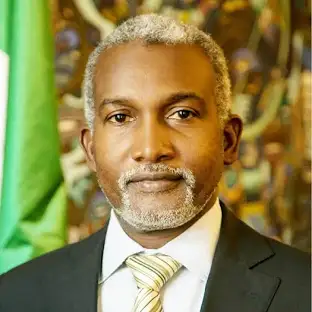
Tag: Amb. Yusuf Tuggar
-

Foreign Interference in Protests Will Be Resisted – FG Warns
Escalating its strong arm handling of the hunger related crisis that swept across the country since August 1, the federal government has warned foreign entities that it will not tolerate any interference in the ongoing End Bad Governance protests rocking the nation.The warning was issued by Minister of Foreign Affairs, Yusuf Maitama Tuggar while briefing the Diplomatic Corps in Abuja on Wednesday.Tuggar said that President Bola Ahmed Tinubu, a champion of democracy, believes in the fundamental rights of Nigerians, including freedom of assembly and expression. However, he stressed that the government will not condone thuggish behaviour or foreign interference in domestic affairs.“Nigeria is no exception. The government will take appropriate action against any foreign entity residing in Nigeria that is found to have directly or indirectly supported the protesters by whatever means or seeks to interfere in the internal affairs of the country,” Tuggar said.The minister reiterated that Nigeria values its relationships with other countries and organizations but will take appropriate action against any foreign entity found supporting the protesters or interfering in internal affairs.“Indeed, more than at any time before, we solicit your understanding and collaboration in the ongoing efforts of the Federal Government in addressing the economic challenges confronting the country to achieve a better life for every Nigerian at home and abroad,” Tuggar stated.The government’s warning comes amidst reports of foreign flags being raised in support of the protesters, with Russian flags spotted in Kano and Abuja.The protests, which began on August 1, 2024 and are scheduled to end on August 10th, have seen a mix of peaceful demonstrations and violent clashes. -
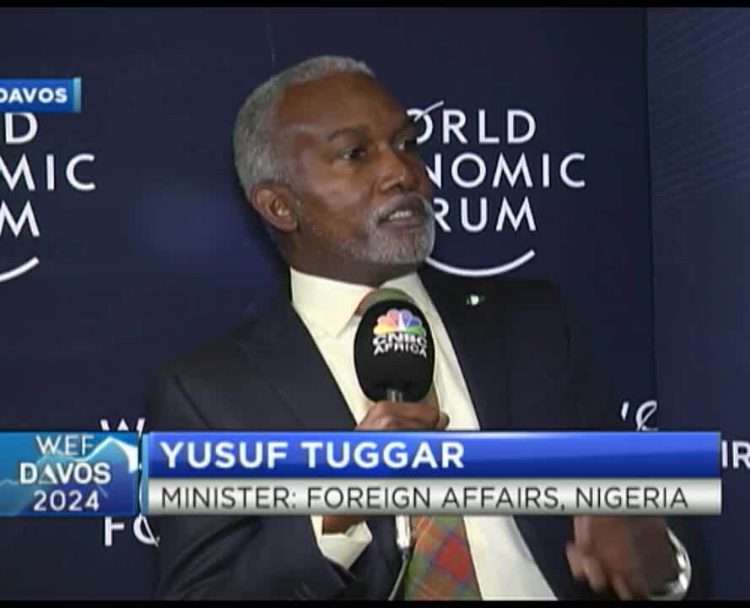
Foreign Affairs Minister, Tuggar calls for Nigeria’s Membership of UN Security Council
Nigeria’s Minister of Foreign Affairs Ambassador Yusuf Maitama Tuggar, has said there is a need to democratise the United Nations (UN) security council and Nigeria with its population, economic size and strategic role in Africa has earned the right to be part of the UNSC.
Ambassador Tuggar made the call while speaking at a panel discussion on the theme “Securing an Insecure World” at the World Economic Forum (WEF), Davos, Switzerland.
Tuggar said the values of democracy – such as the rule of law – should be replicated in the world’s highest decision organs.
Tuggar said the UN security council, as constituted, is not leaving up to its purpose.
“What we have to do is collectively practice what we preach. The values that we uphold – democracy, rule of law – need to be practised, and we need to see them being practised in the very decision-making bodies or entities for the planet,” the minister said.
“So, to begin with, the UN Security Council needs to be democratized. Clearly, it is not fit for purpose.
“We should do away with the veto powers on the UN Security Council; clearly, it’s clumsy and not working. Again, when you look at the global security architecture, it is impacted by such undemocratic entities that influence decisions.
“We have a situation where, in the past, during the bipolar world, there was neutral ground for diplomats to engage, allowing diplomacy to resolve issues, preempt conflicts, and diffuse them. Unfortunately, we don’t have that anymore.
“We are increasingly seeing a situation where diplomats and diplomacy are taking the backseat, and disagreements are being securitized.”
Tuggar expressed dismay that security chiefs and defence policymakers are taking the front seat in world security issues.
“Of course, for the guy with the hammer, everything is a nail,” he said.
Other speakers on the panel with Mr. Tuggar were, the Secretary of NATO, Jens Stoltenberg, Minister of Foreign Affairs of the Kingdom of Saudi Arabia, Prince Faisal bin Farhan Al Saud, Minister of Foreign Affairs of Finland Elina Valtonen, Senator from Delaware United States Christopher A. Coons, President, World Economic Forum Børge Brende, and Federal Minister of Foreign Affairs Federal Foreign Office of Germany Annalena Baerbock
Discussions at the parley dwelled on persistent conflicts, the intensifying climate crises, the fragile global economies and the potential risks of new technologies that were creating a complex global security environment.
The forum provided an opportunity for the participants to interrogate what the true state of global collective security looked like today and how leaders can strengthen it for the future.