Tag: Bola Tinubu

  • SDP’s Adebayo Accuses Tinubu of Interfering in Opposition Politics Ahead of 2027

    SDP’s Adebayo Accuses Tinubu of Interfering in Opposition Politics Ahead of 2027

    The presidential candidate of the Social Democratic Party in the 2023 election, Adewole Adebayo, has accused President Bola Tinubu of attempting to manipulate opposition political parties and weaken democratic competition ahead of the 2027 general elections.

    Speaking during an interview on ARISE News on Tuesday, Adebayo alleged that the president was seeking to exert influence not only within opposition parties but also over institutions expected to remain independent in a democracy.

    “You can’t be candidate general of the opposition. You have to stick to your own party,” Adebayo said.

    “The president wants to belong to every political party, also act as the chairman of INEC, and the part-time chief justice of Nigeria.”

    The former SDP presidential flagbearer made the remarks while responding to reports of internal divisions within the party and claims by one Akinbola Atanda that he was also a presidential candidate of the SDP.

    Dismissing the claim, Adebayo said the party neither recognised Atanda as a member nor as an aspirant.

    “We don’t know him in the SDP. We don’t know him,” he stated.

    “Well, I could say I’m the Pope, but I’m not. You see, the Catholics know who’s the Pope.”

    Adebayo further alleged that the administration of President Tinubu was deliberately creating confusion within opposition parties as part of a broader political strategy ahead of the next election cycle.

    “I know President Tinubu is the author of all of this drama,” he said.

    According to him, the ruling All Progressives Congress was uncomfortable with genuine political competition and was instead attempting to orchestrate weak opposition structures.

    “The whole idea is not to have competition,” Adebayo said.

    “And they want to master that by having pseudo candidates in other political parties and have a coronation.”

    He also criticised the conduct of primaries within the APC, alleging that the party merely staged democratic processes rather than conducting genuine internal contests.

    The comments add to growing political rhetoric ahead of the 2027 elections, with opposition figures increasingly accusing the ruling party of attempting to dominate Nigeria’s political space. Neither the presidency nor the APC had officially responded to Adebayo’s allegations as of the time of filing this report.

  • Youth Without Opportunity Is a Threat, Shettima Warns Nigeria

    Youth Without Opportunity Is a Threat, Shettima Warns Nigeria

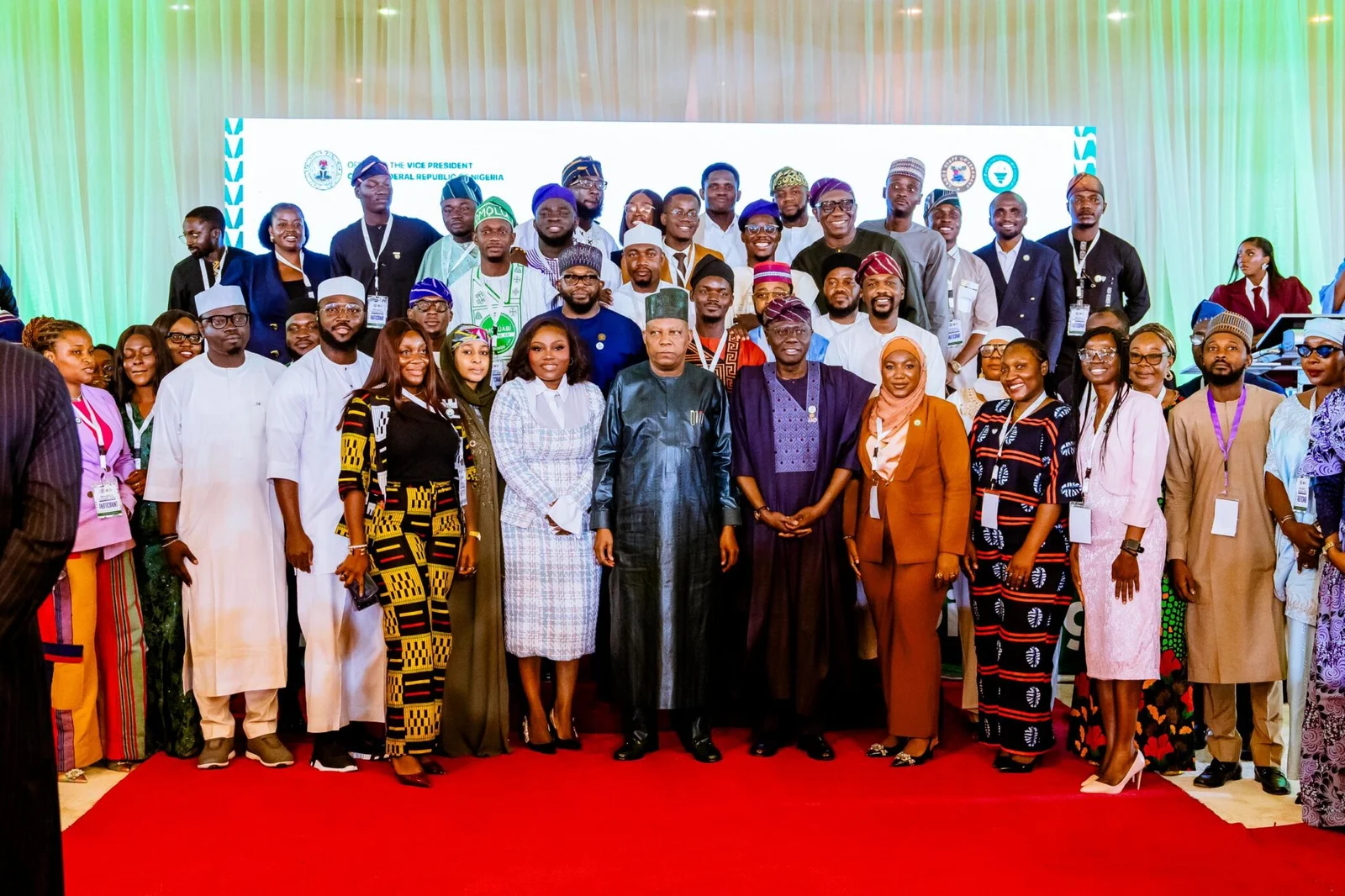
    Nigeria’s Vice President, Kashim Shettima, has warned that the country’s status as one of the youngest nations in the world could become meaningless without deliberate institutional investment to harness its demographic potential.

    Speaking on Monday in Abuja at the Abuja Dialogue 2026, Shettima stressed that Nigeria’s youthful population should no longer be treated as a mere talking point but as a strategic national reality requiring urgent policy attention. The event was organised by the Office of the Vice President in collaboration with the Lateef Jakande Leadership Academy.

    According to him, the country’s growing youth population risks turning into a liability if investments in education, skills acquisition, and economic opportunities are not prioritised.

    “We are one of the youngest nations on earth. That fact should not be treated as a line for conferences or a statistic for brochures. It is a national condition with profound consequences,” Shettima said.

    Call for Structured Youth Leadership Development

    The Vice President emphasised that Nigeria’s future would depend not only on natural resources or government ambitions, but on the strength of systems designed to ensure leadership continuity.

    He advocated a deliberate and forward-looking framework for youth leadership development, noting that leadership must be cultivated through structured pathways rather than left to chance.

    Shettima explained that youth leadership should not be seen as a ceremonial transition based on age, but as a continuous process of preparing and integrating young people into governance and nation-building institutions.

    Sanwo-Olu Highlights Role of Leadership Academy

    Also speaking at the event, Lagos State Governor, Babajide Sanwo-Olu, described the dialogue as a strong signal of the federal government’s commitment to youth leadership development.

    He noted that the Lateef Jakande Leadership Academy serves as a talent incubator, providing young Nigerians with practical exposure to public sector governance.

    Sanwo-Olu called for stronger policy frameworks, adequate funding, and political will to transform youth-focused initiatives into sustainable institutions.

    Federal Government Reaffirms Commitment to Youth Empowerment

    Other government officials echoed the importance of investing in youth development.

    Deputy Chief of Staff to the President, Ibrahim Hadejia, described youth leadership as critical infrastructure that determines the strength of national institutions.

    Minister of Youth Development, Ayodele Olawande, said Nigerian youths are ready to contribute meaningfully to national progress. He added that President Bola Tinubu remains committed to creating enabling platforms for young people to thrive.

    Youth at the Centre of National Development

    Executive Secretary of the academy, Ayisat Agbaje-Okunade, said the collaboration between the federal and Lagos State governments reflects a growing recognition of youth as central to national development.

    She noted that the Abuja Dialogue provides an opportunity to build consensus, align institutions, and reposition youth leadership from the margins to the core of policy and governance.

    A Critical Moment for Nigeria’s Future

    The Abuja Dialogue 2026 comes at a time when governments globally are grappling with rapid technological, economic, and social changes.

    For Nigeria, Shettima’s message underscores a pressing reality: without intentional investment and structured planning, the country’s demographic advantage could become a burden rather than a catalyst for growth.

  • Ombugadu Declares 2027 Nasarawa Governorship Ambition Under APC

    Ombugadu Declares 2027 Nasarawa Governorship Ambition Under APC

    A former governorship candidate of the Peoples Democratic Party (PDP) in Nasarawa State, Mr. David Ombugadu, has declared his intention to contest the 2027 governorship election on the platform of the All Progressives Congress (APC).

    Ombugadu, who recently defected from the PDP to the APC, made the declaration during a town hall meeting with Eggon people of the Nasarawa North Senatorial District held in Akwanga on Friday.

    The former member of the House of Representatives, who represented Akwanga/Nasarawa-Eggon/Wamba Federal Constituency, explained that his decision to join the APC was driven by his desire to contribute to the developmental efforts of President Bola Ahmed Tinubu and Nasarawa State Governor Abdullahi Sule.

    He also dismissed speculations that his defection to the ruling party was aimed at securing the deputy governorship position in the 2027 election.

    “I want to use this opportunity to tell you that I will contest the Nasarawa North senatorial by-election to replace our late Distinguished Senator Godiya Akwashiki at the National Assembly,” Ombugadu said.

    “By God’s grace, I will go to the Senate and subsequently contest for the governorship of the state in 2027.

    “Anyone saying that I joined the APC to pursue the deputy governorship slot is not correct.”

    The former lawmaker added that if elected as senator during the forthcoming by-election, he would facilitate development-oriented projects for the Nasarawa North zone.

    According to him, such projects would include the provision of potable water, scholarship opportunities for students, agricultural empowerment programmes and improved electricity supply.

    Ombugadu also pledged to work closely with Governor Abdullahi Sule and other APC stakeholders to ensure the party’s victory in future elections, including the re-election of President Bola Tinubu in 2027.

    “For the progress and development of Nasarawa State and Nigeria at large, let us give our maximum support to President Bola Ahmed Tinubu and Governor Abdullahi Sule for APC’s victory beyond 2027,” he said.

    He commended Governor Sule for ongoing infrastructural development across the state, particularly the construction of flyovers and underpasses in Lafia, Akwanga and Keffi.

    Ombugadu further urged eligible citizens who had not yet obtained their Permanent Voter Cards (PVCs) to do so in order to participate in upcoming elections.

    In their separate remarks, several political stakeholders expressed support for Ombugadu’s ambition.

    Among them were Mr. Jacob Ali, former PDP Nasarawa North Zonal Chairman; Mr. Istifanus Abaku, former Administrator of Akun Development Area; and Mrs. Lami Bako, former Speaker of the Akun Legislative Council.

    Leaders of the Eggon Political Forum and other community stakeholders also pledged their support and prayers for the former lawmaker, stating that Ombugadu enjoys strong grassroots backing.

    They expressed confidence that he would attract significant development to the Nasarawa North zone if elected as senator in the forthcoming by-election.

  • Wike Promises C of O for Indigenous Communities in Abuja

    Wike Promises C of O for Indigenous Communities in Abuja

    Minister of the Federal Capital Territory (FCT), Nyesom Wike, has pledged to issue Certificates of Occupancy (C of O) to indigenous people of the FCT who are living on their ancestral lands.

    Wike made the promise on Wednesday during a thank-you visit to residents of the Abuja Municipal Area Council (AMAC), where he emphasised the importance of giving indigenous communities a sense of belonging in the nation’s capital.

    According to the minister, the initiative is aimed at addressing long-standing concerns about land rights among the original inhabitants of Abuja. He acknowledged the emotional and cultural significance of ancestral land to the people and assured them that his administration would work towards making the issuance of the C of O a reality.

    “We must change the pattern of politics in Abuja; we must recognise that anywhere you go to, there are people there, and we must recognise them,” Wike said.

    The minister said he understood the pain of being displaced from ancestral land and stressed that protecting indigenous settlements was a priority for his administration.

    Wike explained that his visit to AMAC was also to express appreciation to the people for supporting candidates aligned with President Bola Tinubu during the Feb. 21 FCT area council elections.

    “I am here to thank you for the support you gave to all the candidates in the area council elections. They are all supporters of Tinubu,” he stated.

    He emphasised that political relationships should be mutually beneficial, describing them as symbiotic engagements between leaders and citizens.

    “Meaning you do for me, I do for you; you fall for me, I fall for you; you push me, I push you; you love me, I love you,” the minister said.

    Wike further promised to maintain close engagement with communities in the FCT, noting that President Tinubu had directed FCT ministers to regularly visit communities to better understand their needs.

    He also urged residents to support leaders who genuinely understand their concerns rather than politicians who only appear during election periods.

    Addressing the re-elected chairman of AMAC, Christopher Maikalangu, Wike called on him to prioritise the welfare of the people and ensure that their trust was not taken for granted.

    “Anything your people want, our doors are open for you. Come to us,” he said.

    “Please do not take their support for granted. Make sure we don’t disappoint our people and make sure all their efforts do not go in vain.”

    Earlier, traditional rulers in AMAC led by the Sapeyi of Garki, Usman Nga Kupi, commended the minister for ongoing development projects in the FCT and appealed for further action on land allocations and protection of indigenous communities.

    In his remarks, Maikalangu thanked Wike for supporting his re-election bid and expressed appreciation to residents of AMAC for renewing his mandate.

    He assured them that his administration would work diligently to meet their expectations and deliver on campaign promises.

  • Tinubu’s Choice of Tunde Disu as Acting IGP Triggers Nepotism Firestorm

    Tinubu’s Choice of Tunde Disu as Acting IGP Triggers Nepotism Firestorm

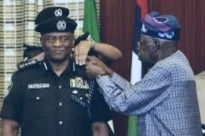
    The appointment of Tunde Disu as Acting Inspector General of Police (IGP) has continued to generate intense public controversy, with critics accusing President Bola Tinubu of nepotism and a growing disregard for Nigeria’s federal character principle.

    Across social media and political commentary spaces, Nigerians have questioned both the timing and rationale behind Disu’s elevation, arguing that it undermines seniority within the Nigeria Police Force and reinforces perceptions of regional and ethnic imbalance in key national appointments.

    One of the most vocal critics, social commentator Isaac Fayose, openly condemned the decision, describing it as nepotistic and difficult to justify on professional grounds.

    Fayose queried why the president would overlook a more senior officer, Frank Mbah, whom he referred to as a “Super Cop” who holds the rank of Deputy Inspector General of Police, in favour of a junior officer appointed only in an acting capacity.

    According to Fayose, the appointment aligns with what he described as a pattern under Tinubu’s administration with the concentration of strategic security, defence, and economic positions among individuals from the South West and of his Yoruba extraction.

    He cited several top offices, including the Chief of Defence Staff, Director General of the Department of State Services, Chairman of the Independent National Electoral Commission, Governor of the Central Bank of Nigeria, Chairman of the National Revenue Service, and the Minister of Finance.

    Fayose questioned what he described as the president’s apparent fear of broadening appointments to reflect Nigeria’s ethnic and regional diversity.

    The criticism gained further momentum following comments by former presidential candidate and human rights activist Omoyele Sowore, who called for the immediate appointment of a substantive Inspector General of Police.

    Sowore stressed that Disu’s position is inherently temporary, noting that the acting IGP is expected to retire from the Nigeria Police Force in April.

    Speaking during an interview on Channels Television, Sowore acknowledged the acting nature of the appointment as announced by the presidency.

    “Tunji Disu is retiring in April, and it is clear that once he is no longer in the police force, he must give way,” he said. “What we know for now is that he has been appointed in an acting capacity, pending the appointment of a substantive IGP.”

    Sowore went further to warn against any arrangement that would allow a retired officer to continue leading the police force.

    He argued that Disu’s elevation had already resulted in the displacement of more than 30 senior police officers, an outcome he described as unnecessary and destabilising for an institution already grappling with public trust challenges.

    With an estimated strength of between 300,000 and 450,000 officers, Sowore insisted that the Nigeria Police Force has no shortage of experienced and competent senior officers capable of assuming the role without controversy.

    He maintained that adherence to seniority, professionalism, and constitutional balance would help restore confidence in the force and the government’s commitment to fairness.

    As the backlash continues to grow, analysts say the controversy underscores broader national concerns about equity, inclusion, and transparency in high-level appointments.

    Pressure is mounting on the presidency to clarify its long-term plan for police leadership and to reassure Nigerians that competence and constitutional principles, rather than ethnicity or political loyalty, will guide decisions at the highest levels of national security.

  • FCT Council Polls: Between Political Triumph and Democratic Questions

    FCT Council Polls: Between Political Triumph and Democratic Questions

     The reaction of the Minister of the Federal Capital Territory (FCT), Nyesom Wike, to Saturday’s area council elections has sparked debate about whether the results represent genuine democratic consolidation or the growing dominance of the ruling party under President Bola Tinubu.

    Speaking in Abuja on Sunday, Wike described the outcome—where the All Progressives Congress (APC) won five of the six chairmanship seats—as a clear endorsement of Tinubu’s “visionary leadership” and the Renewed Hope Agenda. However, critics argue that such framing risks conflating electoral success with unquestioned public approval.

    According to the News Agency of Nigeria (NAN), the APC swept victories in Abuja Municipal, Bwari, Kuje, Abaji and Kwali, while the Peoples Democratic Party (PDP) secured Gwagwalada. While Wike portrayed this distribution as proof of a healthy democratic contest, analysts note that the overwhelming win by the ruling party raises concerns about the shrinking political space for opposition voices in the nation’s capital.

    Wike’s assertion that the elections demonstrated a “renewed and credible democratic process” has also drawn scrutiny. Although the polls were largely peaceful, critics argue that peace alone does not fully address deeper questions about voter confidence, electoral fairness, and the influence of incumbency power in local elections within the Federal Capital Territory.

    The minister’s praise for President Tinubu’s role in strengthening democracy, including support for amendments to the Electoral Act, has been welcomed in principle. Yet observers point out that legislative reforms must translate into consistently transparent practices on the ground to earn lasting public trust.

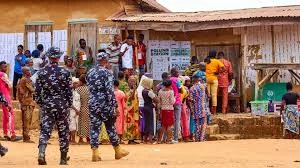
    Wike also commended the Independent National Electoral Commission (INEC) and security agencies for conducting what he described as a free and credible poll. While there were no widespread reports of violence, civil society groups maintain that credibility should be measured not only by orderly voting but also by equal access, reduced state influence, and genuine competition.

    Perhaps most controversially, Wike’s remarks distinguishing between what he called the “real opposition party” and “emergency democrats” have been interpreted by critics as dismissive of dissenting political voices. Such rhetoric, they argue, risks deepening political polarization rather than fostering the inclusive democratic culture the administration claims to champion.

    As the newly elected council chairmen prepare to assume office, the elections leave behind mixed signals: a ruling party celebrating dominance and continuity, and a democracy still grappling with how to balance stability, opposition strength, and genuine grassroots participation.

    Ultimately, whether the FCT council polls mark a true renewal of democratic confidence or simply reinforce existing power structures will depend less on victory speeches and more on governance outcomes in the months ahead.

  • All Eyes on Abuja as Area Council Polls Test New Electoral Law

    All Eyes on Abuja as Area Council Polls Test New Electoral Law

    Residents of Abuja are expected to file out to polling units as the nation’s capital prepares for Area Council elections that will mark the first major test of Nigeria’s newly enacted Electoral Act.

    The elections, scheduled to take place across the six Area Councils of the Federal Capital Territory, will see voters elect chairmen and councillors in a process closely watched by political stakeholders and civil society groups nationwide.

    The polls come days after President Bola Tinubu signed the revised Electoral Act into law, a development that has sparked widespread debate.

    While supporters of the legislation argue that it is designed to strengthen transparency and credibility in elections, critics contend that some provisions remain controversial and could pose implementation challenges.

    Electoral officials say the Abuja polls are expected to provide an early opportunity to assess how the new law performs in practice, particularly in areas such as voter accreditation, result management, and legal compliance.

    Security agencies are expected to be deployed across the capital to ensure a peaceful voting environment, while election observers are anticipated to monitor the exercise for compliance with the new legal framework.

    Political analysts note that the conduct of the Area Council elections could shape public confidence in electoral reforms ahead of future nationwide polls.

    A smooth process may reinforce trust in the new Act, while any operational or legal disputes could intensify calls for further amendments.

    The elections are expected to take place amid heightened public interest, with attention focused not only on local governance outcomes but also on the broader implications for Nigeria’s evolving democratic process.

  • NAHCON in Turmoil as Usman Resigns, Stakeholders Demand Total Overhaul

    NAHCON in Turmoil as Usman Resigns, Stakeholders Demand Total Overhaul

    Nigeria’s Hajj industry is once again under intense scrutiny following the resignation of Prof. Abdullahi Usman as Chairman and Chief Executive Officer of the National Hajj Commission of Nigeria (NAHCON), with stakeholders calling for a comprehensive overhaul of the commission.

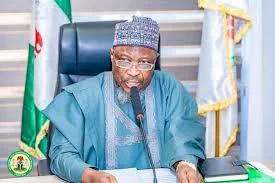
    Usman’s resignation, which takes effect Monday, was announced on Wednesday in Abuja. He cited personal reasons for stepping down after about 14 months in office.

    However, industry experts argue that his exit reflects deeper structural and political tensions that have continued to destabilize the commission.

    Recurring Leadership Changes Raise Concern

    Within the last two years, NAHCON has witnessed three leadership changes, a trend stakeholders describe as troubling for the stability of Hajj operations.

    Alhaji Zikrullah Hassan served as NAHCON Chairman from December 2019 to October 2023 following his appointment by former President Muhammadu Buhari.

    During his tenure, the commission navigated the challenges of COVID-19 restrictions, introduced the Hajj Savings Scheme, and established the Hajj Institute of Nigeria.

    Hassan was replaced by Alhaji Jalal Ahmad Arabi, appointed by President Bola Tinubu on Oct. 17, 2023, for a four-year term. Arabi was later removed amid an investigation into alleged misappropriation of funds released for the 2024 Hajj exercise.

    Following those allegations, Tinubu appointed Usman in October 2024. His tenure, however, was marked by internal disputes and allegations concerning financial management during the 2025 Hajj, generating public scrutiny and tension within the commission.

    “Campaign of Calumny” — Experts React

    Abubakar Jiddah Usman, a Hajj industry expert, said the frequent leadership changes highlight entrenched discord within and outside the sector.

    “Yes, Prof. Abdullahi Usman has resigned. Whether voluntary or forced is immaterial,” he said.

    “What remains indisputable is that anyone overseeing the Hajj industry in Nigeria faces a campaign of calumny from within and outside the sector. Within two years, NAHCON has changed leadership three times. Shall we continue this way?”

    He dismissed claims that Usman lacked administrative competence, arguing that fluency in Arabic or clerical background had never been a defining criterion for success in managing Hajj operations.

    “To argue that modern Hajj operations require less Arabic fluency is baseless. Were previous chairmen deficient in administrative skills?” he queried.

    He added that past chairmen also faced allegations ranging from abuse of office to political interference, suggesting systemic issues rather than individual shortcomings.

    Call for Sole Administrator

    Another expert, Abdullahi Mohammad, advocated for a radical administrative intervention.

    According to him, NAHCON requires a “no-nonsense” reform strategy, potentially through the appointment of a sole administrator with full authority to restructure the commission.

    “The administrator must insulate the Hajj process from material interests and political interference. Only a radical administrative reset can restore diligence, transparency and service to pilgrims,” he said.

    Concerns Over 2026 Hajj Operations

    Muhammed Ibrahim, Coordinator of Independent Hajj Reporters, described Usman’s exit as unfortunate but not unexpected, noting that most pre-Hajj activities, including registration and airline contracts, had already been completed.

    “Given the discord, it may be best to allow the chairman step down to avoid conflicts affecting pilgrims,” he said.

    He recommended that an experienced insider oversee ongoing operations to ensure continuity until after the Hajj, when a substantive appointment can be made.

    Operators Lament Slot Allocation Issues

    Alhaji Abdullateef Yusuf, President of the Association for Hajj and Umrah Operators of Nigeria, pointed to challenges surrounding the allocation of additional Hajj slots.

    “Many members paid millions for hotels and tickets in Saudi Arabia, amounting to billions of naira. Slots promised were later withdrawn, and there is still no clarity. Our operators are in serious limbo,” he said.

    He urged the government to appoint a calm, reputable and experienced individual with integrity, warning against politically motivated appointments.

    Tinubu Nominates New Chairman

    In response to the resignation, President Tinubu has nominated Ambassador Ismail Yusuf as the new Chairman and Chief Executive Officer of NAHCON.

    The nomination, subject to confirmation by the Nigerian Senate under Section 3(2) of the NAHCON Act 2006, was conveyed in a statement by presidential spokesman Bayo Onanuga.

    The President confirmed that he had written to Senate President Godswill Akpabio seeking expeditious confirmation of the nominee.

    Ambassador Yusuf is a career diplomat who served as Nigeria’s Ambassador to Türkiye from 2021 to 2024.

    As stakeholders await Senate action, many insist that beyond leadership changes, what NAHCON urgently needs is structural reform to restore credibility, transparency and stability to Nigeria’s Hajj operations.
  • Amachree Petitions Tinubu, Warns of Rivers Instability

    Amachree Petitions Tinubu, Warns of Rivers Instability

    Abuja — A serious political confrontation is unfolding over Rivers State following a blistering petition submitted to President Bola Ahmed Tinubu by political scientist and international executive Kio Amachree, who has accused the Federal Government of reckless interference, selective justice, and actions capable of destabilising the Niger Delta.

    The petition, dated 8 February 2026, was formally addressed to the President through his Chief of Staff and copied to Nigeria’s top security chiefs, the Attorney-General of the Federation, and the leadership of the country’s anti-corruption agencies. In it, Amachree warned that the federal posture in Rivers State is “dangerous, provocative, and unnecessary,” and risks igniting a crisis in one of Nigeria’s most economically vital regions.

    Amachree rejected any suggestion that Rivers State constitutes a security emergency, arguing that the state is being treated as though it were an insurgency zone despite facing none of the terrorism or banditry challenges afflicting other parts of the country. Rivers State, he said, is neither Boko Haram territory nor a bandit stronghold, yet is experiencing what he described as disproportionate federal pressure and political manipulation.

    He warned that the Niger Delta, which remains the backbone of Nigeria’s oil-dependent economy, cannot be governed through intimidation or manufactured political crises without severe national consequences. According to the petition, Abuja’s current approach risks undoing years of fragile stability in the oil-producing region.

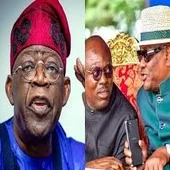
    At the centre of the petition is a direct demand for the immediate removal of Minister Nyesom Wike from federal office pending investigation. Amachree described Wike’s continued presence in federal power as a destabilising factor in Rivers State and a matter of national concern.

    The petition calls for full-scale investigations by the Economic and Financial Crimes Commission and the Independent Corrupt Practices and Other Related Offences Commission into allegations of corruption, abuse of office, diversion of public funds, and unexplained wealth. It further demands a comprehensive asset and lifestyle audit, including scrutiny of luxury vehicles, overseas properties, and alleged proxy holdings.

    Amachree argued that the absence of visible accountability in high office fuels public cynicism and erodes confidence in the rule of law. “Selective justice destroys nations,” the petition stated.

    The document also raises questions over a widely circulated audio recording shared across social media platforms, allegedly capturing Wike making threats of violence against a political opponent. Amachree questioned why, despite the recording’s widespread circulation, no public arrest, interrogation, or formal investigation has been announced by security agencies.

    He warned that the apparent reluctance to act in such a high-profile case sends a damaging signal that power, rather than law, determines accountability in Nigeria.

    Beyond current politics, Amachree framed his intervention within the longer history of Rivers State and the Niger Delta. He identified himself as the son of Chief Godfrey Kio Jaja Amachree, a former Solicitor-General of the Federation, Acting Attorney-General of Nigeria, and senior United Nations official who played a central role in the creation and early administration of Rivers State.

    Amachree stressed that his petition was not driven by party politics or personal ambition, stating that he does not belong to any political party and holds no political office. He described his action as a civic intervention motivated by concern for constitutional order, justice, and regional stability.

    The petition also demands renewed action on the killing of Amachree’s cousin, Miss Ibyami Amachree, allegedly by a soldier. He called for the identification of the soldier involved, disclosure of the unit and chain of command, and prosecution where evidence supports it. According to the petition, unresolved killings involving security personnel deepen public anger and lay the groundwork for future unrest.

    As of the time of this report, the Presidency and the federal agencies copied on the petition have not issued an official response, and no indication has been given as to whether the allegations raised will be investigated. Attempts to obtain comments from representatives of the minister named in the petition were unsuccessful.

    Political analysts say the petition now places the matter squarely at the feet of the President. According to them, the silence or response of the Presidency will be read as a signal — either that allegations of corruption and intimidation at the highest levels will be confronted, or that political expediency will prevail over accountability.

    They warn that failure to act decisively could deepen mistrust in federal authority across the Niger Delta and reinforce perceptions that power shields allies from scrutiny. In a region historically sensitive to marginalisation and coercion, analysts say, such a signal carries consequences far beyond Rivers State.

    For President Tinubu, the petition represents an early and defining test of leadership in the Niger Delta. Whether he orders investigations, distances the presidency from the allegations, or allows the matter to fade into silence may determine not only the immediate political temperature in Rivers State, but Nigeria’s credibility in claiming commitment to justice, federal balance, and the rule of law.

  • World Bank Commends Tinubu’s Reform Drive, Calls Nigeria Global Reference Point

    World Bank Commends Tinubu’s Reform Drive, Calls Nigeria Global Reference Point

    The World Bank has commended President Bola Tinubu for his administration’s reform drive, describing Nigeria as a frequent global reference point for reform implementation and results.

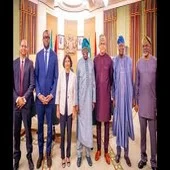
    The bank’s Managing Director of Operations, Anna Bjerde, made the remarks on Tuesday while leading a World Bank Group delegation to meet the president at the State House in Abuja.

    Bjerde said the outcomes of Nigeria’s reforms over the past two years were widely discussed among global leaders, policymakers and investors, noting that the scale and pace of progress had drawn international attention.

    “Nigeria is a frequent example in my discussions around the world because the results achieved in two years are really commendable,” she said.

    She praised President Tinubu’s consistency in communicating the necessity of the reforms, adding that his steady leadership had helped sustain confidence despite the challenges associated with implementation.

    “Even when reform implementation is difficult, there is no turning back. You are staying the course,” Bjerde said.

    According to her, feedback from Nigeria’s private sector indicates that reform outcomes are becoming more visible, with improving investor sentiment and growing confidence in the policy direction of the government.

    On the forthcoming Country Partnership Framework, Bjerde said the new programme would be anchored on Nigeria’s development ambition of building a $1 trillion economy and achieving seven per cent economic growth. She stressed that job creation would be central to the partnership, particularly in light of Africa’s growing population and the urgency of employment opportunities for young people.

    She identified infrastructure investment, agricultural modernisation and improved access to finance for small and medium-sized enterprises as priority areas for collaboration, noting that Nigeria’s infrastructure spending remains low relative to its gross domestic product.

    Bjerde said this gap would require innovative public-private partnerships to unlock private capital and accelerate development. She disclosed that the World Bank’s public sector portfolio in Nigeria currently stands at about $17 billion, while its private-sector arm, the International Finance Corporation, invests approximately $5 billion annually in the country.

    She added that a new reform-linked budget support operation was being prepared, alongside expanded risk guarantee instruments designed to attract more private investment.

    “Your reforms and our budget support go hand in hand,” Bjerde said.

    Earlier, President Tinubu reaffirmed that his administration’s reform agenda was irreversible, declaring that Nigeria had “its hands on the plough” and would not retreat from the path of reform.

    “Since we went into this turn of reform, we are never going to look back,” the president said.

    Tinubu acknowledged that the reforms had been painful at the initial stage but said they were necessary to secure long-term economic stability and sustainable growth. He identified agriculture as a key pillar of the reform agenda, citing the establishment of mechanisation centres and Nigeria’s openness to World Bank support in the areas of improved seeds and productivity.

    The president also reiterated his commitment to transparency and accountability, describing the removal of fuel subsidies and the unification of the foreign exchange rate as difficult but unavoidable decisions.

    “The first reaction was high inflation, but it has come down dramatically. Now that it is stable, we can help investors,” Tinubu said.

    He urged the World Bank to accelerate innovative financing solutions, reduce bureaucratic bottlenecks and deepen support for skills development, while assuring the institution of Nigeria’s readiness for deeper engagement and a sustained partnership.