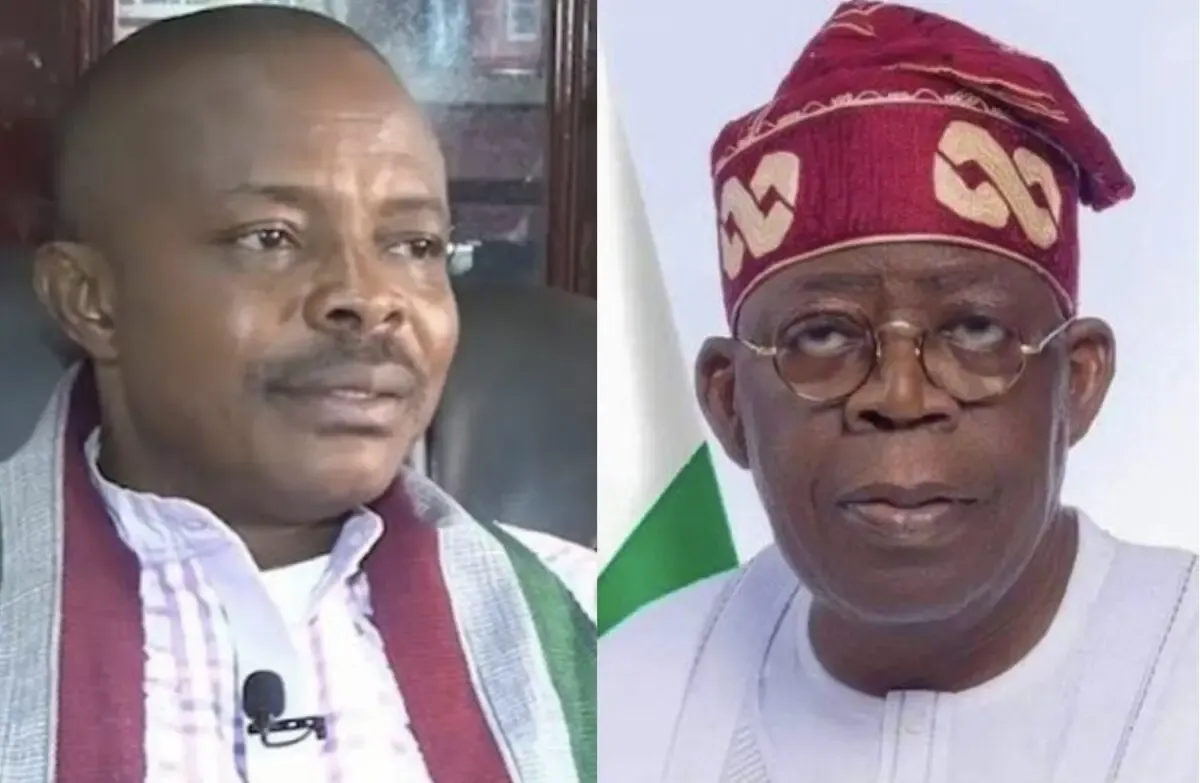
The Nigeria Labour Congress (NLC) has released a powerful message to mark the 63rd Independence Day of Nigeria.
In this message titled “63RD INDEPENDENT DAY MESSAGE TO ALL NIGERIAN WORKERS AND PEOPLE BY THE NIGERIA LABOUR CONGRESS (NLC)… NIGERIA: THE TRAVAILS OF A MISMANAGED GIANT”, the NLC President, Comrade Joe Ajaero, addressed the country’s downward spiral since its early days of independence, emphasizing the critical need for reforms and a nationwide strike to demand change.
According to Ajaero, Nigeria, which was once seen as a promising giant on the world stage, has suffered from mismanagement and corruption over the decades.
He recalled the optimism of the nation’s early years, with thriving agriculture, industries, and a population full of hope. The healthy competition among regions drove progress and prosperity.
“However, the promise of Nigeria’s early independence years soon gave way to a series of missteps, corruption, and missed opportunities. The erosion of ethical governance, widespread corruption, and political instability became the hallmarks of the nation’s trajectory.
“One striking example of this decline is the demise of Nigeria Airways, a once-thriving national airline with a global presence. Today, Nigeria has neither a national airline nor a national shipping line, which has led to embarrassing situations like the ill-fated Nigeria Air project. The country’s once-strong currency, the Naira, has also weakened significantly in comparison to the U.S. Dollar,” Ajaero said.
The press release further questions the privatization of key assets, including power generation and distribution companies, aluminum smelter companies, and steel manufacturing companies, which seem to have failed to deliver the expected benefits to the Nigerian people.
On the healthcare and education fronts, the NLC expressed concern about the declining state of public hospitals and the exorbitant cost of quality education, leading to many Nigerians seeking education and healthcare abroad.
The message also raises the issue of insecurity, particularly the challenges in combating Boko Haram insurgency, despite the military’s past successes in conflicts like the Nigerian Civil War.
Furthermore, the NLC said it has not overlooked the plight of Nigerian workers, who face unfair labour practices, inadequate wages, and the burden of rising fuel prices. They argue that the minimum wage of N30,000 is insufficient to meet basic needs.
The NLC extended its message beyond criticism, as it called on Nigerians from all regions to unite, demand transparency and accountability from their leaders, and work toward a brighter future.
The NLC’s nationwide strike, scheduled for October 3rd, aims to draw attention to these issues and rally citizens to be active participants in reshaping their nation.
Comrade Joe Ajaero reminded Nigerians that the path to a better future for their nation requires collective effort. He called on the people to join hands and build a coalition to address the nation’s challenges, transforming Nigeria into a truly independent and prosperous nation once more.
See Full Statement Below:
63RD INDEPENDENT DAY MESSAGE TO ALL NIGERIAN WORKERS AND PEOPLE BY THE NIGERIA LABOUR CONGRESS (NLC)
NIGERIA: THE TRAVAILS OF A MISMANAGED GIANT
Our nation with all its flaws at conception possesses a great potential to be amongst the best economies of the world. It had the promise of a nation destined to be prosperous and continually developing. At independence, it began to demonstrate the signs that it was going to fulfill these expectations especially with all the giant strides being recorded in all the regions that made up the country. There was a healthy competition amongst the diverse regions for progress with pacesetting and record-breaking achievements all around the nation.
When Nigeria gained independence on October 1st, 1960, the world watched in awe as a nation endowed with abundant human and natural resources took its place on the global stage. With a thriving agricultural sector, burgeoning industries, and a diverse and vibrant populace, Nigeria held immense promise. The spirit of unity and hope that characterized those early years was palpable, and it seemed that we were poised for greatness.
The famous groundnut pyramids became the symbol of a prosperous north while the famous Cocoa House standing on the Cocoa output and the Western Television showed the readiness of the Western region to outpace others with the Eastern region demonstrating its prowess in Palm produce and its rich technological start-ups. It was indeed a nation poised for greatness as the sky beckons.
Our Hospitals and Educational institutions were top notch as royalties thronged our shores for medical treatments while Asian and other African students found home in our citadels of learning. We had a nation that could feed, house and cloth her people; a nation whose citizens lived in prosperity and enjoyed a life that was comparable to that possible in all parts of the globe.
Our currency which was originally the British Pounds and was changed in 1973 to the Naira was stronger than the U$ Dollars but was at par with the British Pounds. Going abroad for studies or to live was not attractive and foreign nationals thronged our shores for greener pasture. Social infrastructure was efficiently maintained and the public utilities remained functional.
As we celebrate Nigeria’s 63rd independence anniversary, it is important that we drew our attention to the fact that this nation was once a great nation filled with great hope inspired by great leaders until inept and corrupt leaders took over the helms of affairs and ran the country aground. The crisis of leadership is truly the crisis of our national development.
The continued mismanagement of our resources has made it difficult for us a nation and as a people to make sustainable progress rather, we have continued to march backwards with every preceding year looking worse than the previous one.
Regrettably, the decades that followed were marked by a series of missteps, mismanagement, and missed opportunities. The erosion of ethical governance, rampant corruption, and political instability became defining features of our nation. Instead of harnessing our potential for the collective good, our leaders often pursued personal interests, leaving the masses to grapple with the consequences.
There is no other way to explain the fact that about 43yrs ago, Nigeria had a vibrant Airline called the Nigeria Airways with a large fleet of Aircraft, flying to several parts of the globe and owning large properties which spans almost half of Ikeja GRA and in London and capital cities of Europe. We had a national Shipping line that had in its fleet several Vessels which competed favourably with other shipping lines all over the world yet, as a nation, we have managed to deliberately become a nation with neither a national Airline nor a national shipping line. We became a nation that derives happiness in making a mockery of ourselves as was typified by the Nigeria Air debacle where we had to fake the ownership of an Airline by shamelessly borrowing and repainting an Aircraft from Ethiopian Airline.
This period of independence must serve as a time when all of us have to seriously seek to question ourselves and thoroughly re-examine our actions as a people and as a nation. We have to soberly reflect on why we have moved from a once prosperous nation to become a country that is the poverty capital of the world with over 133m multi-dimensionally poor people. This number has since increased after the hike in the price of petrol (PMS) by His Excellency Senator Bola Ahmed Tinubu. It is indeed an opportunity to find how we have moved to a nation that had a refinery that was operational in the 1960s which grew into another three refineries in the 1980s but which have been deliberately made obsolete by those we have entrusted the leadership of our nation.
Nigerians must seek to find out why we have become a nation that must import a product which can easily be refined in our nation and why the conscious sabotage of our economy by those who occupy the helm of affairs in our country? We must make conscious effort at finding out what the phantom called fuel subsidy is, how much was it worth, who was receiving the monies claimed to have been spent and why the obvious lies when the Direct Sales and Direct Purchase (DSDP) agreement was the framework for the import and distribution of products in Nigeria?
Also of great importance is the willful bastardisation of the Naira and the attendant Dollarisation of the economy by the nation’s leaders. We need to find out whether truly a genuine foreign exchange market exists in its true sense in Nigeria. Why would the value of the nation’s currency continue a free fall when the value of accruals from crude is rising? What magic has made it difficult for the value of the Naira to remain stable against the Dollar especially when the Dollar is being pummeled all over the world?
Workers all over Nigeria would want to find out why almost all the privatized entities were sold at a give away price to the so-called investors? Why is it that most of them have either been stripped and scrapped and no longer operational? Who are the real buyers of these entities? We will want to find out who bought the GENCOS and DISCOs, who bought the Ikot – Abasi Aluminium Smelter company and why it is no longer producing but has been shut down. Nigerians deserve to know and we must ask this question: what is going on here?
This Independence Day celebration should allow us to ask those who are leading us why they have refused to fund public Universities appropriately and have instead decided to establish and own private universities? We may wish to know why they have turned Nigeria from a country where foreigners took pride in coming for education to a country where majority of the citizens go abroad to obtain quality tertiary education. We would want to know why the elites have managed to price education out of the reach of the poor.
It is also an opportunity for Nigerian workers to ask our leaders why our hospitals have been turned into places to go and die instead of places to go and be healed? We would want to find out why our Health care system that used to boast of the patronage of influential individuals and families from all over the world have suddenly become anathema both to foreigners and the Nigerian rich? We want to find out why the Rich throng abroad to treat minor ailments instead of making use of our health facilities?
We want to find out what happened to the Ships in the defunct Nigeria Shipping line and what happened to the Aircraft and properties of Nigeria Airways that scattered all over the world. Who acquired them and at how much and where is the money from their acquisition? It will also be interesting to find out who acquired the Steel companies and why none of them is producing steel today?
Much more, Nigerian workers will want to find out why it has become difficult for an army that fought the Civil war and won, fought in Lebanon, Sierra Leone and in Liberia to defeat the Boko Haram insurgents? We want to find out whether it is a deliberate tool to keep Nigeria in perpetual crisis.
One of the most painful aspects of Nigeria’s journey has been the economic struggles faced by the majority of our citizens. Despite being blessed with abundant natural resources, poverty and unemployment have become entrenched in our society. The promise of prosperity for all remains elusive, as a significant portion of our population continues to live in abject poverty.
Moreover, social disparities have widened, with a yawning gap between the privileged few and the marginalized many. Access to quality healthcare, education, and basic infrastructure remains a distant dream for millions of Nigerians. This inequality not only undermines our social fabric but also hampers our collective progress.
As the voice of Nigerian workers, the Nigeria Labour Congress has tirelessly championed and will continue to champion the rights and welfare of Nigerian workers and people. Yet, we cannot overlook the numerous challenges that persist. Issues such as unfair labour practices, inadequate safety standards, and insufficient protection for workers continue to plague our labor force. It is imperative that we work together to address these issues and create an environment where every worker can thrive.
It is inexplicable why this persistent contradiction of; the harder we work, the less we earn; which has kept Nigerian workers totally emasculated and unable to meet their basic needs. N30,000 national minimum wage cannot buy a bag of 50kg rice but can only buy 30 loaves of average sized bread yet some states have refused to pay. Earned income via wages are seen as charity demanding applause from Nigerians when they are paid. Workers have become reduced to going to work on Mondays and sleeping in their places of work till Friday evening before going home because they cannot afford the cost of transport on daily basis yet, this government has refused to act to save the people from this horrendous suffering. That is why we have continued to ask for a Wage Award to serve as a cushion to the consequences of the hike in the price of Patrol by the Government.
We have demanded that because the level of hunger and disease in our nation has become so pervasive, Government should look at Cash Transfers for the most vulnerable through an acceptable national register of the most vulnerable; Tax rebates for low and middle income earners, Mass Transit schemes driven by CNG and EVs to reduce transport cost to citizens; getting the four existing public refineries back to work of which Billions of U$ Dollars have been spent; Access to social housing, Healthcare and quality Education for our citizens; instead of meeting them, they sought means of hijacking Unions and persecuting trade union leaders to weaken and muzzle our voices as the only remaining voice in the civic space.
Despite the challenges that have beset us, there is reason for hope. Nigeria remains a nation with enormous potential. Our young and dynamic population, if properly empowered, can be the driving force behind our resurgence. It is imperative that we invest in education, skills development, and job creation to harness the untapped potential within our youth.
Furthermore, we must demand accountability from our leaders. The days of impunity and unbridled corruption must come to an end. We call on all Nigerians to actively participate in the democratic process, holding our elected officials to the highest standards of integrity and performance.
We must then in the spirit of this year’s independence go beyond questioning why we have found ourselves in the cesspool of poverty and despair and build a determination to put a stop to this inexorable march to the cesspit and morass of excruciating pains and impoverishment. The citizens have a strong role to play in our collective quest for freedom from the shackles of mindless exploitation and pauperization.
Holding our leaders accountable is one of the very critical roles we must all play to free ourselves from the gyres of the oppressive forces of retrogression. It is the highest form of participation in the democratic space. If we cannot hold our leaders to account for every of their action then, we lose our democracy and we lose our nation. It therefore remains our patriotic duty for those that truly love our nation to rise at this time and speak truth to power to ensure that the salvation of our nation becomes real and our people from the North, the West, South and the East are able to enjoy the full benefits of their “Nigerianness” which holds a great promise.
What will the people say of us when we are gone? How will they perceive our actions today if in the face of the great injustice to the downtrodden and the disdain and contempt being meted to our people, we refuse to take action? How will posterity judge us and how will the generations to come see us – as those that folded their arms while our nation kept slipping down the path to destruction or shall we be seen as those patriotic heroes that stood against the manifest wickedness trampling down on the rights and privileges of the common man with historic arrogance and impunity? Are we going to be counted amongst those who rescued our nation by stoically insisting that enough is enough? What will be our choice?
Until we seek to find out why we moved from a nation that had Automobile plants littered all over the nation like Steyr, Leyland, Mercedes, Volkswagen and Peugeot to a nation with zero automobile manufacturing companies if not the intervention of INNOSON and co, a nation that had strategic Paper Mills around the country but now imports all its paper products; a nation that had Steel Rolling Mills in katsina, Osogbo, Jos including Aladja, Ajaokuta etc but had them all intentionally crippled and hijacked by greedy capitalists, we will not have real independence.
Our nation needs men and women today who can rise and save her from those who have captured our nation and are using its levers just for their own selfish ends without any care at all in the world about the workers, the unemployed and the suffering. We need men and women who will deliver us from the galloping powers of neo-colonialism especially their internal collaborators who rule our nation at their behest without a care of the consequences of their actions for millions of our citizens.
We call on all national gatekeepers especially the Traditional Rulers who are the custodians of our customs and traditions and who are closest to the masses thus can feel the degree of suffering in the Country to plead with Government to lift the burden on the people. In making our nation work for the people, the purpose of Governance is fulfilled as anything short of that makes governance predatory.
As we mark this Independence Day, let us do so with a renewed sense of purpose. Let us acknowledge our past, confront our present challenges, and collectively work towards a brighter future for Nigeria. Together, we can reclaim the greatness that has eluded us for too long. It is time for Nigeria to rise and shine once more as a beacon of hope and prosperity for all its citizens. Remember, when we stand as one refusing to be divided, we will triumph! We call on all Nigerians to join us on the 3rd day of October around Nigeria to begin our march to freedom through the indefinite nationwide strike.
To this end, the Nigeria Labour Congress beckons on all of us to join hands from all parts of the nation; the North, the East, the West and the South to build the needed coalition to make our nation truly an independent nation. This nation can work for all of us! This nation can be made beautiful but good things do not just happen; they are worked out. Liberty is not a ripe fruit that falls to the ground on its own accord. With our hands joined together as the owners of Nigeria, in truth and one heart, we can work for our freedom.
Let us awaken this giant and make it work for us!
We wish all Nigerians a happy 63rd Anniversary!
” A people United can never be defeated”
Signed: Comrade Joe Ajaero
President