Tag: FUHSO

  • FUHSO and the Cost of Governing Without Foresight

    FUHSO and the Cost of Governing Without Foresight

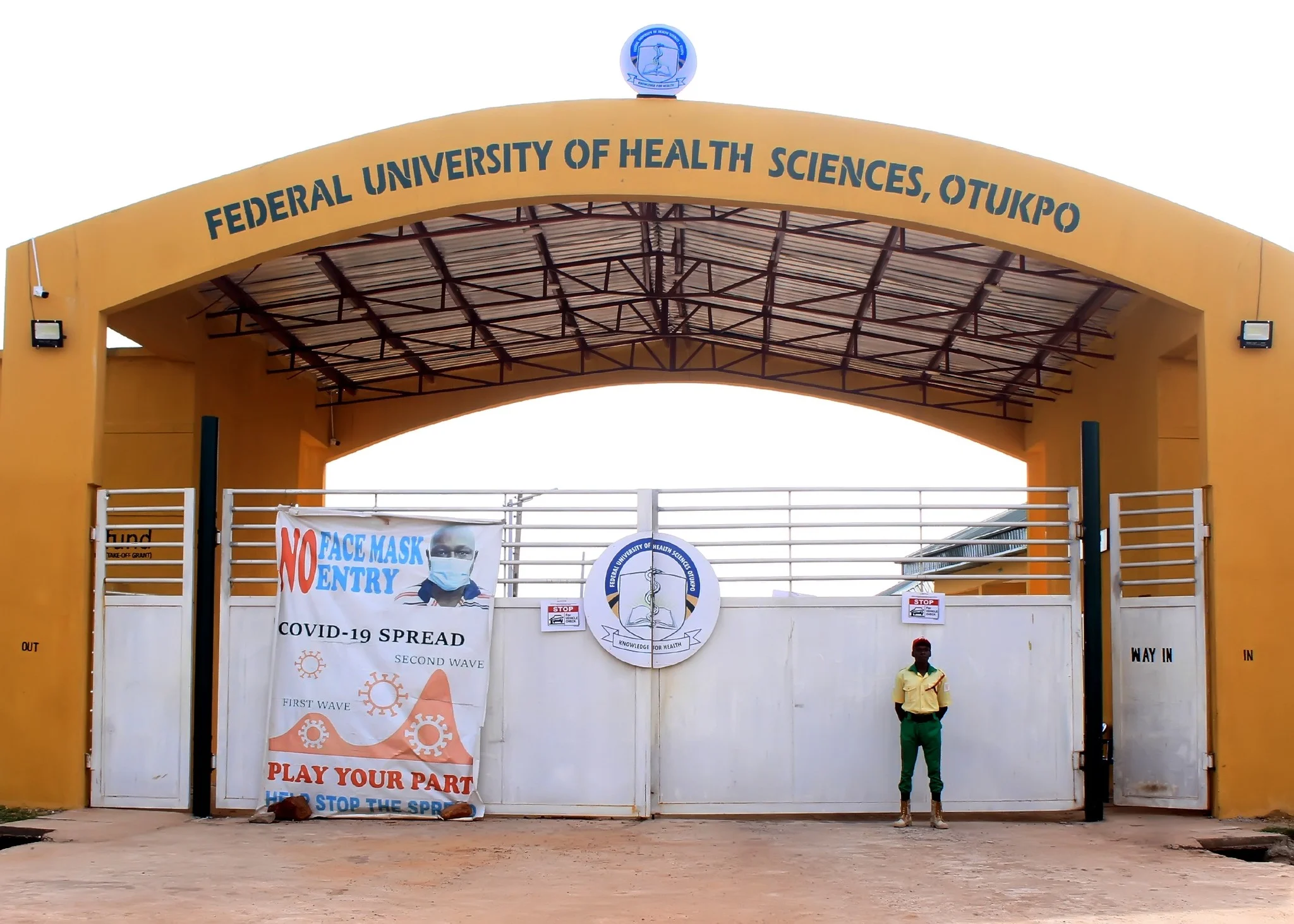
    The difficulties confronting the Federal University of Health Sciences, Otukpo (FUHSO) reflect the challenges that arise when institutional ambition outpaces careful planning. Established to contribute meaningfully to Nigeria’s health workforce development, the university is now struggling to deliver one of the most basic requirements of medical education, clinical training. The fact that several cohorts of medical students are unable to progress because a teaching hospital is not yet operational points to gaps in planning, funding execution, and oversight that deserve urgent and thoughtful attention. Addressing this situation will require coordinated action by the relevant ministries and regulatory bodies to prioritise the completion of core clinical infrastructure, strengthen budget implementation, and ensure that future institutional decisions are guided by long-term sustainability rather than short-term expediency.

    What makes the situation particularly concerning is that it was neither sudden nor unforeseeable. Medical education is among the most capital-intensive forms of tertiary training, and the absence of a functional teaching hospital inevitably undermines any programme designed to produce doctors. Yet admissions proceeded, cohorts advanced through pre-clinical studies, and the warning signs were allowed to accumulate. The resulting bottleneck now confronting students underscores the consequences of launching critical institutions without fully aligning timelines, infrastructure, and financing, a pattern that has too often characterised public sector projects in Nigeria.

    Insiders familiar with the situation say the problem began long before the first students were stranded. The old Otukpo General Hospital, redesignated as FUHSO’s teaching hospital, has seen little more than cosmetic attention. Although funds were captured in the federal budget for its upgrade, an official disclosed that roughly ₦1 billion earmarked for the project could not be meaningfully accessed. The explanation points to Nigeria’s chronic budget implementation failures, allocations announced with fanfare but trapped in bureaucratic bottlenecks, released too late or not at all.

    But the funding story, troubling as it is, does not fully explain the depth of FUHSO’s crisis.

    Records and interviews suggest that early leadership decisions compounded the institution’s vulnerability. Instead of pursuing low-cost, temporary arrangements using existing government facilities, abandoned schools, idle public buildings, or shared spaces common in the early life of many public universities, the university’s pioneer management opted to operate from rented hotels and privately owned structures. These choices consumed scarce take-off funds without building any lasting academic or clinical capacity.

    Education analysts describe this as a classic case of misplaced priorities. While administrative comfort was secured, the essentials of a medical university, laboratories, teaching wards, clinical partnerships, were deferred. Allegations of opaque leasing arrangements and potential conflicts of interest have only deepened concerns, particularly in the absence of publicly available breakdowns of how early funds were spent.

    The contrast with other federally funded health institutions is stark. In the same national budgets where FUHSO struggled to secure just over a billion naira for capital development, established teaching hospitals such as those in Kano, Awka, and Lagos received tens of billions of naira each. These hospitals serve as training grounds for medical students across the country, yet FUHSO, a university designed to anchor health education, was left trying to build from scratch with a fraction of the resources.

    Even among federal universities, the disparity is glaring. While long-established institutions routinely receive allocations approaching ₦50 billion annually, newer specialised universities like FUHSO have been confined to single-digit billions, regardless of the capital-intensive nature of medical education. This raises uncomfortable questions about national priorities and whether the decision to establish such institutions was matched by the willingness to fund them properly.

    The human cost of these failures is now unavoidable. Students face indefinite delays, uncertainty about accreditation, and the emotional and financial strain of a medical education placed on pause. For a country already battling an exodus of healthcare workers, the irony is painful: an institution meant to strengthen the health system is instead producing stalled graduates.

    Regulatory bodies have not escaped scrutiny. The National Universities Commission and relevant medical training authorities approved programmes and admissions without ensuring that minimum clinical infrastructure was in place. Their silence as the crisis deepens suggests a regulatory culture more reactive than preventive.

    What is happening at FUHSO is not an isolated mishap. It reflects a broader national pattern in which institutions are created for political symbolism, budgets are announced without execution plans, and accountability is diffused across ministries, councils, and agencies until responsibility belongs to no one.

    As students remain trapped in academic limbo and public funds continue to trickle into administrative overheads rather than concrete outcomes, the question grows louder: who will answer for the gap between promise and reality at FUHSO? Until this question is confronted honestly, Otukpo will remain a cautionary tale, not of what Nigeria lacks, but of what it repeatedly fails to do with what it has.

    Beyond the immediate impact on affected students, the situation at FUHSO carries broader implications for Nigeria’s health system and national development. At a time when the country faces persistent shortages of medical professionals and the steady migration of trained doctors abroad, allowing a specialised health sciences university to drift without its core clinical capacity is a cost Nigeria can ill afford. Resolving this challenge promptly and transparently would not only restore confidence among students and staff, but also signal a renewed commitment to disciplined planning and accountability in public institutions, principles that remain essential to achieving sustainable progress.
  • FG Shakes Up FUHSO Management, Sacks VC, Registrar

    FG Shakes Up FUHSO Management, Sacks VC, Registrar

     In a significant shake-up at the Federal University of Health Sciences (FUHSO) in Otukpo, Benue State, the Federal Ministry of Education has announced the removal of key officials following protracted power tussle.

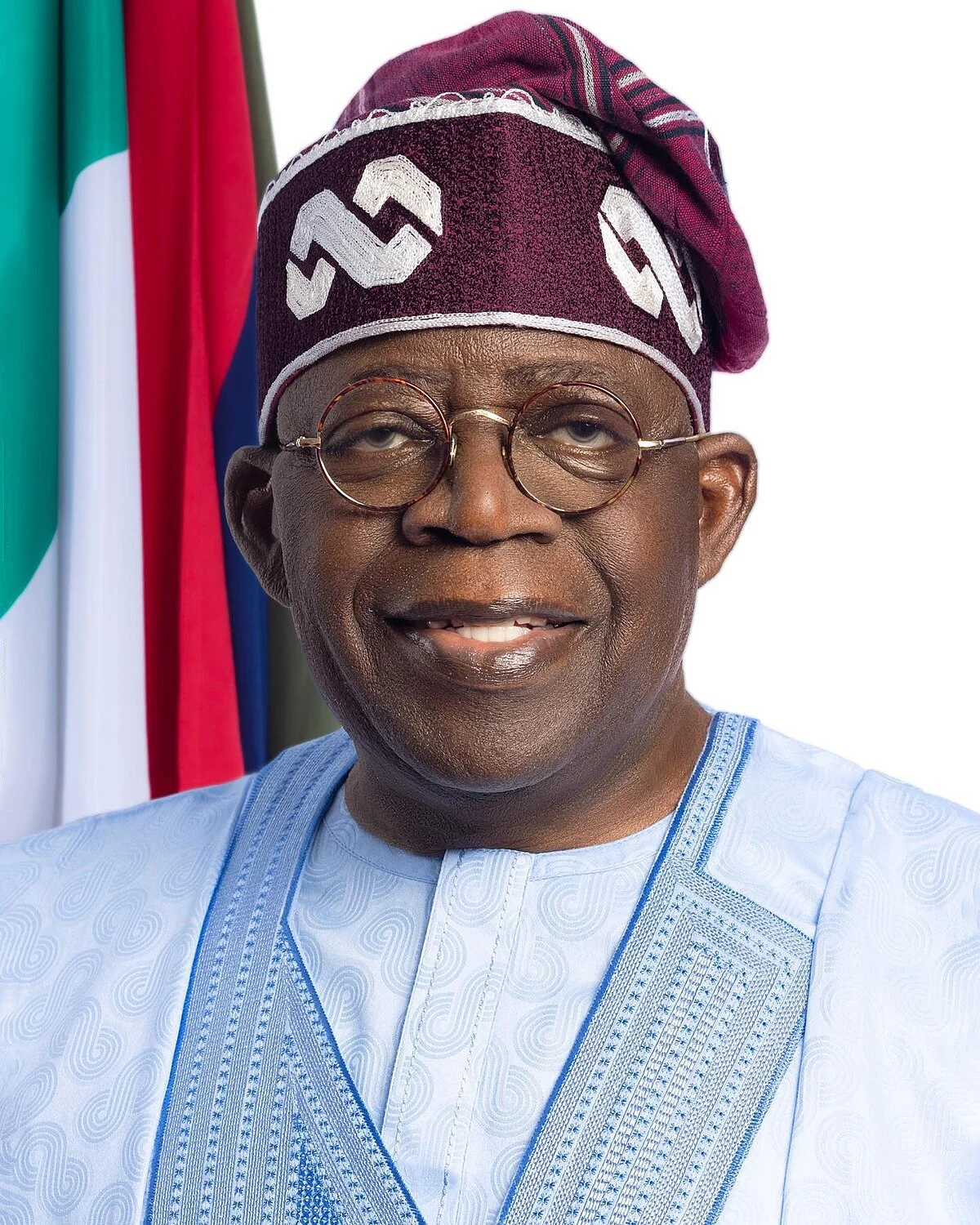
    In a letter dated November 18, 2024, President Tinubu approved the immediate removal of Engr. Ohieku Muhammed Salami as the Pro-Chancellor and Chairman of the Governing Council.

     Additionally, Prof. Ediga B. Agbo and Mallam Aminu Abba have been removed from their positions as Acting Vice Chancellor and Registrar, respectively.

    As part of the restructuring, the Governing Council is now directed to elect one of its external members to serve as the Acting Chairman of the Council until a permanent appointment is made.

     Furthermore, the University Senate has been asked to nominate the most senior Deputy Vice Chancellor for approval as the Acting Vice Chancellor, with immediate effect. 

    Similarly, the Council is tasked with appointing the most senior Deputy Registrar as the Acting Registrar.

    The changes come as part of an ongoing effort to ensure the smooth operation and governance of the institution.

     The Ministry has expressed confidence that these adjustments will help stabilize the university and maintain its focus on academic excellence.

    Dr. Tunji Alausa, Honourable Minister of Education, has conveyed these directives to the Governing Council and reiterated the Federal Government’s commitment to the growth and success of the institution.

    The university community and stakeholders await further developments as these new appointments take effect.

  • Tinubu Reshuffles University Leadership Over Alleged Irregularities

    Tinubu Reshuffles University Leadership Over Alleged Irregularities

    President Bola Tinubu has ordered a leadership overhaul at two federal universities following allegations of irregularities in appointments and governance.  

    At Nnamdi Azikiwe University, Awka, Anambra State, the President removed Vice Chancellor Prof. Bernard Ifeanyi Odoh, Registrar Mrs. Rosemary Ifoema Nwokike, and dissolved the institution’s Governing Council. 

    The council, chaired by Ambassador Greg Ozumba Mbadiwe, was accused of appointing an underqualified vice chancellor without adhering to procedural guidelines. 

    Reports suggest that the council’s actions sparked tensions between the university’s Senate and its management.  

    Similarly, Tinubu dismissed Engr. Ohieku Muhammed Salami, Pro-Chancellor and Chairman of the Governing Council of the Federal University of Health Sciences, Otukpo, Benue State.

     Salami faced allegations of misconduct, including the unlawful suspension of the Vice Chancellor and threats directed at officials of the Federal Ministry of Education, despite warnings to reverse his actions.  

    The Federal Government reaffirmed its commitment to maintaining adherence to laws governing educational institutions, urging university councils to focus on fostering stability and upholding standards in their operations.

  • Stop the in-fighting at FUHSO

    Stop the in-fighting at FUHSO

    The tussle for the leadership of the Federal University of Health Sciences, Otukpo (FUHSO), if left unchecked may torpedo the growth and development of the young institution that was established barely five years ago.

    It is on record that many opposed to the leadership style of the pioneer Vice Chancellor and others that are determined to minimize his role in influencing the choice of a successor, had locked horns in a fight culminating in the suspension of the Vice Chancellor on October 17, 2024, barley three weeks to the end of his tenure, today, November 6th, 2024.

    As at late Tuesday night, various narrations state that there are two Acting Vice Chancellors calling the shot in the school. First, there is Professor Agbo Ediga who was appointed on October 17, 2024 by the Governing Council after it suspended the out-going Vice Chancellor, Professor Innocent Ujah on the allegation of acts of insubordination and other offences.

    Even though a letter by the Permanent Secretary, Federal Ministry of Education, Dr. Nasir Sani Gwarzo and addressed to the Pro Chancellor and Chairman of the Governing Council ordered the reversal of the suspension of Professor Ujah, the Pro Chancellor insists that as the representative of the President of the Federal Republic, who is the Visitor and Chancellor of the University, the Permanent Secretary can not reverse or counter his decision.

    Armed with the reinstatement letter by the Permanent Secretary, the suspended Vice Chancellor Ujah, was reported to have stormed the university yesterday, November 5, and summoned a meeting of the senate which notice, Nigerian Anchor gathered was served on select members of the senate. Following this move, the Pro Chancellor was reported to have mobilised men of the Nigerian Police to seal off the venue. This was however, countered by a troupe of the Nigerian Army that was allegedly invited by the embattled Vice Chancellor.

    It is reported that another Acting Vice Chancellor, Professor Stephen O. Abah has been announced by the outgoing Vice Chancellor.

    Nigerian Anchor sources reveal that a tense atmosphere now prevail on the university campus.

    We condemn this unbridled quest for power by all actors and call for cessation of hostilities without further ado.

    The university is a citadel of learning and a centre of excellence from where the larger society expects the best conduct at all times. Conducts such as the one unravelling at FUHSO is most shameful and a great embarrassment to the university community, especially the students who, all along had perceived these personalities as role models.

    Most affected by this despicable conduct of the characters engaged in this power tussle are the good people of the Idoma nation and the illustrious sons and daughters who laboured and fought to attract this unique Ivory Tower to be located at the heart of the Idoma nation. It is a no brainer emphasizing that this unfortunate incident presents grave reputational cost to the Idoma nation, seeing as most of the dramatis personae are Idoma who should have learnt not to launder their dirty linens in public.

    Finally, we call on authorities at the supervising Ministry of Education not to take sides with any of the warring factions but act as a principled arbiter and firmly order that parties sheath the sword and allow peace to reign by acting based on the rule of law and respect for constituted authority.

  • Vice Chancellor Puts 5-Year-old University of Health Sciences on a faulty start

    Vice Chancellor Puts 5-Year-old University of Health Sciences on a faulty start

    Barring any last-ditch efforts by the supervisory authorities, the five-year-old Federal University of Health Sciences, Otukpo (FUHSO), Benue State may soon implode.


    Staff, Management and service providers accuse the Vice Chancellor, Prof Innocent Ujah of unpaid salaries, contract scam, violation of due process in procurement process and poor condition of service.


    The Nigerian Anchor investigations reveal a cesspool of financial malfeasance arising from the processes of contract award, implementation and payment as well as misappropriation of monies meant for payment of staff salaries and allowances.


    Insiders who spoke to us narrated instances where critical infrastructural projects were awarded to inexperienced contractors, while some of the projects fully paid for were still at various stages of completion.


    As the tenure of the pioneer Vice Chancellor, Prof Innocent Ujah wears out therefore, staff and service providers are in palpable fear and overwhelmed with a sense of trepidation wondering if they would ever be paid.


    The Federal University Health of Services Otukpo was  first established on 20th May, 2015  by former President Goodluck Jonathan. It could however, not commence operations because President Muhammadu Buhari suspended its establishment. This was later restored on June 6, 2019.


    Prof Ujah and other Principal Officers and Council members of the University were appointed on 12th May, 2020.


    Threat of Legal Action

    Already, a real estate firm, ZIGGCHUBS Resources Nigeria Ltd, acting through its lawyer, has threatened to sue the university in a law court over a N14million debt owed by the University for the rental of a hostel accommodation for female students.


    In a letter dated July 3rd, 2024 and addressed to the Dean of Student Affairs of the University, Barr E. A. Ogalekwu issued a seven-day Pre-Action Notice on the institution.


    In the letter, it was alleged that the Management of the University reneged on their commitment to pay N14million, being the balance of an agreed rental sum of N22million on a property it hired as hostel for its female students. This debt had lingered for over a year and the property owner threatened to recover the property.


    Nigerian Anchor checks at the law firm reveal that as of September 2, 2024, the University was yet to redeem the pledge, despite the fact that money realized from the sale of bed spaces to the students could have offset the indebtedness.


    It was also disclosed that the university replied to their letter pleading for two weeks extension of time, which had elapsed.


    Poor Condition of Service and Work Environment

    A source close to the management of the university, who spoke to us on condition of anonymity alleged that some projects at various stages of completion had been fully paid for while alleging also, that the Departments of Microbiology and physics is one single building project being passed off as two different projects.


    Another reliable source also alleged that the administration’s claim of completing abandoned projects at the sum of N200million was a hoax, wondering, “What is the evidence of abandoned projects for a four-year-old university?”


    A very senior member of the management who felt disappointed by the overall performance of the outgoing VC lamented that by his conduct, Prof. Ujah denied the university the opportunity of a good start “as a world class citadel of learning that was aspiration of the founding fathers.”


    The staff member cited the example of a sister Federal University of Health Sciences, Ila-Orangun that was established barely two years ago, boasting of an outstanding array of completed critical infrastructural facilities while FUHSO does not have any.


    PLEASE SEE: Federal University of Health Sciences, Ila-Orangun. Schedule of Completed                         and ongoing projects.


    “We have not commissioned any project. The University is on autopilot as we have absentee VC who looks in occasionally on Thursdays and departs by Fridays.


    While absent all financial decisions must await his return.” He complained.


    At a recent town hall meeting with staff members to douse tension and forestall likely breakdown of law and order, the Governing Council of the University was inundated with a long list of complaints bothering on poor welfare and a lack of foresight on the part of the University Administration.


    The workers complained that almost five years after its establishment, the university does not have a defined condition and scheme of service thereby leading to a haphazard recruitment and placement of personnel.

    Stakeholders at a FUHSO event


    Items 2, and 3 on the long list of welfare issues for which the staff members demanded attention were, “2. Payment of backlog of salary for staff captured in 2022 (some are owed arears of more than 12 calendar months); 3. Capturing of staff members that are yet to be captured, some have spent up to two (2) years without drawing salary and they are breadwinners.”


    Additionally, item 4, which contained serials (a-l) emphasized the “Absence of conditions and scheme of service.” and “No appraisal of staff has been done but staff are due for promotion and steps increment this year.”


    In the face all these challenges, another staff told us, the VC paid himself a hefty sum of N11million as DTA, while newly recruited staff being 28 days allowance, amongst others.


    When contacted for his own side of the story, Prof Ujah, rebuffed Nigerian Anchor, querying why it was just now that the paper was showing interest in the running of the university. “I am used to the media writing stuff about me” he said.


    As of press time, he was yet to reply to the questions we sent to him, hoping he would oblige us with a response.

  • Controversy Brews as VC  Appoints Self Director of University Institute

    Controversy Brews as VC Appoints Self Director of University Institute

    … move  sparks controversy, with many questioning the ethical implications of a sitting Vice-Chancellor appointing himself to a directorial position within the same institution.

    In an unprecedented move, the Vice-Chancellor of the Federal University of Health Sciences, Otukpo (FUHSO), Professor Innocent A.O. Ujah, has appointed himself as the Director of the Institute of Maternal & Reproductive Health of the same institution he currently heads.

    Prof Ujah has barely three months to the end of his five year appoint as pioneer Vice Chancellor of the University. This appointment is therefore viewed by many as a desperate act that is fueled by greed.

    Moreover, this decision has raised eyebrows and sparked discussions within the university community about the apparent desperation behind such an appointment.

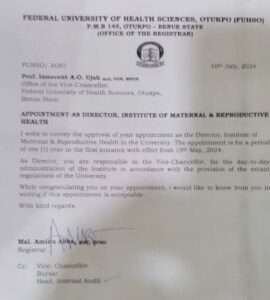
    The official communication from the Registrar, Mal. Aminu Abba, as sighted by Nigerian Anchor, confirms the approval of Professor Ujah’s appointment for a period of one year, effective from May 19, 2024.

    As Director, Professor Ujah is expected to oversee the daily administration of the Institute, reporting directly to the Vice-Chancellor—an office he currently occupies.

    The letter, issued from the Office of the Registrar, states:

    “I write to convey the approval of your appointment as the Director, Institute of Maternal & Reproductive Health in the University. The appointment is for a period of one (1) year in the first instance with effect from 19th May, 2024.

    As Director, you are responsible to the Vice-Chancellor for the day-to-day administration of the Institute in accordance with the provisions of the extant regulations of the University.”


    Read also: https://punchng.com/benue-community-youths-protest-alleged-neglect-by-varsity-management/

    This move has sparked controversy, with many questioning the ethical implications of a sitting Vice-Chancellor appointing himself to a directorial position within the same institution.

    Critics argue that this could be seen as a conflict of interest and a potential misuse of power, especially given the proximity to his retirement.

    The university community and stakeholders await further developments as the situation unfolds.