
Tag: | Governance

  • Farouk Ahmed Denies Education Funding Allegations, Invites Full Investigation

    Farouk Ahmed Denies Education Funding Allegations, Invites Full Investigation

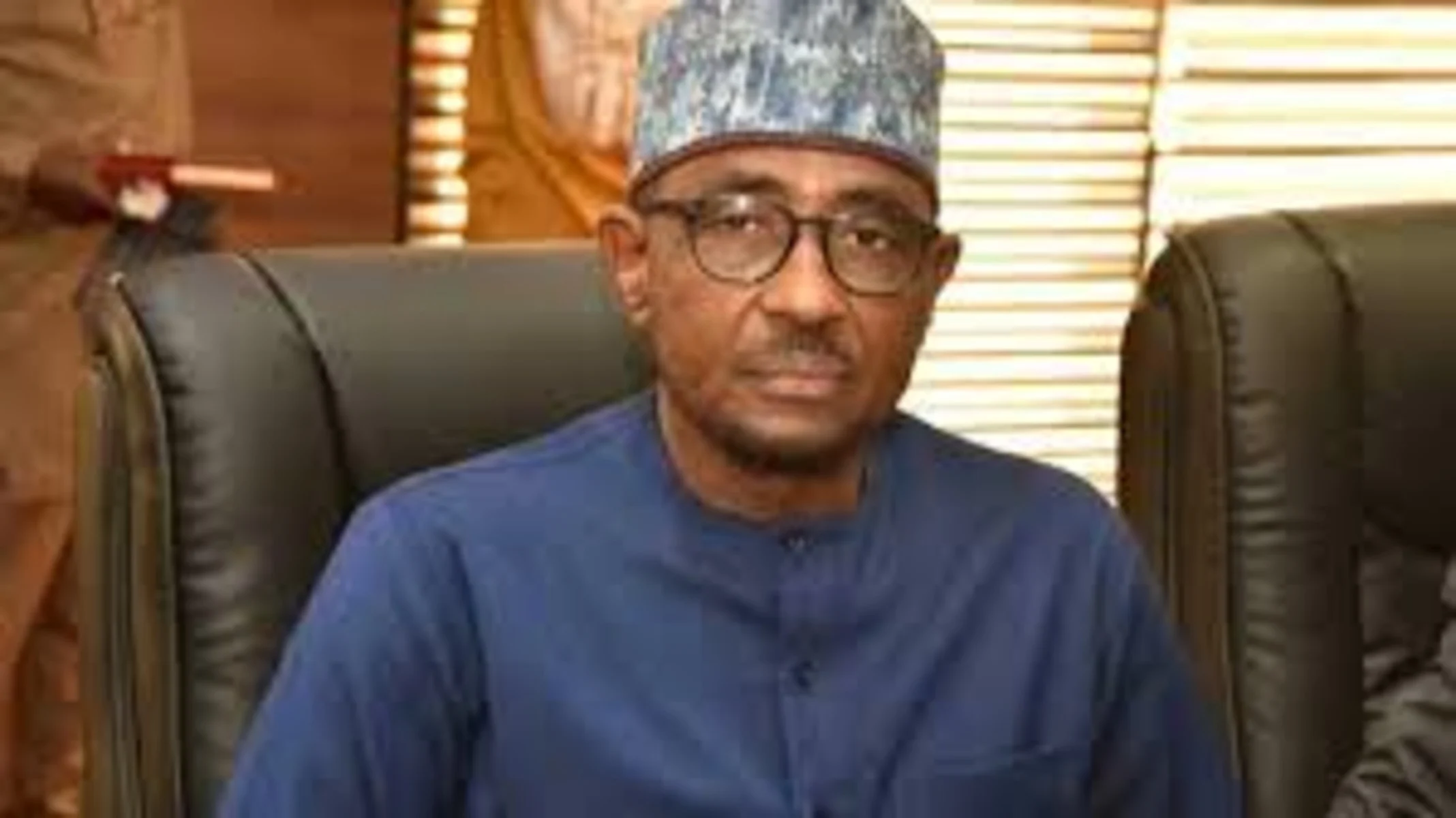
    The Chief Executive Officer of the Nigerian Midstream and Downstream Petroleum Regulatory Authority (NMDPRA), Engr. Farouk Ahmed, has rejected allegations linking the funding of his children’s foreign education to corruption, describing the claims as misleading, ill-timed, and motivated by vested commercial interests.

    In a detailed statement released on Tuesday, Ahmed said he welcomes scrutiny of his finances and has formally invited the Code of Conduct Bureau (CCB), the Economic and Financial Crimes Commission (EFCC), and the National Assembly to conduct comprehensive investigations into his assets, income, and regulatory decisions spanning over three decades of public service.

    Background of Allegations

    Recent claims circulating on social media alleged that Ahmed spent up to $5 million on his children’s secondary education in Switzerland, an amount critics argued was inconsistent with his official earnings as a public servant.

    Responding to the allegation, Ahmed said the figure was “factually incorrect” and failed to account for merit-based scholarships, family education trust funds, and personal savings accumulated over 30 years in the Nigerian petroleum sector.

    According to him, three of his four children received scholarships covering between 40 and 65 per cent of tuition costs, while additional funding came from education trusts established by his late father before his death in 2018.

    “My annual compensation as NMDPRA CEO, approximately ₦48 million including allowances, is publicly available in audited reports,” Ahmed stated.

    “When combined with decades of legitimate savings, cooperative investments available to civil servants, and family contributions, the expenses are fully explainable.”

    Asset Declarations and Transparency

    Ahmed said he has consistently filed asset declarations with the Code of Conduct Bureau since joining public service in 1991 and has authorized educational institutions attended by his children to release financial records to Nigerian investigators.

    He added that foreign educational institutions do not accept illegitimate funds, noting that “schools abroad operate under strict financial compliance regimes.”

    Allegations Linked to Regulatory Actions

    The NMDPRA chief suggested that the timing of the allegations coincides with recent regulatory actions by the Authority, including:

    • Enforcement of stricter fuel quality standards
    • Introduction of transparent licensing and pricing frameworks
    • Approval of fuel import licenses to prevent supply shortages

    Ahmed defended the import licensing decisions, citing Section 7 of the Petroleum Industry Act (PIA), which mandates the regulator to ensure energy security and prevent fuel scarcity.

    “Granting import licenses when domestic supply is insufficient is not economic sabotage; it is a statutory obligation,” he said, warning against reliance on a single-source supply model.

    Call for Investigation

    Ahmed formally called for:

    • A full review of his asset declarations by the CCB
    • Examination of his financial transactions by the EFCC
    • Oversight hearings by the National Assembly

    He pledged full cooperation and said he would testify under oath if required.

    “The Price of Regulatory Independence”

    Reflecting on his career, Ahmed said his rise from a junior engineer at the former Department of Petroleum Resources to CEO of NMDPRA was based on merit and technical competence, not political patronage.

    He acknowledged that reforms introduced under his leadership, aimed at reducing opacity, preferential treatment, and regulatory capture, have created resistance among entrenched interests.

    “If the price of regulatory independence is personal attacks and manufactured scandals, I accept that price,” he said.

    Ahmed concluded by reaffirming his commitment to implementing the Petroleum Industry Act transparently and without favoritism, expressing confidence that “principled regulation will ultimately be vindicated.”
  • ActionAid Demands Probe Into Allegations Against NMDPRA Boss

    ActionAid Demands Probe Into Allegations Against NMDPRA Boss

    Abuja — ActionAid Nigeria has called on President Bola Ahmed Tinubu to intervene and ensure an independent public review following allegations involving the Chief Executive of the Nigerian Midstream and Downstream Petroleum Regulatory Authority (NMDPRA), Farouk Ahmed.

    The organisation said the move was necessary to reinforce accountability, transparency, and public confidence in governance institutions.

    In a statement released in Abuja, the Country Director of ActionAid Nigeria, Dr Andrew Mamedu, stressed the importance of institutional integrity and timely responses that strengthen democratic governance nationwide.

    Mamedu referenced media reports alleging foreign education expenses for four children of the NMDPRA boss, noting that the claims remain unproven. He urged calm, lawful scrutiny anchored in due process, fairness, and respect for all parties involved.

    He called on the Economic and Financial Crimes Commission (EFCC) and the Independent Corrupt Practices and Other Related Offences Commission (ICPC) to immediately commence a thorough, transparent investigation, with findings made public.

    ActionAid Nigeria commended Alhaji Aliko Dangote for raising concerns responsibly, describing whistleblowing as a positive civic duty that strengthens accountability and democratic participation.

    Mamedu emphasised the need to protect whistleblowers, describing them as vital partners in safeguarding public resources and promoting a culture where ethical conduct is rewarded and corruption discouraged.

    He said the allegations offered an opportunity for broader governance reforms, including modest leadership standards, verifiable income declarations, and responsible stewardship of public office to reduce inequality and expand opportunities for Nigerians.

    The organisation also highlighted ongoing petroleum supply challenges, calling for increased investment in functional local refineries to ensure fair pricing, energy security, reduced import dependence, and transparent market practices that benefit vulnerable citizens.

    ActionAid Nigeria noted that ending impunity would strengthen democracy, restore trust in public institutions, and reaffirm public service as a platform for national development rather than personal enrichment.

    The group further urged prompt clarification from the official concerned and advocated stronger asset declaration systems, verification processes, and public access to information to empower citizens and oversight institutions.

    ActionAid concluded by calling on Nigerians to actively monitor public resources, engage institutions constructively, and sustain collective demands for accountability, fairness, and effective service delivery across all levels of government.

  • Tinubu Hails Jonathan as Guardian of Democracy

    Tinubu Hails Jonathan as Guardian of Democracy


    President Bola Tinubu has described former President Goodluck Jonathan as a guardian of democracy whose influence extends far beyond his time in office.

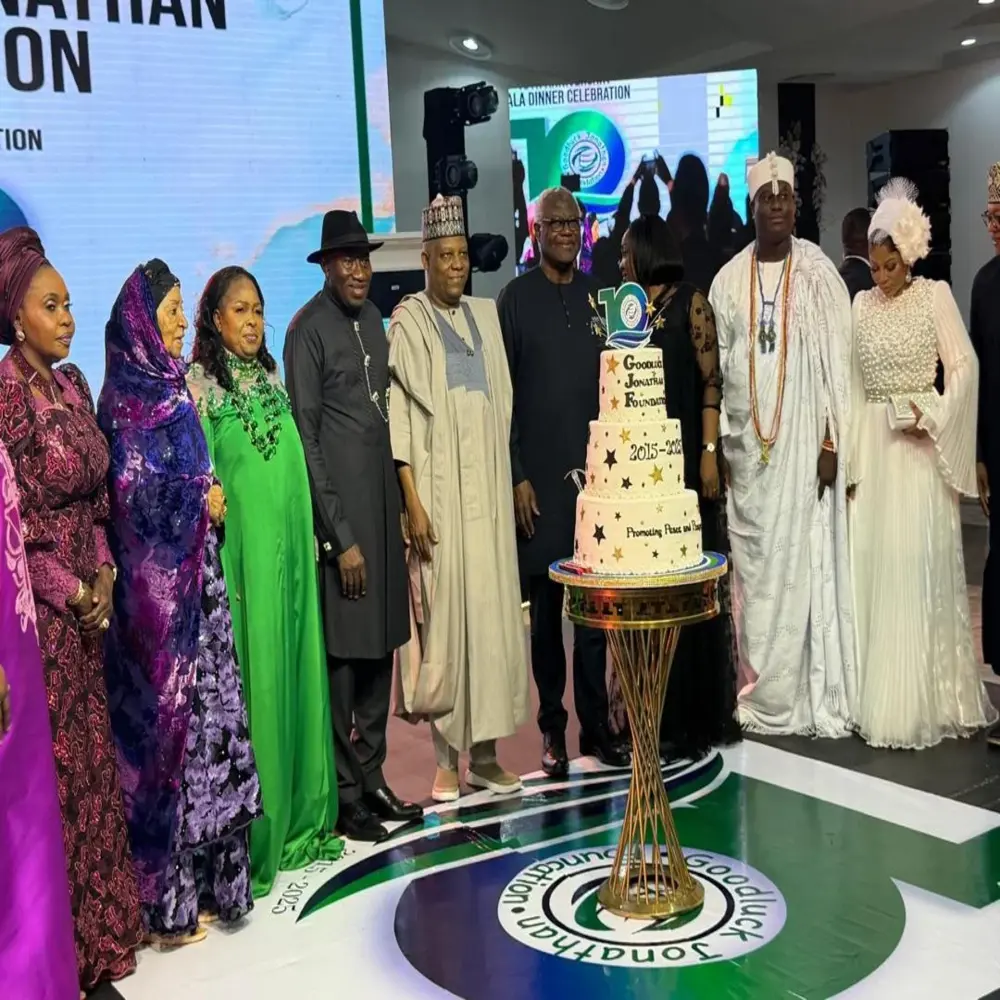
    Tinubu, represented by Vice-President Kashim Shettima, gave the commendation on Thursday at a dinner marking the 10th anniversary of the Goodluck Jonathan Foundation (GJF) in Abuja.

    He said Jonathan remains a powerful example of life after public service, noting that he safeguarded Nigeria’s democracy at a critical moment in history.

    Tinubu observed that Jonathan’s decision to establish the foundation demonstrated that service to humanity continues even after leaving high office.

    “There are not enough words to convey the country’s gratitude. Dr Jonathan has upheld national values since leaving office,” he said.

    The President contrasted leaders who use their post-office influence destructively with those who dedicate themselves to the public good.

    According to him, while some pursue narrow interests that can harm the society that once supported them, others choose the nobler path of serving humanity.

    Tinubu noted that democracy in West Africa and across the world has faced severe threats in the past decade, weakened by “adventurists and extremists who treat institutions as inconveniences and elections as mere formalities.”

    He commended Jonathan for proving that “no ambition should override the sovereignty of the state,” urging Nigerians to promote national unity and respect for democratic processes.

    “Democracy depends on respecting the choices of others. Mandates can always be renewed, but peace must be preserved,” he added.

    Tinubu described the Goodluck Jonathan Foundation as a model for leadership beyond office, emphasizing that governments succeed only with citizens’ cooperation and citizens progress under responsive leadership.

    “Nigeria’s democracy endures because of individuals like Jonathan who place the nation above personal ambition,” he said.

    He congratulated Jonathan and his team, expressing hope that the foundation would continue to guide Africa toward peace and prosperity.

    In his response, Jonathan thanked Vice-President Shettima, former President Ernest Koroma of Sierra Leone, and other dignitaries for honouring the event.

    He said the foundation’s mission was inspired by his experiences and challenges while leading Nigeria.

    According to him, the GJF has continued to focus on diplomacy, good governance, election management, and strengthening democratic institutions.

    Jonathan also sympathised with victims of recent abductions and attacks across the country, urging political leaders to act responsibly in addressing the security and welfare challenges facing Nigerians.

    Guest speaker, Dr Mohammed Ibn Chambas, underscored the importance of functional democracy, stressing that Africa’s future depends on strong institutions, youth empowerment, a free press, and an independent judiciary.

    He praised Jonathan’s leadership, describing him as “a believer in genuine democracy who values the sanctity of human life.”