Author: Caroline Ameh

  • BOBA Calls for Revival of Discipline, Integrity in Leadership at Murtala Muhammed Book Launch

    BOBA Calls for Revival of Discipline, Integrity in Leadership at Murtala Muhammed Book Launch

    The Barewa Old Boys Association (BOBA) has renewed calls for the revival of Nigeria’s founding values of discipline, integrity, and courage in leadership, drawing inspiration from the enduring legacy of former Head of State, Murtala Muhammed.

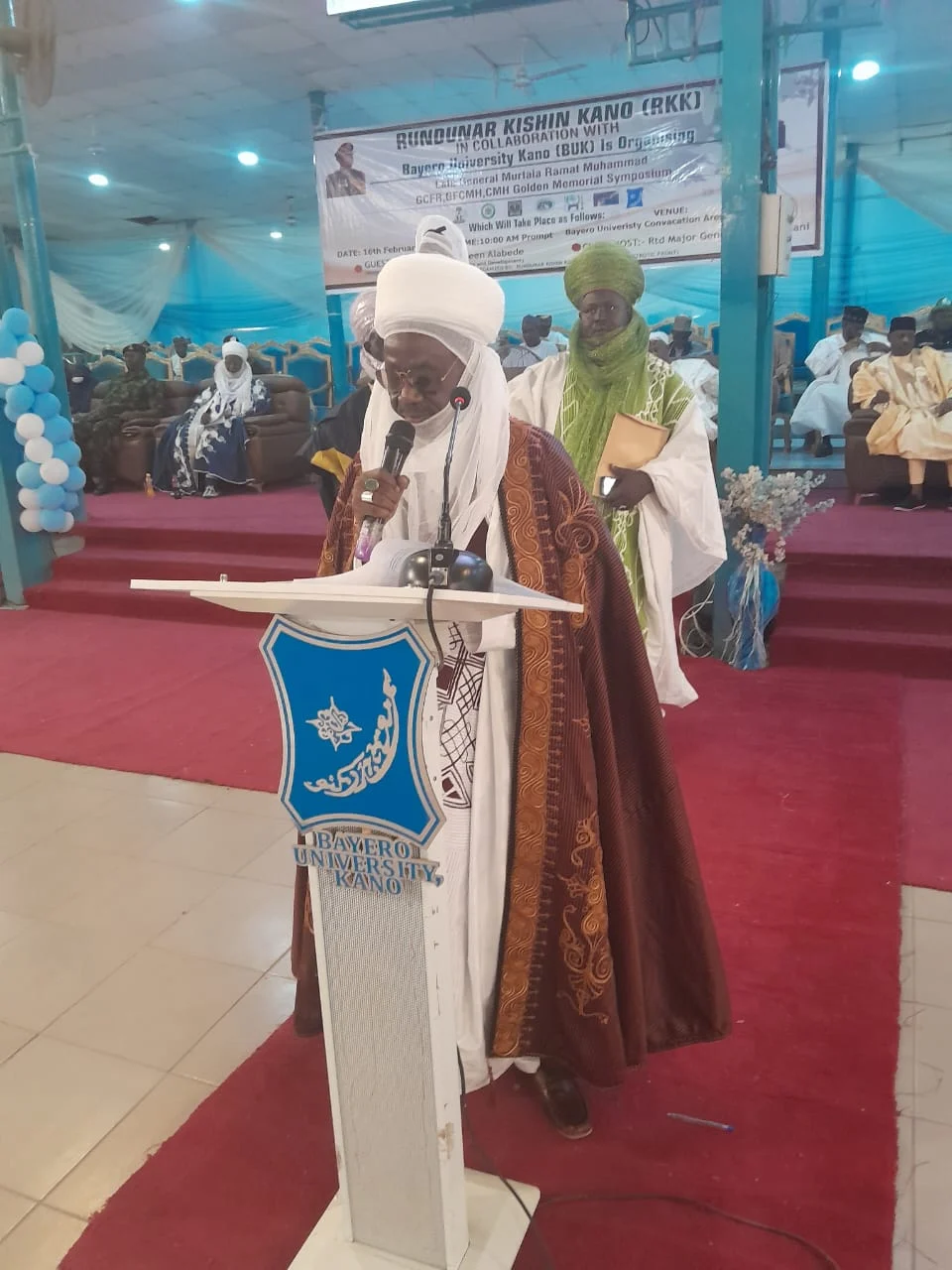
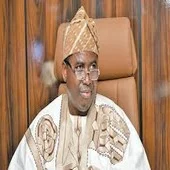
    The call was made at the launch of the book Murtala Muhammed: Unveiling the Ancestral Roots of a Nigerian General, where the President of BOBA was represented by Sarkin Shanun Kano, HRH Shehu Mohammad, FCA, FCCA, who described the occasion as “both an institutional privilege and a national obligation to celebrate a life of patriotic service.”

    Speaking on behalf of the Association, the BOBA President noted that, fifty years after his death, Murtala Muhammed’s name still resonates with urgency, courage, and deep patriotism.

    “Fifty years after his passing, Murtala’s name still carries the electricity of urgency, courage, and patriotism. Before he commanded troops, he commanded respect among his peers. Before he led the nation, he learned to lead himself,” he said.

    The Association traced the foundation of the late General’s leadership to his formative years at Barewa College, where he was admitted in 1952.

    The college’s strict discipline and leadership-oriented culture were described as crucial in shaping his character, instilling values of responsibility, courage, and excellence that later defined his national service.

    According to the BOBA President, three enduring lessons stand out from Murtala Muhammed’s life: that leadership begins early, discipline is the architecture of greatness, and courage is a moral decision before it becomes a public act.

    He reminded Nigerians that Murtala Muhammed’s famous declarations: “Nigeria will not tolerate indiscipline” and “Africa has come of age,” were reflections of convictions formed long before he assumed national power.

    “The story of Murtala Muhammed is not only a military story; it is an educational story. It proves that institutions matter and that the character we build in youth determines the destiny we reach in adulthood,” he added.

    In the press release authored by Stephen Ogboli, BOBA reaffirmed its commitment to strengthening schools and mentoring young Nigerians in values-based leadership, describing such efforts as “the truest memorial to the Murtala Muhammed legacy.”

    The Association further urged public officials and institutions to restore discipline, integrity, and urgency in national service, noting that Murtala Muhammed’s brief tenure in office remains a benchmark for courageous, people-centred governance.

    The solemn event attracted scholars, government officials, military representatives, and members of the Barewa community, and concluded with prayers for the late leader, asking Allah to grant General Murtala Ramat Muhammed eternal rest in Jannatul Firdaus.
  • Timing Dispute Sparks Protest as Akpoti-Uduaghan Misses NCDC Budget Session

    Timing Dispute Sparks Protest as Akpoti-Uduaghan Misses NCDC Budget Session

    A dispute over scheduling on Monday sparked fresh controversy in the Senate as Natasha Akpoti-Uduaghan protested what she described as her exclusion from a budget defence session of the North-Central Development Commission (NCDC).

    The budget defence, held at the National Assembly of Nigeria, was scheduled to begin at 10:00 a.m. and concluded shortly after 11:00 a.m. According to sources familiar with the proceedings, the Kogi Central lawmaker arrived at the venue around noon, only to discover that deliberations had already ended.

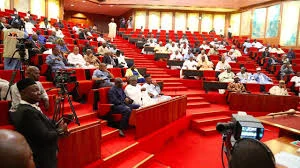
    Senators Akpoti-Uduaghan, Titus Zam and aids during the rowdy session.

    Akpoti-Uduaghan reportedly expressed dissatisfaction with the timing of the session, arguing that it effectively prevented her from taking part. Sources said her protest was not aimed at the substance of the proposed ₦140 billion 2026 NCDC budget, but rather at what she perceived as being shut out of the process entirely.

    Earlier, the chairman of the Senate Committee on NCDC, Titus Zam, told journalists that committee members had examined the commission’s estimates and found them aligned with the development priorities of the North-Central region. He said the panel advised the commission to place strong emphasis on agriculture and security during implementation.

    Monday’s incident comes just days after Akpoti-Uduaghan staged a walkout during a separate oversight session of the Senate Committee on Steel Development. During that meeting, she clashed with committee chairman Patrick Ndubueze after he moved to conclude questioning of the Minister of Steel Development, Shuaibu Audu, despite her request to continue speaking.

    The senator insisted she still had critical issues to raise and accused the committee leadership of curtailing her participation before walking out of the session.

    Taken together, the two episodes have intensified scrutiny of procedural practices within Senate committees, particularly around meeting schedules, members’ participation, and the management of speaking opportunities during budgetary and oversight engagements.

  • NASS Puts INEC on the Spot Over ₦873.78bn 2027 Election Budget

    NASS Puts INEC on the Spot Over ₦873.78bn 2027 Election Budget

    Nigeria’s next general election may be one year away, but the battle over its price tag has already begun.

    The Independent National Electoral Commission (INEC) has projected a staggering ₦873.778 billion to conduct the 2027 general elections — a figure that immediately triggered pointed questions and heightened scrutiny at the National Assembly.

    INEC Chairman, Prof. Joash Amupitan, presented the projection while defending the Commission’s ₦171 billion 2026 budget proposal before the Joint Committee on Electoral Matters. He was emphatic: the ₦873.78 billion earmarked for 2027 is separate from the 2026 allocation, which is meant to fund routine activities such as off-cycle governorship elections, by-elections, voter registration updates, logistics, and administrative operations.

    But lawmakers made it clear that separating the figures does not soften the impact of the headline number.

    Nearly ₦1 Trillion — and Counting?

    Amupitan further disclosed that the ₦873.78 billion projection does not include a fresh request from the National Youth Service Corps (NYSC), which is seeking an upward review of allowances for corps members deployed as ad-hoc election staff.

    That revelation raises a critical possibility: the final cost of the 2027 elections could climb even higher.

    With inflationary pressures, rising logistics costs, security challenges, and technological upgrades expected ahead of the polls, legislators signaled that Nigerians deserve clarity on every naira proposed.

    Lawmakers Draw the Line

    Chairman of the Senate Committee on INEC, Simon Lalong, assured the Commission of legislative cooperation but stressed that support would not translate into a blank cheque.

    He indicated that the National Assembly would rigorously examine the assumptions behind the projection, demanding detailed breakdowns and measurable benchmarks to justify the enormous public expenditure.

    Similarly, Chairman of the House Committee on Electoral Matters, Bayo Balogun, pledged backing for credible elections but delivered a pointed warning: INEC must avoid overpromising and underdelivering.

    Balogun cautioned that operational failures, procurement irregularities, or unrealistic commitments would not be excused under the weight of a near-trillion-naira budget.

    Transparency or Trouble

    Members of the joint committee reiterated that the credibility of the 2027 elections will depend not only on logistics and technology but also on fiscal discipline. With public trust in institutions often tested during election cycles, lawmakers emphasized that transparent budgeting, early planning, and strict oversight are non-negotiable.

    The message from the National Assembly was unmistakable: INEC will get the support it needs, but every kobo must be accounted for.

    As preparations for 2027 quietly gather pace, one thing is clear: the politics of funding the election may prove just as intense as the election itself.

  • Housemanship Gap Locks Out 2,000 Doctors Every Year — MDCN

    Housemanship Gap Locks Out 2,000 Doctors Every Year — MDCN

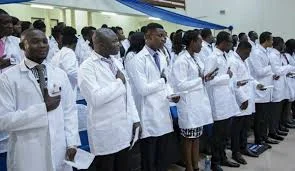
    The Medical and Dental Council of Nigeria (MDCN) has disclosed that about 2,000 Nigerian-trained medical doctors are left without housemanship placement every year, citing limited capacity under the current centralized system.

    The revelation was made by MDCN Registrar Fatimah Kyari while defending the Council’s 2026 budget proposal before the Senate Committee on Health in Abuja.

    Housemanship Capacity Below Medical Graduate Output

    According to the Council, Nigerian medical schools produce approximately 6,000 doctors annually, but the Centralized Housemanship System can only absorb about 4,000 graduates each year.

    This shortfall leaves nearly one-third of new doctors unable to complete their mandatory housemanship, delaying full registration and entry into the workforce.

    “A total of about 6,000 medical doctors are produced annually from various medical schools, while the centralized housemanship system in operation can only take 4,000,” Kyari said.

    Call to Include State and Private Hospitals

    To close the gap, the MDCN urged the Federal Government to expand the Centralized Housemanship System to include state-owned and privately owned hospitals.

    Kyari said such an expansion would allow all 6,000 medical graduates to be absorbed annually, eliminating backlogs and training delays.

    Brain Drain Concerns Grow

    The Registrar warned that persistent housemanship delays were fueling Nigeria’s medical brain drain, as affected graduates increasingly seek training and employment opportunities abroad.

    She stressed that timely placement of medical graduates was critical to retaining healthcare professionals and strengthening the health system.

    MDCN Raises Funding Shortfalls

    Kyari also highlighted funding challenges facing the Council, revealing that no capital funds were released in the 2025 fiscal year, despite an approved ₦1.2 billion capital budget.

    She added that:

    • Only ₦37.5 million was released from the ₦100 million approved for overhead costs, and
    • ₦13.859 billion was released from the ₦16.8 billion allocated for personnel expenses.

    Senate Promises Budgetary Support

    Responding, the Chairman of the Senate Committee on Health, Banigo Ipalibo, assured the MDCN of legislative backing, pledging that the committee would work toward improved funding for the Council in the 2026 budget.

    He noted that addressing housemanship bottlenecks and funding gaps was essential to improving healthcare delivery in Nigeria.

  • Senate Approves Electoral Act Bill, Denies Scrapping E-Transmission

    Senate Approves Electoral Act Bill, Denies Scrapping E-Transmission

    The Nigerian Senate has approved the Electoral Act (Amendment) Bill, 2026, dismissing reports that lawmakers voted to scrap the electronic transmission of election results.

    The bill was passed on Wednesday after more than four hours of heated debate, particularly over the proposed amendment to Clause 60(3), which sparked widespread speculation on social media that the Senate had rejected real-time electronic transmission of results from polling units to the Independent National Electoral Commission’s Result Viewing Portal (IREV).

    Reacting to the controversy, Senate President Godswill Akpabio described the reports as inaccurate and misleading, insisting that the Senate did not vote against electronic transmission.

    “The Senate has not rejected electronic transmission of results,” Akpabio said shortly after the bill’s passage. “What we did was to retain the provision already in the Act, which permits electronic transmission and was applied in the 2022 elections. This Senate cannot afford to go backwards.”

    Debate on the contentious clause began around 2:00 p.m. and concluded at approximately 6:26 p.m., following concerns that a proposed amendment mandating presiding officers to transmit signed and stamped result sheets electronically to IREV in real time could introduce legal complications.

    Instead, lawmakers opted to retain the existing wording of the Electoral Act, which allows election results to be transmitted “in a manner as prescribed by the Commission.”

    Akpabio stressed that the decision does not eliminate electronic transmission from Nigeria’s electoral framework, adding that the provision remains valid and will continue to guide future elections.

    Similarly, Senate spokesperson Yemi Adaramodu said the Senate did not discard the committee’s recommendation on electronic transmission but avoided provisions that could create legal technicalities during election disputes.

    Adaramodu also disclosed that the amendment removed the power to declare a runner-up as winner in cases where a candidate earlier declared elected by the Independent National Electoral Commission (INEC) is later found to be unqualified to contest.

    Electronic transmission of election results has remained one of the most contentious elements of Nigeria’s electoral reform discussions since the 2023 general elections, with civil society groups and opposition parties advocating clearer legal safeguards to enhance transparency and public trust.

    Following the bill’s passage, the Senate announced the composition of a conference committee to harmonise its version with that of the House of Representatives. The committee will be chaired by Adeniyi Adegbonmire, with Tahir Monguno, Simon Lalong, Adamu Aliero, Orji Uzor Kalu, Abba Moro, Asuquo Ekpeyong, Aminu Abbas, and Tokunbo Abiru serving as members.

    Meanwhile, the Senate adjourned plenary until February 24, 2026, to allow lawmakers focus on the defence of the 2026 budget by ministries, departments and agencies (MDAs).

  • I Can Fix Benue APC Crisis — Omale Omale, Declares Chairmanship Bid

    I Can Fix Benue APC Crisis — Omale Omale, Declares Chairmanship Bid

    Former Benue State Commissioner for Power, Renewable Energy and Transport, Chief Omale Omale, has declared that he has the capacity to end the lingering internal crisis rocking the All Progressives Congress (APC) in Benue State.

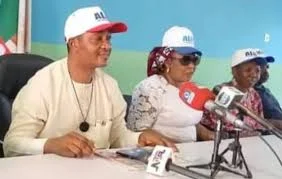
    Omale, who is contesting for the state chairmanship position of the party, made the declaration on Wednesday while speaking with journalists in Makurdi, insisting that only party members with deep knowledge of APC’s history should be entrusted with its leadership.

    “I understand the various tendencies within the party, and I have the capacity to manage them,” he said, citing his experience in party management and government administration.

    The APC founding member accused the current Unity Caretaker Committee of failing to deliver on its mandate of uniting the party, noting that no inclusive meeting involving all factions has been convened since the committee assumed office.

    “The divide is still there. There is a missing link, and it flows from the capacity and personality of those managing the party,” Omale stated.

    He also criticised what he described as the rise of “overnight political players” who lack understanding of the party’s history, while long-standing members who laboured to build the APC are being sidelined.

    Omale assured party members that his leadership would prioritise inclusiveness, internal democracy, and strict adherence to the party’s manifesto, stressing that loyalty must be to the party and not to individuals or factions.

    “For democracy to work, everyone must have a say, and the majority must have their way without creating further division,” he said.

  • Senate Moves to Increase FG Revenue Share, Cites Security Burden

    Senate Moves to Increase FG Revenue Share, Cites Security Burden

    The Senate has commenced legislative action to amend the 1999 Constitution in a bid to increase the Federal Government’s share of national revenue, arguing that the current allocation formula is no longer capable of sustaining the country’s mounting national obligations.

    At present, the Federal Government receives 52.68 per cent of the nation’s revenue, while the 36 states get 26.72 per cent and the 774 local government councils receive 20.60 per cent.

    The proposed amendment is contained in a bill sponsored by Sunday Karimi, which passed first reading during plenary on Tuesday.

    Addressing journalists after the session, Karimi said the existing revenue sharing arrangement has become grossly inadequate for the Federal Government, especially in the face of deepening infrastructure collapse and worsening security challenges nationwide.

    He maintained that the formula, which has remained largely unchanged for years, no longer reflects current realities and places disproportionate financial pressure on the Federal Government.

    “The revenue allocation formula is outdated and unsustainable. It fails to provide the Federal Government with sufficient resources to meet its constitutional responsibilities,” Karimi said.

    He pointed to the deplorable state of federal roads across the country, noting that the burden of construction, rehabilitation, and maintenance continues to rest squarely on the Federal Government despite dwindling funds.

    Karimi also highlighted the escalating cost of internal security, stressing that massive resources are being channelled into combating banditry, terrorism, and other violent crimes threatening national stability.

    According to him, persistent funding gaps have weakened the capacity of the military and other security agencies to effectively prosecute the war against terrorism.

    “The Federal Government is stretched thin. The responsibility of safeguarding lives and property, maintaining critical infrastructure, and preserving national unity cannot be met under the current revenue framework,” he said.

    The senator argued that increasing the Federal Government’s share of national revenue would provide the financial leverage needed to reinforce security operations, repair critical infrastructure, and stabilise governance at the centre.

    The move is expected to reignite intense debate within the Senate of Nigeria, as well as among state governments and local councils, many of which have consistently opposed any reduction in their revenue shares.

    If passed, the proposed constitutional amendment would represent a major shift in Nigeria’s fiscal structure and could significantly redefine the balance of financial power among the three tiers of government.

  • NiMet Rejects N5 Trillion Loss Claims, Says Reports Are Baseless and Misleading

    NiMet Rejects N5 Trillion Loss Claims, Says Reports Are Baseless and Misleading

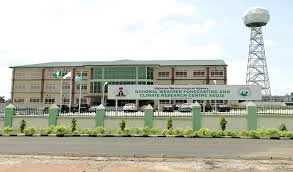
    The Nigerian Meteorological Agency (NiMet) has strongly dismissed reports alleging that Nigerian farmers lost about N5 trillion as a result of inaccurate weather forecasts, describing the claims as false, misleading and unsupported by credible evidence.

    In a statement issued on Tuesday in Abuja, NiMet faulted publications by The Nation on February 2, 2026, and Daily Trust on February 3, 2026, which attributed the claim to the Foundation for Peace Professionals. The agency said the reports amounted to a deliberate attempt to misinform the public.

    The statement, signed by Rabiatu Lawal Ado, Acting Head of NiMet’s Public Relations Unit, said the alleged N5 trillion loss was not supported by any verifiable data, transparent methodology or independent assessment.

    “The alarmist claim that Nigerian farmers lost nearly N5 trillion in productive capital as a result of NiMet’s weather forecasts is entirely unfounded and economically irresponsible,” the agency stated.

    NiMet stressed that it has provided reliable weather and climate services in Nigeria for more than 140 years, supporting planning and decision-making across critical sectors of the economy, particularly agriculture.

    According to the agency, independent evaluations by development partners, the World Meteorological Organization, sector stakeholders and farmers nationwide indicate that NiMet’s forecast accuracy has improved significantly over time. The agency said its accuracy now exceeds the 60 per cent benchmark and has reached over 90 per cent in recent years.

    NiMet explained that its Seasonal Climate Predictions, early warning alerts and location-specific agro-advisories are designed to help farmers make informed decisions on planting dates, crop selection, irrigation planning and risk management.

    “These products are disseminated through state governments, agricultural extension services, traditional media platforms and digital channels to ensure wide reach and accessibility,” the agency noted.

    The meteorological agency also referenced the executive summary of the 2025 Wet Season Agricultural Performance Survey in Nigeria, conducted in collaboration with key institutions across the agricultural value chain. According to NiMet, the survey recorded increased crop yields and livestock production across the country.

    The findings showed improved output in major crops such as rice, maize, cowpea, yam, cassava and groundnut compared to 2024. The survey also indicated a reduction in food prices across all geopolitical zones, reflecting improved supply conditions and the impact of effective policy interventions.

    Reaffirming its commitment to national food security, climate resilience and sustainable agricultural development, NiMet said it would not be distracted by what it described as sensational narratives.

    The agency called on stakeholders, civil society organisations and the media to engage responsibly and ensure that public discourse is guided by facts, credible evidence and verified data.

  • Senate Seeks Mandatory Anti-Venoms in Hospitals After Singer’s Death

    Senate Seeks Mandatory Anti-Venoms in Hospitals After Singer’s Death

    The Nigerian Senate has urged the Federal Government to mandate the availability of snake anti-venoms and other critical antidotes in hospitals across the country following the death of Abuja-based singer, Ifunanya Nwangene, popularly known as Nanyah.

    Nwangene reportedly died after she was bitten by a snake at her residence, a development lawmakers described as a reflection of serious gaps in emergency healthcare delivery.

    During plenary on Tuesday, the Senate called on the Federal Ministry of Health to formulate and enforce national guidelines stipulating minimum stock levels of anti-venoms, antidotes, and emergency medicines in both public and private hospitals.

    The upper chamber also resolved that private hospitals that fail to maintain these essential medicines should not be granted operating licences, stressing that emergency care must meet minimum safety standards nationwide.

    In addition, lawmakers urged the Federal Government to ensure adequate funding and sustained supply of anti-venoms in public health facilities to prevent avoidable deaths arising from snake bites, poisonings, scorpion stings, and drug overdoses.

    The resolutions followed a motion sponsored by Senator Idiat Oluranti Adebule (APC, Lagos West), who noted that Nigeria continues to record increasing cases of envenomation and poisoning requiring urgent medical attention.

    She warned that the absence of life-saving antidotes in hospitals often results in deaths that could otherwise be prevented with timely intervention.

    Contributing to the debate, senators observed that Nwangene’s death highlighted deficiencies in emergency preparedness, adding that prompt access to anti-venoms might have altered the outcome.

    The Senate further directed the National Agency for Food and Drug Administration and Control to work with the Ministry of Health to oversee the procurement, quality control, storage, and nationwide distribution of safe and affordable anti-venoms, with priority given to high-risk areas.

    State governments were also urged to conduct immediate audits of hospitals within their jurisdictions to ensure compliance with approved standards for antidote stocking and emergency response.

    The Senate observed a minute of silence in honour of Nwangene, who died at the age of 26.

  • Olofu Engages Benue South Stakeholders in Lagos Over Senate Agenda

    Olofu Engages Benue South Stakeholders in Lagos Over Senate Agenda

    Breaking from conventional campaign outreach, Dr. David Olofu at the weekend used a Lagos engagement to deepen consultations for his Senate race, convening diaspora stakeholders alongside leaders from the home front in the Benue South Senatorial District.

    The meeting brought together representatives from the district’s nine local government areas, including community leaders, professionals, retired public officers, party stakeholders, and members of the Benue South diaspora, to examine development priorities and the future of representation.

    Addressing the gathering, Olofu said his decision to seek elective office followed extensive consultations and growing dissatisfaction with the state of representation in the district. He described Lagos as a strategic venue, noting its position as Nigeria’s commercial nerve centre and home to a significant population of Benue South indigenes.

    According to him, consultations with traditional rulers, professionals, and grassroots leaders informed a legislative agenda anchored on four pillars, People, Power, Prosperity, and Progress, aimed at converting the district’s agricultural, human, and economic potential into sustainable development.

    He stressed that effective representation must translate into equitable policies, balanced development, and fair resource allocation across all communities.

    Olofu also announced plans to establish the Benue South Peoples Assembly (BSPA) and the Benue South Peoples Council (BSPC), which he said would institutionalise inclusive, bottom-up policymaking and sustained citizen participation.

    He outlined twelve priority areas for legislative intervention, including agriculture and food security, education, health, entrepreneurship and youth empowerment, ICT and innovation, infrastructure and road networks, local government reforms, security and peacebuilding, law and justice, industry and energy partnerships, diaspora engagement, and women and sports development.

    The event featured goodwill messages from several leaders. Chief Abu Abdul opened the session with prayers, while Rt. Hon. John Ngbede, who led the delegation, said the engagement was notable for its inclusiveness, with representatives from various Idoma dialect groups and communities present.

    Former Secretary to the State Government, Prof. David Salihu, and governorship aspirant Dr. Peter Adejo commended the consultative approach and stressed the need for leadership grounded in broad stakeholder input.

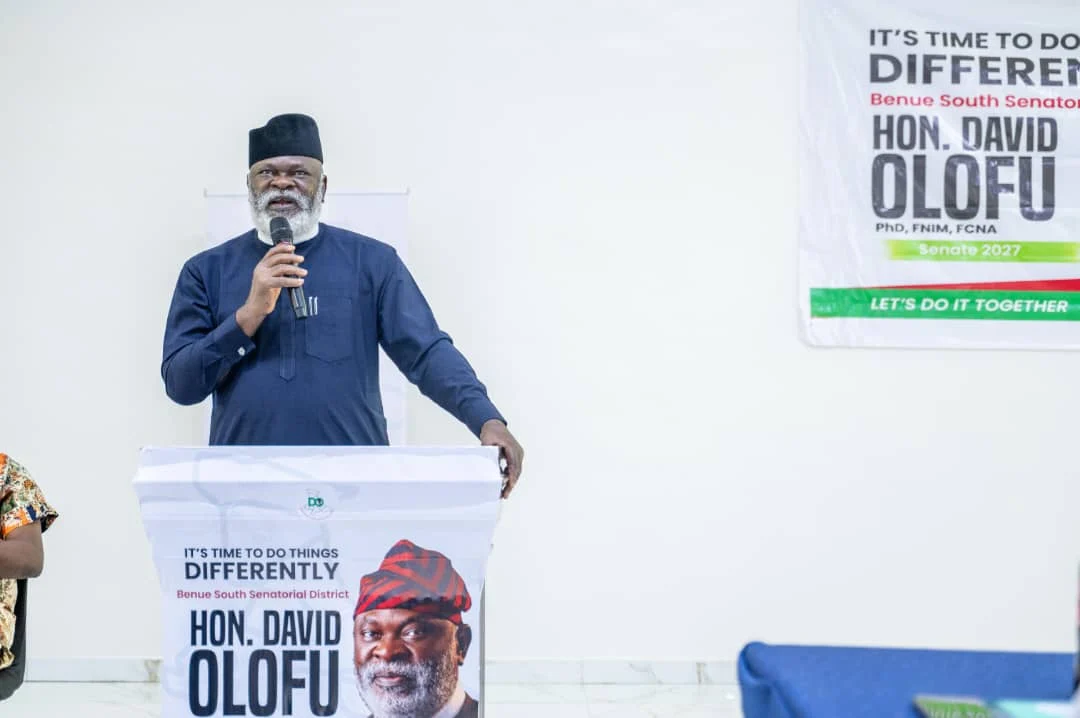
    Dr. Olofu Addressing the Stakeholders at Ikeja, Lagos

    Other speakers included Chief Patrick Ogbu; former Okpokwu Local Government Chairman Barr. Jacob Ogwuche; former Oju Local Government Chairman Hon. Edwin Okpe; retired Assistant Comptroller-General of Customs Odaudu Salihu; retired Assistant Inspector-General of Police Tony Olofu; Dr. Michael Adah, Chairman of Opiatoha K’Idoma Lagos; retired Rear Admiral Andy Onoja Odeh; Dr. Mike Adah, General Secretary of Opiatoha Club Lagos; and Godwin Onyeke, President of Okpotuche Club Lagos.

    An elder statesman and party stalwart, Alhaji Usman Lungu, urged loyalists to mobilise effectively for the aspirant’s success, pledging to work across party lines toward that objective.

    Also speaking, Chief Luke Akubo, the Och’Idoma in Lagos, offered prayers and blessings for Olofu, praising his philanthropy, governance experience, and commitment to the emancipation of the Idoma nation.

    Popular activist Chris Adaba Aba, also known as Mad Lion, described the engagement as a call for Idoma unity, while a prominent woman leader and community organiser, Madam Cynthia Egwa, said the consultations were unprecedented, citing years of neglect of the senatorial district.

    Some speakers likened the consultations to a “know-your-customer” governance model, arguing that understanding community needs should precede policy formulation.

    The Lagos engagement concluded with prayers and goodwill messages and forms part of Olofu’s wider consultation tour across Benue State as he seeks the Senate seat on the platform of the African Democratic Congress.