Author: Chike Ozohili

  • First Bank Rewards Customers With N170m Prizes In Win Big Promo  

    First Bank Rewards Customers With N170m Prizes In Win Big Promo  

    First Bank, Nigeria’s premier financial institution and leading financial inclusion services provider, has launched the Win Big promo to reward and delight its valued customers.

    The four-month promo, which runs till February 2023 will reward several new and existing customers of the Bank with a total cash reward of N170 million.  

    At the end of the four-month promo, 1,240 new and existing customers would have been rewarded with N100,000.00 each as each month will have 310 new and existing customers winning N100,000. Up to 40,000 customers who reactivate their dormant account stand a chance to win free airtime as 10,000 customers will be rewarded with free airtime monthly for reactivating their dormant account.

    6 customers will emerge lucky winners of N1,000,000 each in the grand finale draw. The promo is open to new and existing savings and current account customers.

    To open a FirstBank account, dial USSD code *894*0#and follow the prompt or visit the Bank’s website and click on “Open Account”. You can also visit any FirstBank branch near you to open an account.

    To qualify for the N100,000 monthly draw, customers will have to deposit and maintain a minimum amount of 5,000.00 in their account monthly and transact a minimum of 5 times transactions on any of the Bank’s digital channels: FirstMobile, LIT App, USSD, First Online as well as Debit Card transactions.

    Customers who are eligible to win N1,000,000 must have a deposit of N50,000.00 monthly for four consecutive months or maintain a minimum deposit of N200,000.00 for four months and transact a minimum of 5 times on any of the Bank’s digital banking channels; FirstMobile, LIT App, USSD, First Online as well as Debit Card transactions to qualify for the grand finale draw.

    Customers who reactivate their account(s) are also eligible to win. For reactivating their account,  the first 10,000 customers to deposit N1,000.00 and transact on any of the Bank’s digital channels: FirstMobile, LIT App, USSD, First Online and Debit Card transactions will be rewarded with free airtime. Customers who reactivate their dormant account could also qualify for the monthly draw when they deposit and maintain a minimum amount of N5,000 monthly and transact a minimum of 5 times on any of the Bank’s digital channels. They could also emerge winners of N1,000,000 in the grade finale draw if they meet the criteria.

    To reactivate the account, the customers will have to dial USSD code *894*7# and follow the prompt to reactivate Tier 1 accounts or visit any nearest FirstBank branch for Tier 2 and 3 account reactivation.

    “We are thrilled to launch this promo in appreciation of the patronage, trust and loyalty our customers have shown us over the years. The exciting modalities of the promo reflect our commitment to enhancing the banking experience of our customers across any or all of our digital banking services.

    “This is the season when FirstBank provides opportunities and platforms for the yearly memorable homecoming experience from across the world. The promo is an enabling opportunity for customers, their friends, and families to have exciting, fun-filled, memorable experiences. We encourage our customers to seize this opportunity and participate actively’ she concluded,” said Ms. Folake Ani-Mumuney, Group Head, Marketing & Corporate Communications, FirstBank Group.

  • More Proactive Push Needed For Central Bank Digital Currencies – IMF   

    More Proactive Push Needed For Central Bank Digital Currencies – IMF   

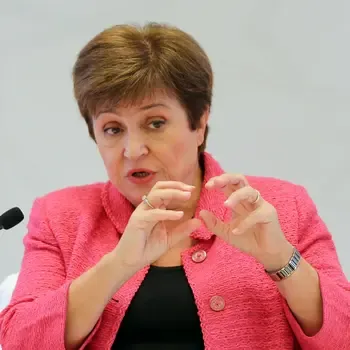
    The head of the International Monetary Fund (IMF) has urged countries to make a more proactive push to develop Central Bank Digital Currencies (CBDCs).

    Eleven countries, including a number in the Caribbean, and Nigeria, have already launched CBDCs. Around 120 others are exploring them, although progress and approaches differ widely and a few have even abandoned the idea altogether.

    “We may be at a point where the public sector needs to offer a little more guidance,” IMF Managing Director Kristalina Georgieva said in a speech in Singapore.

    “Not to crowd out, not to disrupt,” she added. “But to act as a catalyst, to ensure safety and efficiency – and to counter fragmentation.”

    She made her remarks as the IMF published the first instalment of a “virtual handbook” on CBDCs, designed to help countries with the design and set-up process and ensure that the new technologies are globally interoperable.

    Supporters say CBDCs will modernise payments with new functionality and provide an alternative to physical cash, which seems in terminal decline.

    But questions remain as to why they represent an advance when current systems are already capable of many of the proposed benefits, and countries such as Nigeria that have already launched CBDCs are seeing very low uptake among the public.

    Georgieva said that with technology advancing so rapidly, countries needed to push ahead with development now to avoid getting caught out in future.

    “If anything, we need to raise another sail to pick up speed,” she said, likening the efforts to a nautical journey. “The world is changing faster than most imagined”.

  • Naira Depreciates To N827.83/$1 At Official Market

    Naira Depreciates To N827.83/$1 At Official Market

    The naira again declined against the US dollar at the official market on Thursday, exchanging for N827.83 to one U.S dollar after a slight appreciation on Wednesday which saw the local currency exchanging at N818.99/$1.

    This is still a slight gain when compared to the N850.22 it recorded on Tuesday.

    However, the naira closed flat at the parallel forex market where forex is sold unofficially, the exchange rate closed at N1140/$1 as against the same N1140/$1 it quoted on Wednesday, representing 0.00 per cent, while peer-to-peer traders quoted around N1127.01/$1. 

    The intraday high recorded was N1100/$1, while the intraday low was N751.00/$1, representing a wide spread of N348.78/$1.

    Similarly, the naira also fell to the Euro, exchanging at N1,175/€1 at the parallel market, while it goes for N898.44/€1 at the official market. Also the pound sterling goes for N1,370 and N1029.7441 at the parallel and official market respectively.

    According to data obtained from the official NAFEM window, forex turnover at the close of the trading on Wednesday was $173.51 million, representing a 20.87 per cent increase compared to the previous day. 

    The local currency struggle at the foreign exchange market is coming on the heels of rising inflation in the country which saw the inflation rate jump to 27.33 per cent in October 2023 as prices of foodstuff continued to increase in the aftermath of the removal of fuel subsidy by the President Bola Tinubu administration.

    This was according to the October 2023 Consumer Price Index (CPI) and Inflation Report released by the National Bureau of Statistics (NBS) on Wednesday.

    The CPI, which measures the changes in the prices of goods and services, rose from 26.72 per cent to 27.33 per cent showing an increase of 0.61 per cent points.

    “In October 2023, the headline inflation rate increased to 27.33 per cent relative to the September 2023 headline inflation rate which was 26.72 per cent,” the report partly read.

    “Looking at the movement, the October 2023 headline inflation rate showed an increase of 0.61 per cent points when compared to the September 2023 headline inflation rate.

    “Furthermore, on a year-on-year basis, the headline inflation rate was 6.24 per cent points higher compared to the rate recorded in October 2022, which was (21.09 per cent).

    “This shows that the headline inflation rate (year-on-year basis) increased in October 2023 when compared to the same month in the preceding year (October 2022).”

  • Nigeria’s Equity Market Gains N6bn

    Nigeria’s Equity Market Gains N6bn

    The local equity market, on Thursday advanced by N6 billion as gains recorded in the shares of Nigerian Breweries, C&I Leasing, Northern Nigeria Flour Mills among others lifted market activities.

    Market capitalisation of listed equities increased by N6 billion or 0.02 per cent to N39.059 trillion from N39.053 trillion reported the previous day.

    The NGX All Share Index also appreciated by ç basis points to 71025.16 points from 71014.34 points reported the previous day.

    Volume of transactions increased by 186.494 million, representing 63.72 per cent as investors traded 483.847 million shares valued at N4.378 billion in 6545 deals against 297.353 million shares valued at N6.161 billion in 6172 deals.

    A review of investment showed that Deep Capital and NSLTech  led gainers table,gaining  10 per cent each to close at N0.44 and N0.33 per unit, C&I Leasing followed with a gain of 9.95 per cent to close at N4.53 per share, Northern Nigeria Flour Mills gained 9.85 per cent to close at N22.75 per unit while SCOA Plc added 9.82 per cent to close at N1.23 per share.

    On the contrary, ABC Transport recorded the highest loss in percentage terms, dropping by 10 per cent to close at N0.90 per unit, ETranzact trailed with a loss of 9.93 per cent to close at N6.80 per unit, Thomas Way fell by 8.95 per cent to close at N3.46 per share. Guinea Insurance dipped by 8.33 per cent to close at N0.22 per unit, Ellah Lakes fell by 7.89 per cent to close at N3.50 per share.

    Transactions in the shares of Regal insurance led market activities with 104.341 million shares valued at N36.490 million, Oando Plc followed with account of 55.280 million shares worth N676.637 million, Universal insurance traded 53.351 million shares cost N12.338 million, Japaul Gold exchanged 24.949 million shares cost N46.772 million while United Bank for Africa sold a total of 21.492 million shares cost N445.446 million.

  • Expert Decry 3.5% Annual Deforestation In Nigeria

    Expert Decry 3.5% Annual Deforestation In Nigeria

    As climate change wreaks havoc across the 36 States and FCT, an expert has raised the alarm over continued depletion of forests through illegal tree logging.

    The Publisher and Editor-in-chief of Development Agenda Magazine, Mr Paddy Ezeala, said this at a one-day seminar organised by Development Agenda in collaboration with Environmental Media Correspondents Association of Nigeria recently in Abuja.

    The seminar had as its theme: “Climate Change and COP28: The Way Forward For Nigeria.”

    He estimated that 1.5 million trees are felled daily through illegal logging, thereby leading to 3.5 percent deforestation annually.

    Ezeala stated that the establishment of a foreign privately-owned charcoal producing factory in Nsukka, Enugu state worsened the destruction caused by the foreigners, adding that the adjoining states were affected by the massive logging. 

    The publisher lamented that Nigeria is experiencing four percent forest loss annually, which is about the highest globally, as people continue to cut down trees in Cross Rivers, Ondo, Ogun, as well as in some North Central States.

    Ezeala hinted that between 1981 and 2000, Nigeria lost 3.7 million hectares of forests which implied colossal loss of biodiversity. 

    The forest cover had depleted to less than 10 percent as against the mandate of the Food and Agricultural Organizations’ (FAO) that each state is expected to keep its forest cover to a minimum of 25 percent of its land area.

    While about 484 plant species are threatened with extinction, the publisher lamented the absence of measures aimed at encouraging forest regeneration

    “Related to this is the absence of a valuation system to place a value on forest resources so that when forests are destroyed through individual or corporate negligence, adequate compensation will be paid,” he said. 

    He stated that there is a need to develop more environmentally and socially equitable approaches to forest management in Nigeria, noting that the wanton destruction of forests across the country must be checked.

    Ezeala added: “Forests perform a broad range of critical environmental and climatic functions, including the maintenance of constant supply of water. Forests harbour species and at the same time have very deep economic, aesthetic, industrial and religious significance for humans. 

    “However, economic development pressures often lead to the conversion of forest ecosystems without consideration for both the long-term economic costs and the implications of the immediate loss of biodiversity, ecosystem structure and function.” 

    The publisher maintained that Nigeria’s remaining rainforests harbour about 4000 different species of plants, including those effective in the development of alternative medicine. 

    Ezela harped on the need to priortise tree planting and secure protected areas, noting that the National Park Service and others managing the protected areas should be supported. 

    The Emir of Nasarawa, Alhaji Ibrahim Usman Jibril hinted that the rising sea level at the coastal areas, climate change, deforestation, drought and desertification are some of the environmental challenges affecting Nigeria. 

    He said though charcoal has been banned that the government cannot stop households from cooking with charcoal without providing alternative means of fuel. 

    The Chairman of EMCAN, Mr Chuks Oyema said that the essence of the seminar was to showcase how Nigeria is tackling climate change and how the government is prepared for COP28. 

    He urged the media to publish more stories on climate change and embark on collective actions toward mitigating the impact of climate change on the environment.

  • NGO, Stakeholders Accuse FG, Others Of ‘Exploiting’ Mining Communities

    NGO, Stakeholders Accuse FG, Others Of ‘Exploiting’ Mining Communities

    A Non-Governmental Organization, Global Rights, has accused the federal government and critical stakeholders of exploiting mining communities, including taking decisions without carrying host communities along.

    Addressing participants at the Third West African Mining Host Community “Indaba” in Abuja on Wednesday, the Executive Director, Global Rights, Abiodun Baiyewu, said, due to faulty governance systems, the extraction and trade of the resources found in mining communities often fuel conflicts, corruption and violence, hence the need to find solutions to the menace. 

    She said: “Annually, across several platforms across the world, governments and mining companies gather to decide our fate. The fate of our ancestral lands and of our children yet unborn. At these confabs, the people most impacted – extractive host communities are excluded. How do you decide for us without us? Afterall, we are the ones who know where the shoe pinches. We are the ones whose lands are desecrated, whose resilience are weakened. We are the ones.

    “So, we chose to represent ourselves, to give ourselves agency to decide our own future as the African Mining Vision and African Charter on Human and Peoples Rights has accorded us in Sections 20-22. This annual gathering unites us as a people to deliberate and find solutions to the common challenges that we are confronted with as West Africans. It is a platform for open and inclusive dialogue where ideas, experiences, and solutions are shared collectively.

    “We have also chosen to invite governments and mining companies. Perhaps, if they listen to us and dialogue with us, they might finally understand the powers that we have so generously bestowed on them are to protect our rights. Perhaps, they might understand afresh that the security of states start with the security of the people within the state, and adopt a human security paradigm to address the challenges around the efficient exploitation of our resources.

    “It is our collective responsibility to ensure that the wealth of West Africa’s minerals benefits the many, rather than the few and that it becomes a catalyst for peace, development and progress.”

    Speaking earlier, the Executive Secretary of the Nigeria Extractive Industries Transparency Initiative (NEITI), Dr Orji Ogbonnaya Orji, said there is need for the creation of a unique tax force for the mining sector to combat insecurity and other issues affecting it.

  • CBN Extends Use Of Old Naira Notes Indefinitely

    CBN Extends Use Of Old Naira Notes Indefinitely

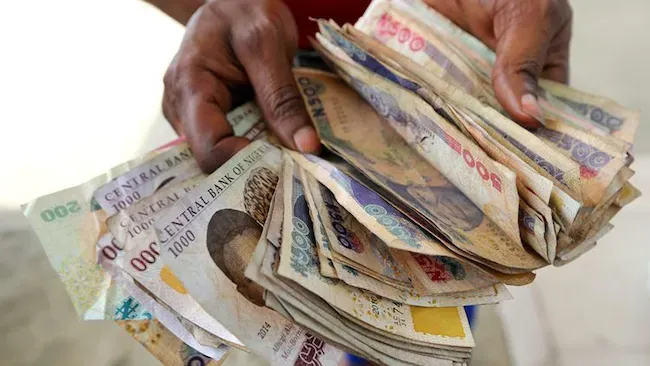
    The Central Bank of Nigeria has said that old design naira banknotes will continue to be legal tender beyond December 31, 2023.

    In a statement signed by Director, Corporate Communication Dr. Isa AbdulMumin on Tuesday, all banknotes issued by the Central Bank of Nigeria (CBN), in accordance with Section 20(5) of the CBN Act 2007, will continue to remain legal tender, ad infinitum, even beyond the initial December 31, 2023, deadline.

    According to the Apex Bank, it is not only in line with international best practices, it would also forestall a repeat of earlier experiences.

    “Please recall that the Central Bank of Nigeria introduced the redesign of N200, N500 and N1,000 denominations in October 2022 and certain deadlines were set for the old design of these denominations to cease as legal tenders.

    “Without prejudice, the Central Bank of Nigeria wishes to inform the general public of its desire to extend the legal tender status deadline of the old design of N200, N500 and N1,000 denominations, ad infinitum.

    “The Central Bank of Nigeria is working with the relevant authorities to vacate the subsisting court ruling on the same subject. Accordingly, all CBN branches across the country will continue to issue and accept all denominations of Nigerian banknotes, old and redesigned, to and from deposit money banks (DMBs),” the statement read.

    The regulator enjoined Nigerians to continue to accept all Naira banknotes (old or redesigned) for day-to-day transactions and “handle these banknotes with utmost care, to safeguard and protect the lifecycle of the banknotes. Also, the general public is encouraged to embrace alternative modes of payment, e-channels, for day-to-day transactions.”

  • Multiple Taxations Affecting Network Expansion – Telcos

    Multiple Taxations Affecting Network Expansion – Telcos

    The Association of Telecommunications Companies of Nigeria says funding required for network expansion is now being redirected to the payment of illegal taxes.

    The operators revealed that the telecom industry was faced with multiple regulations that had led to multiple taxes, ensuring that operators paid taxes to federal, state, and local governments.

    They lamented that the taxes were impacting their members negatively.

    They disclosed this during a meeting with the House of Representatives Committee on Telecommunications to seek legislation to create an enabling environment for the sector.

    During discussion with the committee, ATCON President Tony Emoekpere, clamoured for a special funding vehicle for telecom operators in the country to help them bridge the infrastructure funding gap in the country.

    He said, “Telecom is a capital-intensive sector, requiring significant CAPEX investment to facilitate efficient communications service provision.

    “We would like this committee to drive strategic engagement with the Central Bank of Nigeria on behalf of the telecom sector to bridge the infrastructure funding gap by providing accessible low-cost intervention funds for the rapid deployment of broadband infrastructure nationwide, including in rural areas.

    “In particular, special funding concessions should be provided to the telecommunications industry similar to those provided to the manufacturing sector, and the development of a special infrastructure funding scheme for operators in concert with Infrastructure Corporation of Nigeria (a special purpose infrastructure funding vehicle establishment by the Central Bank of Nigeria will also help harness opportunity for Nigeria’s telecoms infrastructure development through the origination, structuring, execution and end-to-end management of financing for infrastructure development projects to resolve the existing infrastructure deficit.”

    He noted that the country could also adopt the model practised by the Nigerian Local Content Management Board for the Local Content Fund in the oil and gas sector in the telecoms’ industry.

    Emoekpere also highlighted that operators were still operating their old tariff regime while the cost of doing business in the country had risen sharply due to a myriad of factors impacting their businesses.

    He further disclosed to the committee that Right of Way charges were still very high in different states, including Lagos State and the FCT.

    He declared that the country’s 70 per cent broadband penetration target cannot be achieved with high ROW charges, and states must adopt the uniform N145 per meter or waive ROW fees.

    He further urged the Federal and State Governments to activate the use of ICT in governance, health care, education, and agriculture, to encourage operators.

  • CBN Didn’t Liquidate New Banks, Clarifies NDIC

    CBN Didn’t Liquidate New Banks, Clarifies NDIC

    The Nigeria Deposit Insurance Corporation (NDIC) has explained its role in the 20 banks liquidated by the Central Bank of Nigeria (CBN).

    In a signed statement by the Director, Communication & Public AffairsBashir A. Nuhuthe Corporation stated that the report in various social media platforms was misleading.

    The statement reads: “The Nigeria Deposit Insurance Corporation (NDIC) wishes to address the recent misleading news reports circulating on various social media platforms under the headline “CBN Liquidates 20 Banks – NDIC (Names).”

    “Contrary to the misleading headline, we would like to clarify that the 20 banks mentioned in those reports were among the banks that had been previously closed due to the revocation of their operating licenses by the Central Bank of Nigeria (CBN) between 1994 and 2018.

    “The general public should be aware that the NDIC has fulfilled its commitment by paying the guaranteed sums owed to depositors. Additionally, the Corporation has made cumulative payments of liquidation dividends totalling N45.45 billion as of July 2023, representing amounts exceeding the guaranteed sums to depositors of the 20 banks.

    “In light of further recoveries from debtors of the liquidated banks, the Corporation has announced an additional N16.18 billion in liquidation dividends to be paid to depositors, creditors, and shareholders of the 20 banks in liquidation.

    It’s important to note that the liquidation dividend represents the amount in excess of the insured sums paid by the NDIC to depositors of a closed bank. This amount is derived from recoveries made from the realization of assets of failed financial institutions and covers payments to creditors and shareholders after the full payment to depositors of the defunct bank.

    The deposit insurer urge relevant stakeholders to visit any of its offices or access the claims page on our website, www.ndic.gov.ng, to download, complete, and submit the verification form along with the prescribed supporting documents. Submissions should be sent to the dedicated email: claimscomplaints@ndic.gov.ng, it said.  

    The affected banks are; Liberty Bank, City Express Bank, Assurance Bank, Century Bank, Allied Bank, Financial Merchant Bank, Icon Merchant Bank, Progress Bank, Merchant Bank of Africa (MBA), Premier Commercial Bank, North South Bank, and Prime Merchant Bank. Others are Commercial Trust Bank, Cooperative and Commerce Bank, Rims Merchant Bank, Pan African Bank, Fortune Bank, All States Trust Bank, Nigeria Merchant Bank, and Amicable Bank in-liquidation.