Author: Chike Ozohili

  • NIDCOM Boss applauds group for empowering Nigerians in the Diaspora

    NIDCOM Boss applauds group for empowering Nigerians in the Diaspora

    Hon. Abike Dabiri-Erewa, Chairman, Nigerians in the Diaspora Commission (NIDCOM) has commended Avenue Impact, a UK- based consultancy firm, for transforming and empowering Nigerians in the Diaspora to enhance their skills and transition into Project professionals not only in the UK but also in the USA, Canada, Europe, and other parts of the world.

    Speaking at a networking session with a group of Nigerian professionals in the UK, Dabiri-Erewa also commended them for their support to Nigerians at home to enhance their project management skills and for training and mentoring over 10,000 members of the global Diaspora community.

    She further noted the commitment of their various mentees who have themselves turned to mentors and uplifting younger ones .

    At the event, which was also attended by the Mayor of Southwark, Mayor Micheal Situ, a number of those who had been trained by Avenue Impact, testified to the tremendous impact the skills acquired had transformed their lives and enhanced their job acquisition and performance.

    The NIDCOM boss encouraged them to key into the Commission’s programmes such as National Diaspora Day on July 25, Nigerians Diaspora Investment Summit (NDIS), Badagry Door of Return, Nigeria Diaspora Housing Scheme amongst others.

    The Managing director, Mr Funsho Akinwunmi said the event seeks to unite Nigerian Project and IT Professionals, foster networking and discussions on leveraging skills to add value to UK and Nigeria and support the current government’s initiatives.

    Earlier, Mr Tunji Ajidahun, Programme Director (Avenue Impact Limited) welcomed all and stressed the commitment of the firm to continue to train Nigerians in the diaspora on skills needed for better placements wherever they find themselves.

    Pastor Smart Kemiki – Managing Director of Dominion4Eever Management Limited gave a talk on how to invest wisely in the UK while Dr. Babatunde Adeyemo – CEO of Pelican Valley Estate spoke on investing in Real Estate in Nigeria.

    The event was rounded up with a thrilling performance by Music mogul, Paul Play Dairo.

  • NALDA To Crash Maize, Rice Prices Across Nigeria

    NALDA To Crash Maize, Rice Prices Across Nigeria

    *Commences Harvest From Farm Estates

    The National Land Development Agency (NALDA) is set to crash the price of maize and rice as it commences crop harvest from its farm estates across Nigeria.

    The Agency has farm estates across Nigeria has achieved tremendous success in both farms built and run solely by the agency and in collaboration with private and public institutions across the six geopolitical zones.

    Harvesting, bagging and storing of rice and maize are currently ongoing in Niger, Nasarawa, Benue, and Oyo states.

    The agency targets 150 metric tons of maize while the faro 44 and 59 rice cultivated at Nasarawa state is expected to yield over 300 metric tons of paddies.

    Harvesting and bagging have also ongoing in the NALDA-cultivated 150-hectare rice farm in Gboko, Benue State.

    According to the agency, it is anticipated that the harvests will boost Nigeria’s grain supply (rice and maize), which will have a big effect on the value chains.

    Evidence from states during the media tour of harvest activities at farm sites showed that the harvests will help to reduce the gap in domestic production and supply of rice and maize.

    Speaking with journalists, NALDA Executive Secretary, Prince Paul Ikonne, said the harvest will be released into the markets immediately as it would greatly assist in cushioning the effects of high food prices.

    In Bauchi State, maize harvest is ongoing at the well-equipped NALDA farm estate located at Galambi.

    Although the overall land area is 500 hectares, 50 hectares were cultivated due to a 15-day rain delay and a late start to activities.

    The farm is equipped with four tractors, two maize threshers, planters, boom sprayers, maize harvesters, and a finished grain warehouse.

    The Bauchi State Coordinator for NALDA is Jalaludeen Muhammad Mu’Azu. said that the NALDA farm will boost significant production in the area because no farms in the state possessed such machinery.

    Head, Department of Engineering, at NALDA, Engineer Owolabi Matthew Olusegun, speaking with journalists about the level of mechanisation on the farm expresses joy at the level of impact the harvest will have on the Nigeria economy.

    “This is what we have been preaching, and it is proof that Nigeria is capable of doing so, as you have witnessed firsthand at NALDA Farm. With this, you can see how much labour we have removed, how much drudgery has been eliminated, and how the entire process has been streamlined.

    “We are therefore appealing to the federal government to invest more in NALDA. We are ready to replicate this farm all over the country. With this we can increase the acreage to ensure that we get food self-sufficiency. We can do it and we are doing it,” he said.

    According to Mu’Azu, the crop’s success has already piqued the interest of farmers in the surrounding farming communities.

    He explained that the entire farm operation was entirely mechanized, from harrowing to planting to spraying fertilizer with a 400-litre capacity boom sprayer and machinery for weeding and harvesting.

    According to him, “we have just started our harvest and you know this is the first time we are farming here. From the stories that we heard from people, there is a particular place they showed us that since they came here 40 years ago, they have never seen maize production that can be compared to our own.”

  • Naira Plunges Across Forex Segments Amid Liquidity

    Naira Plunges Across Forex Segments Amid Liquidity

    The naira closed last week on a losing streak, plunging in all segments of the foreign exchange (forex) market.

    “In the local currency market, the performance of the naira was underwhelming”, said analysts at Afrinvest.

    At the parallel market, the base currency (Dollar) appreciated 1.8 per cent week-on-week (w/w) against the price currency (naira) to N1,150.00/$. While at the NAFEM window, the base currency (dollar) rose 0.4 per vent w/w against the naira) to N794.89/$. Meanwhile, activity level in the NAFEM window improved by 11.1 per cent w/w to $817.7 billion from $736.3 billion in the prior week.

    At the FMDQ Securities Exchange (SE) FX Futures Contract Market, the total value of open contracts of the Naira remained at $4.2 billion.

    “We do not foresee any changes given that CBN has cleared all Non-Deliverable Forwards (NDFs) open contracts, shortly after rendering contracts for tenors between one and twelve months inactive in response to reforms in the NAFEM window. This week, we expect rates across different segments of the market to depreciate following demand-supply imbalance”, said Afrinvest.

    At the end of trading last week, system liquidity surged higher by 667.2 per cent to close at N527.1 billion. Nonetheless, the price of liquidity in the banking system, the OPR and OVN rates rose 2.9ppts and 2.4ppts w/w respectively to 23.8 per cent and 24.6 per cent.

    At the primary market segment for T-bills, the CBN offered bills worth N211.7 billion across the 91 (N9.7 billion), 182 (N1.8 billion), and 364-day (N199.9 billion) tenors.

    Demand was healthy across all ends of the curve as the average bid-to-cover ratio printed at 5.8x due to robust system liquidity. Stop rates across the 91-day and 182- day instrument improved, rising 100bps apiece to 7.0 per cent (91-day) and 11.0 per cent (182-day). Meanwhile, the stop rate remained unchanged at 16.8 per cent in the 364-day instrument.

    Meanwhile, the secondary market segment saw a bullish outing as the average yield across all tenors compressed 213 basis points (bps) w/w to 11.2 per cent. The bullish outing was driven by buy interest on the mid (182-day) and long-dated (365-day) instruments as yield saw a decline of 242bps and 221bps w/w respectively. In the coming week, we anticipate healthy liquidity conditions due to FAAC inflow and Bond coupon payment. Consequently, we expect buy sentiment to be sustained at the T-bills secondary market.

    Meanwhile, Brent crude oil price futures inched higher by 1.4 per cent to close at $81.75/bbl., as traders remained on the sideline ahead of next week’s Organisation of Petroleum Exporting Countries (OPEC+) meeting.

    The anticipated meeting would focus on output cut agreements for 2024, following the recent downturn in oil price due to strong supply from non-OPEC producers. Meanwhile, on the domestic front, Nigeria’s foreign reserves fell 28bps ($91.7m) w/w to $33.2bn (22/11/2023).

  • CBN Eyes Explicit Inflation-Targeting Framework To Enhance MP Effectiveness

    CBN Eyes Explicit Inflation-Targeting Framework To Enhance MP Effectiveness

    The Central Bank of Nigeria (CBN) is set to adopt an explicit inflation-targeting framework to enhance the effectiveness of its monetary policy.


    The Governor, Central Bank of Nigeria (CBN), Mr. Olayemi Cardoso who disclosed this in Lagos while unveiling his policy direction at the Chartered Institute of Bankers of Nigeria (CIBN) bankers’ night, said that the details and requirements for this framework are currently being finalized alongside the fiscal authorities.


    He said the CBN will provide forward guidance, enhance transparency, and maintain effective communication with the public to anchor expectations and build trust among stakeholders.


    He said under the economic agenda of President Bola Ahmed Tinubu’s administration, the government has set an ambitious goal of achieving a Gross Domestic Product (GDP) of $1.0 trillion over the next seven years, with clearly defined priority areas and strategies. He said attaining this substantial target necessitates sustainable and inclusive economic growth at a significantly higher pace than current levels. The administration has already commenced this journey through fiscal reforms, including the removal of petrol subsidy and the unification of the foreign exchange market rate.   


    On achieving President Bola Tinubu’s Agenda, he  said Nigerian banks do not have sufficient capital in servicing a $1.0 trillion economy in the near future.


    He said the first step to be taking by the CBN will be directing banks to increase their capital while technology will continue to play a critical role in delivering financial services and enhancing financial inclusion.


    “Therefore, we must make difficult decisions regarding capital adequacy. As a first step, we will be directing banks to increase their capital,” he added.


    He stated that from his observation some licensees are operating outside the approved activities, breaching the boundaries set for them, insisting that any intentional or unintended non-compliance will be subject to sanctions, as operators have the responsibility to ensure that they are licensed for the activities they undertake.


    Speaking further he said “Concurrently, as we conduct a comprehensive review of the licensing framework for payment services, we will engage in extensive consultations to develop a new regulatory and compliance framework that is suitable for the technology-driven payment services sector.


    “Looking ahead for the industry, banks should reassess the responsible banking framework to ensure that the requirements are effectively integrated into their strategies. I am aware that some banks have made commendable progress in this regard.


    “The Central Bank of Nigeria is taking steps to enhance its in-house capacity so that it can assist other banks that still have progress to make in implementing their sustainability principles.


    The governor said the primary mandate of the CBN is to ensure price stability, in addition to other objectives such as issuing legal tender currency, safeguarding external reserves, promoting a sound financial system, and providing economic and financial advice to the government.


    He mentioned that  In line with CBN strategy to refocus on its core mandate, the CBN will discontinue direct quasi-fiscal interventionist activities and instead utilize orthodox monetary policy tools for implementing monetary policy.


    According to him “Our monetary policies will aim to achieve price stability, foster sustainable economic growth, stabilize the exchange rate of the naira, and reduce interest rates to facilitate borrowing and investments in the real sector. In order to ensure the proper functioning of domestic and foreign currency markets, clear, transparent, and harmonized rules governing market operations are essential.

    “New foreign exchange guidelines and legislation will be developed, and extensive consultations will be conducted with banks and FX market operators before implementing any new requirements”


    The CBN governor pointed out that the major challenges affecting the nation’s economy include high and rising inflation, inadequate foreign exchange supply, depreciation of the exchange rate, limited external reserves, weakened output, and high unemployment. These challenges according to him have led to increased interest rates, discouraging investments in productive activities.


    He said within the banking system, high inflation has affected asset quality and solvency ratios.


    Additionally, the persistent depreciation of the naira poses a significant risk for domestic banks with foreign exchange exposures.


    He assured Nigerians that while it is indeed a formidable challenge, it is not insurmountable, adding that with the right policy measures, we can overcome these obstacles and pave the way for progress and prosperity.


    He said the removal of petrol subsidy and the adoption of a floating exchange rate, among other government policies, are anticipated to have positive effects on the economy in the medium-term. These measures are expected to enhance investor confidence, attract capital inflows, stimulate domestic investment, and ultimately improve the level of external reserves. Additionally, they are expected to contribute to the stabilization of the domestic currency.


    He said despite the challenging global and domestic macroeconomic environment, Nigeria’s financial sector has demonstrated resilience in 2023, with key indicators of financial soundness largely meeting regulatory benchmarks.


    He mentioned that stress tests conducted on the banking industry also indicate its strength under mild-to-moderate scenarios of sustained economic and financial stress, although there is room for further strengthening and enhancing resilience to shocks.


    He said although the banking sector demonstrated soundness and resilience, there is still much work to be done in fortifying the industry for future challenges.


    He said in recent years, the continuous decline in Nigeria’s crude oil production has further weakened our already inadequate economic diversification. This has led to a decline in government revenue and foreign exchange inflows, while simultaneously witnessing a growth in public expenditures and a deterioration in macroeconomic indicators, which has constrained our policy options. Consequently, we have seen the fiscal deficit and public debt increase, placing additional strain on external reserves and contributing to exchange rate instability.

  • Nigeria’s Q3 GDP Grows 2.54% – NBS

    Nigeria’s Q3 GDP Grows 2.54% – NBS

    In the third quarter of 2023, Nigeria’s Gross Domestic Product (GDP) grew by 2.54 per cent (year-on-year) in real terms. This growth rate is higher than the 2.25 per cent recorded in the third quarter of 2022 and higher than the second quarter 2023 growth of 2.51 per cent.

    In its Gross Domestic Report Q3 2023, released on Friday, the statistics bureau noted that Q3 performance was driven mainly by the Services sector, which recorded a growth of 3.99 per cent and contributed 52.70 per cent to the aggregate GDP.

    The agriculture sector grew by 1.30 per cent, from the growth of 1.34 per cent recorded in the third quarter of 2022.

    The growth of the industry sector was 0.46%, an improvement from -8.00% recorded in the third quarter of 2022.

    In terms of share of the GDP, agriculture, and the industry sectors contributed less to the aggregate GDP in the third quarter of 2023 compared to the third quarter of 2022.

    In the quarter under review, aggregate GDP stood at N60,658,600.37 million in nominal terms. This performance is higher when compared to the third quarter of 2022 which recorded aggregate GDP of N52,255,809.62 million, indicating a year-on-year nominal growth of 16.08%.

    The NBS noted that in real terms the oil sector growth was –0.85 per cent (year-on-year) in Q3 2023, indicating an increase of 21.83 percentage points relative to the rate recorded in the corresponding quarter of 2022 (-22.67%). Growth also increased by 12.58 percentage points when compared to Q2 2023 which was –13.43 per cent.

    On a quarter-on-quarter basis, the oil sector recorded a growth rate of 12.47 per cent in Q3 2023.

    Nigeria recorded an average daily oil production of 1.45 million barrels per day (mbpd), higher than the daily average production of 1.20mbpd recorded in the same quarter of 2022 by 0.25mbpd and higher than the second quarter of 2023 production volume of 1.22 mbpd by 0.23mbpd.

    According to the NBS, “the sector contributed 5.48 per cent to the total real GDP in Q3 2023, down from the figure recorded in the corresponding period of 2022 and up from the preceding quarter, where it contributed 5.66 per cent and 5.34 per cent respectively.”

    The non-oil sector grew by 2.75 per cent in real terms during the period under review. This rate was lower by 1.52 percentage points compared to the rate recorded in the same quarter of 2022 and 0.84 percentage points lower than the second quarter of 2023.

    “The sector was driven in the third quarter of 2023 mainly by Information and Communication (Telecommunication); Financial and Insurance (Financial Institutions); Agriculture (Crop production); Trade; Construction; and Real Estate, accounting for positive GDP growth.

    In real terms, the non-oil sector contributed 94.52% to the nation’s GDP in the third quarter of 2023, higher than the share recorded in the third quarter of 2022 which was 94.34% and lower than the second quarter of 2023 recorded as 94.66%,” the report stated.

  • Chevron Reiterates Commitment To Partnership For Sustainable Development

    Chevron Reiterates Commitment To Partnership For Sustainable Development

    Chevron Nigeria Limited (CNL) has said that it is committed to partnership with various stakeholders including the communities neighbouring its areas of operations in the Niger Delta, for sustainable development.

    CNL is the operator of the joint venture between the Nigerian National Petroleum Company Limited (NNPC Ltd) and CNL.

    The company affirmed that it is engaging with relevant stakeholders including the protesters at its Terminal and Escravos Gas—To-Liquid (“EGTL”) jetties, community leaders, traditional rulers, the Board of Trustees (“BOTs”) of the Warri Onshore Host Community Development Trust (“HCDT”), the Nigerian Upstream Petroleum Regulatory Commission (“NUPRC”), the Delta State Government, and other critical stakeholders to ensure the peaceful vacation of the protesters who have blocked access to the Terminal and EGTL jetties since November 21, 2023.  

    The protesters are demanding for the renaming of the Warri Kingdom Onshore Host Community Development Trust (HCDT) and involvement in the nomination of additional persons for inclusion on the Board of Trustees (BOT) of the HCDT. In addition, they are requesting for mobilization of their community workers for the EGTL Turn Around Maintenance (TAM) activities.

    CNL’s General Manager, Policy, Government and Public Affairs, Esimaje Brikinn reaffirms CNL’s strict compliance with applicable laws and regulations.

    “As a law-abiding corporate citizen, CNL is committed and continues to make progress in the operationalization of the respective HCDTs in compliance with the Petroleum Industry Act, 2021. We continue to collaborate with the relevant stakeholders, including community leaders and traditional rulers towards the operationalization of the HCDTs. Also, CNL is committed to ensuring the participation of community workers in the EGTL TAM in line with the manpower mobilization plan”, he said.

    Esimaje stated that contrary to untrue media reports about some protesters that are allegedly missing, verifiable reports on ground indicate that none of the protesters are missing. 

    He reiterated CNL’s priority on the safety of the people, the environment, and assets in all its operations and noted that CNL will continue to engage the relevant stakeholders to resolve the issues amicably.

    “CNL advocates respect for the rule of law and use of constructive dialogue in the resolution of all issues,” he concluded.

  • Chevron Confirms Protests In Escravos, Terminal, Jetties

    Chevron Confirms Protests In Escravos, Terminal, Jetties

    *Affirms Collaboration With Host Communities

    Chevron Nigeria Limited (CNL) has confirmed ongoing protests at its terminal and Escravos Gas-To-Liquids jetties in Warri, Delta State.

    According to a statement by General Manager, Policy, Government and Public Affairs of Chevron, Esimaje Brikinn, the protesters are demanding for the renaming of the Warri Kingdom Onshore Host Community Development Trust (HCDT) and involvement in the nomination of additional persons for inclusion on the Board of Trustees (BOT) of the HCDT.

    In addition, they are requesting for mobilization of their community workers for the EGTL Turn Around Maintenance (TAM) activities.

    CNL confirms that at about 7am on November 21, 2023, boats conveying some protesters started patrolling along CNL’s Terminal and Escravos Gas-To-Liquids (EGTL) jetties and subsequently blocked access to Escravos Terminal (including EGTL jetty) in CNL’s Western area of operations.

    The company is operator of the joint venture between the Nigerian National Petroleum Company Limited (NNPCL).

    The CNL spokesman insisted that the company operates in strict compliance with applicable laws and regulations.

    He said, “CNL is committed to the operationalization of the HCDT in compliance with the Petroleum Industry Act, 2021 (PIA). CNL continues to collaborate with the relevant stakeholders, including Ugborodo community leaders and traditional rulers towards the operationalization of the HCDT. Also, CNL is committed to ensuring the participation of community workers for the EGTL TAM in line with the manpower mobilization plan.”

    He stated that CNL continues to engage with relevant stakeholders including the protesters, community leaders, traditional rulers, the BOT of the HCDT, Nigerian Upstream Petroleum Regulatory Commission (NUPRC), the Delta State Government, and other critical stakeholders to ensure the peaceful vacation of the protesters from CNL’s Terminal and EGTL jetties.

    “CNL places the highest priority on and remains committed to the safety of people, the environment and its assets,” Esimaje noted.

  • NSIA-ZCG Sign Pact On Infrastructure Investments In Africa

    NSIA-ZCG Sign Pact On Infrastructure Investments In Africa

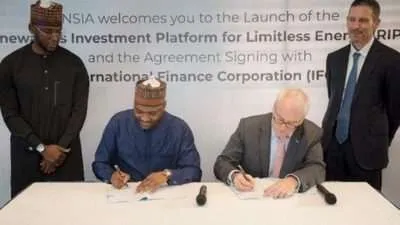
    The Nigeria Sovereign Investment Authority (NSIA) and Z Capital Group (ZCG), on Wednesday announced a joint venture partnership to establish a fund focused on infrastructure investments in Africa.

    This strategic collaboration offers the opportunity to leverage the unique economic and financial opportunities that are currently burgeoning within the African continent.

    NSIA is an investment institution of the Federal Republic of Nigeria, established by the Nigeria Sovereign Wealth Act (Establishment Act 2011), to manage and invest in a diversified portfolio of medium and long-term funds. While ZCG is a leading, privately held merchant bank comprising private markets asset management, business consulting services, technology development and solutions. 

    The ZCG-NSIA partnership signifies a significant step toward sustainable and impactful infrastructure investments in Africa, reflecting a shared commitment to economic development, innovation, and climate resilience in the region. This collaboration marks a pivotal moment showcasing NSIA as a partner of choice in leveraging opportunities that align with the African continent’s momentum and upward trajectory in the global economic arena. 

    Investment Commitment: Under this MoU, ZCG and NSIA will pursue equity, debt, and other blended financial instruments for investments across diverse sectors, including, but not limited to, healthcare, renewable energy, mobility & logistics, energy transition, climate-adaptive infrastructure, digital & social infrastructure, climate-smart agriculture, and green industrialization. 

    The joint venture is expected to capitalize on the complementary expertise of NSIA and ZCG, combining technical expertise, project management skills, and a deep understanding of the local context to deliver successful infrastructure solutions.

    In addition, the partnership will prioritize environmentally sustainable and socially responsible practices, aligning with global standards and best practices to ensure long-term benefits. ZCG and NSIA will seek projects that deliver scalable socio-economic impact in Africa, while also generating attractive investment returns and diversification opportunities.

    Founder, President, and Chief Executive Officer of ZCG, James Zenni “We are pleased to expand our long-standing relationship with the NSIA through this unique partnership that will support our shared investment and socio-economic goals,” said “Given Africa’s rapidly expanding population and its increasing cultural and political influence on a global scale, we see many appealing infrastructure investment opportunities across the continent. We look forward to combining our investing, consulting, and technology expertise with NSIA’s deep expertise in managing large-scale infrastructure projects across multiple verticals as well as pivotal stakeholder relationships to identify and invest in assets that further drive economic development throughout the continent.” 

    “NSIA is pleased to partner with ZCG on this joint venture that will enable us to pursue compelling investment opportunities in Africa,” “ZCG shares our vision of fostering continued economic growth and innovation across Africa, ZCG also shares our focus on investments in climate adaptive infrastructure to meet the needs of current and future generations of Africans. In collaboration with ZCG, we can deepen existing investments to further support Africans and play a leading role in propelling sustained socio-economic development across Africa,” said, Managing Director and CEO of NSIA, Aminu Umar-Sadiq.

  • We’re Closely Monitoring Egina Spill Situation -NIMASA

    We’re Closely Monitoring Egina Spill Situation -NIMASA

    The Nigerian Maritime Administration and Safety Agency (NIMASA) has said it is closely monitoring the crude oil spill incident which took place during loading operations in Egina on 15th November 2023 at about 6:30am.

    The Assistant Director, Public Relations, NIMASA, Osagie Edwards, in a statement said the Agency is working closely with the National Oil Spill Detection and Response Agency (NOSDRA) and Nigerian Upstream Petroleum Regulatory Commission (NUPRC) from the Crisis Management Room CMR, where the spill is being monitored real time using oil spill monitoring software from the Emergency Response Centre.

    NIMASA explained that though the volume of the spill is not yet confirmed, Total Energies is providing aerial surveillance, dispersant application, while further mobilization is being considered. 

    “The Oil Spill Response Limited from the United Kingdom is also assisting with pollution control measures. Reconnaissance survey of the impacted area confirms that the shoreline communities of Andoni, Qua-Iboe terminals, Bonny Island, Opobo/Nkoro and Eastern Obolo, which are closest to Egina, are not yet affected,” the Agency said. 

    NIMASA Director General of NIMASA, Dr Bashir Jamoh, noted that the Agency is in collaboration with all stakeholders to control the pollution and also put in place measures to prevent such occurrences in the future, in line with provisions of the MARPOL Convention.

    “Since the incident happened, our men have been liaising with other organs of Government to ensure the pollution is effectively controlled and managed, to protect the marine environment and the communities close to the incident point. Accidents do happen, it’s what we do thereafter that matters and I believe that the IOC Total, working with NIMASA, NUPRC, NOSDRA and collaborating with international service providers, will surely ensure proper management of the spill,” he said.

  • FAAC: FG, States, LGs Share N906.955bn October Revenue

    FAAC: FG, States, LGs Share N906.955bn October Revenue

    The Federation Account Allocation Committee (FAAC) has shared the total sum of N906.955 billion Federation Account Revenue to the Federal Government, States and Local Government Councils for the month of October 2023. 

    A breakdown of the amount according to a communique issued by the FAAC revealed that total distributable revenue comprises statutory revenue of N305.070 billion, Value Added Tax (VAT) of N 323.446 billion, Electronic Money Transfer Levy (EMTL) of N15.552 billion, Exchange Difference of N202.887 billion and Augmentation of N60.000 billion.  

    According to the communique, total revenue of N1,346.519 billion was available in the month of October 2023. Total deductions for cost of collection was N53.483 billion; total transfers, interventions and refunds was N386.081 billion.   

    Gross statutory revenue of N 660.090 billion was received for the month of October 2023, lower than the N1,014.953 trillion received in the month of September 2023 by N354.863 billion.  

    The gross revenue available from the Value Added Tax (VAT) was N347.343 billion, higher than the N303.550 billion available in the month of September 2023 by N43.793 billion.   

    Of the N906.955 billion, the Federal Government received N323.355 billion, State Governments got 307.717 billion and the Local Government Councils took home N225.209 billion. 

    The sum of N50.674 billion (13% of mineral revenue) was shared to the relevant States as derivation revenue. 

    From the N305.070 billion distributable statutory revenue, the Federal Government received N147.574 billion, the State Governments received N74.852 billion and the Local Government Councils received N57.707 billion. The sum of N24.937 billion (13% of mineral revenue) was shared to the relevant States as derivation revenue. 

    The Federal Government received N48.517 billion, the State Governments received N161.723 billion and the Local Government Councils received N113.206 billion from the N323.446 billion VAT revenue.

    The N15.552 billion Electronic Money Transfer Levy (EMTL) was shared as follows: the Federal Government received N2.333 billion, the State Governments received N7.776 billion and the Local Government Councils received N5.443 billion.

    The Federal Government received N93.323 billion from the N202.887 billion Exchange Difference revenue. The State Governments received N47.334 billion, and the Local Government Councils received N36.493 billion. The sum of N25.737 billion (13% of mineral revenue) went to the relevant States as derivation revenue. 

    The Augmentation of N60.000 billion was shared as follows: Federal Government received N31.608, the State Governments received N16.032 billion and the Local Government Councils received N 12.360 billion

    In the month under review, Import Duty, Petroleum Profit Tax (PPT), Value Added Tax (VAT), CET Levies and Electronic Money Transfer Levy (EMTL) increased significantly while Excise Duties and Companies Income Tax (CIT) recorded considerable decreases. Oil and Gas Royalties decreased marginally.