Goldman Sachs has predicted oil price will likely rise to $100 again, citing lower production output from the Organization of Petroleum Exporting Countries (OPEC), amongst others.
Chief Executive Officer of Financial Derivatives Company (FDC) Limited, Bismarck Rewane, says it will only increase revenue to governments but will not benefit Nigerians.
“Globally, oil prices trade at $95/b and are projected to hit $100/b by year-end due to supply shortages. While government revenue, Federal Account Allocation Committee (FAAC) could increase in naira terms, Nigeria’s reliance on imported energy products (LPG, diesel, petrol and kerosene) amid a falling naira means higher food and transport costs, exacerbating inflationary pressures”, said Rewane in a statement Sunday.
He said, these will be major considerations for the MPC at its next meeting, whenever that will be. Nonetheless, we expect the MPC to remain hawkish.
Rewane in its FDC Prism Sunday however said, some form of looking inward could solve Nigeria’s economic woes.
“Viable options would be improving the value addition of top agricultural traded products like cashew and cocoa, as well as mineral resources like steel. More importantly, Nigeria needs to show its political will, improve access, and encourage local businesses, particularly SMEs, to participate in the AfCFTA by removing non-tariff barriers, he said.
Also meanwhile, oil and gas companies keep reporting meaty profits and investors are rediscovering their love of hydrocarbons.
At the recent World Petroleum Congress (WPC) in Calgary, oil executives and government officials both warned against the continued push to discourage investment in new hydrocarbon production.
“There seems to be wishful thinking that we’re going to flip a switch from where we’re at today to where it will be tomorrow,” Exxon’s chief executive said during the event.
“No matter where demand gets to, if we don’t maintain some level of investment industry, you end up running shorter supply which leads to higher prices,” Darren Woods also said.
This is exactly what we are currently witnessing in Europe and the United States. Because of the transition push, oil producers are being extra cautious with production growth. Also, they are prioritizing shareholder returns to keep shareholders on, so it pays for them to be cautious.
In Europe, the supermajors are being squeezed by windfall profit taxes, activist pressure, and increasingly restrictive legislation, so they are turning elsewhere.
Shell is tapping billions of potential barrels in Namibia, and Total is considering a $9billion commitment to oil exploration in Suriname.
Meanwhile, Nigeria’s oil output could increase to 2.1 million barrels per day by December 2024 after the country secured $13.5 billion in investment pledges over the next twelve months from oil majors.
The companies agreed to invest a total of $55.2 billion by 2030 – including the $13.5 billion over the next twelve months – to lift crude production, according to a statement from the president’s office. Nigeria’s oil output stood at 1.18 million bpd in August 2023, according to the Organisation of Petroleum Exporting Countries (OPEC), meaning production would nearly double by the end of next year.
Nigeria is the top oil producer in Africa but large-scale oil theft has over the years cost the country billions of dollars, while dwindling investment in the sector has also curtailed output. The losses from theft and a lack of new projects have reduced oil exports sharply, eroding foreign currency earnings in Africa’s biggest economy.
The Nigerian National Petroleum Company Limited (NNPCL) and the Nigerian Content Development Monitoring Board have signed a Memorandum of Understanding with major oil companies to reduce cost, drive efficiency in Nigeria’s oil and gas industry.
The agreement, which was signed on Monday, would enable the implementation of the industry framework which was developed by the IJC to achieve an optimal contracting cycle of not more than 180 working days.
Key benefits of the framework in the MoU include a reduction of the contracting cycle for open competitive tender, selective tender, and single sourcing tender to 180, 178, and 128 working days respectively compared with the current best effort performance of 327, 333, and 185 working days respectively.
The framework is in line with the Nigerian Upstream Cost Optimization Program (NUCOP) and in consonance with President Bola Tinubu’s directive for NNPC Ltd and NCDMB to engage the industry with the objective of improving the performance of the petroleum industry.
An optimized contracting cycle is expected to improve the ease of doing business, reduce cost, and drive efficiency which will eventually translate to production growth, increased revenues, and ultimately improved profitability.
The MOU is one of the many collaborative solutions between the major industry players that will contribute significantly to the double-digit economic growth rate agenda of the Government and generate tremendous value for all the stakeholders including the investors, the companies, the community, and the country at large.
The move is in line with one of the key mandates of NNPC Ltd as the National Energy Company in article 53 (7) of the Petroleum Industry Act (PIA) to conduct its affairs on a commercial basis in a profitable and efficient manner.
The mandate for efficiency requires that NNPC Ltd is committed to working with its partners in ensuring key processes, procedures, and timelines that drive major business activities such as contracting are structured in a manner that engenders efficiency and drives profitability.
NNPC Vice President, Upstream, Oritsemeyiwa Eyesan, signed on behalf of the National Oil Company while the Executive Secretary NCDMB, Simbi Wabote signed on behalf of the Board.
Cement manufacturers under the umbrella of the Cement Producers Association of Nigeria have warned that the price of the product may further rise following plans by the federal government to introduce the use of concrete for road construction.
Fielding questions from journalists at its AGM, the Chairman of BUA group owners of Bua Cement said cement prices will drop from N5000 to N3500 by January 2024 when its new plants finally begin operation.
The Minister of Works Dave Umahi since his appointment has been an advocate of the use of concrete for road construction, as according to him, it lasts longer than roads constructed with asphalt.
In a statement jointly signed by PrinceDavid Iweta and ChiefReagan Ufomba, the National Chairman and National Secretary respectively, the Association warned that the price of cement may rise to as N9000 from the present ₦5000.
However, the Cement manufacturers warned that there would be dire consequences if the supply end is not addressed properly, noting that if it is not addressed the price of cement would not come down.
The Association therefore called on the government to emphasise road designs that allow both cement technology and asphalt pavement to run concurrently.
“Our findings from various parts of the country show that cement sells for as high as N6000 per bag in the rainy season. Our prediction is that it will sell for over N9,000 per bag in the dry season, especially with the pronouncement of the Honourable Minister of Works on cement technology and the marching order on housing by Mr President if the government does not take proactive steps.
“While we commend the Honourable Minister’s position on cement-made roads, we warn of the dire consequences if the supply end is not properly addressed. In fact, it would amount to dereliction of duty not to intervene. And the time is now. To do otherwise is to continue in a worsening pipe dream that prices would suddenly drop on this essential input that will continue to drain the purse of Nigerians, render them homeless, encourage chaos between demand and supply, and worsen the infrastructure deficit it sets out to cure, and lead to an unprecedented price hike.
“We also call on the Honourable Minister of Works to lay more emphasis on the design criteria of roads that allow both cement technology and Asphalt pavement to run concurrently, in turn, will provide ample time for a smooth transition that allows contractors to invest in commensurate and requisite equipment and retooling. We must also as a nation regulate static and dynamic load traffic by introducing weighbridges at access points on our highways.”
While urging the present administration to conclude the backward integration policy started by late President Yar’adua administration, the Cement manufacturers noted that availability and affordability of the product cannot be achieved if the government fails to break the chain of monopoly and favouritisms.
It, therefore, called on President Bola Tinubu’s government to permanently solve this perennial cement price hike problem by expanding participation in the sector with companies who have verifiable evidence of local investment, including greenfield licenses and quarrying.
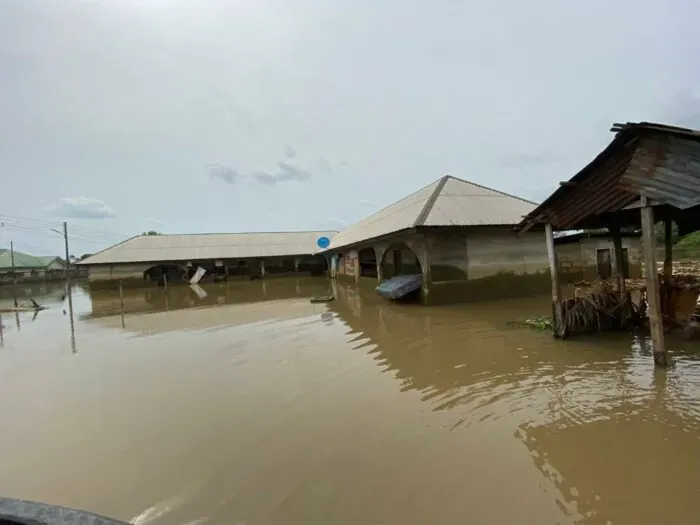
No fewer than five riverine communities in Delta have been sacked by water in the Warri North Local Government Area.
Mr Kenren Pere, Councillor representing Ogbinbiri ward 18, in Asigborodo Community disclosed this to newsmen on Monday in Warri.
Pere said that the affected communities included Torukubuagbene, Awanba, Koropigbene, Itagbene and Asigborodo as well as adjourning communities.
According to him, the incident began more than a week ago and the situation became worse on Friday.
While appealing for an urgent intervention by the state government, the councillor said that the life of his people were at stake.
Pere said: “I cannot attribute the course to flooding or the heavy torrential downpour that has been happening in recent time, though, rain has been falling before, but we have not had it so bad like this.
“Many valuables including local boats, clothes, food items, and other means of livelihood have been destroyed by the unfortunate occurrence.
“Lives are at stake, people can no longer go about their normal daily activities to feed, so there is hunger in the affected communities.
“The overflow started more than a week ago, but the situation became worse three days ago, leaving my people in fear,” he said.
Pere also appealed to the state government to send relief materials including food items to the people.
to alleviate their suffering.”
However, when contacted, Mr Smart Asekutu, Chairman, Warri North Local Government Area did not pick the several calls put across to his mobile line nor respond to the WhatsApp messages sent to his cell phone.
Meanwhile, Mr Daniel Okpor, Director, Administration and Finance, Delta Emergency Management Agency said that the agency was not aware of the development.
Okpor, however, requested for video clips of the incident to aid their findings and response.
“Was the incident a result of flood or rainfall? We believe more on video than photographs. In the absence of video, you can send me photographs,” he requested.
Conoil Plc has reported gross earnings of N145.8 billion for the 2022 financial year.
The amount represents an increase of 5.3 per cent against N138.2 billion in the corresponding period of 2021.
The major oil marketer in a statement at the weekend on its audited results for the year ending December 31, 2022, said despite the massive developmental challenges in the country and the tough operating environment, its Profit Before Tax (PBT) grew by 60.1 per cent to N6.13 billion in 2022 from N3.83 billion in 2021, while Profit After Tax (PAT) increased by 60.1 per cent from N3.08 billion to N4.96 billion in the same period.
With the significant improvement in profitability in the petroleum-marketing subsector, Conoil’s earnings per share rose to N7.14, representing a 60.8 percent increase over the N4.44 earned in 2021.
The company also recorded an increase of 22 per cent in net from N53.98 billion to N65.91 billion.
Thrilled by the impressive all-round performance, shareholders at the company’s 53rd Annual General Meeting at the weekend, unanimously approved the proposed final dividend payout of N1.734 billion, which translates to N2.50 per share, for the 2022 financial year.
Conoil had assured the shareholders of its commitment to continue to deliver strong and sustainable performance that would enhance returns to its shareholders.
The Chairman, Conoil Plc, Dr. Mike Adenuga (jnr), in his address to the shareholders at the meeting, said that company remained motivated in creating excellent value for its shareholders, while also ensuring that its share price remained on the rise.
He said, “We have shown a consistent ability to improve our operating margin and grow our volumes across all our locations. We have a great brand portfolio with energized and talented personnel with a reach pan-Nigerian. Our overriding goal is to ensure the continued delivery of excellent services to our customers and ultimately ensuring that our shareholders are rewarded.
“Conoil Plc plans to consolidate on the progress made in the previous years to deliver a strong and sustainable performance that enhances returns to our shareholders.
“Regardless of the odds, the company is marching forward in the year with confidence and optimism, as it strategically and continuingly positions its business to take advantage of key opportunities,” Adenuga assured the shareholders.
Looking ahead, the Conoil Chairman noted that while there might be challenges posed by the rapidly changing geopolitical and socio-economic environment, Conoil would, however, concentrate on the strategies that have given it the greatest dividend.
He said the Federal Government has stated critical reforms, such as the elimination of the petrol subsidy and reforms in the foreign exchange market.
Towards this end, he said Conoil would concentrate on the strategies that have given it the greatest dividend. “The Company will grow its earnings, improve profitability and asset quality and deliver competitive returns to its esteemed shareholders.”
Access Holdings’ net profit for the first half of the year rose by about 52 per cent compared to the corresponding period of last year as its half-year revenue reached N900 billion mark for the first time ever.
Gross earnings for the period climbed by 58.9 per cent to N940 billion, putting the financial services group on track to dwarf the N1.4 trillion reported for full year 2022, when the current year winds down.
Access Bank anchored the growth on fair value and foreign exchange gain, which expanded by approximately 50 per cent to N192 billion.
That followed a major revamp of the Nigerian foreign exchange system towards the end of the second quarter, which triggered a reasonable drop in the value of the naira against the dollar but opened the door for the lender to gain big after converting its financial assets denominated in the foreign currency to the naira.
At 13.5 per cent, improvement in net interest income was paltry as the cash the corporation paid savers as an incentive for holding their deposits ate away at most of the interest it generated during the period, which originally had surged by as much as 63 per cent.
That expense alone consumed N382.6 billion of the entire revenue. Taxable profit advanced to N167.6 billion from N97.8 billion a year earlier, while profit for the period rose 52.4 per cent to N135.4 billion.
Ironically, Access Holdings’ post-tax profit lagged those of its other peers who come behind it among Nigeria’s five biggest banks, including UBA, Zenith, GTCO and FBN Holdings in indication of the group’s current inability to tap the vast potentiality of its assets to boost earnings.
Its total assets stood at N20.8 trillion in June in a big leap from N15 trillion at the end of last year, following a banking acquisition in Angola and a number of similar deals in the pipeline with Standard Chartered Bank in Cameroon, Gambia, Sierra Leone, Tanzania and also Angola.
Access Holdings declared an interim dividend of N0.30 per share on Saturday equivalent to a payout of N10.7 billion, compared to the N0.20 per share it announced a year earlier.
The stock has yielded 103 per cent since the beginning of the year.
The World Bank has approved a fresh $700 million loan for Nigeria to boost adolescent girls’ learning and empowerment.
According to a statement published on its website, the lender said the new loan will serve as additional funds for an ongoing project known as the Adolescent Girls Initiative for Learning and Empowerment.
The Bank noted that apart from the girls that would benefit from the financing, others included over 15 million students and beneficiaries, such as teachers, administrators, families, communities, and staff in existing and newly constructed schools.
“The World Bank approved additional financing of $700m for Nigeria to scale up the Adolescent Girls Initiative for Learning and Empowerment programme whose goal is to improve secondary education opportunities among girls in targeted states.
“The additional financing will scale up project activities from the current seven states to eleven additional states and increase the targeted beneficiaries to include out-of-school girls, those who are married, and those who have disabilities,” the statement read.
The World Bank put Nigeria’s out of school children at over 12 million, with many of them in Northern Nigeria.
It was also noted that an estimated one million children were affected by increased insecurity around schools in 2020-2021.
The statement added, “In the seven AGILE programme implementing states – Borno, Ekiti, Kaduna, Kano, Katsina, Kebbi, and Plateau – the number of girls in secondary schools has increased from about 900,000 to over 1.6 million.
“Under the programme, over 5,000 classrooms have been renovated and over 250,000 eligible girls have received scholarships.
“The AGILE programme has supported construction and rehabilitation of WASH facilities in secondary schools and the installation of computers and solar panels which make attending school more convenient and conducive for both girls and boys. Life skills, systems strengthening, and advocacy are other key aspects of the program which address social norms impeding girls’ education.”
The World Bank Nigeria Country Director, Shubham Chaudhuri, stated that, “Closing the gender gaps in economic empowerment by ensuring girls have access to education and skills is key for Nigeria’s development and economic prosperity.
“Nigeria’s working population will soon be one of the youngest and largest around the world, which means that investing in adolescent girls is imperative when addressing overall economic prospects and growth.”
Gombe State Governor, Miuhammadu Inuwa Yahaya (left) with the Deputy Secretary General of the United Nations Amina Mohammed at the sidelines of the 78th UNGA in New York recently.
In the realm of politics, some leaders shine with exceptional brilliance, and Governor Muhammadu Inuwa Yahaya of Gombe State undoubtedly ranks among these distinguished figures.
His recent trip to the 78th United Nations General Assembly (UNGA) in New York City on the entourage of President Bola Ahmed Tinubu carries profound implications for the socio-economic future of Gombe State and the Northern region at large.
The inclusion of Governor Inuwa Yahaya in President Tinubu’s travel delegation, among the 36 State Governors, stands as a proof of his eminence and leadership qualities, as well as the confidence reposed in him by the commander-in- chief not only as northern governors’ forum chairman, but as an outstanding leader.
The significance and impact of this journey cannot be overstated as it aligns with the Greater Gombe Agenda, a vision championed by Governor Inuwa at all times.
The UNGA serves as a platform for comprehensive development, and Governor Inuwa Yahaya took full advantage of the global gathering and advanced the interests of Gombe State and Northern Nigeria effectively.
On the sidelines of the General Assembly, Governor Inuwa Yahaya engaged in fruitful discussions with key UN agencies and partners, with a particular focus on the pressing issue of out-of-school children in his State and Northern Nigeria. This critical issue has been a central concern for him, given the challenges posed by poverty, insecurity, and cultural beliefs.
His commitment to achieving Sustainable Development Goal Four (SDG4) through inclusive and equitable quality education also came to the fore. He particularly sought the support of UNICEF and other international partners to address the pressing challenge of out-of-school children.
Speaking to newsmen in New York, Governor Inuwa Yahaya outlined various strategies employed by his administration, to address the menace of out-of-school children, including the establishment of community-based schools, school construction and renovation, distribution of learning materials, and sensitization campaigns for parents. However, he noted that while the strategies have yielded some positive results, more needs to be done, which is why he has sought for support in that direction.
“I have been able to meet with UNICEF, UNFPA, and other agencies of the United Nations to make sure that we get the support required so that we can uplift the lives and livelihoods of our people, especially in the Northern region where there are a lot of challenges with regards to insecurity and poverty. So, we are strengthening collaboration to address challenges in our state, region, and country,” the Governor said.
The UNGA trip also enabled Governor Inuwa Yahaya opportunity to solidify Gombe’s stance on vital development issues and strengthen relationships.
During his visit to the Nigeria Consul General in New York, Ambassador Lot Peter Egopija, Governor Inuwa highlighted the immense potential of Gombe State and its readiness to tap into global opportunities.
The Governor informed Ambassador Egopija of Gombe State’s agricultural richness and the availability of two major dams in the state which are essential for irrigation and hydropower generation. These valuable resources, he noted, could catalyze agricultural growth and energy sustainability.
He also intimated the Consul General about the sprawling 1000-hectare Muhammdu Buhari Industrial Park, which holds the potential to be a game-changer in Gombe State’s industrial landscape.
He said the Industrial Park will be powered by clean and renewable energy sources such as hydro and solar power, with a promise of uninterrupted 24-hour electricity supply to factories within the park.
The Governor also mentioned the successful maiden Gombe investment summit held in 2022 which secured commitments from investors amounting to over 50 billion Naira across various sectors, including Agriculture, Services, Information and Communication Technology (ICT), and Cement manufacturing.
He expressed his eagerness to build on this success, and solicited the support and participation of the Nigerian Mission in US in the upcoming Gombe investment summit scheduled for November this year.
Governor Inuwa Yahaya’s commitment to addressing climate change and ecological equilibrium is also evident. Recent incidents of floods and infrastructure damage in the State have underscored the need for ecological solutions. The UNGA provided the Governor an opportunity to engage with experts and organizations focused on these challenges.
Also, the Governor secured commitments from the United Nations for support and collaboration in various critical sectors, including health, education, and more to foster socio-economic development.
The UN Deputy Secretary-General, Hajiya Amina Mohammed, during a meeting with the Governor on the sidelines of the General Assembly, assured him that the UN would stand shoulder to shoulder with him and his administration throughout his stewardship to deliver meaningful development to Gombe State.
The DSG assured Governor Inuwa of her willingness to engage with international development partners such as the Bill and Melinda Gates Foundation (BMGF), Susan Buffet Foundation, and the African Peace Corp to garner support for Gombe State in the realm of healthcare and human resource development.
She also offered to facilitate UN’s technical support to bolster the Secretariat of the Northern States Governors’ Forum, a crucial platform for regional development, as soon as a formal request is made.
She commended the giant strides and progress achieved under the leadership of Governor Inuwa Yahaya in Gombe State, noting that the Governor has set a precedent in subnational governance.
Hajiya Amina Mohammed offered words of encouragement to Governor Inuwa Yahaya, lauding the discernible improvements in the quality of life of the people of Gombe State.
In his remarks, Governor Inuwa Yahaya commended the Hajiya Amina Mohammed for her remarkable contributions to the UN’s global mission, describing her as a worthy daughter of Gombe and proud global ambassador of the state and Nigeria.
During the meeting, he presented an overview of the multifaceted development initiatives that his administration is currently implementing, with a particular focus on healthcare and education.
The Governor appealed for support in leveraging Hajiya Amina’s international networks to enhance Gombe state’s healthcare system, particularly at the primary and secondary levels. This includes attracting skilled manpower to fortify the operations of the three General hospitals that have either been constructed or rehabilitated across the three senatorial zones of Gombe State.
In his capacity as the Chairman of the Northern Governors’ Forum, Governor Inuwa Yahaya also sought the UN’s assistance in strengthening the Forum’s Secretariat through the provision of technical experts. These experts would work in tandem with the Forum to drive its overarching development objectives.
Governor Inuwa Yahaya’s active engagement at the UNGA epitomizes his statesmanship and commitment to representing the interests of Gombe State, Northern region and Nigeria as a whole. His mission to secure investment opportunities, address critical issues like out-of-school children, healthcare delivery, and promote ecological sustainability is a demonstration of his leadership’s vision and forthrightness.
As the Governor returns home with the promise of partnerships, investments, and support, Gombe State and Northern Nigeria stand to benefit from his successful sojourn on the global stage. His feat at the 78th UNGA reaffirm that, indeed, he is a diamond shining in the rhinestone of Nigerian politics and governance.
*About the Author: Ismaila Uba Misilli is the Director General (Press Affairs), Government House Gombe.
As part of efforts to ease the hardship occasioned by the removal of petrol subsidy, the Infrastructure Bank has promised to provide funding for the Compressed Natural Gas (CNG) Mass Transit.
According to the bank during a visit to the Permanent Secretary of Special Projects Dr. Okokon Udo Ekanem, part of the strategy will include collaborative efforts towards advancing sustainable infrastructure development.
The team headed by Director in the Bank, Andrew Nweke, said the bank is committed to supporting the Federal Government in mitigating the effects of fuel subsidy removal through the promotion of Compressed Natural Gas (CNG) Mass Transit.
According to him, the bank had dedicated funds towards financing CNG mass transit.
Compressed Natural Gas (CNG) has emerged as a cleaner and more sustainable alternative to conventional fuels, offering significant economic and environmental benefits.
He said TIB’s proactive stance in this endeavour aligns with its broader mission of fostering sustainable infrastructure development in Nigeria.
Also speaking, the Acting Managing Director of the Bank, Mrs. Nkiru Chime, highlighted some of TIB’s achievements in the transport sector through the Move Nigeria Scheme (MNS).
She said the bank has played a pivotal role in facilitating economic progress, adding that since the inception of the MNS, it has disbursed about N47bn, resulting in the distribution of over 4,500 vehicles across all geopolitical zones.
The scheme, she added, has created over 10,000 employment opportunities consequently and has contributed to the Gross Domestic Product through the transport sector.
The transport sector contributed about 1.35 per cent to Nigeria’s GDP in the second quarter of this year.
Chime added that the Move Nigeria Scheme (MNS) has become synonymous with TIB’s commitment to transforming the nation’s transportation landscape.
By facilitating access to financing and resources, she said MNS has empowered numerous entrepreneurs and businesses to acquire vehicles, thereby stimulating economic activities across various sectors.
According to her, the decision to allocate funds for the promotion of CNG Mass Transit underscores TIB’s responsiveness to the evolving energy landscape and its dedication to environmentally friendly and cost-effective transportation solutions.
The troops of 103 Battalion (Rear) of 82 Division, Nigerian Army, presently on Operation UDOKA II had rescued Dr Maxwell Ayim from suspected kidnappers between Four Corner and Amokwe Junction in Udi Local Government Area of Enugu State.
This is contained in a statement issued in Enugu on Saturday by Lt.-Col. Jonah Unuakhalu, acting Deputy Director Army Public Relations, 82 Division, Nigerian Army.
Unuakhalu said that Ayim was rescued unhurt on Thursday.
According to him, the rescue operation was conducted when troops deployed at Udi checkpoint received a distress call from the police on the incident.
Unuakhalu said that on arrival, the troops came in contact with the kidnappers, adding that due to the troops’ superior fire, members of the criminal gang fled in disarray with gunshot wounds into the nearby bushes.
The army spokesman said that the gallant troops during further exploitation of the gang withdrawal route found the victim abandoned by the gang.
“Troops proceeded to rescue the victim. He had since been reunited with his family after preliminary medical checks.
“Joint Task Force Operation UDOKA II therefore, calls on the law abiding and good citizens of Enugu and the South-East region in general not to relent in providing timely, credible and reliable Information.
“This will help in putting an end to the spiral of kidnapping activities and sundry criminality within the region.
“Operation UDOKA II will continue combating crime and criminality in accordance with the extant rules and regulations guiding its operations,” he said.