Author: Chike Ozohili

  • World Bank puts Nigeria’s GDP at $477.4bn in 2022

    World Bank puts Nigeria’s GDP at $477.4bn in 2022

    A new report by the World Bank Group showed that Nigeria’s recorded an estimated Gross Domestic Product of $477.4 billion in 2022.

    The report showed that the country ranks 18th position on the continental ranking of countries by GDP per capita for 2022.

    The 2022 ranking showed that Nigeria notched one point up from the 19th position it ranked in the previous year when the GDP stood at $440.8 billion.

    According to the World Bank’s latest data, Nigeria recorded a 5.7 per cent increase in its GDP per capita, which rose to $2,184 in 2022, from the $2,066 reported in the preceding year.

    In terms of nominal GDP, the country’s economic performance demonstrated remarkable resilience, registering an 8.3% nominal year-over-year expansion in 2022, in spite of the whirlwinds across the global and regional economy.

    Broadly analyzed, the World Bank’s report showed that the African economy slowed to 3.8% in 2022, dipping the continent’s nominal GDP to an estimated $2.75 trillion.

    In addition, the report Indicated that the Sub-Saharan region recorded a slow growth rate of 3.6%, in contrast to 4.1% recorded in 2021, with a projected growth rate of 3.1% in 2023, due to what the bank attributed to sluggish global economic growth, high inflationary pressure, and tough financial conditions exacerbated by the high debt profiles of the countries in the continent.

    A further analysis of the report in terms of GDP per capita, which is a more accurate measure of productivity in an economy, the continent’s economy recorded an average of $2,705 in 2022, indicating a 6.6% increase compared to $2,538 recorded in the previous year.

    The report further covered the top 10 countries in Africa based on GDP per capita in 2022 with Seychelles topping the ranking table with an impressive GDP per capita standing at $15,875, followed by Mauritius, which recorded a 12.7% upswing in its GDP per capita, which climbed to $10,216; and Gabon which came third with 2.1% increase in its GDP per capita to $8,820 in 2022.

    Others are in order of ranking, Botswana which came fourth, boasting an average GDP per capita of $7,738; Equatorial Guinea with a GDP per capita of $7,053 in 2022, representing a 6% decline compared to $7,507 in 2021; the 6th position in ranking was South Africa at $6,776 GDP per capita; Libya at number 7th with $6,716 GDP per capita; Namibia ranked 8th with $4,911 GDP per capita; Egypt followed with $4,295; and Algeria came 10th with $4,274 GDP per capita in 2022.

  • Niger Coup: No harm will come to ousted Bazoum, PM Zein assures

    Niger Coup: No harm will come to ousted Bazoum, PM Zein assures

    *Says Niger will not collaborate with Russia or the Kremlin-backed Wagner group

    Ali Mahaman Lamine Zeine, the newly appointed Prime Minister of Niger, has conveyed that the generals responsible for the recent coup, which led to the ousting of President Mohamed Bazoum on July 26, are committed to ensuring his safety.

    In an interview with The New York Times, Zeine, the most prominent civilian figure appointed by the military, emphasized that Niger does not have a history of resorting to violence.

    “Nothing will happen to him, because we don’t have a tradition of violence in Niger,” Zeine, the most senior civilian appointed by the military leaders, told the newspaper in an interview from Dakar on the fate of overthrown President Mohamed Bazoum.

    Speaking from Dakar, Zeine assured that there are no plans for harm to befall President Bazoum, who has been confined to his residence since the coup.

    Zeine also explicitly stated that there is no intention to collaborate with Russia or the Kremlin-backed Wagner group, addressing concerns about external partnerships.

    Reports from The New York Times indicate that the ousted President’s house had its water and electricity supply disrupted by the coup leaders, who also issued threats regarding his safety if other African countries proceed with a military intervention to restore him to power.

    In response to the situation, President Bola Tinubu warned of “grave consequences” should Bazoum’s health deteriorate while under house arrest, as conveyed by a European Union official. Meanwhile, questions about Bazoum’s well-being and his status were raised by reporters at the United Nations headquarters in New York.

    A spokesperson for UN Secretary-General Antonio Guterres confirmed that they have received information from a reliable source indicating that Bazoum is alive. Stephane Dujarric, the spokesperson, stated, “As far as we know, he’s alive.”

    Prime Minister Zeine, a trained economist who had previously served as the finance minister, addressed the presence of foreign military forces in Niger. He commented on the presence of 1,100 American soldiers and 1,500 French soldiers involved in anti-terrorist operations alongside the local army. Zeine suggested that a review of such military partnerships might be necessary and acknowledged the diplomatic approach of the White House in resolving the crisis.

    As Niger navigates this complex situation, the commitment to peaceful resolution and the assurance of the safety of ousted leaders remain crucial aspects of the ongoing discourse.

  • Revive idle wells to meet revenue shortfall, expert urges FG

    Revive idle wells to meet revenue shortfall, expert urges FG

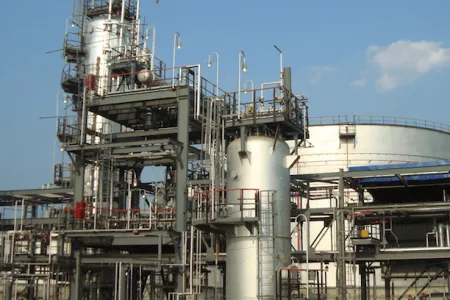
    Industry expert, Dr Victor Ekpenyong has urged the Federal Government to revive idle oil wells to boost oil production in order to meet revenue shortfalls.

    Ekpenyong, who is the Chief Executive of Kenyon International West Africa Limited, said this during an interactive session with journalists in Yenagoa, Bayelsa State.

    Kenyon International is a Well Control Services firm.

    Ekpenyong noted that vandalism and oil theft have hampered the country’s oil production and kept the nation from harnessing its full production capacity.

    He explained that oil production was being limited by breach of pipelines that evacuate crude from oilfields to export terminals.

    He noted that with the rebound of the Forcados Export Terminal which has been out of service, there will be an increase of export capacity by at least 350,000 barrels per day (bpd) when scheduled repairs on the export trunkline is completed in the next one week.

    Ekpenyong commended the Nigerian National Petroleum Company Limited (NNPCL) for ongoing repairs on major oil export pipelines, noting that upon conclusion of repair schedules, export capacity would rise significantly.

    He said that there was the need to revive idle assets to boost oil production to meet the Organisation of Petroleum Exporting Countries (OPEC) quota of 1.8 million bpd quota for Nigeria.

    Ekpenyong noted that there was existing production capacity to meet the shortfall in production from a little over one million bpd current output.

    “Reports available from NNPCL have it that repairs on Trans Forcados Export Trunkline is almost concluded and the Forcados Export Terminal will be up again and it has capacity to handle up to 400,000 bpd of oil export.

    “The sections of the Trans Niger Delta Pipeline (TNP), which feed the Bonny Crude Export Terminal, are also scheduled to be ready as well, so we need to revamp the idle wells to produce enough to meet our OPEC quota and earn more revenue,” Ekpenyong said.

    He noted that the country is yet to produce more and leverage the supply cuts occasioned by the Russian-Ukrainian crisis which has pushed up international crude oil prices.

    He noted that proposed divestment by the government from oil assets in non producing oil reserves would provide opportunities for investors to enter into partnerships with the government to increase oil production.

    “The efforts being made by the government to increase local refining is very massive. I learnt that the rehabilitation work at the Port Harcourt refinery has gone far for the President to promise that the plant will be back in December.

    “There is also ongoing work in Warri Refinery and these will increase local production of refined petroleum products and reduce imports and subsequent pressure on the naira at the foreign exchange market,” Ekpenyong said.

    He said that NNPCL remained the dominant importer of refined petroleum products saying the $3 billion facility being put in place by the government would enable more private sector players to augment the supply deficit. 

  • CBN opens FX price verification system portal

    CBN opens FX price verification system portal

    *Vows to sanction infractors  

    In a bid to address the constraints that has bedeviled the foreign exchange market, the Central Bank of Nigeria has introduced a foreign exchange price verification system, specifically for importers to access forex.

    The portal is scheduled to begin on August 31, 2023.

    The CBN’s Trade and Exchange Department said in statement that the price verification report from the portal is now mandatory for all ‘Form M’ requests.

    “Following the successful conduct of the pilot run and various trainings held with all the banks, the Central Bank of Nigeria hereby announces the Go- Live of the Price Verification System (PVS),” the statement reads.

    “All applications for Forms M shall be accompanied by a valid price verification report generated from the price verification portal.

    “For the avoidance of doubt, by this circular, the price verification report has become a mandatory trade document precedent to the completion of a Form M,” the statement said.

    The Apex Bank insisted that it would not fail to sanction any case of infraction.

    “Please, ensure compliance,” the Bank said.

  • No truth in UK properties’ acquisition allegation, says NIMASA

    No truth in UK properties’ acquisition allegation, says NIMASA

    The Nigerian Maritime Administration and Safety Agency (NIMASA), has debunked allegations that it recently acquired three properties in the United Kingdom.

    Femi Falana SAN, speaking on ChannelsTV flagship programme, Sunrise Daily had alleged that the agency recently acquired properties in the UK.

    But the Assistant Director, Public Relations, NIMASA Osagie Edward, in a statement to journalists on Friday, said there was no truth in the allegation as the agency has not acquired any property in the last 30 years.

    “Our attention has been drawn to the allegation by Femi Falana, a Senior Advocate of Nigeria, SAN, leveled against the Management of the Nigerian Maritime Administration and Safety Agency NIMASA, bordering on acquiring three properties in England under this regime.

    “We wish to state that there is no truth in the allegations, as NIMASA did not acquire any property in England, as claimed by Femi Falana.

    “Furthermore, the Agency has not acquired any property in any foreign country in over 30 years.

    “While we respect the views of the learned silk on public matters, NIMASA demands that he takes responsibility and retract this false claim.

    “We also use this medium to caution that he and other members of the public should verify their facts before going public with any information. 

    “The public is hereby advised to disregard the statement by Femi Falana SAN,” the statement read.

  • Chinese Yuan strengthens to 7.2006 against dollar

    Chinese Yuan strengthens to 7.2006 against dollar

    The central parity rate of the Chinese currency renminbi, or the Yuan, strengthened 70 pips to 7.2006 against the U.S dollar Friday.

    This is according to the China Foreign Exchange Trade System.

    In China’s spot foreign exchange market, the Yuan is allowed to rise or fall by 2 per cent from the central parity rate each trading day.

    The central parity rate of the Yuan against the dollar is based on a weighted average of prices offered by market makers before the opening of the interbank market each business day.

  • MTN Nigeria secures N100bn funding to bolster operations

    MTN Nigeria secures N100bn funding to bolster operations

    MTN Nigeria, a leading telecommunications provider, has successfully initiated a funding drive to raise N100 billion as part of its strategic efforts to enhance operational capabilities.

    This funding is being secured through the issuance of Series 6 and 7 under the company’s established commercial paper programme.

    The capital infusion is slated to fortify the company’s working capital reserves and serve various general corporate objectives.

    A statement from Afrinvest, a prominent financial advisory firm, announced the commencement of the MTN Nigeria Communications PLC Series 6 & 7 Commercial Paper offering.

    The offering, which commenced on August 16, 2023, is scheduled to conclude on August 21, 2023. Investors are presented with a compelling opportunity, with a yield of 10.88% for Series 6 and 11.25% for Series 7, resulting in yields of 115% and 12.25% respectively.

    MTN Nigeria, a telecommunications powerhouse, holds a preeminent position in Nigeria’s communications landscape, boasting a subscriber base of over 77.1 million mobile users as of H1 2023.

    This colossal market presence is underpinned by substantial investments in cutting-edge infrastructure, including an expansive 2G, 3G, and 4G network that covers 92.5% of 2G, 86.3% of 3G, and 80.0% of 4G population coverage.

    Furthermore, the company boasts an extensive fiber network spanning over 35,000 kilometers and a diverse range of valuable spectrum holdings.

    MTN Nigeria has consistently demonstrated its commitment to innovation by spearheading the launch of Nigeria’s first-ever 5G network.

    This pioneering move has resulted in 5G coverage across key cities in all six geopolitical regions, achieving a population coverage of 5.5%.

    The company’s influence extends to digital and financial inclusion, evidenced by a substantial user base of approximately 41 million active data users and 7 million active fintech users. This demographic engagement is particularly significant within Nigeria’s youthful and rapidly expanding population.

    Notably, MTN Nigeria sustains its AAA rating from GCR, the highest attainable corporate rating, underscoring its robust competitive stance, strong earnings, and reliable cash flows.

    The company also garners an Aa+ rating from Agusto, further validating its sound financial standing. These commendations are reflective of MTN Nigeria’s adept management team and its symbiotic association with the broader MTN Group.

    The capital garnered from this offering will play a pivotal role in reinforcing MTN Nigeria’s working capital provisions and fulfilling overarching corporate objectives. The transaction underscores MTN Nigeria’s ongoing commitment to sustainable growth and resilience within the telecommunications sector.

  • Again, equity market sheds N96bn

    Again, equity market sheds N96bn

    The local stock market closed trading on Thursday on a negative note, shedding N96 billion with the anticipated rise in exchange rate and fuel prices.
    The market capitalisation of listed equities declined further by 0.27 per cent to N35.273 trillion from N35.369 trillion reported the previous day.
    The decline led the benchmark index, NGX ASI, to witness a decline of 176.32 basis points, concluding at 64448.96 points from 64,625.28 points reported on Wednesday.
    An analysis of the investment showed that JohnHolt led gainers table in percentage terms, gaining 10 per cent to close at N1.32 per share, CWG followed with a gain of 9.76 per cent to close at N3.60 per share, Prestige insurance gained 8.33 per cent to close at N0.52 per unit, Cutix Plc added 8.00 per cent to close at N2.70 while Linkage Assurance gained 7.69 per cent to close at N0.98 per unit.
    On the contrary Guinness Nigeria Plc topped losers chart, dropping by 8.57 per cent to close at N0.32 per unit, RTBriscoe trailed with 8.16 per cent to close at N0.45 per unit, Chi Plc loss 7.61 per cent to close at N0.85 per share, SUNU Assurance dipped by 6.98 per cent to close at N0.80 per unit, Deep Capital declined by 6.67 per cent to close at N0.28 per share.
    The volume of trades increased by 28.63 million, representing 9.82 per cent as investors traded 320.346 million shares valued at N3.729 billion in 5176 deals against 291.714 million shares costing N7.432 billion in 6213 deals.
    Transactions in the shares of Fidelity Bank led market activities with 80.045 million shares valued at N595.543 million, Transnational Corporation of Nigeria followed with 34.268 million shares worth N137.206 million, United Bank for Africa traded 24.398 million shares cost N340.020 million , Universal Insurance traded 22.429 million shares worth N5.062 million , FBNHoldings exchanged 19.096 million shares cost N353.481 million.

  • Local refiners got 3.6m barrels of crude in 2 years – NUPRC  

    Local refiners got 3.6m barrels of crude in 2 years – NUPRC  

    The Nigerian Upstream Petroleum Regulatory Commission (NUPRC) has said it delivered 3,614,936 barrels of crude to three local refineries between September 2021 and May 2023.

    According to the regulator in a statement Thursday in Abuja, only local refiners that complied with relevant requirements of Section 109 of the Petroleum Industry Act, 2021 are entitled to crude supply.

    NUPRC said the clarification became necessary due to insinuations from some operators that it had failed to supply them with crude oil.

    The Commission said, between January 2019 and August 2021 the period before the PIA came into effect, 1,726,049 barrels of oil were supplied to two refineries that met the requirements of the law at the time. The two refineries are operated by Walter Smith and NDPR. The post-PIA supplies were made to Walter Smith, NDPR, and OPAC refineries.

    It stated that the Commission recently granted approval for Millennium Oil and Gas Limited to supply by trucking 60,000 barrels of crude oil at the rate of 20,000 barrels per month for three months to OPAC and Duport refineries in Edo State.

    In addition, alternate evacuation routes such as trucking of crude oil to refineries have been approved to forestall potential downtime during refinery operations which might arise due to non-availability or vandalism of pipelines.

    It was emphatic that the Commission remains steadfast in delivering on the mandate stipulated by the PIA and will not relent in ensuring that a conducive and suitable supply of feedstock to all licensed refineries operating within the country is sustained.

    It further stated that any refinery operator or group of refinery operators in Nigeria not receiving or claiming not to be receiving feedstock from appropriate agencies are yet to satisfy the mandatory requirements as stipulated by law.

    It pointed to the fact that the Commission has provided regulatory support for qualified refineries by ensuring adequate crude oil supply. It restated its commitment to transparency and determination to work within the provisions of the PIA; which is why data concerning its operations with industry operators are always made available for public scrutiny.

    “The NUPRC wishes to state the facts to provide insight and clarity to the general public as follows: Section 109 of the Petroleum Industry Act (PIA) 2021 mandates that the Domestic Crude Supply Obligation (DCSO) be placed on all holders of Petroleum Mining Leases and Oil Mining Leases in Nigeria in a bid to ensure crude oil supply to local refineries.

    Under Section 109(2) of the Petroleum Industry Act, the Commission gazetted the Production Curtailment and Domestic Crude Oil Supply Obligation Regulations which provides clarity on the obligations of the stakeholders of the domestic crude oil supply value chain.

    “The PIA prescribes its implementation mechanism requiring the Nigerian Midstream and Downstream Petroleum Regulatory Agency (NMDPRA) to furnish the Commission with domestic crude requirements of licensed operating refineries on an annual basis which would form the basis for the Commission to issue the crude supply obligation on the producing companies in the upstream sector. It also mandates the requirement for the transaction to be on an arm-length commercial basis between the producer/supplier and the refiner.

    “The Commission has provided an enabling framework for the supply of crude oil to be negotiated between the lessee and the oil refining licensee, having regard to the prevailing international market price for similar grades of crude oil as stipulated in section 4 (7) (b) of the Domestic Crude Supply Obligation (DCSO) regulations in either the Nigerian Naira or the United States Dollar or a combination for flexibility to be agreed by the parties.

    “Consequently, the Commission placed priority on developing this regulation for the operationalization of the mandate and developed the regulation to ensure the availability of a regulatory framework for DCSO.

  • Uwaleke appointed SA to Senate C’ttee Chair on Capital Market

    Uwaleke appointed SA to Senate C’ttee Chair on Capital Market

    The first Professor of the Capital Market in Nigeria, Uche Uwaleke has been appointed as Special Adviser to the Chairman of the Senate Committee on Capital Market.

    A letter signed by Chairman of the committee Senator Osita Izunaso, and titled: “Appointment as Special Adviser to the Chairman Senate Committee on Capital Market, and seen by the NIGERIAN ANCHOR on Thursday morning, read:

    “It is my pleasure to offer you appointment as Special adviser to the Chairman of Senate Committee on Capital Market and Institutions.

    “Having followed with keen interest your display of deep knowledge of the capital market through numerous media engagement and academic publications some of which I have come across.

    “As Chairman of the Senate Committee on Capital Market and Institutions, I have no doubt that your advice will assist me and members of my committee to exercise adequate oversight on the Nigerian Capital Market.”

    A Professor of Finance and the Capital Market at the Nasarawa State University and President of Association of Market Academics of Nigeria (ACMAN), Uwaleke has vast years of experience in the finance and the capital market.

    A former commissioner of finance in Imo and one-time chief economist at the Securities and Exchange Commission (SEC), analysts are confident that he would bring his experience to bear in the Nigerian capital market.