Author: Chike Ozohili

  • She Forum Africa announces regional chairs for newly instituted hubs

    She Forum Africa announces regional chairs for newly instituted hubs

    As part of ongoing internal re-organization efforts, She Forum Africa, a pan-Africa Women Development, Intergenerational Mentorship, Leadership & Lifestyle Community has instituted regional Hubs to deepen advocacy initiatives and strengthen women’s share of voice in local African communities.

    In a statement by Founder and Chairperson of the Forum, Ms. Inimfon Etuk, “the recent composition of Regional Hubs for East, West & South Africa and a Diaspora Hub are part of internal re-organization efforts to strengthen the bargaining power of women and create a much-needed avenue for African women in local communities to own the process of transformation towards Africa we want and deserve. The Hubs are Chaired by women leaders who have distinguished themselves as formidable agents of true development in their respective rights.”

    According to Etuk, Hon. Nadia Ahmed Abdalla, former Deputy Minister, Ministry of ICT, Innovation & Youth Affairs, Republic of Kenya who takes up the role as Regional Chair, East Africa Hub; Dr. Sindy Zemura-Bernard, Founder/CEO of the Southern Africa Embrace Foundation, Canada, who takes up the role as Regional Chair, South Africa Hub; and Mrs. Renee Q. Boateng, Founder, Butterflies and Pearls, Ghana, who will serve as Regional Chair, West Africa Hub. Also named is Dr. Mercy O. Umeri, Assistant Teaching Professor/MiniMPA Coordinator, Hugo Wall School, Wichita State University, Kansas, USA appointed as Chair, Diaspora Hub while Asiya Sani Suleiman, a Communications professional and “Garkuwan Mata” of Abaji has been unveiled as the Organization’s Director, Partnerships & Corporate Engagement. 

    She Forum Africa has as its core mission, to amplify personal development opportunities for African women through strategic mentoring and life-long learning within a home-grown, African-led initiative. In addition to advocacy on issues affecting women’s health, wellbeing and rights, her programmes are designed to assist young females, entrepreneurs and female professionals advance their careers and life goals in a traditionally male environment by providing insight into relevant skills for personal growth.

    “We are constantly updating our skills through various initiatives and capacity building experiences to ensure we remain a credible, tested and preferred Partner for Organizations desirous of heightened impact in their respective spheres,” Etuk added.

  • Modular Floating Dock: NIMASA takes over continental shipyard

    Modular Floating Dock: NIMASA takes over continental shipyard

    The Nigerian Maritime Administration and Safety Agency, NIMASA has taken over areas leased to it by the Nigerian Ports Authority (NPA) at the Continental Shipyard for the operations of the Modular Floating Dock.

    The areas include: the Dolphin Jetty, Waterfront of the jetty adjourning the slipway, an administrative block, a construction, welding and mechanical workshop and a civil maintenance workshop, among others.

    During the ceremony, the Director General of NIMASA, Dr. Bashir Jamoh, said the handing over of the Continental Shipyard to NIMASA marks the final lap in the quest of the Agency to deploy the modular floating Dockyard.

    The Director General, who was represented by the Head, Public, Private Partnership, PPP, Unit Mr. Kabiru Diso assured stakeholders that the Modular Floating Dockyard would soon be deployed since all grey areas between NIMASA and the NPA have been cleared.

    “The Modular Floating Dockyard is a national asset and now that all grey areas between the NPA and NIMASA have been addressed, we are very close to the deployment of the Modular Floating Dock. 

    Our goal is to domicile dry-docking of vessels in the country thus saving the nation foreign exchange currently expended on dry-docking vessels outside the shores of Nigeria. The floating dock will also provide both direct and indirect employment to Nigerians with a multiplier effect on capacity development,” he said.

    The Infrastructure Concession and Regulatory Commission (ICRC), had issued a certificate of compliance for an Outline Business Case (OBC) for the operation of the floating dock, while also describing it as bankable and sustainable.

    The modular floating dock, which has the capacity to handle up to 10,000 Metric Tons vessels, would be run on a Public Private Partnership arrangement.

  • West Africa Defence Chiefs meet Wednesday to discuss Niger coup

    West Africa Defence Chiefs meet Wednesday to discuss Niger coup

    Defence chiefs from West Africa’s regional bloc ECOWAS will meet in Nigeria’s capital Abuja for two days beginning Wednesday to discuss last week’s coup in Niger, the bloc said in a statement on Tuesday.

    On Sunday leaders of the Economic Community of West African States slapped sanctions on Niger and warned they may use force as it gave the junta a week to reinstate President Mohamed Bazoum.

    The leaders gave the junta seven days to reinstate President Mohamed Bazoum, who is being held captive.

    Earlier, the junta warned it would resist any “plan of aggression against Niger” by regional or Western powers.

    Meanwhile hundreds of coup supporters protested outside the French embassy in the capital Niamey.

    A statement read out after the Sunday summit in Nigeria said that Ecowas had “zero tolerance” for coups.

    The regional bloc said it would “take all measures necessary to restore constitutional order” if its demands were not met within a week.

    “Such measures may include the use of force,” and military chiefs are to meet “immediately” to plan for an intervention, the statement added.

    The Special Representative and Head of the United Nations Office for West Africa and the Sahel was at the meeting, and said Ecowas had taken a decisive action because events in Niger were concerning.

    “Niger is playing a key role in fighting terrorism. If Niger stops playing this role this will give more space and more leeway to terrorists to expand in the region,” Dr Leonardo Santos Simao told BBC’s Newshour programme.

    He added that “no official negotiations” were taking place between ECOWAS and the country’s military junta.

    This is the first time ECOWAS has threatened military action to reverse the coups that have taken place in the region in recent years.

    It last sanctioned military intervention in 2017, when Senegalese troops were deployed to The Gambia to force long-serving ruler Yahya Jammeh to leave office after he refused to accept defeat in elections.

    Chad’s President Mahamat Idriss Déby Itno has gone to Niamey to tell the junta to step down, Chad’s government said.

    He met junta deputy leader Gen. Salifou Mody.

    It is unclear whether he will hold talks with Gen. Abdourahmane Tchiani, the head of the presidential guards unit who has declared himself Niger’s new ruler.

    The West African leaders also announced the immediate enforcement of a no-fly zone over Niger for all commercial flights, the closure of all land borders with the country, and the imposition of financial sanctions against the junta.

    Ahead of their meeting, Gen. Tchiani warned ECOWAS and unnamed Western nations against stepping in.

    “We once again reiterate to ECOWAS or any other adventurer, our firm determination to defend our fatherland,” the statement, which was read out on TV, said.

    The coup has prompted concern that Niger, a former French colony, could pivot towards Russia.

    The ousted president had worked closely with both regional and Western nations to fight militant Islamists.

    Burkina Faso and Mali moved closer to Russia after their own coups.

    In Niamey, some of the protesters outside the French embassy chanted “Long live Russia”, “Long live Putin” and “Down with France”, AFP news agency reports.

    They also set fire to the walls of the embassy compound.

    France would not tolerate any attack on its interests in Niger, and would respond in an “immediate and intractable manner”, President Emmanuel Macron’s office said in a statement. 

  • Don’t disrupt economy, OPSN urges FG, labour unions

    Don’t disrupt economy, OPSN urges FG, labour unions

    The Organised Private Sector of Nigeria (OPSN) has called on the Federal Government and labour unions to work assiduously to avert disruption of socio-economic activities.

    Mr Segun Ajayi-Kadir, Head, Secretariat, OPSN, gave the advice in a statement in Lagos.

    The OPSN comprises five business membership organisations, namely: the Manufacturers Association of Nigeria, and the Nigerian Association of Chambers of Commerce, Industries, Mines and Agriculture.

    Others are the Nigeria Employers Consultative Association; the Nigerian Association of Small and Medium Enterprises and the Nigerian Association of Small-Scale Industrialists.

    Ajayi-Kadir noted that the OPSN had followed keenly, the developments following the recent call by the Nigeria Labour Congress and the Trade Union Congress of Nigeria for a nationwide peaceful protest.

    The protest is scheduled for August 2, 2023, as consultations between the Federal Government and labour unions have not yielded positive results.

    He urged the government to employ its best endeavours to reengage the leadership of the unions and find an amicable ground to avert the imminent disruption in business activities.

    “We opine that adequate consideration should be given to the dire state of the economy and the possible unintended social unrest that may result from the protests.

    “We call on our members to be circumspective in their business operations, as we await the outcome of ongoing consultations between government and unions,” he said.

  • NGX market cap gains N1.8trn in July

    NGX market cap gains N1.8trn in July

    Transactions at Nigerian Exchange Limited (NGX) closed the month of July 2023 on a positive note as earnings and dividend declarations from quoted companies helped NGX’s market cap to gain N1.814 trillion.


    The gain was also supported by insider dealings among companies as directors and related parties consolidated their positions in a show by such investors of their belief in the inherent values of such companies, as well as sustained positive reactions to the ongoing reforms by President Bola Tinubu.


    Despite the profit taking, selloffs and FX pressures witnessed within the period, the benchmark NGX All-Share index which opened the trading month at 60,968.27 points, closed at 64,337.52 points, representing a 5.53 per cent growth while year-to-date (YTD) close at 25 per cent in the month under review. 

    Also, market capitalization- listed value of equities rose by N1.814 trillion from N33.197 trillion to N35.011 trillion.


    There were also better-than-expected corporate earnings, higher dividend payouts and relatively improved liquidity as fixed income yields were not stable in the face of soaring inflation which supported buying interests in the market and flow of funds into the equity space.


    It will be recalled that a total turnover of 2.854 billion shares worth N37.645 billion in 41,547 deals was traded by investors on the floor of the Exchange last week Friday. The high traded volume and mixed sentiment experienced during the month reflected the buying interests by majority shareholders and activities of institutional investors as they sought to hedge against inflation on a mixed outlook for fixed income rates and yields.


    This followed the fact that the second quarter (Q2) performance of some quoted companies beat the inflation rate, raising hopes of better earnings that will support price and payout at the end of the financial year.


    Given the outcome of the Monetary Policy Committee meeting in the month under review, the prevailing mixed economic data and as well more corporate earnings now looking up, analysts believe that positive earnings surprises and possible interim dividend declarations from companies would spur increased bargain-hunting activities on the bourse.


    They also added that profit-taking activities on stocks that have experienced substantial appreciation might be possible.

    Analysts at Cordros Research said, “In the medium term, we expect investors’ sentiments to be influenced by developments in the macroeconomic landscape and the movement of yields in the fixed-income market”.

  • Anthrax Outbreak: FAO strengthens partnership with Nigeria

    Anthrax Outbreak: FAO strengthens partnership with Nigeria

    The Food and Agriculture Organisation of the United Nations (FAO) and the Federal Ministry of Agriculture and Rural Development (FMARD) have expressed their readiness to partner to check and control the spread of Anthrax disease in the country.

    Their partnership followed the anxiety created over the emergence of an anthrax outbreak in Nigeria, following the report of two recently confirmed cases in Lagos State.

    The Communications Officer FAO Nigeria, David Tsokar, made this known in a statement issued on Tuesday in Abuja.

    According to the statement, on July 13, a suspected case of Anthrax was reported in a mixed farm at Sabon Wuse, Niger State, and a rapid response team was deployed by the Federal Government to collect samples and send them to the National Veterinary Research Institute (NVRI) in Vom, Plateau.

    The presence of the disease was confirmed by the team and consequently, FMARD announced Government’s plan to intervene and control its possible spread.

    Tsokar said the Director, the Department of Veterinary and Pest Control Services, (FDVPCS) in FMARD, Dr. Columba Vakuru, said the strategy of interventions include quarantining the affected farm.

    Other measures include the vaccination of susceptible animals around the infected farm, educating farm workers using the One-health approach, and planning statewide vaccination of susceptible animals.

    The FAO Nigeria, through the Emergency Center for Transboundary Animal Diseases (ECTAD) was requested to provide the technical and financial support to the intervention strategy.

    This has to be on logistics to the start-off of the risk-based nation-wide vaccination against Anthrax, which commenced last Friday, July 22 in Suleja (Niger State), the local government where the first case was reported.

    Subsequently, a nation-wide meeting with all Directors of Veterinary Services (DVS) from the 36 States and the Federal Capital Territory would be convened to fashion a comprehensive response to prevent, detect and respond to further spread of Anthrax to other parts of the country.

    The FAO ECTAD Country Team Lead, Dr Otto Vianney Muhinda, said that “the partnership is to be enhanced within the context of the One Health approach, and efforts would be sustained using a strong team of frontline experts, to prevent the spread of the disease to other parts of the country.

    “With the support of USAID, we are pursuing our efforts to mobilise human and financial resources, including the Directors of Veterinary Services from the 36 States and FCT Abuja, to discuss the ongoing Anthrax outbreak and evaluate the preparedness of the States vis-à-vis the implementation of strategies to prevent the spread of the disease into the country as well as put in place control measures.”

    The consultative meeting with DVSs from the states would discuss risk assessment and survey, the conduct of mass nationwide vaccination of animals (cattle, sheep, and goats) against Anthrax, refresher training for epidemiology officers, and training of livestock professionals, farmers, butchers and traders on biosecurity measures.

    The joint field mission to Sabon Wuse was conducted by the ECTAD, FDVPCS, and the National Center for Disease Control (NCDC), where a quick risk assessment was conducted, one week after the first animal died of the disease.

    Vaccinations had, however, been carried out and other risk communication initiatives were deployed to avoid the spread to other farms and/or neighboring communities within 15 kilometers radius.

    The same team would be deployed to Lagos State to carry out the same exercise.

  • SEC, FMMSD seek to raise capital for non-oil sector

    SEC, FMMSD seek to raise capital for non-oil sector

    The Securities and Exchange Commission (SEC) and the Capital Market Community are to partner with the Federal Ministry of Mines and Steel Development and other stakeholders to promote the use of alternative means of raising capital such as Non-Interest products, tokenization of assets, as well as adopting technologies such as FinTech.

    This among others was contained in a communiqué issued at the end of a two-day workshop on financing the Nigerian solid minerals sector through the capital market and the critical role of the commodities exchanges.

    The workshop also emphasised the need for the FMMSD and Federal Ministry of Education to re-prioritize the focus on STEM education at basic, secondary and tertiary institutions. 

    According to the communiqué, “There is a need for the Capital Market Community to ensure that the market infrastructure that supports the bringing to market of mining ventures is in place, while also protecting investors. 

    “All stakeholders should be involved in promoting sustainable practices and ESG standards within the mining industry while the FMMSD is to ensure the availability of geoscience data, given that it is essential alongside relevant market data in enabling intermediaries and commodities exchanges to structure products for the mining industry. 

    The participants also agreed that the FMMSD should collaborate with SEC and other stakeholders to develop capacity in the industry and address the issue of interference in mining activities by the State Government, which is identified as a major challenge faced by mining companies, the FMMSD is to take concrete steps to resolve the conflict in State and Federal laws as well as overlapping oversight.

    Earlier in a keynote address, the Executive Commissioner Operations of the SEC, Mr. Dayo Obisan said the solid minerals sector possesses immense transformative potential for sustainable economic growth in Nigeria and holds immense potential to contribute significantly to national economic diversification and sustainable development goals. 

    “With over 44 minerals discovered across the Federation, the mining industry can play a vital role in diversifying our economy away from crude oil dependency. The FMMSD has embarked on various initiatives to increase the sector’s contribution to Nigeria’s GDP from 0.5% to approximately 3% by 2025.

    To address the financing challenges faced by the mining industry, the SEC Commissioner said stakeholders must recognize the crucial role of the capital market in providing much-needed funding for large-scale mining projects as the capital market offers a wide array of financial instruments and products, attracting long-term investments and diversified sources of funding. 

    He said by tapping into this market, mining companies can strengthen their financial position and promote transparency, accountability, and good corporate governance practices to attract both domestic and foreign investors, stimulating investment inflows and fostering growth in the sector.

    He stated that to address these challenges, some practical solutions may include, but not limited to; attracting strategic investors who have established mining operations can bring expertise, technology, resources, and access to international markets. Such partnerships can be in the form of equity capital or debt financing, allowing miners to benefit from immediate cash injections and technology support.

  • Give Tinubu benefit of doubt, Uwaleke appeals to Nigerians

    Give Tinubu benefit of doubt, Uwaleke appeals to Nigerians

    Professor of Finance and the Capital Market at the Nasarawa State University, Uche Uwaleke, has called on Nigerians to give President Bola Ahmed Tinubu the benefit of the doubt.

    The President had in a nationwide broadcast on Monday in Abuja, reeled out a number of measures meant to cushion the effects of the removal of fuel subsidy.

    In his inauguration speech, the President said fuel subsidy was gone forever. According to him, his administration would rather channel the savings from the subsidy removal into other critical sectors of the economy.

    In his broadcast, the President said his administration has proposed the sum of N75 billion to fund enterprises at 9% interest per annum; N125 billion to energize MSME; release 200,000 Metric Tonnes of grains; 225,000 metric tonnes of fertilizer,  seedlings, and other inputs to farmers; and N50 billion each to cultivate 150,000 hectares of rice and maize.

    Also, the federal government will also make available N50 billion each to cultivate 100,000 hectares of wheat and cassava, N100 billion to acquire 3000 units of 20-seater CNG-fuelled buses and review the minimum wage.

    Uwaleke said: “The President’s address to the nation is quite soothing.

    “He spoke in clear terms and I think Nigerians should allow him the benefit of the doubt.”

    The first Professor of the Capital Market in Nigeria was however concerned that President Tinubu failed to tell Nigerians how the executive will also make sacrifices.

    “But it was short on how the three arms of government will share in the pains of the governed, especially with respect to affecting a significant cut in the cost of running government,” he asked.

  • Nigeria’s currency circulation hits N2.60trn in June

    Nigeria’s currency circulation hits N2.60trn in June

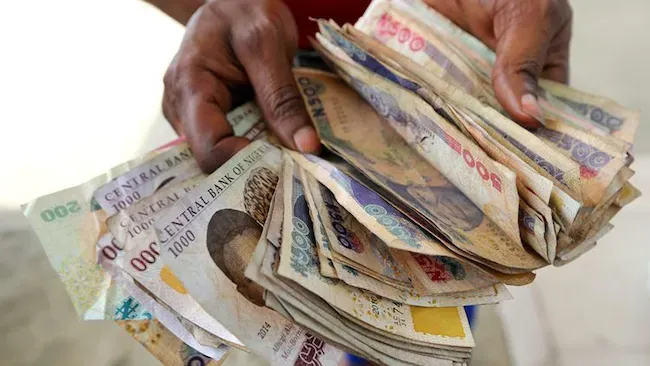
    Nigeria’s currency in circulation climbed to N2.60 trillion in June 2023.

    Currency in circulation is the amount of cash in paper notes or coins issued by the CBN to conduct transactions.

    According to the latest data from the Central Bank of Nigeria (CBN), the figure rose by 88 percent from N1.39 trillion in January to N2.60 trillion in June 2023.

    The amount of currency in circulation in Nigeria fluctuated in the first half of 2023. In January, it stood at N1.39 trillion and fell to N982,097 billion in February.

    However, currency circulation rose to N1.68 trillion in March. In April, May, and June, it increased to N2.48 trillion, N2.53 trillion, and N2.60 trillion, respectively.

    In October 2022, the CBN announced that it would be redesigning three of the existing banknotes: the N200, N500, and N1000 notes. The new notes were due to be circulated on December 15, 2022, while the old notes would remain legal tender until January 31, 2023.

    The apex bank said it decided to redesign the banknotes because of concerns about the management of currency in circulation, particularly those outside the banking system.

    The CBN said currency management has faced several challenges in recent years, including counterfeiting, the use of cash for illegal activities, and the hoarding of banknotes by members of the public.

    Crude oil prices may rise on demand increase

    Experts say the prices of crude may likely increase in days to come as demand outpaces supply following a cut by the Organization of Petroleum Exporting Countries (OPEC), particularly that of major producer Saudi Arabia.

    The International Energy Agency (IEA) and the Organization of the Petroleum Exporting Countries (OPEC) earlier projected oil demand to outpace supply this year, leading to overall inventory draws to the tune of 400,000 to 500,000 barrels per day (bpd), mostly accounted for by the second half of the year (2023).

    Reacting to the development, experts at JP Morgan believe that the disparity between demand and supply will lead to increased oil prices.

    “It appears that the voluntary cuts announced by eight OPEC countries in April plus the additional 1 million bpd of unilateral Saudi cuts that just started in July are having the desired effect, with sour barrels becoming scarcer.”

    JP Morgan also stated that a rise in driving and flying activities this summer has put a strain on supplies as refineries are struggling to cope, meanwhile, there was also a drop in Russian crude supplies in July 2023. When demand outweighs supply, prices will rise, and analysts expect that the recent rise in crude oil will extend even further.

    Earlier this month, Secretary General of the International Energy Forum (IEF), Joseph McMonigle, told CNBC that crude oil demand bounced back to pre-Covid levels quickly, but supply is having a tougher time catching up.

    “So, for the second half of this year, we are going to have serious problems with supply keeping up, and as a result, you are going to see prices respond to that.”

    If crude oil prices rise on the global market, it means two things for the Nigerian market:

    Increased oil revenues are needed as Nigeria plans to roll out intervention schemes to cushion the effect of the fuel subsidy removal on the country’s citizens. In a prior announcement, the government has made it known that among other plans; it is focused on mass transportation, and alternative energy sources like compressed natural gas as well as reducing the impact of transportation costs as intervention schemes.

    An increase in the cost of fuel will be unavoidable because the country has no refining capacity as citizens await the end of the current rehabilitation of the Port Harcourt, Warri and Kaduna refineries.

    So, as more fuel imports come into the country, facilitated by private companies, fuel pump prices could increase. This also means that Nigerians need to increase their earnings, to survive a possible fuel pump price hike in the future.

  • Nigeria’s equity market sheds N391bn

    Nigeria’s equity market sheds N391bn

    The nation’s equity market on Monday opened the week on a negative note, shedding N391 billion following profit taking activities recorded by small, medium and large stocks.

    The market capitalisation of listed equities fell by 1.10 per cent to N35.011 trillion from N35.402 trillion reported the previous day.

    The NGX All Share Index also depreciated by 718.87 basis points to 64337.52 points from 65056.37 points reported the previous day.

    An analysis of the investment showed that Betaglass Nigeria Plc, Linkage Assurance, SUNU Assurance and Mansard insurance led gainers table, appreciating by 10 per cent each to close at N38.50 per share, N0.77, N0.66 and N3.74 per share. Berger Paint followed with a gain of 9.95 per cent to close at N11.05 per unit.

    On the contrary, five companies declined by 10 per cent at the close of transactions on Monday.

    Dangote Sugar Refinery, Sovereign Trust Insurance, Ecobank Transnational Incorporate gained 10 per cent to close at N27.00, N0.63 per share, N15.30 per share respectively. Livestock and NPF MicroFinance Bank fell by 10 per cent also to close respectively to N1.89 and N1.80 per share.

    Volume of trades increased 213.65 million, representing 46.47 per cent as investors traded 673.42 million shares valued at N6.47 billion in 9788 deals against 459.770 million shares worth N5.345 billion exchanged hands in 8051 deals.

    Trading activities in shares of Abbey Building Society led activity with 112.259 million shares valued at N112.274 billion in 94 deals, Fidelity Bank followed with 58.588 million shares cost N503.707 million in 452 deals, Union Bank of Nigeria Plc traded 51.079 million shares worth N357.551 million in 30 deals, FCMB group exchanged 49.363 million shares cost N323.678 million in 294 deals while Universal insurance traded 47.506 million share cost N11.232 million.