
Author: Chike Ozohili

  • Subsidy Removal: Tinubu to release N200bn to rice, cassava farmers

    Subsidy Removal: Tinubu to release N200bn to rice, cassava farmers

    *To make grains, fertilizers available

    President Bola Ahmed Tinubu has disclosed that in a bid to cushion the biting effect of fuel subsidy removal, the federal government will be releasing the sum of N200 billion will be released to farmers to cultivate rice, maize, cassava, and wheat.

    President Bola Tinubu, who made the announcement in a national broadcast Monday added that the amount would be taken from the initial N500 billion approved by the National Assembly for the cultivation of 500,000 hectares of land across the country.

    According to the President in the broadcast monitored by Nigerian Anchor, the economy will overcome the present turbulence occasioned by the petrol subsidy removal. He further said that there will be an immediate release of grains and fertilizers to ease price increase that is hitting the pockets of Nigerians.

    “Our economy is going through a tough patch and you are being hurt by it. The cost of fuel has gone up. Food and other prices have followed it. Households and businesses struggle. Things seem anxious and uncertain.

    “I understand the hardship you face. I wish there were other ways. But there is not. If there were, I would have taken that route as I came here to help not hurt the people and nation that I love.

    To further ensure that prices of food items remain affordable, we have had a multi-stakeholder engagement with various farmers’ associations and operators within the agricultural value chain.

    “In the short and immediate terms, we will ensure staple foods are available and affordable. To this end, I have ordered the release of 200,000 Metric Tonnes of grains from strategic reserves to households across the 36 states and FCT to moderate prices.

    “We are also providing 225,000 metric tonnes of fertilizer, seedlings, and other inputs to farmers who are committed to our food security agenda.

    “Our plan to support the cultivation of 500,000 hectares of farmland and all-year-round farming practice remains on course. To be specific, N200 billion out of the N500 billion approved by the National Assembly will be disbursed as follows:

    “Our administration will invest N50 billion each to cultivate 150,000 hectares of rice and maize. N50 billion each will also be earmarked to cultivate 100,000 hectares of wheat and cassava,” the President assured.
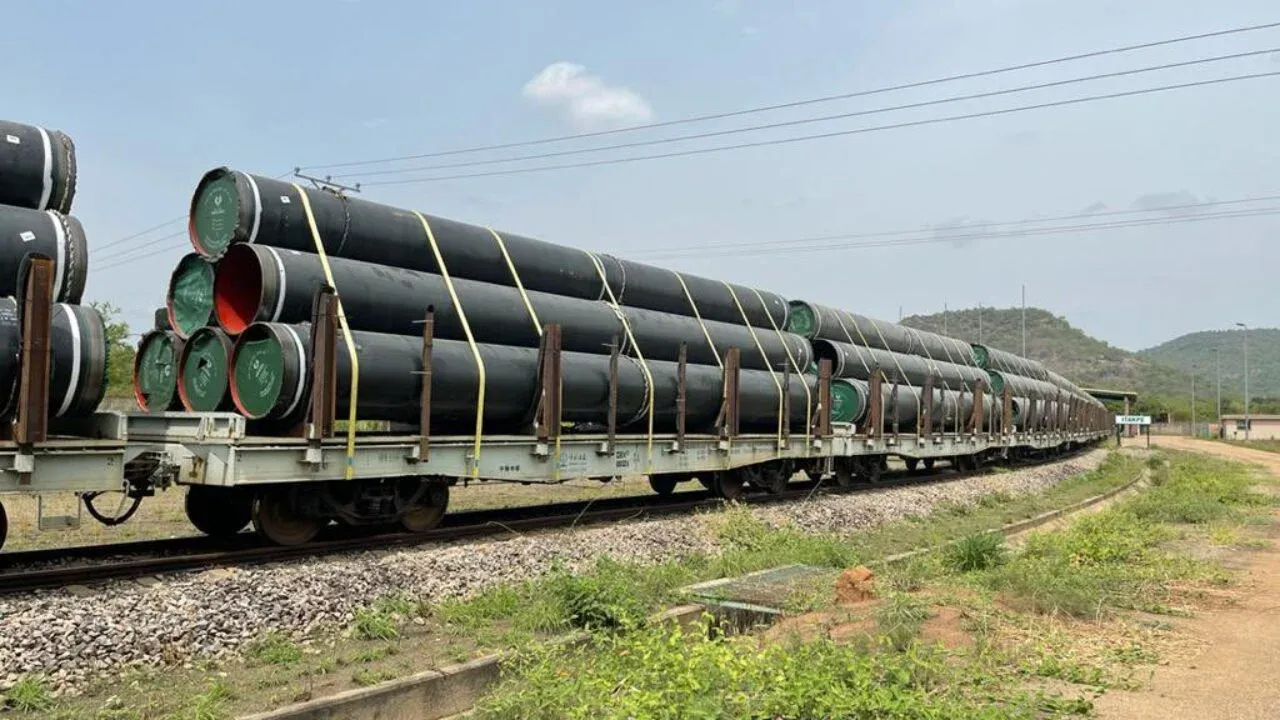
  • Our gas transportation projects will bring affordable, cleaner energy- NNPCL

    Our gas transportation projects will bring affordable, cleaner energy- NNPCL

    The Group Chief Executive Officer of the Nigerian National Petroleum Company Limited (NNPCL) has emphasized the company’s commitment to vigorously pursue its gas development and gas transportation projects.

    This declaration was made on Monday during a keynote address at the Society of Petroleum Engineers’ Annual International Conference and Exhibition, which centers around the theme “Balancing Energy Accessibility, Affordability, and Sustainability: Strategic Options for Africa.”

    Represented by the Executive Vice President, Upstream, NNPCL, Mr. Adokiye Tombomieye, the CEO expressed that the gas projects will significantly enhance energy accessibility, affordability, and sustainability for Nigerians.

    Nigeria holds vast natural gas reserves, totaling about 209.5 trillion cubic feet, with the potential for up to 600 trillion cubic feet.

    This abundant resource is expected to drive a cleaner and more affordable energy vision.

    While acknowledging alternative energy sources like solar and wind, the CEO pointed out their technological limitations, high cost, and inability to meet the robust energy demands of industries, cities, and remote areas.

    Gas, on the other hand, holds the potential to address these challenges effectively.

    The CEO appreciated the Society of Petroleum Engineers for consistently leading the way in assembling pivotal industry professionals.

    However, he highlighted the trilemma situation faced by African countries, striving to balance energy accessibility, affordability, and sustainability while aligning with the United Nations Sustainable Development Goals.

    He emphasized that achieving this delicate balance requires political will, technological innovation, effective market mechanisms, well-crafted policy interventions, and capacity building.

    A multi-stakeholder approach, involving government, the private sector, civil society, host communities, and the public, will be pivotal in achieving these goals.

    The Nigerian energy industry has witnessed strategic transformation in recent years, leading to viable industry legislation with the Petroleum Industry Act (PIA) and a long-term gas-centered energy transition plan.

    Additionally, the PIA has enabled NNPC Limited to venture into the renewable energy business, while the Nigerian Climate Act has mainstreamed climate change actions for sustainable development.

    The proactive measures undertaken by the Nigerian energy sector hold the promise of bringing affordable, cleaner energy to the nation while ensuring a greener and sustainable future.

  • UBA increases staff salaries to address rising cost of Living

    UBA increases staff salaries to address rising cost of Living

    The United Bank for Africa (UBA) Plc, Africa’s global bank, has reaffirmed its dedication to the well-being of its staff and their families amid the current economic challenges impacting living conditions which is occasioned by the removal of fuel subsidy.

    In response to this rising cost of living, the bank’s Board of Directors has taken decisive action by implementing a cost of living adjustment for its employees, effective immediately.

    This marks the third time in three years that the bank has raised the salaries of its staff, underscoring its commitment to recognizing and valuing the contributions of its employees.

    Additionally, in line with its commitment to rewarding excellence, UBA announced the promotion of over 1,500 staff across Africa in March 2023, building on the elevation of close to 1,000 staff in the previous year.

    Oliver Alawuba, UBA’s Group Managing Director/Chief Executive Officer, stated, “We are aware of the impact of recent economic policy pronouncements on prices and your capacity to meet your financial commitments to family and personal needs. As an organization focused on the well-being of our people, I am pleased to inform you that the Board of UBA Plc has approved a Welfare Allowance for all employees.”

    This decision by UBA to adjust staff remuneration once again reflects the bank’s unwavering commitment to maintaining a standard of living for its employees that is in line with prevailing economic conditions.

    By prioritizing staff welfare, UBA aims to support its workforce in navigating the challenges posed by the changing economic landscape.

    Alawuba explained that the decision to adjust the staff’s remuneration package once again demonstrates UBA’s unwavering commitment to maintaining the standard of living for its employees at a level that is commensurate with prevailing economic conditions.

    “This move will serve to alleviate the financial burdens faced by our staff and their families, reinforcing the bank’s position as a responsible and caring employer,” he explained.

    United Bank for Africa is one of the largest employers in the financial sector on the African continent with 25,000 employees’ group wide and serving over 35 million customers globally. 

    Operating in 20 African countries and in the United Kingdom, the United States of America, France and the United Arab Emirates, UBA provides retail, commercial and institutional banking services, leading financial inclusion and implementing cutting edge technology.

  • Zenith Bank wins Best Commercial Bank for consecutive 3rd time

    Zenith Bank wins Best Commercial Bank for consecutive 3rd time

    *Grabs Best Corporate Governance awards

    For a third year running, Zenith Bank Plc has been named the Best Commercial Bank in Nigeria at the World Finance Banking Awards 2023. 

    The bank also emerged as the Best Corporate Governance Bank, Nigeria, in the World Finance Corporate Governance Awards 2023, retaining the award for a second consecutive year.

    The awards were presented to Dr. Ebenezer Onyeagwu, the Group Managing Director/Chief Executive Officer of Zenith Bank Plc, at the London Stock Exchange recently.

    The recognitions celebrate the bank’s tremendous feats and milestones in financial performance, financial inclusion, corporate governance, and sustainability.

    Commenting on the awards, Dr Onyeagwu said: “These awards are a testament to our resilience and ability to adapt to the vagaries of the market as well as our innate capability to engender very stellar business performances through our innovative products and solutions. It also affirms our continued commitment to global best practices in corporate governance, sustainability and corporate social responsibility.”

    The MD dedicated the awards to the Founder and Group Chairman, Jim Ovia, thanking him for his mentorship and for establishing the basis for a resilient and highly successful institution. He also expressed gratitude to the board for their exceptional leadership, vision, and insight; to the staff for their unwavering commitment and dedication; and to the bank’s customers for making Zenith their preferred bank.

    World Finance is a foremost international magazine providing extensive coverage and analysis of the financial industry, international business, and the global economy. Its editorial combines award-winning journalism, covering a vast array of topics from banking and insurance to wealth management and infrastructure investment, with contributions from some of the world’s most esteemed economists and theorists and consultants from government think tanks and the World Economic Forum.

    Zenith Bank’s track record of excellent performance has continued to earn the brand numerous awards, with these latest honours coming on the heels of several recognitions, including being recognised as the Number One Bank in Nigeria by Tier-1 Capital, for the 14th consecutive year, in the 2023 Top 1000 World Banks Ranking published by The Banker Magazine; Bank of the Year (Nigeria) in The Banker’s Bank of the Year Awards 2020 and 2022; Best Bank in Nigeria, for three consecutive years from 2020 to 2022, in the Global Finance World’s Best Banks Awards; Best in Corporate Governance’ Financial Services’ Africa, for four successive years from 2020 to 2023, by the Ethical Boardroom; Most Sustainable Bank, Nigeria in the International Banker 2023 Banking Awards; Best Commercial Bank, Nigeria and Best Innovation In Retail Banking, Nigeria in the International Banker 2022 Banking Awards.

  • Seplat grows 2023 H1 revenue by 3.8% to N278.3bn

    Seplat grows 2023 H1 revenue by 3.8% to N278.3bn

    *Gross profit hits N140.6bn

    A leading Nigerian independent energy company, Seplat Energy Plc, has recorded a rise in revenue by 3.8 percent to N278.3 billion from N219.2bn year-on-year in its unaudited results for the six months ended 30 June 2023.  

    Seplat, which is listed on both the Nigerian Exchange Limited and the London Stock Exchange, also grew its 2023 H1 gross profit to N140.6bn from N114.1bn year-on-year.

    The Company, in its announcement, described the operating performance for the period as solid, given a 2 per cent increase in production, helped by reduced losses on its Western Asset, which is benefitting from the availability of the Amukpe-Escravos Pipeline and increased output from OML40.

    The company extended the Share Sale and Purchase Agreement (SSPA) for the acquisition of ExxonMobil’s share capital of Mobil Producing Nigeria Unlimited (MPNU) to preserve the transaction, pending the resolution of certain legal proceedings and receipt of applicable regulatory approvals; and will continue to work with all parties to achieve a successful outcome.

    The full-year production guidance was retained at 45-55 kboepd whilst Capex guidance ranges at $160 – $190 million (previously $160 m) to support the Group’s objectives for the year.

    Following the Company’s previously announced Board succession plan (25 April 2023), it announced that Eleanor Adaralegbe, currently Vice-President Finance, has been appointed CFO-designate and will succeed Emeka Onwuka as CFO in 2024.

    Commenting on the impressive results, Mr. Roger Brown, Chief Executive Officer, Seplat Energy said:

    “Seplat Energy’s continuing strong performance puts us on track for an excellent year that will support the increased quarterly dividends we announced in April, and our balance sheet remains strong despite the impact of the recent Naira devaluation.

    “We are benefiting greatly from use of the new Amukpe-Escravos Pipeline, which has supported our robust cash generation this year, and remain focused on improving operations, reducing costs where possible and further de-risking the business.

    “We continue to strengthen our Company in the knowledge that our efforts to improve governance and sustainability are widely supported by Nigerian and international investors.

    “The distraction of frivolous legal actions is receding, and we are focused on developing our assets and launching our joint venture ANOH Gas Processing Plant, which will significantly boost our cash generation in the coming years. We expect that this will enable us to fund additional investment in Nigeria’s energy infrastructure and return higher dividends to shareholders.

    “We remain confident that our proposed and transformational acquisition of MPNU will be approved, enabling us to scale into a significant energy supplier with diverse and productive assets that have potential to generate substantial benefits for Nigeria. We wholly align and support the recent government efforts to make Nigeria a more attractive place to invest and continue to focus on delivering affordable and reliable energy for Nigeria’s young, entrepreneurial and rapidly growing population.”

  • Cash shortages drops MTN’s fintechs’ revenue by 39.4%

    Cash shortages drops MTN’s fintechs’ revenue by 39.4%

    The effects of cash shortages on over-the-counter (OTC) transactions during the first quarter of 2023 impacted negatively on MTN’s Nigeria revenue from fintech customers.

    The company, which disclosed this in its first half of 2023 financial results, said it reported a 39.4 percent decline in its fintech customers for the half-year 2023, bringing its users down to 7 million at the end of June.

    According to MTN, out of the 7 million fintech customers, 3.1 million are MoMo wallet users, representing 44 per cent of its total fintech customers.

    Despite the decline in customers, MTN said it recorded a 7.8 per cent growth in fintech revenue. Its fintech revenue for the first six months of this year stood at N43.6 billion compared with N40.4 billion recorded during the same period last year.

    The report also said that the naira devaluation impeded the company’s financial growth in the second quarter of 2023, recording a forex loss of N131.5 billion, an increase of N 117.9 billion from the N13.6 billion forex loss reported in the first of 2022.

    MTN reported that the Central Bank of Nigeria’s recent forex operations changes caused a significant 60 per cent movement in the exchange rate to N756.24/US$ by the end of June 2023.

    The telecom giant’s second-quarter results show pre-tax profits fell a whopping 64 per cent to N44.6 billion, taking off its half-year profits to N200.3 billion compared to N268.6 billion in the same period in 2022.

    Explaining the reasons for the company’s fintech business poor performance in the period under review, MTN’s Chief Executive Officer, Mr Karl Toriola, said the firm’s fintech user base was impacted by the effects of the cash shortages on over-the-counter (OTC) transactions during the first quarter of 2023.

    Toriola noted that the fintech business remains a crucial priority for MTN as it continues to put structures in place to support the execution of its growth strategy and scale the fintech ecosystem in line with our Ambition 2025 strategy.

    In that regard, he said the company would ramp up its fintech campaigns to create more awareness.

    Meanwhile, MTN recorded 49.9 per cent growth in its digital revenue for the period under review.

    According to the company, this was bolstered by revenue from rich media services and content VAS.

    Toriola said the digital revenue growth was also supported by the adoption of digital products and the development of the active base, up 56.6 per cent to 14 million.

    “In H1, we bought Amazon Prime Video and Apple Music to our customers, expanding our rich media services portfolio. Ayoba, our instant messaging platform, continued to gain traction with the addition of over two million users, bringing the monthly active users to 7.2 million in H1.

  • Stock market swells N867.7bn, as forex gap widens across trades

    Stock market swells N867.7bn, as forex gap widens across trades

    The Nigeria Exchange (NGX) last week grew by an additional N867.7 billion to cap at N35.7 trillion. All Share Index (ASI) rose by 0.1 percent.

    This is as the crude oil price rise in the international markets failed to grow the country’s foreign reserves, leading to a widening gap across markets.

    At the domestic stock market, Year-to-Date (YTD) return improved to 26.9 percent (previously 26.8 percent). Activity level dampened as average volume and value traded fell 31.7 percent and 62.0 percent to 570.9 million units and N7.5 billion week-on week (w/w) respectively.

    At the global equities market, resilient corporate earnings encouraged bullish sentiment.

    Last week, the global equities market performance was shaped by a mix of the International Monetary Fund (IMF’s expectation of a better growth in China, unsurprising rate hikes by the US Feds and European Central Bank (ECB), and exciting corporate earnings.

    Overall, the MSCI World index rose 0.3 per cent w/w. The US market closed the week positive as investors continued to digest impressive corporate earnings releases and recent economic data.

    Specifically, PCE headline inflation slowed to 3.0 per cent in June from 3.8 per cent in the prior month – further solidifying expectations of the Fed to halt its ongoing hawkish monetary campaign.

    A the foreign exchange (fox) market, Brent crude oil price rose 3.9 per cent w/w to $84.00/bbl. backed by strong demand from the Sino economy as it reopens economic activities.

    This also comes with supply being artificially contained by OPEC+ members and frail supply pulls from the US.

    “Meanwhile, Nigeria’s foreign reserves still falls short of expected accretion from crude earnings as it declined 0.1 per cent w/w to $33.9 billion as of July 26th, 2023”, said analysts at Afrinvest.

    Across the forex market last week, naira traded within a similar band to the previous week. At the Investors & Export (I&E) window activity level improved 8.3 per cent, 32,3 million to $421.6 million, leading to 0.3 per cent w/w appreciation of the naira N775.76/$. In the parallel market the dollar appreciated 0.6 per cent w/w to N870/$, bringing a weekly average spread increase of 60.6 per cent to N89.02.

    At the treasury bills market, the OPR and OVN rates (interbank rates) fell 19.5ppts and 19.6ppts w/w respectively to 0.9 per cent and 1.4 per cent due to buoyant system liquidity.

    Specifically, liquidity level advanced 180.2 per cent  w/w to N593.0bn as higher opening balances of banks (9.0x w/w) and Federal Account Allocation Committee (FAAC) payment largesse more than offset NT-Bills outflows of N264.3 billion during the week.

    The secondary market for domestic bond instruments closed the week on a bearish note as investors reacted negatively to the outcome of the MPC meeting. As such, average yield rose three basis points (bps) to 12.8 per cent backed by repricing across the curve.

    Specifically, yield on the short, mid, and long-dated instruments expanded by 145bps, 25bps and 19bps respectively.

  • 5kg cooking gas price decreases 6.71% in June- NBS

    5kg cooking gas price decreases 6.71% in June- NBS

    The average retail price for refilling a 5kg Cylinder of Liquefied Petroleum Gas (Cooking Gas) decreased by 6.71% on a month-on-month basis from N4,360.69 recorded in May 2023 to N4,068.26 in June 2023, the National Bureau of Statistics (NBS) has said.

    The National Bureau of Statistics (NBS), in its Liquefied Petroleum Gas (Cooking Gas) Price Watch for June 2023 report posted on its website, showed that on a year-on-year basis, this decreased by 3.56% from N4, 218.38 in June 2022.

    On state profile analysis, Kwara recorded the highest average price for refilling a 5kg cooking gas with N4, 750.00, followed by Niger with N4,691.16, and Zamfara with N4,683.33.

    On the other hand, Ondo recorded the lowest price with N3,287.86, followed by Ekiti and Nasarawa with N3,288.46 and N3,364.62 respectively.

    In addition, analysis by zone showed that the North-Central recorded the highest average retail price for refilling a 5kg cooking gas with N4,421.97, followed by the North-West with N4,260.30, while the South-West recorded the lowest with N3,709.16. 

  • Subsidy Removal/FX Reforms: Harder times await Nigerians, PwC predicts

    Subsidy Removal/FX Reforms: Harder times await Nigerians, PwC predicts

    A new report by Pricewaterhouse Coopers Nigeria (PwC) says there are likely to be more difficulties for Nigerians due to the removal of fuel subsidy and floating of the foreign exchange market by the federal government.

    In its Nigeria Economic Outlook report for August 2023, the professional services conglomerate stated that Nigeria’s business environment would be tough as a result of higher costs of operation and lower revenue as the impact of fuel subsidy removal and floating of the forex market takes a toll on consumer spending.

    “Consumer spending may be adversely impacted by the elevated inflation rate (food 25.3% and core inflation 20.3% rates) and fuel price (140% increase after subsidy removal), the report said.

    “Business revenues may decline in the short-term mainly due to direct impact input costs and reduction in disposable incomes.

    “Rise in energy, food, transportation, and import costs may dampen consumer spending on non-discretionary items.”

    The report further stated that it impacts other sectors of the economy as transportation costs are expected to rise just as the floating of the naira will drive up the costs of imported raw materials.

    “Finance costs [are] to increase due to exchange rate losses from higher interest payments incurred on exposure to foreign currency denominated loans,” the report said. “These losses are on account of the currency devaluation.”

    PwC noted that although the increases may have a negative impact, they could provide incentives to corporates to explore local sourcing or backward integration in the medium term.

    The report said that economic reforms, including FX market liberalization, have the potential to attract foreign investments and drive capital inflows in the long term.

    “However, in the short run, investors may take a cautious “wait-and-see” stance, possibly due to the lack of additional reforms aimed at bolstering business and economic fundamentals” adding that “an increase in inflation could lead to a reduction in real yields or returns on investments.”

  • IMF lowers global growth forecast to 3% in 2023-24

    IMF lowers global growth forecast to 3% in 2023-24

    Global growth has been projected to fall from 3.5 percent in 2022 to 3.0 percent in 2023 and 2024, according to a latest International Monetary Fund (IMF) report.  

    The Bretton Woods Institute in its updated World Economic Outlook (WEO) for the month of July 2023, titled: “Near-Term Resilience, Persistent Challenges”, noted that despite resilience, the global economy remained weak.

    “Compared with projections in the April 2023 WEO, growth has been upgraded by 0.2 percentage points for 2023, with no change for 2024.

    “The forecast for 2023–24 remains well below the historical (2000–19) annual average of 3.8 percent.

    “It is also below the historical average across broad income groups, in overall Gross Domestic Product (GDP) as well as per capita GDP terms,” it said.

    While advanced economies continued to drive the decline in growth from 2022, especially with weaker manufacturing, the Fund noted that it was not the same in emerging markets and developing economies.

    According to the global financial institution, the growth outlook is expected to be broadly stable for 2023 and 2024, although with notable shifts across regions.

    “For emerging market and developing economies, growth is projected to be broadly stable at 4.0 per cent in 2023 and 4.1 per cent in 2024, with modest revisions of 0.1 percentage point for 2023 and –0.1 percentage points for 2024.”

    The report showed growth in Sub-Saharan Africa is projected to decline to 3.5 per cent in 2023 before picking up to 4.1 per cent in 2024.

    It revealed that economic growth in Nigeria in 2023 and 2024 is projected to gradually decline, in line with April WEO projections, reflecting security issues in the oil sector.

    According to the Fund, Nigeria’s economic growth is projected at 3.2 percent in 2023 and is expected to decline to 3.0 in 2024.