Author: Chike Ozohili

  • Naira drops further at investors, exporters window

    Naira drops further at investors, exporters window

    The Naira on Tuesday dropped further, exchanging for N763 against the dollar at the Investors and Exporters window.

    The Naira depreciated by 0.67 percent when compared with N768.17 which it exchanged for the dollar at the close of business on Monday.

    The open indicative rate closed at N760.50 to the dollar on Tuesday.

    An exchange rate of N841 to the dollar was the highest rate recorded within the day’s trading, before settling at N763.

    The Naira sold for as low as 467 to the dollar within the day’s trading.

    A total of 245.65 million dollars was traded at the official investors and exporters window on Tuesday. 

  • Nigerian Insurers pool N726.2bn premium in 2022 – NIA

    Nigerian Insurers pool N726.2bn premium in 2022 – NIA

    The volume of premiums recorded by its member companies in 2022 grew to about N726.2 billion, the Nigerian Insurers Association (NIA) said on Tuesday.

    NIA’s Chairman, Mr Olusegun Omosehin said this while delivering an address at the 52nd Annual General Meeting (AGM) of the association in Lagos.

    Omosehin said that the figure recorded is estimated to be an increase of 33.9 per cent over the premium income of N569.1 billion recorded in 2021.

    He said, despite the economic downtown in the country, the insurance industry continues to take its place in the economic space as the economic driver, restorer of businesses and a dependable safeguard of national assets.

    “As a subset of the national financial system, the insurance industry also had a fair dose of the general economic and socio-political problems bedeviling the country in the past one year.

    “Perennial power outages, herders and farmers conflicts, kidnapping, banditry poor infrastructural facilities, increasing poverty galloping inflation, flooding and other natural catastrophes.

    “Also, geometric rise in exchange rate of the business resulting in high cost of operations.

    “Notwithstanding these challenges, insurance companies continue to discharge their obligations as financial intermediators and restorer of businesses in line with their mandate,” he said.

    According to him, the association is working closely with the National Insurance Commission (NAICOM) and other stakeholders within the financial services and technology segments to promote the business of insurance.

    Omosehin said the collaboration was geared toward increasing the sector’s contribution to the national Gross Domestic Products (GDP), which will lead to increase insurance penetration and density.

    He expressed regret that the Consolidated Insurance Bill 2020 was not signed into law during the 9th Assembly, despite the spirited effort made by the association to ensure that it was.

    Omosehin appreciated NIA Governing Council members and past chairmen who worked tirelessly to ensure that the bill was signed.

    He noted that the governing council would review the process that had brought the bill that far and take the next steps in the coming months after due consultation with all relevant stakeholders.

    Omosehin commended the significant progress made by the Energy and Allied Insurance Pool of Nigeria (EAIPN), conceived by the NIA, to build local capacity and reduce premium flight in oil and gas underwriting.

    He charged the general business insurance companies to increase their patronage to the pool to improve the capacity of the local market to underwrite oil and gas risk through the pool.

    In her address, Mrs Yetunde Ilori, Director-General, NIA, said that in the course of the year under review, the association collaborated on a joint project with the Lagos State Vehicle Inspection Service (VIS).

    Ilori said the collaboration is on enforcement and validation of genuine compulsory motor third party insurance.

    She said this was made mandatory by extant laws through the Automatic Number Plate Recognition (ANPR) device of VIS and the Nigerian Insurance Industry Database (NIID), verification platform of NIA.

    The director-general appreciated the Commissioner for Insurance,  Mr Sunday Thomas, Heads of companies in the industry, various associations and stakeholders for their support toward NIA.

    According to him, this will further grow the industry.

    The News Agency of Nigeria (NAN) reports that Mr Austin Ebose, Managing Director, Anchor Insurance Company Ltd., and Mrs Ebelechukwu Nwachukwu, Managing Director, Royal Exchange Assurance Nigeria Ltd., were inaugurated as governing council members of association.

    The NIA’s governing council said that their swearing-in followed an election and ratification by its members.

    Stakeholders at the AGM included: representatives from NAICOM, Chartered Insurance Institute of Nigeria (CIIN), Nigerian Council of Registered Insurance Brokers (NCRIB), Institute of Loss Adjusters of Nigeria, Association of Registered Insurance Agents of Nigeria (ARIAN), among others. 

  • World Bank to boost Nigeria’s Electrification Project with $750m

    World Bank to boost Nigeria’s Electrification Project with $750m

    The World Bank said on Tuesday that it planned to commit additional 750 million dollars to deepen Nigerians’ access to electricity through the Nigeria Electrification Project (NEP).

    World Bank’s Director of Strategy and Operations for Western Central African Region, Ms Elizabeth Huybens, said this while inspecting the 60 Kilowatts Mini-Grid Project in Kilankwa Community, Kwali Area Council of Abuja.

    The project is being implemented by the Rural Electrification Agency (REA) through NEP.

    “This is the first national electrification project we see at work here, about $350 million is coming to a close, and we are preparing a successor project that will be $750 million.

    “We are definitely extending our support to something that we think is critical and Nigeria is leading the world in small grid development,” she said.

    Huybens said that the Kilankwa project would assist the country in providing access to electricity to more people faster than it could have done by just extending the national grid.

    “So, I am very impressed that the grids in small communities work and there is also the foresight to think about how one can fully optimize the use of the electricity generated to expand productive activities.

    “Like the rice mill that we have just seen, I hope that in the future, we will see a lot more of that,” she said.

    The director said that the project was considered because the bank believed that access to electricity by all was one of the most important goals to pursue by any country.

    According to her, without electricity, it is hard to think about how communities can live, adding that kids cannot study at night.

    “We cannot move toward electric vehicles if we don’t have electricity. In fact, you cannot even charge your cell phone without electricity.

    “So, it is hard for me to think about modern life without electricity and it is hard for me to think about reducing poverty without access to electricity.

    ”And since the World Bank’s overarching goal is to help countries eradicate poverty, we need to help them provide access to electricity for its population,’’ Huybens said.

    The Managing Director, REA, Mr Ahmad Salihijo, said that the project was currently serving about 300 households and businesses.

    Salihijo said that the project was developed by the World Bank under the Performance-Based Grant of NEP.

    “This has been operational for some time now. So, we are privileged to have come here with the World Bank team to see how it is performing.

    “We are working on ensuring productive use and also that we have energy-efficient equipment connected to the mini-grid,” he said.

    One of the beneficiaries, Mr Ayuba Yabo, a Rice Miller, commended the Federal Government and the World Bank for bringing the project to their community.

    Yabo said that the project had assisted him to reduce the cost of diesel to run his business and enabled him to make more profit. 

  • Inflation drives more 4m Nigerians into poverty – W/Bank

    Inflation drives more 4m Nigerians into poverty – W/Bank

    High inflation rates have pushed an additional four million Nigerians into the poverty bracket in the first five months of the year, the World Bank has said.

    Annual inflation in Nigeria has been in double digits since 2016 and climbed to an almost two-decade high of 22.4 percent last month on the back of soaring food and non-alcoholic beverage prices and elevated energy costs, according to the National Bureau of Statistics.

    Nigeria has one of the highest inflation rates in Africa.

    According to the National Bureau of Bureau in a report last year, 133 million Nigerians people are “multi-dimensionally poor” meaning they lack adequate access to food, healthcare and sanitation, in addition to suffering financial hardships.

    According to World Bank lead economist in Nigeria, Alex Sienaert, the effect of slowing the pace of inflation in many countries, as monetary policymakers raised rates, has not been visible in Nigeria.

    “There is an entrenched structural inflation that has taken hold that cannot be explained by some of the global supply chain issues or the energy crisis,”

    Sienaert said, as the bank launched its latest development update on the country. However, the bank said the policies adopted by the new government of president Bola Tinubu, who took office last month, offered an opportunity to boost growth. Nigeria’s central bank has raised the key interest rate by 700 basis points since May 2022 and mopped up liquidity at commercial lenders with a cash reserve ratio that has been raised by 500bp in the same period as it seeks to tame inflation.


    The World Bank said those measures were “undermined by monetisation of the budget deficit and other inconsistent policies”.

    Sienaert said other trade and industrial policies — such as directed credit to businesses, the closure of land borders since 2019, use of multiple exchange rates and bans on certain industries accessing foreign exchange from the central bank — had also fuelled inflationary pressures in Nigeria.

    “All of these things have increased the cost structure in the economy. It’s quite difficult to pinpoint the single silver-bullet factor. But it seems quite clear that the previous mix of domestic policies have been the driver of what is clearly the higher structural rate of inflation in Nigeria than elsewhere in the region on average.”

    The Washington-based lender maintained its forecast for Nigerian gross domestic product to grow by 3.3 per cent this year, a level which was “not enough to meaningfully lift incomes per person and help to reduce poverty”.

    The economy was dealt a further blow earlier this year when the central bank’s redesign of the country’s highest denomination currency notes led to a scarcity of cash. Low oil production also contributed to a contraction in the first quarter of the year to 2.4 per cent this year from 3.3 per cent in the same period last year.


    Nigeria Economic overhaul raises hopes for Nigeria’s new leader Tinubu’s new government has eliminated most of Nigeria’s costly $10bn-a-year petrol subsidies and suspended central bank governor Godwin Emefiele, who artificially propped up the value of the local Naira currency against the dollar. Since Emefiele’s removal earlier this month, the bank has abandoned the currency peg and allowed the Naira to reflect close to its real value against the greenback.


    The value of the currency has plummeted more than 60 per cent, while petrol and transport costs have risen sharply.

    Shubham Chaudhuri, the bank’s country director in Nigeria, told the FT that Tinubu’s government was making “bold steps” with the reforms and urged the administration to provide “robust” support — such as targeted cash transfers to cope with rising costs, to stop more Nigerians falling into poverty.

  • Nigeria’s equity market sustains growth, gains N421bn

    Nigeria’s equity market sustains growth, gains N421bn

    Trading activities on the floor of Nigerian Exchange (NGX) on Tuesday sustained an upward trend, appreciating by N421 billion as transactions in small and medium stocks boosted market activities.


    Market capitalisation of listed equities increased by 1.3 per cent to N32.729 trillion from N32.308 trillion reported the previous day.


    The NGX All Share Index crosses 60 thousand marks at the end of trading, appreciating by 770.10 basis points to 60108.86 points from 59338.76 points traded on Monday.


    An analysis of the investment showed that Courtvellle Business Solutions, Omatek, Afromedia, and Ikeja Hotel led the gainers’ table during the day, gaining 10 percent each to close at N0.66 per share, N0.33, N0.22, and N3.63 per share respectively.

    Transco Hotel followed with a gain of 9.97 percent to close at N21.29 per share.


    On the contrary, Redstarex topped the losers’ chart, declining by 10 percent to close at N3.15 per share, C &I Leasing trailed with a loss of 9.79 percent to close at N3.50 per unit, Morison Industry declined by 9.22 percent to close at N1.97 per unit, Sovereign Trust Insurance fell by 7.41 percent to close at N0.50 per share, May and Baker down by 6.42 percent to close at N5.10 per unit.


    The volume of trades increased by 411.008 million, representing 74.36 percent as investors traded 963.696 million shares valued at N12.533 billion in 9463 deals against 552.688 million shares worth N13.056 billion exchanged hands the previous day in 8052 deals.


    Transactions in the shares of AccessCorp led market activity during the day, exchanging 111.668 million shares valued at N1.741 billion, GTCO Plc followed with an account of 78.985 million shares worth N2.692 billion, United Bank of Africa traded 72.291 million shares cost N878.218 million, Sterling Bank exchanged 65.612 million shares cost N195.574 million, Zenith Bank sold 52.436 million shares worth N1.769 billion.

  • Telecoms providers mull data, airtime tariff hike

    Telecoms providers mull data, airtime tariff hike

    *Telcos decry rising cost of fuel, electricity

    Chairman of the Association of Licensed Telecom Operators of Nigeria (ALTON), Gbenga Adebayo, has disclosed that network providers are considering raising the prices of their services in Nigeria.

    Adebayo said the increase was necessary due to the rise in the cost of operation on the back of a 40 percent hike in electricity tariff by the Distribution Companies (DisCos) and an increase in the price of fuel.

    ALTON is a group of telecommunications companies comprising MTN Nigeria, Airtel Africa, Globacom, 9mobile, Spectranet, Smile, and more.

    He said the rising cost of operation was a burden on the network providers, and they need to pass the increase incurred from changes in electricity tariff and fuel price to the cost of their services, which includes airtime and data sales.

    According to the ALTON chairman, the telecommunications companies are already in discussion with the Nigerian Communications Commission (NCC) to review the prices of their services.

    “All these changes have had impacts on our industry. You know as an industry, these are parameters that affect the cost of the services we offer, I mean our production cost and when production costs go up, end user prices to go up,” Adebayo said in a report by The Nation Newspaper on Tuesday.

    “So, if it gets to that stage, naturally we will also respond to the trend of that issue expectedly because for the industry to be sustaining, prices have to reflect the cost of production,” he noted.

    Adebayo said the increase in the cost of energy; fuel, diesel and transport need to be added to the cost of services provided by the telcos, disclosing that it now costs more to transport diesel to base transceiver stations (BTS).

    “For the sustainability of the industry, the tariff we charge the consumers will reflect the cost of production, in this case the cost of energy, cost of fuel, cost of diesel, and cost of transport.

    “So, expectedly, prices are meant to go up,” the chairman said, adding, “What we are doing at the moment is that we are working with the regulator to follow the guideline on tariff review.”

  • No national grid collapse in Q4 2022 -NERC

    No national grid collapse in Q4 2022 -NERC

    A fourth quarter 2022 report by the Nigerian Electricity Regulatory Commission (NERC) has stated that there was no recorded cases of National Grid collapse.


    According to NERC, there was an improvement in electricity supply during the period under review as the system operators ensured there were no grid collapses.

    In the first three quarters of 2022, there were frequent cases of grid collapses leading to massive electricity outages nationwide.

    It is noteworthy that there was no grid collapse in 2022/Q4. The Commission, in collaboration with the TCN, will continue to intensify efforts to sustain the improvements in grid stability and prevent system collapses.

    “Furthermore, the Commission shall continue to strictly monitor compliance with the system operator’s directives to generators on the free governor and frequency control mode in line with the provisions of the subsisting operating codes in the electricity industry.

    “The commission is also exploring options for the enforcement of an under frequency load-shedding scheme instituted to provide an added layer of security for the grid in case of a sudden loss of generation.

    “The Transmission Company of Nigeria (TCN) could also be required to undertake a review of the calibration of its relay settings as part of the efforts to increase grid stability”,  the report said.

    The NERC report also notes that the national grid is designed to function within certain stability limits in terms of voltage (330kV±5%) and frequency (50Hz±0.5%).

    “So, any deviation from these stability ranges can result in decreased power quality and, in severe cases, cause widespread power outages,” NERC said.


  • We arrested 243 motorists without drivers’ licences -FRSC

    We arrested 243 motorists without drivers’ licences -FRSC

    The Federal Road Safety Corps (FRSC), Ondo State Command, says it has arrested no fewer than 243 motorists without drivers’ licences within one month across the state.

    Mr Ezekiel SonAllah, State Sector Commander of FRSC, made this known at a one-day mega rally organised by the FRSC to sensitise motorists ahead of the Eid-el-Kabir celebrations in the state.

    SonAllah, who said that the arrest was made through the special patrol embarked upon in the month of May, said that the motive was to eradicate road crashes in the state.

    The sector commander, therefore, called on motorists to always check their vehicles’ eligibility before embarking on any journey, saying it had become necessary for motorists to shun whatever would cause crashes on highways.

    SonAllah, who charged drivers to see themselves as professionals in their chosen carriers, said that drivers are as good as pilots or captains of ships that need to be careful when operating.

    According to him, “We are in the rainy season now, therefore, we must have functional wipers, light systems and standard tyres to avoid crashes.

    “Please, don’t manage your life because as a breadwinner of your family, many people are looking and waiting to celebrate the Sallah with you and remember that only the living can celebrate.

    “More so, a drivers’ licence is the only legal document that permits you to drive. Some drivers will tell you they have been driving for years and they are masters but you are not a master if you don’t obey traffic rules.

    “So, if it’s a must for you to drive to stay alive, you must have a drivers’ licence because we will not allow you to ply our roads without a drivers’ licence. All hands must be on deck to ensure that life is safe here in Ondo State,” he said.

    Mr Jacob Adebo, Chairman, Park Management Committee (PMC) in Ondo State, appreciated the FRSC for organising the programme, saying that it would go a long way to help motorists, especially commercial drivers.

    Adebo, who explained that he established a PMC taskforce in the state to arrest any driver going against road traffic rules, cautioned drivers to always cross-check passengers’ luggage before embarking on any journey during the festival period.

    “Don’t drink while driving. Respect FRSC officials and other security agencies on the highways because they are not there to victimize you but to protect and save you from unforeseen circumstances.

    “And our task force is everywhere within the state to support the FRSC and will be arresting any erring driver,” he said. 

  • We’ll fast-track access to single-digit loans for MSMEs—FG

    We’ll fast-track access to single-digit loans for MSMEs—FG

    The Federal Government has said that it will ensure quick access to single digit loans for Nigerian small businesses.

    Vice President Kashim Shettima made the pledge on Tuesday in a message to mark the 2023 World Micro Small and Medium Enterprises (MSME) Day.

    He said that the Federal Government was aware of the impact of fuel subsidy removal on MSMEs and was working towards addressing it.

    “On this World MSME Day, the government of President Tinubu recognises the vital role that MSMEs play in driving economic growth, creating jobs, and promoting innovation.

    “We remain committed to providing support, fostering an enabling environment, and improving access to finance for MSMEs, especially in these unprecedented times.

    “We urge all stakeholders to come together to champion the growth and success of MSMEs to achieve sustainable development for all.

    “We also recognise the plethora of issues that face MSMEs as a result of the subsidy removal.

    “However, the government is working urgently to ensure quick access to single digit loans for Nigerian small businesses within the shortest time possible.

    “Please note that the president is your partner and here to make life easier for your businesses. Happy MSMES Day,” he said.

  • Kano: Gov Yusuf suspends salaries of 10,800 workers

    Kano: Gov Yusuf suspends salaries of 10,800 workers

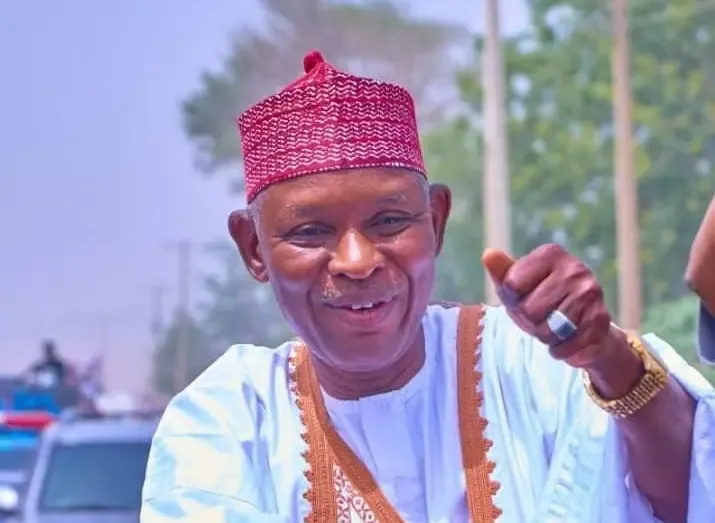
    Governor Abba Kabir Yusuf of Kano State has directed the Accountant General of the State to stop the salaries of over 10,800 workers employed by former governor Abdullahi Ganduje’s administration, pending investigations.

    Mr. Abdulkadir Abdulsalam, the Accountant General of the state, made this known to newsmen in Kano.

    Abdulsalam said the affected staff were employed at the twilight of the previous administration.

    He said that a Committee has been set up to investigate their engagement in the civil service, assuring that the outcome of the finding will play a role in their fate.

    The accountant general also announced the suspension of transfers made by the previous government within the civil service against existing rules, adding that the status quo ante should be maintained by the affected government officials.

    Abdulsalam however expressed the readiness of the new administration to pay workers salary by the 25th of every month, as he revealed that pension and gratuity would be paid to retired workers as when due.

    He also disclosed that the new administration would operate a single account to ensure financial discipline.