Author: Chike Ozohili

  • Climate Change: Honour financial commitments, AI tells wealthy nations

    Climate Change: Honour financial commitments, AI tells wealthy nations

    Amnesty International (AI) has urged rich countries to honour previous financial commitments they have failed to meet and adopt new ones which guarantee the rights of people in lower-income countries.

    Speaking at the Summit for New Global Financing Pact (PACT) in Paris, Amnesty International’s Secretary General, Agnès Callamard, said “Many vulnerable, lower-income states have been overwhelmed by economic shocks, debts they cannot pay, and the effects of climate change – a crisis to which they contributed very little, but which is costing people in these countries dearly. These are unprecedented challenges that require a rethink of how the world’s financial architecture is set up.

    “The rights of many people in vulnerable countries to access healthcare and social protection are not met at even the most basic level. There is a vital need to provide financial and technical assistance to these countries so that they can scale up social protection schemes to guarantee people’s right to an adequate standard of living.

    “Unsustainable levels of debt can have grave implications for economic and social rights. The cost of servicing existing debt can divert essential financing away from crucial social spending. Coordinated international action offering debt relief can transform the ability of governments to invest in economic and social protections, supporting their capacity to protect the rights of their people.

    “All creditors – states, private creditors, and international financial institutions – should cooperate to ensure timely debt relief for all countries in and at risk of debt distress and consider all options, including debt restructuring and debt cancellation.

    “All states should support and fund the establishment of a global social protection fund to help countries that are struggling to provide adequate protections, as advocated by the International Labour Organisation and UN Special Rapporteur on Extreme Poverty and Human Rights.

    “It is regrettable that many states, and civil society organisations and social movements representing communities worst affected by these crises, will not be represented at the summit. Those most exposed to the effects of climate change and national indebtedness should be allowed to contribute to discussions and engage in reforms that can achieve climate justice and economic security.

    Article 2 of the International Covenant on Economic, Social and Cultural Rights (ICESCR) obliges countries to take steps, including through international cooperation and assistance, to support other countries to meet their economic and social rights obligations.

    Rich countries and big corporations have failed to fulfill a pledge to provide $100 billion annually to help states mitigate and adapt to climate change. A separate loss and damage fund has yet to be funded and become operational while a climate meeting in Bonn this month was hampered by disputes between wealthy and developing countries over climate finance.

    Callamard noted that lower income countries cannot fairly phase out fossil fuels, protect people from the harms of the climate crisis and provide remedy to those most affected if wealthier states continue to evade their obligations of international cooperation and assistance under human rights law and the commitments taken under the 2015 Paris Agreement and the United Nations Framework Convention on Climate Change to provide climate finance to developing countries.

     “Commitments to ensure urgent and sufficient relief for nations in debt distress, and more grants, are required to support those states struggling to protect the rights of people against the devastating impacts of the climate crisis and other disasters.

    “With average global temperatures rising and set to far exceed the 1.5˚C increase over pre-industrial levels previously agreed to, the world is standing on the precipice of a climate disaster. This summit should offer a chance for global leaders to protect the rights of the world’s most marginalised people, not move the burden further onto those who are suffering the most but contributed the least to causing this crisis,” she said.

  • Obtain customers’ social media handles, CBN directs banks

    Obtain customers’ social media handles, CBN directs banks

    The Central Bank of Nigeria (CBN) has urged banks and other financial institutions in Nigeria to obtain the social media handles of their customers for the purpose of identification.

    The CBN in the new directive, asked financial institutions to obtain e-mail addresses, telephone numbers, and residential addresses from customers.

    In a circular posted on its website at the weekend and titled “Central Bank of Nigeria (Customer Due Diligence) Regulations, 2023,” the regulator stated that the new regulation was designed to provide additional customer due diligence measures for financial institutions under its regulatory purview.

    “To provide additional customer due diligence measures for financial institutions under the regulatory purview of the Central Bank of Nigeria to further their compliance with relevant provisions of the Money Laundering (Prevention and Prohibition) Act (MLPPA), 2022, Terrorism (Prevention and Prohibition) Act (TPPA), 2022, Central Bank of Nigeria (Anti-Money Laundering, Combating the Financing of Terrorism and Countering Proliferation Financing of Weapons of Mass Destruction in Financial Institutions) Regulations, 2022 (CBN AML, CFT and CPF Regulations) and international best practices.

    “And enable the CBN to enforce compliance with customer due diligence measures in line with the CBN AML, CFT and CPF Regulations,” the Apex Bank said.

    The apex bank, under its customer identification column, said financial institutions must identify their customers (whether permanent or occasional, and whether natural or legal persons or legal arrangements).

    For Individuals — legal name and any other names used (such as maiden name), permanent address (full physical address), residential address (where the customer can be located), telephone number, e-mail address, and social media handle; date and place of birth, Bank Verification number; Tax Identification number; nationality; occupation; public position held; and name of employer.”

    It also noted that an individual must have “an official personal identification number or other unique identifier contained in an unexpired document issued by a government agency that bears the name, photograph, and signature of the customer, such as a passport, national identification card, residence permit, social security records, or drivers’ license.”

    Part of the requirement includes “Type of account and nature of the banking relationship, and signature, and politically exposed person status.”

    The regulator also said financial institutions shall not establish or keep anonymous accounts, numbered accounts, or accounts in fictitious names.

  • NDLEA arrests 1,064 suspects, seizes 7.5 tonnes of illicit drugs

    NDLEA arrests 1,064 suspects, seizes 7.5 tonnes of illicit drugs

    The Kano Command of the National Drug Law Enforcement Agency (NDLEA), said it arrested 1,064 suspects and seized 7.5 tonnes of illicit drugs between June 2022 and June 2023 in the state.

    This is contained in a statement issued by the NDLEA Acting Public Relations Officer, ASN ll Sadiq Maigatari, to mark UN International Day Against Drug Abuse and Illicit Drug Trafficking in Kano on Saturday.

    The theme for the year 2023 is: “People first: stop stigma and discrimination, strengthen prevention.”

    According to him, drug abuse and illicit drug trafficking are global issues that threaten the health and well-being of individuals and the society as a whole.

    He said the suspects arrested comprise 1,001 males and 63 females.

    Maigatari said the total drugs seized within the period under review is 7,530.813kg of drugs, which is made up of 5,228.673kg of cannabis, 2096.837kg of psychotropic, 47.013kg cocaine and 65.24kg of heroin.

    He added that during the period under review, the Command secured 111 convictions, while 126 cases are still pending in court.

    “In our Drug Demand Reduction (DDR) activities, we admitted 96 clients and conducted 1,081 brief intervention which include 701 males and 380 females”

    He commended the Chairman/Chief Executive Officer NDLEA, Retired Brig.-Gen. Mohammed Buba Marwa, for his unwavering support, which has helped the agency achieve a huge success.

    According to Maigatari, “We commend the Kano State government, the Chairmen of Rano and Tudun Wada Local Governments, Emir of Rano, NGOs and sister security agencies for their support in the fight against drug abuse and trafficking.

    “NDLEA is working tirelessly to combat drug trafficking and abuse. We must all come together to address this problem and put people first.

    “We will continue to enforce the law and bring drug traffickers to justice, but we will also work to treat people who use drugs with compassion and respect. “On this World Drug Day, let us renew our commitment to stopping the stigma and discrimination against drug users and strengthen prevention measures to ensure that people’s lives come first,” the statement said.

  • Civil Defence decorates newly promoted officers in Jigawa

    Civil Defence decorates newly promoted officers in Jigawa

    Nigeria Security and Civil Defence Corps (NSCDC), Jigawa State Command, has decorated officers recently promoted to various ranks during the 2022 Senior Officers promotion.

    A statement signed by the spokesperson of the Command, Mr Adamu Shehu, made this known on Saturday.

    He said that the decoration took place on Friday with two officers promoted to Deputy Commandants, six Superintendents of Corps and three Assistant Supretendents of Corps.

    Others included 1 Deputy Superintendent of Corps, 11 Assistant Superintendents of Corps and 18 Inspectors of Corps promoted to Assistant Supreintendents of Corps.

    While congratulating the newly decorated officers, the State Commandant, Mr Musa Malah, in the statement, charged them to discharge their duties to reciprocate the gesture.

    He further commended the Commandant General of the Corps, Mr Ahmed Abubakar-Audi, for his commitment and determination in improving personnel welfare.

    The statement revealed that while responding on behalf of the newly decorated officers, the Head of Finance, Mr Shehu Bakari, assured the State Commandant of their resolve to give their best in their places of assignments.

    They vowed to continue protecting the interest of the corps wherever they found themselves. 

  • JAMB adopts 140 minimum score for admission into varsities

    JAMB adopts 140 minimum score for admission into varsities

    *100 tolerable score for Polytechnics, COE

    The Joint Admissions and Matriculation Board (JAMB), has adopted the National Minimum Tolerable score for admission into universities, polytechnics, and colleges of education as 140, 100 and 100 respectively.

    The JAMB Registrar, Prof. Ishaq Oloyede, disclosed this at the 2023 Policy Meeting of Tertiary Institutions in Abuja on Saturday.

    He said that all institutions must abide by this rule and must not go below the approved points.

    He also said that every tertiary institution must ensure its own minimum standard, especially as it relates to institutional screening and grading in the Senior Secondary Certificate Examination (SSCE), which must not be lower than 50 marks.

    ”All institution must abide by this minimum point. This means that no institution can go below the standard.

    ”For the 15 private universities that demand between 120 and 130 as minimum points, note that the 140 is sacrosanct and must not be violated.

    “This is because the system put in place will not recognise 139, so ensure you comply,” he said.

    Oloyede also said that institutions must not collect more than N2,000 as screening fees from candidates.

  • We’ve up to date financial statements – SEC

    We’ve up to date financial statements – SEC

    The Securities and Exchange Commission has said that it’s financial statements have been duly audited over the years, restating it’s commitment to high corporate governance standards.

    According to a statement signed by the Management of the Commission, “the attention of the Securities and Exchange Commission (the Commission), the apex regulator of the Nigerian capital market has been drawn to some reports in the electronic and print media, insinuating that the Commission had not audited its financial statements since 2014.

    A newspaper report had alleged that the capital market regulator had not audited it’s financial account in the last 8 years. 

    “Contrary to these false claims, the Commission as a law-abiding agency has duly audited its financial accounts year after year before and onward from 2014, and has submitted these to the relevant agencies statutorily empowered by the Federal Government to receive same,” SEC stated.

    The statement listed the agencies to include, the Federal Ministry of Finance, Budget and National Planning; Office of the Auditor General of the Federation; Fiscal Responsibility Commission; Office of the Accountant General of the Federation, as well as the appropriate committees of the National Assembly.

    “The Commission, being a strong promoter of world-class corporate governance standards, hereby restates its commitment to upholding such ideals and strongly advise persons with requests for information to channel such to the Commission via email to sec@sec.gov.ng, and to which the Commission would respond accordingly.

    “The dissemination of factual information is critical to complementing the efforts of the Federal Government for the growth and development of the capital market and Nigeria’s economy,” the Commission added.

  • Naira slumps 0.66% to end week on negative

    Naira slumps 0.66% to end week on negative

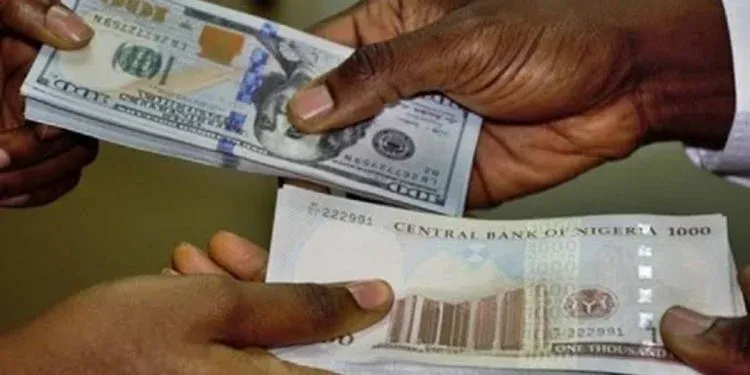
    The Naira on Friday closed on a negative note as it exchanged for N770.17 against the dollar at the investors and exporters window.

    The naira depreciated by 0.66 per cent when compared with N765.13 for which it exchanged for the dollar on Thursday.

    The open indicative rate closed at N759.13 to the dollar on Friday.

    An exchange rate of N801 to the dollar was the highest rate recorded within the day’s trading, before it settled at N770.17.

    The naira sold for as low as 461.10 to the dollar within the day’s trading.

    A total of 125.47 million dollars was traded at the official investors and exporters window on Friday.

  • Nigeria has only 60 active pharmaceutical industries – Expert

    Nigeria has only 60 active pharmaceutical industries – Expert

    Executive Secretary of Kwara Health Insurance Agency, Dr Olubunmi Jetawo-Winter, says only 60 out of the 180 existing pharmaceutical manufacturers in Nigeria are active.

    Jetawo-Winter disclosed this on Friday in Ilorin in her key note address at the 2023 Week of the Association of Industrial Pharmacists of Nigeria (NAIP), Kwara Chapter.

    The theme of the week is: “Emerging Challenges in Achieving Medicine Security in Nigeria”.

    She stated that while only 60 pharmaceutical industries are active in terms of manufacturing, others are in packaging or repackaging.

    According to her, this in spite of the potential capacity of the industries to produce between 50 to 75 percent of the nation’s drug needs.

    “It is saddening to see products, that pharmaceutical industries have the capacity and competence to produce locally, being imported into Nigerian market.

    “The country imports up to 90 percent of Active Pharmaceutical Ingredient (APIs) excipients, and almost all equipment used for manufacturing of drugs are also imported,” she said.

    The expert opined that about 30 per cent of drugs used in Nigeria are produced locally, saying the country largely depends on China and India for the remaining 70 per cent.

    Jetawo-Winter underscored the need for medicine security in Nigeria, describing it as measure to ensure that quality, efficacy, safety and sufficiency of medicines are guaranteed for defined population.

    “Once produced by the manufacturer, medicines and medical consumables must meet the right standard for manufacturing.

    “The integrity of such medicines and consumables are not compromised during its transportation, distribution and, storage, until it gets to the end user,” she said.

    Similarly, Jetawo-Winter said Nigeria had huge potential for local raw materials production, including APIs and excipients to support local manufacturing of drugs and medical consumables while leveraging on emerging opportunities in medicine security.

    She also called for increased funding for health and improved pharmacovigilance, which she said is responsibility of every pharmacist.

    Mr Isaac Salami, the state Chairman of NAIP, explained that the three-day event was to sensitise all stakeholders on the need to produce effective, safe, affordable and readily available drugs for the state and Nigeria as a whole.

    He appealed for strong political will and commitment by the government at all tiers to boost the pharmaceutical industries in the country.

    “We are calling for government assistance, as most of our pharmaceutical ingredients are imported, including packaging,” he said.

    The NAIP chairman also advised regulatory agencies to do more in terms of helping the industries in promotion, manufacturing and safety of drugs to Nigerians.

    Mr Adejuwon Otelaja, the Chairman of Phamaceutical Society of Nigeria (PSN), Kwara Chapter, who was represented by Mrs. Munirat Bello, Secretary of the association, underscored the need to finding lasting solutions to challenges confronting the sector.

    Otelaja lamented that some parts of the country record shortages in over-the-counter drugs, while observing the need for stability in the sector.

    Mrs Aina Obafemi, a former Vice Chairman of NAIP, noted that the association had been in the forefront of sensitising the people on best practices regarding drugs.

    She assured that members are ready to collaborate with government to ensure the industries overcome the present challenges.

    According to her, government can support local manufacturers financially and cancel double taxation which is detrimental to the growth of the sector.

    Obafemi also applauded the present administration for the reform on getting forex, saying the reform will assist greatly in acquiring APIs in Nigeria. 

  • South Africa seeks collaboration with Nigeria on PPPs

    South Africa seeks collaboration with Nigeria on PPPs

    South Africa has sought the collaboration of the Nigerian government on mutually beneficial infrastructure development through Public Private Partnerships (PPPs).

    South African High Commissioner to Nigeria, Tharmi Mseleku disclosed this when he led a team of officials on a courtesy visit to the Director General of the Infrastructure Concession Regulatory Commission (ICRC), Mr Michael Ohiani.

    In a statement by Ag Head, Media and Publicity of the Commission Manji Yarling on Friday in Abuja, Mseleku noted that although both Nigeria and South Africa were learning from each other in implementing PPPs, there was a need for both countries to rekindle their collaboration and take it to a greater height.

    “We are here to get the information about the kind of infrastructure that is envisaged to be developed through PPPs because we have the capacity to support, both from the financing and technical point of view,” he said.

    He disclosed that Development Bank of South Africa (DBSA) was part of the financiers of the Kano-Maradi rail project, adding that the bank was willing to do more in the area of financing.

    “The DBSA is not the only one looking to finance infrastructure from that perspective, they have the capability to also support the post-contract processes.

    “We came to have a conversation so that we can open the doors to rekindle the relationship. South Africa is open for business,” he said.

    Receiving the delegation, IDRC Director General, noted that the relationship between both countries on PPPs dates back to the inception of ICRC when members of staff went on a study tour of the South African PPP institutions.

    Ohiani hinted that from then on, the Commission had recorded great milestones with many PPP projects already underway.

    “Over the years, we now have 82 ongoing PPP projects that we are regulating. From 2010 to date the Federal Executive Council (FEC) has approved 102 PPP projects that are worth N10.8 trillion to be invested in by the private sector.

    “We have been able to achieve a lot in terms of using PPP to deliver on the infrastructure needs of the country,” he said.

    The ICRC boss told the envoy that the Commission had also established a PPP Training Institute called the Nigerian Institute for Infrastructure and PPP (NII3P) where training is offered on PPPs, with an MBA in PPP programme also available in Partnership with the Malaysian University for Science and Technology.

    Ohiani said South African companies were already engaged in PPPs in Nigeria while some others were indicating interest.

    “We look forward to having further collaborations especially as it relates to the Africa PPP Network (AP3N) which is scheduled to hold in South Africa later in the year,” he said.

    German leader Scholz drums support for increased global effort to tackle hunger, poverty

    German Chancellor Olaf Scholz has said there is a need for world leaders to urgently fight hunger, poverty and the challenges to growth.

    Speaking at a global finance summit in Paris which has over 100 countries participating, on Thursday, Scholz said shared responsibility was paramount in the global fight against hunger, poverty, and climate change.

    Scholz said: “Many countries, especially in the global South, have major challenges to overcome,’’.

    “Many things that exist come together anyway: a challenge for growth and for fighting hunger and poverty, and then on top of that the necessary measures to deal with man-made climate change.’’

    Scholz also called for greater cooperation in partnerships for a just energy transition in the fight against climate change.

    He cited past successes in climate financing, where Germany has made far-reaching commitments.

    “We will continue to do so and remain committed to our pledges.’’

    Development opportunities must also be sustainable, while progress must also be made in ensuring that raw materials were first processed locally, the German leader said.

  • FG supports FRSC with 130 operational vehicles

    FG supports FRSC with 130 operational vehicles

    The Federal Government has said it will continue to support the Federal Road Safety Corps (FRSC) operations towards a crash-free nation.

    The Secretary to the Government of the Federation (SGF), Senator George Akume, stated this while inaugurating 130 multi-functional operational vehicles for the corps on Friday in Abuja.

    Akume while assuring President Bola Tinubu`s support, said that the vehicles would further boost the corps operations across the country.

    He said that the present administration is determined to give special attention to policies and programmes to achieve set goals.

    The SGF said that the federal government would invest in transport infrastructure, to enhance economic growth and safety of lives and property on Nigeria roads.

    He said the deployment of the vehicles would aid the field operations that included rescue, recovery and speed removal of obstructions on the road.

    According to him, it would enable the corps achieve its cardinal responsibilities through effective and efficient operations.

    “Let me use this opportunity to reiterate Tinubu`s commitment to the provision of transport infrastructure.

    “Mr President believes that investment in transport infrastructure is a key determinant of performance in all other sectors, since it plays a vital role in any nation’s development and growth.

    Akume said that the Federal Government was in synch with the efforts of FRSC and encouraged other agencies of government at all levels, to develop similar resourceful ways to improve their work processes.

    He said that operational vehicles would improve the quality of road safety management approach in Nigeria.

    “Government efforts remained consistent, it is only proper for its agencies tasked with certain regulatory aspects of the infrastructure to live up to expectation.

    “It is in this respect that FRSC comes in for road traffic regulation. If the responsible regulators do not live up to their billing, then government’s efforts would have been in vain,” he said.

    Akume advised the corps to deploy the 130 operational vehicles to enhance its visibility on the nation’s highways as soon as possible.

    The SGF tasked the FRSC to sustain its transformational approach to road safety management and maintain its leadership role in the West Africa sub-region.

    Earlier, the FRSC Corps Marshal, Dauda Biu said that one significant benefit of the event was to move the corps further in its goal of operating as a world class organisation.

    Biu said that the vehicles would enhance the corps capacity to carry out its statutory duties most diligently

    He said that it would also assist the corps to demonstrate how best to approach road safety management as the lead agency in the sector.

    The 130 multi-functional operational vehicles comprise of 97 patrol vehicles and 10 heavy duty tow trucks.

    Others include; 15 flatbed tow trucks, five ambulances, one 56 seater staff bus and two coaster buses.