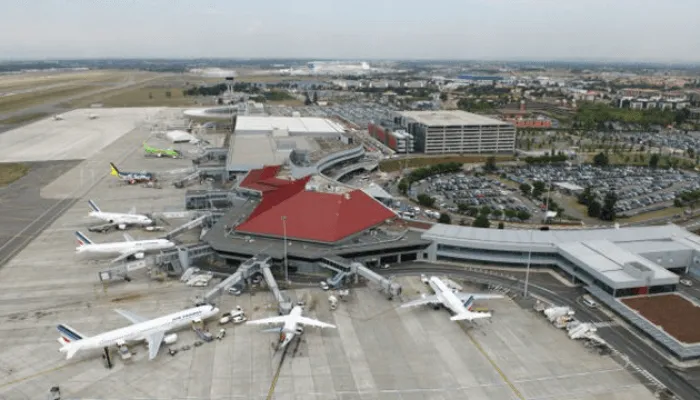
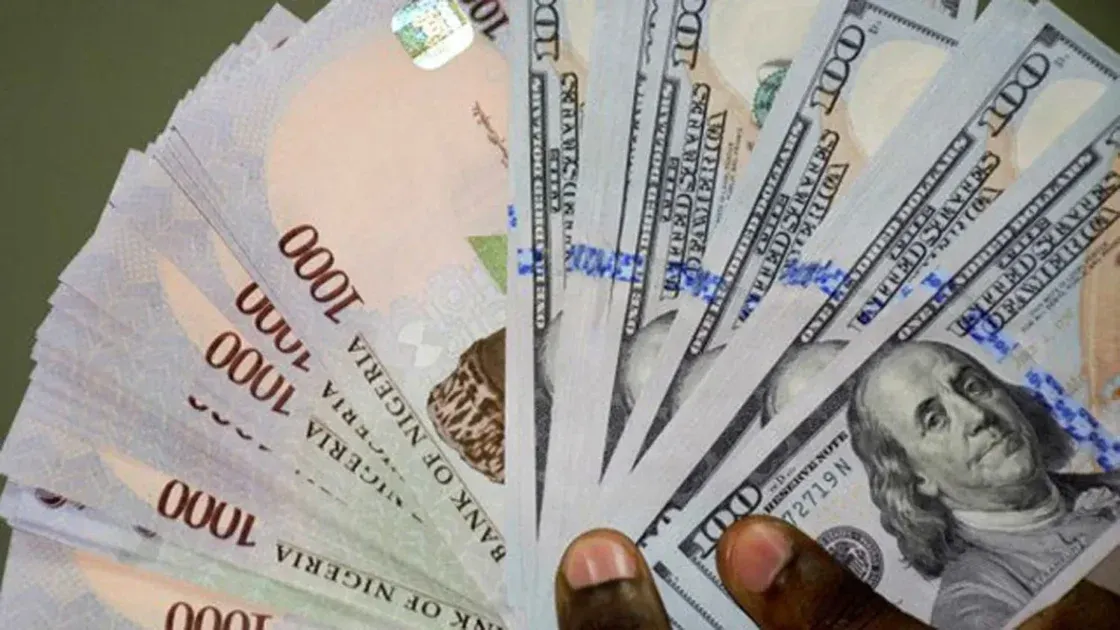
The concessioning of the Nnamdi Azikiwe International Airport (NAIA), Abuja, and the Mallam Aminu Kano International Airport, Kano will fetch about $800 million for the Federal Government.
The Minister of Aviation, Hadi Sirika, who dropped the hint, said that the concessioning of the two international airports was approved by the Federal Executive Council (FEC).
Sirika said the Abuja and Kano airports would be concessioned for 20 years and 30 years, respectively, by the Corporación America Airports (CAA).
He also said the approval was part of the Ministry’s roadmap aimed at putting the nation’s assets under concession rather than privatisation.
The concession, he said, would generate $797.4 million (N368.8 billion) as fees and taxes from the concessionaire.
“Put together, it is about $800 million. And this is equal to the amount of money that we borrowed to build those four airports.
“The consortium that won the bid is Mssr Corporación America Airports consortium and in the consortium, they have Mssr Mota-Engil Africa and Mssr Mota-Engil Nigeria and this is through a PPP, and it’s for 20 years for Abuja, and 30 years for Kano,” he said.
Speaking further on revenue expected from the deal, Sirika gave a breakdown of the amounts payable to the government as fees and taxes.
“The concession fees or upfront fees for Abuja is $7 million while $1.5 million will be given for Kano. The fixed concession fee is $401.2 million for Abuja and fixed fees for Kano is $21 million.
“The variable costs concession fee is $154 million for Abuja, and $26.9 million for Kano. Tax $111.2 million for Abuja and $42.7 million for Kano. The Infrastructure Concession Regulatory Commission (ICRC) supervision fees for Abuja is $16.4 million and $5.3 million for Kano.
“So, the total amount of money that is accruing to the government is $700 million for Abuja and then $97.4 million for Kano,” he added.
Sirika also said the aforementioned fees are different from the direct fees the Federal Airports Authority of Nigeria (FAAN) would continue to earn from passenger service charges, which is projected to be $4 billion (N1.84 trillion).
The Ministry of Aviation will now be known as the Ministry of Aviation and Aerospace.
This was disclosed on Thursday in a statement on the Ministry’s Twitter handle @fmaviationng.
According to the statement, the Federal Executive Council (FEC) approved the change of nomenclature of the Federal Ministry of Aviation to the Ministry of Aviation and Aerospace with immediate effect.
“The new nomenclature is in line with the nature of the sector, being under the exclusive management and regulation of the Federal Government,” the statement added.
The Senate, on Wednesday, passed a resolution calling on the Central Bank of Nigeria (CBN) to release the sum of $717,478,606 in airline funds that are currently trapped in the country.
The Upper Chamber also urged the CBN to allocate $25 million to airlines operating in Nigeria at its fortnightly dollar auction.
These resolutions were made after considering a motion titled ‘Current Issues on airlines blocked funds in Nigeria’ sponsored by Senator Biodun Olujimi (PDP-Ekiti) during plenary.
Olujimi who is the chairman of the Senate Committee on Aviation was represented by the Vice Chairman of the Committee, Senator Bala Na’Allah (APC-Kebbi) who presented the motion on his behalf.
The Red Chamber has urged the Federal Government to take immediate action to reverse the trend of increasing airlines blocked funds in Nigeria.
It also called on President Muhammadu Buhari to direct the CBN Governor, Mr. Godwin Emefiele, to release the blocked funds to the affected airlines.
Additionally, the Senate appealed to airlines operating in the country to refrain from withdrawing their services while efforts are underway to resolve the issue.
Senator Na’Allah, who moved the motion, stated that since January 2021, Nigeria has been the most challenged country in the world for airlines to repatriate their funds to support their operations.
In February, Nigeria alone accounted for 44 per cent of the total airlines blocked funds in the world.
As of March, the total amount of airlines blocked funds in Nigeria was $717,478,606, which includes matured bids that the CBN has not yet delivered, bids that are yet to mature, and cash balances in airlines’ accounts for repatriation.
He furthered that of the total amount of airlines blocked funds in Nigeria, matured bids that the CBN has not yet delivered accounted for $186.5 million, which is 26 per cent of the total blocked funds.
Three stakeholders, IATA, Qatar Airways, and Ethiopian Airlines, accounted for 57 per cent of the total blocked funds.
A review of the airlines’ blocked funds in Nigeria over the last six months indicates an average month-on-month increase of $49.3 million.
The consequences of these blocked funds are that cheap tickets are not available in Nigeria because taxes and inflation will have eroded the profit when the funds are kept for a long period of time.
As a result of the blocked funds, tickets in Nigeria have become very expensive and limited.
Neighbouring countries are able to get cheaper tickets because they make prompt payments due to the prompt repatriation of funds.
Senators supported the motion and voted to approve the prayers when they were put to a voice vote by Senate President, Ahmed Lawan.
Seventeen years, after the Federal Capital Territory (FCT) demolition team first visited Gishiri, a community within Katampe District of the Federal Capital City (FCC) as the FCT Administration (FCTA), the team, on Wednesday, made good a second visit to cleanse the area of bad eggs.
The team moved its bulldozers into the area to carry out demolition of several illegal structures that were sitting on land meant for infrastructure development.
Nigerian Anchor gathered that the structures had been marked in March, April and early May in 2023.
But most of the residents, however, feigned ignorance of the several notices, feeling that it would never be carried out like it happened when the demolition team, first, visited in 2006.
Since then, the residents continued to build on high power tension and water channels despite warnings from the government.
Unknown to the residents, the demolition meant business on Wednesday, and they were caught unawares, as there was pandemonium and tears from the residents.
“I parked into this area in March 2022, and just renewed my rent in March 2023, which cost N400,000.00. Where can I park now? If I had known, I wouldn’t have come to this area,” one of the female victims, who spoke under anonymity said.
The Senior Special Assistant (SSA) to the Minister of FCT on Monitoring, Inspection and Enforcement, Ikharo Attah, said that the demolition was necessitated by the need to reclaim the place for infrastructure development.
He said that the victims took advantage of the proximity of the area to the FCC, and flouted the Abuja Master Plan rules, turning the area into a haven for bad eggs.
Attah regretted that some of the unauthorised structures in the area were hideouts for drug dealers and suspected criminals that terrorise mostly Maitama and Asokoro residents in the city.
“We came here today to attack the triple illegalities associated with squatter settlements, the criminals’ den inside the cashew plantation in Gishiri, where we recovered cocaine and other hard drugs.
“Although there were tears and lamentations, we are not done yet as we are just getting warm up in Gishiri, and this is the first time the bulldozers came into Gishiri, since the days of Mallam Nasiru Ahmed El-rufai as FCT Minister.
“The team from Development Control is firing from all cylinders, even as those of us who are political appointees are going, we are sure that when we leave, the team on ground is set to continue the city clean up exercise,” he said.
The Director, the Department of Development Control, Murkhtar Galadima, after the demolition, said that the exercise, which was the mother of all demolitions, was to rid the city of illegal structures.
“The clean-up exercise is to rid the city of illegal structures. When you see demolition like, this is because of the magnitude of illegal structures in this particular area. Over 10 years ago, we have been marking and removing (structures), but no headway. But today, we got a headway.
“This area is a water pipeline corridor coming from lower Usman Dam to various tanks in town. Some of the buildings are on flood plain. This demolition is (the) mother of all demolitions because it contains everything. Any land that is not approved by Development Control is illegal, and therefore, will be removed,” he said.
The Federal Government, on Wednesday, maintained that academic activities of the proposed African Aviation and Aerospace University will commence in September 2023.
The Minister of Aviation, Hadi Sirika, disclosed this while signing the MoU with Nile University, on behalf of the Federal Government.
Nigerian Anchor reports that this is the second time the Federal Government would be making the announcement.
Last year, Sirika had announced that the African Aviation and Aerospace University will commence registration for the 2022/2023 academic session on September 26 to November 18, 2022.
Sirika, while signing the MoU in Abuja, said the university will help address the research and development gaps in the aviation sector, adding that it will begin academic activities offering BSc courses in Aviation Business and Meteorology.
He also mentioned that the university has hired its management staff and created an academic brief while noting that there are plans to privatise the university in the future for greater effectiveness.
“The university ought to have happened a long time ago because it is part of our roadmap in 2016 that was approved by the president and this is just to go straight into research and development in civil aviation and aerospace and of course environmental sciences.
“This university has received attention all over the world. The first of its kind in Africa and by the grace of God, it would be one of the top universities in the world. I’m also very sure that we may even go into aviation medicine in the near future.
“It is dedicated to those core mandates of aerospace aviation and environmental sciences. It is intended to attend to the huge demands we have in this sub-region of ours and indeed continentally especially as Africa is looking to unite, integrate and become one entity in all fields and human endeavours.
“I’m happy to say that the academic brief has been developed, the management staff have been employed and of course, it will be governed by the Federal Government but will be owned and operated by the private sector through PPP arrangement.
“I’m sure in the long run, it will end up being truly private sector but the government needs to ground it fully to ensure that the take-off does not suffer any hitch.
“The university will run both physical and online courses. These days, universities are turning virtual and we will begin with the B.Sc. Aviation Business and B.Sc. Meteorology and of course, continue to grow. Also, not too far from now, we will be getting approval from NUC to commence Master of Science in Aviation Management.
“Nile will provide support for the undergraduate programme for the first two years and it is expected that more research and collaboration will be established between the AAAN and NUN,” he said.
Operators of bike riders popularly called ‘Okada’ on Tuesday night lynched two bike snatchers who stabbed a rider to death in Jikwoyi, a suburb in Abuja.
Nigerian Anchor learnt from some residents that the incident happened between 9pm and 10pm at the Jikwoyi Extension III (popularly called Dagbadna) area of the community.
The Okada rider was said to be carrying the two men from Phase II Junction to an area of the Jikwoyi Extension III, where there is a mission hospital called Cornelian Hospital.
When they got to the area, which is usually lonely, the two men told the okada rider to stop them.
It was at that point that they began to struggle with him, in an attempt to snatch his bike from him.
When they could not forcefully overpower him to snatch the okada from him, they opted to stab him severally to weaken him.
Having succeeded in taking the bike from him, they left him bleeding on the ground, and drove away.
Luckily for the badly wounded okada rider, some of his colleagues found him, and he narrated what happened to him, before they rushed him to a nearby hospital.
His colleagues went to the Mai Angwa Vigilante to report the incident, and the vigilante group quickly went after the thieves.
After combing the bush for about 30 minutes, they found them, with the okada, and arrested them.
The badly stabbed okada rider, however, died in the hospital, after some minutes.
The sad news infuriated the other okada riders, who stormed the Mai Angwa Vigilante post, overpowered the vigilante group, dragged out the thieves, and beat them to death.
Nigerian Anchor’s efforts to get the Mai Angwa speak on the matter was abortive, as he was not in his home office.
‘Rain, rain, go away’, a short nursery rhyme, suggests how unwelcomed the rainy season is to everybody, especially children.
Also known as the wet season, the rainy season is the time of year where the majority of a country’s or region’s annual precipitation occurs. In Nigeria, rainfall is experienced throughout the year, with most significant rainfall occurring from April to October, and with minimal rainfall occurring from November to March. It is, however, briefly interrupted in August in the southern part of the country.
Rainy season in Nigeria is a blessing and curse. This is because like other works of nature, there are many advantages and disadvantages of rain. On one hand, the people get a break from the scorching sun, temperatures drop, and the crops get enough water. Then, on the other hand, plans get ruined, traffic intensifies, and one gets wet and cold.
The weather in Nigeria is very easy to understand. Just like everyone learned in the elementary school, Nigeria, like the rest of West Africa and other tropical lands, has only two seasons – the dry and rainy seasons.
Rainy season in Nigeria is experienced in two different ways. In Southern Nigeria, therainy season features heavy and abundant rain. The annual rainfall received in this region of the world is usually high. The rainy season in Nigeria differs by region. Rainy season is different in northern and southern Nigeria.
In southern Nigeria, light rainfall begins in March, with the peak of the rainy season being June and July. In June and July, it rains cats and dogs. A brief break is experienced in August, to begin again in September, and the season does not end until late October.
In northern Nigeria, rainy season does not come until June. Rainy season in Nigeria is the planting season, and with the dry season comes the harvest. After the rainy season comes the dry season, which is accompanied by a dust-laden air mass from the Sahara Desert, locally known as the harmattan season in Nigeria.
Residents of the country would describe the weather conditions in Nigeria as violent and apologetic. This is because the weather is never on ones’s side.
Last year, the United Nations Children’s Fund (UNICEF) disclosed that more than 2.5 million people in Nigeria were in need of humanitarian assistance following severe flooding that ravaged the country. The agency also stated that 60 per cent of those affected were children.
It further revealed that about 1.5 million children were at increased risk of waterborne diseases, drowning and malnutrition due to the flood.
UNICEF further explained that the floods which had affected 34 out of the 36 states in the country, had also displaced 1.3 million people, while over 600 people have lost their lives and over 200,000 houses have either been partially or fully damaged.
“Cases of diarrhea and water-borne diseases, respiratory infection, and skin diseases have already been on the rise. In the North-eastern states of Borno, Adamawa and Yobe alone, a total of 7,485 cases of cholera and 319 associated deaths were reported as of 12 October. As rains are expected to continue for several weeks, humanitarian needs are also expected to rise,” a statement by UNICEF said.
The flooding in Nigeria has also affected the education sector as it left behind trails of destruction in schools. It led to schools being closed down, children dropping out of school and school absenteeism as some school buildings were used as evacuation centres.
For example, in Anambra State, the government had announced the closure of all the primary and secondary schools in the flooded communities and other flood prone areas in the state.
Some towns in Ogbaru Local Government Area were flooded due to the overflow of the River Niger. Also, some communities in Anambra West and other LGAs were affected.
Commissioner for Education in the State, Prof Ngozi Chuma-Udeh, during the period, in a public service announcement released by her aide, Chioma Unachukwu, said that the closure of the schools became necessary to ensure the safety of the schoolchildren.
“I am directed to convey the Honourable Commissioner’s approval for the closure of all schools in riverine and flood prone areas in the state with immediate effect in compliance with the already published 2021/2022 Special Academic Calendar for riverine and flood-prone areas in the state,” it partly read.
Also, the Bayelsa State Government had to direct all public primary, secondary and private schools in the state to suspend all academic activities and embark on a flood break until Friday, November 11, 2022.
The directive became necessary to safeguard the lives of teachers and students as the flood had continued to submerge parts of the state.
Reports have it that flood took over parts of Adagbabiri, Swali, Azikoro, Amassoma, Agudama Epie, Igbogene, Sagbama Communities and Nembe Kingdom in the State.
In Delta State, the Delta State University of Science and Technology, Ozoro, had to be shut down for two weeks by the government as a result of the ravaging flood that has negatively affected most parts of the institution.
The state Commissioner for Higher Education, Dr. Kingsley Ashibuogwu, announced the closure of the university during an emergency visit for on the spot assessment of the impact of the flood on the institution.
The Commissioner noted that with the level of the flooding, it was no longer safe for students to remain on campus.
Faculties mostly affected by the flood included that of Administration and Management, Computer Science, and Environmental Sciences.
Others included the Faculty of Agriculture, Mass Communications, the University Health Centre, the library, generator plant house, Staff Club, as well as the administrative building of the university.
The Commissioner expressed hope that within the two weeks duration, the flood would have receded.
He added that the measure was taken in the best interest and safety of students and workers in the university community and assured students and the school management that lectures and academic activities would resume as soon as the flood receded.
With the reports of this magnitude last year, education experts had worried that the destruction by the flood will increase the number of out-of-school children in Nigeria which the United Nations Educational, Scientific and Cultural Organisation (UNESCO) disclosed to be about 20 million.
“I feel the flood will take us back a lot especially when it pertains to the out-of-school children in the country,” Edwina Obom, an education specialist, said.
She, therefore, urged the Federal Government to ensure that steps are being taken to either prevent the natural disasters or minimise the issues.
This advice is important as the National Emergency Management Agency (NEMA) has warned Nigerians to expect severe flooding this year.
The Director General of NEMA, Mustapha Ahmed, during an event in Abuja in March, said that there had been seasonal climate predictions and annual flood outlooks by the Nigerian Meteorological Agency (NiMet) and the Nigeria Hydrological Services Agency (NIHSA).
He said last year’s flood disaster in the country was an eye-opener for NEMA, and warned that the agency would spread early warning messages and signals to states, local government areas and Federal Capital Territory (FCT).
“We will not keep quiet. We want them to know that there will be flooding this year,” he said.
At the beginning of the year, the Nigerian Meteorological Agency (NiMet), has, in its 2023 Seasonal Climate Prediction (SCP), disclosed that the rainfall Onset date is predicted to be earlier than the long-term average in most parts of the country.
The NiMet Director-General, Prof. Mansur Bako Matazu, during an unveiling of the 2023 SCP stated this on the issue of this year’s flooding.
“Definitely, we have peak rainfall between July to September and in such times, because of high soil moisture, we expect flash floods around cities and we are also expecting riverine floods in those areas that are flood-prone,” he added.
Photo combo of late Saint Obi and his wife and children
His social life was blunted. Perhaps by his reticent disposition. His persona, two dimensional. To a distant public, he was upscale and cool. His manly bearing spoke loud. His onscreen image ironically amplified some idiosyncrasies; heroics, romantic adventures and traits that did not gel with the mortal privacy that eerily define his quiet and lonely life.
Saint Obi, real name, Obinna Nwafor, was shy, almost bordering on timidity and insecurity. He cherished the pleasantly tranquil interactions among a few friends. He would vanish at any outburst that could upset the poise of such small meetings. As he repeatedly told me, he just wanted to live a cool, quiet and fulfilled life. But, has he lived this cool and fulfilled life he envisioned? I have my doubts.
I tell Saint’s story here with painful tears in my eyes; because he was a star, a superstar whose life turned out a gleam of irony. Yet, it was this stardom that fetched him his much-professed financially strong and powerful wife. And their wedding, that solemn ritual of love would drastically alter the cause of his life and tragically yank him off the creative community that threw him up for the wife to capture and indeed conquer.
Their marriage was at best a dramatization of love. It was quick. He barely told us that he found a wife. Then, the marriage happened. It was something of a mystique, only those involved understood the histrionics that played out. None of us who were his closest pals, who walked with him through the crucible to the crest of his career in Nollywood, none of us was invited. The distance between us and the guy I admirably called Saint of the Storm had begun. This gulf would widen with each year. We saw him perhaps once a year after this marriage.
And life actually seemed to have given him a fair shake of the dice. He dressed well, drove big cars and even his skin, in literal lingo, spelled wellness.
The Saint would be blessed with three beautiful children. But not on one occasion were his friends in Nollywood invited for a christening or birthday. We were told that his wife was of the topmost hierarchy in telecom giant, MTN. But even if their celebrations were designed to be a rendezvous of the elites of the technocracies that his wife chiefly belonged, you expected that Saint would reach out to a few of his fellow creatives, for even if they would herald his small beginnings, there could be no tinge of shame to it because we all have our journeys and our stories. And even at that, the actor or cineaste in Nollywood is by no means poor.
But more tragic is the fact that his marriage did not only take away Obinna from his friends, it took him away from Nollywood. Saint stopped acting, and absconded from his career and perhaps his calling.
It would seem prognostic now. Yes, because I recall leaving my house in Lagos Mainland for his massive office in Lekki, Victoria Island, Lagos. It was about six years ago. There, I demanded to know why my friend abandoned our industry. He told me with his usual shy expressions that he wanted to focus on some other businesses and also to work behind the camera. Because his visage was unconvincing to me, I told him in stark terms, that whatever his new vision and pursuits, he must not abandon the trade that made him who he was.
It took another three years for Saint to return to his homies. But when he did, some of the deeply disappointed ones sniggered behind him. This was because the simmering rumors of cracks in his marriage had hit home. And though secretive in his ways, he knew it was time to open up. And he did. “I do not know why my wife’s siblings see me as a gold digger. They confront me, harass and fight me in my own matrimony. And my wife did nothing to stop them. I work hard, I earn my money. I have never depended on my wife “, he lamented, eyes blurred with tears. You could tell he was in deep pain.
Linda Saint-Nwafor, late Saint Obi’s wife
By the next visit, the Saint returned with a deep cut from a knife on his left eye. His wife’s brothers, he said, scaled the wall fence of their house to attack him. They were captured by hidden closed-circuit television, CCTV, installed for surveillance and security, he revealed.
He reported them at the police station and subsequently acquired a gun to defend himself. This effectively marked the beginning of the end of his marriage and perhaps Saint Obi’s long walk to a sad end. He moved out of his marital home to a new house to begin the reconstruction of his destiny, alone without his wife and worse still without his three beautiful children.
Meanwhile, his wife went to the police to defend her siblings using her financial power to manipulate the cause of justice, Saint stated unequivocally. The wife also sued for divorce, not in Lagos, but in Ogun state. As Saint put it, “It was to make the journey difficult for me. But I will not bend neither will I break. I will fight with my last blood to take custody of my children. They love me and they know it will be hard for me to live without them.
Divorce is not an issue. My marriage has long been over”, he said with a mix of courage and a quaky heart that betrayed his distress.
About mid-last year, however, Obinna took ill.
But he told no one. He simply became scarce. He was in and out of the hospital, we would later learn. He sold two of his three big SUVs to take proper care of his health and to acquire six Camry cars he’d use for Uber. But his vanishing health continued unabated. He seemed to have a premonition of his own passing as he wept repeatedly about not seeing his children. He emaciated. Life took a grim picture.
When I saw him by chance in January 2023, the dude called Saint looked 15 years older than his age. His macho cut had shrunk. His fat wallet was gone. What was left was only his fat will. His eyes seemed lost in their socket. This would be the last time I would see him.
Saint snuck out of Lagos to hang in with his sister in Jos. He told no one.
But a month ago, in April precisely, the once delightful actor who brought joy to many a home broke his icy silence. He called our mutual friend in US to give him a devastating message. He was on a deathbed, he said and wanted our friend to pray for him.
“It’s not looking good, pray, pray for me”, he appealed passionately.
His next call came on May 1, 2023. This time to his mentor, the man who made him a star with his productions, Zeb Ejiro, OON. He told him with a wavering voice that he had had three surgeries but was still in hospital in Jos. He averred again that his situation was not looking good, that he is also in a deep pain, distressed that he could not see his children. But still he begged him not to tell anyone about his ailment. Such was the life of this creative hermit, a lonely trouper.
I was the first to hear the news of his death late on Sunday, May 7. Having confirmed it, I called Zeb Ejiro. “
I have very bad news my brother, Zeb “, I began. “What is it, what is it? “, he asked anxiously. “A big star has fallen in Nollywood “. Zeb broke down in tears. I hadn’t said who it was. But sobbing helplessly now, he said, “Don’t tell me it is Saint Obi”.
Sadly, he was right.
May his soul find peace.
* Zik Zulu Okafor, veteran journalist, Nigeria Media Merit Award Winner and multiple award winning filmmaker wrote from Abuja.
The Nigerian Ports Authority (NPA) has disclosed that 23 ships conveying assorted goods are expected at Lagos ports from May 15 to May 25.
The NPA listed the items expected at the port to include bulk sugar frozen fish, general cargo, base oil, bulk salt, bulk wheat, diplomatic, bulk fertilizer, container and petrol.
It also stated that 20 ships were already discharging general cargo, petrol, container, crude soya oil, bulk urea, bulk wheat, base oil, frozen fish, bulk sugar, bulk gypsum, propane/butane and frozen fish.
The authority added that one ship had arrived the port and was waiting to berth with container.