In a move aimed at alleviating poverty and enhancing economic stability, Nigeria’s government has introduced a cash transfer programme to assist 20 million low-income individuals.
Finance Minister Wale Edun revealed this development at the Nigeria Economic Summit, emphasizing the government’s efforts to allocate its improved revenue toward social welfare programs.
The initiative targets the most vulnerable, covering around 60% of the nation’s poorest citizens.
Currently, the programme supports four million households, which equates to approximately 20 million people.
The plan includes an expansion phase that seeks to reach 15 million households nationwide.
The government’s revenue for the first half of 2024 saw a remarkable rise to ₦9.1 trillion, a considerable increase from the ₦4.06 trillion collected during the same period in 2023.
This surge has enabled the administration to invest heavily in social programs that address the cost of living and other economic challenges faced by Nigerians.
Edun also discussed the broader fiscal reform plan, which involves utilizing technology to enhance tax collection and ensure compliance from various government entities.
This approach has facilitated an increase in domestic resource mobilization, allowing the government to allocate more funds toward social initiatives.
The programme’s expansion is in line with the government’s focus on developing sectors like agriculture, manufacturing, oil, and housing. The aim is to curb inflation, improve food production, and make essential goods more affordable.
The initiative reflects the government’s commitment to enhancing the quality of life for Nigerians through targeted economic interventions and sectoral development.
Ongoing renovations at Dodan Barracks, the former seat of the Federal Government is set for timely completion, December, the State House Management confirms.
The Permanent Secretary, Olufunso Adebiyi, provided this update during a recent oversight visit by the House of Representatives’ Committee on Special Duties.
The renovations, along with a substantial budgetary allocation for various operational needs, demonstrate the government’s commitment to maintaining its infrastructure.
Adebiyi reported that the State House’s overhead costs for 2024 reached N22.62 billion, encompassing multiple departments, including the offices of the President and Vice President, the Chief of Staff, and the Medical Centre.
In terms of budget implementation, the State House has achieved impressive figures, with 99 percent of the overhead expenses already utilized.
Out of the N51.3 billion allocated for capital projects in 2024, N22 billion has been spent, indicating a 43 percent implementation rate thus far.
Adebiyi praised the House committee for approving an increased budget for the State House, which is essential for addressing various operational challenges and improving staff welfare.
The renovations at Dodan Barracks are funded through the supplementary budget for 2023 and the budget for 2024, reflecting a strategic use of available resources.
Additionally, the State House is progressing towards full digitization by November 2024, which aims to improve efficiency and security in its operations.
The visit by the House committee serves as a vital part of their oversight responsibilities, ensuring transparency and accountability in budget execution.
In what many insinuate may be the case of corruption fighting back, 16 state governors are challenging the legality of the Economic and Financial Crimes Commission (EFCC).
The Supreme Court is set to hear the significant case on October 22, involving a legal challenge to the Economic and Financial Crimes Commission (EFCC) initiated by 16 state governments.
The suit, led by Kogi State, contests the constitutionality of the EFCC’s establishment, claiming it violates constitutional provisions regarding state assembly agreements.
The case, now marked as SC/CV/178/2023, involves Kogi and fifteen other states, including Ondo, Edo, and Oyo.
A panel of seven Justices, headed by Justice Uwani Abba-Aji, has accepted the states as co-plaintiffs, allowing their arguments to be consolidated for more efficient proceedings.
During a hearing, representatives from the involved states presented their cases.
Kogi State’s legal counsel emphasized the need for clarity on procedural matters, suggesting that states wishing to join should be officially recognized as co-plaintiffs.
Justice Abba-Aji agreed and scheduled the next hearing for October 22.
The plaintiffs asserted that the EFCC was established without the requisite approval from the majority of state assemblies, rendering it illegitimate.
Among the reliefs sought, Kogi State demanded a declaration that the Federal Government and its agencies lack authority over its funds and cannot investigate financial matters related to the state.
This legal action occurs in the backdrop of ongoing investigations into the previous Kogi governor, Yahaya Bello, for alleged corruption.
Additionally, Kogi’s legislature recently enacted a law to create a state anti-graft agency, which the governor stated is not intended to undermine the EFCC’s authority.
Desperate to motivate workers, the FG has re-introduced the civil service anthem
The Head of Civil Service of the Federation, Didi Walson-Jack, has reintroduced the civil service anthem for federal workers.
Initially launched in 2018, the anthem is part of efforts to boost morale and drive ongoing reforms within the civil service sector.
During a recent media briefing in Abuja, Walson-Jack highlighted that the anthem aligns with the federal civil service strategy for 2021-2025, aimed at enhancing creativity and innovation in implementing reforms.
The reintroduction is also part of efforts to support the Renewed Hope Agenda of President Bola Tinubu, emphasizing efficiency, productivity, and a focus on citizens in public service delivery.
The anthem will be promoted among all civil and public servants across the country.
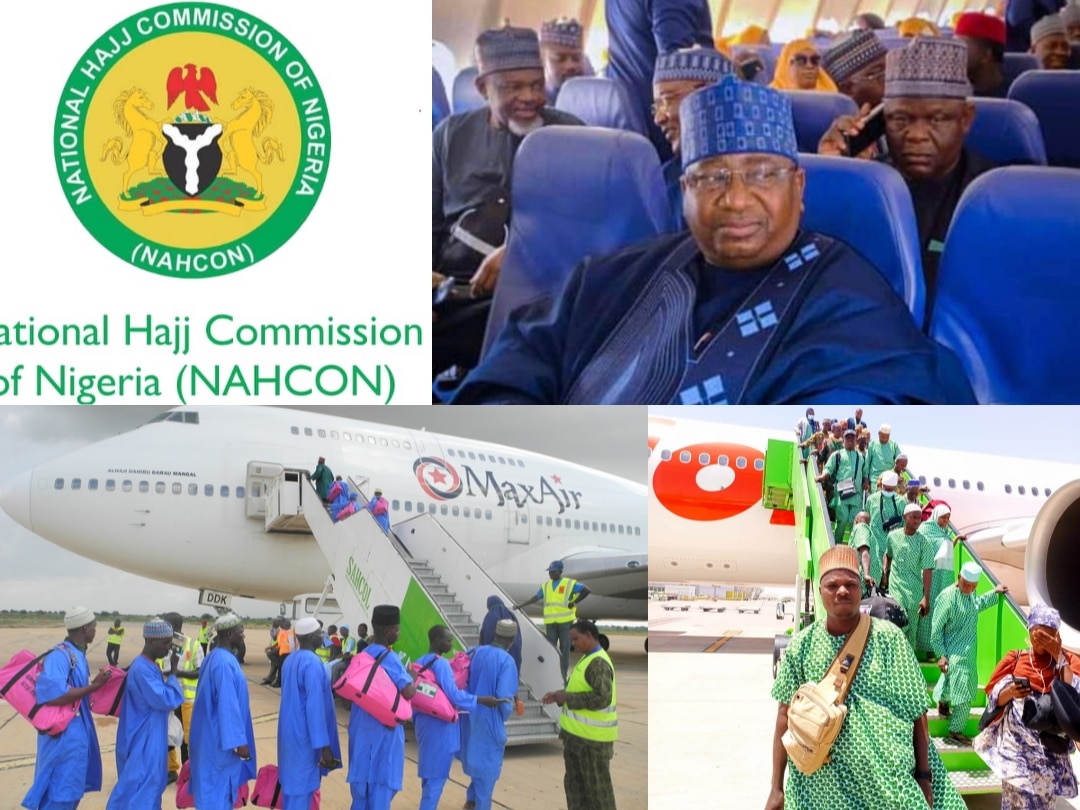
With Naira averaging N1,600: USD1, Hajj fares may exceed N10million in 2024
The National Hajj Commission of Nigeria has announced that there will be no government subsidies or concessionary rates for the upcoming 2025 Hajj pilgrimage.
This decision was communicated by NAHCON’s Commissioner for Operations, Anofi Elegushi, during a recent virtual meeting with Private Tour Operators.
In the announcement, it was confirmed that pilgrims, whether registered through state Pilgrims’ Welfare Boards or private operators, will not benefit from any favorable exchange rates for fare payments.
As a result, pilgrims may face costs exceeding N10 million, based on the current exchange rate of over N1,600 to $1, with the standard fare estimated at around $6,000.
While the Federal Government had previously offered a substantial subsidy of N90 billion for the 2024 Hajj, no such financial support will be available for 2025.
As NAHCON prepares for the next pilgrimage, initial deposit amounts for intending pilgrims have already been set by several states, including the Federal Capital Territory, at N8.4 million.
Further discussions revealed that the Saudi Ministry of Hajj and Umrah has limited the number of private companies involved in the pilgrimage to ten, each required to register a minimum of 2,000 pilgrims for visa approval.
Additionally, it was announced that Nigerian pilgrims who attended the 2023 Hajj will each receive a refund of SR150. However, NAHCON is still awaiting further information regarding refunds for the 2022 Hajj.
The Commission clarified that it received only N2.75 billion from 110 companies for the 2024 Hajj registration, contradicting claims of a larger debt owed to the Private Tour Operators.
Refunds have already been processed for some companies, with remaining funds yet to be allocated.
The Joint Action Committee (JAC) of local government-based unions, including the Nigeria Union of Local Government Employees (NULGE), Nigeria Union of Teachers (NUT), and Nigerian Union of Pensioners (NUP), has proposed several initiatives following the Supreme Court’s decision granting financial autonomy to local governments.
JAC’s recommendations aim to improve operations across the country’s 774 local government areas.
Key proposals include an audit and redistribution exercise to determine the actual number of local government workers, teachers, and pensioners.
The committee also suggests a one-year pause on new recruitment for local government and teaching positions to stabilize the system and enhance efficiency.
Additionally, JAC called for a restructuring of supervisory institutions overseeing local government staff.
The committee proposed that statutory memberships of various local government agencies, including the Local Government Service Commission and the State Universal Basic Education Board (SUBEB), should be expanded to include representatives from unions and stakeholders such as ALGON (Association of Local Government of Nigeria).
JAC further emphasized the need for federal support in providing essential equipment like tractors, refuse disposal vans, and vocational skill acquisition materials, with costs deducted from local government allocations in installments.
To bolster security, they advocated reorganizing local peace and security committees for better policing and intelligence efforts.
In terms of worker welfare, JAC suggested specific payment structures and allocations for salaries, pensions, and training, ensuring these funds are properly managed by relevant agencies.
The committee also recommended strengthening the Federal Ministry of Special Duties and Inter-Governmental Affairs to oversee policy formulation, coordination, and reforms at the local government level through regular summits.
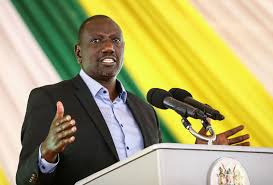
Kenya’s Deputy President, Rigathi Gachagua, is facing an impeachment vote in parliament following accusations of corruption and undermining the government.
The vote is set for Tuesday, exposing internal divisions within the ruling party.
Lawmakers have raised concerns about Gachagua’s alleged involvement in ethnically divisive politics, corruption, and supporting anti-government protests that began in June 2024.
Gachagua, a businessman from the Kikuyu tribe, ascended to his position as Deputy President in August 2022 after a closely contested election alongside President William Ruto.
However, tensions between the two have surfaced in recent weeks, with Gachagua claiming he has been sidelined and accused of backing youth-led protests against tax increases.
Lawmakers have listed 11 grounds for his impeachment, including allegations of acquiring assets worth 5.2 billion shillings ($40 million) since the election, despite an annual salary of just $93,000.
One of the notable assets includes the famous Treetops Hotel. Despite these accusations, Gachagua maintains that his wealth stems from legitimate business dealings and inheritance.
The impeachment process was initiated on October 1, with 291 members of parliament supporting the motion.
If two-thirds of the National Assembly back the impeachment, it will proceed to the Senate for further consideration.
Should the vote pass, Gachagua would be the first Deputy President to be impeached under Kenya’s 2010 constitution.
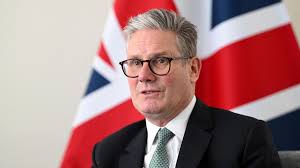
Sue Gray, the Chief of Staff to UK Prime Minister Keir Starmer, has officially stepped down from her position.
Gray is expected to assume a new responsibility as the Prime Minister’s envoy for nations and regions.
This move follows her involvement in internal disagreements, particularly concerning her salary, which was reportedly higher than the Prime Minister’s.
Morgan McSweeney, who previously served as the Prime Minister’s Chief Adviser, will take over from Gray.
Keir Starmer expressed gratitude for Gray’s contributions, especially for her role in preparing the government for its current agenda.
Gray, who gained attention for her investigation into the pandemic-related parties at Downing Street, leaves amid ongoing discussions regarding her influence within Downing Street.
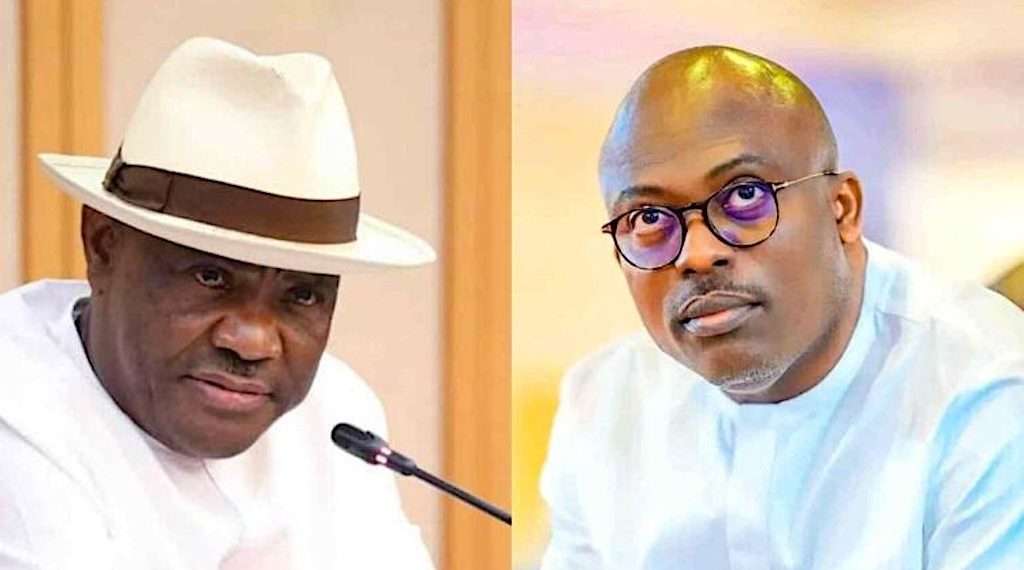
A loud explosion occurred at the All Progressives Congress (APC) secretariat in Rivers State, causing widespread destruction.
The incident took place along Aba Road in Port Harcourt, just hours before the scheduled Local Government Council elections.
Dynamites were reportedly used in the attack, which severely damaged the secretariat’s structure, pulling down the gate and destroying doors, windows, and other property.
The blast caused panic in the surrounding area as residents fled for safety.