Category: News

  • Why Bobrisky Was Provided ‘Special Place’ – Prison Experts Explain

    Why Bobrisky Was Provided ‘Special Place’ – Prison Experts Explain

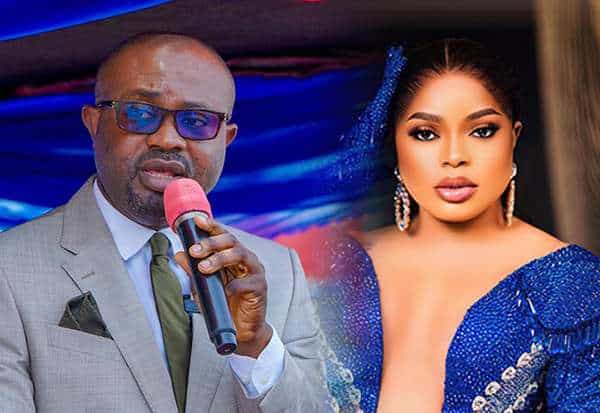
    Prison experts have elucidated on the controversies surrounding where crossdresser, Idris Okuneye, widely recognized as Bobrisky, served his prison terms for his naira abuse case.


    Bobrisky was released from prison on August 5 after serving a six-month prison sentence for abusing naira notes, as handed down by Justice Abimbola Awogboro of the Federal High Court in Lagos on April 12, 2024.


    However, there have been controversies regarding Bobrisky’s jail term.


    On Tuesday evening, prominent influencer Martins Vincent Otse, also referred to as VeryDarkMan shared a voice recording purportedly featuring Bobrisky, in which he allegedly confessed to bribing EFCC officials with ₦15 million.


    In the recording, Bobrisky stated that the ₦15 million was intended to persuade EFCC officials to dismiss the money laundering charges against him.


    Additionally, the crossdresser asserted that he did not spend any time in prison following his conviction and subsequent six-month sentence.


    However, amid a series of speculations and investigations commenced by concerned bodies, prison experts have explained the reasons behind the segregation of the controversial crossdresser from other inmates at the correctional facility while refuting allegations regarding the existence of a VIP section.


    During an appearance on Arise TV’s The Morning Show on Friday, Bishop Kayode Williams, the Director General of the Prison Rehabilitation Mission, detailed the various accommodations allocated to inmates according to distinct classifications.


    According to him, there was a need to provide Bobrisky with a special place different from other inmates in order to protect him from danger.


    Williams feared that homosexual inmates might take advantage of Bobrisky’s body features if he was not separated from them.


    He said, “There are accommodations for condemned prisoners, those sentenced to death, who must not mingle with other inmates. The second accommodation is convicted inmates, who are the owners of the prison.”


    Speaking further on Bobrisky’s situation, Williams said: “The accommodation that is provided for males, are they going to bring Idris with his transgender body /look to go and sleep in the general cell? The first thing they do is decide how to treat someone like that.


    “They provided him a special place for protective custody because, with his appearance, he would be in danger. He looks like a woman, moves like a woman, and there are homosexual inmates who would be willing to take things to extreme lengths.”


    On his part, former National PRO of the Nigerian Correctional Service, Francis Enobore, corroborated Williams’ comments, explaining that the service profiles each inmate for both their safety and the general prison environment.


    “Yes, he confessed in court that he is a man but he came in bodily showing that he is a woman. Some of the people behind bars are unrepentant homosexuals. There is no doubt that if care is not taken, we will have a very serious security situation on our hands,” he said.


    However, Enobore refuted claims of Bobrisky being given a private section, stating, “There’s no such thing as a private apartment or anything special in the prison.”


  • Education Minister Whatsapp Number Hacked

    Education Minister Whatsapp Number Hacked

    The phone line of the Minister of Education, Prof Tahir Mamman, has been hacked, according to a disclaimer issued on his official X account on Thursday.
    In the post, Mamman warned the public to avoid communicating through the affected number.
    “My phone line has been compromised. Please refrain from calling the number and ignore any messages requesting assistance until the issue is resolved.
    “Thank you for your understanding,” he wrote on X.com.
    The Ministry of Education has also confirmed the breach.
    In a statement issued Friday by the Director of Press and Public Relations, Boriowo Folasade, the ministry disclosed that the compromised line is being used by unauthorised individuals.
    The statement read, “The Office of the Honourable Minister of Education, Professor Tahir Mamman, wishes to inform the general public that the Minister’s WhatsApp number has been hacked and is currently being used by unauthorised individuals.
    “We deeply regret any inconvenience this may cause and urge everyone to disregard any message of request received from the said number until further notice.
    “The matter has been reported to the relevant authorities and is under investigation. We advise all members of the public to remain vigilant and report any suspicious activity.”
  • Fed Govt Begins Payment of New Minimum Wage

    Fed Govt Begins Payment of New Minimum Wage

    The federal government has commenced payment of the new minimum wage to civil servants on its payroll, effective Thursday, September 26.


    Bawa Mokwa, the spokesperson for the Office of the Accountant-General of the Federation, confirmed this in an interview, earlier today, Thursday September 26.


    He assured that workers will start receiving alerts for their new salary payments from Thursday.


    Recall that on Tuesday, the National Salaries, Incomes and Wages Commission said that the payment of the new minimum wage will commence from July 2024.


    The NSIWC Chairman, Ekpo Nta, made the disclosure during a press briefing in Abuja.


    The commission stated that this was because the date in question was when the President approved the bill after the National Assembly passed


  • FG increases NYSC members monthly allowance to N77,000

    FG increases NYSC members monthly allowance to N77,000

    The Federal Government has approved the increment of Corps Members’ monthly allowance from N33,000 to N77,000 with effect from July 2024.
    This was disclosed in a statement shared on the Instagram handle of the National Youth Service Corps (NYSC), on Wednesday, September 26.
    According to the statement, the increase was in line with the enactment of the National Minimum Wage (Amendment) Act 2024.
    The statement reads: “The Federal Government has approved the increment of Corps Members’ monthly allowance to Seventy-Seven Thousand Naira (N77,000) with effect from July 2024.
    “This is in line with the enactment of the National Minimum Wage (Amendment) Act 2024.
    “This was contained in a letter from the National Salaries, Incomes and Wages Commission, dated 25th September 2024 and signed by the Chairman, Mr. Ekpo Nta.
    “Prior to this, the Director General, NYSC Brigadier General YD Ahmed, had paid an advocacy visit to the Chairman in which he solicited for a robust welfare package for Corps Members.
    “The NYSC Boss is thankful to the Federal Government for the timely gesture and is optimistic that it will not only bring much needed succour to the Corps Members, but also boost their morale and motivate them to do even more, in their service to the nation.
    “Before this increment, the monthly allowance for Corps Members was Thirty-Three Thousand Naira (N33,000).”
  • Benin Republic Thwarts Alleged Coup Plot, Arrests Top Officials

    Benin Republic Thwarts Alleged Coup Plot, Arrests Top Officials

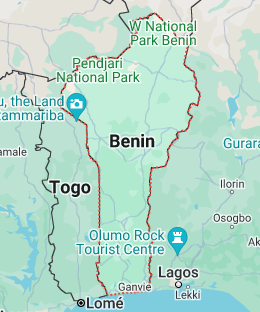
    Authorities in Benin Republic claim to have successfully foiled a planned coup attempt that was set to take place on Friday.
    Prosecutors revealed on Wednesday that the alleged plot involved high-ranking officials and was uncovered just days before the scheduled event.
    A special prosecutor at Benin’s court for financial crimes and terrorism, Elonm Metonou, disclosed that a former sports minister, Oswald Homeky, was apprehended on Tuesday night.
    Homeky was reportedly caught handing over six bags filled with cash to Djimon Tevoedjre, the commander of the republican guard, who is responsible for the security of President Patrice Talon.
    “It appears the Republican Guard commander in charge of the president’s security was engaged by the minister Oswald Homeky and Olivier Boko in order to carry out a coup by force on September 27, 2024,” Metonou stated.
    According to the prosecutor, the seized bags contained approximately 1.5 billion West African CFA francs, equivalent to about $2.5 million.
    Investigations revealed that a bank account was opened in Côte d’Ivoire under Tevoedjre’s name on August 6. The funds were reportedly transported in Homeky’s vehicle, a Toyota Prado fitted with fake license plates.
    Olivier Boko, a businessman and close associate of President Talon, was also implicated in the conspiracy. He was arrested earlier in the week in Cotonou, Benin’s commercial hub.
    Boko, who has made his presidential ambitions clear ahead of the 2026 election, allegedly collaborated with Homeky in paying off the military commander to ensure there would be no resistance during the coup.
    Investigations are ongoing, with authorities working to track down other individuals involved in the plot.
    Since 2020, several West African nations have experienced successful coups or attempted military takeovers.
    President Talon, who has governed Benin since 2016, has come under scrutiny, with critics accusing him of gradually dismantling democratic institutions and tightening his grip on power.
  • Provide Details Of Where Bobrisky Served Sentence – NBA To NCoS

    Provide Details Of Where Bobrisky Served Sentence – NBA To NCoS

    The Nigeria Bar Association (NBA) has demanded that the Nigerian Correctional Service (NCoS) provide transparent details of where crossdresser, Idris Okuneye, popularly called Bobrisky, served his conviction sentence.
    The president of NBA, Afam Osigwe, also demanded an independent investigation by the office of the National Security Adviser (NSA), the Economic and Financial Crimes Commission (EFCC) and the office of the Attorney General of the Federation (AGF) to determine if Bobrisky bribed personnel of EFCC and NCoS to serve his jail terms outside the correctional center.
    In a statement on Wednesday, NBA also advised the public to refrain from linking Femi Falana and his son, Folarin Falana, known by his stage name Falz, to the Bobrisky case.
    It read: “The Nigerian Bar Association (NBA) commends the timely decision of the Economic and Financial Crimes Commission (EFCC) to launch an investigation into allegations that some of its officers received ₦15 million from Idris Okuneye, popularly known as Bobrisky, to dismiss money laundering charges against him.
    “The allegation of bribery to reduce or drop charges is very disturbing. An urgent and thorough investigation is needed to determine whether bribes were paid or are sometimes paid to influence the nature of charges brought against defendants in criminal cases. This investigation will also test the transparency of the investigative process and the procedures for charging defendants in court.
    “The investigation by the Economic and Financial Crimes Commission (EFCC) should determine whether or not there was any financial inducement by Bobrisky or anyone on his behalf in exchange for the dropping of money laundering charges against him. Any person found complicit must face the full weight of the law.
    “The NBA acknowledges that all individuals and institutions accused are entitled to the presumption of innocence until proven guilty. However, we insist that a swift and thorough investigation be carried out to establish the truth. If any public official is found culpable, appropriate legal actions must be taken to hold them accountable.
    “The NBA therefore demands that the Nigerian Correctional Service (NCoS) not only respond to the allegation that Bobrisky did not serve his time in a correctional facility but also provide transparent details on the conditions under which Bobrisky served his sentence. If it is proven that he was allowed to serve his sentence outside a Correctional Facility, in breach of the law and a court order, the officers and officials responsible must be prosecuted and dismissed from service.
    “We also call upon the Attorney General of the Federation, EFCC, and the Office of the National Security Adviser to independently investigate allegations that a convict paid a bribe to be allowed to serve prison time in a private residence instead of in a Correctional Facility, as well as the allegation that a bribe was demanded in exchange for a government pardon. The suggestion that convicts can freely serve their time in private residences and potentially procure a pardon by paying a bribe undermines the very foundation of our criminal justice system and erodes public confidence in the system.
    “We believe that this investigation will provide the individuals named in these allegations the opportunity to clarify their roles (if any) in this matter. If these allegations are found to be true, it would not only mock our correctional system but also serve as a wake-up call for necessary reforms in our prosecutorial and correctional processes. The NBA shall appoint eminent members of the legal profession to monitor this situation and ensure that due process is followed.”
    It continued, “The NBA is especially concerned with the allegation involving one of Nigeria’s foremost legal luminaries, Femi Falana, SAN, and his son, Folarin Falana, Esq. (aka FALZ). The video claims that Mr. Folarin Falana reached out to Bobrisky, and his father, Femi Falana, SAN, allegedly discussed the possibility of applying for a presidential pardon for Bobrisky. We note that Femi Falana, SAN, has denied this allegation.
    “It is important to note that the law allows convicts to apply for a presidential pardon under Section 175 of the 1999 Constitution of the Federal Republic of Nigeria (as amended). This provision empowers the President to grant pardons to individuals convicted of offenses, subject to certain conditions and upon the recommendation of the Council of State.
    “The NBA acknowledges that applying for a presidential pardon is a legitimate legal recourse available to any convict, as stipulated by law. However, it is crucial to clarify that such a process must follow due procedure and be devoid of any form of influence peddling or unethical practices.
    “Femi Falana, SAN, is a highly respected legal practitioner known for his integrity and long-standing commitment to human rights and justice. He has in fact denied the allegation against him. The Nigerian Bar Association urges the public to refrain from making premature conclusions regarding Mr. Falana’s or indeed any person’s alleged involvement in these matters.
    “The Nigerian Bar Association reiterates its commitment to upholding justice, fairness, and the rule of law. We will continue to support all efforts to ensure transparency and accountability in our prosecutorial, law enforcement, and correctional systems. We also call for calm and restraint while investigations are carried out, and we assure the public that we will monitor these investigations closely to ensure they are conducted in a transparent and unbiased manner.”
  • BREAKING: Senate begins screening of Kudirat Kekere-Ekun as CJN

    BREAKING: Senate begins screening of Kudirat Kekere-Ekun as CJN

    The Senate has begun with the screening of Honourable Justice Kudirat Kekere-Ekun as the Chief Justice of Nigeria, CJN.
    Before the commencement of the screening on Wednesday, the Senate leader, Senator Opeyemi Bamidele, APC, Ekiti Central moved that there should be a re-order of the Legislative Business of the day to make the screening of Kekere-Ekun be the first matter to be addressed.
    Kekere-Ekun who is going to be screened in the Committee of the Whole of the Senate, arrived at the hallowed Chamber at 12.30.
    She entered with other Justices of the Supreme Court, Court of Appeal, and others after Order 12 of the Senate standing Order was cited by Senator Bamidele to allow for her and other visitors enter the Chamber. It was seconded by the Deputy Minority Leader, Senator Oyewumi Olalere, PDP, Osun West.
    The Acting CJN was led by the Special Adviser to the President on the Senate, Senator Basheer Lado.
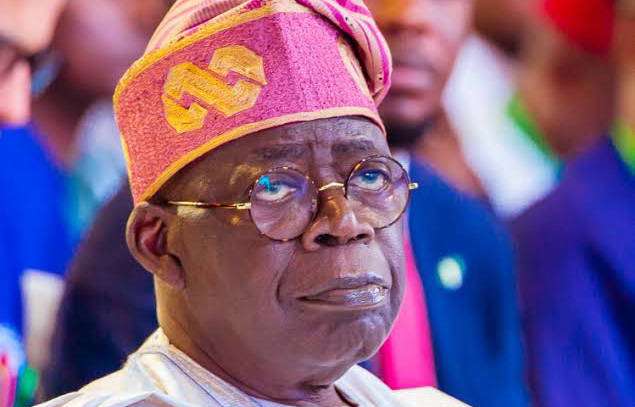
    President Bola Tinubu had on Tuesday written the Senate, seeking the screening and subsequent confirmation
    of Honourable Justice Kudirat Kekere-Ekun as the Chief Justice of Nigeria, CJN.
    President Tinubu’s letter was read by the President of the Senate, Senator Godswill Akpabio upon resumption from the annual break the Upper Chamber embarked upon since July.
    The letter read, “Pursuant to 231(1) of the constitution of the Federal Republic of Nigeria of 1999 as amended which gives the power to the president powers to appoint the chief justice of Nigeria (CJN) on the recommendation of the National Judicial Commission (NJC) and subject to confirmation of the Nigerian senate.
    “I have the honour to forward the nomination of Honourable Justice Kudirat Kekere-Ekun CON for confirmation as CJN.
    “While I hope that this request will receive the expeditious consideration and confirmation of the senate, please, accept distinguished senate president the assurances of my highest consideration and personal regards.”
    Recall that Justice Kudirat Kekere-Ekun was on 23rd August 2024 sworn-in as the 23rd Chief Justice of Nigeria (CJN) by President Bola Ahmed Tinubu at the State House, Abuja.
    With the swearing-in, Kekere-Ekun was expected to operate in an acting capacity until confirmation by the Senate.
    She took her Oaths around 11:38 am. She’s the second female Justice to hold the position.
  • FEC approves economic stabilisation bills, proposes 10 changes to spur economic growth

    FEC approves economic stabilisation bills, proposes 10 changes to spur economic growth

    The Federal Executive Council has approved the Economic Stabilisation Bills (ESB).
    These bills, driven by recommendations from the Presidential Fiscal Policy and Tax Reforms Committee, chaired by Taiwo Oyedele, mark a critical step in the government’s Accelerated Stability and Advancement Plan.
    President Bola Tinubu presided over the 18th meeting of the Federal Executive Council at the Aso Chambers of the State House, Abuja.
    The ESB aims to amend over 15 tax, fiscal, and establishment laws, paving the way for enhanced economic stability.
    The proposed amendments are expected to reduce inflation, strengthen the naira, and boost job creation while promoting fiscal discipline and poverty alleviation.
    Oyedele took to his X account on Tuesday night to outline the 10 key amendments proposed by the ESB.
    He noted that these efforts are in a bid to stabilise Nigeria’s economy and lay the groundwork for long-term inclusive growth.
    These reforms, according to him, are set to shape the future of Nigeria’s fiscal landscape.
    Here are the 10 proposed changes:
    Amendments to income tax laws to facilitate employment opportunities for Nigerians in the global value chain, including the digital economy.
    Zero-rated VAT and improved incentive regime to promote exports in goods, services, and intellectual property.
    Amendments to facilitate investment in the gas sector and simplify local content requirements to ensure competitiveness.
    Reform of the foreign exchange regime to enhance the regulatory powers of the CBN, unlock more forex liquidity, strengthen the naira, and sustain rates convergence.
    Tax reliefs for private sector employers in respect of wage awards and transport subsidies provided to their employees.
    Tax relief to companies that generate incremental employment and retain such employees for a minimum of three years.
    Fiscal discipline and enhancement of remittances from government agencies and corporations to the Consolidated Revenue Fund of the Federal Government.
    Collaboration with states to suspend certain taxes on small businesses and vulnerable populations, including road haulage levies and other charges on transportation of goods.
    Introduction of a “Tax Identification Consolidation and Collaboration (TICC)” initiative to expand the tax base and create a level playing field for businesses.
    Provision of additional funding for the Students Loan Scheme.
    With these groundbreaking reforms approved by the FEC, “the Economic Stabilisation Bills are set to be transmitted to the National Assembly for passage into law.”
    If enacted, these changes will play a pivotal role in stabilizing Nigeria’s economy and fostering long-term sustainable growth
  • President Tinubu’s UNGA79 Address: Some Key Points

    President Tinubu’s UNGA79 Address: Some Key Points

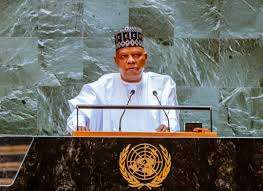
    In Nigeria’s national statement delivered at the 79th session of the United Nations General Assembly (UNGA) late Tuesday, President Bola Tinubu, made an appeal to global leaders, urging them to prioritize debt forgiveness for Nigeria and other developing nations.
    The president emphasized the need for relief from multilateral financial institutions and creditors during the 79th Session of the UNGA in New York.
    Represented by Vice President Kashim Shettima, Tinubu stressed that the nations of the Global South cannot achieve meaningful economic progress without concessions on their overwhelming debt burdens.
    His call for debt relief and reforms came amid the pressing economic challenges these nations face.
    In a press release issued by Stanley Nkwocha, Senior Special Assistant to the President on Media and Communications (Office of the Vice President), the Nigerian leader highlighted to the UN how the global debt crisis is crippling countries’ abilities to address the needs of their citizens.
    He also pointed out that trade barriers and protectionist policies are shattering nations’ aspirations, while unchecked competition is stifling motivation and obstructing global investment opportunities.
    The Debt Management Office, in its Q1 2024 report, revealed that Nigeria’s total domestic and external debts amounted to ₦121.67 trillion ($91.46 billion).
    With state governments seeing a 122% increase in external debt servicing in the first half of 2024, the economic strain has been severe, with Kaduna and Lagos states paying the highest servicing costs.
    During the first half of 2024, Nigerian states witnessed a 122% rise in external debt servicing, reaching ₦139.92 billion, up from ₦63.06 billion in 2023.
    This increase was driven by escalating borrowing costs due to currency depreciation, which has severely affected state-level spending and fiscal stability.
    Addressing world leaders, Tinubu stated, “We must ensure that any reform of the international financial system includes comprehensive debt relief measures, to enable sustainable financing for development.
    “Countries of the global South cannot make meaningful economic progress without special concessions and a review of their current debt burden.”
    The Nigerian leader also called for the recovery of funds lost through corruption and illicit financial flows.
    He urged international cooperation to recover and return stolen assets, noting that the return of such funds to their countries of origin is essential under the United Nations Convention against Corruption.
    “Therefore, the international community must promote practical measures to strengthen international cooperation to recover and return stolen assets and to eradicate safe havens that facilitate illicit flows of funds from developing countries to the developed economies,” The Nigerian leader said.
    Tinubu expressed concerns over rising nationalism and unilateralism, warning that these trends threaten global peace and cooperation.
    He argued that such an inward focus detracts from efforts to tackle pressing issues like terrorism, climate change, poverty, food crises, inflation, and growing debt.
    The President also underscored that multilateralism, rooted in inclusivity, equality, and cooperation, remains the surest path toward addressing these challenges.
    Reflecting on global conflicts and other ongoing crises, Tinubu highlighted the UN’s failure to achieve its core objectives, stating that billions of dollars are funneled into wars and conflicts rather than resolving issues such as poverty, hunger, and inequality.
    “Today, these pillars of our organisation are threatened. They risk being broken by the relentless pursuit of individual national priorities rather than the collective needs of the nations that are assembled here today.
    “While commitment to multilateralism offers us the surest guarantee of global action to address the existential challenges we face, singularity and nationalism are undermining the aspirations towards the peaceful and collective resolution of such challenges.
    “From last year’s summit, and indeed from previous years, we have carried over the numerous challenges of terrorism, armed conflict, inequality, poverty, racial discrimination, human rights abuses, food crises, hunger, irregular migration, piracy, global pandemics, hyper-inflation, nuclear proliferation, grinding debt burden, climate change, and a host of other vexations.
    “The continued manifestation of these challenges testifies to our failings rather than to any lofty achievements on our part. Billions of dollars are being committed to the prosecution of wars and the fanning of the embers of conflict,” he said.
    Tinubu reaffirmed what he termed “Nigeria’s steadfast commitment to the deepening of multilateralism,” just as it did 65 years ago when it joined the United Nations as the 99th member-state.
    “We remain committed to that desire to remain friendly with all nations and participate actively in the works of the United Nations, as expressed by our founding Prime Minister, Sir Abubakar Tafawa Balewa,” he said.
    Speaking on Africa, Tinubu expressed deep concern over the resurgence of military coups and unconstitutional changes in governance.
    He explained that these events underscore the fragility of democracy when not accompanied by economic development, peace, and security.
    These challenges, he said, must be a central focus of deliberations at the UNGA, as the lack of development and security fuels dissatisfaction among African citizens.
    “Our people need employment. They need decent livelihoods. They desire good and affordable education and healthcare for their children and families. They need to live in healthy, safe and secure environments. They need hope and they need opportunity,” he added.
    Tinubu also called for reforms in the global financial system and a fair, transparent multilateral trading regime.
    He urged that the “Pact for the Future” be used to reposition developing economies and implement concrete measures to overcome their unique challenges.
    “It is for this and other reasons that we reiterate the call by countries, especially of the global South, for reform of the international financial architecture and promotion of a rules-based, non-discriminatory, open, fair, inclusive, equitable and transparent multilateral trading system,” he noted.
    Addressing the issue of insecurity, Tinubu highlighted how it has driven citizens into extreme hardship, eroding their trust in democracy.
    He emphasized that restoring confidence in democratic governance and constitutional order is a responsibility that rests with the global community.
    He stated, “We cannot build durable societies with the threat of terrorism, banditry and insurgency growing in our countries and regions. Indeed, violent extremism remains an existential threat to both national and international peace, security and development. We are making concerted efforts to contain and roll back this threat.”
    Tinubu reassured world leaders that the “High-Level African Counter-Terrorism Meeting” hosted by Nigeria in April 2024, along with its outcome—The Abuja Declaration—aims to offer practical solutions to address the challenges posed by terrorism and insurgencies.
    Tinubu also warned of the growing risks posed by climate change, citing the devastating floods in Nigeria that submerged parts of the country, including Maiduguri.
    He called for the international community to honor their commitments made at various Conference of the Parties (COP) meetings, arguing that the consequences of climate inaction would affect every nation.
    The President also spoke on the role of the United Nations in conflict prevention, lamenting the normalization of global conflicts.
    Tinubu pointed out that conflict prevention was a core objective of the United Nations at its inception. However, he expressed regret that this mission has become increasingly difficult, as conflicts have become normalized.
    “When even the condemnation of violence, civilian casualties, and calls for a ceasefire are viewed as controversial,” he remarked, it becomes clear how challenging the task has become.
    He went on to outline key root causes of global conflicts, including poverty, hunger, ignorance, inequality, exclusion, and other forms of injustice.
    He referenced specific conflicts, such as those in Sudan and the war in Gaza and other Palestinian territories, as examples.
    “What this tells us is that the international community has failed to live up to the spirit and aspirations of the United Nations to rid the world of inequality, violence and domination of one people by another. Justice is antithetical to revenge,” he emphasized.
    The President also called for significant reforms in the United Nations Security Council, advocating for permanent seats for Nigeria and other African nations.
    He stressed the urgency for the UN to enhance its relevance and credibility in an increasingly fast-paced global landscape.
    The United Nations Security Council (UNSC) is one of the six key organs of the UN, responsible for maintaining international peace and security. It comprises 15 members, with the five permanent members holding veto power.
    The Security Council plays a critical role in recommending the admission of new members to the UN General Assembly and approving amendments to the UN Charter.
    Additionally, the UNSC has the authority to initiate peacekeeping missions, impose international sanctions, and authorize military actions when necessary to address global security threats.
    Tinubu said, “Some permanent members of the United Nations Security Council have offered encouraging, if tentative, indications of support on the issue of reform of the Council. We welcome the change in tone and urge an acceleration in momentum to the process.
    “The Security Council should be expanded, in the permanent and non-permanent member categories, to reflect the diversity and plurality of the world. We fully support the efforts of Secretary-General Guterres in this regard.
    “Africa must be accorded the respect that it deserves in the Security Council. Our Continent deserves a place in the permanent members category of the Security Council, with the same rights and responsibilities as other Permanent Members.”
    Tinubu concluded by urging the UN to accelerate the momentum toward Security Council reform, pointing out that some permanent members had expressed tentative support.
    He reaffirmed Nigeria’s commitment to multilateralism and cooperation, stressing that only through collective action can the world hope to resolve the existential challenges it currently faces.
  • Tinubu Declines Assent To Bill Seeking Extension Of Federal, State Legislators Tenure

    Tinubu Declines Assent To Bill Seeking Extension Of Federal, State Legislators Tenure

    President Bola Tinubu has declined assent to a bill seeking to extend the tenure of service of legislative officers at the National Assembly, as well as the 36 state Houses of Assembly from 35 to 40 years and their retirement age from 60 to 65 years.
    The president’s declined assent was conveyed in a letter read, today on the floor of the Senate by the President of the Senate, Godswill Akpabio.
    The harmonised controversial retirement age bill was first stepped down in February, 2024 for further research and consultation with stakeholders, after a significant number of senators voted against it.
    The bill first introduced during the 7th Assembly, was transmitted to the 9th Assembly where it suffered a standstill and subsequently to the 10th Senate.
    The President’s letter read that ‘ Upon thorough examination and careful consideration, I have decided to withhold my assent to the bill”, Tinubu wrote.
    “This decision is made by the powers vested in me by the Constitution of the Federal Republic of Nigeria. I wish to express my sincere appreciation for the diligent work of the Senate with regard to the drafting and passage of this Bill. I hope you will receive it with understanding. Please accept the assurances of my highest regard”, the letter read.
    Akpabio presided over the resumption of legislative sitting after eight weeks of recess.