Tag: Bola Tinubu

  • NCC: Set to Digitally Enable the Renewed Hope Agenda

    NCC: Set to Digitally Enable the Renewed Hope Agenda

    The Nigerian Communications Commission (NCC) has asserted its role as being instrumental in advancing the development of the Nigerian telecom sector as well as assisting the realisation of the objectives of President Bola Ahmed Tinubu’s Renewed Hope Agenda. 

    In an official communication pushed out from its headquarters, Abuja, the NCC insists that it current agenda emphasizes supporting youth and women by leveraging the digital economy.

    It asserts that as the nation marks one year of the current administration, the NCC highlights its commitment to the Ministerial Blueprint, “Accelerating our Collective Prosperity through Technical Efficiency,” spearheaded by Dr. Bosun Tijani, the Honourable Minister of Communications, Innovation, and Digital Economy. 

    This blueprint aims to support Nigeria’s economic growth through enhanced productivity and digital innovation.

    Key targets of the Strategic Agenda 2023-2027 include improving Quality of Service (QoS) by 50% by 2024, increasing broadband penetration to 70% by 2025, and achieving significant improvements in data download speeds and coverage. 

    The agenda also aims to reduce the unconnected population in rural areas from 61% to less than 20% by 2027.

    Dr. Aminu Maida, the Executive Vice Chairman and Chief Executive Officer of the NCC, the statement indicates, has identified three Strategic Focus Areas: Consumers, Industry and Licensees, and Government. 

    His approach prioritizes balancing the needs of these stakeholders while enhancing the Quality of Experience for consumers, addressing industry debt issues, advocating for telecom infrastructure as Critical National Infrastructure, and reviewing regulatory instruments to align with current realities.

    Through these efforts, the NCC is poised to deliver on the promise of Renewed Hope, driving Nigeria’s digital transformation and fostering economic growth.

  • National Assembly to Consider Bill Proposing Nigeria’s Return To Regional Government

    National Assembly to Consider Bill Proposing Nigeria’s Return To Regional Government

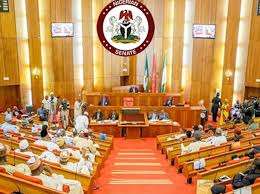
    In a landmark move, the National Assembly is speculated to be planning for a debate and, most likely, pass into into law before October 1, 2024, a bill proposing a return to regional government.

    Part of the draft bill circulating on social media, seen by SaharaReporters is titled: “A Bill for an Act to Substitute the Annexure to Decree 24 of 1999 with a New Governance Model for the Federal Republic of Nigeria.” 

    Although the identities of the sponsors of the bill were yet to be ascertained, the Bill, when passed, would be cited as the Constitution of the Federal Republic of Nigeria New Governance Model for Nigeria Act 2024.

    The sponsors of the Bill explained that the current Constitution of the Federal Republic of Nigeria 1999 (as Amended) is not “autochthonous” as it does not evolve from the deliberations and consensus of the Nigerian people.

    According to the advocates, the constitution amendment would be subject to a “yes or no” vote in a referendum by the people of the Federal Republic of Nigeria. 

    The sponsors of the Bill explained that the current Constitution of the Federal Republic of Nigeria 1999 (as Amended) is not “autochthonous” as it does not evolve from the deliberations and consensus of the Nigerian people.

    According to the advocates, the constitutional amendment would be subject to a “yes or no” vote in a referendum by the people of the Federal Republic of Nigeria.

    Part of the draft Bill seen by SaharaReporters on Friday partly read: 

    “PART I – Preliminaries: WHEREAS Nigeria, its Peoples and Government have been governed under Decree 24 of 1999 that was handed down by the then Military Government without the express consent of the people despite the preamble of “We the people.” 

    “WHEREAS the said Constitution of the Federal Republic of Nigeria 1999 (as Amended) is not autochthonous as it does not evolve from the deliberations and consensus of the Nigerian People.

    “WHEREAS the Peoples of Nigeria now desire and effectively demand for a change to a Constitution based on Federal/Regional System of Government. 

    “WHEREAS the Federal and Regional governments are to operate within the provisions of this Constitution, it is within the discretion of the ethnic blocs within the States that constitutes a given region to aggregate or disaggregate as Provinces, Divisions and Districts, while being in control of their affairs without let or hindrance at whatever level of governance.

    “Whereas the 1999 Constitution as amended is a schedule of a military decree now deemed to be an Act of the National Assembly for which the National Assembly have the powers to amend and/or abrogate as expedient.

    Whereas the National Assembly where so necessary and expedient can invoke the doctrine of necessity to resolve any point of law for the good governance of the country Nigeria.”

    On PART 11 – Substitution Clause, the drafters proposed that the National Assembly shall invoke its inherent powers to expunge the schedule attached to decree 24 of 1999 often referred to as 1999 Constitution as amended from the decree, which “is now deemed to be an Act of the National Assembly to which the National Assembly have the powers to so do and replace same with a new governance model for Nigeria effective not later than October 1, 2024.”

    “This amendment is subject to a yes or no vote in a Referendum by the people of the Federal Republic of Nigeria,” it proposed.

    On governance structure under PART III – Stipulations for Federal Administration, the sponsors proposed that: “(1) Nigeria shall be a Federation comprising of Regional Territories and a Federal Capital Territory and shall be a Republic to be known by the name of the Federal Republic of Nigeria. 

    “(2) The territorial jurisdiction of Nigeria shall comprise the territory of the Regional members of the Federation and its bound.

  • Old national anthem: ‘Vagabonds in power distracting us —Charly Boy

    Old national anthem: ‘Vagabonds in power distracting us —Charly Boy

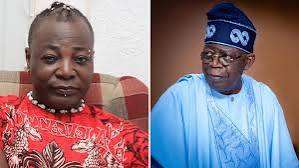
    Nigerian entertainer, Charles Oputa, also referred to as Charly Boy or Area Fada, has joined the chorus of criticism against the reinstatement of the old, colonial national anthem by President Bola Tinubu and the National Assembly, echoing the sentiments of millions of Nigerians.

    President Tinubu formally initiated the recitation of the old national anthem, “Nigeria, We Hail Thee,” despite widespread disapproval from the public.

    This decision follows the recent enactment of a bill, signed into law by the President, replacing the current national anthem, “Arise O Compatriots,” with “Nigeria, We Hail Thee,” passed by the Senate on Tuesday and the House of Representatives last week.

    In his trademark candid manner, Charly Boy, also known as the ‘Senior Advocate of the Masses,’ took to X on Wednesday night to denounce the move, emphasizing that it does not align with the pressing priorities of the Tinubu administration.

    “Vagabonds in power wan distract us from hunger, kidnapping, high cost of living by organizing useless priorities for us to follow so we no go dey talk as e dey pain us?”

    “Animals in Agbada fit make me start to sing our olden days National Anthem, imposicant.

  • Nigeria’s Name, Flag Should Also Be Changed – Mike Ozekhome Tells Tinubu

    Nigeria’s Name, Flag Should Also Be Changed – Mike Ozekhome Tells Tinubu

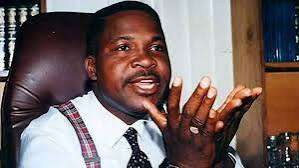
    Popular rights activist and Senior Advocate of Nigeria (SAN), Mike Ozekhome, has admonished the incumbent government led by President Bola Ahmed Tinubu to also change Nigeria’s name and national flag.

    This is as he commended the administration for reverting to the old national anthem, describing it as a welcome development.

    According to Ozekhome, the change of the national anthem was long overdue.

    Ozekhome stated this during a press conference on Wednesday where he expressed that he was elated by Nigeria’s return to the old national anthem, 10 years after he moved a motion for it at the 2014 National Conference.

    The SAN said: “Bringing the old National Anthem back is well overdue. It has better lyrics in content and context like the Senate President said. It is better than the other one.

    “The name Nigeria and the flag should also be changed.”

  • Rivers Traditional Ruler Urges Presidential Intervention in Kano Emirship Dispute

    Rivers Traditional Ruler Urges Presidential Intervention in Kano Emirship Dispute

    In a bid to address escalating tensions surrounding the Emirship tussle in Kano State, HRH Appolus Chu, the Egbere Emere Okori of Eleme, Rivers State, has issued an appeal to President Tinubu, calling for immediate intervention to safeguard the revered institution of the Emir of Kano.

    In his appeal to President Tinubu, HRH Chu highlighted the broader implications of the dispute, stating, “The throne of the Emir of Kano transcends mere governance; it embodies centuries of tradition and serves as a pillar of cultural identity.”

    He expressed deep concern over attempts to politicize and undermine the authority of traditional rulers, warning of potential repercussions for peace and stability.

    “The traditional institution remains a beacon of stability, especially in times of crisis,” Chu affirmed, noting its pivotal role in community cohesion and governance. He urged all parties involved to respect a recent court order maintaining the status quo ante, emphasizing the judiciary’s role in preserving peace.

    Recognizing Kano’s significance as an economic hub and home to millions, HRH Chu appealed for concerted efforts to restore calm and respect for traditional authority.

    He urged President Tinubu to intervene decisively to avert further escalation and uphold the rule of law.

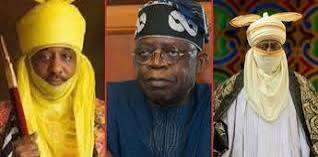
    Kano finds itself in the midst of a contentious dispute over the Emir’s throne.

    Governor Abba Yusuf recently enacted legislation repealing the Emirates law, resulting in the removal of five emirs.

    This move also reinstated deposed Emir Sanusi Lamido, who was previously dethroned under former Governor Ganduje’s administration.

    However, Emir Ado Bayero has opposed his dismissal and initiated legal proceedings in response.

  • LG autonomy: S/Court gives Govs 7 days to respond Suit

    LG autonomy: S/Court gives Govs 7 days to respond Suit

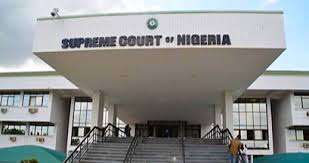
    The Supreme Court, Thursday, gave the 36 State Governors seven days to file their defence in reponse to the Federal Government suit seeking autonomy for 774 local governments in the country.

    The Apex court also ordered the AGF to, upon receipt of the governors defence, file his reply within two days.

    The seven-man panel led by
    Justice Garba Lawal issued the order while ruling on an application for an abridgment of time argued by the Attorney General of Federation ( AGF) Lateef Fagebemi SAN.

    The apex court said that the decision of the court was predicated on the national urgency of the suit and the non objection from the attorneys general of the states of the federation.

    It insisted that filing of all processes and exchanging of same must be completed within the time.

    Justice Lawal ordered that the 8 states that were not in attendance at Thursdays proceedings must be served with fresh hearing notice.

    The 8 states are Borno, Kano, Kogi, Niger, Ogun, Osun, Oyo, and Sokoto, whose attorneys general were absent in court despite being served with hearing notice.

    In the meantime, the matter is adjourned to June 13 for hearing of the suit.

    The FG, through the AGF, Prince Lateef Fagbemi SAN, dragged the 36 state governors to the supreme court over alleged misconduct in the local government administration.

    Specifically, the AGF is seeking full autonomy for LG as third tiers of government in the country.

    The Governors were sued through their respective State Attorneys General.

    In the suit marked SC/CV/343/2024, the AGF is praying the Apex Court for an order prohibiting State Governors from unilateral, arbitrary and unlawful dissolution of democratically elected local government leaders for local governments..

    In the originating summons, AGF is also praying the Apex Court for an order permitting the funds standing in the credits of local governments to be directly channelled to them from the Federation Account in line with the provisions of the Constitution as against the alleged unlawful joint accounts created by governors.

    The summon, personally signed by AGF, seeks an order of the Apex Court stopping governors from constituting Caretaker Committees to run the affairs of local governments as against the Constitutionally recognized and guaranteed democratically system.

    It also applied for an order of injunction restraining the governors, their agents and privies from receiving, spending or tampering with funds released from the Federation Account for the benefits of local governments when no democratically elected local government system is put in place in the states.

  • Tinubu To Present 2024 Supplementary Appropriation Bill To NASS

    Tinubu To Present 2024 Supplementary Appropriation Bill To NASS

    President Bola Tinubu will soon present the 2024 Supplementary Appropriation Bill to the National Assembly (NASS). 

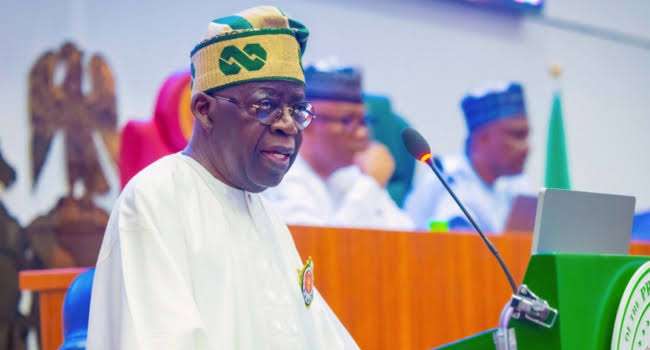
    “I submitted the last budget to you,” the President said when he addressed a joint sitting of the National Assembly on Wednesday.

    “You expeditiously passed it. We are walking the talk. I will soon bring the Year 2024 (Supplementary) Appropriation Bill. That is just for your information,” the President said at the joint sitting to mark the Silver Jubilee Of Nigeria’s 4th Republic.

    In his response, Senate President Godswill Akpabio, said, “Thank you, Mr President, we will be expecting the Supplementary Appropriation Bill of 2024 as soon as possible.”

    Also, at the joint sitting which coincided with the first anniversary of the Tinubu administration, the President confirmed ‘Nigeria, we hail thee’ as the “latest national anthem”.

    Tinubu said, “You rang out the latest national anthem, ‘Nigeria, we hail thee’. This is our diversity, representing all characters and how we blend to be brothers and sisters.”

    The President pleaded with both the Senate and the House of Representatives to continue to collaborate and work together with the administration to build the country on the path of sustained progress and development.

    “We have no other choice; it is our nation. No other institution or personality will help us unless we do it ourselves. No amount of aid from foreign countries or any other nation (will fix us), they take care of themselves first. Let us work together as we are doing to build our nation, not only for us but for generations unborn.

    Tinubu had on January 1, 2024, assented to the N28.7 trillion 2024 Appropriation Bill passed by the Senate.

    The 2024 budget was N1.2 trillion higher than the budget originally proposed by the President to a joint NASS session on November 29, 2023.

  • National Anthem Reversal: President Tinubu Enacts Bill, Returns “Nigeria, We Hail Thee”

    National Anthem Reversal: President Tinubu Enacts Bill, Returns “Nigeria, We Hail Thee”

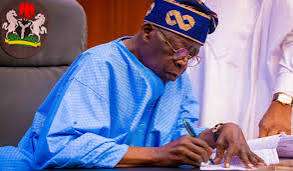
    President Bola Tinubu has signed into law the National Anthem Bill 2024, effectively restoring “Nigeria, We Hail Thee” as the country’s official anthem. The decision, announced amidst a backdrop of anticipation and skepticism, marks a significant departure from the anthem “Arise, O Compatriots,” which has held sway since 1978.

    The National Anthem Bill 2024, a contentious piece of legislation that has garnered attention nationwide, underwent rigorous scrutiny in the National Assembly before receiving the presidential assent.

    Advocates for the change argue that the reinstated anthem carries deeper historical resonance and a stronger sense of unity, reflective of Nigeria’s diverse cultural heritage.

    President Tinubu, at the joint national Assembly address following the signing ceremony, emphasized the importance of honoring Nigeria’s past while embracing its future. “Our anthem is more than mere words; it is a symbol of our collective identity and aspirations,” he remarked. “Returning to ‘Nigeria, We Hail Thee’ is a reaffirmation of our commitment to unity in diversity.”

    However, the decision has not been met without criticism. Opponents of the anthem reversal express concerns about erasing decades of symbolism embedded in “Arise, O Compatriots,” which has served as a rallying cry for generations of Nigerians. Some view the move as a regressive step, undermining efforts towards national cohesion and progress.

    As the country prepares for the transition, plans are underway to disseminate the reinstated anthem across various platforms, including educational institutions, government functions, and public events.

    The impact of this reversion on Nigeria’s cultural landscape and national sentiment remains to be seen, as citizens grapple with the implications of this historic decision.

  • Tinubu’s anniversary: FG begins N75,000 cash payment to 75 million Nigerians

    Tinubu’s anniversary: FG begins N75,000 cash payment to 75 million Nigerians

    The Federal Government announced on Tuesday the reinstatement of the suspended social investment programme, aimed at providing direct payments to 75 million Nigerians across 50 million households.

    This initiative is intended to alleviate the hardships faced by citizens, particularly vulnerable groups, as disclosed during a ministerial sectoral briefing marking President Bola Tinubu’s first year in office.

    Wale Edun, the Minister of Finance and Coordinating Minister of the Economy, revealed that the cash transfer programme had undergone significant overhauls to address and mitigate fraud.

    This announcement follows the suspension of all National Social Investment Programme Agency (NSIPA) activities by President Tinubu on January 12 for a six-week period, due to alleged mismanagement.

    Concurrently, Betta Edu, the Minister of Humanitarian Affairs and Poverty Alleviation, was suspended on January 8.

    The intervention programmes affected by this suspension included N-Power, the conditional cash transfer scheme, the government enterprise and empowerment programme, and the home-grown school feeding initiative.

    On March 13, the House of Representatives urged the federal government to resume these social investment initiatives.

    To revamp the programme, President Tinubu established a Special Presidential Panel, led by Edun, to conduct an intensive review and audit of the existing financial frameworks and policy guidelines of the social investment programmes.

    Providing an update on the committee’s progress, Edun emphasised the government’s commitment to providing relief for poor Nigerians.

    “I am duty-bound to give you an overview of the strategy, policies, and implementation of Mr President’s reform programme,” Edun said.

    “Immediately upon assuming office, Mr President launched macroeconomic reforms to restore stability to the Nigerian economy, including subsidy reforms and foreign exchange market reforms.

    “These reforms caused a spike in costs for individuals and businesses, but Mr President is committed to counterbalancing the negative effects with interventions across the social spectrum.”

    Edun outlined the government’s restarted social investment programme, which includes direct payments to 75 million Nigerians in 50 million households.

    He also mentioned improvements in access to credit, with ₦1 billion allocated to consumer credit and grants of ₦50,000 being provided to 1 million nanoindustries.

  • The Tinubu Presidency:Renewed Hope or Reincarnation of Controversy

    The Tinubu Presidency:Renewed Hope or Reincarnation of Controversy

    Just as I reflected on a theme to anchor my thoughts on the first anniversary of the Tinubu Presidency, I received two electronic messages from the same source, expressing two diametrically opposed views on the same subject matter.

    What is even more perplexing is the fact that the two messages were official communications purporting to convey a message from the highest office in the land and signed off by two individuals that should have been speaking from the same script.

    The first message, an official communication from the office of the Special Adviser on Media and Publicity to the President, Mr. Ajuri Ngelale read:
    “STATE HOUSE PRESS STATEMENT
    IN COMMEMORATION OF MAY 29 AND THE FIRST ANNIVERSARY OF THE PRESIDENT TINUBU ADMINISTRATION
    In furtherance of his commitment to delivering good governance, President Bola Tinubu has embarked on the inauguration of strategic projects across the country.

    More transformative projects will be inaugurated by President Tinubu’s administration for the benefit of all Nigerians.
    In view of public commentary concerning the President delivering a speech before a Joint Sitting of the National Assembly tomorrow, May 29, 2024, it is important to state that this information is false and unauthorized as the Office of the President was not involved in the planning of the event.” This message was dated My 28, 2024.

    In the same breath, another communication from the presidency and signed by Mr. Bayo Onanuga, the Special Adviser on Information & Strategy to Mr. President was released, and it read:
    “STATE HOUSE PRESS STATEMENT
    PRESIDENT TINUBU TO ADDRESS JOINT SITTING OF NATIONAL ASSEMBLY TOMORROW
    President Bola Ahmed Tinubu will not make a broadcast to the nation on Wednesday to celebrate his first anniversary as the leader of Nigeria.
    Instead, the President will address a joint session of the National Assembly, which has lined up a programme to commemorate 25 years of the nation’s democratic journey at both the executive and legislative levels.

    President Tinubu’s speech will dwell on the achievements of his administration and Nigeria’s democracy since the military ceded power in 1999.
    Former Senate President, Senator David Mark, former speaker of the House of Representatives and now President Tinubu’s Chief of Staff, Rt. Hon. Femi Gbajabiamila are all lined up to address the parliament.

    Also lined up to speak is the former military ruler, General Abdulsalami Abubakar, who handed over power to civilian administration in 1999.
    At the end of the speeches, President Tinubu will commission the National Assembly Library and Resource Center, now to be known as Bola Ahmed Tinubu Building.” This one too, was dated May 28, 2024.

    While we await the stage appearance of President Tinubu, the lead character in this dramaturgy about heroic failures, I can hear some mischief makers murmuring déjà vu. Certainly. It is the reincarnation of controversy, which has become the hallmark of this president.

    Even more controversial is the record of performance of the first twelve months of the Tinubu presidency.

    From last May 29, twelve months ago, when on inauguration day, President Tinubu, looking forlorn but turbo-charged by the excitement of new office pronounced, “subsidy is gone” until this day, cheerleaders and advocates of his policy choices have mastered the art of double-speak. They often argue, ‘even though the policies shall visit pain and hardship on the people, the tough decisions have to be made for the good of the country.’

    Yet, what we see are somersaults and policy reversals that reveal the poor quality of work that was put into these policies. From the withdrawal of subsidy on petrol to the merger of the forex windows through to recent withdrawal of subsidy on power, Nigerians have been served a menu of completely strange dishes that give them no option of choice.

    Unfortunately, this is coming after eight cruel years of nepotistic, corrupt and clueless reign of Gen Muhammad Buhari when virtually every index of misery took an upward swing. President Buhari represented the worst case of dashed hope since the return of civil rule in 1999.
    At ascendancy in 2015, he promised to wrestle corruption to a manageable level, grow the economy and tackle insecurity. Eight years after, he handed Nigeria to his successor and party mate, Bola Ahmed Tinubu as the poverty capital of the world where about 113million, out of a population of 200million, was classified as multidimensionally poor with out-of-school population brimming at 20.2million children.

    President Tinubu, during his numerous electioneering campaign stumps, promised to continue from where President Buhari stopped. It can be assumed that the import of that message was lost on many Nigerians until what some now say was a thoughtless “subsidy is gone” pronouncement.

    From inauguration day till date, it will seem like the President was determined to act like the young king Rehoboam who spoke roughly to his subjects and said in 1 Kings 12.11: “And now, whereas my father put a heavy yoke on you, I will add to your yoke; my father chastised you with whips, but I will chastise you with scourges!”

    What is however, very clear to a discerning Nigerians is the fact that as many compatriots lay prostrate and distraught due to the excruciating burden of “Tinubunomics” his alleged puppeteers, the Bretton Woods institutions, infamous deities of the market-driven economy, may celebrate President Tinubu’s zero-subsidy regimes and the foreign exchange liberalization; two policies that created the current storm in the economy.

    President Tinubu’s leadership mantra is christened, “Renewed Hope.” This contradicts sharply with the reality on ground as many Nigerians and their businesses have been crowded out of the emerging economic landscape. With the naira now a shadow of its old self, since it now exchanges for less than half of its value as at less than a year ago, while the rate of inflation has doubled and unemployment nearing 50 per cent, and with a cabinet that is an unwieldy crowd of round pegs fitted into square holes, it is most doubtful how President Tinubu can turn the corner and restore hope and life to many Nigerians who are already at economic and mental health ICUs.

    What Nigerian politicians and their retinue of advisers are yet to come to terms with is the basic reality that governance is essentially about the welfare of the people. Anything beyond that is mere sophistry.

    Dudley Seers, British and New Zealand development economist captures this convincingly when he “suggests that development is when a country experiences a reduction or elimination of poverty, inequality and unemployment.” In other words, the subject matter of development that should be of interest to our politicians and others in leadership positions is the type of answer they get to the question about what happens to poverty, unemployment, illiteracy, disease, destitution and such other negative indices.

    So, as members of the governing APC and other apparatchiks of the current dispensation takeover media spaces and platforms to pontificate, and most times, lie about the record of performance of this government in the last twelve months, they need to spare a thought about the fact that figures do not lie.

    Nairametrics reports that Nigeria’s misery index has been surging since Tinubu took over power, moving from 73.05 and headed towards the 100% mark. Food inflation as at last April was 40.53%, compared to 24.61% in the same period of last year.

    With all the anti-people policies that have been brought onboard without commensurate implementation and impact assessment plan, President Tinubu has let the genie out of the bottle and it would require doubling down on remediation efforts to buoy the economy, heal the people and “Renew Hope”.