Author: Caroline Ameh

  • President Tinubu Calls for Enhanced Collaboration with FBI to Combat Cybercrime and Terrorism

    President Tinubu Calls for Enhanced Collaboration with FBI to Combat Cybercrime and Terrorism

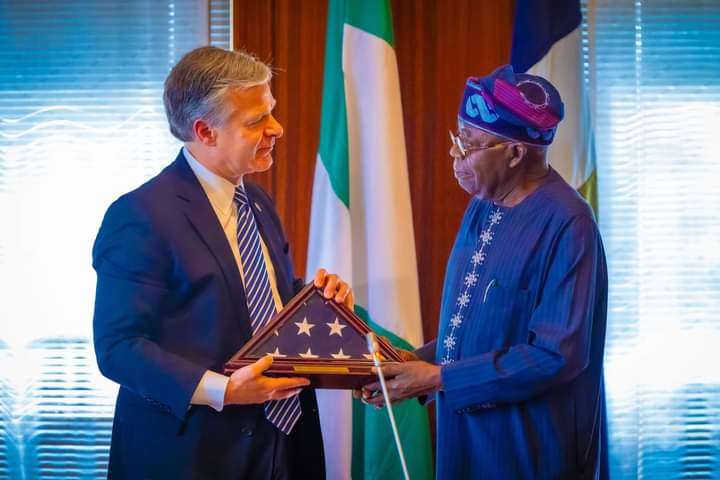
    President Bola Tinubu has given order for increased cooperation between Nigerian law enforcement agencies and the United States’ Federal Bureau of Investigation (FBI). He gave the order during a meeting at the State House, Abuja, on Saturday, during FBI Director Christopher Wray’s visit.
    President Tinubu called for greater focus on addressing cybercrime, terrorism, and related criminal activities through joint efforts.

    In a statement issued by his spokesman, Chief Ajuri Ngelale, Mr Tinubu acknowledged the FBI’s sophistication and reputation for excellence, expressing honor at the Director’s visit.

    “The visit of Director Wray underscores the importance of our partnership in eliminating local and global crimes,” President Tinubu stated.

    As Chairman of ECOWAS, President Tinubu also highlighted Nigeria’s collaboration with other West African nations in combating economic crimes.

    “We are working closely with our regional partners to tackle economic crimes and terrorism,” President Tinubu affirmed.

    President Tinubu further stressed the role of education in poverty alleviation, noting its significance in addressing the root causes of criminal activities. He expressed appreciation for the diverse Nigerian agencies present at the meeting, actively involved in reducing crimes across the country.

    In response, FBI Director Wray praised President Tinubu’s commitment to enhancing partnerships among government agencies to protect citizens from terrorism and cyber-enabled crimes.

    “We value President Tinubu’s efforts in countering terrorism, which poses a threat to both Nigeria and the United States,” Director Wray acknowledged.

    He also highlighted Nigeria’s recent successes in countering ISIS and other terrorist groups in West Africa, crediting effective coordination among security agencies.

    “We stand ready to support Nigeria in various aspects, including counter-terrorism, cybercrime prevention, and intelligence sharing,” Director Wray assured.

    Key security figures attending the meeting included National Security Adviser Mallam Nuhu Ribadu, Inspector-General of Police Kayode Egbetokun, and Director-General of the Department of State Services (DSS) Yusuf Magaji Bichi.

    The meeting concluded with a reaffirmation of mutual commitment to deepen collaboration through enhanced intelligence sharing and joint operations, reflecting Nigeria’s proactive stance in leveraging international partnerships to bolster its security efforts against evolving threats.
  • Senate Urges NLNG to Allocate $43 Million for Human Capital Development

    Senate Urges NLNG to Allocate $43 Million for Human Capital Development

    The Senate has directed the Nigeria Liquified Natural Gas (NLNG) Limited to allocate $43 million from the $4.3 billion Train-7 project towards human capital development initiatives.
    This directive came during an interactive session held at the National Assembly on Tuesday, involving representatives from NLNG, NCDMB, Saipem Contracting Limited, and Daewoo Engineering & Construction.

    Senator Natasha Akpoti-Uduaghan, the chairman of the committee, emphasized the importance of compliance with the Nigerian Oil and Gas Industry Content Development (NOGICD) Act.

    According to a statement released by her chief press secretary, Arogbonlo Israel, in Abuja, Senator Akpoti-Uduaghan stressed the significance of transparent and effective utilization of the allocated funds to benefit Nigerians and enhance the country’s human capital development and institutional strengthening.

    Of the $43 million designated for human capital development, $25.8 million, constituting 60 percent of the total, is earmarked for learning institutions from public primary to tertiary levels nationwide.

    Senator Akpoti-Uduaghan highlighted the infrastructure deficits in Nigeria’s primary and secondary schools, citing a report by the Universal Basic Education Commission (UBEC), which identified approximately 40,000 classrooms in deplorable conditions. She suggested that NLNG’s human capital development initiatives should support UBEC’s efforts to provide adequate educational facilities.

    Moreover, the senator pointed out discrepancies in reported figures for the NLNG Train-7 project. Depending on the project’s valuation, she outlined different allocations for institutional strengthening and various training programs.

    For projects in the oil and gas sector valued over $500 million, 1 percent of the project value is allocated to human capacity development and institutional strengthening.

    The Senate committee, in collaboration with NLNG and NCDMB, aims to establish a framework and select public institutions across the country to benefit from the strategic program.

    This initiative is geared towards enhancing the capacity of learning institutions, addressing the issue of out-of-school children, and improving learning structures in public institutions.

    The effective utilization of these funds is expected to have a positive impact on the country’s human capacity development and institutional strengthening.

  • Off-cycle Elections: INEC Adds 269,992 new Voters to Preliminary  Register

    Off-cycle Elections: INEC Adds 269,992 new Voters to Preliminary Register

    The Independent National Electoral Commission (INEC) has announced the release of the preliminary register of new voters for the upcoming governorship elections in Edo and Ondo States.

    In a press statement signed by Mr. Sam Olumekun, National Commissioner and Chairman of the Information and Voter Education Committee, the Commission outlined the next steps in the electoral process.

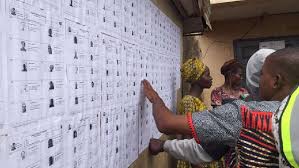
    According to the release, the register will be displayed for claims and objections by citizens for a period of seven days starting from Wednesday, June 12, 2024. The display will take place in all 395 wards across both states and will also be available on the INEC website.

    Citizens are encouraged to identify any ineligible persons on the register and file objections using Forms EC2 and EC3, which can be obtained from INEC officials or downloaded from the INEC website.

    Additionally, individuals who have recently registered, applied for transfer, correction of personal details, or replacement of lost or damaged PVCs are urged to draw the Commission’s attention to any errors or wrong entries for further action.

    The commission also provided statistics from the Continuous Voter Registration (CVR) process, indicating a total of 269,992 new voters in the two states following the suspension of registration on June 9, 2024.

    The majority of registered voters are youths aged 18-34, with students comprising the largest occupational group. Requests for replacement of PVCs, voter transfer, and information updates were also noted.

    The commission emphasized that these figures are preliminary and subject to further verification, as final figures will be published on a state-by-state basis after the claims and objections period and the use of the Automated Biometric Identification System (ABIS) to clean up the register. The date for the commencement of collection of new PVCs will be announced thereafter.

    The Commission urged the public to take advantage of the register display period to assist in cleaning up the register as required by law.

    The commission reiterated the importance of public participation in ensuring the accuracy and integrity of the voter register for the upcoming elections.

  • First year of the 10th Senate: Mixed Bag of Achievements and Challenges – Sen. Imasuen

    First year of the 10th Senate: Mixed Bag of Achievements and Challenges – Sen. Imasuen

    Neda Imasuen, Senator representing Edo South Senatorial District, has offered an assessment of the performance of the 10th Senate, one year after inuguaration, highlighting a blend of accomplishments and obstacles.

    Making his views known to journalists in Abuja, Senator Imasuen acknowledged some landmark achievements within the first year while underscoring the necessity for introspection regarding missed opportunities.

    He noted some distractions faced by the Senate, primarily stemming from electoral litigations that engulfed numerous members, including the President. These legal battles, he lamented, diverted attention from legislative responsibilities and impeded the swift implementation of the proposed lefislative agenda for the senate.

    Nevertheless, Senator Imasuen expressed unwavering optimism about the Senate’s capacity to positively impact Nigerian society. He stressed the Senate’s dedication to effective lawmaking, rigorous oversight functions, and responsive representation of the populace.

    While highlighting the rigorous nature of the budget process, Senator Imasuen shed light on the Senate’s tireless efforts, including late-night sessions and even working on Sundays to ensure the budget’s scrutiny and approval. Despite the arduous journey, he expressed pride in the Senate’s resilience and determination to deliver on its mandate.

    Moreover, Senator Imasuen also said that in his constituency, he brought initiatives aimed at empowering youths, demonstrating his commitment to fostering socio-economic development at the grassroots level.

    As the 10th Senate progresses, Senator Imasuen conveyed confidence in its ability to overcome obstacles and fulfil its obligations to the Nigerian people.

    With each passing day, he noted, the Senate is settling into its role more effectively, paving the way for greater accomplishments in the years ahead.

  • Senate Divided Over Proposed Bill to Replace Open Grazing with Ranching in Nigeria

    Senate Divided Over Proposed Bill to Replace Open Grazing with Ranching in Nigeria

    A bill, likely to test the will of the ruling elite to address the lingering farmers/herders’ clash has gone through the second reading in the Senate, despite stiff opposition by some senators from the northern part of the country.

    The bill seeks to outlaw open grazing in Nigeria, while institute ranching in the states of pastoralists’ origin.

    Sponsored by Senator Zam Titus Tertenger of the APC representing Benue North West, the bill faced a divided Senate but managed to pass its second reading.

    Senator Tertenger argued passionately for ranching as the only viable solution to the recurring conflicts between herders and farmers in Nigeria. He emphasized the urgent need to modernize livestock-keeping practices to ensure the safety and well-being of both the herds and the herders. Citing alarming statistics of lives lost and millions displaced due to these conflicts, Tertenger urged his colleagues to act decisively.

    Support for the bill came from Senators Enyinnaya Abaribe of APGA (Abia South), Garba Musa Maidoki of the PDP (Kebbi South), and Abba Moro of the PDP (Benue South).

    However, opposition was strong, with Senators Adamu Aliero of the PDP (Kebbi Central), Suleiman Kawu of the NNPP (Kano South), and Danjuma Goje of the APC (Gombe Central) raising objections.

    Senator Aliero cited constitutional provisions guaranteeing free movement across states with property, arguing against limiting ranching to pastoralists’ states of origin. Similarly, Senator Kawu deemed the bill incompatible with Nigeria’s constitutional framework.

    Efforts to defer the bill were led by Deputy Senate President Senator Jibrin Barau of the APC (Kano North), who advised the sponsor to reconsider its approach. Nevertheless, the bill proceeded to its second reading following a voice vote by Senate President Godswill Akpabio, despite the sponsor’s reluctance to withdraw it.

    The bill has been referred to the Senate Committees on Agriculture, Trade and Investment, and Judiciary and Legal Matters for further scrutiny over the next four weeks.

  • BREAKING NEWS: The Strike is Over!

    BREAKING NEWS: The Strike is Over!

    The Nigeria Labour Congress (NLC) and the Trade Union Congress (TUC) have called off the nationwide strike.

    Mr. Festus Osifo, President of Trade Union Congress, announced this on Tuesday in Abuja following a joint extraordinary national executive council meeting of the unions. He mentioned that a communiqué would be issued shortly.

    Recall that both unions (TUC and NLC) on Monday commenced an indefinite nationwide strike to express their grievances over the hike in electricity tariffs and the lack of consensus on a new minimum wage.

    This action halted activities in critical sectors of the economy, leading to the closure of schools, businesses, hospitals, and airports. The national grid was shut down, plunging the nation into darkness.

  • Nationwide Strike to Go on: Negotiations Between NASS and Labour End in Deadlock

    Nationwide Strike to Go on: Negotiations Between NASS and Labour End in Deadlock

    Efforts by the leadership of the National Assembly to mediate between the federal government and Labour unions hit a roadblock as the latter insists on continuing the strike. Despite last-minute discussions, the unions remained adamant in their demand for a ₦494,000 minimum wage while negotiations persist.

    In a bid to resolve the ongoing impasse between the federal government and Labour unions, the leadership of the National Assembly convened a meeting aimed at finding common ground. However, despite extensive deliberations, the parties failed to reach a consensus.

    Labour unions, represented by their leadership, reiterated their stance that the strike action must continue until their demands are met. Central to their demands is the insistence on a ₦494,000 minimum wage, which they argue is necessary to address the pressing needs of workers across various sectors.

    Meanwhile, the federal government has expressed its commitment to ongoing negotiations but maintains that any decision regarding the minimum wage must be approached with careful consideration of economic realities and sustainability.

    The deadlock in negotiations underscores the challenges faced by both parties in finding a balance between addressing the legitimate concerns of workers and ensuring the long-term viability of government policies.

    As the strike enters its next phase, the impact on essential services and the economy at large is expected to escalate, further underscoring the urgency for a resolution to be reached.

    With negotiations at an impasse and the strike set to continue, the onus is on both the federal government and Labour unions to redouble their efforts to find a mutually acceptable solution. The welfare of workers and the stability of the economy hang in the balance as stakeholders navigate this challenging period of labor relations.

  • Indefinite Strike: NASS Makes last Ditch Effort to Avert Strike

    Indefinite Strike: NASS Makes last Ditch Effort to Avert Strike

    In a bid to forestall the impending nationwide indefinite strike by labour unions, the leadership of the National Assembly is by now meeting with organized labour in Abuja to avert the strike

    The meeting, attended by key government officials including the Secretary to the Government of the Federation (SGF), Senator George Akume, Minister of National Planning Atiku Bagudu, Minister of Labour, and the Head of Civil Service, aims to address the deadlock between the Federal Government and labour unions over the issue of a new national minimum wage and the recent hike in electricity tariffs.

    Notable figures present at the meeting include President of the Senate, Godswill Akpabio; Deputy Senate President, Barau Jibrin; Senate leader, Opeyemi Bamidele, among others.

    A statement jointly signed by the spokespersons of the Senate and the House of Representatives, Senator Yemi Adaramodu and Rep. Akin Rotimi, Jr., highlighted the urgency of the situation, acknowledging the announcement by organized labour, including the Nigeria Labour Congress (NLC) and Trade Union Congress (TUC), to commence an indefinite strike action from Monday, June 3, 2024.

    The National Assembly leadership, represented by President of the Senate, H.E. Senator Godswill Akpabio, and Speaker of the House of Representatives, Rt. Hon. Abbas Tajudeen, PhD, is taking proactive steps to mediate and avert the impending industrial action, recognizing the potential severe repercussions on the populace and economy.

  • Nationwide Strike Imminent as Labour Unions Decry Government Inaction

    Nationwide Strike Imminent as Labour Unions Decry Government Inaction

    The Nigeria Labour Congress (NLC) and the Trade Union Congress (TUC) have threatened to embark on nationwide strike by Monday in response to the Federal Government’s failure to finalize a new National Minimum Wage Act and reverse the recent surge in electricity tariff to N65/kwh.

    During a press conference held on Friday, May 31st, 2024, the unions expressed deep concern over what they perceive as the government’s disregard for the welfare of Nigerian workers.

    The unions were particularly irked by the absence of governors and key ministers, except for the Minister of State for Labour and Employment, during the negotiations as a mark of the government’s lack of commitment to addressing the concerns of workers.

    Recalling the ultimatums issued during the May Day celebrations on May 1st, 2024, demanding the conclusion of the minimum wage negotiations by the end of the month, the unions emphasized the lack of substantial progress or commitment from the government.

    In addition to demanding the reversal of the recent electricity tariff hike, which saw rates skyrocket to N225/kwh, the unions reiterated their call for a return to the previous rate of N65/kwh and an end to the categorization of consumers into Bands.

    Despite widespread protests and public outcry, the unions criticized the government’s response as characterized by “persistent inaction” and the dissemination of propaganda rather than engaging in meaningful dialogue.

    Consequently, the NLC and TUC announced the initiation of an indefinite nationwide strike, set to commence on Monday, June 3rd, 2024. The unions called upon their affiliates, civil society organizations, market traders, and the general public to lend their support to the industrial action.

    While acknowledging the potential inconveniences that may arise from the strike, the unions affirmed their unwavering resolve to pursue their objectives until the demands regarding the minimum wage and electricity tariff hike are satisfactorily addressed by the government.

  • National Anthem Reversal: President Tinubu Enacts Bill, Returns “Nigeria, We Hail Thee”

    National Anthem Reversal: President Tinubu Enacts Bill, Returns “Nigeria, We Hail Thee”

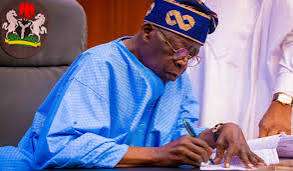
    President Bola Tinubu has signed into law the National Anthem Bill 2024, effectively restoring “Nigeria, We Hail Thee” as the country’s official anthem. The decision, announced amidst a backdrop of anticipation and skepticism, marks a significant departure from the anthem “Arise, O Compatriots,” which has held sway since 1978.

    The National Anthem Bill 2024, a contentious piece of legislation that has garnered attention nationwide, underwent rigorous scrutiny in the National Assembly before receiving the presidential assent.

    Advocates for the change argue that the reinstated anthem carries deeper historical resonance and a stronger sense of unity, reflective of Nigeria’s diverse cultural heritage.

    President Tinubu, at the joint national Assembly address following the signing ceremony, emphasized the importance of honoring Nigeria’s past while embracing its future. “Our anthem is more than mere words; it is a symbol of our collective identity and aspirations,” he remarked. “Returning to ‘Nigeria, We Hail Thee’ is a reaffirmation of our commitment to unity in diversity.”

    However, the decision has not been met without criticism. Opponents of the anthem reversal express concerns about erasing decades of symbolism embedded in “Arise, O Compatriots,” which has served as a rallying cry for generations of Nigerians. Some view the move as a regressive step, undermining efforts towards national cohesion and progress.

    As the country prepares for the transition, plans are underway to disseminate the reinstated anthem across various platforms, including educational institutions, government functions, and public events.

    The impact of this reversion on Nigeria’s cultural landscape and national sentiment remains to be seen, as citizens grapple with the implications of this historic decision.