Author: Caroline Ameh

  • Cybersecurity Levy Not Punitive – Sen Buba,

    Cybersecurity Levy Not Punitive – Sen Buba,

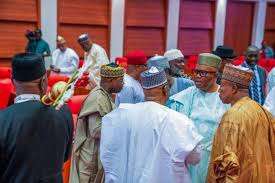
    The Chairman of the Senate Committee on National Security and Intelligence, Senator Shehu Umar Buba, has addressed the controversy surrounding the proposed implementation of the Cybersecurity levy by the Central Bank of Nigeria (CBN). The levy is provided for in the Cybercrimes (Prohibition, Prevention, etc) (Amendment) Act, 2024.

    He clarified that the levy is not punitive as it has numerous exemptions to protect and relieve ordinary citizens, particularly the poor. According to him, the exemptions include salary payments, intra-account transfers, loan disbursements and repayments, and other financial transactions.

    Senator Buba said the amendments to the Cybercrimes Act were a collaborative effort with the National Assembly’s ICT and Cyber Security Committee. The committee also underwent a transparent public hearing process, receiving contributions from various stakeholders. Both Houses of the National Assembly unanimously passed it before President Bola Ahmed Tinubu signed it into law.

    Senator Umar emphasised that the provisions for the cybersecurity levy have been in place since 2015 but were delayed due to unclear interpretations and applications.

    “The Cybercrimes Act of 2015 has provisions for imposing a cybersecurity levy since its enactment, but the vagueness of Section 44 led to different interpretations until the 2024 amendments. The levy is 0.5%, equivalent to half a per cent of the value of all electronic transactions by businesses specified in the Second Schedule to the Act.

    “The amendments addressed crucial gaps in the Act and empowered the nation to implement the National Cybersecurity Programme effectively. They also seek to realign and empower the country to combat the inadequate funding and disruptive effects of cyber threats on national security and critical economic infrastructures,” he said.

    Senator Umar underscored the criticality of the cybersecurity levy’s implementation, stating that its prudent utilisation will bolster the nation’s capacity to evaluate, execute, upgrade, and fortify the security of national critical economic infrastructure, thereby safeguarding the nation’s cyberspace.

    The Committee commended the Office of the National Security Adviser and the Central Bank of Nigeria (CBN) for initiating the operationalising the cybersecurity levy, highlighting its benefits far outweigh its drawbacks.

    He expressed appreciation to the leaders and representatives of MDAs at the federal and state levels, as well as to all stakeholders who contributed to this effort’s success.

    While maintaining that the Committee’s mandate is to create laws that align with the aspirations of Nigerians, he appealed for public support, assuring that the policy will yield maximum benefits for citizens in the shortest possible time.

    Following the enactment of the Cybercrime (Prohibition, Prevention, etc) (Amendment) Act 2024 and under the provision of Section 44 (2)(a) of the Act, a levy of 0.5 per cent (0.005) equivalent to half per cent of all electronic transactions value by the business specified in the Second Schedule of the Act is to be remitted to the National Cybersecurity Fund, which the Office of the National Security Adviser shall administer.

    Though the announcement created controversy, the circular exempted some transactions from cybercrime levy.

    The exemptions included loan disbursements and repayments, salary payments, intra-account transfers within the same bank or between different banks for the same customer, intra-bank transfers between customers of the same bank, and Other Financial Institutions (OFIs) instructions to their correspondent banks.

    The exemption also applies to interbank placements, banks’ transfers to CBN and vice versa, inter-branch transfers within a bank, cheque clearing and settlements, and Letters of Credit (LCs).

    Others include banks’ recapitalisation-related funding only bulk funds movement from collection accounts; savings and deposits including transactions involving long-term investments such as treasury bills, bonds; and commercial papers; government social welfare programmes transactions, e.g. pension payments; non-profit and charitable transactions including donations to registered non-profit organisations or charities; educational institutions transactions, including tuition payments and other transaction involving schools, universities, or other academic institutions.
     

  • Senate Moves Forward with Bill to Protect Domestic Workers and Employers

    Senate Moves Forward with Bill to Protect Domestic Workers and Employers

    In response to the escalating cases of abuse and exploitation faced by domestic workers in Nigeria, the Nigerian Senate has taken a significant step forward by advancing a bill aimed at protecting the rights of domestic workers and their employers.

    Sponsored by Senator Hussaini Babangida of the People’s Democratic Party (PDP) representing Jigawa State, the bill passed its second reading on Wednesday following a comprehensive presentation of its core principles during plenary sessions.

    Senator Babangida emphasized the urgent need for legislative intervention, stating, “Over the years, there has been an increase in the incidents of assaults and abuse of domestic workers by their employers or hosts. These abuses ranged from slave labor, physical abuse, and sexual abuse among others.”

    He further highlighted the vulnerability of domestic workers in the informal sector, noting, “They are unionists and they do not have a collective platform to speak for themselves and therefore remain ostensibly vulnerable and helpless.”

    Addressing concerns about crimes involving domestic workers, Babangida pointed out, “On the other side of the coin, is the rise in the state of complicity of crimes committed by domestic workers mostly in connivance with other criminal elements of society against their employers or host. These bother on burglary, kidnapping, stealing of children, and sometimes outright murder.”

    The bill aims to document and safeguard the rights of domestic workers while also considering the security concerns of their employers, particularly in rapidly urbanizing cities such as Port Harcourt, Lagos, Abuja, and Kano.

    President of the Senate, Godswill Akpabio, referred the bill to the Committee on Labour and Productivity for further legislative inputs after it successfully passed its second reading. It is expected to return to plenary for deliberation in four weeks.

    Also in a related development, a bill seeking to amend the Chartered Institute of Accountants of Nigeria (ICAN) Act also progressed with its second reading at the Senate.

    Presented by Senator Solomon Adeola (APC-Ogun), the bill proposes amendments to strengthen ICAN’s collaboration with other professional bodies and regulatory authorities, both domestically and internationally.

    Adeola highlighted the necessity of updating the ICAN Act to align with the evolving needs of chartered accountants and the changing economic landscape. “The act empowered the Institute to set standards and regulate the practice of Accountancy in Nigeria,” he stated.

    Following the second reading, the bill was referred to the Committee on Establishment and Public Service for further legislative inputs and is expected to return to plenary for consideration in three weeks’ time.

  • Senate Forms Ad-hoc Committee to Investigate Delayed $18.5 Billion Abuja Centenary Economic City Project

    Senate Forms Ad-hoc Committee to Investigate Delayed $18.5 Billion Abuja Centenary Economic City Project

    Amid mounting concerns over the prolonged delay in completing the $18.5 billion Abuja Centenary Economic City project, the Senate has taken decisive action by establishing a 7-member ad-hoc committee. Tasked with unraveling the factors impeding the project’s progress a decade after its commencement, the committee aims to conduct a comprehensive investigation.

    In a bid to expedite the project’s completion and ensure adherence to the original public-private partnership agreement, the Senate has directed the committee to review the agreement and propose amendments if deemed necessary. Additionally, the Federal Government has been urged to prioritize the revival of the Abuja Centenary City project by extending essential support and resolving regulatory hurdles.

    The impetus for these actions was a motion titled “Urgent need to revive and complete the stalled Centenary City Project, Abuja to realize its economic and development potential,” sponsored by Senator Oyelola Ashiru of Kwara South (APC).

    Senator Ashiru underscored the significance of the project, which was conceived in 2014 to commemorate Nigeria’s centenary through the creation of a modern city akin to Dubai. Envisioned as an economic powerhouse, the Abuja Centenary Economic City was poised to generate employment, accommodate residents, and attract visitors on a grand scale.

    Despite the initial optimism and substantial investment, the project has languished for nearly a decade, achieving only minimal progress. Senator Ashiru cited an independent investigation assessment from November 2023, which revealed a stark disparity between the project’s current status and its ambitious vision.

    The regulatory and implementation challenges have further exacerbated the project’s stagnation, prompting Senator Ashiru to emphasize the urgent need for intervention. He cited the success of similar ventures, such as the $6 billion Eko Atlantic City development project in Lagos, as a testament to the transformative potential of well-executed urban projects.

  • Senators’ Discontent Over Refurbished Chamber Echoes Amidst Senate Proceedings

    Senators’ Discontent Over Refurbished Chamber Echoes Amidst Senate Proceedings

    Complaints by Senators on their refurbished Chamber continued Tuesday, a week after bickerings about sitting arrangements.

    Recall that Senate plenary was last week Tuesday, marred by complaints made by some senators on sitting arrangements in the renovated chamber.

    The complaints led to a rowdy session which lasted for about 15 minutes and eventually forced the Senate into executive session.

    A week later, issues on alleged inadequacies in the Chamber were again raised, specifically by the Whip of the Senate, Senator Ali Ndume (APC Borno South).

    Senator Ndume, who raised the issues through Order 42 of the Senate Standing rules, said what was supposed to be a Chamber has been turned into a conference hall, which, according to him, is not acceptable.

    “Mr. President, I rise to make disturbing observations on this supposedly renovated chamber through order 42 that deals with personal privileges.

    “Since day one, precisely last week Tuesday when we moved into this Chamber that was supposed to have been renovated, there have been complaints here and there.

    “First was on sitting arrangements, followed by echoing of voices by microphones that are even not audible. No voting device, required facilities not yet provided.

    “We need to correct all these anomalies for the Hallowed Chamber to be what it is supposed to be,” he said.

    Concurring to Ndume’s observations, the President of the Senate, Godswill Akpabio, in his response, said the observations were well noted and the point of order was upheld.

    He, however, explained to Ndume that complaints on sitting arrangements among Senators have been sorted out 99.9%, just as he reminded him that the contract for the renovation work was not done by the 10th National Assembly.

    “This is not our contract and not even National Assembly contract but that of the Federal Capital Development Authority (FCDA), the landlord of the National Assembly Complex.

    “Observations on inadequacies in the renovated chamber are welcome from time to time for required perfection but what we should be aiming at in the long run is for us, as federal lawmakers, to have proper autonomy on the National Assembly Complex and not continue as tenants of FCDA,” he said.

  • Central Bank of Nigeria Mandates Registration of All PoS Operators with CAC

    Central Bank of Nigeria Mandates Registration of All PoS Operators with CAC

    In a bid to tackle fraudulent activities and bolster transparency within the financial sector, the Central Bank of Nigeria (CBN) has issued a directive requiring all point-of-sale (PoS) operators to register with the Corporate Affairs Commission (CAC) within a two-month timeframe.

    According to reports, PoS terminals have been implicated in a significant portion of fraud incidents, accounting for a staggering 26.37% of such cases in 2023 alone. This move by the CBN seeks to address these concerns and ensure the integrity of transactions conducted through PoS systems.

    With Nigeria boasting 1.8 million PoS agents as of 2022, the directive mandates that all operators must undergo registration with the CAC to continue conducting business in the country.

    The announcement came following a meeting between representatives from the fintech industry and Hussaini Magaji (SAN), the Registrar-General/Chief Executive Officer of the CAC, held in Abuja on Monday, May 7th. Magaji emphasized that the registration deadline of July 7th is in accordance with legal obligations and aligns with the directives of the CBN.

    “The Corporate Affairs Commission and Fintech companies in Nigeria, better known as PoS operators, have agreed to a two-month timeline to register their agents, merchants, and individuals with the CAC in line with legal requirements and the directives of the Central Bank of Nigeria,” stated Magaji.

    The collaborative effort between the CAC and fintech companies underscores the commitment to regulatory compliance and the promotion of a secure financial ecosystem in Nigeria.

  • TCN Transfers Market and System Functions to Newly Established Entity

    TCN Transfers Market and System Functions to Newly Established Entity

    In a bid to revitalize Nigeria’s power sector, President Bola Tinubu, in collaboration with the Nigerian Electricity Regulatory Commission (NERC), has introduced sweeping reforms by unveiling the Nigerian Independent System Operator of Nigeria Limited (NISO). This significant restructuring marks a pivotal moment for the country’s energy landscape.

    The decision was formalized through an official order signed by TCN’s Chairman, Mr. Sanusi Garba, and Vice Chairman, Mr. Muslim Oseni, in Abuja on Saturday.

    Under the directives outlined in the order, TCN will undergo a comprehensive transfer of all market and system operation functions to the newly established NISO.

    This realignment of responsibilities is in accordance with the stipulations set forth in the Electricity Act 2023, aimed at providing a more streamlined approach to the management of Nigeria’s power infrastructure.

    Previously, TCN held critical licenses, including Transmission Service Provider (TSP) and System Operations (SO) licenses issued by NERC. With the inception of NISO, TCN will divest its market and system operation assets and liabilities to the newly formed entity, allowing for a sharper focus on its core transmission functions.

    To facilitate this transition, the Bureau of Public Enterprises (BPE) has been tasked with overseeing the incorporation of a private company limited by shares under the provisions of the Companies and Allied Matters Act (CAMA) by May 31.

    This entity, named the Nigerian Independent System Operator of Nigeria Limited (NISO), will assume full responsibility for market and system operation functions as outlined in the Electricity Act and TCN’s system operation license.

    NISO’s mandate encompasses the efficient management of assets and liabilities associated with market and system operations on behalf of market participants and consumer groups.
    Furthermore, the newly established ISO will play a crucial role in negotiating contracts for ancillary services with independent power producers and generation licensees, ensuring the stability and reliability of Nigeria’s national grid.

  • Nigerian Peace Corps Establishment Bill Introduced, Passed First Reading in the Senate

    Nigerian Peace Corps Establishment Bill Introduced, Passed First Reading in the Senate

    The Nigerian Peace Corps Establishment Bill, earlier passed by the House of Representatives on 29th February 2024 and transmitted to the Senate for concurrence, was read on the floor of Senate and passed through first reading.

    With this development, a motion for concurrence to be sponsored by the Senate Leader, Sen. Micheal Opeyemi Bamidele (Ekiti Central) will come up shortly to enable the Senate to adopt the Bill in line with the extant rules of the National Assembly.

    The Peace Corps of Nigeria established over 25 years ago by the National Commandant, Dr Dickson Akoh, is incorporated in Nigeria under the Company and Allied Matters Act (CAMA) and accorded the Federal Government recognition through the Federal Ministry of Youth Development and granted license to operate in the Country as a Non-Governmental Organization by the Federal Ministry of Finance, Budget and National Planning.

    Aside the Peace Corps bill, the Senate also passed for first reading, Nigerian Hunters and Security Service Bill 2024, Legislative Houses (Powers & Privileges) Act (Amendment) Bill 2024 and National Talent Rehabilitation and Integration Agency (Establishment) Bill 2024.

    Others are the Agricultural Research Council Act (Amendment) Bill 2024 and Agricultural Harvest and Processing Zone (Establishment) bill 2024.

  • Senate Session Disrupted by Seating Spat in Renovated Chamber

    Senate Session Disrupted by Seating Spat in Renovated Chamber

    The much-anticipated return to the revamped Hallowed Chamber for the Senate’s plenary session was overshadowed by a bitter dispute over seating arrangements, resulting in a chaotic interruption of proceedings.

    Anticipation ran high as Senators gathered in the newly refurbished Hallowed Chamber for their first plenary session post-renovation. However, the mood soured quickly when Senate President Godswill Akpabio began acknowledging Senators who celebrated birthdays during the recess.

    Senator Sahabi Alhaji Ya’u of APC Zamfara North wasted no time in expressing his discontent with his allocated seat, confronting Senate Leader Senator Micheal Opeyemi Bamidele of APC Ekiti Central.

    What began as a private grievance escalated rapidly into a public confrontation, inciting reactions from fellow Senators and plunging the chamber into disarray.

    Senator Ya’u vehemently argued that his seat, positioned at the far right of the chamber, failed to reflect his seniority as a former Deputy Minority Whip during the 9th National Assembly.

    Senator Danjuma Goje of APC Gombe Central echoed similar sentiments, lamenting the perceived disregard for hierarchy in the seating arrangement.

    In an attempt to restore order, Senate President Akpabio intervened, urging Senator Bamidele and the aggrieved Senators to address the issue with the presiding officer.

    Following this intervention, Akpabio proceeded with his welcome address, albeit after a delay caused by the altercation.

    Subsequently, Senator Bamidele called for an emergency executive session, presumably to diffuse tensions and salvage the disrupted proceedings.

    As Senators work to resolve internal conflicts, the nation’s legislative agenda hangs in the balance, awaiting their undivided attention.

  • Indigenous Firm Completes Renovation of National Assembly Chambers

    Indigenous Firm Completes Renovation of National Assembly Chambers

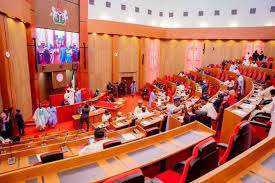
    After a 40-day recess, the Senate is set to resume plenary sessions on Tuesday, inside the renovated chambers of the National Assembly officially handed over by Visible Construction, a subsidiary of Laralek Ultimate Group of Companies.

    Marking the successful completion of a project that began in September 2022, relocating both the Senate and the House of Representatives to temporary chambers.

    The indigenous construction firm, engaged for the first time in such a project at the National Assembly, has impressed staff with the state-of-the-art facilities now available for legislative proceedings.

    Visible Construction, a subsidiary of the Laralek Ultimate Group of Companies, delivered the chambers just in time for use.

    Since the commencement of renovation works in September 2022, both the Senate and the House of Representatives had been operating from temporary chambers. The 9th National Assembly concluded its session sine die from these temporary quarters.

    However, with the inauguration of the 10th National Assembly on Tuesday, June 13, 2023, at the temporary chambers, Visible Construction was urged to accelerate the renovation process.

    Now, after ten months, the indigenous construction firm has successfully delivered the reconfigured chambers to both houses of the National Assembly.

    The chambers, originally constructed by Arab Contractors, a foreign firm, in 1997/1998 under the late General Sani Abacha-led military government, have undergone significant upgrades.

    Visible Construction’s involvement in the renovation marks a milestone as the first indigenous firm to engaged in such construction and renovation work at the National Assembly.

    Staff members of the National Assembly expressed their satisfaction with the completed work, highlighting the modernized facilities and equipment now available.

    An anonymous staff member noted the improved environment for plenary proceedings, stating that senators and members of the House of Representatives now have conducive chambers for their legislative activities.

  • 119 Inmates Escape Suleja Correctional Centre Following Heavy Downpour

    119 Inmates Escape Suleja Correctional Centre Following Heavy Downpour

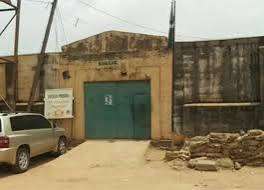
    Suleja Correctional Centre was thrown into chaos on Wednesday night as a severe rainstorm battered the facility, leading to the escape of 119 inmates.
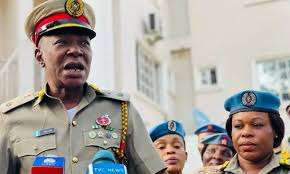
    Mr. Adamu Duza, the spokesperson for the Federal Capital Territory Command of the Nigeria Correctional Service (NCoS), confirmed the incident, attributing it to the extensive damage caused by the downpour.

    The heavy rainfall destroyed the custodial facility and its surroundings, particularly damaging the perimeter fence and facilitating the escape of the inmates, according to Duza.

    In a statement released on Thursday morning, Duza revealed that immediate measures were taken to recapture the escaped inmates. Working in collaboration with other security agencies, the NCoS has successfully apprehended 10 fleeing prisoners, who have been returned to custody.
    However, efforts to locate and secure the remaining escapees are ongoing, with law enforcement agencies intensifying their search.

    “The Service recognizes the vulnerability of its aging facilities, many of which were constructed during the colonial era,” stated Duza. “Efforts are underway to modernize these facilities and enhance security measures.”

    Duza highlighted ongoing initiatives aimed at upgrading correctional infrastructure, including the construction of six 3000-capacity ultra-modern custodial centres across Nigeria’s geopolitical zones.
    Additionally, existing facilities are undergoing reconstruction and renovation to address structural weaknesses and improve operational efficiency.

    The NCoS urged the public to remain vigilant and report any suspicious activities or sightings to the nearest security agency. Despite the breach, authorities reassured residents of Suleja of their unwavering commitment to ensuring safety and security in the region.