Author: Chike Ozohili

  • Youths Protest Sokoto Emir’s killing

    Youths Protest Sokoto Emir’s killing

    As President Tinubu and the political elite reduce governance to the pursuit of personal fancies, life in Nigeria has become nasty, brutish and short.
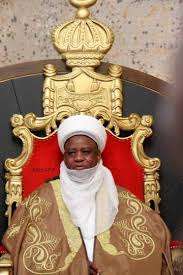
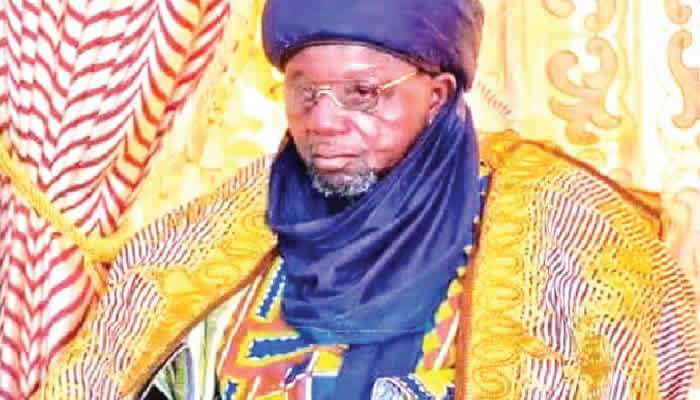
    In Sokoto for instance, a large group of youths from Sabon Birni Gobir Local Government Area has protested against the abduction and brutal killing of Alhaji Isa Muhammad Bawa, the Sarkin Gobir of Gatawa District.
    The demonstration erupted following Bawa’s death, which occurred on Wednesday after he was kidnapped and violently killed by his captors.
    Footage obtained shows the protesters marching toward the residence of Sokoto’s deputy governor, Alhaji Idris Muhammad Gobir, setting tires and other objects ablaze along their route.
     Their protest reflects their demand for justice and greater action to address escalating violence in the region.
    The protest comes amid reports that Alhaji Bawa was buried without his body present due to the circumstances of his death.
    A video surfaced showing Bawa pleading for help before his death, which was confirmed after the terrorists’ demand for a ransom of N60 million and five motorcycles for his body.
    The kidnappers initially sought N1 billion for the release of Bawa and his son, who were abducted in July.
     The distressing video of Bawa, captured in captivity, shows his desperate pleas for assistance.
    In response, President Bola Tinubu has condemned the attack, calling it a grave and unforgivable act.
    He has extended condolences to Bawa’s family, the Gobir Emirate, and the Sokoto State government.
  • The Jabi Lake Recreation Park lies Waste

    The Jabi Lake Recreation Park lies Waste

    Barring an urgent intervention by ‘Mr. Project’, Chief Nyesom Wike, the Honorable Minister of the Federal Capital Territory (FCT), the Jabi Lake Recreation Park may soon be taken over by hoodlums and street beggars who throng the arena daily in search of sustenance.


    The real danger however, is the definite possibility of dangerous criminals infiltrating the arena some day and effecting traumatizing acts like an abduction.


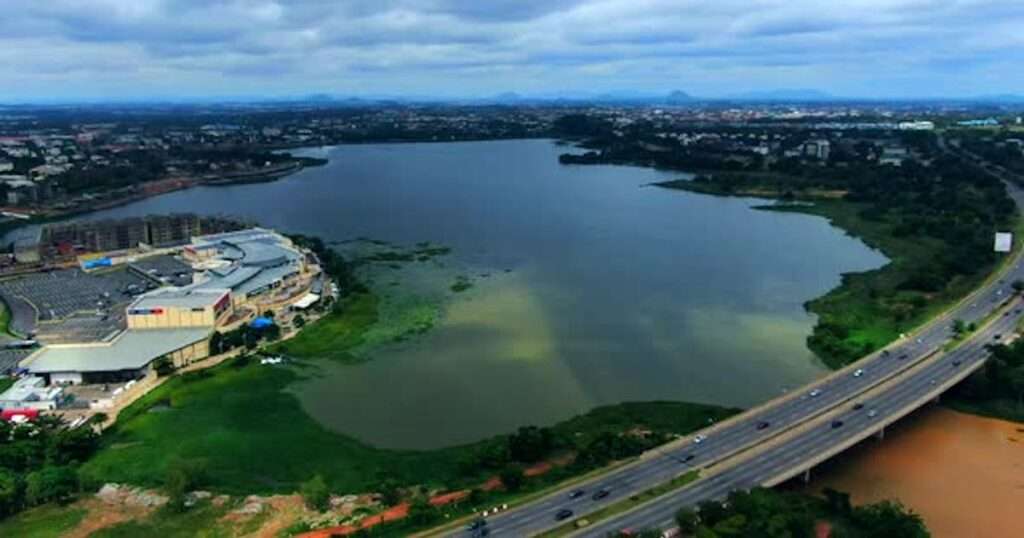
    The Jabi Lake, an aquatic splendour of some sort, is one of the iconic landmarks of Abuja, the Federal Capital city of Nigeria, Africa’s most important country.


    Jabi Lake, Abuja: Aerial View

    Constructed in 1981, as an earthen dam, Jabi Lake is a body of water that was initially created as the first major source of water supply to the people of Abuja. The lake is over 1,300 hectares in total surface area. The reservoir may have initially supplied water to about 100,000 people..


    Even though man-made and limited in size, the lake has morphed into a natural aquatic ecosystem, with the potential of standing Abuja in the same stead as one of the beautiful cities in a hinterland decorated with a body of water like Cairo on the bank of the Nile River or the six great lake cities of the United States.


    See: Egypt Nile River_ Map, History, Facts, Location, Source


    In a bid to enhance its status as a recreation and tourist centre of good reckoning, the Jabi Lake area was reconstructed and re-kitted to become a beautiful recreation park in 2007. The new centre was inaugurated by then President Olusegun Obasanjo. As a reflection of the administration’s high hopes for the park, christened as the Jabi Lake Resort, it invited the American actor and global entertainment icon, Wesley Snipes to grace the occasion.


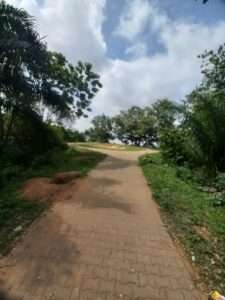
    Unfortunately, all that is history now. Jabi Lake Resort has become a shadow of its old self. The lake has been taken over be seaweed (water hyacinth) while wild bushes have grown around the precincts of the body of water, both completely defiling its scenic beauty.

    Overgrown with Seaweed

    Most infrastructural facilities provided have been totally vandalized. Armoured cables buried several feet in the ground to connect security lighting poles have been uprooted and carted away. Public conveniences have been taken over by hoodlums and the destitute who have converted them to their abodes.


    Uprooted Armoured Cable (left)

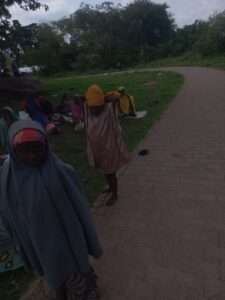
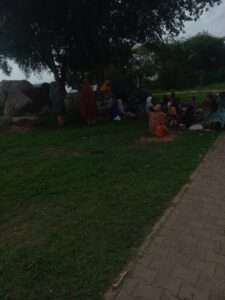
    Street beggars, urchins and hawkers abound, littering the complex with human and material wastes.  At the Jabi Lake recreation Park today, fitness enthusiasts who throng the arena daily to walk out, have to wangle through columns of beggars and their wards, mostly out-of-school children who pack into the arena to eke out a living.


    Mango and other ornamental trees planted for flora and climatic control are routinely violated and felled.


    Hawkers and other petty service providers have erected shacks and other makeshift shelters in the complex thereby giving it a complete slum-look.

    Destitute/Beggars


    Residents of the FCT, revelers, fitness enthusiasts and potential investors who spoke to Nigerian Anchor wonder why such a great recreation facility could be left to waste.

    Efforts to get the opinion of officials of the Federal Capital Territory Authority (FCTA) on the issue proved futile.

    Experts on tourism suggest the Ministry of the FCT should take steps to extricate property from whatever ownership encumbrances, revamp the facility and put it to some kind of commercial use.

    Better still, a Private, Public Partnership could be evolved to ensure that the complex, which was constructed at a great cost to taxpayers is not lost to hoodlums.


  • President Tinubu returns from another foreign trip

    President Tinubu returns from another foreign trip

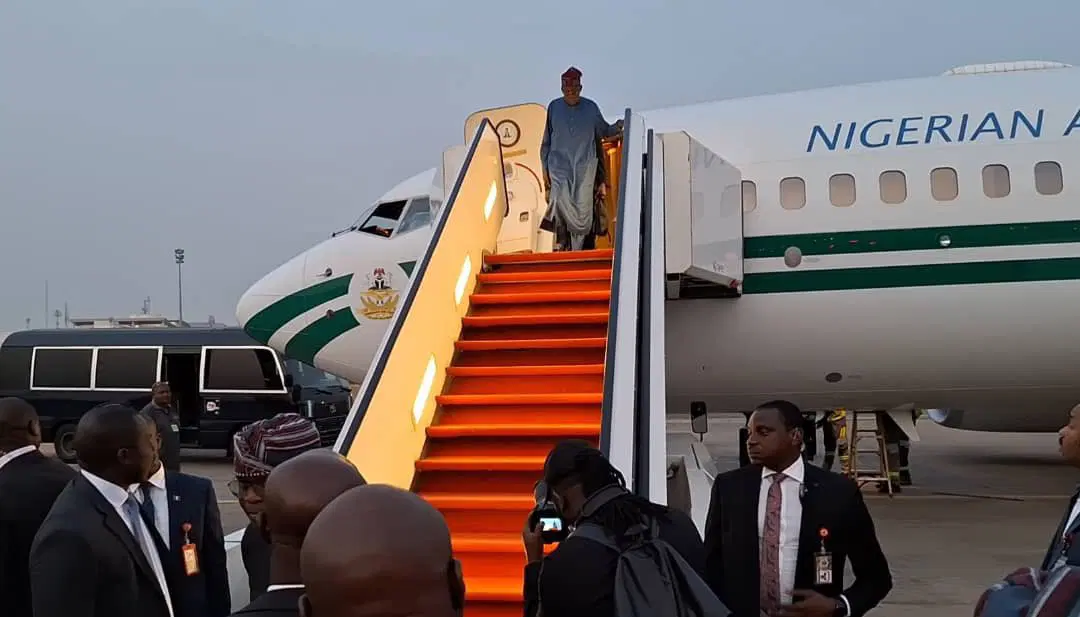
    President Bola Tinubu returned from his three-day official trip to Equatorial Guinea yesterday. This makes it his 22nd foreign trip barely 15 months after assuming office, May 29th, last year.

    Like his predecessors since 1999, the President is reported to be embarking on these trips in hot chase of Foreign Direct Investment (FDI) into various sectors of the resource rich Nigerian ecosystem.

    During this last trip, Tinubu and his Equatorial Guinean counterpart, Teodoro Mbasogo, were reported to have signed an agreement on the Gulf of Guinea Pipeline Project.
    The agreement covers legislative and regulatory measures for the gas pipeline, establishment and operation, transit of natural gas, ownership of the gas pipeline, and general principles.

    In previous engagements, two Nigerian companies were reported to have signed Memoranda of Understanding with German counterparts in November 21, 2023 for gas supplies.

    In one of such agreements, it was stated that a certain Nigerian company named Riverside LNG would collaborate with the German company Johannes Schuetze Energy Import AG to provide 850,000 tons of liquefied natural gas to Germany annually. The president’s office stated that gas exports would rise in the coming years, with the first delivery of gas anticipated in 2026.

    Presidential Spokesperson, Ajuri Ngelale, in an earlier interview on Channel TV talked about how President Tinubu:

    “… is personally conducting an open-door policy to investors from around the world, … to ensure that they have direct access to all of the regulators and government officials that will further enhance the environment in which foreign direct investments will be coming into the country,”

    The President and his team are also seeking investments in other sectors such as electricity, rail transportation, agriculture and others.

    Before President jets out to another oversea destination for what some term as an elusive chase for FDI, experts advise for greater introspection and more strategic outreach, seeing as such forays by previous administrations had remained a wild goose chase.

    As one analyst put it, “investment money is a very discerning guest that goes only to where it is welcome.”


  • Hunger Protest: Don’t bother to continue

    Hunger Protest: Don’t bother to continue

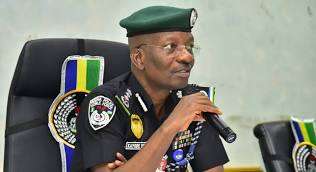
    The Inspector General of the Nigeria Police Force (NPF), Mr. Kayode Egbetokun has warned protesters to discontinue the ongoing national protest against hunger and bad governance or have the police and other armed forces to contend with.


    Briefing the press in Abuja this evening, Mr. Egbetokun said the NPF shall not hesitate to call in other members of the Nigerian armed forces to help quell the uprising should they be overwhelmed.


    Giving his view about the way the protest panned out on the first day, he insisted that what happened today was, “Mass uprising and looting, not protest”. He regretted that even “those who claimed to be the protest leaders were nowhere to be found when things got out of hand”.


    Advising the protesters to be law abiding he said, “groups who claim to exercise right to protest must also know they are duty bound to obey laws of the land.


    Know your rights but do not neglect your responsibilities or duties,” he cautioned the protesting youth.


    He warned that the police was on the red alert and determined to ensure that law and order was maintained in the country.


    Concluding, the Police chief said, “I advise that they should not bother to continue with this.”

  • Hunger Protest: D-DAY in Nigeria?

    Hunger Protest: D-DAY in Nigeria?

    A blogger called it the “Ides of March in August.” Some called it the “Day of Rage.” Others have aptly described it as the “day to take back Nigeria.” Call it what you may but today is August 1, 2024 and what shall not be in doubt is that President Bola Ahmad Tinubu shall today play host to some not-too-August visitors, as Nigerians from all works of life pour onto the streets, if all go as planned, to demand better treatment from the leadership of their country.

    Operated under the hashtag: #END BAD GOVERNANCE, a group of Nigerians issued a notice to the Federal Government some weeks back with the intention to embark on ten days of mass protest, starting August 1-10, 2024, to demand reversal of economic polices that the current government had introduced. Some of these policies include the withdrawal of subsidy on petrol, hike in energy (electric power) tariff, further liberalization of the foreign exchange market.

    It is worth repeating here that these policies were dictated by the International Monetary Fund (IMF) and the World Bank, so called Bretton Woods Institutions, created in December 1945 to mastermind the implementation of the Bretton Woods Agreement of July 1944. Over the years, the two institutions have served “as important pillars for international capital financing and trade activities.” Unfortunately, their advises and the prescriptions contained in the Structural Adjustment Policies (SAPs) that they recommend, have always failed to serve the interest of needy Third World Countries.

    From countries of the Latin Americas to poor countries in Africa and the Asia, the one-size-fits-all policies that these two lending institutions propose to third world countries often lead to mass revolts, often because of the hardship that they cause. As for Nigeria, it is a deja vu as the current episode is Nigeria’s second attempt at implementing SAP. The first also ended in a fiasco as the country was thrown into a turmoil of mass revolt that is today remembered as the anti-SAP Riots.

    Same as now, the Anti-SAP Riots were a result of the government decision to implement the Structural Adjustment Program (SAP) in 1986 under the International Monetary Fund (IMF) in an effort to counteract the impact of declining oil revenue and devaluing the Naira, cutting back on social spending, implementing widespread layoffs, being measures taken to guarantee Nigeria’s eligibility for loans from the IMF.

    Public resentment to IMF Structural Adjustment Programmes are fueled by several factors. Apart from the very bitter pills that they prescribe, the failure of the ruling elite to subordinate themselves to the same lifestyle modification that they recommend to the mass of the people, spike most of the anger that drive the protests. In Nigeria, just as the ongoing episode in Kenya, while the people grapple with cost of living crisis, politicians and their families, supposed servants of the people, revel in obscene affluence.

    In Nigeria, the numbers tell all the story. Down by 370.55 percent, the local currency was so massively devalued that a US dollar today exchanges for 1,660 naira, instead of N448.0 by end of 2022. With this fall in the value of the naira, and Nigeria being import dependent, the price of all goods skyrocketed. Just to give an example, rice, Nigeria’s most staple food has become a luxury item in many family menus as a 50kg bag, hitherto sold at N7,500 in 2023 now sells between N85,000 and N100,000. Food inflation estimated at 40 percent. While interest rate hovers around 28-30 percent.

    President Tinubu, either wittingly or otherwise, it was, who set the tone and pace for the current harsh economic reality buffeting Nigerians when he announced that subsidy on petrol was gone while reading his inaugural speech. Even the most strident advocates of subsidy removal sharply disagreed with the method of withdrawing the very critical subsidy on petrol by the president. This was due to how he announced it without proper review and implementation plan.

    The rest, as they say, is now history. The country now tithers precariously by the edge of the cliff. Whether the people will troupe out to carry out the threat of a mass protest shall become manifest momentarily. What is of critical essence going forward is how the law enforcement agents contain the protest that the Federal Government and the sub-nationals can not be excused as having done enough to stave off.

  • Gov Abba Yusuf: Kano People say, “We’re yet to feel your Joseph”

    Gov Abba Yusuf: Kano People say, “We’re yet to feel your Joseph”

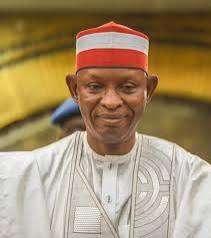
    All politics is local and the impact on the economy affects individuals personally. So, like the rest of Nigeria, the people of Kano say they are hurting. The catchphrase on the streets of kano now is, “Governor Yusuf Abba, we are yet to feel your Joseph”

    Nigeria’s democracy is unravelling very fast. Unfortunately, this is happening at the market square in a global village where citizen journalism has left no stone unturned. The royal rumble in Kano and the river of trouble, red with human blood, flowing freely on the streets of Port Harcourt are two poster images that tell all onlookers that all may not be well with the largest democracy in Africa.

    While the madness in Rivers State may be a needless fight that has been nurtured to become a monstrous brawl may be, because someone in the corridor of power has a vested interest, the same cannot be said about the festering inferno in the ancestral home of Malam Ibrahim Dabo which must be put out fast before it engulfs the entire metropolis.

    As it is common knowledge today, Muhammadu Sanusi II dan Chiroman Kano Aminu dan Muhammadu Sanusi I dan Abdullahi Bayero (2014-2020) and Aminu dan Ado dan Abdullahi Bayero (2020–2024), both protagonists in the current tussle for the emirship of Kano, are all grandchildren of Abdulahi Bayero, the eighth Emir of Kano (1926-1953) and a grandchild of Ibrahim Dabo, the first Emir and founder of the Dabo Dynasty.

    The reign of Fulani rulers of Kano has enjoyed relative peace and growth over the years. This continued until the late 1970s and early 80s when the late Governor of Kano state, Alhaji Abubakar Rimi attempted to balkanize the Emirate Council into five, namely; Gaya, Karaye, Bichi, Rano and Kano. Of course, he paid dearly for it as it caused him his re-election. Being not one known to be restrained by the huge moral demands of his office, former Governor Abdulahi Ganduje embarked on a repeat of this controversial exercise when he split the Council into five same Emirates and went a step further to depose the fourteenth emir of kano, Muhammadu Sanusi II in 2019.

    Governor Abba Yusuf, like his predecessor Sabo Bakin Zuwo in 1983, has also gone ahead to reverse all that Governor Ganduje did by reverting to the single emirate structure, deposing Alhaji Aminu Bayero and re-instating Muhammadu Sanusi II. Now the dye is caste and there is bedlam in Kano. The clan of Abdulahi Bayero, the Kano populace, the State Government and institutions of the Federal Government have locked horns in an Olympian duel with potentials for massive upset of the peace. Unfortunately, the prospect of an early resolution of the conflict is now being progressively encumbered by the same judiciary that should lead that charge, as courts at various levels give orders and counter orders and judgements without adequate recourse to established cases.

    Every politics is local and the impact on the economy affects individuals personally. So, like the rest of Nigeria, the people of Kano say they are hurting. The catchphrase on the streets of Kano now is, “Governor Yusuf Abba, we are yet to see your Joseph.” This is an apparent reference to both the Quranic and Biblical reference to the suffering of Prophet Joseph (Annabi Yusuf) before ascending to the position of leadership over his people and the redeemer of Egypt and the surrounding nations from the seven-year famine.

    Located at the North Western part of Nigeria, Kano, with a GDP of $13.6billion, is the commercial capital of northern Nigeria and the country’s second largest economy after Lagos with a GDP of USD 29 billion as of 2020. Kano, unlike most states in Nigeria is essentially a one city state with Kano city contributing most of the attributes that define the state. Growing at 3.06%, the population of Kano metropolis is estimated at 4.35million as of 2023, while the state population is put at 16.25m. With 415,598 Kano State had the highest Registered Live Births in the country in 2019. The huge population size, coupled with a GDP that is almost the size of the population makes Kano to rank as the 35th state in terms of GDP per capita. Kano also ranks poorly at the 12th position in terms of business environment, being able to list only 1,829,843 enterprises, compared with 3,345,948 in Lagos and 2,133,096 in Rivers states. About 72 per cent of the population of Kano state or 7.1 million people are actively engaged in economic activities and generating $978 GDP per capita.

    As it is the case with most states in northern Nigeria, most indices of underdevelopment are still looking up. For instance, it is painfully a valid assertion that poverty in Nigeria is essentially a northern phenomenon. As of 2019, 55.1 percent of Kano live below the poverty line. Whereas only 4.5 per cent of the population of Lagos state fall within this bracket. Indeed, apart from Kaduna state with 43.5 per cent more than half of the population of all the states in north western and north eastern Nigeria live below poverty line with Sokoto leading the pack at 87.73 per cent. These figures worsened due to the abysmal economic record during eight years of the Muhammadu Buhari Presidency.

    Take out of school population as an example, with a national estimate of about 20 million, accounts for 989,234 children out of school.

    Added to this is the current cost of living crisis precipitated by wrong policy choices, timing and implementation by the Tinubu Presidency. In an effort to spur investment and raise output, Tinubu has enacted measures since entering office in May of last year, including cutting back on gasoline and energy subsidies and twice depreciating the naira. Which, according to him, are measures required to set Nigeria up for sustained growth. However, President Tinubu’s goal of six percent annual economic growth is far too ambitious compared with the economy’s current growth rate, and the changes have increased inflation to a 28-year high, exacerbating the country’s cost of living crisis, with a direct causative effect on crime wave. These negative headwinds impact Kano state also.

    All of the above, not to mention the challenge of decrepit physical infrastructure, go to show the enormity of challenges that confront the administration of Governor Abba Yusuf. Moreover, the New Nigeria Peoples Party (NNPP), under which banner he won the governorship election, had promised to provide the basic necessities of life that include, but not limited to the provision of qualitative mass education, free primary health care, food and water, housing roads and security, economic empowerment for all Nigerians. Even though a pleasantly surprising sanctuary from the incipient scene of violent crimes that most of Nigeria, especially northern Nigeria had become, Kano, nonetheless shares a lot in common with the rest of the country that is now in the firm grips of cost-of-living crises. And the people are reminding Governor Abba Yusuf to tread carefully as to how well or not he manages the emirate tussle and go on to deliver on his campaign promises are critical to determining his second term ambition.
  • EID-EL-KABIR: Feast of the Sacrifice

    EID-EL-KABIR: Feast of the Sacrifice

    Eid-el-Kabir is an Arabic expression for “Feast of the Sacrifice”. It is also called Bakr-Eid, Sacrifice Feast. Eid-el-Kabir can also be called Eid-al-Adha. The origin of the feast is linked to Ibrahim being ordered to sacrifice his son and he simply obeyed, but, Allah in His infinite mercy gave him a sheep to sacrifice instead of his son Ishmael. 
    It was the angel Jibril that stopped him and told him that due to his submissiveness, his sacrifice had been accepted. Following this was Ibrahim’s journey from Canaan to the rocky desert of Mecca, Saudi Arabia with his wife Hagar, Adnan, and Ishmael.


    On his return to Canaan, he left behind Hagar and Ishmael who ran out of food and water, but by Allah’s divine provision, Hagar and her son were able to drink from a spring of water and even got food to freshen themselves. Ishmael became a prophet and dedicated himself to spreading the message of submission to Allah to nomads in Arabia. This served as a precedent to the Hajj performed during the period.


    Eid-el-Kabir is considered the holiest of the two Muslim celebrations; the other being eid el fitr. 
    During eid, worshippers come out massively for congregational prayers. This is done worldwide. 

    After the prayers, usually at open fields that serve as masjid or mosques, animals are slaughtered symbolising Ibrahim’s own willingness to sacrifice his own son. The symbolic sacrifice is done in various countries by slaughtering a cow, ram, camel or goat, depending on the predominant culture in a given place.


    However, the domestic animal used must be in top form and healthy, outstanding in all ramifications, to qualify for the sacrifice. The animals sacrificed are meant to be divided into three parts. One part is for the family who slaughtered it. While the other two are for relatives and friends. Also, families visit one another and share meals together even after the celebration.


    The period is usually characterized by intensive prayer by the faithful for individual families, those in authority and for global peace. Muslims climax the period with gorgeous dressing. Significantly, women seem to attach more interest to trending fashions. Thanks to their husbands who always provide for their families to ensure their wives and children come out in their best attires.


    Usually, eid festivities are kicked off by annannouncement by the Sultan of Sokoto, Muhammad Sa’ad Abubakar, regarding the sighting of the new moon, following which a date for eid is calculated.
     

    In Nigeria, on the sideline of activities during the period is the flamboyant display by the royals across all the emirates who richly dress and ride on horses that are well decorated, holding durbars and other social activities which attract all citizens.

    There is also an exchange of official visits between the traditional rulers and political leaders. For many years, Eid-El-Kabir celebration, like other religious festivals was used as a tool for galvanizing the citizenry by the government.

    On the ocassion of the 2024 Eid el Adha, Nigerian Anchor Newspaper felicitates  with our Muslim readers and, indeed, all Nigerians on this blessed month, being a period for sacrifice, charity and dedication to the worship of Almighty God. 
    As we celebrate the festival, May God accept our prayers and other acts of devotion and bless our families and our nation with Peace, Stability and Progress.

    Happy Eid-el-Kabir.


  • Controversial Portrait for Democracy Day

    Controversial Portrait for Democracy Day

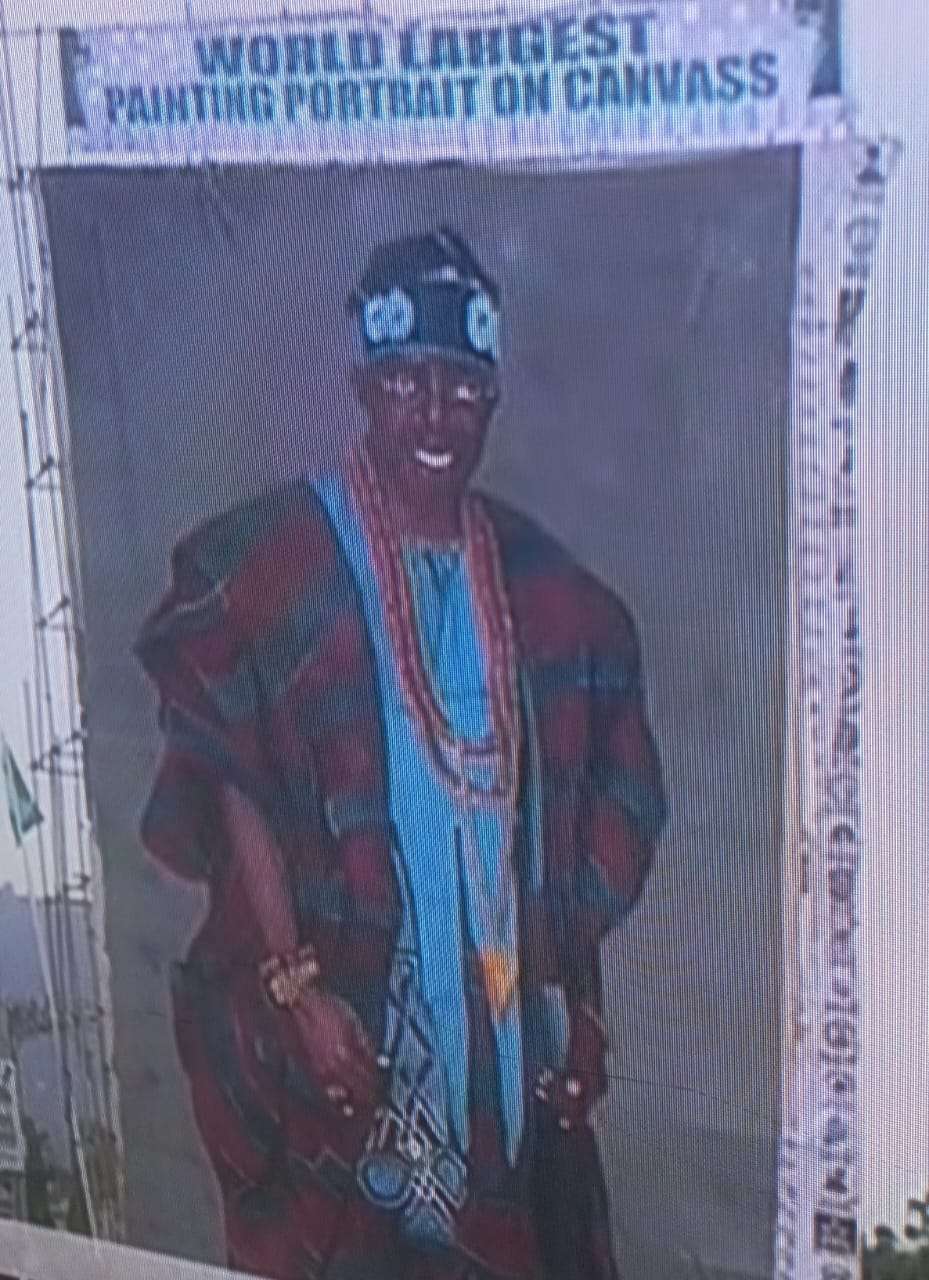
    It may seem too weird to be true, but it turned out that the main event to commemorate this year’s democracy day was the commissioning of his own portrait by President Bola Ahmad Tinubu.

    Claimed to be the largest painted portrait of an individual in the world, the work of art was painted by a group of 37 artists, purportedly drawn from all states of the federation and the Federal Capital Territory (FCT) and unveiled at the Eagle Square, Abuja to Commemorate 25 years of uninterrupted civilian rule in Nigeria.

    Upon commissioning, it was announced at the event, the portrait shall be taken for display at a public gallery at the nation’s capital, Abuja.

    Nigeria, Africa’s largest democracy underwent several fits and starts in its journey to civil rule due to frequent interruptions via military coups d’etat that topple such civilian governments.

    The current effort at democratic governance is the longest in the country, having started in 1999 and running till date, uninterrupted.

    Many however wonder why unveiling a large portrait of the president by the current government should be considered as the appropriate symbolism for this occasion.

    Notable journalist and reknown columnist, Dr. Ruben Abati, and his colleague, Rufai Oseni, both anchors of the Morning Show on Arise TV could not help but wonder aloud whether Nigeria was still a democracy or a civilian dictatorship.

  • N62,000 Minimum Wage: Beware of the rage of the people-Benson Upah

    N62,000 Minimum Wage: Beware of the rage of the people-Benson Upah

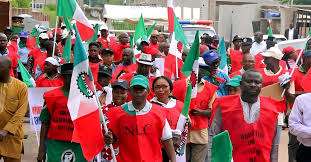
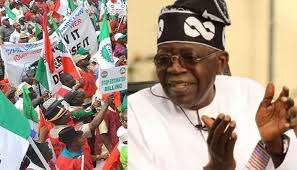
    If the gathering storm is to be taken as a reliable pointer, then Nigeria may be headed for another major labour crisis as organized labour has not only rejected N62,000 minimum wage offered by government but cautioned that “some state governors, were behind the mischief.”

    Speaking at a live television programme this Monday morning, Nigeria Labour Congress (NLC) Head of Information and Public Affairs, Mr. Benson Upah disclosed that about five state governors were bent on “throwing spanners to the works”. Even as he declined mentioning the names of these governors, the NLC spokesman cautioned the mischief makers to be aware that “the rage of labour is more manageable than the rage of the people.”

    Mr. Upah said that contrary to the impression being given to the Nigerian public about the lack of capacity, government revenue has now shot up as the amount being shared by the three tiers of government has moved from N700billion to N1.3trillion. He therefore assured that “Labour is not being difficult but talking about something which is practical and reasonable.”

    Pressed to state what shall be the next action of organized labour, Mr. Upah, who was guest at the Morning Show on Arise TV said, “appropriate organs of labour shall meet and take a decision.”

    He went further to state, “Our troops, our resources, our reaction time, our good intentions are intact. Appropriate organs of the unions will reconvene and take the right action.”

     Organised labour, comprising of the Nigeria Labour Congress and the Trade Union Congress (TUC) have been engaged in protracted negotiations over a new minimum wage, or at best a living wage. The big elephant at the room during these meetings had been the disproportionate pay politicians and other public office holders approve for themselves as compared to the very poor take home pay of the average worker.

    The current agitation for a higher pay had been triggered by ongoing hash economic reforms embarked upon by the Bola Ahmad Tinubu Presidency. First was the withdrawal of controversial subsidy on petrol. This was followed by the liberaisation of the foreign exchange market and the 240% upward review of electricity tariff.

    The combined effect of these changes had led to sudden rise in prices of foodstuff and essential services like the cost of transportation and medicaments.

    Following its rejection of the N62,000 offered by the federal and subnational governments, organized labour has scheduled a National Executive Council (NEC) meeting for tomorrow, Tuesday to deliberate on the next line of action.

  • Noisy vessels and the Presidential Victory Lap

    Noisy vessels and the Presidential Victory Lap

    We hear President Tinubu has directed his Minister of Finance and coordinating Minister of the Economy, Yemi Edu, to furnish him with the template for a reviewed minimum wage within 24 hours.

    And I say, Before nkò?

    If I’m president Tinubu, I’ll also direct the minister to prepare to implement a pay raise of about N120 or N150k immediately.

    Why not? When you win a battle, what do you do but celebrate?

    President Tinubu won this battle.

    Labour sold themselves very cheaply.

    First, the choice of battle was wrong, if you ask me. Organised Labour should not have fought for increase in minimum wage or living wage, slavish as that one sounds.

    How could you be fighting for any of these two in a clime where the top officials of your government rank among the most remunerated in the world?

    Our public officials have cornered the nation’s wealth to themselves. They arrange hefty pay packages for themselves and still go ahead to help themselves to the till without any consequence.
    On top of all that, they have cornered the highest paying MDAs where only their children and close relatives get employed.

    So, it was a very dumb move for NLC and TUC to be fighting for minimum wage instead of duelling for proper wealth distribution through the democratisation of employment opportunities.
    The way to achieve this is for Labour to press for uniform pay for public offices as was the case.
    Labour should be calling for a uniform pay for either all federal parastatals on the one hand or equal pay for all federal government ministries departments or agencies, on the other hand.

    So, whether it is NNPCL, CBN, FIRS or Federal Fire Service, or National Library, you shall operate the same pay structure.

    But as things stand now, whether the minimum wage is reviewed or not, the income gap between the politicians, their children, who are employed in these high-paying parastatals and the rest of us shall remain wide.
    Meanwhile, na the same market we dey go. The same fuel we dey buy, etc.
    At the end of it all, the hurly burly has come and gone at a great relief to President Tinubu and his friends the topmost level of government that this Labour battle cry was full of sound and fury but signifying nothing to be dreaded.