Author: Chike Ozohili

  • Nationwide Strike: kneejerk Reaction to a Serious Governance Challenge

    Nationwide Strike: kneejerk Reaction to a Serious Governance Challenge

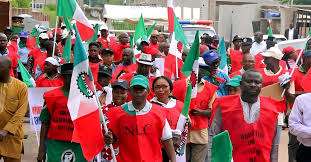
    As you read this Nigeria is now under total lockdown, whereby major economic activities in the organized public and private sectors have been completely crippled.

    Labour has made good its threat to commence an indefinite nationwide strike to protest government insensitivity to its plight and clamour for wage review.

    This moment has been long coming, taking into account recent federal government economic policies which impacts have been skewed againts the suffering mass of Nigerians.
    From the withdrawal of fuel subsidy, liberalization of the foreign exchange to the recent hike in electricity tariff and and aborted cybersecurity levy. Most of these reforms are mass focused and have had acute impact on the social and economic wellbeing of poor Nigerians.

    This has pitched labour unions against the government as organized labour agitate for wage increases and better welfare for their members.

    But I am one of a few who do not think that the labour is going about its agitations correctly. The protests and strikes so far have been kneejerk reactions that have been largely ineffectual.
    Put simply, I DO NOT AGREE WITH THIS CALL FOR NATIONWIDE INDEFINITE STRIKE.
    My reasons are simple.

    1. As already stated, this strike and others before it are largely kneejerk reactions to a fundamental error of policy choice, planning and implementation by government.
    2. The strikes are one too many and have a tendency of seeming like one repeating a process and expecting a different outcome.
    3. Some are of the opinion that most of the recent strike actions have been about bread and butter issues and nothing about the very important subject of better governance of the society.

    Here are a few alternatives that labour may want to contemplate if they are desirous of thinking outside the box.
    1. Formulate proper critical engagement with the government on sincere cost cutting measures that affect the highest echelons of the public service and governmental agencies.

    2. Collaborate with the executive to instigate a downward review of the cost of governance.

    3. Encourage the president to prune the size of the cabinet or you partner with the mass public to achieve the same purpose.

    4. Let you labour strike not be always about your interests but the wellbeing of the Nigerian masses.

    These strategies shall assist to endear the labour movement to the Nigerian public and win their confidence and trust.
    Labour can leverage on such goodwill to escalate activities to achieve desired changes in the political arena.

  • The Tinubu Presidency:Renewed Hope or Reincarnation of Controversy

    The Tinubu Presidency:Renewed Hope or Reincarnation of Controversy

    Just as I reflected on a theme to anchor my thoughts on the first anniversary of the Tinubu Presidency, I received two electronic messages from the same source, expressing two diametrically opposed views on the same subject matter.

    What is even more perplexing is the fact that the two messages were official communications purporting to convey a message from the highest office in the land and signed off by two individuals that should have been speaking from the same script.

    The first message, an official communication from the office of the Special Adviser on Media and Publicity to the President, Mr. Ajuri Ngelale read:
    “STATE HOUSE PRESS STATEMENT
    IN COMMEMORATION OF MAY 29 AND THE FIRST ANNIVERSARY OF THE PRESIDENT TINUBU ADMINISTRATION
    In furtherance of his commitment to delivering good governance, President Bola Tinubu has embarked on the inauguration of strategic projects across the country.

    More transformative projects will be inaugurated by President Tinubu’s administration for the benefit of all Nigerians.
    In view of public commentary concerning the President delivering a speech before a Joint Sitting of the National Assembly tomorrow, May 29, 2024, it is important to state that this information is false and unauthorized as the Office of the President was not involved in the planning of the event.” This message was dated My 28, 2024.

    In the same breath, another communication from the presidency and signed by Mr. Bayo Onanuga, the Special Adviser on Information & Strategy to Mr. President was released, and it read:
    “STATE HOUSE PRESS STATEMENT
    PRESIDENT TINUBU TO ADDRESS JOINT SITTING OF NATIONAL ASSEMBLY TOMORROW
    President Bola Ahmed Tinubu will not make a broadcast to the nation on Wednesday to celebrate his first anniversary as the leader of Nigeria.
    Instead, the President will address a joint session of the National Assembly, which has lined up a programme to commemorate 25 years of the nation’s democratic journey at both the executive and legislative levels.

    President Tinubu’s speech will dwell on the achievements of his administration and Nigeria’s democracy since the military ceded power in 1999.
    Former Senate President, Senator David Mark, former speaker of the House of Representatives and now President Tinubu’s Chief of Staff, Rt. Hon. Femi Gbajabiamila are all lined up to address the parliament.

    Also lined up to speak is the former military ruler, General Abdulsalami Abubakar, who handed over power to civilian administration in 1999.
    At the end of the speeches, President Tinubu will commission the National Assembly Library and Resource Center, now to be known as Bola Ahmed Tinubu Building.” This one too, was dated May 28, 2024.

    While we await the stage appearance of President Tinubu, the lead character in this dramaturgy about heroic failures, I can hear some mischief makers murmuring déjà vu. Certainly. It is the reincarnation of controversy, which has become the hallmark of this president.

    Even more controversial is the record of performance of the first twelve months of the Tinubu presidency.

    From last May 29, twelve months ago, when on inauguration day, President Tinubu, looking forlorn but turbo-charged by the excitement of new office pronounced, “subsidy is gone” until this day, cheerleaders and advocates of his policy choices have mastered the art of double-speak. They often argue, ‘even though the policies shall visit pain and hardship on the people, the tough decisions have to be made for the good of the country.’

    Yet, what we see are somersaults and policy reversals that reveal the poor quality of work that was put into these policies. From the withdrawal of subsidy on petrol to the merger of the forex windows through to recent withdrawal of subsidy on power, Nigerians have been served a menu of completely strange dishes that give them no option of choice.

    Unfortunately, this is coming after eight cruel years of nepotistic, corrupt and clueless reign of Gen Muhammad Buhari when virtually every index of misery took an upward swing. President Buhari represented the worst case of dashed hope since the return of civil rule in 1999.
    At ascendancy in 2015, he promised to wrestle corruption to a manageable level, grow the economy and tackle insecurity. Eight years after, he handed Nigeria to his successor and party mate, Bola Ahmed Tinubu as the poverty capital of the world where about 113million, out of a population of 200million, was classified as multidimensionally poor with out-of-school population brimming at 20.2million children.

    President Tinubu, during his numerous electioneering campaign stumps, promised to continue from where President Buhari stopped. It can be assumed that the import of that message was lost on many Nigerians until what some now say was a thoughtless “subsidy is gone” pronouncement.

    From inauguration day till date, it will seem like the President was determined to act like the young king Rehoboam who spoke roughly to his subjects and said in 1 Kings 12.11: “And now, whereas my father put a heavy yoke on you, I will add to your yoke; my father chastised you with whips, but I will chastise you with scourges!”

    What is however, very clear to a discerning Nigerians is the fact that as many compatriots lay prostrate and distraught due to the excruciating burden of “Tinubunomics” his alleged puppeteers, the Bretton Woods institutions, infamous deities of the market-driven economy, may celebrate President Tinubu’s zero-subsidy regimes and the foreign exchange liberalization; two policies that created the current storm in the economy.

    President Tinubu’s leadership mantra is christened, “Renewed Hope.” This contradicts sharply with the reality on ground as many Nigerians and their businesses have been crowded out of the emerging economic landscape. With the naira now a shadow of its old self, since it now exchanges for less than half of its value as at less than a year ago, while the rate of inflation has doubled and unemployment nearing 50 per cent, and with a cabinet that is an unwieldy crowd of round pegs fitted into square holes, it is most doubtful how President Tinubu can turn the corner and restore hope and life to many Nigerians who are already at economic and mental health ICUs.

    What Nigerian politicians and their retinue of advisers are yet to come to terms with is the basic reality that governance is essentially about the welfare of the people. Anything beyond that is mere sophistry.

    Dudley Seers, British and New Zealand development economist captures this convincingly when he “suggests that development is when a country experiences a reduction or elimination of poverty, inequality and unemployment.” In other words, the subject matter of development that should be of interest to our politicians and others in leadership positions is the type of answer they get to the question about what happens to poverty, unemployment, illiteracy, disease, destitution and such other negative indices.

    So, as members of the governing APC and other apparatchiks of the current dispensation takeover media spaces and platforms to pontificate, and most times, lie about the record of performance of this government in the last twelve months, they need to spare a thought about the fact that figures do not lie.

    Nairametrics reports that Nigeria’s misery index has been surging since Tinubu took over power, moving from 73.05 and headed towards the 100% mark. Food inflation as at last April was 40.53%, compared to 24.61% in the same period of last year.

    With all the anti-people policies that have been brought onboard without commensurate implementation and impact assessment plan, President Tinubu has let the genie out of the bottle and it would require doubling down on remediation efforts to buoy the economy, heal the people and “Renew Hope”.
  • Energy Challenge: Tinubu appoints Team to establish “Evergreen City”

    Energy Challenge: Tinubu appoints Team to establish “Evergreen City”

    In his determination to walk the talk President Bola Tinubu has given the global clamour for energy diversification a boost by assigning energy consultants, INFRACORP the duty of developing Nigeria’s pioneer alternative energy city; the “EvergreenCity.”

    Fleshing up the details on this novel energy concept, Presidential media aid, Ajuri Ngelale stated that InfraCorp, owned by former General Electric top gun, Lazarus Angbazo shall be the “Lead Arranger and Developer of the EvergreenCity”.

    President Tinubu also approved the establishment of the Presidential Steering Committee on Project Evergreen, into which he has empanelled a select team of alternative energy experts that shall ensure the successful implementation of the project.

    In a press statement, Chief Ngelale disclosed that the steering committee shall be chaired by the Special Presidential Envoy on Climate Action, while the Secretariat shall be headed by Lolade Abiola of the UN SE4ALL

    Ngelale listed thirteen other green energy gurus as members of the steering committee. Promiment among them is Mr. Suleiman Yusuf, Managing Director and CEO of Blue Camel Energy, a leading player in Nigeria’s green energy ecosystem.

    Other members of the committee are Lazarus Angbazo (CEO, InfraCorp), Salisu Dahiru (CEO, NCCC), Aminu Umar-Sadiq (CEO, NSIA), Khalil Halilu (CEO, NASENI), Abba Abubabkar Aliyu (CEO, REA), Fatima Shinkafi (CEO, SMDF), Uzoma Nwagba (CEO, CrediCorp), Bala Bello (Deputy Governor, CBN), Teni Majekodunmi (NCCC), Nana Maidugu (NSIA), Michael Ivenso (NCCC), and Chidi Ajaere (Jet EV).

    President Tinubu also approved the terms of reference for the work of the Committee to include:
    (1) Selection of partners/consultants to undertake critical development activities, including project design, environmental impact assessments, feasibility studies, financial modelling, and market engagement.

    (2) Raising private funding for the development of the city and constituent projects.

    (3) Coordinating with partners, development institutions, and other providers of capital and technical assistance.

    (4) Reporting to the Supervisory Presidential Steering Committee on Project Evergreen

  • More Burden on Nigerians as the Central Bank Slams Another Tax on Bank Customers

    More Burden on Nigerians as the Central Bank Slams Another Tax on Bank Customers

    It will seem like there may be no respite soon for the toiling mass of Nigerians as they continue to be bombarded by all manners of taxes, tariffs and levies by the government and service providers with the latest being the introduction of a 0.5 per cent “cybersecurity levy” by the Central Bank of Nigeria (CBN).
    Earlier in the day, First Bank Nigeria Plc led others in the reintroduction of two percent processing charge on deposits above N500,000 and three per cent charge on amounts above N3,000,000 for corporate customers. The reintroduction of these charges is coming about four months after the Central Bank of Nigeria suspended such charges for cash deposits above N500,000.
    In a circular signed by Chibuzor Efobi, Director of Payments System Management and Haruna Mustafa, Director of Financial Policy and Regulation, the CBN said collection of the new levy shall commence in two weeks from yesterday, May 6th, 2024 and it shall be remitted to the Office of the National Security Adviser (ONSA).
    Even though the apex bank was silent on the use into which the ONSA will put the proceeds of the new tax to be paid by bank customers, it explained that deduction and collection of the cybersecurity levy is consequent upon the enactment of the Cybercrime (Prohibition, Prevention etc) Amendment Act of 2024.
    It was explained in the circular that Section 44 (2)(a) of the Act, provides for the collection of “a levy of 0.5% (0.005) equivalent to a half percent of all electronic transactions value by the business specified in the second schedule of the Act, is to be remitted to the National Cybersecurity Fund (NCF), which shall be administered by the Office of the National Security Adviser (ONSA).”
    It was further stated that the CBN shall rely on commercial, merchant, non-interest and payment service banks, as well as mobile money operators for the collection of the levy. It also stated that any defaulting institution that fails to remit funds collected shall be liable to a fine of not less than two percent of the annual turnover of the defaulting business.
    “Deductions shall commence within two (2) weeks from the date of this circular for all financial institutions and the monthly remittance of the levies collected in bulk to the NCF account domiciled at the CBN by the 5th business day of every subsequent month,” the bank stated.

  • Prof Jega, 5 Others Warn President Tinubu against Signing Defense pact with America, France

    Prof Jega, 5 Others Warn President Tinubu against Signing Defense pact with America, France

    Nigeria is at the verge of commiting another major political blunder as its leadership is under intense pressure to sign a defense pact that may undermine her sovereignty, complete with all the daunting security implications.

    When signed this pact will enable the redeployment of American and French soldiers that were recently expelled from three countries in the Sahel region to Nigeria and a few other countries in the gulf of Guinea.

    Towards this end, it has been reported that the leadership of Nigeria is currently under intense lobby to give a nod to this plan.

    Sensing that President Ahmed Bola Tinubu may cave-in to the lobby, former INEC Chairman and notable academic, Prof Attahiru Jega and some civil society heavy lifters of Northern extraction penned an open letter to president Tinubu yesterday to dissuade him from nursing any positive thoughts of saying ‘aye’ to the plan.

    Apart from Prof Jega, the other authors of the open letter comprised of Abubakar Siddique Mohammed of the Centre for Democratic Development, Research and Training (CEDDERT),
    Zaria; Kabiru Sulaiman Chafe,
    Arewa Research and Development Project (ARDP), Kaduna; Jibrin Ibrahim
    Centre for Democracy and Development (CDD), Abuja; Auwal Musa (Rafsanjani), Civil Society Legislative Advocacy Centre (CISLAC), Abuja; and Y. Z. Ya’u, Centre for Information Technology and Development (CITAD) in Kano.

    They argued that “Nigerians have consistently opposed defense
    agreement with foreign countries since the 1960s when the Balewa administration was
    forced to abrogate the Anglo-Nigerian Defense Agreement because the agreement contained a clause which allowed the Royal Airforce to overfly and test its aircrafts in Nigeria.”

    They further contended that another reason, which remains valid till this day, why the late Prime Minister was compelled to abrogate the agreement was that it was considered as an “impairment of Nigeria’s freedom of action” as sustaining such agreement could drag the country into a war against its wish.

    The group advanced other compelling reasons, backed by numerous internationally documented cases, to insist that President Tinubu, whom they suspect seemed favourably disposed, must not sign the pact. For instance, they argued that allowing the American and French troops, which were recently flushed out from Niger to resettle in Nigeria would be a major affront that could conflict relations between the two brother nations which were merely separated by colonial demarcation.

    Citing the claim by one of Nigeria’s most successful foreign affairs ministers, late Gen Joseph Garba, they argued, “Nigeria’s neighbors are a matter of colonial
    heritage and socio-cultural diversity; but it is in our Nigeria’s interest to deliberately
    cultivate the friendship of our neighbours.”

    The group therefore pleaded with President Tinubu not to yield to the immense pressure being put on him to sign the pact because of numerous other downsides that include the bad blood that it may breed between Nigeria and its immediate neighbours and other friendly nations from the Eastern bloc.

    The group therefore, advised that the president should not further encumber the current tense security situation of Nigeria by introducing a foreign element into the troubling mix.

  • Funding Universities:  Prof Ochefu Says “Edupreneurs” to the Rescue

    Funding Universities: Prof Ochefu Says “Edupreneurs” to the Rescue

    As governments, unions and other stakeholders grapple with challenges of managing 21st century university system, a former Vice Chancelor and General Secretary of the Committee of Vice Chancellors of Nigerian Universities (CVCNU), Prof Yakubu Ochefu has advised about the emergence of new ownership models that will take over proprietorship of universities in Nigeria.

    He said the new group shall comprise of “Public-Private Institutions, for-profit and publicly traded universities”.
    According to the professor of economic history, this group, which he called the “edupreneurs will grow and overtake existing institutions providing significantly increased personal choice for all, from pre-school to post-graduate studies.”

    Prof Ochefu, who spoke on “Rethinking the Philosophy of University Education in Nigeria in the Era of Education 4.0” was the guest lecturer at the 81st Interdisciplinary Research Discourse of University of Ibadan Postgraduate College.
    Delving into the economics of global education the former Vice Chancellor disclosed that tertiary education has a global market value of $763 billion. He stated further that when compounded, this grows by 14.59% every year.

    He also said that the World Bank estimates that there were 220 million students worldwide in 2020 and that number will rise to 380 million by 2030.The Big ASK is where will we in Nigeria be in all these developments. He then asked, “where will we in Nigeria be in all these developments?”

    The CVCNU helmsman disclosed that Nigeria currently has a total of 116 Public and 149 Private universities. He said 53 public universities are owned by the federal government while 63 are owned by State Governments. He went further to chronicle the challenges confronting public universities in Nigeria to include poor funding, governance issues, lack of qualified teaching and non-teaching staff, poor technology and infrastructure base, amongst others.
    He advised that all stakeholders must make deliberate efforts to address these challenges to enable university education in Nigeria to measure up to the disruptive feature of the Fourth Industrial Revolution.
    Precisely, he admonished that an innovative design for the emerging tertiary educational system must be one that focuses on institutional pedagogical outcomes, which in turn influence curriculum, the flow of knowledge and the type of knowledge shared, as well as the behaviours of students, instructors, and governance team leaders.

    He illustrated his advocacy with the idea of a “Polymath University” that is based on an educational theory that suggests that original thought and creativity can be obtained by connecting seemingly unrelated ideas and concepts.
    Beyond the management structure, Prof Ochefu also dwelt extensively on the nature and pedagogy of university education in the fourth industrial revolution (Education 4.0). He said the disruptive impact of the new era entails ubiquity of learning, aided by the internet, as opposed to localised type as well as overall democratization of access.

    In concluding, Professor Ochefu X-rayed the pivotal role of the Vice Chancellor as the CEO of the university. Referencing the famous British higher education teacher, Geoffrey Boulton, Prof Ochefu asserts, “It could be said that changing a university is like moving a graveyard – you get no help from the people inside!”.

  • CBN Orders Banks to Raise Capital or Face Downgrade

    CBN Orders Banks to Raise Capital or Face Downgrade

    In response to the macroeconomic challenges facing the nation, the Central Bank of Nigeria (CBN) has issued a directive for leading banks to bolster their capital reserves or risk downgrade. The move targets Tier 1 Banks, including UBA, GTB, ACCESS Bank, First Bank, and ECO Bank.

    Under the new regulations, commercial banks with International Banking licenses must increase their authorized capital base to N500 billion, up from previous levels ranging between N115,815 million and N270,745 million. This mandate, effective immediately, stipulates that the revised capital comprises only paid-up capital and share premium, excluding shareholders’ funds.

    Additionally, banks with national licenses must raise their capital to N200 billion, affecting institutions like FCMB, Fidelity, and Stanbic IBTC. Furthermore, those operating with Regional Licenses face a requirement to boost their authorized capital to N50 billion.

    The CBN’s directive also extends to merchant banks, which must maintain a minimum capital base of N50 billion for national licenses and N20 billion for non-interest banks. Regional license holders are mandated to maintain a minimum share capital of N10 billion.

    According to Haruna Mustafa, Director of the CBN’s Financial Policy and Regulation Department, these measures aim to promote a safe, sound, and stable banking system in line with existing legislation.

    Banks are now presented with limited options to comply with the directive, including injecting fresh equity capital through private placements, rights issues, or offers for subscription, engaging in mergers and acquisitions, or undergoing license authorization upgrades or downgrades.

    Executives are bracing for the challenge, with a two-year deadline set by the CBN to meet the new capital requirements. The banking industry now faces a period of restructuring and strategic decision-making as it navigates these regulatory changes.

  • Surmounting the Tunji-Ojo Hurdle

    Surmounting the Tunji-Ojo Hurdle

    As President Tinubu promises not to spare anyone found culpable by the probe of the fraud at the Ministry of Humanitarian Affairs and Poverty alleviation, shall we now call this frenzy a hurricane? Because that’s what it is beginning to look like. For many, the jury may still be out on the streets. But it will seem like President Tinubu don vex. That’s why one can, for the want of a better moniker describe the current disruption in the executive branch as the reveling of a Hurricane Tinubu on the Three Arms Zone which, to all intents and purpose, it is safe to say, Nigerians are savouring the storm.

    But many fear that President Tinubu may not have the liver to go the full hog in the battle to clear the swamp. As we say, Nigeria is so lucky. It does not suffer natural disasters, except that the effect of bad behaviour of our public officials’ wrecks havocs greater than the worst tsunami.

    What should have been a land flowing with milk and honey, Nigeria has been despoiled by the successive reign of kleptocratic and ruinous rulers who simply steal public funds just for the fun of it. The theft of public funds by politicians, civil servants and their associates exerts the greatest pressure on the public purse in Nigeria. It has been estimated that from independence in 1960 till date, over US$582bin had been stolen from the public treasury in Nigeria by those into whose care it was entrusted.

    Stealing by public officials in Nigeria has become so bad that it is the major feature that describes successive regimes since the dawn of the Furth Republic in 1999, such that every succeeding administration, from the President Olusegun Obasanjo government, through late President Yar’adua, till date, had been more corrupt than its predecessor, not only in terms of their ranking in the Global Corruption Perception Index but the actual heist.

    The greatest shocker was the eight years of unmitigated disaster that was the Buhari reign of banditry, theft, cluelessness, and ignominy. So, when the lid blew open on what has now been termed as BETTAGATE at the cesspool called the Ministry of Humanitarian Affairs and Poverty Alleviation, not a few Nigerians heaved a sigh of relief, hoping the Renewed Hope Agenda of President Tinubu had found an opportunity to get Nigerians to ‘vibe to its rhythm’, unbeknownst that the Tunji-Ojo hurdle would prove to be a litmus test too complex to decipher. Certainly, it proves how broad it is that ethnic bias is a Faultline in the fight against corruption.

    But President Tinubu must know better than to drop the ball at this point, just to save the career of a wily dealer whose ugly backside was revealed too early before attaining a crescendo when he would make the kill. Mr. President must know that he is the boss at whose desk the buck stops. It is his presidency for crying out loud! If he allows this buildup to stall, it may be sunset at dawn for his presidency. Bettagate presents a great opportunity for him to recalibrate and relaunch his regime’s chequered agenda.

    Before the big seizure at Hajiya Halima’s drawers that provided the tip-off leading to this cache, Nigerians gazed in vain into the midnight sky, on a daily basis, hoping they could locate a sign that gives confidence to hope in President Tinubu’s Renewed Hope agenda. The same Minister Betta Edu was one of the early signs that a gadfly of a lady constituted a major distraction to the realization of this agenda. Like her predecessor, Hajiya Sadiya Umar Faruk, she baffled Nigerians on a daily basis with unbelievable tales about how she was empowering Nigerians with magical cash transfers, even as many discerning individuals struggled to trace her footprints on the nation’s poverty landscape. As they say, it is many days for the thief, and one day for the owner of the house. Even the least endowed could tell that the economic empowerment strategy being deployed by the Humanitarian Affairs Ministry was nowhere near tackling the poverty challenge.

    Many expect that President Tinubu would be swift in clearing this Augean stable currently littered with the Bettagate scandal. But it would seem that the President has buckled, unable to surmount the Tunji-Ojo huddle. Many had foretold this difficult juncture with exactitude, basing their confidence on the suspicion that Tunji-Ojo represents the interests of some deadly masquerades at the seat of power. Recall that this was the same Tunji-Ojo of the infamous “Honorable Minister, off your mic” as he prevailed on then Minister of the Niger Delta, Senator Godswill Akpabio from spilling the beans about how he and other members of the National Assembly benefitted from contracts awarded by the commission.

    It is déjà vu all over, as it would seem like we are back at the President Muhammadu Buhari era when, as Senator Shehu Sani poetically put it, members of the kitchen cabinet caught stealing were deodorised with fragrance while others, who were not members of the cabal, were sprayed with insecticides if caught. This is why one can not, therefore, help but to be reminded of the pledge by then candidate Tinubu when he promised that his would be an administration that would continue from where Buhari stopped.

    In what seems like a resort to the usual distraction and subterfuge, the president has announced the suspension of the NSIP programme. Many think this is just to divert attention from the call for suspension of Minister Tunji-Ojo, pending the conclusion of ongoing investigation by anti-graft agencies to determine the extent of his involvement. To date, the white paper issued based on the probe of the NNDC contract scam is yet to see the light of day. Meanwhile, the same man pleading with the honorable minister to off his mic is now a minister of the Federal Republic. Is there any wonder, therefore, that he is enmeshed in another contract scam?

    This may be why many think that today’s Nigeria is a crime scene. It is actually a theatre of the absurd where it is one day one trouble. It is a vicious cycle where the rulers repeat the same outdated processes while expecting a different outcome. It can almost be predicted with certainty that this too shall pass as the report of the investigation shall be swept under the proverbial carpet that has become a burial place for probe reports and the white papers that are hardly implemented.

    President Tinubu needs to act differently if he truly desires to renew the hope of Nigerians in the ability of their government to be of help to them.
    This, too, does not cost an arm and a leg. All that is required is to be honest, truthful, and sincere in your dealings with the people. Simply put, act based on the rule of law.
    Ours is a constitutional democracy, where the constitution is the cookbook that is required to be methodically followed.

  • Bongos Ikwue: Ofu K’Idoma, Abuja Celebrates the Legend

    Bongos Ikwue: Ofu K’Idoma, Abuja Celebrates the Legend

    Intended to be another party to celebrate the end of what was for many Nigerians a difficulty year, the members Ofu K’Idoma Development Association, Abuja and their families got the value of two for the price of one as the gathering assumed a different charge upon the arrival of music icon and living legend, Mr. Bongos Ikwue.

    Sensing the mood of the reveling crowd the Disc Jockey (DJ) played several memorable tunes of the music icon that is noted for his soul searching and nostalgic classics.

    In a magical transfiguration, the once noisy and busy crowd of families exchanging pleasantries and banter coalesced into a dance troupe of some sort miming, dancing and milling around Mr. Ikwue who was seated at the centre of the large crowd of dancers.
    Ofu K’Idoma Development Association is a socio-cultural group comprising the crème de la crème of Idoma sons and daughters domicile in the Federal Capital Territory, Abuja.

    Apart from gathering to create a bond of unity and taking care of members in need, the association focuses more on in indigent members of the Idoma community in the entire Benue South or Zone ‘C’.

    The 2023 end of year party was chaired by Mr. Sonny T. Echono, the Executive Secretary of Tertiary Education Trust Fund (TERTFUND).

    The fun atmosphere notwithstanding, the organisers of the party did not fail to take advantage of the large gathering of both the young and old to pass a message or two about life opportunities and challenges.

    In a brief remark, the Chairman appreciated Mr. Ikwue for accepting the invitation to grace the occasion. He also advised young Nigerians to always have a clear vision about their purpose in life. He urged the young adults at the event to emulate the good example of the music legend by daring to dream and living their dreams.

    He also enjoined members with the means, to grant others a helping hand at their times of need. He also made a token donation as seed money for a capacity building initiative in support of the youth.

    Now 81, Bongos Ikwue, in his custom soft, soothing velvet voice advised the audience to always be prayerful in all of life’s quest.

    Apart from the members, who are accomplished professionals in the private sector and public service, the armed forces, business and academia, the gathering witnessed a deluge of other notable Idoma people who came as invited guests.

    The Chairman of the Association, Mr. Emmanuel Abechi in an address of welcome informed the gathering that the Ofu K’Idoma end of year party holds every other year, in alternate sequence with the community development year.

    During the latter period, the association selects a number of projects for intervention at the home front. The Association had intervened in the areas of healthcare delivery, oil palm plantation, provisioning for Internally Displaced Persons (IDPs), social mobilization and political awareness; just to mention a few.

  • THE NEW TETFund: WHITHER MR INNOVATOR?

    THE NEW TETFund: WHITHER MR INNOVATOR?

    When, fifteen months ago, the freshly retired federal Permanent Secretary, Architect Sunny Togo Echono, was appointed Executive Secretary(ES) of the Tertiary Education Trust Fund(TETFund) to take over from Professor Elias Bogoro, there was so much euphoric expectations towards moving the establishment to another level which would be more functional and more responsive to the ever evolving needs of Nigeria’s Educational sectors(specifically the public Universities, Polytechnics, and Colleges of Education). Unequalled dynamism was expected of the new ES for the nation to become a better player on the globalised educational stage of cutting edge competitiveness. These expectations were not misplaced as they drew from a well of precedents which had accrued to the highly rated former President of the Nigerian Institute of Architects, as well as during his equally acclaimed years traversing the Civil Service of the Federation during which time he had been variously described as highly reliable, diligent, thorough, dependable, professional, and innovative.
    The question that readily comes to mind now, however, is how much of these qualities have been brought to bear in the new Executive Secretary’s more than one year at TETFund and how much positive impact has it had on the Organisation?

    In the new spirit of accountability seemingly enveloping the whole Nation, at the onset of a new Administration, it is pertinent to interrogate the salient plans which Arc Sonny Echono spelt out in his inaugural speech, and judge him by his words, how much he has been able to match action with words or not.

    On resumption as the new Executive Secretary, Arc Sonny Echono did not mince words in setting up his agenda for TETFund. Items he spelt out included, but not limited to, Internal Reorganisation towards greater efficiency; swipe on Erring Contractors and staff of tertiary institutions in Overseas Training Funds; suspected Procurement Racketeering involving TETFund staff; Curriculum Review; Skills Acquisition and Entrepreneurship; ICT Advancement; Deepening Research Development and Innovation in Tertiary Institutions; Partnerships; and Books Publications.

    Analysis of the actions taken by the new ES even in the first one hundred days showed clearly the direction he was heading. He started by the outright cancellation and, or, suspension of programmes and consultancies considered to be of no special importance to TETFund. He followed this with disengagement of almost half of the members of the National Research Fund Screening and Monitoring Committee, considering their unclear roles, which were at best duplications of others, and therefore wasteful. The ES then rightsized the Technical Advisory Group for greater efficiency.

    Within one year in office as Executive Secretary, Arc Sonny Echono had approved numerous physical infrastructure projects which were undertaken in tertiary educational institutions all over the country. These included seven Universities Senate Buildings; seven University Library Buildings; forty two University Faculty Buildings; fourteen Polytechnic Faculty Buildings; as well as numerous Lecture Theatres; Lecture Halls/Classrooms; Administrative/Academic Staff Offices; Entrepreneurship Buildings and Equipments; ICT Buildings and Equipments; Male and Female Hostel Buildings; Vehicles; Perimeter Fencing, and many physical infrastructural projects scattered all over Nigerian Universities, Polytechnics and Colleges of Education.

    Financial administration has undergone some significant changes since Echono took over. There has been impressive achievement in Non-Statutory Revenue, while overseeing Government Agencies such as National Assembly Committees and Auditor General ‘s Office have been furnished with adequate information regarding queries and observations about financial activities of TETFund. There has been reasonable reduction in turnaround time for processing transactions in respect of Staff, Service Providers and Beneficiary Institutions.