Author: Ugo Onuoha

  • Is Nigeria Beginning to Shut Down?

    Is Nigeria Beginning to Shut Down?


    By UGO ONUOHA

    The prospects for the future wellbeing of this country, Nigeria, are not looking good, the pretenses of our rulers to the contrary notwithstanding. And this is not about its distant future. It’s about the near future. Nigeria is rapidly deteriorating from not working to falling apart.

    The assertion that the country is not working is a notorious fact, but the claim that it is falling apart could be treated as crying wolf. It may not be out of place if we reassure ourselves that we have been at the precipice on more than one occasion in the past.

    The country was barely seven years old from independence when it was plunged into a fratricidal civil war during which millions of lives were lost in the space of three years, 1967–1970. Some commentators, rightly or wrongly, regard that civil war and the events that preceded and precipitated it as the beginning of genocide on the Igbo, a significant nation inside this country.

    Others, especially from the side of the victorious Yoruba nation of the southwest region, Hausa, Fulani and other minority nations of the northern region, regard the war as a necessary conflict to Go On With One Nigeria (Gowon). Yakubu Gowon, now in his 90s, was the military head of state who led the triumphant federal side.


    History Written by the Victors

    The dominant history of any war, which also passes as the authentic one, is usually written by the victors and their collaborators. So it has been with the Nigeria–Biafra war.

    The victors claim that between 200,000 and 300,000 people died on the Biafran side, but the victims put the figure at between 2,000,000 and 3,000,000 deaths. The victors say that one of the events that snowballed into the bloody war — the January 1966 military coup — was plotted and selectively executed by the ultimate losers, wherein their (victors’) military and political leaders were gruesomely murdered.

    The victors’ collaborators, the British Broadcasting Corporation (BBC), was in overdrive to propagate and perpetuate the falsehoods. Fifty-five years since that war, the BBC has not relented. It has become more sophisticated, more daring, and more demonic. Its record at distortion and baiting genocide is in public sight.

    Some British taxpayers who fund the corporation and prominent politicians have seen through the evils of the BBC and are now demanding that it be scrapped. The BBC may yet get its deserved comeuppance if the U.S. President, Donald Trump, delivers on his vow to sue that corporation for billions of dollars.

    The BBC had reportedly interviewed Trump and then fiddled with his responses to convey a different message and portray the American leader in poor light. It’s the corporation’s stock-in-trade. It has been begging Trump for forgiveness ever since. It has sacked at least two of its top executives, including the CEO. Thus far, Trump, who revels in court litigations, appears implacable.

    If Trump sues for defamation and wins billions of dollars, that could help to quickly bury the BBC and erase the evil the corporation represents. In spite of whatever some people might think, the world will surely be better for it. If Nigeria is unravelling for the worse, the fingerprints of the BBC have been on it from the beginning.


    The Signs of a Failing Nation

    There’s no doubt that Nigeria is seriously beginning to shut down after many years of protracted abuse by insiders and outsiders. The unravelling has been noticeable since 1960, and even before.

    The signals were obvious at the various negotiations and constitutional conferences that led to self-government at different times for different regions of this country. They were there when some of the country’s founding fathers from the north made violent vows to dip the Koran in the ocean and to ensure that the emergent country became the estate of their forebear, Uthman Dan Fodio.

    The Fulani hegemons also boasted that they would never allow the infidels of the southern regions to rule over them, and the minorities in their midst in the north to be in control of their own destiny.

    The signs were there when elections were rigged, violence unleashed, and politicians induced to cross carpet in the southwest to stop a victorious non-son of the soil from forming and heading the regional government in Ibadan.

    The schism led to the dislocated non-indigene moving to Enugu, his ethnic base, which ensured that the premiership of the defunct eastern region was wrestled from a minority politician to accommodate the returnee ‘big man’. Bad blood started spreading.


    A History of Ignored Warnings

    The January 1966 military coup and the July 1966 counter-coup, and the acrimonious killings that ensued, were clear signs that the Nigerian construct or project was a sham. “Araba,” the violent chant of the separatist agitators of the north, was unheeded.

    Historically, elements from the north were the first to demand the dissolution of Nigeria. Indeed, they did not want independence when it happened. It’s instructive that the British were reportedly the people who persuaded the north to remain in the federation, which was structured to favour them.

    In the period that “araba” lasted, an opportunity to deal with a fractured and flailing federation was lost.

    Before independence in 1960, the man who saw tomorrow, Obafemi Awolowo of the Yoruba stock, had vigorously canvassed for a very loose federation, but Nnamdi Azikiwe, the pan-Nigerian, Pan-Africanist, and incurable optimist, argued to the contrary.

    Given what has been happening in this country for so many years, it would be hypocritical to argue that the jury is still out on whose vision would have served this now-benighted country better.

    The bestiality of the civil war and the scorched-earth tactic in punishing the losers, and in the sharing of the booties by the winners, were also markers that all was not well. We papered over the cracked walls and pretended to be moving on.

    When, after the war, the slogan of “reconciliation, reconstruction, and rehabilitation” failed to materialize, we shrugged our shoulders and moved on in the belief that the defeated people should pull themselves up by their bootstraps.

    It would be their misfortune if they couldn’t, and didn’t. We probably were convinced that we had perfected the act of ignoring iniquities and inequities and the structural defects of the federation. In reality, we were stacking the odds against building a nation out of a country.


    The Chickens Coming Home to Roost

    Now it should be obvious that the chickens are coming home to roost. Tragedies have become the byword for our country.

    In the 1980s, a celebrity journalist and columnist, the late Dele Giwa of the National Concord newspaper, and later Newswatch magazine, which he co-founded, wrote an opinion article in which he said that Nigerians had become “unshockable.” And to think now that those were the years of innocence.

    Today Nigerians are inured to shock, with the lived experience of multiple tragedies of monumental proportions every day.

    This is a peek into the picture of our country in the last week, and not every tragedy was reported or captured.

    A serving general in the armed forces and three of his men were captured and executed by terrorists in Borno State on Friday, November 14; 64 people, including women and children, were abducted by terrorists in Tsafe Local Government Area of Zamfara State on Saturday, November 15.

    The next day, Sunday, November 16, 25 female students and their principal were abducted from their school in Maga, Kebbi State, by terrorists. The vice principal was shot and killed.

    Soon after, terrorists invaded a Christ Apostolic Church (CAC) in Eruku, Kwara State, killing two worshippers and abducting 38 others. The terrorists are reportedly demanding ₦100 million for each of the abductees.

    Elsewhere, one policeman was killed by terrorists in Geidam, Yobe State; eight members of a civilian security taskforce were killed by terrorists and three others abducted in Gwoza, Borno State; terrorists abducted 15 persons, including four nursing mothers and babies, in Sabon Birni in Sokoto State. Two persons were killed by the terrorists in that operation.

    Back in Kwara State, terrorists killed four rice farmers in an attack in Edu; and on Friday, November 21, terrorists invaded St. Mary’s School, a private Catholic college, in Papiri, Niger State, and abducted more than 300 pupils, students, and staff.


    The Looming Abyss

    This past week could be the worst in terms of insecurity in our country thus far. But the likelihood is that it could get worse.

    The American president has been threatening to use the military to attack Islamist terrorists in Nigeria, who he accused of committing genocide on Christians. He repeated the threat last weekend, and he has reportedly gotten approval from Congress to do whatever pleased him in that regard.

    Now imagine this scenario: Islamist terrorists increase the spate of kidnapping Christians and non-fundamentalist Muslims, who they would use as human shields against American drone strikes if the situation deteriorates further.

    In effect, the expectation of a spike in abductions — as is beginning to manifest presently by sectarian terrorists — should not be treated as far-fetched or as a red herring.

    Nigeria is unravelling, and the prospects are foreboding. The situation will not be helped by the position of Nigeria’s president, Alhaji Bola Ahmed Tinubu, that he is depressed by the country’s worsening security situation.

    He was not installed in the presidency to throw up his arms in seeming surrender and to leave citizens to the devices of terrorists and sundry violent non-state agents of evil.
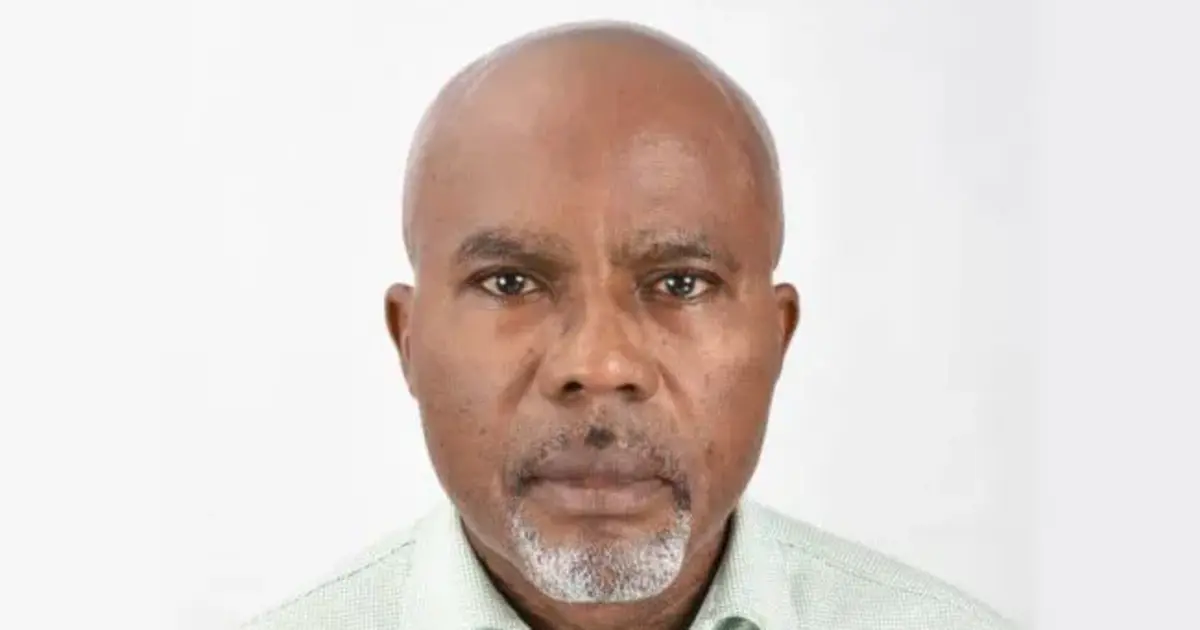
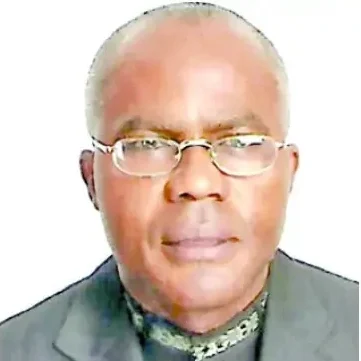
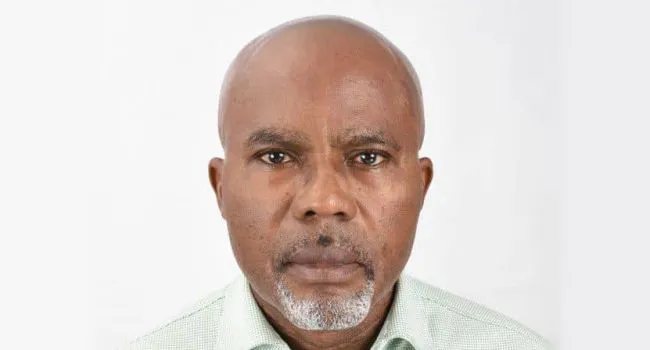
    Ugo Onuoha is a veteran journalist, former Managing Director/Editor-in-Chief, Champion Newspapers Ltd, columnist, and public affairs analyst. His works often explore governance, power dynamics, and civic accountability in Nigeria’s evolving democracy. He writes from Lagos.

  • A Minister of Particular Concern

    A Minister of Particular Concern

    By Ugo Onuoha


    A Minister of Particular Concern

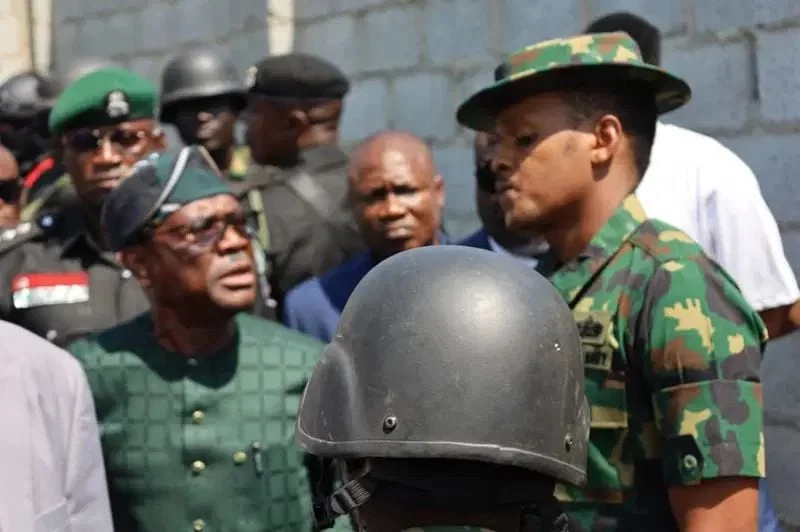
    “What happened between the Minister of the Federal Capital Territory (FCT), Nyesom Wike, and Navy Lieutenant A.M. Yerima is unfortunate. When Wike arrived at the site of the disputed land in Abuja, the officer explained that he was simply obeying lawful orders. Wike should not have exchanged words with the officer; he ought to have addressed his concerns through the officer’s superiors. He is our colleague, and he could have reached out to us to resolve whatever issue there was.

    “The officer’s action was lawful—he was trained to be disciplined, loyal, and obedient to orders. Therefore, the young officer merely carried out his duty, which is worthy of commendation. He did not commit any offence under military regulations. If you observe carefully, he spoke respectfully and conducted himself properly.

    FCT Minister, Nyesom Wike in near fisticuff with an officer of the Nigerian Navy

    “There is, therefore, no offence under military law for which he should be charged. Wike should not have engaged him in an altercation, especially out of respect for the uniform he was wearing. Anyone who disrespects a soldier indirectly disrespects the President, who is the Commander-in-Chief of the Armed Forces. There is, therefore, no basis for any punishment against the officer. This is not about supporting the military to act disrespectfully towards civilians. The Minister should understand that every officer has superiors.

    “I gathered that he called the Chief of Defence Staff, who advised him to wait for an investigation. However, he did not wait and instead went straight to the site. As a leader, he ought to have exercised patience and waited for the outcome of the investigation. Wike also contacted the Chief of Naval Staff, who assured him that an inquiry would be conducted. Yet again, he did not wait. It was supposed to be a one-day inquiry, but he chose to go there and confront them. Now that the Chief of Naval Staff has visited the area—since it involves a land dispute—the matter will be investigated to determine who owns the lawful documents. If the land has been revoked, there are established procedures to follow diplomatically.

    “We [the Ministry of Defence] have not received any formal complaint from Wike, but I called him after the video went viral and advised that he should have spoken with me before going there, rather than confronting the officers directly.”


    A Matter Effectively Closed

    I have chosen to reproduce the words of Alhaji Bello Matawalle, the Minister of State for Defence, because of what they represent. Although he mentioned the need for further investigation, the tone and tenor of his statement suggest that the matter is effectively closed—and the naval officer has nothing to worry about. Lt. Yerima, by every indication, acquitted himself well. He was professional and measured in his conduct during that very public confrontation with a “super minister” known for his loquacity.

    To reinforce the sense that the matter is closed, one only needs to recall the words of the Minister of Defence, Alhaji Mohammed Badaru, who stated that his ministry and the armed forces “will always protect our officers on lawful duty.” Badaru added: “We will not allow anything to happen to him so far as he is doing his job, and he is doing his job greatly well.” The defence minister made this statement during a ministerial briefing for the 2026 Armed Forces Remembrance Day in Abuja. Let that sink in.

    You may call it esprit de corps, but several retired generals from both the North and the South—including former Chiefs of Defence Staff and Army Staff, Generals Lucky Irabor and Tukur Buratai—have spoken in Yerima’s defence. They even called for a public apology from Wike to both Yerima and the Commander-in-Chief, President Bola Tinubu, for dishonouring a military officer commissioned by the President himself.


    Lawyers, Silence, and Political Optics

    Notable voices have weighed in on the Wike–Yerima confrontation over the disputed plot of land in Abuja last Tuesday. Some are lawyers—senior and junior—while others are political commentators and public intellectuals. A few have argued in favour of Wike, citing the 1999 Constitution (as amended), but the majority have faulted him, emphasizing due process, the rule of law, and the impropriety of resorting to self-help, as appeared to be the case here.

    As usual, the legal community has been divided—lawyers seldom agree on anything, even when the law seems straightforward to the “unlearned.” For most of the past week, they have been doing what they do best: lawyering. Their disputations may be intellectually stimulating, but one must not take them too seriously. Often, their arguments are shaped by convenient partisanship masquerading as constitutional fidelity.

    By the way, has anyone noticed the deafening silence from Wike’s colleagues in the Federal Executive Council? Nearly fifty cabinet members, yet not one has publicly spoken in his defence. Does this silence reflect how they truly regard the Minister? As for President Tinubu, who appointed Wike “on our behalf,” the Minister may well be beyond reproach or removal—for obvious political reasons.


    The Politics of 2023 and the Future of 2027

    Wike appears untouchable—because of the past (2023) and the future (2027). President Tinubu, ever the political strategist, prioritizes electoral victory by any means necessary—the Machiavellian creed that the end justifies the means. And Wike fits perfectly into that school of thought.

    Tinubu “discovered” Wike in 2023, when the latter was nearing the end of his governorship of oil-rich Rivers State. Having fallen out with his own party, the PDP, Wike was eager to prove his relevance. Tinubu needed a foothold in the Niger Delta and, by extension, the national electoral map. In that year’s presidential election, Wike reportedly “delivered” Rivers State to Tinubu—an opposition candidate—in defiance of his own party’s standard-bearer, Atiku Abubakar.

    An APC governor from the North, astonished by Wike’s performance, allegedly remarked that his party merely begged for 25 percent of the votes but received an overwhelming—and inexplicable—victory. Unsurprisingly, the PDP still won the subsequent governorship election by a landslide, demonstrating the complex web of political transactions that define Nigerian elections.

    In essence, Wike paid with the votes of Rivers people for his current position in a supposedly opposition-led federal government. That, in part, explains his “untouchable” aura. He remains a crucial asset for the 2027 elections—and the President knows it.


    The Rivers Factor and a Trail of Conflict

    Wike has long been a person of concern throughout his political career—from his days as Chairman of Obio/Akpor Local Government Area, to Minister, to Governor, and now to FCT Minister. Since assuming office in August 2023, controversies have dogged both his official and personal conduct.

    He installed Siminalayi Fubara as his successor in Rivers State but soon fell out with him. Earlier this year, he was linked to political violence that led to a temporary declaration of emergency in the state, suspension of all elected officials—including the governor and lawmakers—by President Tinubu. The crux of the matter was political control. Wike openly claimed he nominated all elected officials, purchased their nomination forms, and installed them in office. The implication: Rivers State belongs to him.

    A chastened Fubara has since been reinstated under conditions widely reported to include a promise not to defect to the APC as its leader and to forgo a second-term bid.

    Throughout his political journey, Wike has sparred with nearly everyone who once aided his rise—from former President Goodluck Jonathan and his wife, Patience, to his predecessor, Rotimi Amaechi. His rift with Atiku Abubakar and the PDP leadership over the 2023 presidential ticket further cemented his image as a combative political loner.

    On Saturday, he and his loyalists were reportedly expelled from the PDP—a move he predictably dismissed with scorn. Wike is, as the Igbo say, an ikiri—a tenacious creature that never lets go once it bites. But the real casualty may be the PDP itself, now adrift and internally fractured.

    A court ruling against holding the party’s Ibadan convention underscores how the PDP’s legal and political machinery remains compromised. In Abuja, many judges are whispered to be “Wike’s judges,” highlighting his alleged influence over the judiciary.


    Money, Power, and the Capital Territory

    Wike’s public persona is equally polarizing. His frequent, combative media chats—lavishly funded from the FCT’s coffers—have become theatrical displays of arrogance. Barely two months after his appointment, he reportedly secured presidential approval to exempt the FCT from the Treasury Single Account (TSA) policy, giving him free rein over the territory’s internally generated revenue—beyond public scrutiny.

    Allegations have since swirled around him: the revocation and reallocation of prime land to cronies and family members, misuse of public resources (including taking his children on official foreign trips), and failure to fully declare assets, notably properties in the United States allegedly registered in his wife’s and children’s names. He has also been accused of using public venues for partisan political events, including hosting a factional PDP meeting at the FCDA conference hall. Wike, for his part, has strenuously denied all allegations of wrongdoing.


    A Dangerous Moment for Civil–Military Relations

    The Wike–Yerima spat, however, carries deeper implications—especially against the backdrop of an alleged coup plot reportedly involving northern military officers. Although the government insists the arrests were disciplinary, many Nigerians remain skeptical.

    The vehement defence of Lt. Yerima by northern political figures, including the Defence Ministers, raises its own concerns. And then came the cryptic post from the Nigerian Defence Headquarters’ X (formerly Twitter) account, in bold uppercase letters:

    “IT IS AN HONOUR TO SERVE IN THE NIGERIAN MILITARY. UNSHAKEN. UNBENT. UNBROKEN.”

    Make of that what you will.

    Meanwhile, the National Assembly is reportedly considering legislation to make the military answerable not only to the President but to all tiers of civilian authority.

    In a manner of speaking, may Wike not become Nigeria’s Achilles’ heel in this fragile and fractious democracy of twenty-six years.


    About the Author

    Ugo Onuoha is a veteran journalist, former Managing Director/Editor-in-Chief, Champion Newspapers Ltd, columnist, and public affairs analyst. His works often explore governance, power dynamics, and civic accountability in Nigeria’s evolving democracy. He writes from Lagos.


  • Genocide: Trump, Tinubu, and the Islamic State of Nigeria

    Genocide: Trump, Tinubu, and the Islamic State of Nigeria

    By Ugo Onuoha


    Donald Trump’s warning to President Tinubu over alleged genocide against Christians has reopened Nigeria’s deepest wounds — exposing again the country’s uneasy balance between faith, power, and politics.


    A Red Herring in the Nigerian Tragedy

    Red herring. That is the one phrase that best captures the flurry of debates following former U.S. President Donald Trump’s threat to “deal with” those he accused of waging a genocidal war on Christians in Nigeria.

    Trump’s statement was stark: President Bola Ahmed Tinubu must act decisively against sectarian Islamist terrorists seeking to Islamise the country — or face dire consequences. His warning, dramatic as it sounded, reignited a familiar national anxiety.

    The Nigerian government, characteristically, has swung between denial and reluctant acknowledgment. Officials first dismissed talk of genocide as exaggerated propaganda; then, in the next breath, admitted that while killings exist, they are not state-sanctioned.


    The Denial Industry

    Some Muslim groups and clerics have been especially vocal in rejecting the label of “genocide,” particularly regarding violence in the Middle Belt. But their rebuttals struggle against visible reality.

    “We live in a global village; the world sees everything,” the author notes.

    In the age of smartphones, satellites, and citizen journalism, atrocities cannot easily be buried. The world watches Nigeria — just as Nigerians watch the world. Even North Korea, despite its iron censorship, has not fully silenced global scrutiny.

    Governments everywhere understand that information is power. Nations spy on allies and enemies alike. The 2010 WikiLeaks scandal merely confirmed what the powerful already knew: diplomacy is as much about gathering intelligence as exchanging pleasantries.

    From Lagos cocktail receptions to cultural events like the Argungu Fishing Festival or Ojude Oba, Nigeria is never beyond the gaze of foreign observers. Agents arrive disguised as tourists. The truth always finds its way out.

    So when it comes to the question of whether genocide against Nigerian Christians exists, the argument itself has become redundant. The evidence is in plain sight.


    Before the Beginning: Seeds of Division

    Nigeria’s religious fault line is not new — it was inscribed into the country’s DNA long before independence.

    In 1957, Sir Ahmadu Bello, the Sardauna of Sokoto, famously declared:

    “We the people of the North will continue our stated intention to conquer the South and dip the Qur’an in the Atlantic Ocean after the British leave our shores.”

    Twelve days after independence in 1960, Bello told The Parrot newspaper:

    “Nigeria should be an estate of our great grandfather Uthman Dan Fodio… We must use the minorities in the North as willing tools and the South as a conquered territory.”

    Abubakar Tafawa Balewa, Nigeria’s first Prime Minister, echoed that sentiment as early as 1947:

    “If the British quit Nigeria now, the Northern people will continue their uninterrupted conquest to the sea.”

    More than sixty years later, not one major northern political figure has publicly renounced these views.


    Christians in Power — or So It Seemed

    Some argue that Christian presidents like Olusegun Obasanjo (1999–2007) and Goodluck Jonathan (2010–2015) disproved the claim of Islamic domination. But events during their administrations tell a different story.

    Under Obasanjo, nearly all northern states (except parts of the Middle Belt) adopted Shari’a law, creating parallel legal systems and semi-autonomous religious jurisdictions. Under Jonathan, the backlash from northern elites was ferocious. His presidency was haunted by conspiracy and ultimately drowned by a wave of coordinated opposition — much of it driven by religious sentiment.

    Now, some of those same northern actors are courting Jonathan again, hoping to exploit his credibility to patch the cracks left by Tinubu’s struggling Muslim–Muslim ticket.


    Trump’s Threat and Nigeria’s Reality

    Was Trump properly briefed before making his threat? Perhaps not. Yet his blunt accusation touches on an uncomfortable truth: Nigeria, for all intents and purposes, already behaves like an Islamic state.

    The Constitution says otherwise, but the system tells a different story. Nigeria operates two codes of law — Criminal in the South and Penal in the North — reflecting deep-rooted ideological divides.

    More revealing, however, is what the 1999 Constitution itself contains. Analysts like Pastor Femi Emmanuel and U.S.-based researcher Dr. Josephine O. Soboyejo have shown how heavily it leans toward Islam.

    “Shari’a Law was never enacted into the Constitution — it was inserted,” Soboyejo asserts. “It appears 73 times. Islam, 28 times. Muslim, 10 times. Grand Khadi, 54 times. The Constitution contains no mention of Christ, Christianity, or Church.”

    She calls this “a dual ideology” — one that gives lip service to secularism while institutionalising religious imbalance.


    A Fragile Secular Dream

    Nigeria’s so-called secular state is built on contradictions. Section 38 guarantees freedom of religion, but Section 6 embeds Shari’a jurisdiction, creating a legal paradox that has become “calamitous for Christians,” as Soboyejo puts it.

    This reality is not academic. It plays out in blood and fear across the Middle Belt and Northern Nigeria.

    In 2019, CNN honoured Imam Abubakar Abdullahi of Plateau State, who risked his life to shelter 262 Christians in his mosque during an attack by Muslim herdsmen. His bravery made global headlines — but his story underscored the perilous truth: those who defend Christians often do so at the edge of death.

    From Gideon Akaluka to Deborah Yakubu, countless Nigerians have been lynched for alleged blasphemy. Their killers remain free, unpunished, and emboldened.

    “It will finally be game over,” the writer warns, “when radical Islam fully captures the Yoruba nation — a process already underway.”

    The stakes could not be higher. With the Yoruba population split almost evenly between Christians and Muslims, the struggle for Nigeria’s soul may yet end where it began — in the collision between faith and power.


    Final Word

    Donald Trump’s bombastic threat may be another red herring, but it has dragged into daylight a truth Nigerians prefer to whisper about: the slow erasure of secularism and the steady march toward a theocratic state.

    The question now is not whether the world is watching — it is whether Nigerians are awake enough to see what their country is becoming.

    Nigeria #Tinubu #DonaldTrump #Genocide #ReligiousFreedom #ChristianPersecution #IslamicState #FaithAndPolitics #HumanRights #MiddleBeltCrisis


    About the Author:
    Ugo Onuoha is a veteran journalist, former MD/E-in-C, Champion Newspapers Ltd, columnist, and public affairs commentator. His writings explore politics, religion, and governance in Nigeria and Africa with an unflinching eye for truth and justice.

  • Why all Yoruba must support Tinubu except…

    Why all Yoruba must support Tinubu except…

    By

    UGO ONUOHA

    EXCEPT for the “Omoluabi”, every Yoruba person at home, and in the diaspora, should fiercely support the regime of Nigeria’s president, Alhaji Bola Ahmed Tinubu. So far, he is doing well for them, especially his Yoruba “boys” from Lagos, many of whom actually are not indigenes of the state. Anyway, Tinubu himself is also said not to be an indigene of Lagos. The inevitable question then will be: why the attempt to exclude some Yoruba from being part of the permanent choristers for Tinubu for the perceived good things he is doing for the Yoruba nation? We will explain.

    Meanwhile I could have asked any of my many Yoruba friends for the meaning of “Omoluabi”, the group that I excluded from chanting the incantation “On your mandate” Tinubu personal anthem that could in time supplant the old/new national anthem. I deliberately refused to, but instead opted to consult Meta AI. And it described it thus: “Yoruba ‘Omoluabi’ is a concept that refers to a person of good character, someone who embodies traditional Yoruba values such as respect, honesty, and integrity. It’s about being a good human being, showing empathy, kindness, and strong moral principles”. It went further to explain that “in Yoruba culture, an Omoluabi is highly respected and admired for their virtues and behaviour”. This concept, I believe, also exists in other nations that make up our country. It can be compared to ‘ubuntu’.

    In recent times, and for as long as it lasted, some members of Afenifere, a Yoruba socio-cultural group, which was led by Chief Ayo Adebanjo approximated the virtues of Omoluabi, two of which are sensitivity to fairness and equity. In the run up to the presidential election in 2023, the group stoutly advocated for equity in the consideration for access to power at the topmost level for a critical section it believed had been left out of the power loop for too long. And according to the Adebanjo group that section was not its own Yoruba nation. For that faction of the Afenifere, it did not matter that a Yoruba personage was canvassing and had been adopted as the presidential candidate of the ruling All Progressives Congress [APC] political party. It adopted and endorsed Peter Obi, an Igbo who was running on the ticket of the opposition Labour Party [LP].

    It took courage, though not unusual, to take such a stand in the politics of Yoruba land. But it spoke to the stuff Adebanjo and those who stuck with him in spite of the dangers were made of. Like elsewhere, partisan politics in the south west region can be vicious, deadly, and bloody. But Pa Adebanjo, a renowned nationalist, elder statesman, and lawyer was unfazed by the potential consequences of the position that he took. He had known danger, having played significant roles in Nigeria’s political evolution from colonial time. A lawyer, Adebanjo had served as the organising secretary of the Action Group, one of the leading political parties in the First Republic dominated by the Yoruba. Before he died last February 14 at 96, he had told Nigerians that he would not be around when they would face the consequences of their political choice. How prescient he had been.

    Tinubu has been in office for a little over two years. Or 30 months to be precise. And it was obvious from Day One on May 29, 2023, that his rulership will be consequential for the country. First, he removed petrol subsidy, a policy he had vehemently preached against as an opposition politician. Then he devalued the Naira in a precipitous manner. He imposed taxes on everything ahead of setting up a committee to review and reform Nigeria’s tax laws. The new tax laws are ready and will come into effect from January 1, 2026, about two months hence. The new tax laws can be likened to an elephant in the midst of blind people. Each person describes it from the feel of the part the person touches. But as the elephant is heavy and massive, so will be the burden of new taxes on Nigerians. Even ahead of the implementation of the new tax laws,

    Tinubu has approved the implementation of a 15% tax on imported petroleum products. He said the tax was to protect local refiners of petroleum products. Nigerians say that the tax will worsen the already biting cost of living crisis because a litre of petrol will shoot above N1,000. Nigeria’s informal economy estimated at above 60% depends on petrol for its lubrication. The formal economy is largely driven by diesel fuel. That explains why Nigeria is derisively described as a generator economy. So whatever happens in the petroleum products sector has rippling effects on Nigerians. The other day, a notable critic of this regime said Nigerians should brace up for a tax by Tinubu on the oxygen they inhale. He said that the president, said to be an accountant, is so ignorant that he believes that he can use taxation to to bring the country to the path of sustainable development.

    What should be clear and obvious in this dispensation of Tinubu in the years since his advent, and in the remainder of his tenure is that his policies, programmes, and actions have been tailored to reimagine Nigeria in his own image, to his personal advantage, to the benefits of his cronies and acolytes, to empower his Yoruba of Lagos, and to the advantage of the Yoruba nation. It used to be that many Nigerians were singing from the same hymn book with Tinubu on the restructuring of this country while he was the governor of Lagos state, and then opposition politician. But the restructuring vision and form we once shared with the man, and the other self-styled ‘progressives’ got lost in the shuffle immediately our progressive comrades assumed office at the centre in 2015.

    The irony: the face of the ‘progressives’ at the time was one Muhammadu Buhari, an arch-convervative, sectarian, Fulani Muslim irredentist. Of course, and as expected, Buhari promptly disclaimed the party’s [APC] manifesto promising political and economic restructuring of the country. But he pretended to come back to the issue of restructuring ahead of his reelection campaign in 2019. He set up a committee headed by the then governor of Kaduna state, Nasir el-Rufai, to revisit the matter. It was a ruse. Immediately he ‘won’ reelection, the matter died a natural death. The Rufai Report had served its purpose as a vote catcher especially in the southern parts of Nigeria.

    Buhari scoffed restructuring. Tinubu is redefining and aggressively implementing his own version. Almost every nation within Nigeria is aware of Tinubu’s peculiar and self-serving restructuring even if they appear helpless in challenging him. But the present political leadership of the Igbo nation which suffers from an acute myopia does not realise it because they are like “ndi nzuzu na ndi iberibe na amaghi mgbe ekechara nku ukwa”.

    Tinubu is actively empowering the Yoruba nation to hit the ground running when the inevitable proper restructuring of the country happens or when Nigeria folds under the weight of its many contradictions. Anybody who believes that what obtains currently will be sustainable is being delusional, and living in a fool’s paradise. There’s so much that any president of this country can do to help Nigeria turn the corner, but certainly not the one with a baggage as Tinubu’s. Any other president who is sold to servant leadership could mend Nigeria to an extent but only by the force of a moral personal example.  And there are not many today in the cadre of those now jostling for the office of the presidency.

    Now let’s take a glimpse into the future of Nigeria and how Tinubu is positioning the Yoruba for dominance. As much as we can we will try to sidestep the issue of appointments into critical and sensitive top government positions across board because the matter has been overflogged. Tinubu’s supporters have failed miserably in their attempts to gaslight Nigerians with counter arguments about the overwhelming dominance of the Yoruba and associated Yoruba in leadership in key positions in the military, para-military, maritime, financial, and other sectors. The faces and mannerisms of those who speak the same or similar language, dress and behave the same way may not be a sufficient measure to accuse Tinubu of a barely hidden agenda. For an irrefutable evidence of Tinubu’s designs, ignore the appointments and follow the flow of the money from the central purse to the geopolitical zones. The regime is adept at obfuscation. They would rather we follow the physical counts of the projects allocated to each of the six zones. To do that will be to fall into their trap. At an engagement last July, the Arewa Consultative Forum, a northern pressure group, ignored the project counts and followed the money to accuse the Tinubu regime of sleigh-of-hand in resource allocations.

    The ACF chairman, Alhaji Bashir Dalhatu, cited figures from the federal ministry of works of May 2025 to highlight the disparities in federal allocations for road projects alone. He claimed, for instance, that the figures showed that the south west was allocated N1.394 trillion; south east, N205 billion; north west, N105 billion; and north east, N30 billion. Dalhatu also alleged that Lagos and parts of the south west got the lion’s share of a $21.5 billion loan request with projects in the south west including the Lagos Green Line, Western Super Grid, Lagos – Calabar coastal highway, and Lekki Access Roads, getting eye-popping allocations. The ACF did not cite figures for the south south and north central subregions.

    The proposed hundreds of billions of Naira investments in the Lagos airport and the Lagos seaports at Tin Can Island and Apapa fall into the same category of a Tinubu agenda for the Yoruba nation in a future Nigeria which will not resemble what we have now. That future could also include ‘to your tents o’ nations of the erstwhile Nigeria. But we will digress from the huge investments in the entry ports to expand on how the Investments in the Lagos – Calabar and the Sokoto – Badagry highways are essentially structured to benefit the south west. The two highways will separately or jointly pass through each of the states in the south west except Osun. The federal government said the highways will, among other benefits, stimulate economic activities, ensure free movement of persons, as well as goods and services. In other words, all the states in the south west region are potential beneficiaries except Osun. Since the cost of the Lagos – Calabar road is indeterminate, President Tinubu as a Father Christmas, could still order that a spur be added to link Osun state to the largesse. It has been reported that he has directed that Edo state be linked to the road. It’s also our understanding that the same gesture had been extended to Ebonyi, the home state of David Nweze Umahi, the minister of works.

    The Lagos airport involves an upgrade costing a staggering N712.3 billion. The same airport was renovated with billions of Naira in 2022, on the eve of Buhari’s departure from office as president. The contract will see to the overhaul of Terminal 1, expansion of terminal 2, and the construction of a new apron and access roads. The investment is happening at a time that many of the geopolitical zones do not have any international airport worth its name. Perhaps, the most brazen yet of the Tinubu agenda is the recently announced plan to invest $1 billion in Lagos seaports. When the regime was called out for the concentration of investments in the seaports in Lagos to the neglect of other ports in other parts of the country, it suddenly remembered that those other ports will also benefit from the $1 billion. But the regime still dug in even after being reminded of the social, security, economic, and political implications of putting all of Nigeria’s eggs in one basket. It closed its ears to salient arguments in favour of developing the seaports in Onne, Rivers state, Koko in Delta state, and Calabar in Cross River state. Or even building a brand new port in Imo state, in the heart of Igbo land. Of course, that should be a taboo because a section of Igbo youngsters are clamouring for self determination for the region. For successive rulers of our country, it is of no consequence that a sizeable population of users of the ports everywhere in this country are the Igbo.

  • Between a monstrous Kanu, hideous state, and rogue judiciary

    Between a monstrous Kanu, hideous state, and rogue judiciary

    By

    UGO ONUOHA

    To many Nigerians including some Igbo, Mazi Nnamdi Kanu is the devil’s incarnate. He probably is. But not so fast. To some other Nigerians, he is the major problem of this country. Currently. To the Igbo who are outside the cult of Kanu, the putative  leader of the Indigenous People of Biafra [IPOB], he is the sole reason for the loss of their loved ones, the ruination of their businesses in the south east, the pervasive insecurity in the Igbo nation, and the despoliation of a once peaceful and thriving region. Kanu, and Kanu alone is the reason why the Igbo, arguably the most populous indigenous nation in Nigeria, have been cut adrift from the mainstream of Nigeria’s national politics since after the cameo appearance of the former Nigerian vice president [1979-1983], the late Dr. Alex Ifeanyichukwu Ekwueme, an architect and a lawyer.

    Everything evil afflicting Ala Igbo, and to some extent Nigeria, since the emergence of Kanu on the scene as an agitator and the inspiration of a separatist or self determination movement for the Igbo under the umbrella of Biafra have been laid at his feet. And this is perhaps rightly so. However, not many of us will readily admit that before the advent of the menace of Kanu, there was a disconnect in Igbo land between leaders and followers. There was a palpable leadership vacuum. And as they say, nature abhors vacuum. There was a misalignment between the interests of the Igbo leadership and the aspirations of the younger generation. Nnamdi Kanu who in reality was not the founder of IPOB moved in to fill the vacuum. He seized the organisation and then deployed Radio Biafra to push his megalomaniac agenda of attempting to become the Supreme Leader of the Igbo, a people who are otherwise urbane, sophisticated, discerning and republican. He deployed his oratorical prowess and prescience of mind to sway the gullible and the simple-minded. Some uninformed people believed that his worshippers were only young people. No. They cut across a wide spectrum of the Igbo – young, old, literate, semi-literate, university teachers, students, artisans, and diasporans. Just name it.

    The majority of Kanu’s apostles verily believed that the declaration of the new republic of Biafra was imminent. Dim Chukwuemeka Odumegwu Ojukwu had declared a Republic of Biafra in 1967 which became defunct in 1970. Kanu’s grossly uninformed followers kept boasting about the countries and world powers that had already recognised the emergent phantom nation, including the prospective issuance of a proclamation by the United Nations [UN] birthing Biafra sooner than the skeptics could imagine. In a real, though misguided sense, there was a revolution of rising expectations amongst his supporters, and freedom for Biafrans from the suffocating Nigeria which was derogatively referred to as a zoo. So whatever Kanu said to the maddening crowd was the gospel truth. It was not unusual then to see charlatans and some otherwise respectable and knowledgeable persons fawning and prostrating flat on the ground to greet Kanu in public places. And he reveled in the obsequious idiocy. A full blown cult was formed. Many Igbo dared not criticise or even advise the Supreme Leader. He had a short fuse for those who held contrary views about the charade called a liberation struggle. Even speaking in whispers against the Leader was a dangerous pastime and venture because Kanu had eyes and ears in many communities in the south east. Every dissenter became circumspect while speaking even in small gatherings in Igbo land. The reach of Kanu and his henchmen was frighteningly pervasive. And the fear of speaking against the man was the beginning of wisdom. You could be killed or maimed at the minimum. You could lose family members and livelihoods. In short, there was no safe place.

    From that point the so-called agitation to found the new Biafra could only go one way- down the hill and down a slippery slope. Kanu created or better still promoted an inchoate organisation he was incapable of managing because, ab initio, he was incapable of managing himself. He mistook delusion for success. He strutted around with swagger and an unrivalled air of self-importance. He became disdainful of everybody. He thought himself above reproach. He became the legendary or the proverbial “eze onye agwalam” of Ala Igbo. He was abusive to everybody, with justification in some cases. He travelled in and out of Nigeria believing that his dual nationality [he was also British] will provide a sufficient cover or immunity for him. Apparently, Kanu was convinced that Britain, the West and the world would be in his corner and on the side of Biafra if anything untoward happened to him or his struggle. He may be a smart youngster but he was a novice on realpolitik. Every country’s involvement or intervention in external situations are primarily driven by national interests not emotions. For many countries, a bird in hand [Nigeria] is worth more than a thousand birds [Biafra] in the sky.

    So by Kanu or through Kanu the Igbo nation over time has become a wasteland of sorts. The violent enforcement of sit-at-home orders by the IPOB since 2017 has devastated every sector of the south east – businesses, investments, education, governance, among others. Bloodletting which used to be an abomination among Ndigbo has become commonplace. There had even been stories of cannibalism among the Igbo “efulefu” or renegades. “Aru mere”. At the peak of the insecurity and up till now, some Igbo rituals including traditional marriages were consummated in strange lands. That was the extent of the damage to the psyche of a proud people. If the truth must be told many of the Igbo people residing outside the homeland have been IDPs [internally displaced persons], though they are not captured in the official government statistics. Some have not visited home in the past five years or more. Others from the diaspora make Lagos, Port Harcourt, Asaba or some other places their bases. And from those places they make sorties to their villages. They dash in and dash out before news would filter out that they were around. That had been part of the tragedy of the Igbo for almost one decade.

    However, it is convenient though dubious to make Kanu the scape goat. But if the truth must be told it will be wrong to heap all the blame or the woes of the south east on Kanu. In the beginning IPOB was not a violent self determination movement. Apart from the leadership cadre IPOB was composed of youngsters in the south east who organised rallies and peaceful protests in that region armed with the flag and insignias of the defunct Republic of Biafra. They operated for many years that way until the advent of Nigeria’s affliction, the late Muhammadu Buhari, to the presidency in 2015. He had an abiding disdain which bordered on hatred for the Igbo. He spoke derogatively of the Igbo nation throughout his eight wasted years of ‘non-governance’. Indeed, he set Nigeria back by 30 years at the minimum. And it was he, Buhari, who incited and stoked violence in the south east. His unleashing of the military on unarmed protesting youths in Igbo land, and the atrocities they committed through their so-called Operations Python Dance and Crocodile Smile were well documented by local and global human rights organisations, including Amnesty International. There were videos of soldiers shooting fleeing pro-Biafra youths in the back and killing them all over the east. There were footages of security agents indiscriminately arresting Igbo youths and subjecting them to humiliation and unimaginable torture, often resulting in gruesome deaths.

    Sadly, Kanu and his ragtag and brainless group allowed themselves to be goaded into the cycle of violence and bloodletting. He established the Eastern Security Network [ESN] to, according to their idiotic tale, ward off the invasion of Igbo land by the marauding and gun totting Fulani herdsmen. Videos of their armed but rag-tag ‘soldiers’ were caused to go viral on social media. Ideally, no sovereign tolerates a challenge to its jurisdiction. So the full weight of the armed forces and mercenaries from a private military company owned by Dokubo Asari was visited on the east. The mercenaries infiltrated remote communities in the Igbo heartland, recruited and armed locals who left sorrow and blood in their trail. Dokubo confirmed this much in one of his recent media interviews. It has to be stated for clarity that the impression given about the Nigerian sovereign not tolerating any challenge to its powers only obtains in the south, and particularly in the south east. The sovereignty of Nigeria has been severally challenged in parts of the north without consequences. Terrorists, bandits and kidnappers are still occupying Nigerian territories in parts of the north, setting up administrative structures, and levying taxes on indigenes and residents. Ironically governments are negotiating with the terrorists under the guise of a non-kinetic approach to fighting insurgency. Terrorists come to these negotiations with governments armed with military grade weapons. And they pose for pictures with the government negotiators who cut the image of zombies. As we write this such a negotiation might be ongoing somewhere in Katsina or Zamfara. What a weird spectacle?

    The foregoing notwithstanding, Nnamdi Kanu deserves to be made to pay for the turmoil in Ala Igbo. He is directly or vicariously responsible, no matter how his sympathisers would want to spin it. However, the current court process against him in Abuja is a trial by ordeal. Persecution not prosecution. Kanu’s abduction in a foreign land said to be Kenya, and his extraordinary rendition to Nigeria offended all known municipal laws and international treaties. A fact finding team of rapporteurs of the United Nations has since declared that Kanu’s abduction and trial was illegal. It said that Kanu was a prisoner of conscience, and so should be released. ECOWAS court was reported to have made a similar finding. Even the Abuja division of Nigeria’s Court of Appeal ruled in 2022 that the manner of the abduction and return of Kanu to Nigeria had stripped all the law courts in the land of jurisdiction. But the Supreme Court has a contrary view that appears to be untethered to any laws or precedence. Kanu’s prosecution or persecution was expected to begin to fully unravel by yesterday (Monday, Oct. 27). He has disengaged his attorneys and elected to defend himself. He has listed high profile serving and former government officials, and some foreigners as his witnesses. Some see his move as foolish. A no-brainer. Probably, they are right. But one thing is sure: Kanu will not play on the turf and by the rules of the prosecution and the courts. He won’t allow himself to be drawn into legal niceties or allow himself to be constrained by lawyering. Kanu may have reckoned that the Nigerian state with its compromised judiciary is determined to get him, to break him, and to possibly kill him. So he will fight as dirty as he can muster and use every tool at his disposal to expose the ugly underbelly of the hideous Nigerian state and its rogue judiciary. Nigeria instead of Kanu could be on the dock. This trial promises to be a spectacle. But it could also end in an anti-climax. Nothing is impossible In Nigeria, the self-styled but delusional, giant of Africa.

    Ugo Onuoha, Veteran Journalist, was the Managing Director/Editor-in-Chief, Champion Newspapers Limited.

  • Pardons, clemency, and the death of moral clarity

    Pardons, clemency, and the death of moral clarity

    By

    UGO ONUOHA

    LATEEF Fagbemi is Nigeria’s attorney-general and minister of justice. He has been at the job since August 2023. He is a senior advocate, the equivalent of a King’s [formerly Queen’s] Counsel in the United Kingdom. He might have been a brilliant lawyer but his lawyering skills became more pronounced with his dexterity over election matters. My understanding is that he has had quite a few victories in high profile electoral disputes. And the crowning prize of his nose for winning election disputes was in 2023 when he led a team of other senior lawyers and a motley of nondescript attorneys to persuade the Supreme Court to rubber stamp the award of the presidency of Nigeria by the ‘Independent’ National Electoral Commission [INEC] to Alhaji Bola Ahmed Tinubu. It should be obvious that that win was what contributed in recommending him for the job of the top law officer of this country. We know that winning legal victories in court on election matters are often not strictly based on laws. Many of our judges are known to be corrupt. The additional qualification of Fagbemi was that he is Yoruba. In our country, being controversial comes with the job of being attorney-general and minister of justice. You are not expected to be at the service of Nigerians. You are the lickspittle of the president who appointed you. To be fair, Fagbemi is not alone. He is in the same boat as his predecessors.

    In some jurisdictions the attorney-general and the minister of justice are too separate individuals – the minister can be a partisan hack while the attorney-general is not. In our country, some advocates have been campaigning to separate the two offices. But the advocacies had been half-hearted at best. Even as recent as last year, there was a bill introduced in the House of Representatives by opposition lawmakers of the Peoples Democratic Party [PDP] to separate the ministry of justice and the office of the attorney-general. The bill introduced by Mansur Soro [Darazo/Ganjuwa federal constituency in Bauchi state), and Oluwole Oke of Osun state, was then said to be receiving ‘legislative input from the House Committee on Constitution Review chaired the Deputy Speaker, Benjamin Kalu’. The bill was designed to alter section 150 of the 1999 Constitution with the introduction of sub-section 1 to read’:

    “There shall be an Attorney-General of the Federation who shall be the Chief Law Officer of the Federation different from the person occupying the position of the Minister of Justice to be appointed by the President subject to the confirmation of the Senate”. In the same bill a sub-section to section 195 of the Constitution was proposed. The new sub-section should read, “There shall be an Attorney-General for each state who shall be the Chief Law Officer of the state to be appointed by the Governor, subject to the confirmation of the Governor”. Two things are possible with this bill. One, the bill is still alive awaiting the consummation of the alteration of the Constitution which has remained a work in progress since 2023, or that the bill fell by the way side. Two, the proponents had abandoned the bill in the wake of mass defections to the ruling All Progressives Congress [APC] by governors and lawmakers nationwide. The PDP is so decapitated that it is possible that the sponsors of the bill had jumped ship. And as a member of the ruling party you cannot be seen to be backing a bill that will offend the deity inside the Rock who is the owner of the party and the parliament. That will be the day. A similar move to separate the offices failed at the last hurdle in 2017 when the alteration couldn’t muster the concurrence of two-third of the 36 state assemblies.

    So Fagbemi, as the attorney-general and minister of justice, and as an apparatchik of the APC, has been working his socks off for the president, the APC, and Nigerians in that order. By the virtue of his office, he is the chief legal adviser to the president. When you work for Tinubu, especially as it pertains to politics, independence of mind is not a virtue that’s encouraged. You are better served if you can correctly read his mind and proceed to do such things that he has in mind. And so far Fagbemi appears to be good at it. Between Tinubu and Fagbemi, they have the Supreme [Cult] Court for its imprimatur as the need arises. That informed the approach to the Supreme Court by the duo to make the combined 774 local government areas as a federating unit in Nigeria along with the federal and state governments. Their lame argument was that the Constitution prescribed that the Councils should be financially autonomous, and so should receive their allocations directly from Abuja. Tinubu and Fagbemi conveniently ignored another constitutional provision which stipulated that the states shall superintendent the operations and activities of the local government areas within their jurisdictions. The duo expectedly extracted victory from the pliant justices of the Supreme Court. But for all intents and purposes, it appears so far to be a pyrrhic victory. State governors had continued to use Council allocations as slush funds. The easier and better thing to do would have been to delete the council areas from the Constitution, allow states to create as many local governments or whatever name they choose to call them, and administer and fund them.

    As part of duty as the chief legal adviser to Tinubu, Fagbemi is complicit in the constitutional aberration in the suspension and removal from office for six months of the elected governor, deputy governor, and lawmakers of the Rivers state House of Assembly. And the appointment of an obviously illegal Sole Administrator. A court in Abuja only ruled on technicalities after the fact of the suspension. The main suit challenging what has been variously described as an abuse of power by the president is still languishing in the dockets of one of the courts in the federal capital. This could only happen because like the national assembly, the judiciary is now being widely regarded as a parastatal of the presidency. In like manner the same attorney-general recommended the seizure of the financial allocations to the council areas of Rivers state in the wake of a controversial council election conducted under the governor before he was sacked. But Fagbemi supported the release of the same funds to unelected councils under the Sole Administrator, and in contravention of a Supreme Court judgment that unelected councils should not receive any funds from the federal purse. Fagbemi was also behind the stalemate in Osun state where he has sided with the APC claimants to councils’ chairmanship positions against the PDP. There was a report recently that the PDP governor of Osun state, along with his wealthy songster nephew, had been paying the local government workers from their personal finances. This is not how to run a country or its subnational.

    The latest scandal is that this same attorney-general and minister of justice is currently reviewing a proclamation already publicly issued by the president on clemency and pardons for categories of detainees and prisoners who included merchants of psychotropic drugs and murderers. The review of the proclamation of a presidential order suggests that the buck does not stop at Tinubu’s desk any longer. And that the input prior to the pardons, if any, of the National Council of State comprising former presidents, heads of state, former and current heads of the three arms of government, governors, and other selected personages was of no consequence. What this tardiness, lack of vigour and rigour exposes is that governance is a charade in our clime. And especially in this dispensation. Members of sensitive and critical councils or committees or commissions lend themselves to be used as rubber stamps in decision-making including those involving life and death. They are herded into the Aso Rock Chamber without being armed in advance with briefing folders to acquaint themselves with the details of the issues they are expected to deliberate on and endorse. How is this possible with personages who should ordinarily be regarded as protectors of the realm? Should Fagbemi still be regarded as a fit and proper person for the exalted office he occupies?

    In some other places, and we verily believe that the same applies here, nobody has the authority or power to vary a clemency or pardon which has already been publicly granted by the president especially when that favour has passed through recognised persons and agencies of state. The office of the attorney-general is setting a dangerous precedent by purporting to be working to potentially vary a presidential decree. The likely argument that the pardons had not been gazetted and that the beneficiaries had not been freed from prison is neither here nor there. If the regime in the course of the ongoing review advances salient reasons why some of the beneficiaries of the pardon should be unpardoned, it will only confirm the widely held views that our rulers are neither thorough nor serious on matters concerning the wellbeing of Nigerians. In addition, anyone who had been pardoned and then unpardoned, and who can muster the courage may approach the courts to challenge the flipflop. The person could make a number of claims including discrimination and emotional trauma. The only drawback will be that the people who pardoned and unpardoned also own the courts and the judges.

    Apart from suggestions that this controversial clemency and pardons which have enraged a cross section of Nigerians were tailored to favour kindred spirits, there’s a greater concern that they will be disincentives to those who work tirelessly to ensure that the rule of law prevails. When drug traffickers and merchants are whimsically pardoned, you kill the zeal of the diligent officers of the Nigerian Drug Law Enforcement Agency [NDLEA] and similar institutions. A corollary to this is that you embolden those who are minded to get into the illicit and deadly business. We also create more drug addicts who will become a menace to society and a burden to our health facilities. Those who are responsible for the administration of justice may not be motivated to do more, seeing how their efforts can be undone by a casual and careless stroke of an apparently presidential auto pen. No matter how this ends, the country will be worse for it.

  • No work no pay, except in the NNPC refineries

    No work no pay, except in the NNPC refineries

    By

    UGO ONUOHA

    PUBLIC intellectual and a commentator on national issues, Dr. Nnaemeka Obiaraeri, recently reportedly said that members of Petroleum and Natural Gas Senior Staff Association of Nigeria [PENGASSEN] and Nigeria Union of Petroleum and Natural Gas WORKERS [NUPENG], two key unions of oil workers in Nigeria consume about N120 billion in salaries, allowances, and wages every year. The two unions in various incarnations have been the dominant players in Nigeria’s oil industry for about 60 years, and especially since the commissioning of our first refinery in 1965 in Alesa, Eleme, near Port Harcourt, in Rivers state. This refinery, a joint venture between Shell and British Petroleum, was then known as Nigerian Petroleum Refining Corporation [NPRC]. It was initially built to process crude oil into products like gasoline and diesel. It had the capacity to process 38,000 barrels of crude oil per day. About 24 years later, in 1989, another refinery was founded by the federal government close to the first plant, the so-called second Port Harcourt refinery. Two more refineries were subsequently established by the government, one in Warri in today’s Delta state, and the other in Kaduna, Kaduna state. In theory, the four refineries have a combined capacity of 450,000 barrels.

    Dangote Refinery and Petro-chemical Company

    These four government – owned refineries were all that were of note that operated here until the ‘commissioning’ of the Dangote Refinery and Petrol-Chemical Company in 2023, long before it was completed. In reality, the refinery came on stream in January last year with the production of diesel and aviation fuel. The production of petrol followed eight months later, one year ago last month. At its commissioning, and up till now, the Dangote refinery is the largest single-train refinery in the world. But with its current capacity of 650,000 barrels per day, it is ranked as the seventh largest refinery globally. India’s Jamnagar Refinery sits atop the pile worldwide with an output capacity of 1.24 million barrels per day. We will return to the travails of the Dangote refinery shortly.

    Non-Functioning Refineries

    In 2007, in the twilight of the administration of President Olusegun Obasanjo [1999-2007], Blue Star, a consortium led by the business man, Aliko Dangote, had bidded and and won majority shares in two of the four government-owned refineries in Port Harcourt and Warri. There was disquiet in the land with allegations of underhanded dealings and specious, self-serving arguments about national energy security. So when the successor administration of President Umaru Musa Yar’Adua took office that same year, it revoked the sale and refunded the Dangote consortium about $700million. It has to be said that before the consortium moved in, the refineries were at best epileptic in their operations, and at worst moribund. In fact, to all intents and purposes they were dead. They had become bottomless pits and a cesspool for the corrupt and unscrupulous government officials and their outside collaborators.

    The unions, PENGASSEN and NUPENG, and their fatcat leaders orchestrated the protests and strikes against the partial sale of the two refineries. The unions were not alone. There was a cabal in the background of those who import petroleum products into the country on behalf of the Nigerian National Petroleum Corporation [NNPC]. The deal was that they bring in the products and then make a claim on the government including payments for subsidies. It was a racket that bordered on daylight robbery. Many of the authorised persons and companies brought in zero petroleum products, and yet claimed humongous subsidy payments. There were cases of forged shipping documents and discharge of millions of phantom metric tons of petroleum products in ghost tank farms in Lagos, and elsewhere. And the ghost importers got payments. The racketeering was widespread, corrosive, and deadly. It stretched from individuals to corporations, to government agencies, to the ports, to the national legislature, and the presidency. It was a bazaar. The greater tragedy was that unsuspecting Nigerians were used as fodders to oppose the partial government divestment from the moribund refineries.

    For as long as it lasted, and it has not really ended, the four government refineries presented a story of the near hopelessness of this country. Some persons were employed in each of the refineries in Port Harcourt, Warri and Kaduna and retired in the same after 35 years or on attaining 60 years of age without doing any meaningful work, without really earning their pay. And in-between their employment and retirement, they attended trainings at home and abroad; were promoted as and when due; got pay raise; received hefty allowance; collaborated and connived with the petroleum products import cabal to fleece the country; and, then went home with hefty gratuities and pensions. To crown it all many of such people were not, ab initio, qualified for the jobs for which they were employed. They were beneficiaries of nepotism in recruitment into high-paying government agencies and parastatals such as the refineries, NNPCL, central bank, NIMASA, among others. If, according to Dr. Obiaraeri, about N120billion is expended annually on salaries, wages, and allowances of members of PENGASSEN and NUPENG, then it will be safe to assume that about N250bn was being used as overhead for the personnel of the moribund refineries. And if the refineries have not worked effectively and efficiently for about 30 years, and they indeed have not, it means that this country has been pouring N250bn on average down the drain every year for 30 years. Or N7,500,000,000,000 [N7.5trillion]. In which sane country does this happen, and be allowed to linger for about one generation?   

    Between $15-20bn may have been expended on repairing and recovering the moribund refineries in the last 30 years, to no avail. Of course, much of the money may have been stolen. It was not unusual to read bizarre stories about the stewardship of some leaders of the NNPC, owners and operators of the refineries. About $9million was once found in a steel cabinet in a nondescript house in Kaduna of one of NNPC’s former group managing directors. He claimed it was a gift, and if my recollections are correct, the courts sided with him. He went away scot free. The immediate past group chief executive officer of the corporation, as they are now called, was recently quizzed by the Economic and Financial Crimes Commission [EFCC] ostensibly over allegations of fraud in the repairs of the refineries. He denied any wrong-doing and has been moving about freely. Not much is being heard about the probe. Sooner than later, the investigations will grow cold. As we say here in local parlance: the probe will ‘enter voicemail’. In one-third of the years we have allegedly spent about $20bn in repairing refineries that have literally produced zero petroleum products, Aliko Dangote, had built a refinery that dwarfed the combined capacity of the four government refineries. The cost of the ultra-modern Dangote refinery is about $20bn. The irony should not be lost on us.

    Another cruel irony was the report in the news media a few weeks back which said that the staff of the moribund refineries were threatening to embark on a strike action because of delayed payment of their salaries and allowances. For real? From people who have enjoyed no work for full hefty pay for about 30 years. The strike threat was coming from people whose predecessors were employed and retired from the refineries without doing any genuine work even for one day. From staff who are still likely to retire from the moribund refineries this year and in subsequent years without doing any worthwhile work because the refineries are not producing, and are not likely to produce in the near future. The new CEO of the NNPCL, Bayo Ojulari, said on assumption of office that the refineries would be sold. But he has since changed his mind. ‘Repairing’ the refineries is a veritable channel for slush funds. And the 2027 elections are around the corner. The decision to keep pouring money into the bottomless pits is in spite of the assertion by a man who should know, Dangote, that the refineries may never work again, at least, not optimally.

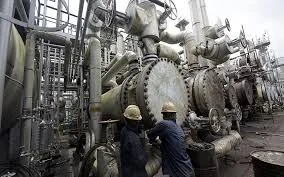
    Warri Refinery

    The death of our refineries is not a stand-alone story. It came with other implicit costs. The resources used to train professionals including engineers were at a loss to the Nigerian state. Some have gone to their graves with skills that never benefitted the country. Others have moved on to other refineries or related corporations or to private and personal endeavours. This will be looking at the big picture. There are other smaller but devastating and crushing losses. When you aggregate these so-called smaller losses in Nigeria’s economy which is about 70% informal, they would amount to so much. We will retell a story told by a national newspaper in the course of investigating the moribund refineries last month. “This place [Kaduna refinery] used to be alive. You would see flames from the furnace, hear the noise of work going on. Now, nothing. They kept saying ‘maintenance’ but we have heard the same story for years with no end in sight”, said Paulina, a bar attendant in Kapam, a community bordering the refinery. Aisha Mohammed was another resident. She reportedly said, “Even if the refinery starts operation at 60%, that will be good. Last time, they promised similar targets, we saw flames, then silence. We are tired of promises”. The closure of one refinery translates to the closures of tens or even hundreds of small scale businesses and services providers operating in the vicinity. Jobs and livelihoods suffer. Families become poorer. Out of school children increase. Young girls drift into prostitution. Idle youngsters become drug users. Crime spikes. Security agencies are stretched. Sadly, our rulers do not, or they willfully refuse to see the big picture. And we suffer.

    ASUU is Different

    On the reverse side, we are about to experience yet another strike by the academic staff union of public universities in Nigeria (ASUU). The extant regime and its predecessors have neglected to implement agreements reached with the lecturers since 2009 or thereabouts. In fact, this administration recently denied the existence of the 2009 agreement. And then quickly recanted. But unlike the refinery workers, the government will soon announce the policy of ‘no work no pay’. And then proceed to implement it. The regime did so not too long ago. The quick resort to no work no pay’ as it concerns university teachers speaks to the store our rulers set on education. That’s why our country is where it is – a bad place.

    UGO ONUOHA, Veteran Journalist, was the Managing Director/Editor-in-Chief, Champion Newspapers Limited

  • Echoes of ‘Iya Shukudi’ in Trade Fair demolitions

    Echoes of ‘Iya Shukudi’ in Trade Fair demolitions

    By

    UGO ONUOHA

     MANY issues have been playing out in Lagos state between the government and residents, especially with those of Igbo extraction. There appears to be no love lost. It has been a cat and mouse relationship since after the February 2023 presidential election in which Labour Party candidate, Peter Obi [an Igbo], defeated a ‘son of the soil’ Bola Ahmed Tinubu, candidate of the ruling All Progressives Congress [APC] political party. The defeat of the Jagaban, who was a governor of the state between 1999 and 2007, was deemed an insult, an assault, and a sacrilege. It came as a shock of ‘tsunamic’ proportion because Tinubu, now president of Nigeria, was regarded as the builder and owner of Lagos, a claim that is blatantly untrue. He was regarded as a wily politician and a political strategist like no other. For once he was outed as a giant with clay feet.

    Since after his governorship, nobody became anything in the state at least, politically without his express approval, anointing, and support. And this includes each and everyone of his successors since 2007. You cannot even aspire to become a local government councillor unless you belong to the camp of ‘Baba sope’. Any beneficiary of Tinubu’s approval who allowed themselves to be suspected of disloyalty or harboured anything short of absolute fealty to the ruler was frozen out, and sent to the Siberia of Lagos. If in doubt, ask the one term governor of the state, Akinwumi Ambode. That the indigenes and residents of Lagos thought he did a good job in his first term was of no consequence. His performance did not guarantee him a second term. He was ousted at the party primary level. It now appears that his rehabilitation is on the horizon after six years and counting of being in the cold. Tinubu is the only governor of the ‘Class of 1999’ in Nigeria who allegedly successfully privatised a state, stork and barrel, for about two decades and counting. So the result of the 2023 presidential election was an aberration and a shock. The political bookmakers did not reckon with that outcome in their widest imagination. It was claimed that the margin of his loss in the informal and unannounced vote tally was staggering. And a huge price must be extracted from any persons or group suspected to have a hand in that humiliating defeat.

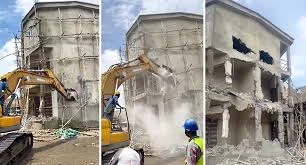
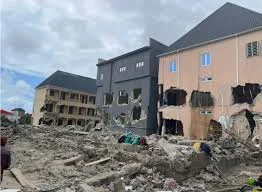
    Some of the demolished properties belonging to Igbo Business people at the FG-owned Lagos Trade Fair Complex

    The Igbo of Lagos were not just merely suspected of voting to defeat the owner of Lagos. Without evidence they were quickly branded as the original sinners, and as harbouring designs to seize the governorship of the state from the indigenes, the economic heartbeat of the Yoruba nation. So, the reprisal was swift and scorching. No Igbo in the state would be allowed to vote in the March 2023 governorship poll unless the enforcers headed by a rich [wealth extracted through extortion and violence], illiterate motor park lout were fully convinced that the Igbo voter would cast their ballot in favour of the ruling party [APC] candidate, Babajide Sanwo-Olu. Videos from some enforcers including that from the popular or notorious motor park henchman in Lagos made the rounds. They warned Igbo voters not to come near the precincts of the voting stations unless they committed to voting for the ruling party candidate, and to show evidence that they did so. It was immaterial that it was unlawful to show who you voted for. Many were restrained from casting their ballots in that election including some Yoruba persons and non-Igbo residents of the state. Their crime: they were judged to resemble Igbo. Those who resisted the enforcers and insisted on voting were viciously attacked, bloodied and left for dead. M.C Oluomo who was the head of the enforcers of no voting for the Igbo of Lagos enjoyed, still enjoys, police escorts. And official protection. His godfather now lives in the Rock.

    RELATED STORIES:

    The police said Oluomo’s threat to the Igbo was a joke and completely harmless. He followed up the get out of jail template with a choreographed video which showed that his jocular banters with ‘Iya Shukudi’ [Yoruba for Igbo’s Chukwudi’s mother], his alleged long time friend and neighbour, was misconstrued as a threat to the Igbo voters in Lagos. But nobody was fooled. Oluomo has since relocated to Abuja to head the national body of road transport workers union, about the same time that Tinubu assumed the presidency, also in Abuja. Oluomo’s relocation and promotion could be a reward for a job well done. Another person who was alleged to play a role in the fall of Tinubu in Lagos in 2023 was his party man and the governor of the state, Sanwo-Olu. It took time to ‘unmask’ his role though there was no supporting evidence placed in the public domain. In ‘Baba sope’s’ camp mere suspicion is enough evidence. The governor was hounded and publicly humiliated. He was ridiculed and castrated. Obviously, with backing from a higher authority, the speaker of the Lagos state house of assembly was empowered to demean and disgrace the governor. He was reportedly at the brink of impeachment. His alleged manoeuvre to remove the speaker was bursted. Indeed, the governor was forced to swallow his own vomit. Respite came when he managed to find sympathizers who agreed to accompany him to Abuja to pay obeisance to their god. Even the allegations of his using a female socialite, whose birthday party he was said to have sneaked out of state to attend in one exotic island in a far-flung part of the world, to launder money has gone cold.

    The deity that they worship does not stop demanding for blood sacrifices. That probably explains the governor’s overzealousness in doing-in the Igbo to satisfy his master. And one certain way to get at the Igbo is to destroy their businesses and threaten their livelihoods. In this regard the Lagos state government under Sanwo-Olu appears to be in overdrive. And demolitions of properties owned by the Igbo, and the closures of markets where they are dominant players on flimsy excuses, have become routine avenues for retributions. It will be wrong and uncharitable to claim that the state government ignores its rules and laws in every and all enforcements. No. The point is that the state government now seems disposed, determined, and eager in using a sledgehammer for even minor physical development or sanitary infractions that could otherwise be resolved through dialogues and negotiations. This appears to be the situation with the recent Trade Fair demolitions of fully built up market plazas and complexes by the enforcement team of the physical development agency.

    Any one who watched the Lagos state commissioner for physical planning on national television struggling and stuttering to justify and rationalise the demolitions in the Trade Fair complex would readily realise that the state’s action was not unimpeachable. It was difficult for any neutral person, [which I may not be given the sound and feel of my name], to believe that the enforcement was driven exclusively by legalities or illegalities. But I am persuaded that the demolitions were propelled by sentiments far beyond the Lagos state government, and a section of the Yoruba deep resentment of the Igbo. Envy and pervasive fear of the Igbo also play a part. But the main reason could be Sanwo-Olu working hard to return fully to the good graces of his god in Abuja by crippling the economy of the Igbo ahead of the 2027 presidential election. Was it a coincidence that the demolitions happened at the same time that the successor of MC Oluomo, one Sego, declared with what sounEchoes of ‘Iya Shukudi’ in Trade Fair demolitionsded like oracular finality that Lagos state and APC are one and the same. And that anybody who nursed the idea of not voting for Tinubu, and for APC up and down the ballot in 2027, should know that they are dead men walking. Sego was reported to have been invited by the secret police [self-styled directorate of state services for questioning. But he ended up with a slap on the wrist.  So it’s actually all about hate, fear, envy, and 2027. The Igbo are like the phoenix. And haters will have to contend with that.

    UGO ONUOHA, Veteran Journalist, was the Managing Director/Editor-in-Chief, Champion Newspapers Limited

  • October 1st, an anniversary, and a country’s blues

    October 1st, an anniversary, and a country’s blues

    If we are a serious people we should be looking back in anger as we celebrate the 65th anniversary of our country tomorrow. We have failed ourselves. We have failed Africa. And we have let down black people all over the world. The countries we started off with [indeed we were in front of some of them] have since left us behind. Nature endowed our country with so much natural resources to make it belong to the First World, but we have consistently given ourselves ruinous rulers whenever we have the opportunity to do so.”

    MOCKERY! This word probably best captures the slogan for the 65th anniversary of the independence of our country. The federal government unveiled the, what might as well be a tongue-in-cheek slogan, when it revealed the activities that will precede the anniversary celebrations of the country tomorrow. Nigeria gained political independence on October 1,1960, amidst funfare and much expectations from Africa and the Black World. The theme for the anniversary which will culminate tomorrow is “Nigeria @65: All Hands on Deck for a Greater Nation”. The theme is ostensibly designed to emphasize the critical place of unity, collaboration, and patriotism ‘among government institutions, the private sector, civil society, and citizens in building a nation of peace, prosperity, and progress”.

    As enunciated by the government the theme underscores the need for collective effort to consolidate past achievements and pursue greater national aspirations ‘under the Renewed Hope Agenda’. That’s where the ‘innovation’ ends. The other contents of the anniversary package are normal, routine and run-of-the-mill. They included Juma’at prayer on Friday, September 26, at 1:00p.m.; Inter-Denominational Church Service, on Sunday, September 28, at 10a.m.; and a World Press Conference, on Monday, September 29, at 10 a.m. During the rituals, and after them, our country will continue or return to its normal routine of bloodletting, grinding poverty, indifference of the ruling elite to the plight of citizens, insecurity, banditry, out of school children, increasing number of internally displaced persons [IDPs] in a country that’s not officially at war, renewed hopelessness, despondency, ‘japa’ syndrome [of youngsters and even adults] voting with their feet by fleeing the country in droves, profligacy of the rulers, arrested development, among other vices.

    Many previous rulers of our country, military and civilians, have been myopic, nepotistic, and suffered from tunnel vision. But the last 10 years of the rulership of the All Progressives Congress [APC] have stood out as signposts and symbols of everything that is designed to put pressure on the country’s fault lines. Former president, the late Maj.Gen. Muhammadu Buhari [2015-2023] was a threat to the cohesion and unity of this country in spite of his claims to the contrary. He had said with his own mouth in a foreign land that while he would be in charge as president, he would only take care of those who voted for him during the 2015 presidential election. That statement that divided the country into 97% positive voters, and 5% naysayers [ignore the percentages that did not add up] became the state policy. The atmosphere of the country was fouled and poisoned, but the consolation for the targeted victims of Buhari’s publicly stated meanness was that during his eight years the country experienced more of his non-presence [not necessarily absence], and  ‘non-governance’. They were eight years of waste that dragged Nigeria backwards by, at least, one generation. During a media chat in December 2015 [the only one in his eight-year underwhelming reign], Buhari berated a section of the country, asking angrily and dismissively “what do the Igbo[s] want”? That was his reaction to a question about youth restiveness in the south east who were demanding for a referendum to settle the issue of the Igbo nation continuing to remain part of Nigeria. Buhari did not fail to tell the global audience of the prime time TV programme that he was part of the marauding soldiers during the civil war [1967-1970] who killed the restive youths’ fathers, their unarmed mothers, and siblings irrespective of whether they were combatants or not. Down the line during his reign, he derisively and derogatively referred to the Igbo nation as a dot in a circle. At no time did the accursed ruler describe any other nation within Nigeria in such demeaning, dismissive and insensitive terms. Buhari’s era may have been marked by ‘ungovernance’, but he left behind a legacy of hate and disunity.

    If some Nigerians thought that Buhari will be the end of a president stoking hate and division, then they did not reckon with the coming of his successor, Alhaji Bola Ahmed Tinubu, also of the APC. Even before he acceded to office and power, he had publicly declared that the presidency was his, and Yoruba’s. Embedded in his ‘emi lo kan’ slogan were selfishness, nepotism, corruption, division, disunity, among other vices. And he is living up to it. His appointments into critical and sensitive public offices are skewed to the extent that they make Buhari look like an apprentice and a saint. To be fair to him, his appointments have, unlike Buhari’s, not been promoting a sectarian agenda. But it may be worse in its appearance of innocence. His appointments create the impression of building a cult and rewarding fealty to a cult leader. That could prove more dangerous and unsettling for this country at critical times. Tinubu is not restrained in putting his name or allowing his acolytes to affix his name on public buildings, institutions, and infrastructure, none of which he built in the two years of his four-year tenure. His appointment of the Yoruba into offices is virtually restricted to Lagos state where he was a governor from 1999-2007. And almost all the beneficiaries are from amongst his boys who worked for him as governor. Of course, there had been some outcasts from that cohort. They are frozen out. Lamentations have been rife in the two years of Tinubu so far including from his own Yoruba nation.

    Buhari made sure he mocked Nigerians during his campaign for reelection in 2018/2019 with his campaign slogan of ‘NextLevel’ which was plagiarized anyway. Now Tinubu is following suit by mocking Nigerians with the theme of the country’s 65th anniversary activities. If he did not intend to be cynical, how do you proclaim ‘All Hands on Deck for a Greater Nation’ while your actions promote the exclusion of swaths of the Nigerian society? There are many instances of Tinubu’s action being at variance with his calls for all hands to be on deck to build a greater country. Let’s illustrate with one. There has not been any national census in this country for about 20 years. The prescription is that a head count should happen in a country every ten years. Nigeria has not had any since the controversial and disputed census of 2006. The bungling and failed regime of Buhari pretended it would conduct one. It didn’t. And it couldn’t have. If it tried, the outcome would have been a disaster. Just as his regime was.Now Tinubu’s regime is preparing for a national head count. I wager that it also will not be able to deliver a credible census before his tenure expires in 2027. By the way, he has put his thumb on the scale, so whatever census he conducts with the present structure and personnel will be controversial and the results will be vigorously and justifiably disputed.

    Nigeria has 36 states and the federal capital territory. For the most part the country operates on the basis of an informal six geopolitical zones-the south east, south west, south south [in the southern part of the country], and the north east, north west, and the north central [in the northern part of the country]. These geopolitical zones are thin on law but strong on convention. As may be necessary, the zones form the basis for appointments and allocation of resources from the central government when states cannot be used. For instance, each geopolitical zone has a regional development commission created, staffed, and funded by the federal government in Abuja. Each of the commission is backed by an Act of the National Assembly [NASS]. However, many months ago this regime constituted a body of supreme overseers for the census it said it was planning to conduct. And the regime showed its hands. It was so glaring that even the blind will see the machinations and devious plots for the census. Members of the High Level Committee on National Population and Housing Census were drawn from three of the country’s six geopolitical zones. Even that does not tell the whole story. The Committee has three members from the North and five members from the south. Still the story is incomplete and the figures misleading. In the north only two geopolitical zones were represented- the north west and the north central. The north east, the zone of the Vice President, Alhaji Mohammed Kashim Shettima, was omitted. The real story is in the membership of the Committee from the south of the country. All five members are from the south west, the region of the president of Nigeria, Alhaji Tinubu. South east was not represented. South South was excluded. If this imbalance is not a basis to challenge the census and dispute the results, then what is? In many countries census results form a strong basis for resource allocations. It’s no less so in our country. How then do you justify the exclusion of critical segments of the country from membership of the High Level Committee which will superintend the population and housing census? But the exclusion of some stakeholders has become the standard fare of this country.

    If we are a serious people we should be looking back in anger as we celebrate the 65th anniversary of our country tomorrow. We have failed ourselves. We have failed Africa. And we have let down black people all over the world. The countries we started off with [indeed we were in front of some of them] have since left us behind. Nature endowed our country with so much natural resources to make it belong to the First World, but we have consistently given ourselves ruinous rulers whenever we have the opportunity to do so. We can console ourselves that we did not give ourselves successive military juntas from the 1960s to the 1990s, but that will be no valid excuse for allowing the ruination of Nigeria. In some other countries, citizens are known to have chased away bad military rulers. For elected leaders, except for once, we have also shown ourselves incapable of removing rulers who failed in their first term but chose to cling on to power by manipulating the ballot. May it never be that we will keep looking into the future in forlorn Hope.

  • National oil assets: are the buccaneers coming? [2]

    National oil assets: are the buccaneers coming? [2]

    By UGO ONUOHA

    Federal Government led by the ministry of petroleum incorporated [MOPI] and the ministry of finance incorporated [MOFI], have planned to sell significant portions of Nigeria’s equity in some of our best-performing oil and gas joint ventures”.

    Some commentators have since alleged that this set of our rulers behaves like “usu biara orji ntagbu”, Igbo for ravaging and destructive locusts and cankerworm. They claimed that by the time this journey is over, whenever that will be, the country will be empty and comprehensively hollowed out. The carnage could turn out to be numbing and crippling. By the way, locusts are known to be destructive given their voracious appetite for food. They, like our rulers, are at their worst when they exhibit swarming behaviour under certain conditions. Also like Nigerian politicians, locusts can and do devastate farms and cause significant economic damage wherever and whenever they invade any territory. Desert locusts are reported to be some of the most destructive species. And they are mostly found in Africa. Politicians are some of the worst species in many countries. The worst of the worst are mostly found in Africa with Nigeria competing strongly for the number one position. There are some other interesting bits about locusts that parallel Nigerian politicians. Each locust can eat its weight in plants daily. A typical Nigerian ruler can steal more than he needs in 10 lifetimes. Locust swarms can consume vast amounts of food to rival the daily consumption of residents of well populated cities. The same can be said of the amazing capacity of our rulers to steal from the commonwealth, even money that would confound their successors up to the fourth generation.

    It was not long ago that Nigeria’s president, Alhaji Bola Ahmed Tinubu, reminded us that the problems we are contending with currently, over which he has been exerting so much energy and sleepless nights to reverse, were because his predecessors were nonchalant in their governance style which failed to provide for the upcoming generations. In other words, the earlier rulers spared no thoughts for future generations of Nigerians. The irony was that at the time that Tinubu was grandstanding and waxing philosophical, his regime was busy borrowing and accumulating foreign and domestic debts for the next generations he claimed to be concerned about to repay. For the discerning, the president was engaged in theatre. It was a performance for his choristers, and the unwary. And the background music was the ubiquitous…’On your mandate…’ which is now strongly competing to dislodge the national anthem at events organised by the national assembly, and the ruling All Progressives Congress [APC] political party. At some formal sessions and sittings of the national assembly, including during budget presentations by the president, the partisan ‘On your mandate…’ dwarfs and takes precedent over the national anthem. This speaks to the state of the fears of some people about state capture by this regime.

    Apart from propaganda and the desperate search for wins where there are no wins, the current APC regime is notorious for borrowing and taxation. It has made deceit an artform, and a governance imperative. For them there will always be a lie as a solution to every problem. To tax or borrow and spend on productive ventures can be excused. But to tax and borrow, and then leave Nigerians wondering what happened to the revenues is numbing. It is also troubling to tax and borrow to fund the lavish lifestyles of our rulers, and the profligacy of the regime. Our rulers cannot in good conscience, that’s if they have conscience, ask us to tighten our belts whilst they’re loosening theirs. That’s wicked. That’s evil. That’s unconscionable. Sadly, that’s what is happening now.

    And like buccaneers our rulers are now reported to be training their eyes on our national oil assets. The goal is essentially two folds- increase the revenue accruing to the regime, and asset stripping for the benefit of regime honchos, their collaborators and business partners. The plot is laid out, starting with the amendment of the Petroleum Industry Act [PIA]. The amendment is given since we have a pliable national assembly which has elected to be a parastatal under the presidency. The curated and carefully selected leadership of the national assembly said from the onset that the primary reason for their existence is to accede, without question, to ALL the demands of the president and his executive council. What this means in effect is that looming vandalisation of our national oil assets is a fait accompli unless Nigerians rise to the challenge to say enough is enough. The designs on the oil assets are clear, and coming into the public domain. But that an alarm has been blown on the scheme by industry operators and sundry watchers does not seem to deter the government.

    Instead the regime has started preparing the grounds by falsely claiming that $18billion has been secured through some of its reforms in sectors of the oil and gas industry. “Nigeria secures $18bn in oil and gas investment commitments” was one of the headlines that trended last week. To be sure, ‘commitments’ are not contracts”. As someone wrote, “in the oil and gas sector, they [commitments] often amount to handshake promises, useful for optics [and photo opportunities], but rarely backed by enforceable timelines, financing structures, or regulatory clarity. Without transparency, execution plans, and measurable milestones, such announcements risk becoming political theatre rather than economic transformation. Nigeria deserves more than ceremonial pledges. We need bankable deals, local capacity building, and a clear path to energy security”. The danger is that the planned alteration of the PIA and the expected accompanying assets stripping, and the ceding of portions of our oil commonwealth to self and acolytes and business partners will not ensure and assure “a clear path to energy security” for our country.

    Elsewhere, a commentator who identified as Umar Sani, likened the speculated proposed sale of public investments in some oil assets, and the amendment of the PIA, to winding down [liquidation] of a corporation but in this case the country. His could be an extreme position probably borne out of deep concern over the frightening dimensions of the proposals allegedly by this administration. With this regime and given its insatiable appetite, lust and hankering for money, and more money for hedonistic and less than altruistic purposes, the planned spinning off of the country’s productive, profitable and strategic investments in the oil and gas industry to benefit individuals and private corporations should not be treated as red herring. The trending exposé in the media, even if by unknown author[s], was imbued with the knowledge and expertise of insiders.

    The whistleblowers made their presentations in two parts- asset stripping, and sudden alteration of the PIA. They voiced their opposition to the two plots and urged Nigerians to take a stand because of the feared dire consequences of letting the plot succeed. The first issue they raised was the ‘Planned sale of Federation’s equity in the Upstream oil and gas JVs [Joint Ventures]’, and the ‘Proposed amendment of the Petroleum Industry Act [PIA]’. They described their action as “a call to defend Nigeria’s future and economic security”. They said: (The) “Federal Government led by the ministry of petroleum incorporated [MOPI] and the ministry of finance incorporated [MOFI], have planned to sell significant portions of Nigeria’s equity in some of our best-performing oil and gas joint ventures”. They proceeded to name the JVs in which the Federation’s equity is being sold to private individuals, the prospective beneficiaries, and the percentages involved. Some of the JVs slated for divestments are Renaissance Africa Energy Company [RAEC JV] where 25% of the current 55% held in trust by the NNPCL for the Federation will be sold to an Indian oil firm, Sterling; 25% of the 60% in Oando JV will be spinned off and then sold to Oando Oil Company led by Wale Tinubu. Nigeria’s president is Bola Tinubu. If the sale is effected the Federation will be left with 35% equity in Oando; the Federation holds 60% equity in Seplat Energy Producing Nigeria Unlimited JV. The plan is to sell 35% to an unnamed company which is alleged to be in the orbit of Chagoury & Chagoury, a well known long-standing business partner of Tinubu, Nigeria’s president.

    The whistleblowers contended that the planned divestments will lead to loss of control of strategic national assets. They argued that “handing over control of these JVs to a few individuals [will] take away [the] sovereign ability of the Nigerian state to control its national economic affairs”, and could lead to economic shocks that could threaten the stability of the country. It is also their contention that the sales of the JV assets to a few “well-connected private individuals” will be at great expense to Nigeria’s energy security. “… (T)he revenue coming from these JVs are among the country’s most reliable source of revenue and foreign exchange. Shrinking the Federation’s stake in the JV means shrinking of the Federation’s revenue and Forex inflow. This is simply selling away Nigeria’s assets that have sustained the Nigerian nation since the discovery of crude oil in Nigeria “. They also warned that the planned divestments will be a threat to jobs, discourage skills transfer, blunt vendor opportunities, and make host-community obligations moot. The whistleblowers further argued that selling the identified critical and profitable national oil assets will endanger existing potential employment opportunities. “This is because reduced equity means a weaker say on field development [and] local content targets. This is tantamount to taking Nigerians’ power to manage their resources from them. Once the crown jewels are sold, they are difficult and costly to recover. This will then set a precedent for further disposals and it will greatly undermine intergenerational equity in the management of our natural resources. These assets belong to Nigerians. They must not be traded away behind closed doors for the benefit of a few”.

    The whistleblowers also canvassed against altering the PIA, claiming that the move will work against the interest of Nigerians. “The amendment is planned with personal interest and so it will destroy [the] stability of the [oil and gas] industry and discourage investment. The amendment is designed to hand over the nation’s oil and gas resources in deep water to a…few rich private individuals who are within the corridors of power”. The whistleblowers signed off as a Committee of Patriotic Forces. The gravity of the issues raised above by this so-called Committee of Patriotic Forces notwithstanding, it must be noted that the oil and gas industry is a shark-infested terrain. That business is ‘ike keta orie’ or might is right or the survival of the fittest. It’s not for the faint-hearted. It is a business for the financially well-heeled and politically well-connected. In effect the alarm raised by this Committee could be due to patriotism, but it could also be sour grapes and false alarms by losers in the bazaar of auctioning our collective oil assets by the privileged few for their own personal and selfish purposes. But whichever it is, the government has a bounden duty to lift the veil on the status of the country’s oil assets and provide clarity on its policy concerning this sector of the oil and gas industry. On this allegation, silence cannot be golden.

    UGO ONUOHA, Veteran Journalist, was the Managing Director and Editor-in-Chief, Champion Newspapers Limited