Author: Ugo Onuoha

  • National oil assets: are the buccaneers coming?

    National oil assets: are the buccaneers coming?

    By

    UGO ONUOHA

    THE prospects are frightening if the early indications are true that the Presidency is primed to turn its attention to Nigeria’s national oil assets as part of its drive for increased revenue. The tentative framework of the plot of the regime which is currently being debated in not too hushed tones among industry players should be of concern to all Nigerians. Unless something gives, and quickly too, the possible wasting, I am loath to say plundering, of a critical section of that industry could be likened to the infamous and historic activities elsewhere in the world of pirates in the 17th and 18th centuries. But there’s a difference here. The buccaneers and pirates of the gone by centuries virtually personally sent themselves on missions to the high seas to plunder. But in this case, those who may be mandated to sell off Nigeria’s oil assets may claim, and perhaps rightly so, that they are fulfilling their campaign promises of 2023. They could hide under the cover of being promise keepers.

    It might be helpful to recount how some pirates operated in the past centuries without suggesting that our present crop of rulers also operate in the same way. Today’s pirates in the oceans operate in about the same manner but not necessarily with equal brazenness, temerity, and blood-cuddling brutality. An online entry recorded that “buccaneers were pirates or privateers who operated in the Caribbean Sea during the 17th and 18th centuries. They were known for their bravery, cunning, and sometimes brutal tactics”. It’s ironic that our current rulers are famous or notorious, depending on which side you are standing, for their courage, for instance, in their sudden decision to remove subsidy on petrol, and generally on energy, and their bravery in massively devaluing the national currency, the Naira, all in one fell swoop. And all within two months of assumption of office in 2023.

    Continuing, the online record identified some famous buccaneers to include a Welshman, Henry Morgan, who raided Spanish colonies and ships in the Caribbean; an English pirate who was simply known as Blackbeard. He was said to have blockaded the port of Charleston, South Carolina, in the United States of America. He derived his name from his long black beard, and he was fearless in battle. Calico Jack Rackham was yet another English pirate who also operated in the Caribbean. He was famous for having two fearsome female crew members as accomplices, Anne Bonny and Mary Read, who disguised themselves as men to join in the art of plundering merchant ships and sundry seafarers.

    When it comes to money this regime is insatiable. It frequently issues both Naira and Dollar-denominated bonds and treasury bills. It offers, sometimes unreasonable interest rates, which accounts for the rush to buy by foreign portfolio investors [hot money mongers], creating the illusion of increased foreign Investments.

    For good or for bad, “buccaneers played a significant role in shaping the history of piracy and the Caribbean region”, the online report stated. Their exploits captured the imagination of peoples around the world, and inspired “countless books, movies, and other works of fiction”. In like manner, the bravery and the courage as well as the punishing economic reform agenda of our country’s extant regime has captured the imagination of the citizens. And also dazed them probably to stupor. And surrender. As we stated earlier, the buccaneers of old were unelected and so their actions could be deemed to be illegal and criminal. But our rulers can lay claim to legitimacy on account of the fact that the law declared that they were lawfully elected to their present political offices. So their actions in the wake of their mandate could also be described not to be criminal. Nor illegal.

    Meanwhile, we still have about four months until the commencement of the recently comprehensively reviewed tax laws, but some of its provisions have set off alarm bells nationwide. Individuals are apprehensive, fearing that the provisions will make them poorer in spite of the assurances to the contrary by the clearly malicious contrarian postulations of the government. Some industry operators are grumbling loudly that their operations would be negatively d by the proposed reintroduction of hitherto suspended taxes in the new dispensation. The aviation sector is one such example of players who fear the worst of the looming tax dispensation. Thus far the administration appears unperturbed. All it sees are multiple streams of revenues for its own purposes which includes a proclivity to profligacy. It is behaving like a carpenter armed with a hammer and a nail who regards everything in front of him as wood.

    There’s no doubt that the primary motivation for the removal of petrol subsidy on May 29, 2023, was to gather more money into the coffers of the federal government. The same accounted for the devaluation of the Naira about the same time. There appears to be no other substantive reason for the ongoing quest for cost-reflective pricing of other areas of energy [electricity inclusive]. The tragedy, so far, is that the increased revenues have not positively impacted the lives of the people. The tiers of government have experienced increased revenue, though it could actually be an illusion of money, but the poverty afflicting our citizens is not abating. Last year or so, the National Bureau of Statistics (NBS) said that over 133 million Nigerians suffer from multidimensional poverty. And a little over one month ago, a ranking federal government official said publicly that about 180 million Nigerians were not sure where their next meal would come from. There’s a likelihood that the number has risen. Is it not instructive that in the many recent claims of economic wins, this administration has never mentioned that it has lifted any Nigerian out of poverty in the more than two years it has been in office. For a country such as ours, which has consecutively been the poverty capital of the world since 2019, lifting citizens out of poverty should be a standard measure for the success or otherwise of economic policies.
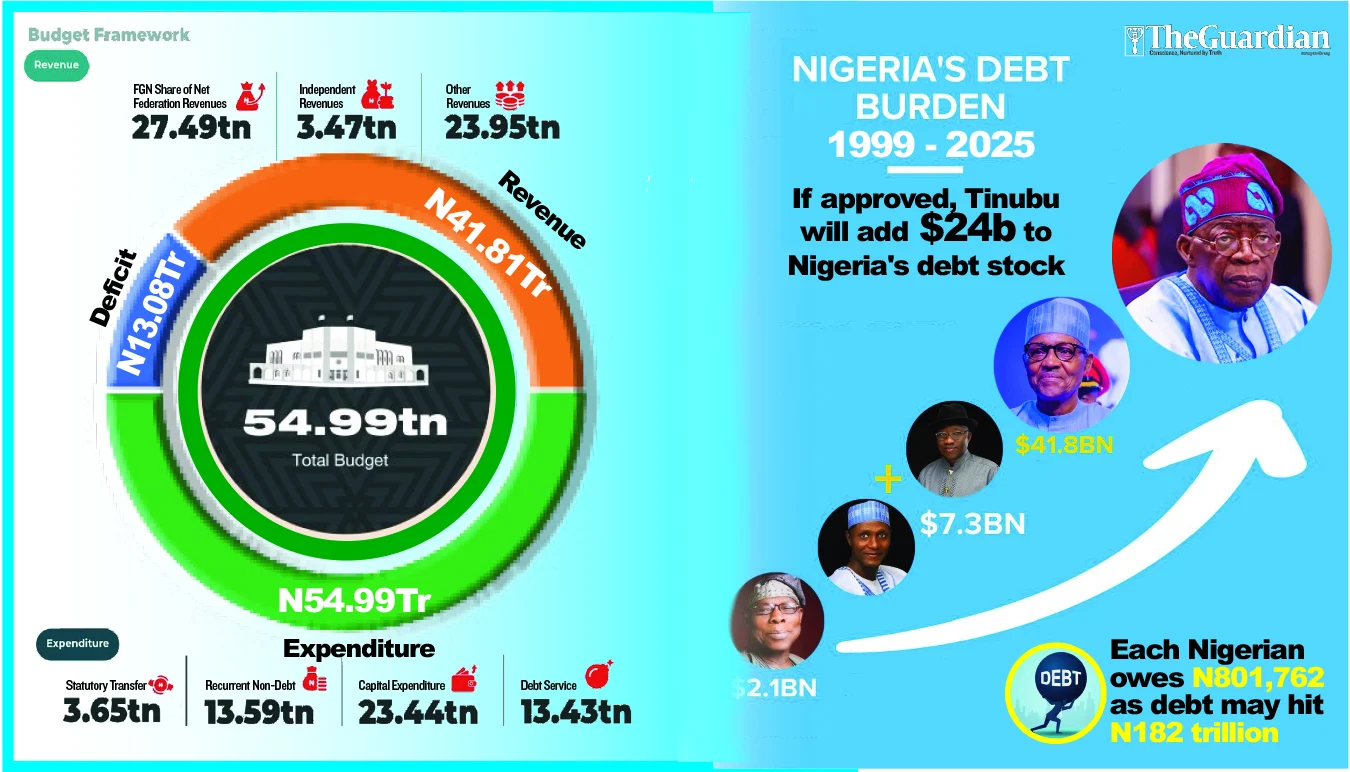
    Nigeria’s Debt Burden

    When it comes to money this regime is insatiable. It frequently issues both Naira and Dollar-denominated bonds and treasury bills. It offers, sometimes unreasonable interest rates, which accounts for the rush to buy by foreign portfolio investors [hot money mongers], creating the illusion of increased foreign Investments. The regime knows that in contrast to foreign direct investment [FDI], portfolio investors are largely unreliable and could prove to be elevated risks to the stability of the economy. They could bail out through massive sell off at the drop of a hat. History is replete with the experiences of economies such as Nigeria’s that had been adversely hit by portfolio investors who cut and run at the first sign of trouble. They have their usefulness but they are a clear and present danger to our economy today. In spite of claims by our current managers of our national economy that we are turning the bend, FDI has remained elusive and seemingly unattainable. To be sure, FDI crashed by a whopping 70% in the first quarter of 2025 when compared with the last quarter of 2024. What this also means is that the prevailing stability in the value of the Naira against other currencies is at best tenuous, fragile, and uncertain.

    Tajudeen Abbas is the Speaker of the House of Representatives. He is a member of the ruling All Progressives Congress [APC] political party. He represents Zaria constituency of Kaduna state. Last week he spoke on the frightening status of the country’s external indebtedness, in the wake of the ongoing borrowings. Within 24 hours he recanted. He must have been reminded that he was chewing more than he can swallow by indicting his real employer, the man in the Villa. In the nature of our democracy, any man or woman who holds any elected office of significance does so because of, and at the pleasure of, the president. But since Abbas spoke the truth based on documents in the public domain, we will use the alarm he mistakenly triggered to justify this government’s insatiable appetite for loans and mindless borrowings.
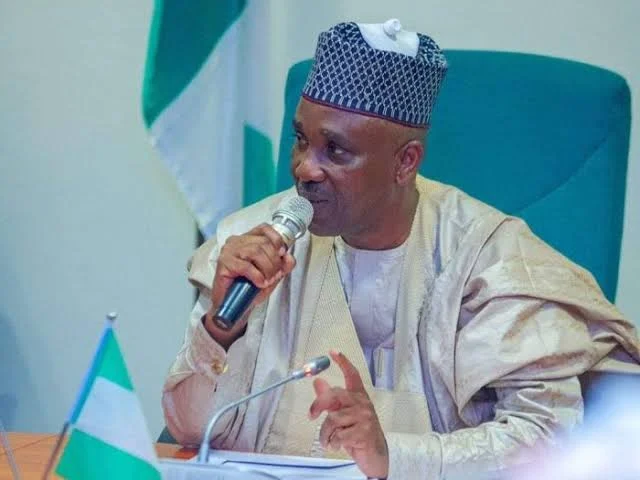
    Tajudeen Abbass

    On the debt question Speaker Abbas said categorically that the government in which he is a ranking member has broken the law. The law stipulated that the debt-to-GDP ratio should not exceed 40%. It currently stands at 52%. And it is projected to climb to 60% by next year. As at the first quarter of this year, the country’s total public debt was approximately N149.39 trillion which was the equivalent of $97 billion. Before he backtracked on his position on the ballooning debt which is a threat to fiscal sustainability, Abbas had emphasized the urgent need for stronger oversight [supposedly by the national assembly], transparent borrowing practices, and then ensuring tangible and verifiable economic and social returns on borrowed funds. It will be fair to say that if the returns have been obvious, Abbas would not have alluded to them.

    . To be concluded next week with a foray into the prospective designs of this regime on our national oil assets, and why Nigerians should be worried, not just concerned.

    UGO ONUOHA, Veteran Journalist, was the Managing Director/Editor-in-Chief, Champion newspapers Limited.

  • People, privations and public policy priorities [5]

    People, privations and public policy priorities [5]

    By

    UGO ONUOHA

    CALAMITY of unimaginable proportion will befall this already fragile country if the economic reform programme of Nigeria’s president, Alhaji Bola Ahmed Tinubu, fails. And the prognosis for its success is not looking good. Tinubu’s SAP 2.0 is almost a wholesale clone of Ibrahim Babangida’s SAP 1.0 of about 40 years ago. That endeavour failed. There’s nothing yet to suggest that its successor will succeed. Though Babangida was a military ruler, his own SAP and its implementation had a human face and a humane touch.Tinubu’s SAP 2.0 is different. Its prescriptions are wide ranging and their implementation ostensibly designed to punish and pauperise and crush Nigerians. Last week, we said that in the concluding part of our intervention today, we will analyse how the country’s “burgeoning [external] debt, lingering cost of living crisis, currency devaluation, increasing despondency and hopelessness among Nigerians, diminishing faith in democracy, general distrust and mistrust of politicians, among others, will most likely constitute strong, even fierce, headwinds to the ongoing economic agenda [of Nigeria’s president, Alhaji Bola Ahmed] Tinubu”. So we will strive to drill them down and examine how a few of these issues could constitute a drag in the quest for economic recovery. We will start with the continuing devaluation of the Naira. Fortunately for us someone has done a historical story on the trajectory of the devaluation of the currency over the decades.

    About three months ago, one Winifred Amase traced the purchasing power of the Naira over the years, using N100 to illustrate. She wrote on the platform of Voronoi, an organisation that asserts that it visualises data to provide “answers to the world’s questions”. Voronoi’s infographic and historical narration on The Price of 100 Naira over the decades was published on May 26, 2025, the eve of the second anniversary of the rule of Tinubu. Under the headline: ‘Once, N100 Had Serious Buying Power’, Voronoi claimed that “In 1973, N100 could buy 20 bags of rice”. It’s important to remind ourselves that in the 1960s, ‘70s, and even the ‘80s, rice was not our staple food. In the 1960s and the 1970s rice was meal for the elite and the well heeled, and a Sunday Sunday delight for the rest in the cities. For the rural poor, and they are the overwhelming majority, rice was a rare meal reserved for festive seasons such as Christmas, New Year, Easter etc. Children and some adults eagerly looked forward to such occasions. Today, rice meal has been demystified, so much so, that it has become a routine, indeed a daily food stripped of its alluring trappings and garnishing.

    On the average, a 50kg bag of rice now costs about N80,000 in a country where the minimum wage is N70,000. But back to Voronoi’s jarring findings. The same N100 that could buy 20 bags of rice about 50 years ago can barely procure two pure water sachets. “As at January 2025”, Voronoi continues, “it’s [N100] value had dropped so significantly that it could only purchase two pure water sachets. [Pure water aka sachet water is drinking water packaged in heat-sealed sachets. It usually holds around 35cl of drinking water]. This infographic charts the decline in the purchasing power of N100 from 1960 to 2025 – highlighting over six decades of inflation and currency devaluation”. For context, it said that Algeria which gained its independence two years after Nigeria’s, had by 2024 “overtaken Nigeria as the third largest economy in Africa, with its economy maintaining a significantly stronger exchange rate in which 1 Algerian Dinar equals approximately 12 Naira”. Voronoi was mindful to state that Naira was introduced as Nigeria’s national currency in 1973.

    Another person also ran a commentary on the trajectory of the value of the Naira vis-a-vis the United States Dollars in the last 50 years and counting. The commentator said it was $1:N0.58k in 1973 when Gen. Yakubu Gowon was in office; $1:N0.63k in 1974; $1:N0.61k in 1975 under Gen. Murtala Muhammed; under Gen. Olusegun Obasanjo who succeeded the slain Muhammed in 1976, the exchange rate was $1:N0.62k and later during his tenure fell to N0.68k in 1978; in 1979 during the time of the first executive president of Nigeria, Alhaji Shehu Aliyu Shagari, the exchange rate was N0.59k to one United States Dollar. In 1983 during the first incarnation of the man who turned out to be the country’s affliction, one dollar exchanged for N0.72k and N0.76k in 1984: in 1985 with Gen. Ibrahim Babangida as military president, the rate was $1:N0.89kobo. That year was the end of the innocence of the Naira. By 1986 and with the introduction of SAP 1.0, the value of the Naira began the precipitous journey down the slippery slope against the Dollar and the other world currencies. It started from N2.2k to N9.91k in 1992.

    Then came Gen. Sani Abacha in 1993 and $1 exchanged for N21.90k and down to N84. 56k in 1997. At the demise of Abacha and Abdusalami Abubakar took over in 1998, the exchange rate was N84.70k:$1. Nigeria returned to democracy in 1999 with the election of Obasanjo as a civilian president. Here’s how the Naira value fared in the eight years of Obasanjo: 1999, $1:N90; 2000, $1:N105; 2001, $1:N106; 2002, $1:N113; 2003, $1:N127; 2004, $1:N130; 2005, N136; 2006, N131.80k. President Umaru Yar’Adua took office in 2007 with $1 exchanging for N125, but in 2008 a dollar exchanged for N120 in what appeared to be an arrest of the free fall of the Naira. But in 2009, the Naira dropped to N171 to the dollar. Under the presidency of Goodluck Jonathan in 2010 the exchange rate fell from N171 to N199 in 2014, the last full year of his presidency. Gen. Buhari became the elected president in 2015 and the rate fell to N300/$, and left office in 2023 with the rate at N460. Between 2023 and 2024, the first year of President Tinubu, the exchange rate of the Naira fell from N460 to N1,483 to one US dollar. Between 2024 and this year the exchange rate dropped to almost N2000 to the dollar, before currently ‘stabilising’ at about N1560/$. The Naira is currently confronted by the legendary propensity of this regime to lie. Last week, precisely on Wednesday, September 3, the president claimed that the Naira exchanged for N1,900/$1 when he assumed office on May 29, 2023. And that his regime had succeeded in bringing it to N1,450/$1. Both claims were lies. When he took office in 2023 after a controversial and disputed presidential election result, the exchange rate was N460/$1. When he spoke last week the rates in both the official and street markets were above N1,500/$1. And by the way, the projection at the onset of the devaluation gamble two years ago was that the Naira exchange rate against the USD would stabilise at N800/$1. Leading lights in the regime said as much, and their echo chambers in the global financial world affirmed the claim. Regime cheerleaders ran with the story. In local parlance, we ask people who are misguided ‘how (is) market?’ In like manner, regime acolytes claimed earlier this year that Tinubu inherited a broken economy from the late Muhammadu Buhari in 2023 with foreign reserves at $3.5billion. That also was an egregious lie. Though there were encumbrances which were not disclosed but the accretion into the foreign reserves was in excess of $35billion in 2023. No government that erects its phoney policies and phantom accomplishments on propaganda and outright falsehoods can endure. Such regime will ultimately unravel and collapse under the weight of its own contradictions.

    The standard argument has been that when a country devalues its currency, it automatically stimulates exports. The argument rests on the premise of one-size-fits-all. It’s bogus and specious. Nigeria has little or nothing apart from crude oil to export. And the determination of the price of a barrel of crude oil in the international market is not solely in the hands of our country. If indeed currency devaluation stirs exports, how come Nigeria’s export trade has remained the same or even stagnated in the past five decades that we have embarked on devaluation? The truth is that Nigeria’s successive rulers and the current one have treated devaluation as an end in itself. It’s not. It should not be. And it will never be. An unknown author recently submitted that “devaluation is not and cannot be an export engine in Nigeria or anywhere [for that matter]”. The person argues, and rightly so, that our rulers have been erecting devaluation on grossly faulty economic foundations. “For devaluation to make economic sense- reduce imports and increase exports- it must meet sufficient conditions. What are those conditions? Supply of exports must be price elastic. In most cases this does not happen in real life. In the case of Nigeria, we devalued Naira by about 200% and export earnings grew by less than 20%. Demand for imports must also be price elastic. No data in the public domain can support this. We continue to depend critically on imported rice and our largest refinery is importing crude! [oil feedstock]. Demand for imports must also be income inelastic”. The writer submits that “Despite worsening poverty in Nigeria occasioned by devaluation and another destructive domestic energy pricing policy, we are yet to see demand for imports of basic goods..reduce in the same proportion as the devaluation”. In addition, many of the non-oil products that we export are mostly non-processed. In other words, we export raw products and buy processed imports at more than five times the value of what we exported. Raw cocoa export and processed chocolate import is one ready example.

    Another headwind for SAP 2.0 is the rate at which the regime is accumulating external debts. The All Progressives Congress (APC) political party and the administrations it has birthed thus far have been borrowing and creating the impression that they are in a hurry to do so because borrowing will soon go out of fashion. It has been worse under Tinubu. The table of how this regime has piled debts upon debts is in the public domain. Our children, grandchildren, great grandchildren and generations down the line will be saddled with the repayment. It appears that our rulers are determined to eat the dinner of Nigeria’s children down to the fourth generation. The Debt Management Office (DMO) had once, when it was worth its name, warned that this country’s indebtedness to external lenders was becoming unsustainable. Other international institutions including some of those who lend to us have had cause to express anxiety over Nigeria’s increasing indebtedness.

    The federal government itself has projected that Nigeria’s debt-to-GDP ratio will hit 60% by next year. That should be a red flag for any conscious and conscientious ruling elite. What’s debt-to-GDP ratio and what are the implications when it is on the high side? Simply put, it is an economic metric that compares a country’s government debt to its gross domestic product [GDP]. It measures a country’s ability and capacity to pay back its debts based on its economic output. A low debt-to-GDP ratio will indicate that Nigeria’s economy produces sufficient goods and services to pay off debts without incurring further debt. On the reverse side, a high ratio would suggest potential difficulties in debt repayment. Any country which finds itself in this category will suffer from arrested economic growth and will face the heightened risk of default. On the debt-to-GDP issue Nigeria is not particularly in a good place. There could still be a wiggle room but if our rulers sustain the rate of borrowing, our debt-to-GDP ratio will climb beyond 70%. And the alarm bells will be triggered nationwide. Given our population the catastrophe could be more damning than the combined experiences of Zimbabwe, Argentina, Sri Lanka, Somalia, and Venezuela, and the reverberations in their respective subregions. West African countries will be overrun by fleeing Nigerians, and their economies will crash. Far flung countries will not be spared either. For too long Nigeria has been a hope deferred. But may it not get worse than that in spite of the current slogan of Renewed Hope. Anyway, the regime won’t care. It’s already primed for victory lap before the 2027 election irrespective of the material conditions of Nigerians. How do we know? From mounting brazen falsehoods from the administration – including that it has eradicated corruption within two years; that it has been fair to all regions in terms of federal investments in projects and financial allocations; that it inherited an exchange rate of N1,900/$1 in 2023 and had moved it to N1,450/$1 by August 2025; and, that insecurity has been tamed. The expectation is that a regime that could look us in the eyes and tell such stomach – churning lies will glibly claim in 2026, and certainly before the 2027 balloting that it had delivered on all the promises it made to Nigerians in 2023. The voices that would say no will be muffled by every means possible including violently.

    *Concluded.

    Ugo Onuoha, Veteran Journalist, was Managing Director/Editor-in-Chief, Champion Newspapers Limited.

  • People, privations and public policy priorities (3)

    People, privations and public policy priorities (3)

    By

    UGO ONUOHA

    LAST week, here, we said that we probably have been down the path that the regime of Nigeria’s president, Alhaji Bola Ahmed Tinubu, has been taking us to in the last 27 months through his economic reform agenda. We wrote that the current economic reform bore a striking resemblance to military president, Gen. Ibrahim Badamasi Babangida’s [IBB’s] structural adjustment programme [SAP] of the mid-1980s. Subsequently we dubbed Tinubu’s programme SAP 2.0. The major planks of the Babangida economic recovery agenda which he introduced in 1986 were economic diversification to reduce Nigeria’s over dependence on crude oil revenues; the development of the non-oil sectors like agriculture, manufacturing, and services; to restore fiscal discipline by implementing austerity measures, curbing government expenditures, and controlling inflation; devaluation of the Naira to make exports more competitive, encourage foreign investments, and reduce trade imbalances; liberalise the market by reducing government intervention and control in designated sectors to promote a more market-driven economic system; to privatize state-owned enterprises so that the private sector would be encouraged to drive economic development which was expected to promote efficiency and productivity; to stimulate economic growth by improving resource allocation and utilisation; improve the standard of living of Nigerians through poverty reduction; to improve government revenue by expanding and widening the tax base; and, to enhance resource allocation and utilisation for sustainable economic development. Does the above economic policy direction sound familiar to the adults in the house? Is this déjà vu? A quick reminder: it will be 40 years, next year, since Babangida introduced and implemented his own economic reform agenda. What were the benefits? How did it end? How much pain did it inflict on Nigerians? If it worked, why are we still where we are today? The answers to the questions are obvious. And we will explore some of them in the wake of the current gamble.

    As we said earlier, Tinubu’s economic reform agenda is SAP 2.0. SAP 1.0 failed, and the reasons why Babangida failed may yet afflict Tinubu’s SAP, though he cleverly dodged calling it by its proper name for fear of a backlash and a pushback by Nigerians. So why did Babangida, a military ruler who sat atop his command and control military/government structure for about nine years, fail with his own SAP after putting Nigerians through so much pain 39 years ago? Could it be because his SAP had no buy-in from citizens? Yes, that’s partly the reason. It also suffered from poor implementation. There was no doubt that it was externally imposed shortly after a charade called a national debate on whether to adopt the programme or not was conducted. It was neither well planned nor intentionally and faithfully executed. Unintended consequences which should have been foreseen and provisions made to alleviate them took a huge toll on the programme. It should be concerning that the ongoing economic programme is grappling with the same problems of unintended consequences, lack of buy-in, and poor implementation. SAP objectives also failed to materialize because of the country’s poor and weak infrastructure. In 1986 Nigeria’s infrastructure was not developed enough to support the goals of the programme. Is there evidence today that the country’s public facilities are strong and robust enough to support the ongoing drastic and indeed reckless surgical procedures on the fragile and largely informal economy of the country? Can what is happening be likened to using a chainsaw for brain surgery? Corruption hobbled Babangida’s SAP, and hindered its effectiveness. Has this monster been tamed? Is it capable of dealing a death blow on Nigeria?

    With succeeding administrations corruption became more pervasive. It has been suggested in some quarters that the extant regime is a haven for corrupt politicians and public servants and their collaborators. It’s a well known fact that some of the leaders of this government were suspects in multi-billion Naira fraud cases before their files were conveniently forgotten and allowed to gather dust on the shelves of the so-called anti-graft agencies, the Economic and Financial Crimes Commission [EFCC] and the Independent Corrupt Practices and Other Related Offences Commission [ICPC], the moment they assumed political offices through nepotistic appointments or rigged elections. Ahead of the 2019 election, a former national chairman of the ruling APC who is currently a senator of the federal republic had reportedly said in public that the sins, including looting of the treasury by office holders and opposition politicians, would be forgotten and forgiven once they joined the ruling party. Seven years after, that offer still remains on the table, and suspected and confirmed corrupt politicians have been enjoying the ‘amnesty’ to the detriment of Nigerians. It is now so bad that state governors, state and national assembly lawmakers are hawking and trading mandates given to them on the platforms of opposition parties to seek favours and protection from the APC. It sounds like what obtains in the mafia world. And this could be one of the reasons why a court in Canada was recently reported to have likened Nigeria’s dominant political parties – APC and PDP – to terrorist organisations. These parties thrive in holding Nigerians as hostages, intimidating citizens, extracting oaths of allegiance and fealty to their leaderships, violence and bloodletting. PDP used to have a cult leader or Capone while it was in power at the centre. APC still does probably because it now controls the federal government.

    Meanwhile, like Babangida’s SAP, Tinubu’s SAP 2.0 is primarily focused on economic austerity measures without publicly saying so. At Inception of the economic programme no heed was paid to cushioning the harsh and inevitable painful fallouts from the agenda. Not much has been done in this regard since 2023, bar the student loan scheme. Other palliatives such as the conditional cash transfers to the poorest of the poor households and individuals, and access to funding for small scale enterprises have suffered from credibility problems. In fact, their implementations have been dogged by allegations of political partisanship and the challenge of verification. Even the register of beneficiaries of the cash transfers exists only in the closets of the implementers. Anybody who wants to assess the store that this regime sets on helping the less privileged and vulnerable, that person should look at the state of the ministry of humanitarian affairs. The ministry’s minister under the immediate past failed regime of Muhammadu Buhari is in court on allegations of financial fraud while she was in office. Her successor, another woman this time under Tinubu, was the first to be suspended from office by the regime also on allegations of financial malfeasance. Her suspension has lingered for almost two years. She has not been sacked, and her suspension has not been lifted. About one year ago she was summoned by the EFCC for interrogation over allegations of fraud in the ministry. There’s no evidence that she was ever charged to court. The minister’s slot remained vacant for a long time before a successor, this time a man, was appointed. But the man has also been removed, and promoted as the new national chairman of the APC. Other government agencies that could positively impact the property-less group are in no better stead. So the materially challenged are choking and suffocating under the weight of SAP 2.0. Cries are getting louder from many segments of the society for the regime to step back and to concentrate more on provision of safety nets for the people. Will it listen and reflect and course correct? Not likely because this regime is right in its own eyes.

    Next, the over-reliance on external factors proved to be an Achilles heels of SAP 1.0. The expectation under Babangida was that his economic reform agenda would succeed on the strength of massive influx of foreign investments, and aid from donor agencies and countries. The expectation did not materialise. So the agenda crashed. The situation is worse now with palpable donor-fatique in the international community. One of the biggest donor agencies was the United States Agency for International Development [USAID]. For all intents and purposes, that body has been scrapped by the new administration in America led by non conventional President Donald Trump. The adverse impact of this development has been projected to be telling on less developed countries like Nigeria. Food aid, support for healthcare and others will suffer massive hits. The vanishing support from donors will put further pressure on the already limited financial resources of Nigeria and other countries which are in a similar category. The prospects of the financial wellbeing of many less developed countries do not look good. Indeed, they are scary. The fact that Tinubu virtually lives abroad allegedly in pursuit of foreign investors, loans and aid, and visits Nigeria occasionally has not borne any significant results. And it may not in terms of investment and aid. For loans, we are likely to be getting them with repayment that we will kick down the road for our children, grandchildren, and great grandchildren.

    In the concluding part of this month-long intervention we will analyse how Nigeria’s burgeoning debt, deepening cost of living crisis, currency devaluation, increasing despondency and hopelessness among Nigerians, diminishing faith in democracy, general distrust of politicians, among others, will most likely constitute strong, even fierce, headwinds to the realisation of the ongoing economic agenda of Tinubu.

    Ugo Onuoha, Veteran Journaist, was the Managing Director/Editor-in-Chief, Champion Newspapers Limited.

  • People, privations and public policy priorities [3]

    People, privations and public policy priorities [3]

    By

    UGO ONUOHA

    THE buzz recently was media headlines that the Director-General of the World Trade Organisation, Dr. Ngozi Okonjo-Iweala, had endorsed Nigeria’s president, Alhaji Bola Ahmed Tinubu, and his economic policy as well as the ongoing reform agenda. What she said to the state broadcaster, NTA, what the presidency reported in its subsequent press statement, how the media framed it, and the general understanding of the majority of Nigerians, stirred a strong controversy amongst the people, and especially so among political partisans and entrenched interests. Not many of our people understood what Okonjo-Iweala said during her visit to Tinubu in the Aso Rock Villa in Abuja. Probably not many in the presidency did either. If they did then they may have settled to put a positive spin on her ‘endorsement’. But she chose her words carefully and with utmost tact. That should not come as a surprise to the initiated and to the discerning. Dr. Okonjo-Iweala is a Nigerian. She was a finance minister and coordinating minister for the economy a little over 10 years ago under Presidents Olusegun Obasanjo and Dr. Goodluck Jonathan. Her visiting Aso Rock at this time when the jostling for the 2027 election is heating up, or at any time for that, would still have presented a dilemma for her. It would be a walk in a minefield. It would not really matter that she was conducting official business for her employers.

    Her every move would be scrutinized. Her every statement would be analysed. Her every utterance would be dissected, and varied meanings imputed. And that was what happened. The ruling party, the All Progressives Congress [APC], was the first off the block. The operatives of the party described the statement of Okonjo-Iweala, whom some suspected of not being enamoured with candidate Tinubu in 2023, as a validation of the regime’s chosen path to national economic recovery. They were all over the map and turned themselves into echo chambers for the international public servant. There was no missing the not too subtle hints from the APC apparatchiks that a leading light from the ‘opposition’ section of the country has given the regime a ringing endorsement. The ‘opposition nation’ in country being the Igbo who appear to be reluctant to embrace the APC in a whole-hearted manner. In 2015 when the APC ousted the ruling People’s Democratic Party (PDP) at the centre, the south east was probably the only region in which the party did not produce a state governor. It had a sprinkling of national assembly lawmakers. It was as a result of the poor electoral showing that the then elected president, the late Muhammadu Buhari, made the infamous, divisive and extremely insensitive declaration that he would only favour parts of the country that voted massively for him and his party. He said he would reward the sections of the country that voted for him with 97% of national resources and leave the crumb of 5% (don’t bother if the percentages do not add up) for the Igbo nation and a few other ‘rebellious’ ethnic groups. And he put it into practice to a telling effect on the Igbo who remained unbowed.

    On their part, opposition parties and other elements who didn’t believe in the president and his administration countered the regime’s claim about endorsement. They said that there was no such thing. They chose to highlight the portion of Okonjo-Iweala’s admonition that the administration should put a human face to its reform agenda by the provision of safety nets for the majority of the people who have been crushed by the sweeping and drastic changes to the economy. The WTO chief dropped red meat for all the contending forces in the country. She demonstrated acute knowledge of diplomatic ‘speak’. She did not explicitly say that the economy was exacting a heavy toll on the people. And she did not say categorically that the reform has been a roaring success either. She merely said that the regime had stabilised the economy. And the ‘economic stability’ phrase which she used was loaded. The man who drilled it down recently was the erstwhile head of the National Bureau of Statistics [NBS], Yemi Kale, who was said to have left the post in controversial circumstances. Some people believed he was sacked for resisting attempted NBS data tampering by politicians.

    Kale wrote recently to explain what it meant when an economist talks about economic stability. But first he had to make a strenuous effort to inform that his intervention was not driven by partisan politics or sour grape syndrome. He said: “I try to stay away from unnecessary debates but let me offer my own view from a purely technical and economist perspective [for education purposes only] to recent debates that were really unnecessary. When economists say ‘an economy is now stable’, they usually mean that the economy has reached a point where it is no longer experiencing major fluctuations/disruptions. In practical terms, it suggests macroeconomic indicators are steady, predictability and confidence where businesses, investors, and consumers feel more confident making long term plans and there are no immediate crises… An economy being described as ‘stable’ however, does not always mean that citizens are free from hardship. When economists say the economy is ‘stable’, they usually mean that overall indicators [like inflation, exchange rates, and GDP growth] are no longer swinging unpredictably. For example, inflation falling from 25% to 12% and staying steady might be seen as stability.

    “However, prices may still be very high compared to past years, meaning [that] people [would still] continue to struggle. Citizens experience the economy differently through cost of food, housing, transport, healthcare, and wages. EVEN IN A ‘STABLE’ ECONOMY, IF INCOMES ARE LOW AND BASIC GOODS REMAIN EXPENSIVE, FAMILIES STILL FACE HARDSHIP [emphasis mine]. Stability might only mean [that] conditions are not getting worse quickly, not that they’ve improved enough to ease daily struggles. So, stability, which is good, can coexist with hardship, which is bad for several reasons”. The simple and straightforward take aways from Kale’s illuminating intervention is that Nigerians may be in the phase of economic stability but the people are still “hurting from the high cost of living” caused by the crisis; economic stability benefits investors and businesses first and that it could ”take months or even years before [that] stability eases hardship and translates into job creation, higher wages, or cheaper goods for citizens, ASSUMING THE STABILITY HOLDS LONG ENOUGH“. Kale acknowledged that the first step in “reversing hardship is stability and stopping the bleed”. However, Kale who’s currently the Group Chief Economist at the Afreximbank, warned that achieving economic stability on its own would not be a “sufficient condition” for economic recovery. From the foregoing explanations, it’s easy to conclude that Okonjo-Iweala chose her words cautiously and carefully as a diplomat that she is while visiting Aso Rock. It has to be noted that she was a vice president at the World Bank where the possession of diplomatic skills are not optional.

    The distabilisation of Nigeria’s economy in the last 27 months is deep, and the toll on the people has been huge and telling. The expectation now is that citizens should celebrate that ‘economic stability’ has been tentatively achieved which should be a harbinger for our elusive El Dorado. But not so fast. The APC regime of Alhaji Tinubu copied the classical but widely failed prescriptions of the Bretton Woods institutions – the World Bank and the International Monetary Fund]- without formal acknowledgement and the buy-in of Nigerians. The owners of the bitter pill prescriptions had said last year that it would take a minimum of 15 years of administering the doses for there to be light at the end of the tunnel. We are just beginning the third year. So there’s a very long way to go. The main planks of the punishing economic recovery prescriptions include less government, unleashing of market forces, currency devaluation, removal of subsidies, reform of public institutions, privatisation of government corporations, among others. As it stands only two or so of these prescriptions have been effected. And yet the economy and the country have been turned on their heads. Already, there are growing strident demands from individuals and groups across all the segments of the country for the regime to pay greater attention to the suffering in the land. Okonjo-Iweala spoke to the imperatives of safety nets. The Nigerian Guild of Editors [NGE] warned that the situation was critical. Prominent traditional rulers have become restive, fearing that something untoward could give. Hunger, privations, lack, hopelessness, and cries are pervasive. But will the reforms deliver if alleviating the suffering and groaning of Nigerians are factored into their implementation? Have we been here before, that’s economic revival through currency devaluation, privatisation, subsidy removal etc? Is this déjà vu? Could this be another structural adjustment programme [SAP 2.0]?

    *To be continued.

    Ugo Onuoha, Veteran Journalist, Public Affairs Analyst, was the Managing Director/Editor-in-Chief, Champion Newspapers Limited.

  • People, privations and public policy priorities [2]

    By UGO ONUOHA

    WITHOUT any doubts whatsoever, the twin policies of the unplanned, wrong-headed, and precipitate removal of petrol subsidy and the massive devaluation of the national currency, the Naira, have at the root of the serious problems plaguing Nigeria and the pauperisation of about 200 million citizens. This regime pulled the plug on the alleged subsidy on petrol the same day it assumed office on May 29, 2023. In fact, it did so within the hour of taking office. At the time it did so, there was no full complement of the government. There were no advisers, no assistants, no ministers, no carriers of its vision and mission [assuming that it had any, really] except the structures it inherited from its predecessor, a regime that was widely regarded as a monumental failure and a scourge on our people. It was widely acknowledged that Muhammadu Buhari did not just waste eight years of Nigeria, but that it set the country back by a generation, or 30 years. Buhari’s was a sad case of serial bungling and ‘ungovernance’. He was an affliction.

    If corruption and industrial scale theft of crude oil in the upstream sector of the industry were the primary problems as were correctly diagnosed by successive administrations, it then follows that the right thing to have been done would have been to visit the root of the challenges with the full weight of the federal government. This regime didn’t. It was the beginning of it getting its priorities wrong. And that was understandable though unacceptable because high ranking government operatives, leading lights in the military, and other collaborators were the crude oil thieves. Those who stole Nigeria’s crude oil in handheld jerry cans or even those who move them in hundreds or thousands of jerry cans in trucks were not our problem. How much damage can they inflict on the national revenue, that’s, if this category of thieves existed? Almost zero. Stories were rife of huge and monster-size tankers criss-crossing our ocean fronts day and night, and their bellies being filled to the brim, and their leisurely sailing away to export markets in the Americas, Europe and Asia. The monster-like vessels were escorted by some members of the armed/security forces of Nigeria safely out of our territorial waters. The proceeds from the sales go to the global syndicate. Everybody knew that the crude was stolen. The ships’ crews were aware. Regulators and monitors of ships’ movements and registers were aware of the illicit business. The buyers were in the know that they were buying stolen products. But they did not care because it was a case of willing sellers and willing buyers. It was immaterial that illegality was written all over the transactions.

    Read Part 1: People, privations and public policy priorities

    The then new regime turned a blind eye to the bazaar in the Niger Delta and went for the jugular of the soft target-the hapless and helpless citizens of the country. It deregulated (read taxed ) the downstream sector immediately which opened the floodgates of the problems now besetting the country and her citizens. It was a petrol pump head tax. And every act of taxation comes with consequences. While the majority of Nigerians struggled with coping with basic needs of life, the privileged few with access were allowed sufficient time to clean up their act of illegally lifting crude oil to our collective loss and detriment. Because of the new tax (deregulation), the price of a litre of petrol rose rapidly from less than N200 to about N1,500 between 2023 and 2024. The bottom was knocked off our disproportionately informal economy. The impact of the ill-digested action was swift and severe and crushing. The movement of people and goods was mainly by road, and the majority of cars, buses, and trucks were powered by petrol. So the movement of people was affected. The same for goods. It was a common sight in mid and late 2023 to see trending videos of workers, artisans and traders going to and fro their various destinations on foot. Even up till today some people still cover significant distances on foot before completing their journey by bus or tricycles or commercial motorcycles otherwise called ‘okada’ or ‘inaga’. Many car owners ditched their vehicles and opted for commercial buses or even ‘leggediz Benz’ or ‘footwagon’, a deprecating description of covering distances on foot.

    The other day, an otherwise respected economist and public intellectual who indeed was one of my teachers during my chief executive programme [CEP] certificate course at the Lagos Business School [LBS], Dr. Bismark Rewane, was lamenting that the patience of Nigerians was being tasked, taxed, and stretched by the unintended fallouts from the policy options adopted by the ruling All Progressives Congress [APC] in the implementation of its economic reforms. I was scandalised but I took solace in the suspicion that he was striving to be seen by the authorities to be politically correct in his public speech. I reminded myself that there were times during the disastrous years of Buhari that the same Rewane spoke in like manner. What could be unintended or unforeseen in inflation spiking and poverty deepening when the price of petrol was raised five fold in a country where petrol played, still plays, an outsized role in the movement of people and goods? In an environment where other modes of transportation are either underdeveloped or non-existent. Rewane’s lamentation was pathetic and patronising. It was nauseating. And an insult to Nigerians. He could not have forgotten that now Nigeria’s president, Alhaji Bola Ahmed Tinubu, had as an opposition politician in January 2012 or thereabout, written an epistle to the then President Goodluck Jonathan opposing the removal of petrol subsidy. Tinubu’s arguments then were unassailable about the dire negative multiplier effects of such action on Nigerians. To now say that the negative fallouts of petrol subsidy removal, and the subsequent mindless devaluation of the Naira soon after were unanticipated, would amount to a gratuitous insult to our collective sensibilities. The policy of sudden removal of petrol subsidy was wrong. And its haphazard implementation made it worse. It was inconceivable that no measures were thought of, and so none was put in place to cushion the inevitable privations that the measure would inflict on Nigerians, particularly the vulnerable segments of the population.

    The subsequent claim that the country would have gone bankrupt was a poor attempt to gaslight the people. If anything is capable of bankrupting this country, and that could still happen, it is the greed and corruption of the ruling elite. The country was hemorrhaging in terms of revenue because ‘urban bandits’ and sundry barbarians were in charge of the treasury. They are still there. There’s no evidence that they have been flushed out or that any attempts are being made to do so. Indeed, the only available evidence is that more of their types are being recruited into the upper echelons of the system including those who helped the former military head of state, the late Gen. Sani Abacha, to steal and stash billions of dollars of Nigeria’s money abroad. By the way, in which universe do you remove petrol subsidy, and then start borrowing money indiscriminately like a drunken gambler, in some instances from commercial lenders, and in foreign currencies, to combat the problem you created? Will it not be likened to an arsonist turning around to play a firefighter? The country was bleeding revenue because every government agency including Nigerian Customs, the Nigerian Police, the Road Safety Commission, NIMASA, and others abandoned their primary and core mandates to become revenue collectors. The monies so collected allegedly on behalf of the federal government were never transparently accounted for. The men in the field sorted out their bosses in the office. Those ones in the office made returns to the bigger men and women in the supervising ministries. And whatever was paid to the public treasury was accepted without questions because those who should raise alarm have been compromised. Who then would question the returns. At the same time the bigger crooks or their agents were in the crude oil producing and exporting platforms helping themselves to our commonwealth. In the face of the bazaar, the government found it convenient and easier to subject ordinary folks to a chokehold through the so-called subsidy removal and currency devaluation. It was their line of the least resistance.

    Petrol subsidy was pulled in May 2023. And Naira devaluation followed immediately in June. Two policies with the capacity to deal a deadly blow on any economy especially a stunted and paralysed one such as Nigeria’s were unleashed on the heels of each other. And there were no plans in place to reduce their impacts on the people. Governance is not about the whims and caprices of the rulers. It’s not about trial and error. It’s not strictly business in the typical style of running a corporation. Rulers don’t treat citizens as clients. Governance should be about covenants between the leaders and the led. The relationship between the people ‘chosen’ to lead and the citizens may be secular but it is still divine in many respects. Nigeria’s 1999 Constitution as amended is very clear and equivocal while stating in Chapter Two that the primary purpose of government is to ensure the wellbeing of the people. This constitutional prescription was not optional for our rulers and was not designed to be effected when it is convenient for them.

    *To be continued.

    Ugo Onuoha, Veteran Journalist, was Managing Director/ Editor-in-Chief, Champion Newspapers Limited

  • People, privations and priorities [1]

    By

    UGO ONUOHA

    WHEN a regime has almost two dozen spokespersons, there will be a tendency for redundancy for some of its operatives. Indeed, it will not be beyond such spokespersons to stoke attacks on their principal or administration from opponents and critics. I once heard a story of a press secretary who had a set of reporters to whom he ‘leaks’ embarrassing stories about a governor, his principal, and the state government, his employer. Then the same press secretary will turn around to ask the governor for a humongous special budget to fight the ‘bad press’. Of course, he will pocket a significant portion of the vote, gather his reporter-collaborators and a few more from outside the clique, and start a counter publicity blitz. I learnt that on one such occasion, the governor was not satisfied with the result of the counter blitz. But the press secretary succeeded in persuading his principal that the odium on the image of their administration would have been worse and debilitating if he had not embarked on the charm offensive. At the time of this incident social media was not pervasive, and fact checking was uncommon. Then governance was a mystery, and the ways of government operatives were mysterious.

    So it was that last weekend the spokespersons of the federal government who were apparently in search of what would keep them busy and relevant in a regime which is neckdeep into propaganda, and sometimes the propagation of outright falsehoods, caused a factual and innocuous editorial opinion of Daily Trust, a national newspaper based in the northern part of the country to attract attention, prominence and weight. The crime of the newspaper which attracted the ire of the apparatchiks of the federal government, and their furious reaction, was that the newspaper placed a mirror in front of the ranking officers of the regime. The editorial which rankled this regime to no end was headlined “Nigerians Are Hungry”. The headline was, sadly still is, a matter of fact. The data  and statistics that were used to support the headline of the editorial were derived from credible government agencies here in Nigeria and from some other institutions abroad. In its attacks on the newspaper, the regime did not bother itself with faulting the assertion of the editorial headline [apparently because the headline was self evident] nor debunking the plethora of statistics as rigged or manipulated. Instead the Presidency only saw mischief and redherring. In fact the regime barely stopped short of invoking treason, its usual default tool for intimidating critics and silencing the opposition.

    The editorial said in part: “To declare that many Nigerians are hungry, suffering, and struggling to survive under hard economic conditions imposed by several economic factors including record-high inflation rates is simply a restatement of the most obvious. While the terribly depleted purchasing power of the citizens continues to bite, the purported reduction of food prices has made little sense to millions of impoverished citizens as the all-season inflation continues to cripple micro and small-scale businesses; eating up entrepreneurs’ hard-raised capitals… As direct or remote consequences of the burden of survival, starvation and malnutrition have since become threats to the health and survival of citizens including a large population of children particularly in some northern states of the country. Earlier in April 2025, the United Nations Children’s Fund [UNICEF] had predicted that 33 million people in Nigeria including over 16 million children will not know where their next meal will come from in 2025. We are already there.

    “With the long history of basic education on a receding tide in the country, the effects of this deplorable situation on school-age children is better imagined as it could deepen further. Malnutrition is a risk factor for low school enrollment, high absenteeism, early drop-outs, and low academic achievement. Similarly, malnourished children are prone to infections and illnesses, which affect school attendance. This is in spite of the hypothetical federal government funded school-feeding programme, which like many other government schemes, has evidently fizzled out. The continuous escalation of survival challenges in the country illustrates a clear disconnect between leaders and Nigerian citizens as if hardship is a virtue”. The newspaper then proceeded to enumerate measures it believes could ameliorate the situation including the immediate suspension of value added tax on foods, suspension of other taxes; release by government of grains from strategic reserves and sale of same at subsidized prices to the vulnerable and less privileged; cash handouts to a category of families; and the intervention by public spirited and well-heeled individuals in providing succour for suffering Nigerians.

    But the Presidency, in its angry reaction, rejected the opinion of the newspaper, saying that the editorial portrayed Nigeria as overwhelmed by hunger and economic hardship. It claimed that the newspaper’s position was “exaggerated, biased and alarmist”, and that it distorted facts and misrepresented government policies. The regime said that to stem hunger in the land it had embarked on some interventionist measures including releasing over 42,000 metric tons of grains from the federal reserves; procured additional 117,000 metric tons; and, scaled up nutrition support in six out of Nigeria’s 36 states. The regime also dismissed the assertion that the national currency, Naira, has become “worthless” by saying that the currency had recovered from N1,800/$1 in March 2024 to approximately N1,525/$1 this month. It said that the Home-Grown School Feeding Programme cannot be said to be dead because it is currently serving 9.8 million children in 53,000 schools. To shore up its counter argument, the Presidency said that the conditional cash transfer scheme is benefitting three million Nigerian households, and that about 400,000 are beneficiaries of student loans.

    The attempt to compel Nigerians not to believe their reality in the last two years and their dire condition of living will do this regime no good. For the first time in the more than 50 years since the end of the civil war in 1970, some researchers in Ibadan, Oyo state, reported months ago that kwashiorkor had staged a return to the country. To be sure, kwashiorkor is usually prevalent in food-insecure and protein-starved countries. So it couldn’t have resurfaced in Nigeria in a void. Kwashiorkor is a form of severe malnutrition essentially characterized by a lack of sufficient protein intake. Kwashiorkor is often implicated for swelling in the feet, ankles, and hands; wasting of the muscle and loss of body mass; liver enlargement because of fat accumulation; various skin changes including lesions and depigmentation; thinning, brittle, and discoloured hair; and, weakened immune system which makes the body vulnerable to infections and illnesses and diseases.

    The irony is that the rebuttal by the Presidency of the editorial by the Daily Trust newspaper that Nigerians Are Hungry turned out to be a confirmation. For instance, why release 42,000 metric tons of grains that were not targeted to serve a particular and specific emergency needs caused by a natural disaster? And why procure another 117,000 metric tons of grains for distribution if all was well? Further questions arise from the defence of the regime. What’s the essence of the so-called ‘nutrition support’ in only six of the country’s 36 states and the federal capital territory [FCT]? Were there natural disasters in the selected six states? Could it be that the six states were worse off in terms of the hunger ravaging the land than the remaining 30 states?

    Next week we will return to this same subject starting with an in-depth analysis to support the newspaper editorial that this regime has within two years made our national currency, the Naira, ‘worthless’ in spite of the futile attempt by the Presidency to gaslight Nigerians.

    *To be continued

    Ugo Onuoha, Veteran Journalist, was the Managing Director/Editor-in-Chief, Champion Newspapers Limited

  • Dystopian nightmare and 161 million Nigerian burnt offerings

    Dystopian nightmare and 161 million Nigerian burnt offerings

    By

    UGO ONUOHA

    There’s this young Nigerian skit maker, as if all of them are not youngsters, whose presentations are either extremely funny or extremely provocative. For him there is no middle course. His words are usually razor sharp. He verbalises his tendencies for violence and also physicalises them. His words are caustic and his resort to physical violence ever present. He always appears to be eternally angry at himself, at everything, and at everybody. I don’t know his name, and I have not consciously tried to know him by name. But he has a unique selling point [USP] which is beyond his scathing skits, and the manner of their presentation. His dress [non]sense and sartorial inelegance give him away as a perpetually angry Nigerian. With no exception that I know of, he religiously and to the annoyance of some people appears in his video skits in ‘shortknickers’, [grant me the indulgence to use this peculiarly Nigerian combo of the words ‘shorts’ and ‘knickers’] with his rope-like belt fastened nearer his chest than by his waist.

    This young man has many skits under his belt. Oh! That could be the reason for choosing to fasten his belt in his chest rather than his waist – to leave enough room to accommodate his angry skits. There are many of his skits that would be award winners were there to be a rating and appraisal agency. But that would depend on who is the assessor. This man’s entries will fall at the first huddle if an agency affiliated to this regime were to be in charge. Of course, he will be utterly foolish, and indeed fatalistic to attempt to compete in such a setting. As I said above, this skit maker has many memorable skits under his belt. But we will try to verbalise two of his skits that we have come in contact with. One of them was in a setting ostensibly in the precincts of a Nigerian courtroom. Two things could be gleaned from this skit-the slow pace of litigation, and the glaring corruption in our court system. A man, the skit maker himself, was sitting on a bench within a court apparently waiting for his suit to be called. He had company. After a while the man looked up from his jotter where he was writing whatever he was writing, yawned, stretched his limbs, and then asked his companions what they would like to eat for lunch. They placed their orders of the usual – rice, beans, plantain, meat, etc.

    Then the man requested one of the young ladies to run the errands. But before she set out the man asked if any of them knew the lunch preference of the judge. One of the girls said yes, that the judge loves ‘dodo’ [fried plantain], rice with stew and assorted meat which must include the intestines of a goat. The man approved that the judge’s food should be part of the order but he reminded the errand woman that she should never forget to include a sealed envelope containing the bribe money for the judge which should be delivered with the lunch pack. A non discerning viewer could just be carried away by the bribe money aspect and lose sight of the slow aspect of going through our courts.

    The other skit that spoke to Nigeria’s situation even if it was not peculiarly Nigerian was this same man’s encounter with a ranking Nigerian government official. In this setting the skit maker was grumbling at the privations visited on Nigerians as a result of the economic policies of this regime, especially the effects of the removal of petrol subsidy and the massive devaluation of the Naira. The government official took his time to ‘educate’ citizen skit-maker on the potential and prospective benefits of the policies that were being implemented. He assured that everything will eventually turn out well for the people. But what angered the skit maker was when the government officer said that there was light at the end of the tunnel. Walking away in fury, the dejected citizen shouted back at the government’s snake oil salesman: ‘must the light always be at the end of the tunnel? Why not at the beginning of the tunnel?’

    No, there will not be any light at the beginning of the tunnel. Certainly not now nor any time soon. What’s currently in the front burner of our country is politics and the 2027 election. Well, it’s been there anyway since after the 2023 presidential election. Nigeria’s president, Alhaji Bola Ahmed Tinubu, had as far back as then challenged the leadership of the Nigerian Labour Congress [NLC] to throw their hats into the political ring during the presidential election if they believed that they had the interest of the Nigerian workers at heart more than himself. This was during the protracted battles to raise the national minimum wage. Tinubu suggested that workers would choose him ahead of the Labour leaders. So, for Tinubu, politics had never been on the back burner. The serial defections of local government councillors, chairmen, state assembly lawmakers, governors, national assembly legislators and sundry elements to the ruling All Progressives Congress [APC] political party did not just happen. If the defections were ordinary we would still be hearing about the allegations of financial fraud against the former Delta state governor, Dr. Arthur Ifeanyi Okowa, by the Economic and Financial Crimes Commission [EFCC]. How much of that alleged heist is still in the public domain since Okowa ‘persuaded’ his successor as governor to move the People’s Democratic Party [PDP] structure on which he was elected, stork and barrel, into the APC? The Okowas abound everywhere in the extant political dispensation.

    Anything apart from plotting to capture and retain the presidency in 2027 will be a distraction. The plan to dominate the digital sphere was unveiled in the presidency in Abuja last weekend. Truth is already marked down to be destroyed with lies and propaganda. Spin doctors have been mobilised. The payout will be irresistible. This same regime that not too long ago mocked data has already started throwing statistics of dubious quality on and at Nigerians. The gang that only yesterday derided data by saying ‘na data we go chop’ is now eating data that bears no relevance to the living conditions and standards of the people. Regime apparatchiks, cheerleaders and choristers have become experts on the rising nominal gross domestic product [GDP], accretion to the foreign reserves and the bullish Nigeria Exchange [the stock market]. But they lose their voices when it comes to talking about the material living condition of a typical Nigerian. Here, their assumed expertise fails them. They avoid such discussion like it is a plague. And it actually is a plague.

    Or how do we explain the fact that about two weeks after an officer of the government reported that 161 million Nigerians, or 74% of the population of the country, would go to bed on a particular July day not knowing where their next meal would come from. If the situation has changed between then and this August day, it will only be for the worse. This dire report of starvation and dying of Nigerians in their hundreds or thousands or even millions have been swept off the media headlines by the politics of 2027. The same thing happened months ago when some Nigerian academics published research findings that child malnutrition as well as kwashiorkor was on the rise. The findings did not gain traction and did not capture our imagination because it was not politics and it was not about 2027. I believe it was the celebrity journalist, Dele Giwa, who was killed by a time bomb, who wrote over 30 years ago that Nigerians were unshockable. This assertion is even truer today than when it was first written. Otherwise, how do we explain that we are obviously not perturbed by a statement by this regime that 161 million compatriots are starving, not sure of their next meal [that’s assuming that they ate the previous meal], and may be facing certain death. They will become burnt offerings for our rulers.

    Nuhu Kilishi is the director of nutrition and food safety in the federal ministry of agriculture and food security. Last month, in Abuja, he painted a grim picture of the deteriorating situation of food insecurity in the country. He said that the proportion of Nigerians facing moderate and severe food insecurity was on the upwards swing, more than doubling from 35% in 2014 to 74% in the first half of this year. He said “only about 20% of Nigerians are currently food secure, meaning that they are certain of their next meal”. Some experts vigorously dispute the 20% food secure Nigerians measured against the type of food available to even about 10% of this 20%. Food can be available but is of dubious nutritional value. They may sometimes taste alike but food and chaff are not the same.

    The ramifications of 161 million or more Nigerians starving possibly to death are far, wide and foreboding. Food insecurity impact every aspect of life and living, the economy, security and the general social fabric of the country. We are not alarmed after being told that 161 million Nigerians are, in simple terms, grappling with malnutrition, weakened immune systems, and exposure to illnesses; emotional distress, anxiety, depression, and mental health issues; impaired cognitive function, low energy levels, and reduced productivity; shame and embarrassment resulting in social isolation; and, vulnerability that makes victims susceptible to exploitation, abuse, or trafficking. Stripped of its fancy jargons, this is what it means to be food insecure. This is the fate that has befallen 74% of Nigerians irrespective of the population figure you are using – 210 million or 220 million or 235 million. There’s no reason to believe that our rulers are fazed by the fact that our country’s last population census was in 2006. Of course, like previous headcounts including those conducted by our colonizers, the 2006 exercise was mired in controversy and the figures widely and vigorously disputed. Ideally, a census should happen every 10 years. But Nigeria has little affinity with normalcy. How much longer will it take for virtually all Nigerians to become burnt offerings on the altars of our thoroughly insensitive and wicked rulers.

  • Broken country and the stolen life of Citizen Gospel

    Broken country and the stolen life of Citizen Gospel

    By

    UGO ONUOHA

    Our country Nigeria is broken. Almost. Beneficiaries of its present state of brokenness are unlikely to admit this. In my Igbo neck of the woods, it is often said that “ala adighi nma bu iru ndi Nze”. People in privileged and leadership positions usually benefit from conflict-ridden situations. In the business world those who are adept at it will tell anyone who cares to listen that a distressed corporation is a fertile ground for personal benefits for its leaders and those occupying strategic positions. I can’t vouch for the veracity of this claim because I didn’t probe further when I was told this about two decades ago. It’s possible to bring illumination to the Igbo adage of “ala adighi nma…” by elaborating on it. In a typical ancient Igbo community [it still holds true even today in some places], only titled men and especially those admitted to the “Nze na Ozo” confraternity were relied upon to settle disputes between individuals or groups or communities.

    An “Nze” is regarded as a truth bearer, above board, without blemish and without reproach. Indeed in the long past era in the Igbo nation, persons with clouds over their lives would never be admitted into the revered group. In that era in some communities in Igbo land, nobody nominated themselves for admission to the group in spite of their personal wealth, prowess, or perceived standing. It’s the kinsmen who will evaluate a person, and then proceed to request him to take the “Ozo” title. It was not a cheap ceremony, and membership was not taken lightly. It was cultural. It was spiritual. It was deep. Members were revered. Membership was exclusive. Membership entails rituals and covenants. But over time, bastardization has set in. Currently, in many parts of the Igbo nation, all manner of people take the “Ozo” title including armed robbers, prolific liars, known adulterers, and advance fee fraudsters. Some diasporan Igbo now take the title in absentia. They just send money home and their relatives will do the needful. Nobody asks questions about their means of livelihood or personal standing in their places of abode abroad.

    For the real “Nze na Ozo”, hosting meetings to resolve disputes does not come cheap. And the parties to the dispute bear the cost of making the provisions for the titled men whenever they meet. So the more frequently there are disputes to settle the better for the arbitrators because of the attendant benefits- in cash and kind. That’s the origin of “ala adighi nma bu uru ndi Nze”. And this is why and how a broken country as is the case with Nigeria comes to the fore. Injustice benefits some people. A few Nigerians profit from corruption. That insurgency has become interminable is because some military generals and civilian collaborators and politicians are reaping billion Naira benefits from the conflicts. Insecurity has become an industry, and combating it, a lucrative business. The more trillions of Naira our governments at all levels sink into battling it, the worse that the situation becomes. If our elections are routinely and brazenly rigged, it’s also down to the fact that there are beneficiaries. There’s pay off for some people in every rotten system.  And there are people left with the short end of the stick.

    It is at this other end of our broken and benighted country that the likes of Citizen Gospel Uebari Kinanee are found. Gospel was a ghost with breath, flesh and blood. He ‘died’ and was ‘mourned’, and ‘buried’, and forgotten by his family. Until he did not die again after 18 years had passed by. He ‘died’ at 14 years and ‘resurrected’ at 32. We will let Haven360 Foundation recount the heart-breaking story of how Nigeria’s security and criminal justice system wasted the life of a citizen. But he was fortunate because he lives to tell the story. First the headline: After 18 Years In Prison As A “Ghost”, Gospel Kinanee Finally Gains Freedom- Reunited With Family After Vanishing At Age 14.

    “In a moment that brought tears to many eyes and renewed our hope in humanity, Gospel Uebari Kinanee, who has been locked away in silence and forgotten for 18 long years, has finally regained his freedom- thanks to the tireless efforts of our team at Haven360 Foundation. We first met Gospel during one of our outreach visits in September 2024. He stood apart- not just physically, but in spirit. He barely spoke, his eyes were distant, his thoughts fragmented. But there was something in him that called out for help, for healing, for justice. As we dug deeper, we encountered a shocking discovery: there was no record of Gospel in the prison system. No case file. No documentation. It was as if he didn’t exist. A ghost behind bars. Authorities had no answers. Prison officials could only say [that] he had ‘been there for years’. How many years? No one could say. Why? No one knew. But we were determined not to leave Gospel behind.

    So, “Despite his mental condition and difficulty [in] communicating, we pressed on- believing that no human being deserves to be abandoned and erased in such a cruel way. After months of letters, investigations, petitions, and sleepless nights, our team traced a possible lead back to a village in Ogoni, Rivers state. And there, everything changed. We found Gospel’s family. His name was not a number. He had not always been lost. He had been loved. According to his heartbroken family, Gospel went missing in 2007, when he was just 14 years old. He had been sleeping outside one [fateful] night when, according to his own account in his native Ogoni language, he was forcefully taken away by the police – allegedly incited by an influential neighbour for reasons he [did] not understand. He remembers only waking up behind prison walls. That’s where his childhood ended. That’s where time stopped for him.

    “His family searched [frantically and] endlessly. They knocked on doors, reported to authorities, prayed, hoped, and eventually mourned him as dead- until…they received a call from Haven360 Foundation that Gospel was alive”. And that was how 18 years of separation and silence “ended in an emotional reunion”. About two weeks ago, precisely on July 17, and in a “deeply moving session at the Goal Delivery, the Chief Judge of Rivers state formally discharged Gospel, confirming that no charge had ever existed [against him]. Gospel walked out of the prison not as a ghost, but as a man reclaiming his name, his story, his right to live”.

    It’s instructive that up until July 17, Gospel counted as one of the staggering 54,000 inmates in Nigeria’s prisons who are awaiting trial in court. But he had no charges preferred against him. In fact he was not officially in detention. He was a ghost. Who knows how many people are in jail but are not in the books of our so-called correctional centres? This raises the possibility that the 54,000 persons formally captured as awaiting trial detainees could be under counting, and the 82,000 total prison population a figment of someone’s imagination. The numbers could be far more than the record shows. In the meantime, authorities of the Nigerian Correctional Service bemoan overcrowding of prisons with awaiting trial inmates accounting for 66% of the total prison population. The high and mighty ensured that hell broke loose when Dele Farotimi said in a book that the country’s criminal justice system was opaque and corrupt, and that it needed to be torn down. The travails of Citizen Gospel Uebari Kinanee illustrate the dire situation of our country. Nigeria will remain a bye word for all that’s disagreeable until it becomes a safe place for the vulnerable and the powerless.

    Ugo Onuoha, a veteran Journalist, was the Managing Director/Editor-in-Chief, Champion Newspapers Limited.

  • Peter Obi and a buffoon called Monday Okpebholo

    By

    UGO ONUOHA

    Who is a buffoon? I will not put my thumb on the scale so that I will not inject my personal bias and anger in the definition of a buffoon. I will simply ask Meta AI. Please AI who is a buffoon? “A buffoon is a person who behaves in a silly, foolish, or absurd way, often causing amusement or annoyance. The term can imply someone who: acts foolishly or absurdly; makes a spectacle of themselves; lacks seriousness or judgment; [and/or] engages in clownish or ridiculous behaviour”. AI elaborates by saying that “In modern usage, ‘buffoon’ can be used to describe someone who is seen as ridiculous, incompetent, or silly, often in a way that’s entertaining or annoying”. It went on to illustrate: “He’s such a buffoon on social media, always posting ridiculous videos”. Which one of these descriptions does not fit the governor of Edo state, Monday Okpebholo? He is silly. He acts foolishly. He is absurd in conduct and utterance. He causes amusement and annoyance at the same time. He makes a spectacle of himself. He never appears to be a serious person. Indications are that he is a dullard.

    Okpebholo lacks good judgment. He’s ridiculous. He is clownish. So far, there is no evidence that he will be a competent governor of an otherwise sophisticated state like Edo. His nomination as the ruling party’s [All Progressives Congress, APC’s] governorship candidate in the last election in Edo state came as a shock to those who knew his antecedents. His stomping for the office was absurd and a depressing spectacle to behold. He struggled to articulate his promises to the electorate. His grasp of the English language was challenged, and sadly continues to be challenged even as a governor. There was no evidence either that he was grounded in his mother tongue.

    Even if he was, how many of the native languages would he have spoken during the campaigns given the diverse languages of the state. Using Nigeria’s special English or pigeon [pidgin English] also appeared a bridge too far for him to cross. He was a disaster as a nominee for a high office. He was a greater disaster as a candidate. And now, daily he is unravelling as a governor. In spite of being a former senator of the federal republic, Monday Okpebholo is neither literate in spoken words nor in written figures. Do you want evidence? Search for videos where he spoke.

    Okpebholo will only be caught dead addressing any audience extempore. Wherever and whenever he does be ready to squirm and to hold your breath for the duration of the exercise. Thankfully, they are all usually short video clips. He is no better with a written speech. He is sure to mangle the words and end up being incomprehensible. Some months ago, Okpebholo could not pronounce the sum total of the 2025 budget of Edo state during its presentation to the house of assembly. He was the presenter. Before the APC, budget presentation was a serious business. At least, there used to be a veneer of seriousness.  Until it stopped being so when the lawmakers in our national assembly started heralding the presentation of Nigeria’s national budgets with the rendering of ‘On your mandate…’, the partisan political song of Alhaji Bola Ahmed Tinubu, Nigeria’s president. In Edo the budget figure that was beyond the pay grade of Okpebholo was the same he is supposed to superintend its implementation.

    Pray, how do you implement what you cannot figure [pun fully intended] out. He tried three times and he failed three times. His subsequent failures were worse than the previous ones. That was how bad he was. And that’s how bad he still is. Okpebholo typifies the typical Nigerian ruler at all levels. The bar is extremely low, encourages fawning, cronyism, and hypocrisy. And we still keep wondering how our country and its sub-nationals keep moving forward in reverse gear. We keep wondering how our country has remained the poverty capital of the world. We keep wondering how and why about 75% or 161 million of our compatriots are today not sure of where their next meal will come from. Why do we wonder with a plethora of the type of Okpebholo in leadership [rulership really] positions, in the driver’s seat across board.

    Before his accession to the Edo state Governor’s Mansion, Okpebholo was a senator. In that role he was not much known for his contributions at plenary or sponsorship of bills or strong advocacy for his constituents and senatorial district. There’s no evidence, but he was probably adept in joining other senators in padding the budget for his personal benefit or for the good of his district. That may have partly accounted for his promotion to be the chief executive of Edo state, a state that had been governed by politically sagacious personages including John Odigie-Oyegun, a former chairman of the APC; an academic and the first First Class graduate of law in 1975 of the University of Nigeria, Enugu campus, Prof. Oserheimen Osunbor [the first Nigerian law student to achieve this feat]; a stormy petrel labour leader, Adams Oshiomhole, who was also chairman of the APC, and now a vibrant senator; as well as a well educated Lucky Igbinedion, one of the sons of the billionaire Esama of Bini Kingdom, Chief Gabriel Igbinedion. Like his fellow party man elsewhere, Okpebholo’s academic career is muddled in controversies, with his political detractors attributing even his marginal success to association with the notorious miracle centre. Miracle or magic centres are special but illegal examination centres designed for those who must be assisted to cheat to pass the joint admissions and matriculation board [JAMB] examination, a prerequisite for admission to tertiary institutions in Nigeria. Even then, his alleged school certificate which was posted online presumably by his political enemies read like a glorification of the ‘D’ poor grade.

    There’s no doubt that Governor Okpebholo passed through the senate but the senate, the upper chamber of the national assembly, obviously did not pass through him. Or how else would he have said what has been attributed to him last week? A trending video showed Okpebholo warning a citizen of Nigeria not to step his feet into Edo state without first getting his [Okpebholo’s] prior approval. In other words, he declared a fellow citizen who was a governor of another state long before the upstart Okpebholo dreamt of being assisted to the governorship a persona non-grata in Edo state. Okpebholo’s order beggars belief. It’s obvious that our country is headed in the wrong direction as highlighted last week by the former president, Olusegun Obasanjo, but it is still arguable that it has sunk this very low where a former senator who is a sitting governor does not know the laws of the land.

    In the video under reference which had yet to be debunked as a forgery as at the weekend, Okpebholo reportedly said: “This message is for the man who claims he has no ‘shishi’ [mimicking Peter Obi who always says he does not give money for frivolities or as bribe during the 2023 presidential campaign]. There’s a new sheriff in town. He cannot just come into Edo without informing me. His security will not be guaranteed. If anything happens to him here, he will have himself to blame. I’m not joking. He came the other day and gave out N15 million. A man who claims to have no money, where did he get that from? After he left, there was unrest in Benin, and three people lost their lives. That’s why I’m saying this: tell Obi not to step into Edo without informing me first”.

    Every other thing in the habit of a man can be cured, but for stupidity there’s no remedy. However, for our readers and other discerning citizens, we will try to deconstruct the stupidity in the warning from Okpebholo. Obi is a well-heeled man financially and this governor who manifests illiteracy at every turn knows that much. Obi, a former governor of Anambra state, has never told anybody that he is a poor man. He fully explained his slogan of not having ‘shishi’ to the effect that his wealth goes into productive causes, and helping people across Nigeria who are genuinely in need, not to indulge people’s frivolities or bribe delegates at political party primaries or voters during elections. And he has lived by that principle by giving to schools in virtually all geopolitical zones of the country, financially supporting internally displaced persons who appear to have been forgotten by our governments, providing for victims of disasters for example in Haiti and recently in Mokwa in Niger state, and generally helping those in need.

    It was a sign of stupidity for Okpebholo to demand that Obi explained the source of the N15 million he gave to a group while he visited Benin recently. Obi does not owe him how he uses his hard earned money. A more sensible governor would have opted to report Obi to the economic and financial crimes commission for money laundering. Apparently, Okpebholo’s stupidity has yet to degenerate to that level. If as the Edo governor claimed, that some persons died the last time Obi visited the state, the proper thing Okpebholo would have done would be to report the incident to the police stating that he reasonably believed that the deaths were caused by Obi. Former governor Obi no longer enjoys any immunity and the police will have no problems probing him and pressing charges in court if a primer facia case is established. The weird idea of Peter Obi applying to, and getting prior approval from Okpebholo whenever he intends to visit or pass through Edo state is bunkum. Okpebholo may be a former lawmaker, but he is as empty as they come. Those in the kindergarten know that freedom of movement is a foundational part of the laws of Nigeria.

    If another person threatened Obi’s life as governor Okpebholo clearly did in his recent outburst, it would have been necessary to call on Nigerians to take judicial notice of his warning and plot to harm Obi, the man who has turned out to be the main issue in Nigeria’s politics and governance. To do so over the comments of a partisan illiterate will be a waste of time. Another viral video from this same bungling man illustrates the stark illiteracy or hypocrisy or both of the man. In the latest video he could be heard telling a crowd in the state that but for the money that President Tinubu has been giving to him, that he would not have been able to govern the state. And to provide the people needed infrastructure. Apparently the governor thinks that the president is doing him a favour by Edo state getting its statutory allocation from the federation account. To Okpebholo, Tinubu is a generous and kind man who gives his state money from his [Tinubu’s] personal wallet. Or the president is so good that he does not seize the monies due Edo state. Okpebholo’s tomfoolery speaks to the damning leadership selection process in Nigeria. He is a tragedy. Unfortunately he’s not alone.

    Ugo Onuoha, a Veteran Journalist, was the Managing Director/Editor-in-Chief, Champion Newspapers Limited.

  • Will Trump’s DOGE eat Elon Musk for dinner?

    Will Trump’s DOGE eat Elon Musk for dinner?

    By

    UGO ONUOHA

    DOGE is the acronym for the United States Department for Government Efficiency. Mired in controversy, it was created with so much swagger by President Donald Trump at the start of his non-consecutive second term last January 20. DOGE has been synonymous with Elon Musk. As president it was within Trump’s remit to create a new government department, but he shares this power with the US Congress [parliament] which should ordinarily give such institutions legal teeth through legislation. The president appoints the heads of the departments with some of the nominees requiring screening and confirmation by the senate, the generally regarded upper chamber of the legislature . The departments are part of the executive branch of government, and are responsible for implementing specific policies and programmes. Prominent departments in the US federal government include Department of State which is responsible for foreign policy and international relations; Department of Defence for national defence and military operations; Department of Education for education policy and programmes [Trump says he will scrap it, anyway]; and, Department of Health and Human Services which is charged with healthcare and social services. Though the executive and legislative branches share in responsibilities in creating departments, only the Congress has the authority to abolish departments through legislation. However, the president can reorganise or merge departments through executive orders though that is subject to Congressional oversight. But all these fanciful arrangements backed by law in some cases and convention in others were before the second coming of Donald Trump.

    Some of the processes and conventions that had been taken as given have been casually upended by the new sheriff in town. Trump may have been emboldened by the fact that while he was out of power and office, and was facing trial for some alleged wrongdoings in his first incarnation as president, the US Supreme Court [SCOTUS] ruled that a president could not be tried for any offences he might have committed in the course of his official duty. The controversial ruling by the SCOTUS appears to fly in the face of the American Constitution which prescribed equality before the law. The Constitution did not explicitly state that ‘nobody is above the law’, but it contains principles that imply equality under the law, that was until the SCOTUS ruled otherwise in 2024. Before then it was widely believed that the Constitution was based on the rule of law, which means that everyone, including government officials, is subject to the law. The 14th equal protection clause prescribes that no state shall ‘deny to any person within its jurisdiction the equal protection of the laws’. And this clause has been interpreted to mean that individuals should be treated equally under the law. In addition, the grundnorm system of checks and balances was supposedly designed to ensure that no one branch of the US government has absolute power. The intent should be to help curb abuses of authority. So, though the phrase that ‘nobody is above the law’ was not directly stated in the Constitution, it had been a fundamental principle of the 249 years old American democracy, until it seems not to be so again because of Trump.

    Trump may be irrational, egoistic, unconventional and unpredictable, but he surely knows where to draw the line in the overall interest of the US. He will not hand over any advantage on a platter to China, a mortal rival in the war for global supremacy.”

    DOGE was created as a US government department by Trump on January 20 via an executive order. It was Trump’s first day in office and it was among the more than allegedly 100 executive orders signed by the president that day alone. Some watchers of the American presidency claimed that the action was unprecedented. Tech billionaire who’s the owner of the e-vehicle company Tesla, and SpaceX, among others, Elon Musk, was tapped to head the new agency. Opponents derisively describe Musk as the man who bought the presidency for Trump by his injection of almost $300 million into Trump’s campaign. He was an early endorser of Triumph for president. He was prominent in stomping for him on the campaign trail. He virtually lived with Trump in Mar-a-Lago in the weeks before the November 5, 2024 presidential election. He had a front row seat at Trump’s inauguration on January 20. And also lived with Trump in the White House in the days after the inauguration. He attended cabinet meetings while the bromance lasted. Musk was an unrepentant advocate for small government and curbing alleged waste in the public sector. He rails against subsidies but ironically his businesses ranked very high in receiving subsidies from the government. So in the eyes of Trump, Elon Musk was the unrivaled man for the job of rolling back the government, or in their words cutting out ‘fraud, waste, and  abuse’ in government operations. So DOGE under Musk was mandated to reduce public expenditures by reviewing government contracts, eliminating unnecessary spending, and cutting bureaucratic red tape; to detect fraud by identifying and preventing fraudulent activities in federal spending, ensuring transparency and accountability; to streamline processes through the deployment of artificial intelligence and emerging technologies to automate and accelerate administrative processes; and, to enhance productivity by restructuring federal agencies to ensure higher productivity and transparency. To detractors the only ‘achievement’ of Musk in his 130 days long employment in government was taking and brandishing a chainsaw at a public event to dramatise how he intended to deal a lasting and deadly blow to the US federal government bureaucracy. It was a jarring spectacle. By the way, Trump employed Musk as a special adviser to avoid his being required to be screened by the senate. It was feared that it would’ve been a very contentious screening that the narrow majority of the ruling Republican Party may not save him. Musk was that toxic to some politicians across the aisle.

    In no time Musk’s 130 days as a special government employee expired and he had to step down. Even his departure was as controversial as his entry. When their quarrel started simmering Trump said he was sacked but Musk countered that the president lied. Days after Elon Musk started attacking Trump’s so-called ‘one big beautiful bill’ which encapsulated the key ingredients of his presidency. Musk called the budget bill a ‘disgusting abomination’, ‘utterly ins@ne’, ‘pork-filled’, and ‘destructive’. He said it was a reversal of the job he [Musk] thought he had accomplished with DOGE. There was a very public falling out between Trump and Musk. Musk said that the bill would balloon the debts which already hover around $37 trillion. But Trump said that Musk’s grouse was because the bill would cut off subsidies to Tesla, Elon Musk’s signature company. Musk threatened that he would ensure the defeat of any lawmaker who voted to support the passage of the bill into law during the midterm election in November 2026. In addition, Musk claimed that without him Trump would have lost the presidential election last November, and Republicans would not have won their narrow majority in the house of representatives. He even suggested that Trump should be impeached and that Trump’s name featured prominently in the Jeffrey Epstein files/tapes which was why the Republican-led government had refused to release the files. Epstein was a friend of Trump. He was a convicted sex trafficker and pedophile. He died in prison in 2019. Musk later walked back some of his allegations against Trump but it was too late. Trump was piqued. He said that DOGE, that same DOGE that Musk used to terrorise others, may be unleashed on Musk and his businesses for alleged ‘fraud, waste and abuse’. And then the clincher. President Trump said that Musk, a naturalised American citizen, could be deported to his native South Africa. So the men who started the American presidency as ‘First Buddies’ gradually became ‘First Monsters’ or ‘First Enemies’. Who blinks first.

    This will be hard to figure out. Trump as the US president is the most powerful man in the world. Musk, the tech billionaire, is the richest man in the world. No other person could afford to lose about $140 billion  in one trading day last month in the valuation of one of his firms in the stock market, and about $37 billion in his personal wealth and still remain the richest man in the world. The Trump-Musk tussle might yet turn out to be a case of two elephants fighting. Not likely. In this fight none may come out of it unscathed. Trump may have the power ‘to do and undo’ as we say here in Nigeria when talking about a person with unrivaled power, but Musk is at the heart of America’s global economic power. Tesla’s biggest manufacturing plant outside the US is in China, a country that has been projected to dethrone America as the number one in the global economic ranking. And China is helping to stoke the row between Trump and Musk. It’s also courting and making offers to Musk and his businesses if the US becomes antagonistic and unaccommodating. Trump may be irrational, egoistic, unconventional and unpredictable, but he surely knows where to draw the line in the overall interest of the US. He will not hand over any advantage on a platter to China, a mortal rival in the war for global supremacy. These are men with big egos. But they will settle because they have so much to lose if their face-off spirals out of control. However, settling for now will not prevent them from quarreling again. Soon. And probably throughout the presidency of Donald J. Trump in the next three and half years. The setting up of the America Party by Musk to rival the traditional two-party system in the US – Democrats and Republicans – will not make the prospects of future frictions any better. Indeed, Musk could just be opening multiple battle fronts against traditional and professional politicians in the US. That could prove an Achilles heel for him. For over 150 years no third political party has produced a president of the United States. It may not be about to change in spite of the enormous wealth of Elon Musk, and what appears to be the appetite of Americans for a change.

    Ugo Onuoha, a veteran journalist was the Managing Director/Editor-in-Chief, Champion Newspapers Limited