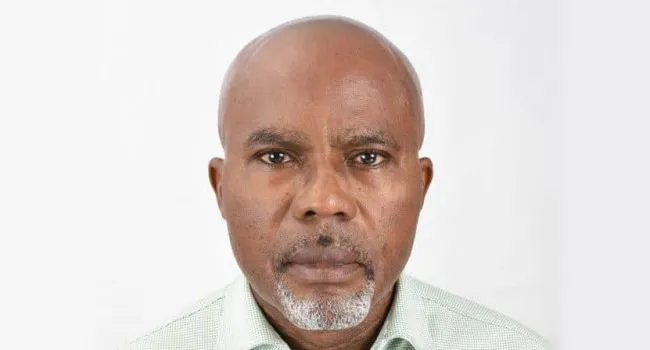
Author: Ugo Onuoha

  • Nigeria’s children of the dump sites

    Nigeria’s children of the dump sites

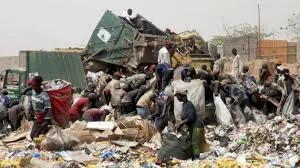
    Our children are now chasing out the adults from the business. But in their own case they are mainly foraging for foods that are often not there. On Monday, January 20, a national newspaper published a news feature on the dire situation of some Nigerian children. Its finding was that not many children were currently privileged to have tea and bread for food at home. It said many of them now live off refuse dumps; they carry sacks filled with used cartons, empty drink cans, and discarded plastic bottles and bowls.

    WHAT’S unfolding presently will form part of the foundations for the future of our country. And the picture is not good. That the majority of the privileged and the ruling elite live in denial will not change it. What is looming and getting clearer as daylight is that this will be a future and a disaster that was foretold. Successive regimes, and especially those of the All Progressives Congress (APC) political party since 2015, had been leading Nigeria down a slippery slope. The 15 years or so of the former ruling People’s Democratic Party (PDP) are now being celebrated as the ‘golden years’ of Nigeria, to borrow from President Donald Trump’s so-called American golden age. But as disasters go the PDP as a ruling party was just a shade above this ruinous APC. PDP lived on borrowed robes. It started fairly well under President Olusegun Obasanjo (1999-2007) but quickly relapsed into bad ways, profligacy and the expressed feelings of invincibility. The party suffered from low crude oil prices at the beginning, as low as $15 per barrel at the start of this democratic dispensation, but later under President Goodluck Jonathan enjoyed a boom with prices surging beyond $120/barrel. It failed miserably in managing the bumper returns. And so got itself sacked ostensibly by voters in 2015.

    The APC, a hastily cobbled special purpose vehicle that passed as a political party, took power at the centre and in most of the sub nationals subsequently. This party over-promised in its quest for power during the campaigns in 2014. It promised everything under the sun except creating human beings. It even promised to recreate Nigeria and Nigerians. But under Muhammadu Buhari it started very poorly by first denying virtually all it promised, and disclaiming its own manifesto. Its candidate – turned – president Buhari was strident in distancing himself from the promises of the party, the so-called Contract with Nigerians. In terms of ineptitude the APC under Buhari turned out worse than the PDP. In corruption the party and its principal operatives were worse than eye-sores. It piled up debts from every source – offshore, domestic markets, and through Ways and Means which simply means minting Naira banknotes backed by nothing. Yes, nothing. Buhari fumbled and wobbled for eight years, and took the country back by 30 years. He was an affliction of unimaginable proportions.
    Buhari’s successor, Alhaji Bola Ahmed Tinubu, now going to 20 months on the saddle, appears to be no better in spite of claims to courage and to reforming the economy and the country. He came with a baggage of personal failings, certificates and names controversies, and a questionable electoral victory. So he was dogged by palpable legitimacy issues. Indeed, there was a recent report, which is yet to be refuted (unlike what is in the regime’s DNA), that a foreign lobbying firm was retained with millions of dollars to help burnish his image and to make him appear less a pariah among his supposed peers on the international stage. By some calculations, Tinubu jets out of the country after every 17 days of what now appears to be a visit to the country he is supposed to be governing to, according to his officials woo foreign investors. He cuts a forlorn and isolated figure in many of his trips abroad, especially when he is in the midst of other significant world leaders. Not a good comparison, anyway, but the US President Donald Trump who took office one week ago, yesterday, and without travelling out of his country, has attracted pledges of investments reported to be close to $3 trillion from around the world.

    Nobody needs to dig deep to find out how shallow this regime is and how desperately it looks for a win. Recently, the henchmen of the administration and their choristers started celebrating that the Naira, Nigeria’s national currency, has stabilised at N1,500 to $1USD. Are they for real? At the beginning of the so-called economic reforms and currency convergence, the consensus and the projection was that the rate would settle at N800/$. Rulers with a modicum of shame will not roll out the drums for the current exchange rate.

    The economic policies and programmes of the Tinubu regime are whimsical and his claimed political reforms are inchoate and haphazard. The jury is still out on his quest to make federating units out of the country’s 774 local councils by making them ‘autonomous’ and funding them directly from the federation account. He claims his actions were informed by Constitutional provisions. But that’s self – serving because this same man, in his earlier incarnation as Lagos state governor (1999-2007) fought tooth and nail for councils to be under the suzerainty of state governments. But not anymore today. The only thing that has changed is that Bola Tinubu is now the president. His actions are political and driven by 2027. He wants his fingers in every pie, and foot soldiers to ‘grab, snatch and run’ away with results of the 2027 election, that is, if there will be any elections in the true sense of the word. The same uncertainty is playing out in the economy. Tinubu says repeatedly that he is already seeing light at the end of the tunnel. He might be seeing a mirage. The World Bank has said it would take a minimum of 15 years of sustaining his punishing economic regimen for any impact to be noticed. The hallmarks of the Tinubu economic kalo kalo are that his policies and programmes are not measurable, they have no benchmarks, they have no timelines, and they have no publicly available templates for reviews should the need arise. They are more like the rural Nigerian children’s game of tumbom tumbom.

    Nobody needs to dig deep to find out how shallow this regime is and how desperately it looks for a win. Recently, the henchmen of the administration and their choristers started celebrating that the Naira, Nigeria’s national currency, has stabilised at N1,500 to $1USD. Are they for real? At the beginning of the so-called economic reforms and currency convergence, the consensus and the projection was that the rate would settle at N800/$. Rulers with a modicum of shame will not roll out the drums for the current exchange rate. But APC has no shame. The party’s serial misrule is on display. Poverty is becoming entrenched in our country. The other day the deputy speaker of the House of Representatives Benjamin Kalu celebrated the rise in diaspora remittances from $25 billion in 2023 to $28 in 2024, as a sign of confidence in Nigeria’s economy. No, it was not. It showed that Nigerians at home were in dire straits, and that the situation had increased the pressure on diasporans to up their remittances. How could it be otherwise with inflation running in the high 30s, the worst level in about one generation?

    The increased diaspora remittances could be the reasons why Nigerians are not yet widely dropping dead on the streets as Europeans predicted and wished would happen in Africa during the COVID pandemic; why some families are still managing to pay children’s school fees at all levels in spite of students’ loan scheme; why some families can still spare a little money for hospital bills; why there’s no widespread starvation; why erstwhile middle class citizens can afford transportation fares to their offices or business premises, or to repair and fuel their cars. If Tinubu’s friend whom he claimed had abandoned his four Rolls Royce limousines had been a destiny – helper, he probably wouldn’t have suffered humiliation brought upon him by friend, the president. A little dollar here and a little pounds sterling and euro there would have kept him going. He would not have been reduced to using a car whose front wheel is susceptible to breaking off in motion without notice on Nigerian roads. In spite of diaspora remittances and other mercies, the Tinubu and APC economic wizardry is taking a huge toll presently on a vulnerable segment of the population. And it presents a foreboding future for our country.

    WASTE to wealth is a fairly popular phrase. Ordinarily, it means a situation where some citizens out of choice visit dump sites to pick out supposed waste and recycle the same to create value and possibly wealth. And this used to be the exclusive preserve of adults. It is no longer the case. Our children are now chasing out the adults from the business. But in their own case they are mainly foraging for foods that are often not there. On Monday, January 20, a national newspaper published a news feature on the dire situation of some Nigerian children. Its finding was that not many children were currently privileged to have tea and bread for food at home. It said many of them now live off refuse dumps; they carry sacks filled with used cartons, empty drink cans, and discarded plastic bottles and bowls. The newspaper illustrated with the story of one Jacob Olorunfemi who claimed that the economy had crippled his parents, forcing him to drop out of school. “I don’t go to lesson(s) anymore because my parents said there is no money… I usually attend lessons like school, where I pay N500 per week. My mother usually sweeps and wash(es) clothes for customers . My father works at a bus park. I have a friend called Sule. He is twelve years old. He used to pick used plastics and condemned items and sell them. His mother beg(s) for alms for a living. He advised me to join him in this scavenging routine and I have been able to save N2,000 since I started”. Jacob is 10 years old.

    Yet there’s another child, Yekini Salam, 11 years old. His late father reportedly left him with a step mother who also had three other children of her own to care for. “I have not been in school for years”, he started. “I dropped out when I lost my father. I don’t know who my mother is but I have a stepmother and three step brothers. I usually hawk wares for my stepmother. But last year she asked me to stop. Sometimes I help people to run errands and they give me tokens in the form of food or cash (in) appreciation. Recently I had to join my friends who are a little above my age in the scavenging routine. I move around places sourcing for plastics, cans and bottles. There are people who I sell to. The materials are scaled (weighed) and I am paid. I want to save enough money to learn aluminium window and door frame construction skills”. The plights of Jacob and Yekini are not just urban phenomena. Children engaging in menial jobs and dropping out of school for various reasons are widespread. The figures for Nigeria’s out of school children range from between 18-20 million. The future is sadly not also bright for some of our children who are fortunate to be in school. The findings are depressing in schools in one of the country’s most populated states. Last Friday, the United Nations Children’s Fund (UNICEF) disclosed that only 9.6% of primary school pupils in Kano showed reading proficiency whilst only 11.2% had basic numeracy skills. The agency’s chief field officer for Kano, Rahama Mohammed further indicated that almost one million children (989,234) of primary school age (about 32% of the population), were “currently not enrolled in formal education in the state”.

    The depressing statistics in Kano could be the same across many states in the north of this country. And it will be myopic to blame the situation solely on the emphasis placed on Islamic or religious education in that part of Nigeria. Even if that were to be the case, a more sensitive ruling elite should know that in the fullness of time what’s happening in Kano and some other states would have a cataclysmic national impact, and would have taken steps to arrest the looming disaster. But how can the situation be redressed with no discernable and sustainable national policy on education with widespread buy-in, and with a miserable and miserly allocation to education in the 2025 national and sub nationals budgets. Even before the advent of the APC in governance at the federal level, infrastructure in public schools were dilapidated. They have only become worse. Not many teachers are in the profession out of choice. The teachers in public schools are badly trained or not trained at all, poorly remunerated, ill-equipped, and generally demotivated. Some of them are petty traders hawking their wares right inside school premises. The future of this country is not looking good. But do our rulers care?
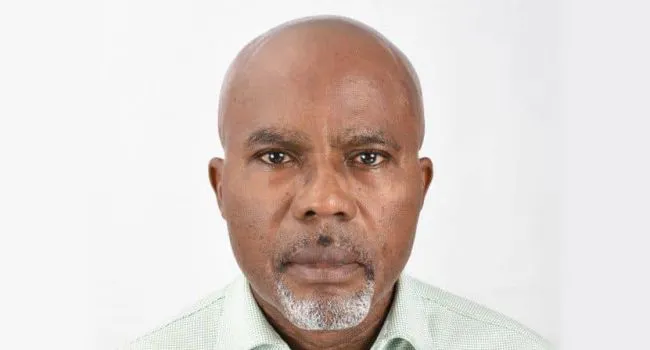
    UGO ONUOHA, a veteran journalist, was the Editor-in-Chief of Champion Newspaper

  • Peter Obi and Tinubu’s APC’s morbid line

    Peter Obi and Tinubu’s APC’s morbid line

    My brother and friend Emeka Duru, a member of the reverred Nze na Ozo fraternity in Orlu, Imo state, said in the title of his article last week in the Niche online publication that ‘Peter Obi is not the issue’ afflicting the floundering regime of Nigeria’s president, Alhaji Bola Ahmed Tinubu and his special purpose All Progressives Congress (APC) clueless ruling party. In the old order, unblemished integrity and fidelity to the truth are some of the irreducible minimums for admission into the Igbo Nze na Ozo clan. Sadly, these requirements for membership appear to be receding as some young men of dubious character and questionable wealth have invaded that rarefied association ostensibly in their quest for legitimacy, relevance and acceptance. Today, many Igbo men and youngsters who are living thousands of kilometres away from the Igbo homeland simply send money home to their relatives to purchase the title of Nze or Ozo, and membership of the club. But I know Nze Emeka Duru. I know he lives here and he associates closely with the people of the ancient Orlu Kingdom where he comes from. He is honest, he is truthful, to the extent that any typical human being can be. If he makes a mistake it will be that of the heart, not the head. And he made a mistake in the title of his article which I referenced above when he wrote that Peter Obi was not the issue. The blurb in the said article which I alluded to said Nigerians needed issues of hunger and poverty holding them down to be tackled. That they needed assurances of a better future for their children. That they needed adequate security for their businesses and properties. That these were the issues that matter to the citizens. The point is that these things enumerated by Duru are exactly the issues that Peter Obi speaks to, and hammers on, to the discomfiture of our current rulers. And because those are the issues that Obi forcefully and relentlessly calls attention to, he has become an irritant to this band of insensitive rulers. He has, therefore, become the issue. So Peter Obi is the issue. They ignore him at their own peril. They take him out also at their own peril. Head or tail they lose. The rulers are in-between and in-betwixt.

    Obi is not a typical Nigerian politician in spite of his being a two -term governor of the south east state of Anambra, and a presidential running mate at another election. So when after the Nigerian Supreme Court legalised the controversial, some would say fraudulent, 2023 presidential election, and Obi said he would not abandon the pursuit of his quest for the realisation of a better Nigeria, not many people took him seriously. The expectation was that he would grumble and make noise for a few months, slip into oblivion, lose traction with his base of mostly young people, go abroad to catch his breath and attend to his health and business, and possibly return close to the next election in 2027 to once more stake his claim to the presidency. None of the expectations came to pass. And no sitting regime, especially that which has been burdened with a lingering perception of illegitimacy, and so many warts and baggage, will not feel irritated and angry at the ‘effrontery’ of Peter Obi. Not many rulers in a third world country like Nigeria will be comfortable with any citizen calling them out for inflicting pains and privations on the vast majority of the people. How can a man whom the electoral agency and the courts had judged that his alternative vision for the country had been rejected by the Nigerian electorate remain so popular and relevant? How could it be that the voice of the same man who was said to have been spurned by the majority of the voters still carried so much weight and resonated across the country two years, next month, after the election? It’s irreconcilable. It just does not make any sense. He should be stopped. The high decibel ‘noise’ from a man with a naturally tiny voice must be muzzled.

    So what happened recently with Felix Morka, national publicity secretary of the APC, was natural and expected, though weird. It’s typical that when one party in a debate loses the argument, they resort to abuse, intimidation, threat, and violence – first verbal and then physical violence. Morka and his band in the APC are at the first stage of verbal violence. And what they have done was to serve a notice that their regime will not be shy in moving to the next phase. The use of the phrase “crossing the line” by Morka on Obi was intentional, thought – through, deliberate, and collectively considered and agreed upon by the APC enforcers and executioners. For them it is enough for Obi. Words carry weight and meaning. It’s especially so in a fledgling anti-democratic dispensation such as ours is rapidly turning into. It does not matter whether the threatening words and warnings were muttered in a sober or in a menacing manner. And in this instance, Morka was menacing. He could not hide the fact that the APC is frustrated by the rankling failures of its successive administrations since 2015, first with that serial bungler and affliction of Nigeria, Maj.Gen. (rtd) Muhammadu Buhari, and now the clueless Tinubu who appears to enjoy the contours of pain on the faces of the majority of Nigerians. We had very early predicted the trajectory of this regime. It is headed by a pseudo -democrat. This has been manifestly obvious since his sojourn in partisan politics. Except for deception or the fun of it, vigorous debates of policies have not been his forte. Baba sope or the master has spoken associated with him since after his governorship was not invented out of thin air.

    So many discerning people knew from the onset that the Lagos democracy template would be exported to Abuja when he was declared the winner and beneficiary of the presidential election about two years ago. It is no surprise, therefore, that the principle of co-equal arms of government in a federal system as ours is designed to be now exists only in name. The Executive approximates the federal government. The national legislature and the judiciary are suborned by an emergent imperial presidency. There could still be remnants of courageous judges but they are a vanishing tribe. The so-called national assembly is now irredeemable. The leadership and followership of the national assembly (NASS) have repeatedly proclaimed that they exist and work at the pleasure of the president, and that whatever the Executive branch asked them to do should be taken as done. The fusion of the Executive, Legislative and Judicial arms of our government into one is virtually concluded. There are no longer opposition lawmakers in NASS in terms of offering alternative visions for governance, or raising their voices against oppressive policies including using public money to fund lavish and ostentatious lifestyles. How can they when they are also beneficiaries of the largesse and the profligacy by their government. By the way, many of the opposition lawmakers, especially of the Labour Party (LP) have since abandoned ship and joined the ruling party. The party and partying must go on.

    Obi’s latest act of ‘treason’, according to the APC, was that he spoke to Nigerians through the mass media to mark the new year. He spoke to many issues affecting Nigerians including insecurity, poverty, inflation, mindless borrowing by the present administration, poor education, dilapidated health facilities, death traps that passed as roads and highways across the country, misplaced priorities by the ruling party, the insensitivity of the ruling elite, grotesque and unconscionable lifestyles of those in government at all levels, a comatose economy, and the prospects of further deterioration in the living standards and living conditions of the vast majority of our people. Almost everybody who is somebody but who’s not at the APC banquet table has said the same or similar things. There’s a consensus that the prognosis for this country in terms of the future material condition of our citizens is not good. If this be the case then, the sin that Obi committed was adding his voice to the possible disastrous outcome from the government’s chosen path and economic policies.

    So many discerning people knew from the onset that the Lagos democracy template would be exported to Abuja when he was declared the winner and beneficiary of the presidential election about two years ago. It is no surprise, therefore, that the principle of co-equal arms of government in a federal system as ours is designed to be now exists only in name. The Executive approximates the federal government. The national legislature and the judiciary are suborned by an emergent imperial presidency. There could still be remnants of courageous judges but they are a vanishing tribe. The so-called national assembly is now irredeemable. The leadership and followership of the national assembly (NASS) have repeatedly proclaimed that they exist and work at the pleasure of the president, and that whatever the Executive branch asked them to do should be taken as done.”

    There was nothing that Obi said in his new year message to the government and the people that was not factual. To illustrate, he had said that as a country, “we have fallen from being the largest economy in Africa, with a GDP of $574bn and a per capita income of over $3,500 in 2014, to now ranking fourth on the continent. Our current GDP is less than 50% of what it was a decade ago, standing at approximately $200bn, with a per capita income of barely $1000”. He said that Nigeria remains ”one of the most insecure and least peaceful nations in the world, with countless communities and families displaced from their homes and now living in (internally displaced persons) IDP camps. According to the Global Peace Index (GPI), Nigeria ranks 143rd out of 163 countries in terms of peacefulness – an indication of a high level of distress”. As usual Obi offered suggestions on what could be done differently. He spoke to the need for signalling by government leaders cutting back on their ostentatious lifestyles. He said for the umpteenth time that borrowing should be for investment in targeted regenerative projects. “This”, he said, “will ensure both productivity and the ability to service and amortize such loans, rather than continuing the current practice of accumulating massive debt with no tangible returns, which places undue strain on future development revenue”.

    There was nothing that Obi said in his new year message that was not already in the public domain. Obi’s only problem with the government is the force of his moral person and Spartan lifestyle. It’s a notorious fact that the current APC regime has been desperate to dig up dirt to sully Obi. And they have serially failed. Whatever they dug up in the past had failed to stick. So they have resorted to verbal violence ostensibly in preparation for physical harm and possibly applying the Italian Solution. This could only be the reason for the APC accusing Obi of being in their cross-hairs. They alleged that Obi was on a mission to incite Nigerians to topple the regime. “Mr. Obi is shooting from the hip. He is not looking or taking an aim. He just shoots widely like Wild-Wild-West movies we used to see back in the day. He is absolutely irrational in his thinking about a man who was governor for eight years and left nothing to remember in Anambra state by way of legacy…he thinks he can bring down the government by simply being maliciously deceptive. I am not somebody to go on the offensive in that manner, but Mr. Obi has CROSSED THE LINE SO MANY TIMES (emphasis mine)…”

    What are the dimensions and implications and consequences of crossing the line as the APC has said about Peter Obi? It means that the person has exceeded the limits of what is considered acceptable, reasonable or decent. And that the person has violated a moral, ethical, or social boundary, and by so doing causing harm, offence or discomfort to others. It could also be overstepping physical or emotional limits, invading another person’s private space, or disregarding their feelings. Crossing the line as APC said of Obi could also be interpreted to mean that Obi in his new year message had exceeded his authority or limits as a citizen in calling out the regime; abused his power, position or influence, and acted beyond his legitimate scope or authority. APC is accusing Obi of engaging in unacceptable behaviour which it considered inappropriate, immoral, unprofessional and dishonest. In essence the APC has served a warning to Obi that his frequent crossing of the line will henceforth be addressed through confrontation and/or conflict. What a ruling party! It’s only an immoral and an insecure regime that criminalises free speech and that threatens to use the sledgehammer on a citizen for criticising the government and offering alternative viewpoints on governance. Nigerians will not be intimidated, they will not be silenced either. They have seen off wannabe dictators whether military or civilians. And this regime will not be different.

    UGO ONUOHA, Veteran Journalist, was the Managing Director/Editor-in-Chief, Champion Newspapers Limited

  • Obasanjo, NNPC’S Invitation and Fraud Foretold

    Obasanjo, NNPC’S Invitation and Fraud Foretold

    With its tattered reputation, the expectation is that the NNPC will carry on its corruption-stained operations below the radar. But no. It won’t. It must behave like the typical Nigerian politician and institution. It must be loud and given to attempting to ridicule. That will only be the explanation for its recent ‘invitation’ to a former president, Dr. Olusegun Obasanjo (1999-2007) to tour the Port Harcourt and Warri refineries which it claimed it had revamped after decades of their being comatose

    There has been no contest, at least not in the last 20 years, about the most opaque government corporation in Nigeria. The Nigerian National Petroleum Corporation (Company) Limited (NNPCL) holds that dubious record. The corporation is synonymous with corruption and brazen lack of accountability. Most times it operates like a parallel government. It sells the country’s crude oil and spends the proceeds as suits its fancy. There are some fancy agencies in that sector, but in reality the NNPC is the operator and the regulator in Nigeria’s oil business. It does not really know how much crude oil is extracted from the belly of Nigeria; it does not know how much is exported; it does not know how much is earned; and, it does not account to anybody. But all the claims or pretentions not to know the critical aspects of its operations are down to one thing: corruption. The company is almost adept at pulling the wools over our eyes. I say ‘almost adept’ because it actually hides under the cover of successive presidents of the country to carry out its heists. Except probably during the presidency of Jonathan, other presidents since 1999 had served as presidents and oil ministers at the same time. Nigeria’s current president, Alhaji Bola Ahmed Tinubu is also the minister of petroleum resources.

    It has to be said that the corruption in the corporation was no less when Jonathan ceded the oil ministry portfolio and supervision of the NNPC to Mrs. Diezani Allison – Madueke. She is right now a fugitive from the law who is hibernating somewhere in the United Kingdom, a country that is notorious for warehousing proceeds of corruption from third world countries’ rulers. The UK is also a beneficiary of centuries of slavery of Africans and black people on whose backs and sufferings it built its evil empire and criminal wealth. It has stoutly resisted taking responsibility for its cruelty, and paying reparations. Meanwhile, that woman whose former husband, a retired Navy General, and officer and gentleman, has since issued a cease and desist order on her use of his name, clutches the international passport of one obscure island nation ostensibly to escape justice in Nigeria. It’s curious that successive regimes since 2015 when the All Progressives Congress (APC) came to power, all attempts to extradite Diezani had failed. The reasons for the seeming failure of the current and past APC administrations to extradite the former oil minister should not be difficult to decipher – the potential revelations from her and her collaborators in the grand theft of our commonwealth during that era will splash mud on present and past rulers. The failure is a grand cover up for the exploiting class.

    For many years the NNPC did not publish any audited accounts of its operations. And it did not explain why. For years, and up till now, the former governor of the central bank, Mallam Sanusi Lamido Sanusi, has been asking NNPC the whereabouts of proceeds from the sales of our crude oil. Under President Goodluck Jonathan, Sanusi accused the NNPC and that administration of carrying out hanky-panky with crude oil export proceeds running into tens of billions of dollars. Sanusi was subsequently suspended as CBN governor, an audit firm was quickly recruited by the accused administration to probe Sanusi’s allegations. The outcome was what you suspected it would be – a clean bill of health for that regime and its corporation. But Sanusi who later became the emir of Kano, and then former emir after he was dethroned, and now back to power as a co-emir of the same Kano, will not be silenced in spite of his travails. He still believes that the NNPC is among the worst afflictions to befall this country in the management of its crude oil resources. Well, NNPC is the automated teller machine (ATM) of the federal government. So it works in concert with any sitting president and his administration. In terms of sleaze, it competes annually for the first position with our judges, police officers, Customs men, among others.

    “Let’s talk about the refineries. I know people are excited about it but I have a completely different view. Is it good that they are functioning? You bet but at what cost? Let’s look at a few things. 1. The (Muhammadu) Buhari administration borrowed $3bn to fix the refineries, $1.5bn for PH, then $1.5bn for both Warri and Kaduna. I wrote against it then because it (made) no sense at all. Why fix before selling? 2. Selling it (for) $750m in 2007 or even lower price would have been better for the nation (and) I am sure you know about Eleme Petrochemicals that for 10 years it was operating at 20-25% capacity utilisation but the first year under Indorama operated at 100% capacity, made profit and dividends paid about $74m.

    With its tattered reputation, the expectation is that the NNPC will carry on its corruption-stained operations below the radar. But no. It won’t. It must behave like the typical Nigerian politician and institution. It must be loud and given to attempting to ridicule. That will only be the explanation for its recent ‘invitation’ to a former president, Dr. Olusegun Obasanjo (1999-2007) to tour the Port Harcourt and Warri refineries which it claimed it had revamped after decades of their being comatose. Part of Obasanjo’s crime was that he reported how he had offered refineries to an international oil company (IOC) to operate in a public private partnership (PPP) arrangement, or to purchase them outright. The IOC concerned politely declined the offer. Then he got a Nigerian consortium led by the serial investor Aliko Dangote to pay the federal government about $750m for one of the refineries after being advised that that would be a prudent thing to do. He said he was told that the refinery in question was tending towards being designated as a scrap. However, Umaru Musa Yar’Adua, who succeeded Obasanjo as president in 2007 aborted the sale on grounds of alleged conflict of interest, and refunded the money paid for the refinery. So 17 years later NNPC wants to taunt Obasanjo for saying that the corruption -infested corporation lacked the capacity to effectively and efficiently manage Nigeria’s refineries.

    Obasanjo was right in 2007 and he will be vindicated. Given its present structure and composition, in spite of the Petroleum Industry Act (PIA) which has been implemented in the breach since it debut, the NNPCL cannot profitably run the country’s four refineries – two in Port Harcourt and one each in Warri and Kaduna. The truth is that Obasanjo’s vindication is not in the future. It has already happened. NNPC’s attempt to gloat and ridicule the former president is not just disrespectful and gross but grotesque. We cannot have two of NNPC’s refineries said to be working at whatever capacity, and a private mega refinery also on stream, in addition to other functional modular refineries, and yet the corporation insists that it would continue to import petroleum products with our scarce foreign exchange. Furthermore, the operations of the Port Harcourt and Warri refineries are mired in controversies. The deal in the raft of resuscitation of the refineries appears to be to give a flailing regime the semblance of a win whilst the corporation’s henchmen and their collaborators in government continue their looting spree.

    But more importantly in Obasanjo’s vindication is in the murky details of the things that have gone into the so-called rehabilitation of the refineries. If we go back to 25 years, the federal government may have expended about $25bn on the refineries so far. This is more than the amount committed by a private entity to deliver a single train refinery which has been described as the eight wonder of the world with about twice the combined capacities of our museum piece four refineries. One of two things will happen to the NNPC refineries – they will collapse sooner than later or they will be kept on life support at huge public expense to create the impression that they are working. No one needs to be an expert on refineries nor possess the power of clairvoyance to discern that a fraud is being foisted on Nigerians.

    Now let’s examine the fraud that the NNPC is perpetrating on our people by its hanging onto the refineries, and giving the impression that they are part of the solution to the country’s energy deficits and crises. I will almost entirely reproduce the analysis done by a diaspora Nigerian in one of the WhatsApp platforms that I belong to. Both pro- and anti- extant regime are agreed that this particular member is usually dispassionate in his interventions. He wrote last week in response to a comment: “Let’s talk about the refineries. I know people are excited about it but I have a completely different view. Is it good that they are functioning? You bet but at what cost? Let’s look at a few things. 1. The (Muhammadu) Buhari administration borrowed $3bn to fix the refineries, $1.5bn for PH, then $1.5bn for both Warri and Kaduna. I wrote against it then because it (made) no sense at all. Why fix before selling? 2. Selling it (for) $750m in 2007 or even lower price would have been better for the nation (and) I am sure you know about Eleme Petrochemicals that for 10 years it was operating at 20-25% capacity utilisation but the first year under Indorama operated at 100% capacity, made profit and dividends paid about $74m.

    “In just one year it produced polymer of 135,000MT, more than 10 years production (compared with the old order). 3. The refineries were owing NNPC N4.5tn as at 2023 yet the capital vote for TETFUND in 2025 is N940bn. In a report last year, $25bn (had) been spent on refineries, why holding on to them? 4. What is the capacity utilisation of these refineries now for the recent $3bn spent to resuscitate them? Remember Project Gazelle, we went to borrow $3.2bn paying back with 90,000 (barrels) per day of crude (oil), mortgaging future revenues. So why should we borrow $3bn to fix a refinery we want to sell rather why don’t we sell as it is and no matter how small walk away. Chelsea (London – based football club) was sold for over £4bn recently but in 1982 it was sold for £1 just to get it off the books”. The understanding is that when assets become liabilities, you place a nominal value on them and get them off the books. Nigeria’s four refineries have become liabilities. It will be the height of fraud to expend billions of dollars on them as the NNPC is currently doing and then turn around to put them in the market to sell at nominal prices. And all indications are that this is the game that the NNPC and the government are playing. To them no scam on Nigerians is too big.

    UGO ONUOHA, a veteran journalist, was the Managing Director/Editor-in-Chief, Champion Newspapers Limited.

  • MY PREDICTIONS FOR 2025

    MY PREDICTIONS FOR 2025

    DO not ask me whether I am now also among the prophets as was curiously inquired of someone else in the Good Book. This shock of a development was recorded in 1 Samuel chapter 10 verse 11. I will take the version or translation or adumbration of the Message Bible. It said: “When Saul and his party got to Gibeah, there were the prophets, right in front of them! When those who had previously known Saul saw him prophesying with the prophets, they were totally surprised. What’s going on here? What’s come over the son of Kish? One man spoke up and said, ‘Who started this? Where did this people come from? That’s how the saying got started, Saul among the prophets! (Is Saul also among the prophets?). Who could have guessed?”. I may not have really been called to the ministry of prophecy but I am also a prophet of sorts. But the more important thing is that in Nigeria you do not need to be a schooled prophet to predict what will happen tomorrow, the next day or the day after. I know that prediction and prophecy are not one and the same thing, but I will leave those who like to split hairs to worry about the distinctions and differences.

    For our purpose today, the last day of this troubled year, I will be peeping into my crystal ball and I will treat whatever I see that will happen in Nigeria in 2025 as a prophecy. So I will advise that you do not deprive yourself of the prophet’s portion through unbelief. Here we go. In 2025, I see the country implementing two distinct and separate national budgets simultaneously. Unless Nigerians pray very hard, I see the number of budgets climbing to three towards the end of the year. Whether two or three budgets end up being implemented by the All Progressives Congress political party led federal government, it will still be an improvement on 2023/2024 fiscal year when, at a time, three and half budgets were being implemented. As it is the case right now, I predict that by this time next year, the henchmen of the government will not bother to give a coherent account of the performance, or better still, lack of performance of the expiring fiscal document or documents.

    From my crystal ball it has been shown clearly to me that the 2025 budget will be passed by the national assembly and signed into law by the president of Nigeria, Alhaji Bola Ahmed Tinubu, before April. The delay in passing the budget will not be down to the scrutiny of the document by senators and representatives. The delay will be down to two factors: one, for them to have sufficient time to pad the budget to line their pockets, and two,to create the impression that they are conducting due diligence. I predict and prophesy that the 2025 fiscal document will be riddled with hanging monetary provisions: allocations for building farm settlements which will be under the aviation and aerospace ministry; budgetary provisions for the repair of highways which contracts will be awarded to crude oil prospecting companies; funds for space exploration which will be domiciled in the newly created ministry of livestock development; and, money inserted in the ministry of agriculture which is expected to be used to build and install solar lights on Lagos -Ibadan expressway. Budgetary allocations for the construction of new classroom blocks in our Unity Schools will be in the name of one obscure restaurateur whose eatery is not registered with the Corporate Affairs Commission; money will be allocated to a community development association in Mgbidi in Oru West local government area of Imo state for the kitting of the national youth service corp members nationwide. It’s our prediction that this will be the complexion of the 2025 national budget. Those who may not like the look and the taste and the texture of the fiscal document should be free to ‘go to court’. The pockmarks and  abracadabra budgeting will continue next year and Budgit, SERAP and other anti-graft kindred spirits go scream and shout taya. These watchdogs have yet to realise that they are talking to rulers who have ingrained witchcraft spirit, the type that whispered to them to remove petrol subsidy and devalue the Naira at the same time last year without considerations for the deleterious fallouts.

    I prophesy that nothing significant will happen with the claim by the regime that it is working to diversify the economy. The Naira value of non-oil exports will increase in a phenomenal manner. But the significant increases will be due to the illusion of money. In dollar terms, the value of non-oil exports will be lower, or it will at best be at the same level with that of Muhammadu Buhari. And there’s nothing complementary with any regime’s performance being compared with Buhari’s, who until now was Nigeria’s worst president. Bad as it is, the Naira will continue to be unstable and unsettled, and will continue to bleed. The posturing of the central bank of Nigeria is just that – posturing. The claims of accretion to the foreign reserves is a ruse. That’s why the CBN is loathe to speak to the structure and tenor of the foreign reserves. The devil is in the details. So there will be no sustainable reprieve for the Naira. Indeed as we wrote this last weekend, Afrinvest took the thunder out of our prophecy. It projected in its latest study that the Naira will depreciate to N1,804/$1 at the official Forex window in 2025. Afrinvest said that it anticipates “that exchange rate volatility would persist in 2025, albeit at a modest pace. Our prognosis is hinged on the belief that the CBN would be constrained from adequately meeting market demand on a sustained basis, as the recent FX reserves accretion was largely driven by inflows from inorganic sources, including those with stringent conditions on usability”. The title of the report, Beyond The Rhetorics: Transforming Reforms to Tangibles, should not be lost on Nigerians.

    Under Buhari over 133 million Nigerians were reported by the government’s national bureau of statistics (NBS) to be in the grips of dimensional poverty. The agency has studiously refrained from issuing further reports on this under Tinubu. In light of the punishing economic policies of the extant regime any further such reports will unsettle this administration and set the alarm bells ringing. However, the NBS recently said that about 53% of Nigerian children are dimensionally poor. A peek into the ramifications of dimensional poverty will help us to appreciate how dire the circumstances of Nigerians are. Dimensional poverty is a concept that describes a state of deprivation or scarcity that extends beyond traditional measures of poverty such as income or material possessions. It encompasses the totality of well-being, including limited access to financial resources, income and employment opportunities. It also involves social connections, relationships and community support. It includes environmental dimensions such as limited access to clean air, water, sanitation, and other environmental resources. There’s also a psychological aspect of dimensional poverty which includes mental health issues, stress, anxiety, and lack of emotional well-being. Spiritual dimension extends to disconnection from one’s spiritual or religious beliefs, values, and practices, while educational dimension involves limited access to quality education, skills training, and personal development opportunities.

    Furthermore, poor physical health, limited access to healthcare services, and inadequate nutrition as well as disconnection from one’s cultural heritage, traditions, and values form critical pillars of dimensional poverty. How many Nigerians are not affected or afflicted by one or more of these issues? Dimensional poverty recognises that poverty is not just about economic scarcity but also about the lack of opportunities, resources, and capabilities that can affect an individual’s or community’s overall well-being. The core of the concept is that dimensional poverty acknowledges that poverty is a multifaceted issue that cannot be addressed by a single solution. It requires a holistic approach by policy makers to overcome. Above everything else, it is important to recognise that poverty is not just an economic issue but a human rights concern. Many previous rulers of our country have been unable to recognise this, and the present rulers will not act differently in 2025. So, next year dimensional poverty will not be properly recognised and steps taken to address it to ensure that a more equitable and just society where everyone has access to the resources and opportunities they need to thrive would be created.

    The only way that the ruling APC knows how to grow the Nigerian economy is by accumulating debts. Therefore, I prophesy that both the domestic and external debt stocks of the country will continue to tick upwards in 2025. Buhari kept borrowing in the name of Nigeria, and then he resorted to mortgaging the country’s crude oil for cash for immediate squandering. Tinubu as he promised during the 2023 campaigns continued the borrowing spree without let. The profile of his borrowings from the World Bank alone reads like this: June 9, 2023, $750m for the power sector (the country is still in darkness suffering from acute energy deficit in spite of the prohibitive cost); June 27, 2023, $500m for women empowerment; July 2023, $800m to cushion the effects of petrol subsidy removal; September 2023, $700m for girls education; December 14, 2023, $750m for renewable energy; $500m to enhance rural access and agricultural marketing; June 13, 2024, $1.5bn for economic stabilisation reforms: June 13, 2024, $750m for resource mobilization reforms; September 2024, $1.57bn for health, education, and sustainable power sectors; October 2024, $500m for sustainable power and irrigation for Nigeria (SPIN) initiative; and, this December, $500m to boost rural access and agricultural marketing in Nigeria. This does not include borrowings from other sources, and this regime is less than two years in office.

    I prophesy that the national assembly will pass the tax reform bills in 2025 after Tinubu had made concessions to pacify sections of the seemingly implacable north. The measured climb down will be political, not economic, because the president has been in the campaign mode for 2027. However, he will look for ways to circumscribe the concessions. From tomorrow which is the first day of 2025, President Tinubu will continue the Yorubanization of appointments into sensitive and critical offices of the federation, the Lagos non-indigene Yoruba, of course. In this regard, I predict that the next chief executive officer of the Nigerian National Petroleum Company Limited (NNPCL) will be a Yoruba. That will be the culmination for full occupation of the country’s financial and revenue generating agencies of the federal government. The security angle is almost sealed with Yoruba Police and Army chiefs.

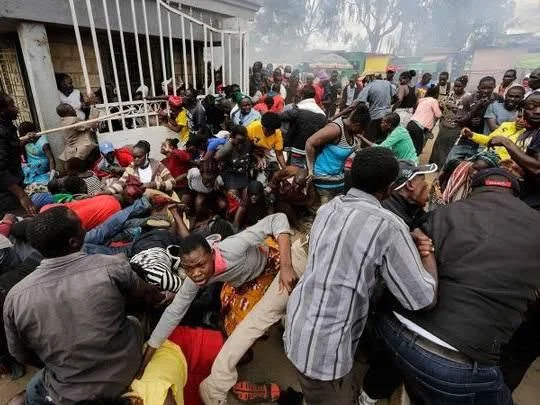
    In 2025, I prophesy that state governors will devise the means to continue stealing the federal accounts allocations of the local governments in spite of the weird financial autonomy awarded the councils by the Supreme Court at the instance of Tinubu. I predict that the national assembly will work hard to impose on the ‘Independent’ National Electoral Commission (INEC) the conduct of local government elections. Subsequently, the councils will be infested with the gargantuan corruption of INEC. During the year, Tinubu’s refrain about his wonder-working economic reforms will become louder in spite of the evidence before Nigerians. He, and his co-travellers, will insist by 2025 that those who would not see the light at the end of the tunnel are either blind or mischievous or both. But we know those who are suffering from optical illusion – they are our thoroughly wicked rulers. They are seeing nothing, and they know it. In 2025 judges will continue to harvest bribes to pervert justice; the police, army, customs and others’ road blocks (extortion plazas) from Sagamu-Aba will not decrease; governments at all levels will do nothing about internally displaced persons (IDPs) across the country; and, deaths occasioned by food stampedes will not abate. In all, Nigeria’s ranking on the global misery index will deteriorate further in 2025. There will be no change in Nigeria’s standing as the global capital of poverty. It has occupied that status since 2019. Let us, Nigerians, intensify to do what we know how best to do: PRAY, instead of holding our rulers to account. Happy New Year.

    UGO ONUOHA, a veteran Journalist, was the Managing Director/Editor-in-Chief of Champion Newspapers Limited

  • Deaths and blood rituals for bulaba balablu Christmas

    Deaths and blood rituals for bulaba balablu Christmas

    Deaths and blood rituals for bulaba balablu Christmas

    ‘It will get worse before it gets worse’. That was the title of my article published here and in other newspapers on November 21, 2023, six months after Nigeria’s president, Alhaji Bola Ahmed Tinubu, assumed office, and started his incoherent economic policies and programmes. The chicken is coming home to roost but it’s doing so at the cost of limbs, livelihoods and lives of the majority of Nigerians who are at the receiving end. Everyday we wake up to news of tragedies, especially of avoidable accidents, miseries and needless deaths. Tragedies now straddle the land – at home, school, market, highway, sea/river, farm, stream, bush path. Everywhere, really. There are no safe places in our country anymore. Nigerian lives no longer matter. Generator fumes wipe out families in their sleep. Kidnappers are no longer content with snatching travelers on the highways; they now pluck them from their homes, and kids from their schools, playgrounds, and classrooms. Terrorists, bandits, and sectarian insurgents who for political correctness were christened herdsmen invade farmlands and rape women and girls, slaughter  men and occupy  farms. Markets routinely go up in flames, many of them suspected to be acts of sabotage designed to cause economic dis-empowerment of a section of the country. Panels of inquiry follow such incidents but the results usually come to naught. There’s no life for a vast majority of Nigerians, and where there is, it is cheap.

    When we wrote on November 21, last year that things will only get worse in this country we had no inkling it will be this bad. We had wished that we will not be vindicated because the consequences will be dire. The reality today is that Nigeria is in a dire straits. But the truth is that in spite of the acute poverty gripping Nigerians right now, the prognosis is that the future, at least the near future, is not looking good. If truth be told the future for many Nigerians is foreboding. What we wrote 13 months ago could have been written today and they will not be widely off the mark. The first three paragraphs of that entry unedited read: “Nigeria is in the intensive care unit and its caregivers appear not to be perturbed. No. They are actually engaged but not in attending to a gravely ill patient. They make platitudes on the delivery of their promises but commit to attending to their hedonistic desires and pleasures.

    “It is 146 days (as at November 21, 2023) since another set of rulers took the reins of power in Abuja. But not for one day have Nigerians heaved a sigh of relief. It has been like the reign of the Biblical rebellious Absalom in one part of the divided Kingdom of Israel. Absalom had told his subjects that whilst his father King David chastised them with the whip, he would do the same with the scorpion. Under former President, Maj.-Gen. Mohammadu Buhari, Nigeria suffered afflictions of unimaginable proportions. Indeed as that clueless regime that was bereft of imagination and humaneness was winding down, the common refrain from Nigerians was: Never Again. Many citizens believed that no future administration in Nigeria will be worse than Buhari’s in terms of abuse of power, impunity, desecration of democratic ethos, insensitivity to the country’s diversity, disregard for the suffering of citizens and intolerance of critical and opposing views. Obviously, we were mistaken”.

    Stampede at Okija, Anambra State

    The extant regime which we wrote about when it was six months old in November last year will be 20 months in office by next month, January 2025. Loyalists and choristers of ‘on your mandate we shall stand…” will still fly off-the-handle to insist that it is still too early to assess the capacity of the regime with a four-year mandate. We will grudgingly concede that they may be right. However, the challenge is that there are virtually no indications that the needles for economic recovery and good governance are moving in the right direction, even if slowly. The experience is that of deterioration in the living standards of many, crisis in the cost of living, runaway inflation with food inflation about 40%, imported inflation caused by the country’s overwhelming dependence on imports and the poor exchange rate. The prediction is that many of these indicators will continue to head south for the foreseeable future. The consequences of forlorn hope which has trumped Tinubu’s ill-fitting  mantra of Renewed Hope are beginning to increase in their effects. You don’t need to listen to hear the groans of the people. You don’t need to be sensitive to feel the despondency of citizens. The sound of hopelessness is loud and clear. Nigerians are buffeted and the country could just be sitting on a keg of gunpowder. But do our rulers know about this clear and present danger? I doubt it otherwise they won’t still be behaving like Nero who serenaded himself with the wafting sounds and melodies from his flute while Rome burnt.

    If they know that the folks are hurting they probably will not continue their hedonistic indulgences by parcelling significant portions of the 2025 national budget to themselves. As in the budget of this year, hefty sums in billions have been carved out in next year’s appropriation bill to buy sport utility vehicles (SUVs) for themselves, their consorts, cronies, and their acolytes; renovate mansions, residences and offices; procure cooking utensils and cutleries; provide fittings, fixtures and furnishings; pay for offshore frivolous junkets and carousing; gorge themselves on foods and drinks at banquets; organize trainings at home and abroad where nothing useful are learned; set up additional ministries, departments and agencies that fail even before they take – off; and, sundry things that suit their fancies. Almost N50 trillion is said to be the size of the proposed 2025 budget. But by this time next year Nigeria will at best still be stagnant, and at worst deteriorated further in the global misery index. By the way, the current budget is said to have its implementation extended up till June 2025. So by the time next year’s budget is rubber-stamped by the national assembly, say in February or March, the two budgets will be running side-by-side. Multiple budgets make accountability by the government difficult but it has remained the preferred option for this regime since its inception. It ran multiple budgets in 2023. It is doing the same in 2024. It will do so in 2025. When you want to evade accountability, muddle the budget, and distort the conventional January -December budget cycle. Play ‘smart’ and pretend that nobody will understand the game. But Nigerians are no fools.

    We are in the season of Christmas and New Year celebrations. But the aroma of the season is not in the air. In its place we have the smell of death. Nigerians are not amused. Ordinarily, Christmas should be a season of celebrations and reflections symbolising light, hope, and redemption. It’s a period when people, especially Christians demonstrate love, kindness, and generosity towards others. It’s a time for family reunion, boost in retail sales and businesses as well as travels and tourism, and vacations. It’s also a period when many people engage in charitable giving, donating to causes and organisations that support the vulnerable and those in need. Christmas is a time for renewal and new beginnings. It offers the opportunity to reflect on past experiences and to look forward to the future. But under Tinubu Christmas has added a new, depressing and morbid dimension – death in dozens. Gloom has overtaken excitement. Mourning has replaced celebration. Hopelessness has displaced hope. It’s renewed anguish for renewed hope. Death has taken the place of life. For Christians December is a celebration of life, the birth of Jesus Christ. But Christmas of 2024 looks more like Easter when Christ was crucified. This Christmas is a season of mourning – mourning in scores.

    Ibadan Stampede, Oyo State

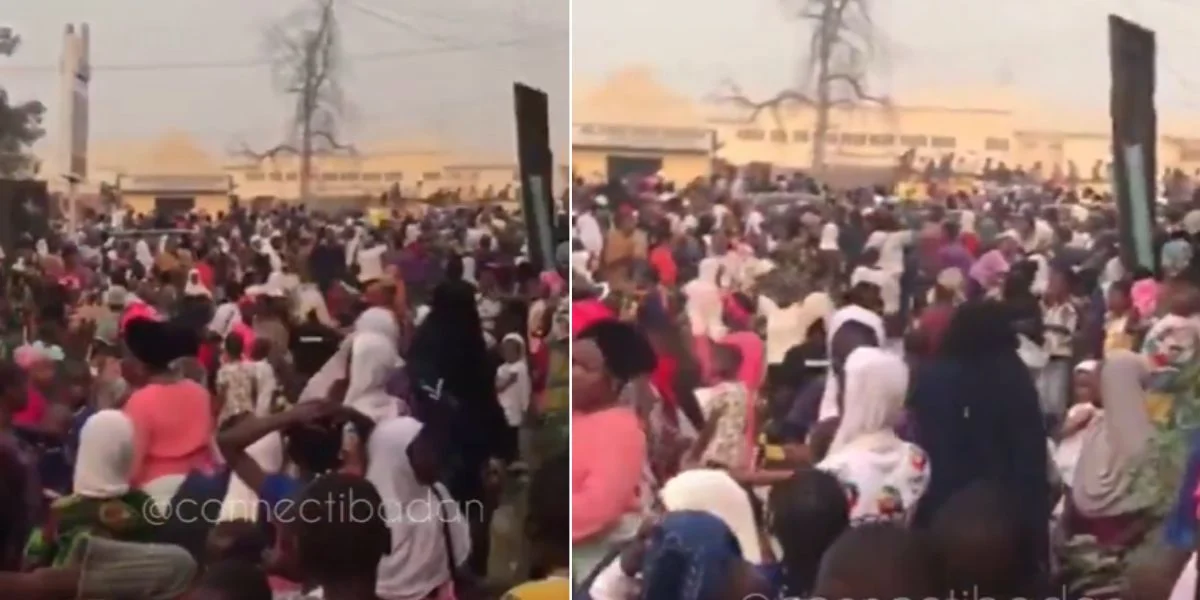
    Tomorrow is Christmas Day but many homes will be mourning, wearing sac clothes. The week before this Christmas may go down in history as the period the most tragedies were recorded in Nigeria with scores of avoidable deaths through stampede caused essentially by grinding poverty. In a space of one week about 35 persons, mostly children, were killed in Ibadan, Oyo state in a supposed fun fair. In reality, it was not a fun fair. It was a hunting ground for food and sundry gifts for starving kids and their parents or guardians. A stampede ensued and the children trampled under the foot. There was no assurance that the children who turned up in their numbers, far more than the capacity the organisers could handle, had any food in their stomachs, and the energy to survive the push and the shove. So they died because this country eats its children. Arrests have been made. Probe has been ordered. Commiserations have been offered. Those are standard fairs. As we wrote this last Sunday, the Ibadan deaths have receded from the news headlines. The authorities are still probing the devastating blast that wrecked the same Ibadan about the middle of this year. As we say here, that probe has ‘entered voicemail’. There’s no reason to believe that the same will not happen to the deaths of the kids.

    Soon after Ibadan tragedies struck in Abuja in the federal capital territory at a Roman Catholic church. Eleven persons were reportedly killed in yet another stampede. The church has a tradition of giving alms to its neighbours and other less privileged people in the community and beyond. The charity is not limited to its members nor to Christians. The church has done this in the past without any incidents. Until this year. The venue was besieged, and in the process of distributing the alms, a stampede ensued and almost a dozen people were killed. About 350 km from the Abuja church, another harvest of deaths took place. This time in Okija in Anambra state. Obijackson Foundation founded by billionaire Ernest Obiejesi, was conducting its annual gifting of bags of rice and other food items to the needy when tragedy through yet another stampede struck. The death toll was officially put at 21. They were mostly women and expectant mothers. A mother of Nigerian extraction who is abroad wept uncontrollably when her son showed her the video of the incident. She lamented that it had to be mothers because they were searching for where the next meal for their children would come from. She reportedly would not eat for the rest of that day. So in the week before Christmas about 70 Nigerians died because of poverty inflicted on them by their own rulers.

    Already the search for scapegoats for these avalanche of deaths has started. Some persons, especially regime choristers, are pointing accusing fingers at the organisers of these events for failure to put in place mechanisms for crowd control. They may have a point. But they conveniently forget that some of these charities have been going on for years with no incident. Could it then be possible that the misery and poverty and hopelessness inflicted on Nigerians are the reasons for the desperation that led to the stampedes in Abuja (north), Ibadan (west), and Okija (east)? Governments at all levels are culpable for the harvest of deaths. But the federal government whose misguided macro economic policies have pauperised the majority of Nigerians takes the lion’s share. The policies of this regime have turned once proud and otherwise hard working Nigerians into beggars and hunters of palliatives. The federal government has ordered that the tragedies be probed. What’s there to probe? The reason for what happened is in plain sight – hunger and starvation occasioned by government policies have driven people to the edge. In Okija, for instance, people were not deterred by the deaths. A video showed that people still stayed on for the bags of rice even after the confirmation that 21 persons from amongst them had died. That was the level of desperation. Nobody was scared that the next stampede could claim their own lives.

    Meanwhile, the Nigerian Police are at it. They said that they are minded to prosecute the charities and persons in whose events the tragedies happened for being negligent in crowd control. They can go ahead as long as they bear in mind that the first to be indicted should be the federal government which has breached a crucial provision in the Constitution which says that the primary duty of the government is to ensure the welfare and security of Nigerians. Has it lived up to it? The police should also know that after indicting the organisers, getting the courts to proscribe the charities, and jailing their operatives, others may begin to shun the act of giving. The emergent hungry and angry people will be recruiting grounds for criminals. It will be a vicious cycle. Is that where we want to be at this time in our country?

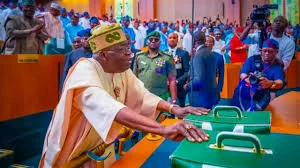
    President Lays 2025 Budget Proposal Before the Joint Session of NASS
  • SYRIA AND NIGERIA AT HISTORY’S CROSSROADS

    SYRIA AND NIGERIA AT HISTORY’S CROSSROADS

    Syria’s a classical case of a country that first died in the hearts and minds of its people long before the erosion started manifesting in the physical. It was decades in the making and it was obvious except to those who benefited from the rot. It is about the same thing in Nigeria with the country falling apart in the eyes of everybody except in the eyes of the ruling elite. The demise of a country begins with the erosion of its people’s sense of identity, purpose and connection to the homeland.

    SYRIA is an enigma. It has always been from ancient times including the era preceding the writing of the Holy Bible by some inspired persons. We will have to contend with time and space if we tried to explore the enigmas of that country in detail. In spite of its current travails, Syria remains a mystery notwithstanding its rich history, cultural diversity, and fractious, indeed, tumultuous politics. It might as well be that the aforementioned traits are the reasons for the mystery of that Middle East country. Well before Damascus, the capital of this historic country fell last week to the many rebel groups that besieged it, it had been losing territory inch-by-inch and day-by-day. But the loss of territory on its own does not necessarily lead to the demise of a country or to a regime change. A country or a regime dies faster when there’s a disconnect with the citizens. That was the lot of Bashar al-Assad who suddenly fled from Syria after his family had ruled the country with iron fists for more than half a century.

    Syria’s a classical case of a country that first died in the hearts and minds of its people long before the erosion started manifesting in the physical. It was decades in the making and it was obvious except to those who benefited from the rot. It is about the same thing in Nigeria with the country falling apart in the eyes of everybody except in the eyes of the ruling elite. The demise of a country begins with the erosion of its people’s sense of identity, purpose and connection to the homeland. The clear implication is that the decline of a country is not just a physical or economic phenomenon, but a psychological and emotional one too. There’s no doubt that a country’s strength and resilience are deeply rooted in the collective consciousness of its citizens. When people lose faith in their country, its institutions, and its values, the very fabric of that country is bound to unravel. This was, probably still is, the case with Syria. And it speaks to the situation in Nigeria today. Is our country at risk, given the manifest disconnect between Nigeria’s ruling elite and sections of its population, especially the majority of the younger generation who feel disaffected by the direction the country is headed? Is implosion inevitable given the obduracy of our rulers? Can it yet be headed off? Is anything being done now or has anything been done in the last 25 years of the fourth republic to salvage the country or are more grievous things being done to savage it? Time will tell.

    “…when a country dies in the souls of its citizens, as appears to be the case of Syria under the successive Assad family regimes, and as it seems to be applying to Nigeria, it leads or can lead to a range of negative consequences. It can trigger social unrest and violent agitations as happened in Syria that have led to the fall of the regime and an uncertain future for the country. Citizens become increasingly frustrated, resort to protests, unrest and violence as Nigeria has been witnessing…To many fellow citizens, the Renewed Hope mantra of the Tinubu regime is a bad joke.”

    Let’s attempt to speak to why the fall of the Assad regime in Syria and the uncertainty about the future of that country should be of concern to Nigeria, Nigerians and their rulers. As in Syria but for different reasons, there’s a significant and growing loss of national pride because many Nigerians no longer feel a sense of pride and ownership of their country. It’s increasingly becoming a case of ‘us versus them’. As in Syria also there were things that hitherto held our people together in the past. Now there’s a disconnect from whatever is left of the things that could be considered as values and principles that used to define us. A significant portion of Nigerians are emotionally detached from the country, including from its history, culture, and traditions. You may do well to ask that teenager or tweenager (children in their 20s) next to you who is not an heir to a plum political office or to private wealth what they feel about our country. Kemi Badenoch, leader of the opposition Conservative Party in the United Kingdom, is a typical diaspora Nigerian who holds the citizenship of another country. She has been in a spat with Nigeria’s vice president Kashim Shettima over comments she made about Nigeria. She represents a typical diaspora Nigerian – acute frustration with the state of our country. It’s baffling that Shettima chose to interject in Kemi’s expression of frustration. My people would say that ‘onaghi adinma ka madu di ka ihe ejiri ko ya onu’. You don’t need to behave like a mad person just because someone said that you are mad. The only way Shettima can shame Kemi is for him to be an example of altruistic leadership in our country. For now we’ll ignore Kemi’s expressed Yoruba bonafide and her slur in distancing herself from a part of the country and their sectarian contribution to Nigeria’s lingering insecurity. Could this be a pointer that Nigeria is actually dying in the hearts and minds of its citizens?

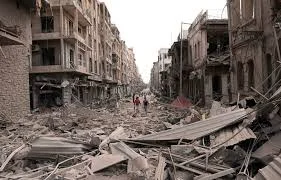
    Syria ravaged by war

    And when a country dies in the souls of its citizens, as appears to be the case of Syria under the successive Assad family regimes, and as it seems to be applying to Nigeria, it leads or can lead to a range of negative consequences. It can trigger social unrest and violent agitations as happened in Syria that have led to the fall of the regime and an uncertain future for the country. Citizens become increasingly frustrated, resort to protests, unrest and violence as Nigeria has been witnessing. A disconnection with a country makes people vote with their feet through indiscriminate migrations sometimes through hazardous routes including deserts on foot, and oceans using dinghy boats. Some more desperate ones try to flee by inserting themselves inside tyre and cargo holds of Europe, Asia or American-bound commercial aircraft. It also accounts for brain drain where talented individuals choose to leave the country to seek better opportunities elsewhere. We live in an era where well trained and skillful compatriots abandon their otherwise respectable jobs and businesses here to travel abroad where they waste their talents by engaging in menial jobs. The life of an average Nigerian is defined by frustration, desperation, despondency and lingering hopelessness. To many fellow citizens, the Renewed Hope mantra of the Tinubu regime is a bad joke.

    “Is Seyi also being prepared for the presidency after his father or sometime later. Before Hafez al-Assad died he took Bashar to France and handed him over to the then French president Jacque Chirac. Hafez told Jacque to treat Bashar as his own son and to help the young man become president of Syria. Jacque Chirac delivered when Hafiz died. Now Tinubu enjoys a difficult to explain association with France and romance with its president Emmanuel Macron. And our president has a politically ambitious son, Seyi.”

    When your best brains flee, the country could experience economic decline, a lack of investment, dearth of innovation, and lacklustre entrepreneurship. Indeed, there could be economic stagnation which could spike the crime rate and make individuals and corporations unsafe. Even the government will be compelled to spend more money to combat crime. When this happens investment will be imperiled and the provision of infrastructural facilities will suffer since the money for their provision will be channeled to fighting crime and criminals. It’s a vicious cycle. Our country is showing signs of these ailments. When a country loses its place in the hearts and minds of its citizens, it stands the risk of loss of its sovereignty. This scenario could be far-fetched in the case of Nigeria. But a weakened country in terms of governance and national security could become vulnerable to external influences that could threaten its independence.

    Nigeria is weakened in governance and this is compounded by conjectures that the critical mass of its leadership could be assets of powerful foreign countries. Gradually, Nigeria is ticking the boxes of everything that could prove fatal to its well-being. Not too long ago, no other person than a former military ruler and later an elected civilian president, Olusegun Obasanjo, while in the United States of America warned that Nigeria was barreling towards a failed state. But Nigerian rulers are adept at living in denial. It gives them comfort because it’s blissful. It postpones the day of reckoning. So it was not strange when the extant regime promptly and vigorously dismissed the assertions of Obasanjo. But Obasanjo was not alone in raising concerns about the declining status and stature of our country in the comity of nations, and the emerging signs of state capture. Other prominent citizens have spoken in that regard.

    Syria and Nigeria may share some things in common but they are two different countries, in different parts of the world, and which have followed different trajectories in their aspirations for growth and development. Nigeria’s aspiration to growth and development may actually have been in reverse gear for many years. It was heightened during the eight disastrous years of Muhammadu Buhari (2015-2023). In Syria Hafez al-Assad died of cancer. His preferred son and heir apparent Bassel had died earlier in a car crash in 1994. So his despised second son Bashar was quickly drafted and recalled from his training as a doctor in England, and groomed for rulership. He assumed the presidency when his father died and started off as an economic and political reformer. But when Syrians demanded more freedoms and political reforms, Bashar dropped the baton and returned to the playbook of his father – use of the sledgehammer. For years he maimed and killed his people until he lost grip and fled to Russia for asylum. History is replete with the certain fate of every ruler that resorts to iron fists.

    Nigeria does not yet have a father-to-son-to-grandchild rulership template. But who says it cannot happen here. It starts with state capture and some political commentators are already persuaded that we are headed in that direction. Seyi is the son of president Tinubu. He is said to be preparing to be the governor of Lagos state in 2027. That’s a legitimate aspiration. But of greater note is that he is a permanent fixture in the delegations of the president’s foreign trips. He is often at the head of protocol standings in foreign lands, usually in front of ministers, diplomats and, other Nigerian state officials. Is Seyi also being prepared for the presidency after his father or sometime later. Before Hafez al-Assad died he took Bashar to France and handed him over to the then French president Jacque Chirac. Hafez told Jacque to treat Bashar as his own son and to help the young man become president of Syria. Jacque Chirac delivered when Hafiz died. Now Tinubu enjoys a difficult to explain association with France and romance with its president Emmanuel Macron. And our president has a politically ambitious son, Seyi. But I do not think that there’s any dots to connect. Only that I have since dropped the notion that certain things cannot happen here. I did so for the good of my mental health.

    Ugo Onuoha, Veteran Journalist & Foundation Member of FICAN, He was Managing Director/Editor-in-Chief, Champion Newspapers Ltd

  • Restructuring Nigeria Makes for Great Rhetoric: Getting it Done is harder than Separating a Conjoined Twin.

    Restructuring Nigeria Makes for Great Rhetoric: Getting it Done is harder than Separating a Conjoined Twin.

    With his local government autonomy, the deregulation of the power to generate and distribute electricity, and now the tax reform bill, President Tinubu is strategically attempting to restructure the country through the back door approach.

    The katakata that has accompanied the tax reform bill is laying to bare once again how intractably difficult it is to govern and transform a country as structurally complicated as Nigeria. The most difficult bill to pass even in the best of circumstances including in countries with a coherent national identity is the tax bill. At the core of any country’s sovereignty is the ability to impose and collect taxes. On it hinges the ability of any government to carry out their core governance responsibilities. One can therefore only imagine how close to impossible it would be to reform the tax collection law in a country like ours with no national consensus, and where the constituent parts treat the country like meat from a stranded bleached whale to be plundered.

    Hence, the presidency should have anticipated the stiff resistance it is now facing from the different power centers each with conflicting agenda.

    It is a known fact that the north has a higher dependency ratio on federal revenue, hence a tax reform bill that shifts the locus of collection and distribution proportionately to the source will disadvantage them. There are also a few states in the southwest with the same higher dependency ratio, whose internally generated revenue is nothing to write home about and whose productive economies do not generate enough VAT to meet their budgetary obligations. In those instance it would be suicidal for the governors to support a tax reform bill that disadvantages them.

    With his local government autonomy, the deregulation of the power to generate and distribute electricity, and now the tax reform bill, President Tinubu is strategically attempting to restructure the country through the back door approach. He has chosen that approach knowing full well that a full scale restructuring bill would be dead on arrival in a Senate and a House of Representatives where the north has clear numerical advantage.

    The north and some southern governors are sending a clear message to the President that they are not ready for restructuring, which might lead to the diminution of their power to tax and control local government allocation as they choose.

    Nigerians have been shouting restructuring, restructuring and now as President Tinubu begins to unpack what restructuring looks like some governors are beginning to develop cold feet knowing that their own power might be eroded.

    Barring a miracle, the tax bill might have suffered a fatal blow. Some of the senators and members of the house of representatives that are opposed to the bills know who butters their bread and who can also put sand in their gaari, the governors. They would dare not go against their wishes.

    Nigerians are learning in real time how intractable it is to reform a dysfunctional country like Nigeria which remains 64 years after independence, a mere geographical expression like Chief Awolowo described it. Nigeria is like an arranged marriage between two partners each of which hates and distrusts one another, seeks to take advantage of one another, and yet are too afraid to disengage and dissolve their dysfunctional union because they figure out that like trying to separate a conjoined Siamese twins, the cost of disengagement might be too high to pay including the possibility of death on the surgical table.

    That is the intractable conundrum that our country has found itself. President Tinubu is putting everything at stake including his second term aspiration with his bold reform agenda. Only time will tell if it was a risk worth taking.

    Adewale Alonge, PhD, is Founder & President, Africa Diaspora Partnership for Empowerment and Development. www.adped.org

  • Our central bank governor is angry. Really?

    Our central bank governor is angry. Really?

    OLAYEMI Cardoso is the governor of the Central Bank of Nigeria (CBN). I was made to understand that he came to the job with intimidating credentials. Some of his traducers will dispute this by saying that his hands-on banking experience is thin and that he was essentially a once-upon-a-time chairman of an international bank with only one branch. And that one branch shared a building with the bank’s headquarters somewhere in Victoria Island in Lagos. I think the name of that institution is City Bank. It has to be acknowledged though that it was, still is, a global brand. But Cardoso’s experience, whether thin or thick, did not fetch him the top CBN job. What did it for him was his connection to Nigeria’s president, Alhaji Bola Ahmed Tinubu. He had worked for Tinubu in the president’s previous incarnation as the governor of Lagos state between 1999-2007. Cardoso is not alone in this regard. Virtually everybody who is anybody and who is occupying any significant position in this regime has been a ‘boy’ or acolyte of the president.

    Cardoso as the CBN governor has done a few other things since he was installed to succeed the former hack who occupied that office. Godwin Emefiele was a disaster who in addition to economic management ineptitude and administrative failings diminished the office of the CBN governor almost beyond redemption. Emefiele, it was, who as a sitting CBN governor made a grab for the presidency of Nigeria. He threw his hat into the ring in the contest for the presidential ticket of the All Progressives Congress (APC) political party. He was a card-carrying though closet member of the ruling party. The man who reappointed him to office for a second term, former president, Maj.-Gen Muhammadu Buhari, said much later that Emefiele did not break any law. Buhari, who turned out to be Nigeria’s affliction, may yet be right but in which sane clime would a serving central bank helmsman dive in such a reckless manner into the murky waters of partisan politics and walk away scot-free. Well, he has not walked away unscatted though he appears to be facing political persecution from Tinubu who appears to feel that the ex-CBN governor threw huddles on his way to Aso Rock Villa through the sudden currency recoloration in the heat of the 2023 campaigns.

    Expectedly, Cardoso had his hands full in terms of house cleaning when he assumed office. In addition, he had a couple of petty bills to pay including the backlog of unremitted foreign currency revenues of international airlines. Apart from minor distractions such as the above and occasional claims of accretion to the country’s foreign reserves (up to $40bn now from about $36bn though no mention is ever made of any portion of the sum that may be encumbered), the new sheriff in the apex bank has preoccupied himself solely with raising interest rates. For Cardoso, mindless raising of interest rates with its deleterious effects on other areas of the economy is the only tool in his box to rein in galloping inflation which now stands at over 33% (food inflation is actually about 40%}, and arrest the rapid and precipitous decline in the value of the Naira. The current street value of the Naira is $1/N1,740. For the 2024 national budget the federal government projected that $1USD would exchange for N800. The projection was off target. Even the economically illiterate knew then that the benchmark was a non-starter. The $1/N1,400 provided for in the 2025 budget may still fall through the cracks. In spite of Cardoso’s best efforts in digging in neither inflation nor exchange rate stability has been achieved. And he has been on these for one and a half years. Just like the chief executive officer of the Nigerian National Petroleum Company Limited (NNPCL), Mele Kyari, and the completion of refineries’ turnaround maintenance, Cardoso has missed all the targets he had set for himself on inflation reduction and Naira stability.

    For a distraction, the CBN governor has turned his attention to populism. Christmas and New Year celebrations are around the corner. Under Emefiele the experience of Nigerians during the festive season in 2023 was both horrible and horrific. To be sure the trauma started from October of that year. Nigerian banks virtually froze the bank accounts of ordinary folks and created a situation where it was easier for a camel to pass through the eye of a needle than for Citizen Ugochi to withdraw any cash from her bank account. In frustration some Nigerians visited their anger at automated teller machines (ATMs) and destroyed a couple of them. Others laid siege to bank premises and held workers hostage. Indeed some bank staff had to use a ladder to scale the fence to escape from the angry mob. We also witnessed situations where customers who managed to force their way into banking halls but could not be availed with desperately needed cash resorted to stripping themselves stark naked as a mark of protest. Of course, the videos of naked bodies with exposed genitalia went viral. The acute cash hoarding by the CBN in connivance with money deposit banks eased up a little soon after the February/March 2023 general elections. But the problem was not addressed in a systematic and deliberate manner. It has lingered on. Getting cash out from the bank accounts of ordinary folks has remained a nightmare for about two years, either from over the counter or from the ATM.

    Last weekend at the Chartered Institute of Bankers Annual Dinner, Cardoso told Nigerians, probably over mouth full of delicacies, that we should report to the CBN any difficulties in withdrawing cash from bank branches or from ATMs. This must have come as a shock to many ordinary folks because this has been their experience since before Cardoso assumed office. That statement from the CBN is the clearest indication that the governor and his leadership team are alienated from the reality of the majority of Nigerians. And how can you serve people you do not know and whose daily grind you are unaware of? On paper, depositors are allowed to withdraw up to N150,000 from the ATM daily. But this has not been the experience of customers for about two years. Rather ATM patrons have had to grapple with ATM machines that never dispensed cash. Where they do the customer is usually arbitrarily limited to cash withdrawal of about N20,000. Often these are old, torn and smelly Naira notes. An acquaintance whose remit included loading ATM machines at weekends (that’s when they have the money anyway) once told me that she had to iron the currency notes on an ironing board before loading them onto the ATM to avoid glitches in dispensing. It’s the same frustration for over the counter cash withdrawals. Customers are restricted to withdrawals of between N20,000-N50,000. But since last month cash withdrawals have been capped at a maximum of N20,000 by many so-called commercial banks. It is the same for ATMs whenever they are dispensing.

    But the experience at ATMs in recent times has been frustrating, annoying and degrading. The limit for daily withdrawal remains N20,000 but the mode of withdrawal has changed. In some ATMs, including the ones owned by the bank warehousing your deposits, the ATMs are now configured to dispense the N20,000 in multiples of N4000. In other words, you are compelled to work the machine five times to get N20,000 in N200 currency notes. And yet the CBN governor who urged us last weekend to report banks which are derelict in their duty of care pretends not to know what has been happening in the institutions he is supervising. He may really not be aware but that’s no credit to him and his team. It is dereliction of duty. Perhaps, the CBN is also not aware of the notorious fact that while the banks appear not to have cash for their customers, the point of sales (POS) operators have more than enough cash at any point in time for their own patrons, of course, at a handsome fee. Unless you are well heeled and connected, you can never get cash of N1,000,000 from any bank at this time. But you can readily get the same amount of money, and even more, from the street side POS as long as you are willing to pay a commission of between N30,000-N50,000. For the street vendor, selling Naira is a profitable business. There’s probably no other country where their currency is sold for a hefty profit by the street corner.

    Apart from cash withdrawal headaches, customers  can hardly get crisp banknotes from the banks, certainly not from transactions made over the counter inside the banking hall. Occasionally, a fortunate patron could get the new notes, including those minted in controversial circumstances last year by Buhari and Emefiele. But by special arrangement you can get these same rare banknotes from the POS if you are willing to pay a premium. However, there are two other sure places of getting the Buhari/Emefiele banknotes – through a superior bank officer, and at event centres for high-end parties.

    For the bank officer you must be ready to play ball while for the hawkers at event centres, you will have to pay a ransom. You may have to pay as much as N30,000 for N100,000 in fresh banknotes. Naira hawkers at event centres are not known to be bank workers. So how do they get the crispy banknotes that they sell at a premium. The banks know. And the CBN knows. Both are complicit in the economic sabotage. The CBN knows or should know the serial numbers of the banknotes it supplies to each bank and so knows the source of any leakage. As for other infractions by the commercial banks, the relevant CBN staff should be made to get off their air-conditioned offices and hit the streets for random checks on the banks and their ATMs. If this is not happening it will only be because the CBN and the banks are in league to punish depositors.

    Nigeria’s economy is largely informal and still driven by cash transactions. Through cash squeeze the CBN and the banks are doing incalculable damage to the economy and so should be branded as economic saboteurs. Cardoso’s angst at the bankers dinner last weekend is contrived and designed to distract. He should be made to purge himself. As for the banks, it is time for customers to file class action lawsuits to test the subject of Duty of Care of banks to their depositors and other clients.

    Onuoha, a veteran journalist, was the Managing Director/Editor-in-Champion Newspapers Ltd

  • VAT, vassal states and restructuring (2)

    VAT, vassal states and restructuring (2)

    THERE are too many things wrong with the regime of Nigeria’s president, Alhaji Bola Ahmed Tinubu. For 18 months since the advent of the administration, it has been a case of stumbling from one problem to the other. The tragedy is that almost all the challenges that this regime has been grappling with were self-inflicted. It started off with an ill-conceived petrol subsidy removal, and it followed that almost immediately with allowing the national currency, the Naira, to be floated.

    Both policies turned out to be disastrous because the so-called petrol subsidy payment persisted in an opaque manner, and subsidizing the Naira did abate. Recently, the state oil corporation, the Nigerian National Petroleum Company Limited (NNPCL) insisted that it will continue to import petroleum products in spite of the existence of a domestic producer, Dangote Refinery and Petrochemical Company, Lagos, which said that it has the capacity to satisfy domestic consumption for petroleum products. Dangote’s 650,000 barrels of crude oil per day production should on full stream produce 50 million litres of petrol and 15 million litres of diesel per day.

    Experts estimate that petrol consumption in Nigeria should not exceed 35 million litres per day. But corruption puts it much higher, sometimes for as high as 70 million litres per day. This outrageous figure is not strange because Nigeria is widely acknowledged as a crime scene – a country hurting in the hands of its supposed care-givers. Private importers who work at the behest of collaborators inside the government have been known to ‘import’ shiploads of petroleum products without the ships being sited anywhere near the country’s territorial waters, not to talk of discharging any products. But such ‘importers’ file claims with excellent shipping documents, and collect hundreds of millions of dollars from the public treasury. NNPCL does the same.

    Then a cartel hijacks the little litres of petrol that were in truth brought in, ferrying such to neighbouring countries in 33000-litre trucks and in broad daylight where they make a kill. Nigeria has clearly delineated borders with its neighbours. We have all manner of tax-payer paid government officials at those borders. But the trade booms. Currently, an investigative reporter has been reporting on the daily massive smuggling of 50kg bags of rice into the country with the active involvement of immigration top shots. He has been doing so with video evidence. Last week the journalist reported that the leader of the smugglers was accorded a red carpet reception at the Abuja headquarters of the Nigeria Immigration Service. His reports have not been disputed and nothing has happened to the economic saboteurs.

    Back to the issue at hand. Alhaji Tinubu takes responsibility for his misadventures on petrol and Naira. Almost two years since his hare-brained twin policies, market forces are yet to fully determine the prices of petroleum products and the price of the Naira. Whilst the NNPCL moderates the prices of petroleum products especially petrol by importing and fixing different pump head prices for different parts of the country, the Central Bank defends the Naira through regular sales of the United States dollars to the bureaux de change, and through the aggressive mopping up of  Naira in circulation. The policies are obviously not working. The price of petrol at over N1000/litre is not sustainable. It has ruined the economy and will inflict more damage with the regime’s insistence that it will stay the course. Nigerian families are worse off. Bloomberg, an American news organization reported last week that about two -third of Nigerian households can barely manage to feed once a day. And the quality of the meal is suspect. Their report was drawn from the latest statistics from the Nigeria’s National Bureau of Statistics (NBS).

    The irony right now is that there are claims that the country is turning the corner, and that good days are on the horizon. Tinubu says so. The central bank governor says the same. Finance minister who is also the coordinating minister for the economy sees the same signs of economic recovery. Even the national security adviser, yes the NSA, who should have his hands full with widespread insecurity pervading the land, parrots the same message of visible economic turn around. But they are the only people who see economic recovery on the horizon. And they all share one thing in common – they all binge on the public treasury. I wager that none of them had been to a gas station to buy either petrol for the government SUVs (armour- plated and bomb-resistant brands) that they are driven in or to purchase diesel to fire government – owned electricity generators in their residences which also are built and tastefully furnished with taxpayers money.

    It is not strange, therefore, that they are separated from reality and the daily grind of the majority of Nigerians. The case of the NSA is particularly painful and pathetic. Daily, he joins the security agencies including the secret police otherwise called the Directorate of State Services (DSS), the regular Police, the Civil Defence Corps, the Armed Forces, among others, to run political commentaries on the state of the country. In place of combating insecurity, what the NSA does is to warn non-state agents terrorizing Nigeria to know that Tinubu is not known to lose any battle. Is he for real? The man cannot be, and should not be, a national security adviser even in a banana republic. What our rulers are doing is beyond talking up the economy, they are deliberately deceiving Nigerians. Any sign of economic recovery must show in the living standards and living conditions of the people. Today’s reality is that about 20 million children are out of school and about 150 million Nigerians are grappling with dimensional poverty. Of course, our country has been the poverty capital of the world since 2019.

    If nothing good is happening in the country, and nothing good has really happened in Nigeria in the last 18 months, it is down to the fact that the majority of Nigerians do not trust the regime headed by Tinubu. He assumed office about two years ago with a fractured mandate. And since then he has proceeded to surround himself with people like himself (people with real and perceived blemishes), and those who speak and dress like him. He is enmeshed in policy somersaults. At every turn he puts the cart before the horse. His regime is wobbly, fumbling and floundering. And because the regime perceives itself as fragile and unstable and unsure in spite of its attempt at blustering, it now sees treason in every spoken word by non-regime supporters, in every action and inaction, and in every news story and editorial opinions of some publications. The point is that the more this regime sees enemies everywhere, the more it will retreat to itself, and the more eventually it will begin to crack down on imaginary detractors. Already, for the diminishing clan of regime choristers, anybody who opposes where Tinubu is taking the country is treated as not being patriotic. To their warped minds they equate patriotism with love for a serially bungling administration. They are not capable of putting country before party or ethnic affiliations or fleeting benefits from the rulers.

    Expectedly, the gulf between the people and the regime is widening and it is beginning to play out. It’s manifesting in the new tax bills before our supine national assembly. For a start, the tax bills are one year late in coming. It is the style of the regime – to make policy statements without even a draft of the working papers. It did the same thing with the student loans scheme and conditional cash transfer to the poor of the poor in the country, to mention but two. Often its pronouncements bear no relationship with reality. The administration at Inception said it would reduce dependence on loans to run the government. That avowal may have informed what was thought to be the urgency it would attach to the tax bills. It failed. Now that the regime has roused itself from slumber, ‘enemies’ have laid ambush for the bills.

    Except for a segment of the Yoruba nation, every other nation in Nigeria is now increasingly inclined to live like “onye ndiro gbara ugburu gburu n’eche ndu ya nche mgbenile” or eternal vigilance is the price for liberty. With the antecedents of Tinubu other component-nations of the country will only treat his tax bills with levity to their eternal damnation. The first thing that should set the alarm bells ringing is the composition of the team that crafted and superintended the making of the bills. They look like Tinubu. They bear similar names like his. They dress and speak like him. So why should he and his parochial team be trusted to be altruistic in the work they have done? Other nations within Nigeria have a right to suspect these tax bills because, so far, Tinubu has demonstrated that he is an ethnic bigot.

    It came as  no surprise, therefore, that a section of the north of Nigeria was the first to scream that the tax bills were not the ‘Hail Mary’ that the regime claimed that they were. Senator Ali Ndume cried foul and vowed that the bills would be killed in the national assembly. Though a member, Ndume must be mistaken if he believes that the country still has a parliament worthy of that name. This assembly is an extension of the Executive arm. I didn’t say so, the leadership of the assembly said so from the get-go. And they have not disappointed. Indeed the national assembly members commenced consideration of the money bills last year by first singing the personal anthem of Tinubu “On your mandate we shall stand…” Anybody who expected any better from such buffoons who masquerade as lawmakers must be living in a fool’s paradise. Then the national economic council (NEC) composed of the vice president  and governors advised Tinubu to withdraw the bills to allow further stakeholders’ consultations. Tinubu promptly and derisively dismissed them. The controversy and the insistence of the president to forge ahead have alerted the other nations. The south east governors forum, for instance, was reported to have set up an expert team to review the bills for possible boobytraps.

    The one bill in the basket of bills that has attracted much attention was the value added tax (VAT). Some experts and indeed non-experts are concerned that the president and his kinsmen tax team are up to some mischief. They have honed in on two words concerning the VAT bill – Attribution and Derivation – which of them should enjoy preeminence. Among other people, one writer attempted to highlight where the bodies were buried in the VAT bill. We will reproduce part of his exertion. The person who identified himself as Chris Okafor on WhatsApp wrote: “.. the truth is (that) tax experts filled with Tinubu’s apologists (and 90% of Nigerians of Yoruba extraction) worked on the bill and hid so much into the bill which will put Lagos and Ogun (states) into economic advantage slightly short of extortion of other states” of Nigeria. He argued that from the present structure of the VAT bill, 60% of the takings will go to the state of collection. His grouse was that a disproportionate amount of VAT proceeds will go to the states hosting the head offices of companies that produce ‘vatable’ goods and services even when the same goods and services were patronized in other states of the country. He illustrated with some companies saying, for instance, that if VAT of N500 million was collected from a branch of a company in one state, 60% of the collection under the proposed principle of derivation would go to the state hosting the headquarters of that company and not in the state where the product/service was consumed.

    There’s little doubt that an arrangement such as illustrated above will make some areas of the country vassal states. It will sow seeds of discord and discontent. VAT is a sales tax and so components of the federating units of the country should be legally empowered to collect and use consumption tax. Another allegation that should be concerning is the yet to be verified claim that there’s a provision in one of the tax bills that would empower the federal government to take a certain percentage of funds that drop into personal and corporate bank accounts. We align with the national economic council that more time should be allowed for further scrutiny of these tax bills. We do not presently have a national assembly, and the claim by the Executive that the assembly should be allowed to scrutinize the bills on our behalf is gratuitous. Our so-called representatives and senators are preoccupied looking out for themselves.

    It’s accepted that we operate an ugly and difficult to decipher federal system of government, but 25 years and counting, we must summon the will to begin to put processes and structures in place to approximate a federation. The ruling elite has a bounden duty to work harder to smoothen the rough edges which combined forces could lead to the implosion of Nigeria. They should see the Nigerian project as bigger than their personal and/or regional interests. And if this perceived skewed VAT distribution is part of the ongoing restructuring in the image and likeness of Tinubu, it may not bode well for this country that for all intents and purposes is tottering on the edge of the cliff. The allegation that bank deposits may be taxed by the government could just prove to be the trigger for national cataclysm. Who wants this?

    *Concluded.

    UGO ONUOHA Was the Managing Director/Editor-in-Chief, Champion Newspapers Limited

  • VAT, vassal states and restructuring [1]

    VAT, vassal states and restructuring [1]

    “Soso onye nzuzu bu onye na-amagh mgbe ekechara nku ukwa”. Only a fool would not know when the bazaar is over. I used to have a friend. He is now late. His name was Jimanze Alowes. He said he was Igbo from Amaigbo in Imo state. But his name did not sound Igbo. However, he spoke impeccable Igbo, if there was any such thing. He also spoke impeccable English, if there was any such thing also. He was brilliant, and articulate. He was certainly street wise. In hindsight, he probably knew that longevity of life was not a gift to him from his creator. He understood this country, and he wanted things done, and done fast to his personal upliftment.

    On occasions when we sat down to discuss and bemoan the challenges that the country threw on the path of youngsters, he would sit in disturbing and disconcerting silence. He left you with the impression that he was not paying attention. But when you expressed frustration that he was not listening he would quietly but intently look you in the eyes, and then say something to the effect that bells were being rung every morning and those with trained ears knew where to go to grab their share of the looting that was going on in the country. Here, I am referencing conversations that took place almost 30 years ago.

    In another vein, Nigeria is like the Biblical story of the 10 Virgins as recorded in the Gospel of St. Matthew chapter 25 from verse 1 and following. “Then shall the kingdom of heaven be likened unto ten virgins, which took their lamps, and went forth to meet the bridegroom. And five of them were wise, and five were foolish”. You will wonder about the relevance of this illustration to the topic above and the broad theme of the subject under discussion. The five virgins who had oil in their lamps represented real Nigerians, while the five foolish virgins who profess to be Nigerians are only outwardly so, doing so just with their lips. In reality they are outsiders who have been left, or who allowed themselves to be left, with the short end of the stick. The Igbo in Nigeria may just be the five foolish virgins. This is not an effort at self deprecation.

    We know it as a fact that some Nigerians have been mouthing the urgent imperatives of restructuring the country. But some elements in the Igbo nation are campaigning for an excision from this country, and the creation of a new country to be called Biafra. This new country was actually first created on May 30, 1967 and became defunct in January 1970. So, Biafra was a country that lived for about three years. The point to note is that while some Nigerians are still clamouring for restructuring, the smart ones are at work doing the deed of reshaping the country. This started with the advent of the All Progressives Congress (APC) political party with Maj.-General (rtd) Muhammadu Buhari in government in 2015. Buhari (2015-2023) was a bad ruler. And he was inept in his attempt to restructure Nigeria to benefit Muslims and the northern parts of the country.

    Nonetheless, he tried his best. He populated his regime with people who worshiped like him. He moved every movable government institution to areas which he considered to be part of the the greater north. He borrowed offshore funds in the name of all Nigerians but concentrated on the citing of public facilities and infrastructure in the north. Buhari’s regime went into overdrive to explore for crude oil in parts of the north. He spared no expense to make this a reality. Where the money for the Buhari venture was not borrowed, it came from the resources from other parts of the country. He commenced building pipelines from the Niger Delta region to the north, and further afield to neighbouring Niger Republic, his alleged ancestral home, to pipe natural gas to yet to be built power stations, and for storage.

    Buhari was no fool. He had a clear picture of Nigeria’s tomorrow. He knew that what we were doing, and are still doing, in this country was not sustainable. He worked very hard to ensure that the north or part of the north was ready for the inevitable. It was this reasoning that informed his borrowing billions of dollars from the Chinese to construct standard gauge rail tracks from the north to the heart of Niger Republic, his other home country. Nigeria will repay the debt but will only get crumbs from the designated projects. The eastern axis of the country will get a narrow rail gauge. Buhari was an intentional man but because he was inept at whatever he did, he failed to accomplish his parochial vision of restructuring Nigeria. He failed himself. He failed his people. But he left a template for his successor. And the new man is adept at devious schemes.

    The new ruler, Alhaji Bola Ahmed Tinubu, is focused and determined to restructure Nigeria to benefit his south west people. And he is not shy about it. He has already said that those expecting restructuring along the lines he had been campaigning for in the past three decades will have to wait in vain. He said that restructuring of the country has been moving apace since he was made president about 18 months ago. And Tinubu’s new definition of political and economic restructuring of Nigeria included stuffing the institutions of the federal government with people who speak and dress like him. He has captured the commanding heights of the security sector and gifted the same to his acolytes who mostly are members of his ethnic group. The same goes for revenue generating agencies of the federation. His presidency recently attempted to dismiss the allegations of his crass nepotism but ended up compounding the situation. The graphics it published actually confirmed the allegations and went further to show that two geo-political zones of the country – the south south and south east – were completely left in the cold in the headship of the security agencies.

    In like manner one of the road infrastructure that was repaired and reconstructed to enviable standard soon after Tinubu took office was the Third Mainland Bridge in the economic capital of the Yoruba nation. If you want to fully appreciate the magnitude of the work done there, drive through it at night. I have driven through many bridges in Nigeria, some of them at night, and I can say with emphasis that none compares with the ‘new’ Third Mainland Bridge. When I drove through that bridge at night soon after the reconstruction was completed, the word restructuring immediately flashed through my mind. To think that Buhari had actually worked on the same bridge some months earlier. Of course, he did it casually since it was not in his zone. Meanwhile, two massive road projects are currently ongoing. The Lagos -Calabar Coastal Super Highway and the Badagry-Sokoto Desert Highway. Both have some things in common: they will cost Nigerian taxpayers trillions of Naira; they will take-off from Lagos, the economic capital of Yoruba land; and, they will pass through all or almost all Yoruba states. The contracts for these super highways have been awarded to one contractor, Hitech Construction Company, whose owner is alleged to be a long-standing business partner of the president. If there were public tenders and competitive biddings for the projects such information is not in the public domain. And there’s no evidence that any environmental impact assessments were conducted ahead of awarding the contracts. What we know is that the right of passage for the Lagos -Calabar road has been changed multiple times. The same for the width of the road. It has shrunk from 10-lanes to six lanes but the cost has not come down. The cost, if ever it will be delivered, will increase beyond the N15 trillion price tag going by the way the Nigerian government operates. It’s worse for these road contracts because the processes are opaque. They are in-your-face contracts.

    As our rulers, first Buhari and now Tinubu, restructure Nigeria in their own image and in their own likeness through the accumulation of debts, many Nigerians including succeeding generations will be saddled with paying debts that had not been used to benefit them. The Igbo of the south east will be the worst hit. The other day it was reported that if Nigerians share the current quantum of the country’s public debt, each citizen will have to pay about N620,000, which is eight times the prevailing minimum wage, to defray the debt. Where’s the equity in this, given that the loans that had been incurred had not been used to the benefits of all parts of the country. Indeed, not too long ago some persons from the Igbo nation said they intended to approach appropriate international courts and tribunals to ensure that Ndigbo would not be obligated to pay back offshore loans that were procured by the federal government but were not used for their (Igbo) benefit.

    *In our next intervention we will explore how Tinubu and his economic witch doctors are scheming to aggrandise a section of the country to the eternal damnation of the rest through their so-called tax reforms. And why there should be a last ditch battle to stop them. That should be a patriotic duty.

    The New Third Mainland Bridge, Lagos

    Ugo Onuoha, Veteran Journalist, was the Managing Director, Editor-in-Chief, Champion Newspapers Limited