Author: Ugo Onuoha

  • ‘Seyi tell your papa country good well well’

    ‘Seyi tell your papa country good well well’

    By UGO ONUOHA

    Two years, in the next two weeks, into the regime of Nigeria’s president, Alhaji Bola Ahmed Tinubu, losers of the 2023 presidential election who contested against him, as well as those who fiercely opposed his suitability for the presidency ab initio, are not letting go. They have tried everything in the books to distract our dear ruler without much success. At the presidential election tribunal in 2023, they threw everything at him including accusing him of forging his name, his university certificates, claiming an alumnus of schools he never attended, and being involved in cocaine deals in the 1990s. None of the mud thrown at him stuck. The venerated justices of the Supreme Court (never mind that some ignoramuses who do not know that the law is an ass prefer to call it Supreme Cult) ensured that nothing untoward happened to the widely accepted candidate, a man after the hearts of a majority of Nigerians at that time, and even up till today. The justices demonstrated that they were heads and shoulders above our revered justices of blessed memories including Kayode Eso, Chukwudifu Oputa, Alfa Belgore, among others.

    Those bent on destroying our country ensured that Tinubu was fully distracted with multiple litigations in the United States’ law courts after Nigeria’s ‘Independent’ National Electoral Commission (INEC) correctly and courageously awarded him the presidency after a fair, free, and credible election which was devoid of any controversies. Both domestic and foreign election observers had in a rare unanimity given the conduct of that poll and the result it produced a clean bill of health. Though the result of the election was declared in the wee hours of March 1, 2023 (about 4am), in spite of the fact that the INEC had assured a few hours earlier that collation of the same result will continue on the same March 1, Nigerians still managed to pour out onto the streets of the country, from the south east, south south, south west, north central, north west and north east, to celebrate Tinubu’s win a few minutes after 4am. Nigerians celebrated his victory like drunken sailors, and gave kudos to the electoral commission for the conduct of the freest and fairest election since 1993. And since that spontaneous celebration two years ago, it has been an unbroken chain of celebrations because the man over whom Nigerians rejoiced had kept faith with his campaign promises to turn the fortunes of the country around, arrest its economic decline, provide enabling environment for employment especially for the youths, stabilise the value of the Naira, tame the galloping inflation, tackle insecurity head on, stop the industrial scale theft of our crude oil, and give corruption a bloody nose. In less than two years, the living standards and conditions of Nigerians have been on a rapid rise, and these have been making our people heady with pride. The ugly tagging of Nigeria as the poverty capital of the world has since been erased. If our country is no longer the poverty capital of the globe because of the relentless war on poverty by the crusading Tinubu regime, do not ask me which country inherited the odium from us. I am a patriot. I do not care. I am only interested in my country. You should also not bother. For once on this issue, you should be a patriot. I am determined to speak well of my country. You should also.

    But in spite of a series of victories by Tinubu’s regime since it came to office in a landslide and popular mandate of a cross section of Nigerian voters two years ago, and despite plaudits from international agencies including the World Bank, International Monetary Fund, JPMorganChase, Standard & Poor’s and similar patronising institutions and credible voices on the wonderful outcomes of Tinubu’s rewarding reforms, the enemies within are still not giving up. They are determined to ignore the beneficial effects of the reforms on the lives of Nigerians, and continue their unpatriotic and egregious efforts to undermine the extant regime. How much more evil can the opposition be? And other undiscerning countrymen and women. After failing in using propaganda to besmirch this phenomenally successful regime, the opposition has now resorted to the use of a pernicious tool. The option which the opposition (real name: enemies of the state) has recently adopted and deployed will make the regime look bad no matter how it reacted or responded.

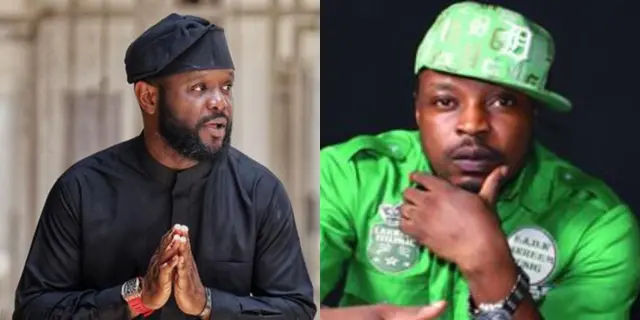
    Bad act Abdukareem Eedris, has been recruited by the opposition to paint our hard working president in unflattering hues. Eedris masquerades as a music producer, writer, songster and political activist. You can see mischief in one nondescript man combining all these attributes. The only thing, to the best of our knowledge, that has brought him fame and fortune (in my considered patriotic opinion, notoriety actually), is that he writes songs which are rightfully promptly banned by the government. It does not matter whether the government was formed by the People’s Democratic Party (PDP) or the current ruling All Progressives Congress (APC). You couldn’t have forgotten his 2004 ‘Nigeria jaga jaga nonsense song that was summarily banned by Olusegun Obasanjo who was the president then. How could a sensible adult be writing lyrics for a song twenty years ago and claiming that our country was a ‘sh’thole’ at a time that the country was actually an Eldorado. To put it mildly and politely, Eedris said at the time that Nigeria was a country with no rhyme and no rhythm. And that it was drifting. How could he? Was he also among the prophets as was asked of King Saul in the Holy Bible thousands of years ago. Obasanjo was a retired general of the Nigerian army before becoming a civilian president. He did it the army general’s way: he banned the song. But he did not go the whole hog- he did not ban Eedris from making music. Ever again. In hindsight he should have.

    If Obasanjo had banned Eedris from his proclivity to write and produce and broadcast vexatious songs which bear no relationship to the lives of Nigerians, Tinubu and his team would not now be left with contending with the notoriety of Eedris and those who may be tempted to copy him and follow his annoying and irritating footsteps. It would appear that Eedris smiled to the banks after Obasanjo banned his ‘Nigeria jaga jaga’ non-song. That would only be the explanation for what emboldened him to wax his recent song titled ‘Seyi tell your papa country hard’. Seyi is one of president Tinubu’s adult children who identifies as ‘Nigeria’s First Son’. His sister also parades herself as ‘Nigeria’s First Daughter’.

    In his latest provocation Eedris said that Nigeria has become a hell hole. He claimed that life has become short, nasty and brutish. Is Eedris for real? He even had the gumption to instruct the ‘First Son’ of the federation to relay his made up bad news to his father. In centuries past and in some jurisdictions, the appropriate punishment for Eedris’s impudence would be a date with the hangman. But I know for a fact that if Tinubu were to be an emperor in that long gone era his good nature and his milk of human kindness would not have allowed him to put Eedris to the sword. Such is the extent of the kindness and the soft nature of our dear ruler. But Eedris and his co-travelers should not underestimate the capacity of this regime to do things that will ensure regime preservation.

    It is down to Tinubu’s concern for the masses of our country that he rolled up his sleeves from the get-go to reverse the enormous damage done to Nigeria’s economy by his party-man predecessor, Muhammadu Buhari, who turned out to be Nigerians’ nightmare in the eight years of his presidency. Tinubu demonstrated uncommon courage by removing petrol subsidy on May 29, 2023- his first day in office. He achieved two things or even more with that masterstroke. He put more money in the coffers of state governors who have used the additional inflow to improve the lives of their people. Secondly, that move made queues at our petrol stations to disappear overnight. Yes, petrol prices initially shot up but they have since normalised. And Nigerians are now grateful to Tinubu because petrol is now affordable and easily accessible. Eedris must be living on another planet for not seeing what our dear leader has achieved in this sector.

    Has Eedris not noticed that the initial inflationary pressures exerted by that patriotic removal of petrol subsidy by Tinubu has since moderated with inflation racing down towards a single digit? If the president did not remove the subsidy Nigeria would have been bankrupt long before today. We wouldn’t have had a country to call our own. Imagine what would have become of the ‘giant of Africa’ as we affectionately call ourselves. In addition, can’t Eedris at least acknowledge that the surfeit of cash for various tiers of our government has ensured that we have stopped piling up offshore loans for future generations of Nigerians. If Tinubu did not stop petrol subsidy when he did we would have been borrowing and behaving as though borrowing was going out of fashion. Even if Eedris will not, I will give it to this regime that the monies saved from yanking off petrol subsidy has empowered the regime to adequately fund and train our security forces to combat insurgents, terrorists, bandits, kidnappers, and sundry felons. ISWAP, Boko Haram, Ansaru, and the like are on their back foot because of the winning streaks of our security forces. It takes an implacable enemy and a loud mouth like Eedris not to see the positives in this patriotic and people-centred regime which is working its socks off.

    The good news extends to the Naira which massive devaluation has been the best thing to ever happen to Nigeria since sliced bread. With the value of our currency left to the forces of the market, investors have been flooding our country. States and local governments have their hands full attending to inquiries from foreign investors. And Eedris should be told that some transnational corporations, a few really, who left on the heels of Tinubu’s reforms are now regretting their actions, and seeking a way to come back to partake in our flourishing economy. And we are now giving them conditions for readmission. JPMorganChase cannot be wrong. It recently touted the strengthening of the extractive arm of its business in Nigeria. Its business model was not founded on charity. A global rating agency last weekend moved Nigeria’s economy from negative to positive. Eedris should acknowledge that in spite of the fact that some of Nigeria’s former diplomats had alleged that they routinely bribed such agencies for favourable ratings. By the way, ratings influence the cost of money for countries such as Nigeria which are neck deep into borrowing from the international lenders market.

    If my opinion is sought I will recommend that Eedris and others who may be inclined to think, behave, sing and write like him should be branded as security risks and enemies of the people. If they are left unchecked, they will continue to incite Nigerians to rise against a regime that has shown commitment to revamping the economy, improving our politics and governance, eliminating out of school children, making Nigerians secure, combating the country’s lingering and notorious energy deficits, and moving the country into the first world. Banning Eedris’s latest hit song – ‘Seyi tell your papa country hard’ is not enough. And it should not be left in the hands of the national broadcasting commission (NBC). He will do worse if the rumoured impending disclosures from America’s Intel Community turned out to be adverse to whatever is left of the reputation of our dear ruler.
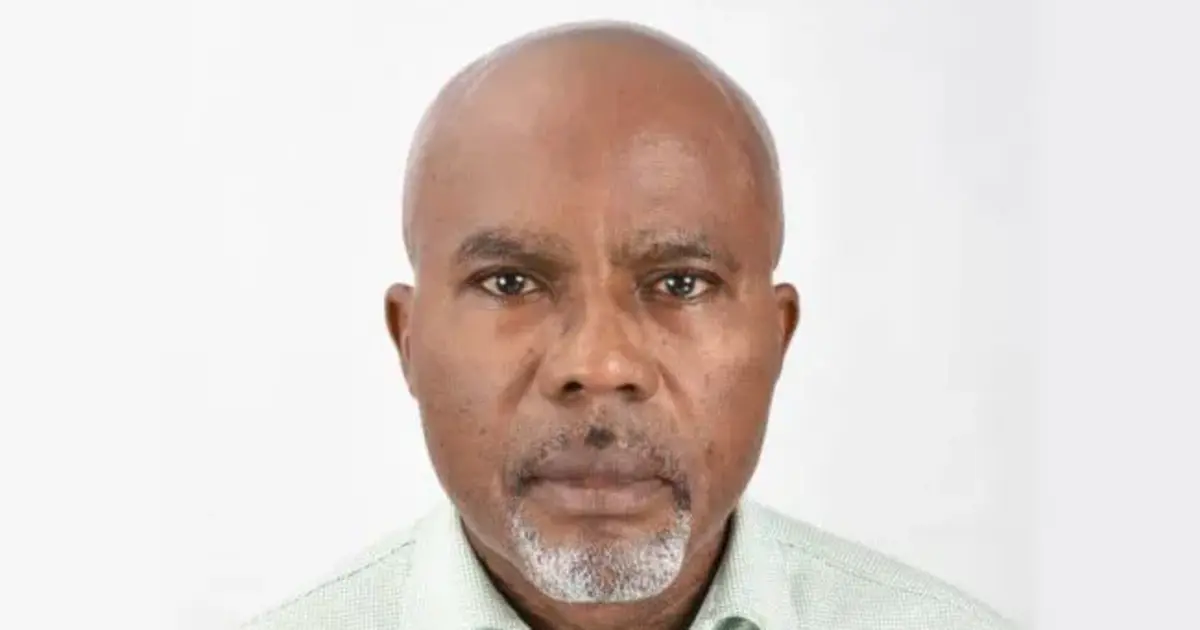

    UGO ONUOHA, a veteran journalist, was the Managing Director/Editor-in-Chief, Champion Newspapers Limited

  • Senator Natasha, the girl-child and kitchen sink throwers

    Senator Natasha, the girl-child and kitchen sink throwers

    By: UGO ONUOHA

    IN our country, Nigeria, they are the alpha males. I mean the male class of the ruling elite. In truth, there’s virtually no female class of the ruling elite since the advent of this country in 1914 when the northern and southern protectorates were amalgamated by the British overlords. There’s this legend that it was a woman who, today in Nigeria, will be regarded as the ultimate ‘side chick’ or a consort to the then ruler of our country that named Nigeria, Nigeria. The woman, Flora Shaw, was a British journalist, and later wife of Lord Frederick Lugard, a British colonial administrator. The story was that in 1897,Flora Shaw coined the name “Nigeria” to refer to the region surrounding the River Niger, a river that was discovered by Mungo Park irrespective of the fact that people had lived on the banks of the same river for centuries before the coming of that meddlesome foreign, no good, interloper.

    Ironically, if Flora Shaw were to be alive today, she would have been in the forefront of the agitation for the respect of the rights of the embattled Senator Natasha Akpoti-Uduaghan. She was a noted strong advocate for women’s rights. There are still some female folks who speak out in the promotion and defence of women’s rights. But their voices are muffled and often drowned out by the cacophony of noises from the alpha males who are the custodians of “ji na nma” or the wielders of the stick and the carrot in the Nigerian realm. Women of stature in the mold of Margaret Ekpo, Funmilayo Ransom-Kuti, Queen Amina, Gambo Sawaba, and the leaders of the protesting Aba Women in 1929 have become extinct.

    The 1929 Aba Women’s Riot was led by Madame Nwanyeruwa. A fearsome and extremely courageous woman who inspired others to organise a massive revolt against British colonial administrators in the southeastern part of this country. The riot which was also known as the Women’s War was a response to the introduction of direct taxation on women and the oppressive policies of the British colonial government. Significantly, the Aba Women’s War inspired other events in other parts of Igboland, and Nigeria throughout the 1930s, 1940s and 1950s. Indeed, historians recorded that the riot was a significant event in the rise of African nationalism and a challenge to British colonial rule in some African countries including Nigeria. Natasha would have rest assured if we still have the Nwanyeruwas, Funmilayos, Margarets, Gambos and Aminas. In a sense Natasha is an orphan. The tragedy is that what is currently happening to senator Natasha in the cult called the senate of Nigeria, the supine and staggeringly corrupt and incompetent ‘Independent’ National Electoral Commission (INEC), the Executive branch of government in Abuja and Lokoja (Kogi state), and among some vested political actors have implications far beyond whatever fate would befall Natasha. If the mafia in politics and the various branches of our government succeed in silencing Senator Natasha Akpoti-Uduaghan, then the fate of women and our female children would be impaired permanently. Women will be stigmatized. Their participation in politics and governance will be adversely impacted. That adolescent girl in the university will be compelled to sign on to the Code of Silence in the face of sexual harassment by her lecturer or supervisor. The woman who desires to make a career in corporations or Nollywood will lose the courage to name and shame male sex predators. Ultimately, this country loses.

    The concerted efforts to squelch what appears to be Nigeria’s ‘Me Too’ season with the allegations of sexual harassment against the senate president, Godswill Akpabio by his colleague, Senator Natasha Akpoti-Uduaghan have dire ramifications for this country. That we appear not to care is shocking, to say the least. It’s instructive and curious that Natasha’s senatorial zone that could only muster about 100,000 votes between the two leading contenders in 2023 after about one year of campaign, was able to manufacture 250,000 votes in a matter of hours to trigger Natasha’s planned recall. Curiouser still is the fact that the face of the recall campaign was that of an aide to the governor of Kogi state who is a noted political enemy of Natasha.

    In the last one month all manner of kitchen sinks are being thrown at Natasha simply because she complained about a toxic work environment. She claimed that she was suffering privations in her workplace, which is the senate of the federal republic, because she refused the alleged repeated sexual advances of the senate president, Akpabio, who is also the chairman of the national assembly. In the event of the unexpected, Senator Akpabio is the third in line to the presidency. So the office he occupies is significant. Ordinarily, the Natasha matter should be simple and straightforward. The burden is on the person who accused another of wrongdoing to prove her weighty allegations. The easiest way to resolve the matter would have been to provide the platform to put the accuser on the spot and then discredit her claims, and dismiss the evidence that she claimed were in her possession.

    But no. First, her petition was initially rejected because she signed it contrary to senate’s rule. Eventually, she succeeded in submitting the amended version but by that time some senators had said publicly that her petition was dead on arrival. How can a supposedly lawmaking body be so lawless, tactless, reckless, and brazen? Earlier, the chairman of the senate committee on public petitions, Neda Imaseun, was all over television stations speaking on the petition and suggesting that Natasha’s allegations lacked merit. Even as rotten as our country is, it is still difficult to find something so absurd to compare with the conduct of Senator Imaseun. Well, his behaviour should not be entirely surprising. After all, there’s information in the public domain that the man is a fugitive from the law in the United States of America (USA) where he had been disbarred from practicing law in the state of New York because of fraud. But he is symbolic of many office holders since the return to rule by civilians in 1999. The head of the executive branch is a severely damaged person. The chairman of the national assembly who is also the senate president had allegations of a multi-billion Naira fraud by the Economic and Financial Crime Commission (EFCC) on his neck up until he was smuggled into that office. There was also a speculation that the head of the judiciary is on the no-visa list of the US. She may be the first chief justice of Nigeria (CJN) to be sworn into office twice – first when she was nominated in acting capacity and then when she was confirmed by the senate. There’s so much awkwardness in the current dispensation.

    If the current Nigerian senate is not a cult headed by males who are adept at shaking people down in mafia style, the Natasha matter should not have lasted longer than two weeks. By now the matter should have been out of the national agenda, one way or the other. Both Akpabio and Natasha would have been compelled to appear before a senate ethics panel headed by an untainted senator. There is a precedent with former senate president Olusola Saraki when one of his colleagues accused him of wrongdoing. He stepped aside, appeared before the relevant committee and cleared his name. It appears in this instance that Akpabio does not see himself as a ‘first among equals’. He probably thinks himself as an executive president with full complements of constitutionally – guaranteed immunity. If that be the case, then there’s an urgent need to remind him that he is not what he probably thinks he is.

    Let me conclude with the thoughts of a female professor in a WhatsApp group where I belong to, who responded to a man who sounded like a misogynist on the Natasha v Akpabio face-off. She wrote: “As much as I do not want to be involved in political matters, I am constrained to make some comments (in response, actually a rebuke of what a man posted). First,… I am shocked that you refer to Senator Natasha as an alaseju whose ‘bom bom must kiss hot water’. It is a sad reflection of how much we are willing to tolerate in our public and private (lives). Senator Natasha made some allegations, she expressed her willingness to provide evidence. The minimum requirement for any decent society and any man with the tiniest bit of integrity is to provide an enabling environment and submit himself to thorough investigation so that the truth could be established.

    “Instead of doing the correct thing, they brought out the ‘smoking guns’ and went on a frontal attack. They were taking ‘àtamo and joining it to àtamo, painting the woman black and addressing everything but the substance of the matter. Many men cry(ing) more than Akpabio and they behave as if they were with him 24/7, figuratively behaving like the outsider that weeps more than the bereaved. Sir, SEXUAL HARASSMENT IS REAL AND IT DESTROYS THE LIVES OF SO MANY PEOPLE (emphasis mine). Lives and destinies are compromised/destroyed when people in power misuse their powers to request/enforce sexual gratification. I teach in a tertiary institution and I have seen it firsthand, both through NGO (non governmental organisation) and in my teaching and research. If (this case is) handled properly, (it) would have sent a strong message to sexual harassers in educational (institutions) and workplaces.

    “Why is Senator Akpabio afraid of an impartial investigation? What is he running from? Why are so many people ready to castigate her instead of asking that an enabling environment be created for her to present her evidence? May I also ask that Senator Akpabio be requested to provide evidence disproving the allegations. For GOD’S (sake), he is an elected servant of the people, holding the position of the number 3 citizen in this country, he should be answerable to the citizens of Nigeria. One of the things that sadden(s) me in this whole saga is the vociferous, almost rabid defence of Sen. Akpabio from certain, sometimes disappointingly, unexpected quarters. Certainly, there are many more closet sexual harassers than we imagine”. The mistake we are making is to think that this matter is just about Natasha. No. It is not. It’s about the future of the girl-child. It’s about impunity. It’s about the Code of Silence and its enforcers. It’s about the future wellbeing of this country. Evil doers will be emboldened if they succeed in silencing and crushing Natasha.

    UGO ONUOHA, Veteran journalist, was the Managing Director/Editor-in-Chief, Champion Newspapers Limited

  • MTP is the law; he can do no wrong

    MTP is the law; he can do no wrong

    By Ugo Onuoha

    THERE are many persons in this republic whose names should never appear in the same sentence with the word democracy. Alhaji Bola Ahmed Tinubu, Nigeria’s current president is one such name. There are many others. He has been around for more than awhile. His reputation precedes him, but hardly for good. There’s no suggestion here that he’s a thoroughly bad man. And irredeemable. But he carries such a heavy baggage that ordinarily would have killed off the social, cultural, political, economic, public and private lives of three persons combined. You will be living in denial not to give credit to any person who has allegedly lived with a false name almost all his life, and who has travelled the world and also worked in transnational corporations with the said dodgy name. You probably may have read or known of someone who claimed to be an alumnus of a school they never attended. Tinubu is one such person. Claiming alumnus of an academic institution not attended is almost an everyday occurrence these days. He had once claimed to be a former student of the University of Chicago, and actually filled a form in that regard for election purposes. But it turned out that he was not a former student of that college. He was caught. He recanted, and then quickly recruited one senator Tokunbo Afikuyomi to play the role of a fall guy. He got away with it in spite of a dogged pursuit in the law courts by the late fiery attorney Gani Fawehinmi.

    “Tinubu is baked in the furnace of the streets, at home and abroad. Apart from becoming the president of our country, not much has changed concerning him. During his soujourn in the US in the 1970s, he was also law onto himself or an outlaw as some would like to say until he was not. He was alleged to be a banker to outlaws and henchmen of the underworld.”

    In line with what appeared to be his life and career, the same person who is today the president of our country attempted to hoodwink old students of the prestigious Government College, Ibadan in Oyo state to host a reception for him as one of their own who has made it in life, decades ago. Again, he was caught at the last minute when nobody could identify as his classmate. However, he was undeterred. Somewhere in his dark past, Tinubu had filled out yet another application to the effect that he had attended yet another Government College, but this time in the Eric Moore, Surulere area of Lagos in 1970. A casual search indicated that Government College, Eric Moore was founded in 1974, clear four years after he claimed that he had attended the school as part of a requirement for admission into a university in the US. He reportedly gained the admission into the college. The admission, to this day, remains controversial. He’s said to have acquired a diploma from that university. But the diploma remains controversial. Even forgery has been associated with it. Lawyers say you cannot put something on nothing and expect it to stand. This is not for Tinubu. He puts something on nothing, and wills it to stand. With Tinubu, the so-called learned people are stark illiterates.

    In some other climes their citizens and sundry gatekeepers of the sanity and health of their nations work extra hard to keep away some people from the levers of the powers of government. Many fall into the category of people who are usually shut out of acquiring and exercising the enormous powers of government. But for this conversation we will restrict ourselves to only two categories of such persons who should be kept out of wielding state power. The first of such persons are those who are mired in sullied and questionable past. The fear is that those in this category carry their life of criminal ‘entrepreneurship’ into government to the hurt of the majority of the people. A leopard does not change its spot. The second group that every sane society tries very hard to keep out of the very top echelons of government is the extremely wealthy, especially those with riches of the questionable type. During the 2023 presidential election, the phrase ‘wealth without enterprise’ gained currency and traction. There are many of them in government today. Lawyer and politician, Muiz Banire, it was who once described them as politicians without a second address. For such people partisan politics and access to the public treasury is their sole and only means of sustenance and livelihood. To them the talk of democracy and its ethos are tales by idiots. To them majority of Nigerians are fools and only good enough to be used as canon fodders in the quest for political power.

    “Tinubu has no principles. He only pretends to be a democrat. He is driven by selfish interests. He’s a tortured man. He is insecure in spite of his bragaddacio. If you are in doubt about how insecure Tinubu is, look at the form and texture of his security chiefs and kitchen cabinet?”

    Tinubu is baked in the furnace of the streets, at home and abroad. Apart from becoming the president of our country, not much has changed concerning him. During his soujourn in the US in the 1970s, he was also law onto himself or an outlaw as some would like to say until he was not. He was alleged to be a banker to outlaws and henchmen of the underworld. And reportedly refunded a huge sum of money to the US authorities in Chicago for alleged illicit deals. A lawyer who was one of his campaign spokespersons in 2023 said Tinubu was not sued for the recovery of the money suspected to be proceeds from illicit drugs. He said only the bank accounts which bore his name were sued for wrongdoing. The man who was engaged in that lawyering, Festus Keyamo, is today the minister of aviation in his principal’s clueless regime.

    In countries and jurisdictions where there are strong institutions and laws, and the will to enforce laws, Nigeria’s president in his past life, which may actually not have passed, could only thrive in the underworld. Or ‘overworld’. And he did. But in Nigeria, Tinubu as president is the law. Only fools still doubt this. Anybody who is the law can do no wrong. In theory we have three equal co-branches of the federal government. But in reality we have one ‘branch’ of government – Tinubu. He showed his hand from day one on May 29, 2023, the very day he assumed office as president after a controversial and hotly disputed election. He scrapped the so-called subsidy on petrol. In tow he handpicked his own senate president, Godswill Akpabio who’s also the chairman of the national assembly (NASS), and installed the chief justice of Nigeria who is the head of the judiciary. One was facing imminent prosecution by the anti-graft agency over alleged fraud running into billions of Naira from his era as governor of Akwa Ibom state. The other who heads the judiciary is alleged to be a personal non-grata in the United States of America (USA) through visa denial. Tinubu enjoys sovereign immunity, the other heads of the so-called co-equal branches of government don’t. The president controls the armed forces, the regular police, the secret police and all other instruments of coercion. So his co-heads of government who are alleged to be tainted survive at his (Tinubu’s) pleasure and mercy. They can’t lift a finger. They must necessarily do his biddings. And they do – one quietly, the other noisily.

    “A lawyer who was one of his campaign spokespersons in 2023 said Tinubu was not sued for the recovery of the money suspected to be proceeds from illicit drugs. He said only the bank accounts which bore his name were sued for wrongdoing. The man who was engaged in that lawyering, Festus Keyamo, is today the minister of aviation in his principal’s clueless regime.”

    Therefore, I was amused when some compatriots who have been slumbering since 2023 when Tinubu took office with his dictatorial tendencies so glaring, started throwing tantrums at his sacking of Rivers state governor, Siminalaye Fubara, deputy governor, Ngozi Odu, and members of the house of assembly over a case of two (executive & legislature) fighting. The dismantling of the critical structures of our nascent democracy in Rivers state had nothing to do with claims of clear and present danger to the economic wellbeing of the country. It was a political move ahead of the 2027 election. Tinubu has determined his minister of the federal capital territory (FCT) Nysom Wike, who awarded the state to him while he (Wike) was the governor in 2023, as erratic and potentially a liability to his reelection in 2017. Tinubu wants to take his fate in his own hands given the electoral value of the oil -rich Niger Delta state. Other states are in Tinubu’s cross hairs too, though the approach to capture them will vary. His surrogates have already given voice to the plot. Those who operate in the gray areas of the law do not have scruples. It’s worse when the man at the head is the law himself.

    When Tinubu took state governors to the Supreme (Court) Cult last year we raised an alarm that the move was not altruistic. He wanted to control the 774 council chairmen throughout the country directly from Abuja, and use them as foot soldiers in 2027. His effort to use provisions in the Constitution as a basis to justify his political action was akin to an attempt to hide behind one finger – apologies to the late MKO Abiola. There seems to be nowhere else where federalism like Nigeria’s that the central government funds the local governments directly as a statutory obligation. In our tortured federalism, the federating units should be between Abuja and the sub-nationals. So each state should ideally create as many administrative units as catches their fancy, and fund them. It should never be the business of Abuja. And by the way, is president Tinubu not the same governor Tinubu who fought then President Olusegun Obasanjo to retain Lagos state control of its local governments and their adjuncts?

    Tinubu has no principles. He only pretends to be a democrat. He is driven by selfish interests. He’s a tortured man. He is insecure in spite of his bragaddacio. If you are in doubt about how insecure Tinubu is, look at the form and texture of his security chiefs and kitchen cabinet? Only an insecure ruler will surround himself with appointees who bear similar names to his, who dress like him, and who share the same mother tongue. Check history – people like this end in ignominy. They are usually caught in the web of their own contradictions. The fear is that he could be a bull in a china shop.

    Ugo Onuoha, Veteran Journalist, was the Managing Director/Editor-in-Chief, Champion Newspapers Limited

  • Yes, painfully the boy died

    Yes, painfully the boy died

    A distressing video trended on social media last weekend. If you love children your heart will sink while watching it. It was about a boy-child who was choking and struggling for life in a footage of about 12 seconds. There were other videos associated with the tragedy. Though his age and name were not given, the boy must certainly be less than 10 years-old. He had tubes passed through his nostrils ostensibly to aid his breathing. But the tubes were crude. And so his breathing came across like sounds from a snoring adult. Every breath in the short video hits the heart like an evil arrow from the bowstrings of a shooter who is adept at shooting to kill. The image was haunting. And then the boy died. It was shattering. He must be the child of a nobody. He may already have been buried in an unmarked grave. In my Igbo part of Nigeria, and probably elsewhere in Africa, no parents would want to behold and be constantly reminded of the burial spot for a child who died so young, almost while still in the cradle.

    This depressing incident reportedly happened in Ebonyi state in the south east of our country. It was posted on social media by a netizen who goes by the title of Asiwaju of Igboland. This person may be mimicking the Asiwaju of Yorubaland who happens to be the current president of Nigeria, Alhaji Bola Ahmed Tinubu. Because this netizen and the president share a title, it may just be necessary for  the president’s aides to bring the video of the boy that eventually died to the attention of the president. Why? We will return to the ‘why’ presently. The sad story was that no hospital in Ebonyi state including federal government health institutions could readily provide appropriate tools to attempt saving the life of the stricken boy. The father of the child was reported to have lamented moments before the kid died: “God don’t let anything happen to my son! Ebonyi state is your forefathers home, nothing will happen to you. Since 12pm, it’s now they are accepting to treat you. The whole of Ebonyi state does not have a tracheostomy tube to suck out groundnuts… I came back home to Ebonyi with my family, putting everything behind to start a new life but today I regret my decision. Since 12pm I have been running round Abakaliki (Ebonyi state capital) to do an X-ray for my son that swallowed something that has been affecting his breathing and no hospital can tend (attend) to us. I am currently at FETHA (and) they are referring us to UNTH ( University of Nigeria Teaching Hospital), Enugu”. And that’s the summary of how Nigeria happened to an innocent child and his ostensibly grief-stricken young parents.

    Needless death

    Ordinarily, an object such as a groundnut lodged in a child’s throat, if that was what happened, should not be a death sentence. Some medical professionals said that such objects can be dislodged within hours with the availability of appropriate equipment and personnel, and the patient discharged from the hospital in hours, at most in 24 hours. Not here. Because we do not care. Francis Nwifuru is the governor of Ebonyi state who was anointed and installed by his predecessor David Umahi, the current federal minister of works. Umahi was alleged to have transformed Ebonyi state in terms of infrastructure which included the establishment of a medical university. It appears the closest thing to achievement by Governor Nwifuru in the health sector was his discovery and arrest late last year of some workers in a primary health facility who were engaged in the business of selling the facility’s branded stationery. The video of the governor’s unscheduled visit and discovery made the rounds on social media.

    There’s no intention here to isolate Umahi and Nwifuru, not even Ebonyi state, for the purpose of calling them out or making them the fall guys, and an errant state. No. To varying degrees, what happened to this kid and his parents in Ebonyi state could happen anywhere else in our country. Like Umahi and Nwifuru, the dividends of democracy for our rulers are defined by the construction and provision of infrastructure and facilities that the eyes can see such as roads and white elephant projects like airports. The 700 km Lagos – Calabar coastal highway and the Badagry(Lagos)-Sokoto 1,068 km desert highway are two of such ongoing projects. Whenever our rulers manage to grudgingly construct school classrooms and build hospitals, they barely bother to furnish them with requisite tools and equipment. Once they are done with the aspects that eyes can see which, by the way, are often poorly executed, they leave us to our own devices. Classrooms are hardly equipped with teaching and learning tools, and hospitals are usually bereft of the latest health gadgets and trained, skillful and dedicated professionals and ancillary staff. Our rulers get away with murder because we do not hold them to account. We do not hold them to account because our rulers have systematically and radically weaponised poverty. They make us scramble for crumbs. They make us feel extremely grateful to them whenever they use a little portion of our common patrimony to minister to our basic needs.

    Systemic failure

    A preponderant majority of Nigeria’s rulers are not just insensitive, they are thoroughly wicked. They offer us run down schools while they send and keep their own children abroad for quality education in safe environments. They leave us with hospitals that are actually morgues, worse than ‘mere consulting clinics’ while they and their families travel abroad on medical tourism to treat headaches and toothaches. They throw us to the dogs to contend with death traps called highways as they fly across the country in scheduled commercial aircraft and private jets. While on the roads, if we do not die through inevitable accidents caused by the poor state of the highways, we will fall into the hands of terrorists who kidnap for ransom, or to kill. This is the 21st century, yet more than 70% of Nigerians do not have access to public electricity power supply. We still grope in darkness. The fortunate few who have access grapple with unstable power supply. Businesses and households are in the same dire straits. The miserable electricity supply is routinely priced out of the reach of consumers. Electricity tariffs go up virtually on a weekly basis. Our public universities, research institutions, museums, highways etc. operate in darkness. The University of Nigeria Nsukka and the University College Hospital Ibadan, two premier academic institutions in our country are prime examples of what a country should not be.

    READ ALSO: Natasha, senate and enforcers of the cult’s code of silence

    Back to Ebonyi state and how Nigeria happened to an innocent child and his now grieving parents. We lost a child because of a medical procedure that involves creating an opening in the neck and inserting a tube into the trachea (windpipe) to provide an airway for breathing. There are many reasons for tracheostomy but in this instance the procedure would have been to bypass an obstruction in the upper airway probably caused by a foreign object. Such a procedure on this child could have provided a secure airway, and bought the medics time to find and remove the suspected foreign object. And everybody would have gone home rejoicing. But no, this one ended in tragedy. And pain. The greater tragedy is that it will happen again. And again. And again.

    Ugo Onuoha was the Managing Director/Editor-in-Chief, Champion Newspapers Limited

  • Natasha, senate and enforcers of the cult’s code of silence

    Natasha, senate and enforcers of the cult’s code of silence

    THE Nigerian Senate is far more than the upper legislative chamber in our bi-camera parliament. In more respects than one, the senate is also a cult which thrives in occultic practices especially on matters pertaining to the conducts and utterances of senators. Other run-of-the-mill cults operate in secret and subscribe to strange codes known only to their members. The members of the senate also operate through codes that are not entirely secret. Their own codes are printed in what senators call Standing Orders. Practicing senators are expected to inscribe the contents of their Standing Orders in their hearts. For some senators the Standing Orders trumps the 1999 Constitution of Nigeria as amended. The Standing Orders is their own holy grail or writ the contents of which must never be breached no matter how anachronistic they may be. Some senators especially their presiding and principal officers are wont to believe that their Standing Orders ranks above every other document in the land. Every senator is mandated to come to work especially plenary clutching the Standing Orders pamphlet. It’s not the same requirement for the Constitution of the Republic.

    So, as a senator, when you take the oath of office and allegiance to the Constitution, you would also invariably be subscribing to senate’s peculiar code. The difference is that you may breach the Constitution and go scot-free or get away with a slap in the wrist. But if you break their code, the hammer of the cult leaders would fall on you heavily, swiftly, and fast. The hammer can be devastating and ruinous. Except perhaps for former senator Shehu Sani, no senator aligns with the offending senator. Last weekend, senator Sani said he was saved from what appeared to be an inevitable suspension from the senate for nothing less than six months but for the intervention of presiding officers, senators Olusola Saraki and Ike Ekweremadu, respectively senate president and deputy senate president at the time. What was senator Sani’s offence: he publicly disclosed the salaries and allowances of senators during his time. In Nigeria salaries and allowances of senators, members of the House of Representatives, and some other public officers could be likened to the Constitution of Malawi under their former president, the late Hastings Kamuzu Banda. Legend has it that when Banda had his vice grips on Malawi, it was a criminal offence for any other person except the president to quote or reference any provisions in the Constitution. It was also forbidden that any Malawian should speculate on the age of the president. So senator Sani was set to be sacked from the senate by those who did not elect him.

    Nigerian senate was part of making a law to encourage whistle-blowing and protect whistle blowers, but it loathes whistle blowers from amongst its fold, and especially if the whistle blowing has to do with its activities, actions and operations. The most important operating code for our senators is that “nga – aha eri anaghi eri onwe ha” or dogs don’t eat dogs. Except for the aspect of accusation of sexual harassment against the current president of the senate, Obong Godswill Akpabio, by  senator Natasha Akpoti-Uduaghan, nothing that has happened in the past two weeks was strange. At the minimum no less than six senators had been suspended from the senate since the advent of civil rule about 26 years ago. To be candid less than 10 suspensions could not by any imagination be said to be too much. So on this score kudos to the senate. However, a closer examination of some of the reasons for the suspensions of senators should be concerning. Some of them speaks to the lawlessness of the presiding officers of the senate, and the inclination to enforce a culture of silence in the senate. The same applies to the House. One senator Abdul Ningi was suspended from the senate last year for three months for blowing the whistle on the padding of the national budget by some lawmakers in the national assembly to the tune of N3trillion. He further alleged that two distinct budgets were being operated – one approved by the national assembly and the other procured by the Executive arm of government for itself. He was humiliated and hounded out in the guise of suspension. As it later turned out senator Ningi spoke the truth. The budget in question was mindlessly padded and two budget documents were being executed. But there were no consequences. Not from the Executive, not from the Legislature. The culprits went scot-free. The majority of senators and representatives respected the cult’s code of silence. The only code in the presidency is the president who obviously cannot go to equity. So the evil doers walked away with their financial heists. And the country muddled along in the journey to nowhere.

    Ovie Omo-Agege was once a senator. In 2018 he was accused of opposing a bill for election reordering. His name was also mentioned when some thugs stormed the senate chamber and stole the mace, the legislative house’s symbol of authority. That burglary was captured on live television. The action of badging into the senate to disrupt proceedings and seize the mace was said to have been ignited by sundry leadership disputes. Omo-Agege was suspended from the senate, and denied the privileges and appurtenances of office. He went to court and the court struck down his suspension. The presiding judge ruled that the action of the senate was illegal. A similar fate befell senator Ali Ndume. He was the majority leader of the current senate (the 10th senate). Last year he spoke out about the grinding poverty in the land occasioned by the economic policies of the ruling All Progressives Congress (APC) political party of which he is a ranking member. He spoke to other issues as well. He was swiftly suspended and stripped of his principal officer’s role. The office of the majority leader was quickly handed over to another party man, foreclosing any possibility of it being restored to him at the end of his suspension. He was coerced to apologise before his sacking was lifted. The same Ndume was suspended in 2017 when he demanded the probe of senators Saraki and Dino Melaye over allegations that Saraki who was senate president had a bulletproof car seized by the Nigerian Customs Service, and that Melaye had forged his academic certificates. Saraki appeared before the ethics panel and later stepped aside for his deputy to preside over the committee of the whole house where the ethics committee report was considered. He was cleared of the charge. On his part Melaye obtained a certified true copy of his university diploma and was also cleared. Ndume is a veteran lawmaker having been in the national assembly since the return to civil rule, moving from the House to the senate. He shoots from the hips, and routinely talks himself into trouble.

    Other senators who have talked themselves into trouble were Arthur Nzeribe who in 2022 was suspended indefinitely during the senate presidency of Pius Anyim Pius over allegations of a N22 million fraud, and senator Joseph Waku who was suspended in 2000 after suggesting that a military coup would be preferable to allowing the then president Olusegun Obasanjo to continue in office. Senator Femi Okurounmu suffered a similar fate in 1999 after he alleged that some senators were plotting to impeach Obasanjo.

    Though suspension of senators is as old as this fourth republic but none has generated so much controversy as the recent sacking of the Kogi central senator Natasha Akpoti-Uduaghan. It started with the removal of Natasha from her sitting position in the senate chambers. She refused to move in spite of pleas from her colleagues. On this score she failed because the allocation and reallocation of seats is the exclusive preserve of the senate president. It does not matter that she was not pre-informed as courtesy would demand. However, the failure to inform her of the change did not violate any rules. She eventually yielded and then claimed she was being victimised because she rejected the sexual advances of Akpabio. She listed times and occasions when Akpabio made sexual overtures to her, including telephone calls. Natasha followed up with a petition to the relevant committee of the senate. The petition was initially rejected for procedural errors. One thing led to the other and Natasha was swiftly suspended for allegedly breaching senate rules including refusing to stand up whenever Akpabio was ushered into the chamber. She just managed to submit her reworked petition before she was walked out of the senate to begin her draconian and illegal six months suspension.

    Since Natasha’s suspension the senate has been in overdrive to justify her sacking ostensibly because of the backlash it has generated. Senate leader Opeyemi Bamidele said at the weekend that Natasha was suspended for violating senate rules and for ‘unparliamentary behaviour’. He said that ‘Rather than submitting to the authority of the senate, Akpoti-Uduaghan had been misinforming the unsuspecting public that she was suspended because she accused the senate president of sexual harassment’. Obviously the senate leader takes Nigerians for fools. But he’s not alone in his hubris. Akpabio himself weighed in on the matter in which he is the prime accused. He said while receiving a group from his south south region that Nigerians are ignorant of the processes and procedures of the senate, and so lacked the capacity to make reasonable judgement on the matter. The interesting thing is that the real morons among Nigerians are in government – the Executive, Legislature, and Judiciary. Often the selection of the key officers in our governments at all levels are not based on merit or capacity. The tragedy is that when they get there, by hook or crook, they think themselves as the best and the brightest. If they are what they think that they are, our country will not be the mess it is today, and butt of jokes in the commity of nations.

    If the current senate is not a cult there’s no other universe where Akpabio would be presiding over anything concerning Natasha who accused him of sexual harassment. The ethical thing to do would be for him to recuse himself from the sentencing without fair hearing of Natasha even if her kangaroo trial was for the alleged breach of senate rules, and ‘unparliamentary behaviour’. Akpabio had no scruples of being a judge in a case which involves him by association. Furthermore, senate by suspending Natasha has demonstrated that it is a lawmaking body that takes delight in breaking the law. Or how do we explain the fact that there’s a subsisting judgment from a court of competent jurisdiction that suspending a lawmaker for six months was illegal.

    UGO ONUOHA was the Managing Director/Editor-in-Chief, Champion Newspapers Limited

  • Kanu, Besigye and contours of Kenya’s rogue-state

    Kanu, Besigye and contours of Kenya’s rogue-state

    KENYA, the East African country noted for its leisure and tourism, including the globally acknowledged safari, is fast carving a niche for itself. That niche is likely to earn the country a notoriety that could prove deleterious to all other aspects of its national life. If the noticeable conduct of the Kenyan state has been limited to one administration and one political party, it could have just passed as the bad act of one regime or one political party. But within three short years two different presidents of the country had acted in ways that should be of concern to the rest of Africa, the African Union, and indeed the world. Kenya, in fact its capital Nairobi, is becoming a deadly place for visiting opposition figures from other countries in Africa. It’s fast becoming a ground for the capture, abduction, kidnapping, imprisonment, drugging, and facilitating the extraordinary rendition of vocal opponents of authoritarian regimes elsewhere on the continent.

    The first in such unsavoury conduct in recent memory was in 2021. Uhuru Kenyatta, the son of that country’s independence president Jomo Kenyatta, was the president in 2021. In 2014  he had escaped trial at the International Criminal Court (ICC) in The Hague, Netherlands on charges of inciting bloody riots over election disputes. Uhuru was the fourth president of the country from 2013 to 2022. Ahead of the 2022 election, he worked against the eventual winner William Ruto who belonged to the same political party as him, and who was in fact the deputy president. Uhuru had been everything anybody could be in the politics and governance of his country including being minister of finance, and deputy prime minister. But apart from allegations of inciting bloody election riots during which scores of Kenyans died, and the humiliating charges before an international tribunal, was his regime’s facilitation of the abduction and extraordinary rendition of Mazi Nnamdi Kanu to Nigeria in 2021. Kanu is the leader of the Indigenous People of Biafra (IPOB), a group campaigning for the self-determination and independence of the Igbo in the south east of Nigeria. At the time of his abduction in Kenya, Kanu was an unrelenting and unsparing critic of the regime of Nigeria’s immediate past president, Maj.- Gen. Muhammadu Buhari. Buhari turned out to be an unmitigated disaster and an affliction on the country during the eight years of his presidency.

    Because of the criminal conduct of Uhuru Kenyatta’s rogue regime, Nnamdi Kanu has remained in prison in Abuja, Nigeria’s capital territory since 2021. An attempt to set Kanu up on February 10, for what he (Kanu) and some other literate commentators described as a kangaroo trial failed. In open court Kanu insisted that the judge had recused herself from the case and so no longer had jurisdiction to hear the case. He also alleged that the prosecutors were motivated by the humongous monetary inducements from the state rather than by the need for justice. Obviously frustrated by the ding dong Justice Binta Nyako adjourned the case sine die and returned Kanu to prison. By the way, Kanu has been in and out of prison for the better part of the last one decade. He had earlier been arrested at the Lagos airport on his return from London, dumped in prison for about two years, arraigned before Nyako and granted bail. He was adjudged to have jumped bail when he escaped a murderous and bloody attack on his father’s home in Umuahia in Abia state by a combined team of state security agents. He fled abroad for his dear life.

    A similar scenario played out again in the same Nairobi, Kenya in November last year. This time it happened under a different president, Mr. William Ruto, who took over the presidency after a hotly contested election. Dr. Kizza Besigye is the main opposition leader in Uganda, Kenya’s neighbours. For years he has been a thorn in the flesh of a one time freedom fighter and now an eternal ruler of Uganda, Yoweri Museveni. Effectively, Museveni has been the ruler of Uganda since 1986 with the sacking of the regimes of Milton Obote and Field Marshal Idi Amin Dada. He consolidated power during the 2000s and 2010s with the removal of constitutional term limits in 2005 which allowed him to run for president indefinitely. Three years ago Museveni won his sixth term as president in an election marred by the usual massive rigging and the intimidation of prominent opposition figures, and social media shutdowns. His regime is notorious for alleged human rights abuses, torture, arbitrary arrests, extra judicial killings, corruption and nepotism. It is interesting and instructive that this same Kizza Besigye who has become the punching bag of Museveni was his (Museveni’s) personal physician from 1980 to 1982 while Museveni was a rebel leader. About 45 years ago Besigye worked his utmost to keep Museveni in good health. And alive. Today, and for the past 20 years or so, Museveni appears determined to kill Dr. Besigye for consistently contesting for the presidency against him.

    As we wrote earlier Besigye has become the symbol of opposition to the life presidency of Museveni. And what a price he has been paying for opposing the ‘saviour’ of Uganda. Like Kanu, Besigye, himself a serial presidential candidate, was arrested in November 2024 in Kenya and forcibly returned to Uganda, and held in a military prison. He was said to be in Kenya for a book launch. Then he was charged with firearms and security offences in a military tribunal. The charges carry the death penalty. However, because the trial has been highly controversial and closely watched by audiences beyond Uganda and Kenya from where he was plucked, the case was later transferred to a civilian court, where he is currently facing charges of treason. As with Kanu’s case in Nigeria, Besigye’s trial keeps being adjourned. On February 11, he reportedly embarked on a hunger strike. His health is presently said to be in a poor state. His situation was so bad that by the middle of February there were claims on social media that he had died. The rumour was subsequently squashed. It has been reported that following pressure, the opposition leader was brought before a civilian court in Kampala on February 19, looking weak and frail. And in a wheelchair. The next day a court ordered that the trial be suspended for 60 days to allow him to recover. Meanwhile, the international community, including the United Nations human rights chief, has expressed concern over Besigye’s treatment and the fairness of his trial. In the case of Kanu in Nigeria, rapporteurs of a UN agency declared about two years ago that his detention and trial were not legal on account of his extraordinary rendition from Kenya to Nigeria in 2021.

    It should be a matter of concern to Africa and the world that Kenya is gradually turning itself into a rogue state which facilitates the abduction of visiting opposition figures and the extraordinary rendition or repatriation of such persons to dictatorial regimes in their home countries. We acknowledge that Kenya is a player in the international community, and so has a duty in line with relevant treaties it subscribed to, to help arrest fugitives from the law. But there are laws and processes and procedures for effecting such arrests and extradition. This certainly was not the case with Nnamdi Kanu. And there are indications that Besigye’s recent forcible arrest and repatriation to Uganda may not have met the prescribed minimum standards for repatriation. Furthermore, Dr. Besigye was not a fugitive. He has stubbornly refused to flee Uganda in spite of his persecutions. And his insistence on staying in his country annoys Museveni and Museveni’s enablers to no end. The worry is that if Africa closes its eyes to the rogue tendencies of the Kenyan state ostensibly because of the preponderance of dictatorial regimes on the continent whether civilian or military, democracies elsewhere cannot afford to do the same. Kenya should be closely watched and monitored so as to curb this dangerous trend. If Kenya fails to follow the path of rectitude and adherence to international treaties of which it is a signatory, it should be treated as a pariah state and punished through coordinated international sanctions. There’s a possibility that other countries may copy the proclivity of Kenya to arrest opposition personages and illegally repatriate them to authoritarian regimes in their home countries where uncertain fates including extrajudicial deaths await them. And the continent would gradually become a cauldron for the opposition.

    Ironically, Kenya was born out of strident and fierce opposition to the British by relentless freedom fighters. I recall a stage play of the Kenyan struggles at the University of Nigeria Nsukka in 1982 or so. The actor who played the role of Field Marshal Dedan Kimathi, a key Mau Mau leader, was outstanding. He was bloodied by the British but remained unbowed till the end. The audience was moved in a way that I have not witnessed since then. The Mau Mau struggle was central to the liberation of Kenya, and its independence from British colonial rule. They fought against land expropriation by the British, forced labour, and racial segregation from 1952. The Mau Mau fighters in the 1950s who fought the British were primarily of the Kikuyu nation just like Uhuru Kenyatta, latter day betrayer and persecutor of freedom fighters. Jomo Kenyatta was the first president of independent Kenya and one of the key leaders of Mau Mau. Uhuru, the fourth president of Kenya is his son and Mau Mau by extension. It may be arguable but without the struggles of the Mau Mau Kenya would not have gained independence when it did. In 2013, the British government which tormented and killed scores of the leaders of Mau Mau officially recognised the roles of the warriors in Kenya’s independence and agreed to pay compensation to surviving veterans. In the eyes of Uhuru, his father Jomo Kenyatta, might as well have been a terrorist when he fought alongside his Mau Mau comrades to free Kenya from the clutches of colonial Britain. Current president William Ruto could be excused for his excesses because, unlike Uhuru, his family was not known for being part of the bloody liberation struggles in Kenya. He has no martyrs to temper his condemnable conduct.

  • Would Abiola have attended the conclave for Babangida?

    Would Abiola have attended the conclave for Babangida?

    “That Buhari participated in any form or shape during the public presentation of a book titled “A Journey in Service”, was a shouting testimony to the unity of the ruling elite and their serial jokes on us.”

    EVEN Muhammadu Buhari, an affliction on Nigeria during the eight years of his presidency – 2015 to 2023 – was there in Abuja last week. Represented. His choice not to attend in person but rather through a proxy was immaterial. That Buhari participated in any form or shape during the public presentation of a book titled “A Journey in Service”, was a shouting testimony to the unity of the ruling elite and their serial jokes on us. The book was the memoirs or author biography of Ibrahim Badamasi Babangida, the military president who ruled the country between 1985 -1993. He was a comrade – in- arm with Buhari until he was not. Babangida or IBB as he’s fondly called by his admirers was reported to be a key player in the coup of 1983 which sacked the first democratically elected executive president of our country, Alhaji Shehu Aliyu Shagari, and installed an usurper, Maj.-Gen. Buhari. It was also the same IBB that inspired the sacking of Buhari and installed himself as military president about two years later. He subsequently imprisoned Buhari without trial for many years. Since then Buhari had not pretended about his being a ‘sworn enemy’ of Babangida until they stopped being enemies last week. At least so it seemed. My Igbo people would say that “ezue ka aha eri udele, atotuo ngiga”. I doubt that this Igbo adage has an equivalence in the English language so I will attempt a poor transliteration. The basket of vulture meat preserved just above the fireplace is brought down when those who partake in the eating of vulture gather together. In much of Africa, probably all of the continent, the meat of vulture is not a delicacy that people hanker after. Indeed, it’s a taboo. So picture in your mind’s eye the type of men who gather to savour the meat of a vulture. They must be less than honourable men. I won’t say they are usually evil and horrible.

    For the life of me I will never contemplate saying that the gathering last week in Abuja was that of vultures, not just the eaters of the meat of vultures. Branding people as vultures in Africa has a history behind it. And that history was bone-crushing and bloody. In spite of commendable efforts at national healing the scars are still evident including jarring artefacts in a museum dedicated to that nightmare. The Rwandan genocide occurred in 1994. It was devastating and tragic, and resulted in the loss of hundreds of thousands of lives. There are two major ethnic groups in Rwanda – Hutu and Tutsi – who had long-standing tensions between them. The story was that as with colonialism everywhere, the Belgian overlords during the colonial rule created a system of ethnic classification which favoured the Tutsi minority. In 1994 political instability ensued following the assassination of the president, Juvenal Habyarimana, a Hutu. The president’s aircraft was shot down. The country’s Radio Television Libre des Mille Collines (RTLM) began broadcasting hate messages, inciting the majority Hutu to kill the Tutsi whom it branded as vultures. Between April – July 1994, about one million people had been killed in widespread violence, rapes, and destruction of property. The world stood askance and watched the carnage. On July 4, 1994, a Tutsi-led Rwandan Patriotic Front (RPF) captured Kigali, the country’s capital, and seized power. Paul Kagame has been president of that country since 2000. Now you probably will appreciate why I will never brand last week’s gathering in Abuja for Babangida as that of vultures in spite of the strong attraction to do so. No fewer than 95% of the people at that conclave were rulers and ruiners of this country, past and present. More like ruiners.

    The man who was ‘celebrated’ in Abuja did more things than the vexatious abortion of the 1993 presidential election which the late Moshood Kashimawo Olawale Abiola was post-humourously recognised as the winner. Babangida introduced the punishing International Monetary Fund-inspired structural adjustment programme ostensibly to address economic challenges; creation of the national directorate of employment to tackle unemployment; creation of the mass mobilisation for self-reliance, social justice and economic recovery; and, transition to civil rule which turned out to be interminable, and indeed a ruse. But for the employment directorate, none of the key programmes of Babangida endured to this day. This could be a pointer that the programmes were useless or that continuity has not been the hallmark of Nigeria’s successive administrations. At the height of his delusion Babangida was given the appellation of Maradona, a global football icon from Argentina, Diego Amando Maradona, whose exploits included scoring a goal with his hand (the hand of God) in a World Cup match between Argentina and England. The real Maradona ultimately dribbled himself into shame and disgrace through drug addiction. The fake Maradona also ended up in odium and pariah by annulling what was described as the freest and fairest election in the country. He was subsequently forced from office and into a life of isolation from decent society. When he was forced from office by the one he feared most, the late Gen. Sani Abacha, Babangida claimed that he was “stepping aside”. It has taken one generation for him to take the tentative steps to step back into the limelight. That was what happened in Abuja last week, aided and abetted by his friends and ‘foes’. I will wager to the annoyance of some readers that if Abiola, who Babangida should be vicariously held responsible for his detention and death, were to be alive he would have been part of the Abuja conclave. That’s how the elite roll. They have no permanent friends. They have no permanent enemies. They only have permanent interest-the hold on power both political and economic. One of them said as much the other day. Kayode Fayemi was governor of Ekiti state. He had also been a federal minister. He said the quarrels amongst them (politicians) were social media creations to titillate and distract the rest of us. He said they were not real, never skin deep.

    And the assertion by Fayemi that the joke was on the rest of Nigerians was in full display in Abuja during the attempted canonisation of Babangida. Those that we were once made to believe were hunters and the hunted came together, under the same roof backslapping one another, grinning from ear-to-ear, clinking wine glasses, and shoving them in our faces. Those are the same people over whom we cause divisions in our families, become sworn enemies of our longstanding friends, cut ties with acquaintances, and vow never to have anything to do with otherwise good people who belong to our class. The persons we are making enemies for, and defending with our lives are the same people celebrating their oneness and unity in the open, and conspiring behind closed doors on how to keep their knees on our necks. In which other jurisdiction would a Babangida be positioned to be hoisted in the pantheon of great, visionary and missionary leaders? That’s what is about to happen. The man who said he was “stepping aside” about 30 years ago is ready and being aided to step back into decent society by the people of his class. And we are being made unconscious enablers in the revision of history and rehabilitation of one of our oppressors. How? Why?

    Babangida has just tossed a book into our national conversation. We are now supposed to be pre-occupied and busy discussing aspects or all of his author biography. What he dropped is like that elephant in the midst of blind people. The animal is as big and huge as the part that each blind person in the room feels. Every segment of our country is gloating or grieving over aspects of his offerings. There’s a red meat for everybody. Some amongst the Igbo are over the moon that a participant in Nigeria’s many military coups had finally written that the January 1966 coup was not an Igbo coup. Who didn’t know that except for those who were eager to be sold a lie to keep the Igbo down? He wrote that the symbol of that coup Chukwuma Kaduna Nzeogwu was only Igbo in name and that he was as Hausa as they come. He also gave Ndigbo another red meat when he wrote that Chukwuemeka Odumegwu-Ojukwu’s excision of Biafra from Nigeria was almost unavoidable given the failure of the Head of state, Yakubu Gowon in securing the life and property of the Igbo in the north during that period of national crisis. Another one for the Igbo was his assertion that the so-called Igbo coup cost the lives of some Igbo officers at the hands of fellow Igbo, and that the coup was stopped by an Igbo officer. The red meat from Babangida, the Maradona, to the north and the west was his full-throated and strident condemnation of the cold-blooded killings of their prominent political figures in spite of the leaders’ non-resistance to the putsch. Also for the two defunct regions was the objection to what he described as non-coup activity in the former eastern region and the non-loss of lives of their political leaders.

    However, the one aspect of the book that will keep Babangida in the front burner of national conversation for sometime is the subject of June 12, 1993, and the belated acknowledgement by the principal character during that crisis that Abiola won the presidential election of that year. That singular incident has, rightly so, become a sore point in Nigeria. It evokes extreme emotions and passions. I was a reporter in the heat of the crisis and everyone became a ‘war’ reporter. Sometimes we came back from the theatres of the crisis to craft our story, and then shooting breaks out right in front of the newsroom. You sprang up from your seat to behold through the glass windows of the first floor newsroom of Champion Newspaper House, Ilasamaja, Lagos, the shooting dead by the military of mostly young and defiant men protesting the annulment of the election. It was a bloody and chilling spectacle, the type that any young beholder will take to their grave. A few of the people who were killed in the aftermath of the election annulment in 1993 had names and were mourned. Many of the victims had no names, so to speak. Their respective families bore the brunt for the victims whose remains were recovered. Some parents didn’t have the opportunity for closure by recovering the corpses of their children. About the same fate befell some Igbo who lost their lives and property during “oso Abiola”. And that’s why in the light of the recent conclave in Abuja and the canonisation of villains, the question of whether it was worthwhile to die for Nigeria has resurfaced. Will you still die for this country? The answer might as well be yes, if you consider Nigeria as a value greater than you.

  • Nnamdi Kanu and the trial of Justice Binta Nyako & others

    Nnamdi Kanu and the trial of Justice Binta Nyako & others

    Mazi Nnamdi Kanu who has been in prison for the better part of the last 10 years is the face of the Indigenous People of Biafra (IPOB). He was not the founder. He was at the head of the internal rebellion and the subsequent insurgency that ousted the promoters of IPOB and its handmaiden, the once ubiquitous new Radio Biafra. This radio station stirs deep love, and equally deep hatred and loathing from various sections of a deeply divided Nigeria. Among Igbo youngsters, and they constitute the majority of that nation’s population, as in other population segments in Africa, Radio Biafra was a must listen to. It enjoyed a global reach and so a global followership. At the height of its prowling prowess it was not unusual to hear the majority of passengers inside inter-state commercial buses from the East insisting on the vehicle driver tuning into Radio Biafra for the duration of the trip. I am a witness on occasions when I had a need to travel by that means. On the flip side, haters of Radio Biafra were legion and equally filled with unspeakable bile. The contents of its programming were venomous, hate-filled, irreverent, trenchant and pugilistic. Kanu was a propagandist, and he knew it. Whenever he was on duty and behind the console, the world stopped among youngsters of the Igbo nation wherever they may be in the universe. Nigeria’s former president and affliction, Maj-Gen Muhammadu Buhari, and his co-travelers in that ancient regime could have feigned to be unfazed by the name-calling and two-fisted and relentless attacks on them by Kanu and Radio Biafra, but the truth was that they were unsettled and irritated. At one point, Buhari’s attorney general filed a suit in court against Kanu which key charge was insulting the president. Some lawyers contended then that there was no such crime in our books.

    So in a span of one decade Kanu has managed to be the leader of a separatist group, a serial defendant in court cases, eternal accused person, head of a terrorist organisation, sponsor of a violent militia, a detainee, a prisoner, an escapee from a violent and bloody invasion of his father’s compound near Umuahia in Abia state, a man determined by a superior court of having no case to answer, a fugitive from the law, among other labels. The current status of Nnamdi Kanu is that of a man serving prison term for an indeterminate period or sine die without being formally convicted by a court of law for any known crime. Early this month a federal high court in Abuja had ordered that he should be hauled before the court on Monday, February 10. If there was a reason for the sudden arraignment, it was not in the public domain. If it was stated then yours sincerely missed it. The curious thing was that the judge before whom Kanu would appear was his ‘customer’. In local parlance a customer is someone you see often and conduct business with. The name of this federal high court judge is Binta Fatimat Remawa Nyako. She is the wife of a retired Navy General, Rear Admiral Murtala Nyako. In a sense Justice Nyako, and the accused/defendant Kanu are customers after Kanu had gotten a prior trial judge recused from his lingering and obviously interminable ‘trial’. Properly speaking, Nnamdi Kanu is not facing prosecution; he’s being persecuted. He is a prisoner of conscience. Even his persecutors know this as an unvarnished truth.

    As it turned out February 10 was for the resumption of the trial of Kanu on terrorism and other related trumped up charges against him by the federal government. But it wasn’t to be. Justice Nyako was supposed to be seated on her throne. In reality she sat on the throne. The government lawyer, Adegboyega Awomolo was supposed to sit in the front row because of his status as a senior advocate of Nigeria. And he was there. Kanu, the accused/defendant, was as expected in the dock. Ideally, the contestations over fine legal points should be between the prosecuting and defence teams. The judge moderates and holds court, pun intended. It was not to be. It turned out to be a circus and a spectacle soon after the so-called trial got underway. For anyone not used to the Nigerian court system it would have been easy to conclude that the judge and the prosecutor were the persons on trial, the persons in the dock. Kanu did not fight shy in taking over his own defence from his lawyers. He vociferously made accusations, insinuations and inferences that were in no way complimentary to the judge and the lead prosecutor. He alluded to bias, ethical misconduct, abuse of law, corruption, and outright monetary inducements in hundreds of millions of Naira.

    There were viral videos on the altercations in court on that fateful, really disgraceful day. A national newspaper later captured what transpired after first reporting that the suit had been adjourned indefinitely: Earlier in January Kanu (had) filed a petition against Justice Nyako before the national judicial council wherein he accused her of judicial misconduct over his trial. And days later, the IPOB leader called for his case to be transferred to the south east if no judge at the federal high court in Abuja was willing to preside over it apart from Justice Nyako. At what was supposed to be the commencement of proceedings, prosecutor Awomolo had stated that he had filed and served all necessary documents and so was ready. But defence attorney, Aloy Ejimakor, said that the issue before the court was not about proceeding with the trial. At that point Justice Nyako intervened to explain that though she had earlier recused herself from the case, the chief judge of the federal high court had turned down her decision to withdraw from the case. Subsequently she directed that the defendant should file a formal motion with the chief judge requesting the reassignment of the case to another judge. That was a curious demand by Nyako.

    While the opposing lawyers were haggling about the propriety of a motion for reassignment, Kanu obtained leave of the court to speak for himself on the matter. “Yes, I want to take over”, Kanu responded to a question from Nyako. Kanu then said that he agreed to attend court out of respect for the judiciary. He insisted that Justice Nyako no longer had jurisdiction over his trial, as she had previously recused herself in September of 2024. He turned to the lead prosecutor and said, “a grown up man like you who should be in the village and, who should be making sure that things are done properly, is here subverting the law”. Turning his gaze to the judge, Kanu said he no longer recognised the authority of her court. “Everything you (the judge) said here is meaningless to me. Why is it that when it comes to my case, everything is turned upside-down?” The defendant argued that the memo sent by the chief judge, returning the case file to Justice Nyako, could not override the enrolled order made on September 24, when she initially recused herself”. When Justice Nyako informed Kanu that he was at liberty to appeal the chief judge’s decision, the defendant shot back saying that” if the chief judge disagrees, he should appeal the (recusal) decision” to a superior court. It soon became a monologue with Kanu saying: ”You (Nyako) cannot preside over this case, not now, not today, not ever. You stand recused and you must leave my case. I don’t need you in my case. You are biased. Tell the chief judge that Nnamdi Kanu said so. This is not a court of law. This is a shrine to injustice, and I will not subject myself to it “. Kanu also shot down an attempt by the prosecutor to get Justice Nyako to fix a trial date. “Because of money they are paying you from the AGF’s (attorney general of the federation’s) office, a grown up man like you is here supporting evil. The rule of law says you should go on appeal. The same chief judge, writing this stupid memo, I have recused him before. He sat on an appeal, I took him to NJC, and recused him. Why is he insisting on this one? He wants to embarrass your lordship by asking her to sit on this case“. Apparently flustered, Justice Nyako said: “The only decision I can make right now is that in the light of what is happening now in court, I am going to adjourn this case sine die. But Kanu told the judge that she had no jurisdiction to adjourn anything. “None whatsoever. You cannot make an order without jurisdiction. The memo from the chief judge cannot confer jurisdiction upon you”.

    It’s very clear from the so-called trial of Kanu that his persecutors are determined to use politics to blunt and trump law. The federal government has no case against Mazi Nnamdi Kanu except attempting to suppress free speech which is a constitutional right. Assuming, but without conceding, that any charges could be sustained against him, those charges were vitiated by the singular terrorist act of the Buhari regime in abducting Kanu from Kenya and his extraordinary rendition to Nigeria. The Abuja division of the Nigerian Court of Appeal said as much in October 2023. The second highest court in the land had voided all the charges preferred against him. The three-man panel of justices was unanimous in ruling that the government breached local and international treaties to unlawfully arrest and detain Kanu. In discharging and acquitting Kanu when the case was taken off Nyako, one of the panelists, Justice Oludotun Adefope-Okojie, said that the authorities failed to publicly disclose where they arrested Kanu and therefore could not proceed with his trial. “No government is permitted to abduct anybody without following due process of extradition. Nigeria is not an exception”. However, the federal government got the Supreme Court to overrule the Appeal Court decision and return the case file to Nyako’s court for trial. Curiously, the Supreme Court had no publicly stated opinion on the abduction and extraordinary rendition of the victim of the state-sponsored terrorism. Even then it took weeks before the apex court released the formal judgement. Because Kanu was involved the court breached the regulation that stipulated a maximum of seven days. Elsewhere rapporteurs of a United Nations agency that probed Kanu’s abduction and  trial had also come to the same conclusion that the government behaved like a rogue state. The demanded that Kanu should be freed and compensated for the trauma he might have suffered on account of his abduction, an extraordinary rendition to Nigeria, and illegal imprisonment.

    Just like Buhari before him, the regime of Alhaji Bola Ahmed Tinubu, is using Mazi Nnamdi Kanu as a pawn in their political chessboard. The intention is to use him for quid pro quo ahead of the 2027 election. Tinubu obviously does not understand the make up of a typical Igbo person. Using Kanu as a bargaining chip will not win him any significant support in the Igbo nation when the time comes. He may have a better chance of making inroads in the hearts and minds of the Igbo if he immediately directed his attorney general and minister of justice to file a nolle prosequi as it concerns the torture and trial of Kanu. The sentiment even amongst those who are not sold to Kanu’s methods is that Tinubu has inherited and perpetuated the humiliation and trial of the Igbo nation for their lack of support for, and indeed outright rejection of him during the presidential election of 2023, just like his predecessor Buhari. There’s an idiomatic expression about the law being an ass. This is often interpreted to mean that the law can be unreasonable, stupid, inflexible, unjust, illogical or harsh. The expression could also imply that the law may not always align with common sense or moral principles. But the law is really not all these. The greater problem is within the range of persons who manipulate the law for ends other than good. In this category you will find corrupt government officials, litigants, witnesses, lawyers, judges and sundry participants in the judicial process. So let Tinubu, like Buhari, continue to treat the law as an ass because it suits his mean and duplicitous fancies and proclivities.

    UGO ONUOHA, veteran journalist, was the Editor-in-Chief of Champion Newspapers Limited

  • Education: name, policy not Nigeria’s problem

    Education: name, policy not Nigeria’s problem

    AFTER my parents fled Lagos for Mgbidi in the then Eastern region (later East Central State and now Imo State) at the onset of the Biafra – Nigeria civil war in 1967, they registered their children at Central School (primary) in our village. We had been dislocated from St. Jude’s Primary School in the Ebute Metta area of Lagos. Central School was comparable to St. Jude’s in infrastructure, teaching staff, and the quality of instructions. This should not come as a surprise because both schools were run by the Missionaries. They were also located in the bowls of expansive premises. However, Central School had a slight edge because it had a very big green and lush field which served as a football pitch, and for track and field sports events. The only drawback was that the field was located across a major road (now an expressway), the Onitsha – Owerri freeway. On that other side of the road also was the headmaster’s official residence which overlooked the field, and slightly to the left was the ‘i’ shaped teachers’ quarters. If we took time to write about some basic features of what was basically a rural school in the 1960s, it is only because we will have cause to return to it in the course of our engagement today. And it is also because of the recent policy flip flops and our nation’s apparent unseriousness over education since the ill-advised seizure of public primary and secondary schools by the military when soldiers assumed political  power in the 1960s.

    Tunji Alausa replaced Prof. Tahir Mamman as education minister in the last underwhelming reshuffle of the Cabinet of Nigeria’s president, Alhaji Bola Ahmed Tinubu. The president had said at the time of the Cabinet changes that he dropped some ministers because Nigerians assessed them poorly. But it could be a matter of coincidence that the changes happened at about the same time that the sacked minister was entangled with the controversial subject of the minimum age for the admission of our young adults or children into tertiary institutions. He was reported to have said that any child who was younger than 18 years would be ineligible for admission into the university. Some Nigerians and parents were alarmed and incensed especially because of the suddenness and alleged lack of consultations before the pronouncement. It was reckoned that many kids who were already in the terminal classes in secondary schools may be compelled to idle away for two to three years at home with the attendant risks before they become eligible to sit for the joint admissions and matriculation board examination for admission. The fight was loud, strident and very public. The spat may not be solely responsible for the ouster of the minister, but it may not be entirely unconnected with his sacking.

    That minister’s removal has, however, not cured Tinubu’s regime’s proclivity to put its own foot in its own mouth. His has been a case of one week, one controversy. Some of the president’s men and women speak from both sides of their mouths, and often long before they think through any issue. The other day, it was one presidential aide who wrote in a blog post that the federal government was at the cusp of increasing tariffs on electricity yet again. Nigerians screamed. Producers and manufacturers kicked and baulked at the proposed hike, saying that energy already accounts for a substantial percentage of their operational costs and household expenses. The government backed down, at least for now. The aide later went on a long-winding explanation of how the message was misunderstood, and how what was written was twisted and taken out of context. Last week was the turn of the federal ministry of education.

    The minister was reported to have said that the federal government had scrapped the junior secondary school and the senior secondary school segments in Nigeria’s school system. In their place our children will subsequently be made to undertake a straight 12-year basic education before admission into the university if qualified. A national newspaper reported the ‘new policy’ thus last week Friday: The federal government has announced the scrapping of all junior secondary schools (JSS) and senior secondary schools (SSS) in the country and introduced a compulsory 12-year uninterrupted basic education model after which a Nigerian child can aspire to higher education. With this development, the Nigerian government is seeking the abolition of the 6-3-3-4 education system and replacing it with 12-4. This is even as it has sought the approval of the national council on education (NCE) to officially adopt 16 years as the minimum entry age requirement into the country’s tertiary institutions. The NCE is the apex policy-making agency in the education sector.

    Alausa was said to have spoken in Abuja in the presence of the commissioners for education in Nigeria’s 36 states and the education secretary of the federal capital territory (FCT), officials of agencies and parastatals under the education ministry, as well as representatives of development partners. The minister reportedly elaborated by saying that by subsuming secondary education into basic education, students will benefit from uninterrupted learning up to the age of 16, and that the new policy would align with global best practices. He claimed that the reform would reduce dropout rates by eliminating financial and systemic barriers that currently prevent students from completing secondary education. “Extending basic education to 12 years will ensure a standardized curriculum that is uniformly implemented across the nation. This will also facilitate early exposure to vocational and entrepreneurial skills, preparing students for both higher education and employment. Many developed nations have implemented similar systems where basic education spans 12 years, ensuring that students acquire foundational knowledge before specialising at tertiary levels”. The minister rightly said that “When students receive an extended period of compulsory education, they are better equipped to join the workforce with relevant skills. This reform will also reduce child labour and other social vices resulting from premature school dropout”.

    Children in dilapidated classroom

    Barely 24 hours after, the education ministry poured cold water on the minister’s declaration. Its director of press claimed that the minister has not scrapped the extant education system but merely made a proposal to the NCE. “At the extraordinary national council on education meeting held on 6 February 2025 in Abuja, the honourable minister of education, Dr. Maruf Olatunji Alausa, presented a proposal for discussion – not an immediate policy change. The proposal seeks to transition to 12 years of compulsory education while retaining the current 6-3-3(4) structure. A key aspect of this proposal is to eliminate the examination barrier between JSS and SSS, allowing students to progress seamlessly without external assessment at that stage. To ensure a well – informed decision, the ministry will undertake extensive stakeholder engagements over the next eight months, consulting education policymakers, state governments, teachers, parents, and other key players. The final decision on whether to adopt this reform will be made at the National Council on Education meeting in October 2025”.

    The latest proposal on education that appears afflicted by flip flops from the onset may actually be the way to go in the 21st century. But beautiful policy formulations and the tendency to copy and paste what obtained in other jurisdictions cannot be an end to themselves. It takes commitment and doing by those involved in getting desired and beneficial results from policy formulation and implementation. In 1982, 43 years ago, when the current education system was introduced the aims included making primary education (6 years) universal and accessible to all children; equip pupils and students with fundamental reading, writing, and math skills (basic literacy and numeracy); for junior secondary education (3 years) to introduce students to basic pre-vocational skills; expose students to a range of subjects including languages, mathematics, sciences, and social sciences in a broad based educational format; in the subsequent three years of senior secondary education, to allow students to specialise in specific subjects or fields; and, prepare them for post-secondary education or entry into the workforce. The tertiary education segment (4 years) of the extant system was designed for advanced learning which will provide students with in-depth knowledge and skills in their chosen fields; and, then foster a culture of research, development, innovation and entrepreneurship. “Nwanyi da ada ugbere abuo aguo ihe obu na ukpa onu’”. Literally this means that when you fail twice in an endeavour it will be imperative to stop, reflect and take stock. The 6-3-3-4 replaced the colonial education system we inherited from the British. So, unless anybody else lives in denial and scores the current system as a roaring success, the implication is that we have failed in our quest for useful education again. The sensible thing to ask ourselves at this stage is whether “aguba adighi nko, m’obu onye na-akpu isi amagh oru ya”- is the problem that of the barber or the clippers? I wager that in the case of the serial failures in our education system, the barber is to blame. This is not a prayer, but the proposed 12 years of basic education will fail unless we cure the foundational and human problems besetting our education.

    And these problems are in plain sight. The general guideline by UNICEF is for developing countries to allocate between 15-20% of their annual budgets to education. How many administrations at the national and subnational levels have met this recommendation since the return of democracy (rule by civilians) to Nigeria in 1999? None, we dare say. And that should be a pointer to the store we set on education. Evidence abounds that even much of the meagre, miserable and miserly allocations to education are routinely stolen by stakeholders and superintendents in the sector. And arising from the twin evils nothing worth writing home about happens at all levels of our public school system. There are no teachers training colleges worthy of their names; there are no professional teachers in the true sense of the word; teachers in our country are the wretched of the land who grudgingly opt for the vocation when other options fail; they often engage in petty trading and hawking of wares in school premises to the neglect  of their primary job partly because their remunerations are beggarly; the children of our ruling elite do not attend Nigeria’s public schools, in fact they are hardly educated in this country; to put it mildly infrastructure is poor, among other deficits. The truth is that no meaningful teaching and learning can take place in a typical Nigerian public primary and secondary school.

    Now that we have just mentioned the acute deficit of infrastructure let’s return to our opening paragraph and Central School, Mgbidi. It cuts the picture of a typical public school. It’s in a state of utter disrepair. The walls of the classrooms are broken, the floors are more of craters, desks are nonexistent, and the blackboards are visual eyesores. The land assets have been invaded by all manner of persons and individuals,  church and the host community. To cap the absurdity the army who erected a checkpoint right In front of the school has fully taken over and occupied the sports field opposite the school on the Onitsha – Owerri expressway. All manner of shanties have been constructed on the field which also now serves as a parking lot for military trucks. It could be said to be a necessity but what the army contingent in Mgbidi has turned part of the premises of the Central School into is symptomatic of the value this country places on education – abysmally low and unflattering. Policy change now or later will not suffice. “Ka anyi laa oha ajuju”. There’s a need for wider consultations and deeper reflection, and general buy-in by Nigerians. Otherwise…

    UGO ONUOHA, veteran journalist, was the Editor-in-Chief and Managing Director of Champion Newspapers Limited

  • Maximum government and minimum governance

    Maximum government and minimum governance

    WHAT we have had since the return of democracy (rule by civilians really) in 1999 has been more government and less governance. Successive administrations have steadily expanded governmental institutions without a commensurate positive impacts on the lives of Nigerians. The number of ministries in the states and at the federal level has been on the rise. The same goes for the number of commissioners or ministers as the case may be. Government departments have also exploded so much so that many Nigerians have lost count and track. Their functions are also blurred. The story is worse as it concerns agencies. These creations are not informed by the desire to serve the majority of our people. The ministries, departments and agencies (MDAs) mushroom as jobs for the boys. And drainpipes on the commonwealth. They are centres of mindboggling and unimaginable heists on our common patrimony. The situation is so bad that the government sometimes feigns embarrassment. Though in reality the government is not embarrassed. It’s only interested in selling dummies to the people. And successive administrations have elevated deceiving Nigerians to an art form.

    The ongoing charade can be gleaned from this running and recurring story of more than 10 years and counting. In 2011, the People’s Democratic Party (PDP) president, Goodluck Jonathan set up what was formally called the Presidential Committee on the Rationalisation and Restructuring of Federal Government Parastatals, Commissions and Agencies. The panel subsequently became known as as the Oronsaye Committee after the name of its chairman Stephen Oronsaye. Oronsaye was a federal permanent secretary, and his committee had representatives from various ministries, departments and agencies as members. The panel sat for about one year, and its primary mandate was to review the then existing (it has become worse now) structure and operations of federal government agencies, with a view to streamlining, rationalising, and restructuring them for greater efficiency and effectiveness.

    The committee submitted its recommendations in 2012 to the same regime that set it up. Beyond making pious statements, Jonathan did nothing concrete about the report. He was just one year into his own administration after serving out the remainder of the first term of his running mate, President Umar Musa Yar’Adua, who died in office in 2010. In essence Jonathan had a fresh mandate of Nigerian voters, he had no looming election, he set up the committee, and yet he had no balls to implement the recommendations of his own committee. Three years later, Jonathan sought reelection with a promise, among other promises, to implement recommendations made to him three years earlier. Of course, he was defeated. A man who could not explain his failure to effect changes he promised after three years could not be trusted to act differently if armed with a new mandate. The PDP was also swept away in the gale of sacking. In comes the All Progressives Congress (APC) regime of Nigeria’s affliction, Maj.-Gen. Muhammadu Buhari, in 2015. He was touted and promoted as Nigeria’s messiah. But he turned out to be a disaster. The jury is still out on who between Buhari and Bola Ahmed Tinubu, the current occupant of the presidential villa, will be the worst in the history of this country. Buhari vowed to implement the Oronsaye Committee recommendations. He did not. He failed spectacularly. By the way, he failed in almost all he attempted to do in the eight years of his presidency. However, Buhari succeeded only in achieving one thing – taking Nigeria backwards by one generation or 30 years. I did not make up this – read the determinations of many personages on Buhari’s performance, and the current lamentations of his party men who succeeded him.

    “One year, this month, a presidential spokesman Bayo Onanuga wrote this on the micro blogging platform X: “Twelve years after the Steve Oronsaye panel submitted its report on restructuring and rationalising federal government parastatals and agencies and a white paper issued two years after, President Tinubu and the Federal Executive Council today (February 2024) decided to implement the report. Many agencies will be scrapped and many others will be merged, to pave the way to a leaner government”.

    Key recommendations of the Oronsaye Committee which have remained on the shelf for 13 years included reduction of statutory agencies from 263 to 161, the abolition of 38 agencies, merger of 52, and reversion of 14 to departments within ministries; abolition of controversial agencies such as the federal character commission, fiscal responsibility commission, and the national poverty eradication programme; merger and restructuring of various agencies including the national agency for the control of aids (NACA) with the centre for disease control, and the national emergency agency (NEMA) with the national commission for refugee, migration, and internally displaced persons (NCFRMI); subsuming and relocating the service compact with all Nigerians (SERVICOM) to function under the bureau for public service reforms (BPSR), and the niger delta power holding company (NDHC) to be relocated to the ministry of power. It was estimated then that if the recommendations were implemented the federal government would be saved almost N1 trillion in operational expenses. The ultimate objective of the recommendations was to streamline government operations, eliminate redundancies, and improve service delivery.

    The Report has seen the back of two administrations, those of Jonathan and Buhari, and midway into the first term of the third. One year, this month, a presidential spokesman Bayo Onanuga wrote this on the micro blogging platform X: “Twelve years after the Steve Oronsaye panel submitted its report on restructuring and rationalising federal government parastatals and agencies and a white paper issued two years after, President Tinubu and the Federal Executive Council today (February 2024) decided to implement the report. Many agencies will be scrapped and many others will be merged, to pave the way to a leaner government”. The Minister of Information and National Orientation also briefed the press on the issue. Mohammed Idris reiterated the claim by Onanuga that some ministries, departments and agencies (MDAs) would be scrapped, merged or subsumed into relevant organisations of government. He said that an implementation committee had been raised and that the details of the affected MDAs would soon be published. Like his predecessors Tinubu lied. Instead of scrapping more MDAs have been created including the ministry of livestock that was announced last year.

    Like Jonathan and Buhari, Tinubu has also embarked on playing games with Nigerians on the imperatives of minimum government and maximum governance. In 2014 Jonathan’s attorney – general Mohammed Adoke headed the white paper committee. Nothing came out of it. In 2021, Buhari set up two committees to implement this same report. One committee was headed by a former head of service Bukar Aji with the mandate to review the Oronsaye report and the government white paper. Ms. Amal Pepple chaired the other committee which had the responsibility of reviewing MDAs created between 2014 and 2021. In July of 2022, Boss Mustapha, secretary to the government of the federation under Buhari, established yet another white paper committee, headed by Ebele Okeke, to review the report of the Pepple committee. Obfuscation was, still is, the name of the game. Nigerians are supposed to lose track, and be lost in the maze of committees and panels while nothing is accomplished. Of course, Buhari failed to implement the report. Meanwhile, since 2012 that the game had been on, successive administrations had been busy creating more MDAs, and ballooning the recurrent expenditures and sundry frivolous expenses of the federal government. President Tinubu who has also said he would cut the cost of governance has about 50 ministers in his Cabinet, the highest in the last 26 years. He, it was, who signed a 2024 budget that allocated about N344 billion to the national assembly; the completion with N21 billion of a mansion as the official residence of the vice president; the purchase of a $150 million presidential jet; the procurement of a presidential limousine estimated at hundreds of millions of Naira, and annual recurring procurements of a fleet of luxury sport utility vehicles (SUVs) for government and non-gobernment officials. After discounting the minor operatives there are between 12-15 principal spokespersons in the presidency.

    Apart from MDAs, successive administrations have found ways to continue to run bloated government to the pain of citizens. One of such means which has gained traction is the creation of the so-called regional development commissions. So far about five have been created for the north west geo-political zone, for the north east, for the south east, and one for the south west. The south south, a geographical absurdity in terms of name, already has a longstanding equivalent called the Niger Delta Development Commission (NDDC). Concerning these creations the north central remains an orphan. All the commissions have their own bureaucracies including chairmen, managing directors, executive directors, non-executive directors, representatives of special interests, and sundry staff members. There’s nothing ‘developments’ about these zonal commissions. They are creations to reward party hacks, and to serve as officially centrally funded clusters for ‘snatch, grab and run’ 2.0 in 2027. Apparently, the only critical qualification for appointment into these commissions is the possession of the APC party membership card. To be competent or a technocrat is a surplus to requirements. The recently created ministry of regional development has an allocation of N2.493 trillion in the 2025 budget now before the national assembly. In the allocation NNDC gets N776.5bn; north west commission, N585.9bn; south west, N498.4bn; south east, N341.3bn; while the north east gets N291bn.

    Maximum government and minimum governance was popularized by a former Prime Minister of India,Atai Bihari Vajpayee. It refers to a situation where the government’s role is overly expansive, intrusive, and controlling, but its ability to effectively govern and deliver public services is limited. As obtains in Nigeria it implies an overbearing and centralised state that tries to control every aspect of citizens’ live often through bureaucracy and red tape. With minimum governance, a maximum government fails to provide basic public services, ensure law and order, and promote economic growth. This concept highlights the tension between the government’s desire to control and its ability to deliver. The idea is that an overbearing government can actually lead to less effective governance. A maximum government is characterized by bureaucratic red tape, inefficient public services, corruption and cronyism, and inadequate law and order, as well as public safety. Interestingly, the current Indian Prime Minister Narendra Modi is a champion of minimum government and maximum governance, the very opposite of his predecessor’s position. By limiting government overreach, Modi has been credited with creating a more favourable business and investment environment, improving public services, and enhancing the overall well-being of Indians including lifting over 250 million citizens out of poverty in the 10 years from 2014-2024. For context, it means that Modi lifted the equivalent of the combined populations of Nigeria (206m), Ghana (35m), Lesotho (2.1m), Equatorial Guinea (1.6m), Guinea Bissau (1.6m), Mauritius (1.2m), Djibouti (1.05m), Comoros (860,600), Cape Verde (500,000), Sao Tome and Principi (230,000), and Seychelles (105,000) out of poverty within 10 years. And every president in Nigeria has enjoyed two terms of four years each, and yet our country is the poverty capital of the world. We are not lacking examples to learn from. Our problem is that partisan politics trumps everything. We have partisan politicians who are preoccupied with, and consumed by, the next election.

    Mr. Ugo Onuoha, veteran journalist was the Managing Director and Editor-in-Chief of Champion Newspapers Limited