Category: News

  • Diphtheria kills 3, 7 others hospitalised in Kaduna

    Diphtheria kills 3, 7 others hospitalised in Kaduna

    A suspected outbreak of Diphtheria in Makarfi Local Government Area of Kaduna State has killed three children, leaving seven others hospitalized.

    Malam Aliyu Alassan, the Health Secretary of the Makarfi Local Government Council, confirmed the development on Saturday.

    He said the suspected cases occurred at Tashar Na Kawu, Gubuchi Ward of the local government.

    Alassan said most of the affected victims were children, adding that the specimen of the victims had been forwarded to Abuja for analysis.

    “Those suspected with the disease have been taken to the hospital and isolated for medical observation.

    “While contact tracing is going on to prevent further spread of the disease,” he said.

    The state Ministry for Health had earlier confirmed cases of Diphtheria in Kafanchan, the headquarters of Jema’a Local Government Area of the state.

  • Tragedy in Ogun: Man beheads 84-yr-old, dies while resisting arrest

    Tragedy in Ogun: Man beheads 84-yr-old, dies while resisting arrest

    In a shocking incident that has left a community in grief, an 84-year-old man, Alfred Opadipe, was brutally beheaded by a 32-year-old man, David Shodola, in Iperu community, Remo North Local Government Area of Ogun.

    The suspect, who was believed to be mentally challenged, met a violent end himself as he fiercely resisted arrest and attacked police officers with a machete.

    The horrifying event unfolded on Friday when the police received a distress call from an unnamed informant alerting them about the gruesome crime. Responding swiftly, a team of officers, led by the Isara Divisional Police Officer (DPO), Bankole Eluyeru, rushed to the scene to apprehend the suspect.

    However, what seemed like a routine arrest took a dangerous turn as David Shodola vehemently opposed the police officers’ attempts to apprehend him.

    In a horrifying display of aggression, he brandished the machete and launched a fierce attack on the Divisional Police Officer and his team. The officers found themselves in a life-threatening situation, with no choice but to defend themselves and the community they serve.

    In the ensuing confrontation, the police were forced to take drastic measures to protect themselves and neutralize the assailant. Tragically, David Shodola succumbed to the encounter, leaving the authorities to grapple with the aftermath of a deeply unsettling incident.

    As the news of the incident spread, the community and the nation were left in shock and sorrow. The motive behind such a heinous act remains unclear, and questions have arisen about the mental state of the suspect. However, according to the information gathered by the police, there had been no prior reports of David Shodola being mentally challenged.

  • Gas Proliferation: Stakeholders harp on synergy of regulatory bodies

    Gas Proliferation: Stakeholders harp on synergy of regulatory bodies

    Stakeholders have expressed concern over the reoccurring development of gas proliferation in the country and called for synergy between regulatory bodies to ensure that the issue of safety was not being compromised.

    The various stakeholders spoke at a consultative meeting towards the implementation of Project Safety – A global safety action against illegal gas proliferation in Nigeria.

    The consultative meeting was organised by the National Industrial Safety Council of Nigeria (NISCN) the and International Human Rights Commission (IHRC) in Nigeria, in collaboration with other stakeholders in industrial safety.

    The various stakeholders expressed concern over the development, noting that the proliferation of cooking gas retail outlets in the country had made it difficult for effective supervision and enforcement to take place.

    They highlighted the dangers of cooking gas plants within residential areas while seeking best practices that ensure safety standards are applied to everyone installing or operating gas technologies in the country.

    Dr. Duru Hezekiah, IHRC’s Ambassador at Large and Head of the Diplomatic Mission in Nigeria, decried the devastating consequences of gas explosions.

    He said IHRC was deeply concerned about the existence of Liquefied Petroleum Gas (LPG) facilities in residential areas and the potential dangers they pose to the lives and properties of citizens.

    He explained that the primary objective of the project was to reduce the rate of mortality and morbidity associated with gas plants in residential areas while upholding fundamental human rights.

    “By advocating for sustainable practices, formulating effective policies, and strengthening the capacities of the state, we strive to mitigate the devastating effects of gas-related incidents in Nigeria.

    “We aim to carry awareness on international safety measures making it possible for gas operators and users to adhere to regulations.

    “We firmly believe that safety standards must apply to every individual or organization involved in the installation, alteration, maintenance, or operation of gas technologies in Nigeria.

    “As stakeholders, we will leverage on our partnerships by creating awareness, implementing enforceable regulations that can help in reducing risks posed by these facilities and protect the rights to life of citizens in our communities,” he said.

    Dr. Festus Daniel, the President, the National Industrial Safety Council of Nigeria (NISCN) commended IHRC’s contribution to Project Safety, assuring the stakeholders of NISCN’s commitment to the quest to any cause that would guarantee industrial safety.

    Daniel who was represented by Adeyinka Oyediran, NISCN Lagos State Chairman, stressed that the alarming consequences that have emerged due to the establishment and operation of gas plants near where people live cannot be ignored.

    He noted that apart from industry players being worried that quacks are manning gas outlets, residents are getting perturbed that their safety is being compromised gradually by untrained gas outlet owners, while appropriate government agencies look the other way.

    “For safety and emergency response, we will bolster our emergency response systems to effectively address any incidents or accidents that may occur in the vicinity of gas plants.

    “Training programmes, regular drills, and the deployment of advanced technology will be implemented to enhance our response capabilities.

    “The safety of our citizens is non-negotiable, and we will leave no stone unturned in protecting their lives,” he said.

    Mr. Yahaya Bukur, Director, of Standards Development, Standards Organisation of Nigeria (SON) stressed on the need for synergy and collaboration between all the regulatory bodies.

    He noted that SON had a lot of standards for LPG cylinders, adding that their major role is to establish standards for various products in Nigeria and also monitor the products coming into the country.

    “So, we need to identify where we can synergise. For instance, if we are issuing certificates for plants, who are those regulatory agencies that should ensure safety?

    “The issuance of a certificate for somebody to operate does not mean that one still has the ability to give a certificate for the quality and maintenance of that product.

    “NEMA has a role to ensure that all the necessary facilities are put in place in case there is an emergency. So, we all have a role to play.

    “But in Nigeria, we are faced with the problem I refer to as the ‘silo syndrome’. Everybody wants to operate in isolation.

    “We are endowed with a lot of resources in this country but all these cannot be useful to us if we don’t interact and collaborate with each other,” he said.

    Sini Omar of the IGP Special Task Force on Petroleum and Illegal Bunkering, Force Headquarters, Abuja on his part said, setting up a task force to prosecute defaulters of gas proliferation was the way to go.

    “We must push for relevant laws with regards to gas proliferation to be enacted by the National Assembly to cater for sanctions, be it by way of fines and to draw up modalities on how to go about it.

    “Defaulters must be sanctioned through civil remedy, minimal sentence or criminal sanctions by empowering the relevant law enforcement agencies to prosecute them,” he said.

    Mr Atabo Daniel, the Chief Search and Rescue Officer at NEMA said there was a need for all stakeholders to double their efforts, not only in the area of regulation but also enlightenment.

    Atabo pleaded with parents and business owners to keep members of their families and those at workplaces abreast of safety tips.

    “In as much as we ensure that more people comply, as we enforce safety precautions on a sustainable basis, the issue of education and enlightenment of the public cannot be overemphasized.

    “When you are not using gas cookers, teach family members how to lock the gas cylinders and steps to take to ensure that there are no leakages on the gas cylinders.

    “Apart from working towards ensuring safety at home, safety at the workplace is also of great importance in making the country safe,” he said.

    Stakeholders at the consultative meeting were representatives of SON, the Inspector General of Police, NEMA, the Federal Road Safety Commission (FRSC), and the Federal Ministry of Environment.

    Others include; representatives from the Ministry of Petroleum Resources, the Federal Ministry of Industry, Trade and Investment (FMITI), the Nigeria Red Cross Society, and the Federal Ministry of Health.

  • Fuel subsidy removal mitigates overpricing risk in oil, gas sector -NAICOM

    Fuel subsidy removal mitigates overpricing risk in oil, gas sector -NAICOM

    The National Insurance Commission (NAICOM) has affirmed that the oil and gas sector will no longer be subjected to the risk of product overpricing due to the removal of fuel subsidy.

    Speaking in Lagos on building local content, the Commissioner for Insurance of NAICOM, Mr. Sunday Thomas said the federal government’s local content initiative is part of its plan to develop the human and material resources of its oil and gas sector.

    “The intention of synergy is more tilted towards encouraging preventive, detective; as well as corrective and compensatory regulatory controls.

    “It is beneficial, to also state, that necessity is on us to ensure that risks are accurately priced and professional advice is given to ensuring entities, especially in the Oil and Gas space, as it poses a vantage position to avoiding overpricing of products, underrating of risks, negligent omission of necessary covers and its consequential effect on avoidable pressure and burden on finances.

    “However, the company’s exposures that were not accurately reviewed could deter incentivization from the regulator that could be provided in the future to compensate for risk improvements deployed to reduce potential environmental liabilities, or the advantages enjoyable by deploying capital on the transition from high-based carbon energy and its environmental impacts.

    “This is in contemplation with the pressure to reduce Green-House Gas (GHG) emissions and transition to Clean and Renewable Energy.

    “Also, the disclosure and reporting requirement of Section 49 of the Nigeria Oil and Gas Industry Content Development (NOGICD) Act is to ultimately enhance regulatory decisions that will benefit the Oil and Gas Industry and the nation at large,” Thomas said.

  • Plateau State varsity shut down over lecturers’ unpaid salaries

    Plateau State varsity shut down over lecturers’ unpaid salaries

    Plateau State University (PLASU), located in Bokkos, Barkin Ladi Local Government Area, has been forced to shut down indefinitely due to an ongoing strike action initiated by the local wing of the Academic Staff Union of Universities (ASUU).

    The strike is a response to the university’s failure to pay the lecturers’ salaries.

    In an attempt to counter the narrative surrounding the closure, the University management issued a statement claiming that the closure was merely a one-month break, starting from July 20, 2023, until August 21, 2023, to allow the lecturers to grade students’ examination papers.


    However, a message widely circulated among the students revealed that the responsibility for the current situation lies with the Academic Staff Union of Universities (ASUU) at PLASU.

    The message stated that academic activities had been suspended due to the strike, which meant that the external defense sessions which were scheduled to hold would no longer take place.

    “ASUU of PLASU has declared suspension of academic activities. As a result of this, the external defence will not be holding. We regret whatever this might cause. New date will be announced as soon as ASUU’s declaration is lifted,” the message said.

    A student of the University, preferring to remain anonymous, disclosed to NIGERIAN ANCHOR that the rumours about a potential strike had been circulating for some time, as a result of the non-payment of lecturers’ salary arrears for five months.

    The Vice Chancellor, Prof Bernard Matur, had tried to persuade the lecturers not to proceed with the strike, but when it became evident that the backlog of salaries would not be addressed by the end of July, the strike commenced.

    The strike is the latest in a series of challenges faced by the university. Prior to this, both students and lecturers had been operating under precarious conditions due to the surrounding area’s insecurity.

    Female hostels were regularly targeted by armed criminals, leading to injuries to students and theft of valuables such as mobile phones and electronic gadgets.

    The porous nature of the campus, which is lacking a perimeter fence, and inadequate deployment of armed security personnel, were cited as factors contributing to the heightened crime.

    The ongoing strike has significantly impacted the morale of both students and staff of Plateau State University, which was once renowned as one of the best state government-owned universities in Nigeria before it fell into difficult times during the twilight of former Governor Simon Lalong’s administration.

    This current strike comes just eight months after a prolonged eight-month strike called by the national body of ASUU.

    Some parents, who spoke to this publication, however, remain hopeful that the newly elected governor of Plateau State, Barr Caleb Mutfwang, will take the necessary steps to expedite the resolution of the strike and restore stability to the university.

  • Alleged Possession of Pump Action Rifle: DSS arraigns Emefiele July 25

    Alleged Possession of Pump Action Rifle: DSS arraigns Emefiele July 25

    The suspended former Governor of the Central Bank of Nigeria (CBN), Mr. Godwin Emefiele, will on July 25 be arraigned before a Federal High Court sitting in Lagos. 

    The detained Emefiele will be arraigned on two-count charge of possession of a pump action rifle and one hundred and twenty-three rounds of live cartridges.

    The arraignment which will be coming up before Justice Nicholas Oweibo, has attracted so much condemnation from members of the public and civil society organizations following the filing of charges of possession of a pump action rifle after several months of accusation and six weeks of detention.

    Recall that Justice M.A. Hassan of the FCT High Court restrained the Department of State Services from arresting Mr. Emefiele but the service still went ahead to arrest him and claimed it had fresh information in support of their allegations of terrorism against Mr. Emefiele only to charge him with possession of a pump action rifle.

    Also in a tweet on their official Twitter handle in reaction to committal proceedings filed against the Director General of the Service, the DSS had alleged that it seemed IPOB was defending on of their own while referring to Mr. Maxwell Opara, one of the lawyers to detained IPOB leader Nnamdi Kanu, who led the team of lawyers who filed the Form 48 against the Director General of the Service.

    Meanwhile, there are still growing calls for the removal of Mr. Bichi from office due to his serial violation and disregard of court judgments, the worsening security situations, and the politicization of the Service.

  • AfDB, W/Bank agree on key areas of collaboration in Africa

    AfDB, W/Bank agree on key areas of collaboration in Africa

    The African Development Bank (AfDB) Group and the World Bank have agreed to collaborate to identify key areas for intervention that will transform Africa.

    The agreement comes after a productive working meeting in Abidjan, a follow-up to a previous between World Bank President Ajay Banga and AfDB’s President, Akinwumi Adesina.

    The agreement was made by Senior Vice-President of AfDB, Bajabulile Tshabalala and a delegation from the World Bank led by its Managing Director for Operations, Anna Tshabalala

    In a statement on its website, AfDB says the collaboration will strengthen efforts to tackle poverty and climate change, develop various sectors, including energy and agriculture, and deal with pandemics.

    The AfDB’s Senior Vice-President provided an update on the Bank Group’s top priorities for the continent, known as the High 5s.

    Tshabalala was accompanied by the Vice-President for Regional Development, Integration and Business Delivery Marie-Laure Akin-Olugbade and several of the Bank Group’s senior managers.

    She said the benefit of the meeting was to strengthen efforts already made to tackle poverty and climate change and build young people’s capacity for promoting small and medium-sized businesses.

    “The meeting also aims to develop the energy, agricultural and other sectors, and help deal with future pandemics,” she said.

    Tshabalala explained that the Bank was in partnerships with other institutions, such as Afreximbank, the West African Development Bank and others, for better synergies on the ground.

    She said: “A few months ago, we received the visit of the incoming president of the World Bank, and since then, we have noted that the two presidents have regular exchanges.

    “Obviously, I think the expectation is that they will come up with the concrete plans and objectives for cooperation and partnership, because I think this is what our shareholders are looking for.

    “We want to strongly articulate our joint effort with the World Bank, because the two of us have a unique position on the continent; we do the most development work.

    “You know our relationship is going from strength to strength.”

    Meanwhile, the World Bank’s Managing Director for Operations lauded the Bank Group’s dedication to fostering synergies among development initiatives in Africa.

    Bjerde elaborated on how projects in key areas of focus, funded by the World Bank, could serve as the cornerstone for future partnerships.

    She said these included addressing recent crises and prioritising medium-term development goals such as poverty reduction, equitable growth, and tackling climate change.

    “Our precedent is huge, which is why I also want to make sure, during my visit, that we spend some time together.

    “And I look forward to seeing what we can do to bring real development ultimately to a higher level. I think we’re all being called upon to become better and bigger,” Bjerde said.

  • Kaduna Customs seizes goods with N1.04bn payable duty

    Kaduna Customs seizes goods with N1.04bn payable duty

    The Nigeria Customs Service made significant seizures of contraband items with a total payable duty of N1.04 billion in its Kaduna zone between June and July.

    Mr. Musa Jalo, the Customs Comptroller in the zone, revealed that these items were confiscated in a total of 179 seizures.

    The seized items included 21 units of used vehicles, 11 vehicles used to transport contraband goods, and 81 parcels of suspected Indian hemp.

    Additionally, 2,234 bags of 50kg rice, 48 other bags of 25kg rice, and 226 Jerry cans of refined vegetable oil were among the confiscated goods.

    Furthermore, the Customs zone seized 2,780 cartons of spaghetti and pasta, along with 278 bales of second-hand clothing, 15 sacks of second-hand shoes, 140 cartons of tinned tomato paste, and pomades.

    The Customs officials also confiscated 140 Jerry cans of diesel and 1,000 Jerry cans of petrol, each containing 25 liters.

    Customs Comptroller Jalo assured the public that the Customs Service would continue its efforts to combat illegal activities and further called for support and cooperation from residents in the zone.

  • Alleged N7.9bn Fraud: EFCC docks Stella Oduah on 25-count charge

    Alleged N7.9bn Fraud: EFCC docks Stella Oduah on 25-count charge

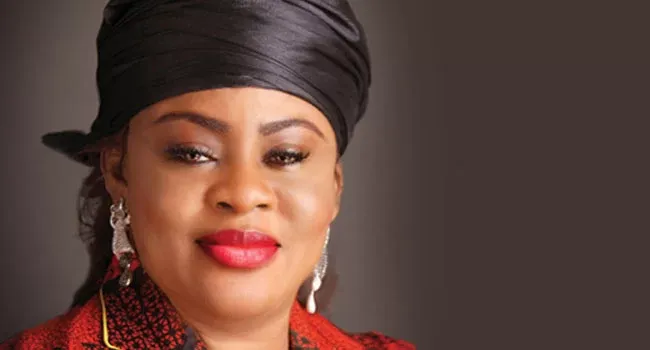
    A former Minister of Aviation, Senator Stella Oduah was on Friday, arraigned on a 25-count charge brought against her by the Economic and Financial Crimes Commission (EFCC).

    The former Senator, who pleaded not guilty to the charges, was arraigned before Justice Inyang Ekwo of a Federal High Court, Abuja, on the allegation that she laundered public funds to the tune of about 7.9 billion, in connivance with eight others. 

    The prosecution, in suit number, FHC/ABJ/CR/316/20, mentioned Gloria Odita, Nwosu Emmanuel Nnamdi, Chukwuma Irene Chinyere, Global Offshore and Marine Ltd, Tip Top Global Resources Ltd, Crystal Television Ltd and Sobora International Ltd as other defendants in the matter.

    They pleaded not guilty to the charge when it was read to them in the open court.

    Sequel to their not-guilty plea, Justice Ekwo held that the administrative bail the EFCC earlier granted to them subsists.

    Specifically, EFCC, among other things, alleged that Oduah, Odita, and the Company Secretary to Sea Petroleum & Gas Company Ltd (SPGC), had in February 2014, used their positions to transfer the sum of N1,629,250,000.00 from I-Sec Security Nig. Ltd accounts No. 2021756955 with First Bank Plc, to Global Offshore and Marine Ltd account No. 2022977296 also domiciled with First Bank Plc, which money they reasonably ought to have known that it formed part of the proceeds of an unlawful act.

    According to the anti-graft agency, the defendants opened a naira “anonymous Private Banking Nominee Account No. 2024414450 with First Bank Plc and thereby committed an offence contrary to Section 11(1) of the Money Laundering (Prohibition) Act 2011 (As Amended) and punishable under Section 11(4) (a) of the same Act.”

    They were equally accused of opening a United State dollar “anonymous Private Banking Nominee account No. 2024414498 with First Bank Plc and thereby committed an offence contrary to Section 11(1) of the Money Laundering (Prohibition) Act 2011 (As Amended) and punishable under Section 1 1(4) (a) of the same Act.”

    More so, the court directed the EFCC to transfer the case file to the office of the Attorney-General of the Federation to ensure diligent prosecution of the defendants. 

    Justice Ekwo adjourned the case till October 17 for trial. 

  • Subsidy Removal: NULGE demands 300% minimum wage increment

    Subsidy Removal: NULGE demands 300% minimum wage increment

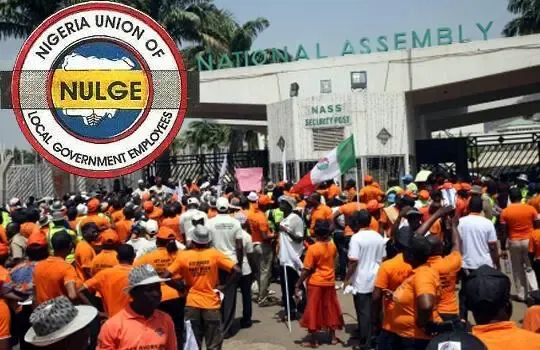
    The Nigeria Union of Local Government Employees (NULGE) has called for a 300 percent increment in the minimum wage for workers across all sectors due to the inflation caused by the removal of fuel subsidy.

    NULGE National President, Mr Ambali Olatunji, said this in a communique jointly signed by Mr Isah Gambo, General Secretary of the union, at the end of its regular National Executive Council (NEC) meeting on Thursday in Abuja.

    Olatunji said that the 300 percent rise was imperative considering the inflation necessitated by the removal of fuel subsidy on local government staff.

    Accordingly to him, it is the position of NULGE that there should be 300 percent rise in the minimum wage for all Local Government workers and other public servants including private sector workers.

    He also said that considering the overbearing posture of the state governors on local government which had left it prostrate in the country, there was need for state of emergency to be declared on local government administration.

    This, he said would address the infrastructural decay, poverty and state of unemployment across the local governments in the country.

    Olatunji also said that government as a matter of urgency should create a special intervention fund to take care of aforementioned social welfare and infrastructural decay through the Ministry of Special Duty.

    NUGLE boss said that the proposed fund should be able to carter for projects and programmes in conjunction with local government.

    He further called on the federal government to establish a special agency to collaborate with the local government administration in administering the fund for the development and the transformation of the rural areas.

    He added that considering the state of insecurity that had affected food production in the country, the local government administration should be assisted in establishing special vigilante to protect farmers.

    He, however, acknowledged the effort of federal and state governments to cushion the effect of the economic policies on citizens.

    Olatunji also urged the government to utilise the 800 million dollars from World Bank to provide mass transit and other interventions especially in the auto-mobile spare parts companies, to carter for the transport need of the masses.

    “This will discourage importation, alternate energy provision (CNG), vocational skill acquisition centers for youth and women,” he said.

    He also advised government to give tax rebate/holiday for low income earners and small scale entrepreneurs, as a way of encouraging and sustaining their businesses.

    He condemned the attacks on local government secretariats in Plateau, Anambra, Abia and Enugu states by gunmen nothing that they were unwarranted.

    Olatunji while calling for urgent re-opening of the 17 local governments in Plateau shut down as a result of alledged political crisis, urged the SGF to expedite action on the scheme of service for the local government.

    “It is the conviction of the union that autonomy for local governments remains the best way to return the country to the part of development and growth.

    “This will translate to the direct funding of local governments without which no genuine national development can be achieved,” he said.

    He also called for the establishment of Local Government Police (Community Police) to address the spate of insecurity across the country.

    Olatunji further called for special rural allowances for local government staff to discourage rural-urban migration.