Author: Caroline Ameh

  • Senate Commends EFCC for Record 4,111 Convictions in 2024

    Senate Commends EFCC for Record 4,111 Convictions in 2024


    …praises anti-graft agency’s resilience, call for stronger legislative support

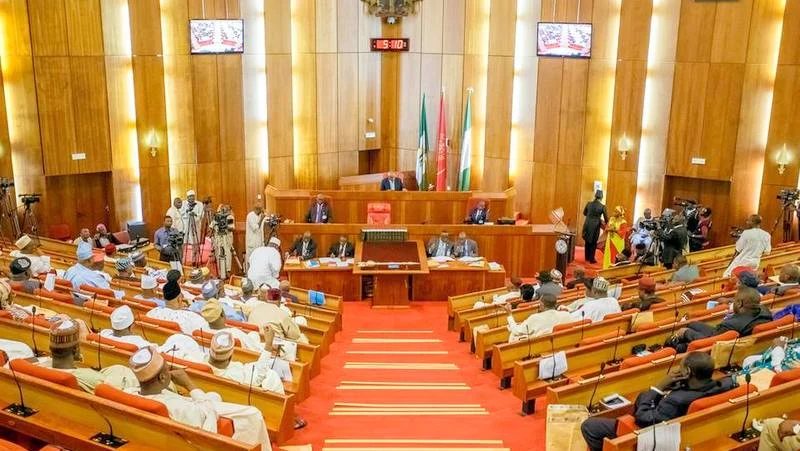
    The Nigerian Senate has lauded the Economic and Financial Crimes Commission (EFCC) for ecuring 4,111 convictions in 2024.

    The upper legislative body said the performance represents the highest annual figure since the anticrime agency was established.

    The commendation came following the adoption of a motion titled “Urgent Need to Commend the Economic and Financial Crimes Commission (EFCC) for Its Significant Gains Made in Recent Times, Particularly in 2024, Despite the Challenges It Has Encountered.”

    The motion was sponsored by Senator Emmanuel Udende Memga (Benue North-East) during plenary on Tuesday.

    Presenting the motion, Senator Udende described the EFCC as a “frontline agency mandated to combat economic and financial crimes in Nigeria,” with powers to investigate, prevent, and prosecute offenders involved in money laundering, cybercrimes, advance fee fraud, and other related offences.

    He noted that the Commission has played a crucial role in promoting accountability, transparency, and integrity across the public and private sectors, thereby safeguarding the country’s financial system.

    According to data presented to the Senate, the EFCC in 2024 received 15,724 petitions, opened and investigated 12,000 cases, and filed 5,081 cases in court.

    Despite operational and resource limitations, the Commission recorded 4,111 convictions, marking the highest number in any operational year since its inception.

    Senator Udende said, “The EFCC has remained steadfast and professional in the discharge of its statutory mandate despite threats to its personnel and the increasing sophistication of financial crimes. The Commission’s resilience is commendable.”

    He further disclosed that the EFCC’s efforts in 2024 led to significant monetary recoveries and asset forfeitures that comprised of
    173 automobiles, 378 electronic devices, 1 hotel, 2 gold Cuban chains, 14 landed properties, 784 estates, and Unspecified quantities of petroleum products.

    Seconding the motion, Senator Nwaebonyi Onyeka (Ebonyi East) described the EFCC’s effort as “unprecedented,” commending the Commission’s diligence in recovering the nation’s stolen wealth.

    He emphasized the need for the relevant committees of the National Assembly to strengthen legislative oversight and provide continuous institutional support to the Commission.

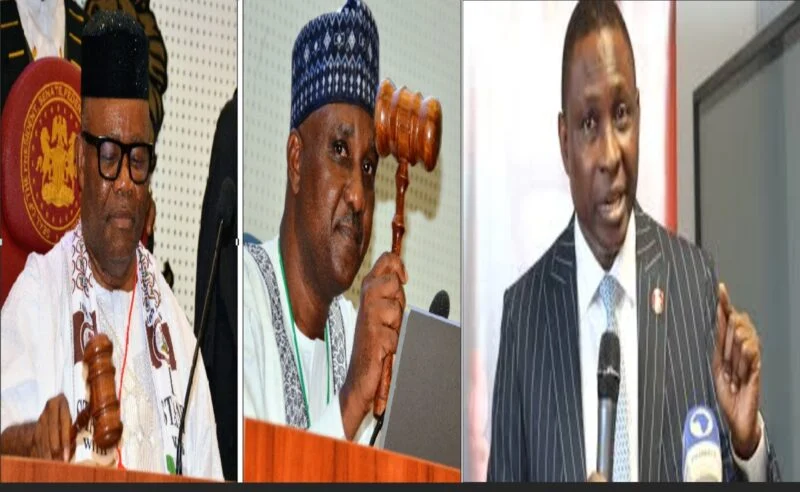
    Ruling on the motion, President of the Senate, Godswill Akpabio, commended the EFCC for its dedication and attributed the agency’s recent successes to what he described as “the right choice in the appointment of the Commission’s leadership” by President Bola Ahmed Tinubu.

    Akpabio also urged the EFCC to publish the total number of genuine convictions as well as petitions found to be frivolous or politically motivated, as a way of deepening public trust and enhancing the integrity of its anti-corruption drive.

    “Transparency in outcomes will further strengthen the EFCC’s credibility and sustain public confidence in the fight against corruption,” Akpabio stated.

    The Senate President further saluted the integrity and professionalism of EFCC staff, pledging the continued legislative support of the National Assembly to the Commission and other anti-corruption agencies in the country.

    Monetary recoveries included ₦9,477,977,318.78, $2,605,858.30, £1,600.13, and various digital currencies such as 13.37 BTC (worth $572,992.86), 5.97886094 Ethereum ($13,353.06), 298.4770071 Green Satoshi Tokens ($6), 1,002.547631 USDT ($1,002.22), and an additional 2,699,233 USDT (TRC-20).

    The Senate observed that these results have significantly enhanced Nigeria’s global image and public confidence in the country’s anti-corruption drive.


    The Lawmakers also acknowledged the sacrifices of EFCC officers who, despite operating under difficult conditions and personal risks, continue to pursue justice and protect the nation’s economic well-being.

    The upper chamber therefore resolved to commend the Economic and Financial Crimes Commission (EFCC) for its dedication, professionalism, integrity, patriotism, and remarkable achievements in the fight against financial crimes.

    The Senate reaffirmed its commitment to supporting anti-graft institutions in their pursuit of integrity, national development, and financial accountability.
  • Sen Dickson Rejects Gov Diri’s Defection to APC, Stays Loyal to PDP

    Sen Dickson Rejects Gov Diri’s Defection to APC, Stays Loyal to PDP


    Sen Seriake Dickson (Bayelsa West) has distanced himself from the defection of Gov Douye Diri and 23 members of the Bayelsa Assembly to the All Progressives Congress (APC).

    Speaking after the Senate plenary on Wednesday, Dickson reaffirmed his commitment to the opposition Peoples Democratic Party (PDP), stressing that he has no plans to join the ruling party.

    The senator expressed disappointment that neither the governor nor the state lawmakers consulted him before their decision to leave the PDP.

    Dickson suggested that the internal issues within the PDP could have been addressed through proper party leadership rather than a mass defection.

    “What is the role of party leadership if it cannot resolve crises?” Dickson remarked, emphasizing that leadership should be focused on resolving conflicts, not abandoning the party.

    Referring to the situation in Bayelsa, Dickson, who served as the state’s governor before Diri, said the governor and lawmakers were part of his political team, but he did not consider himself a political godfather.

    “I never played the role of a godfather. I handed over power and moved on to my duties as a senator,” he said. “I will remain in the PDP, a lone northern star,” he emphasised.

    Governor Diri, along with the entire Bayelsa State House of Assembly, officially joined the APC in a ceremony in Yenagoa on Wednesday, marking a major shift in the state’s political alignment.

    This defection has raised eyebrows, as Bayelsa has been a stronghold of the PDP for years.

    While Diri’s move to the APC reflects a broader trend of political realignments in the region, Dickson made it clear that he will not follow suit.

    He emphasised that the PDP’s challenges could be resolved within the party, not by switching allegiances.

    Meanwhile, in a separate development, Senator Dickson addressed the controversy surrounding the nomination of Professor Joash Ojo Amunpitan as Chairman of the Independent National Electoral Commission (INEC).

    He clarified that despite some confusion over the nominee’s identity due to a mix-up with similarly named academics Amupitan’s nomination represents a significant milestone.

    As a Senior Advocate of Nigeria (SAN), Amunpitan is the first lawyer of such status to be nominated for this prestigious position, according to Dickson.

    The senator also pointed out that being in the opposition does not mean opposing every decision from the government.

    Sen Dickson emphasised the importance of considering each issue on its merits. He expressed confidence that the Senate’s Electoral Committee would thoroughly vet Amunpitan’s nomination.

    With Governor Diri’s defection to the APC, the political landscape in Bayelsa is undergoing a major shift.

    However, Dickson’s steadfast loyalty to the PDP highlights ongoing divisions within the state’s political establishment.

    Whether this rift will have lasting consequences for the PDP in Bayelsa remains uncertain.

  • Senate Pushes for Establishment of National Sickle Cell Research, Treatment Centre

    Senate Pushes for Establishment of National Sickle Cell Research, Treatment Centre

    The Nigerian Senate has advanced a landmark Bill aimed at creating Sickle Cell Disorder (SCD) Research and Therapy Centres across the country, following its successful second reading on Wednesday.

    The Bill was sponsored by Senator Katung Marshall (Kaduna South), and it proposes the establishment of specialized centres dedicated to the research, diagnosis, and treatment of sickle cell disease in each of Nigeria’s six geopolitical zones and the Federal Capital Territory (FCT), Abuja.

    The Bill also contains detailed provisions for the administration and operation of these centres.

    Senator Marshall, in his presentation, highlighted the severity of SCD in Nigeria, noting that the country remains the epicentre of the disease in sub-Saharan Africa.

    “Nigeria accounts for roughly half of the 300,000 babies born worldwide with sickle cell disorder each year,” he explained.

    “With over 650 children dying daily from SCD-related complications, many of whom do not survive past the age of five, the need for this legislation has never been more urgent.”

    The proposed Bill has garnered widespread support from lawmakers, who emphasized the critical need for a structured response to the high mortality and complications associated with the disease.

    Senators pointed to the inadequacies in the current healthcare infrastructure for managing sickle cell disorder, including the lack of specialized treatment facilities and the ineffective implementation of existing diagnostic tools.

    Senators Natasha Akpoti-Uduaghan (Kogi Central), Victor Umeh (Anambra Central), and Isa Jibril (Kogi West) expressed strong backing for the Bill, underscoring the potential of the research and therapy centres to alleviate the suffering of millions of Nigerians living with sickle cell disorder.

    “The establishment of these centres will be a game-changer,” said Senator Akpoti-Uduaghan. “It will provide the much-needed care and treatment that millions of Nigerians are currently deprived of.”

    The Bill was referred to the Senate Committee on Health for further deliberation and is expected to be reviewed within the next four weeks.

    The proposed legislation outlines 27 clauses covering various aspects of the centres’ operation, including the establishment of a Board of Management, staffing structures

  • Nigerian Governors’ Forum Partners UNDP to Boost Subnational Development

    Nigerian Governors’ Forum Partners UNDP to Boost Subnational Development

    In a major step towards driving sustainable investment and enhancing state-level economic resilience, the Nigerian Governors’ Forum (NGF) has deepened its collaboration with the United Nations Development Programme (UNDP).

    It states further that the move shall advance subnational investment and financing reforms across the country.

    This was made known in a press release signed by Yunusa Tanko Abdullahi, Director, Media & Strategic Communications, Nigeria Governors’ Forum (NGF).

    He said this was the outcome of a working visit by a high-level UNDP delegation led by Ms. Elsie G. Attafuah, Resident Representative in Nigeria, and Dr. Raymond Gilpin, Chief Economist for Africa and Head of the UNDP Economists’ Network.

    Mallam Abdullahi stated that the engagement focused on exploring innovative financing models to help Nigeria’s 36 States mobilize investments, strengthen fiscal systems, and bridge infrastructure gaps.

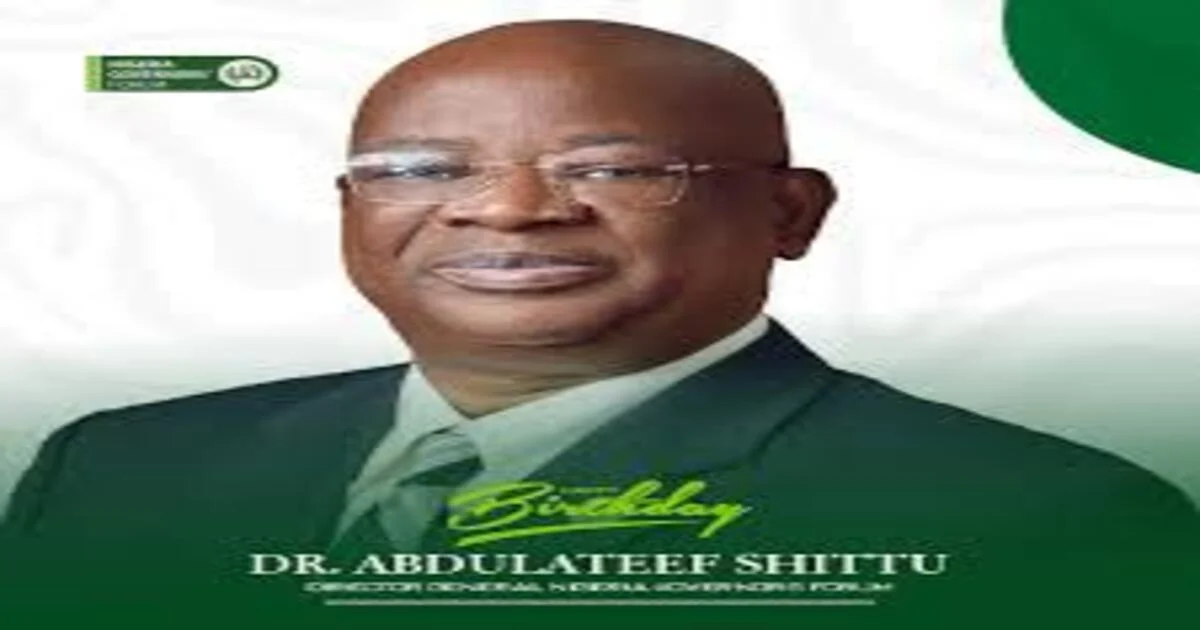
    Welcoming the delegation, Mr. Abdulateef Shittu, Director-General of the NGF, described the partnership as “a timely step in deepening Nigeria’s subnational development agenda.”

    “We value UNDP’s partnership in helping States become more competitive and investment ready,” Shittu said. “Our goal is to create a pathway where subnational governments can independently attract, manage, and sustain investments that directly impact lives and livelihoods.”

    Mr. Shittu highlighted the NGF’s recent launch of Investopedia, a digital investment intelligence platform showcasing over 269 investment-ready projects across Nigeria’s 36 States. He described the initiative as “a practical demonstration that Nigerian States are ready, willing, and able to lead the country’s transformation when provided with the right tools and partnerships.”

    He further noted that the next phase of collaboration with UNDP will focus on three strategic priorities which includes: strengthening States’ fiscal and institutional capacity to attract long-term financing, establishing frameworks for blended and innovative finance and building a pipeline of bankable projects aligned with national and global sustainability goals.

    “We see this partnership as catalytic,” he added. “With UNDP’s technical support and the Forum’s coordination structure, we can make subnational governments key drivers of Nigeria’s development narrative.”

    In his remarks, Dr. Raymond Gilpin commended the NGF’s leadership for creating platforms that enable States to engage global investors and development partners.

    “Nigeria’s States are essential building blocks of national development,” Gilpin said. “Our role at UNDP is to support the Forum in strengthening the systems that make investments viable from fiscal governance and data analytics to human capital and institutional efficiency.”

    He emphasized that the collaboration aims to develop sustainable financing mechanisms that blend public and private capital while ensuring transparency and inclusivity in project implementation.

    “We are ready to walk with the Forum in connecting the strategy, the financing, and the governance dots to make growth work for the people,” he affirmed.

    Also speaking, Ms. Elsie G. Attafuah, UNDP Resident Representative in Nigeria, described the engagement as a continuation of UNDP’s long-standing partnership with the NGF to promote inclusive and sustainable development across the country.

    “Our collaboration with the NGF represents a strategic partnership aimed at ensuring that no State is left behind in Nigeria’s development story,” she said.

    Ms. Attafuah reaffirmed UNDP’s commitment to supporting States in five key sectors: agriculture, energy transition, healthcare, education, and the digital economy noting that these areas have the greatest potential for visible impact on citizens’ lives.

    “This engagement is about helping States convert their opportunities into tangible investments that create jobs, expand access, and build resilience,” she added.

    Both the NGF and UNDP agreed to formalize their collaboration through a Memorandum of Understanding (MoU) that will outline technical assistance and pilot interventions in select States.

    The partnership will also establish a Subnational Development Finance Lab, a Public-Private Partnership (PPP) Competency Framework, and a State Investment Readiness Index to benchmark competitiveness across Nigeria’s States.

    “Together, we can convert Nigeria’s immense opportunities into transformative investments that uplift lives and strengthen local economies,” Mr. Shittu concluded.

  • Breaking: Council of State Approves Professor Joash Amupitan as New INEC Chairman

    Breaking: Council of State Approves Professor Joash Amupitan as New INEC Chairman

    The National Council of State has unanimously approved the appointment of Professor Joash Ojo Amupitan as the new Chairman of the Independent National Electoral Commission (INEC).

    President Bola Ahmed Tinubu presented Professor Amupitan’s nomination during the Council meeting held on Thursday at the Presidential Villa, Abuja.

    Prof Amupitan is a Senior Advocate of Nigeria (SAN) from Kogi state. He replaces Professor Mahmood Yakubu, whose tenure ended in October 2025 after seving since 2015.

    This development was disclosed in a statement signed by Mr. Bayo Onanuga, Special Adviser to the President on Information and Strategy, in Abuja.

    President Tinubu described Professor Amupitan as “a man of integrity and impeccable character who is not politically aligned,” noting that he is the first person from Kogi State and the North-Central region to be nominated for the position of INEC Chairman.

    Members of the Council unanimously endorsed the nomination. Governor Ahmed Usman Ododo of Kogi State lauded Amupitan’s competence and reputation, describing him as “a man of honour, discipline, and deep commitment to national service.”

    In line with constitutional provisions, President Tinubu is expected to forward Professor Amupitan’s name to the Senate for screening and confirmation.

    Born on April 25, 1967, in Ayetoro Gbede, Ijumu Local Government Area of Kogi State, Professor Amupitan, 58, is currently a Professor of Law and Deputy Vice-Chancellor (Administration) at the University of Jos, Plateau State. He also serves as the Pro-Chancellor and Chairman of the Governing Council of Joseph Ayo Babalola University in Osun State.

    A renowned legal scholar, Amupitan specializes in Company Law, Law of Evidence, Corporate Governance, and Privatization Law. He was conferred with the rank of Senior Advocate of Nigeria (SAN) in September 2014.

    He began his academic journey at Kwara State Polytechnic, Ilorin (1982–1984), before proceeding to the University of Jos, where he earned his Bachelor of Laws degree (1984–1987). He was called to the Nigerian Bar in 1988 and later obtained an LLM in 1993 and a PhD in 2007, both from the University of Jos.

    Following his National Youth Service at the Bauchi State Publishing Corporation (1988–1989), Amupitan joined the University of Jos as a lecturer in 1989. He rose steadily through the ranks to become one of the institution’s leading academic administrators.

    He has held several strategic academic positions, including Chairman, Committee of Deans and Directors (2012–2014); Dean, Faculty of Law (2008–2014); and Head, Department of Public Law (2006–2008).

    Outside academia, Professor Amupitan has contributed his expertise to national development through service on various boards and councils. These include the Nigerian Institute of Advanced Legal Studies, the Council of Legal Education (2008–2014), and Integrated Dairies Limited, Vom. He also served as a board member of Riss Oil Limited, Abuja (1996–2004).

    A prolific legal author, his notable publications include Corporate Governance: Models and Principles (2008), Documentary Evidence in Nigeria (2008), Evidence Law: Theory and Practice in Nigeria (2013), Principles of Company Law (2013), and An Introduction to the Law of Trust in Nigeria (2014).

    Professor Amupitan is married and blessed with four children.

  • Senate Swears In Ikpea, Nwachukwu as Senators for Edo, Anambra

    Senate Swears In Ikpea, Nwachukwu as Senators for Edo, Anambra

    The Senate, on Wednesday, restored its full complement of 109 members with the swearing-in of Joseph Ikpea and Emmanuel Nwachukwu, representing Edo Central and Anambra South Senatorial Districts, respectively.

    Senators Ikpea of the All Progressives Congress (APC) and Nwachukwu of the All Progressives Grand Alliance (APGA) were inaugurated following the by-elections held in September to fill the vacancies created by the exit of Senator Monday Okpebholo, now Governor of Edo State, and the demise of Senator Ifeanyi Ubah in July 2024.

    The ceremony, presided over by Senate President Godswill Akpabio, saw the Clerk of the Senate, Emmanuel Odo, administer the oaths of office and allegiance to the new legislators.

    In his remarks, Akpabio described their election as a call to national service, urging them to familiarize themselves with the 1999 Constitution and the Senate Standing Orders (as amended in 2023) to effectively discharge their legislative responsibilities.

    “Today, you have been called to national duty. You are no longer senators of your political parties; you are senators of the Federal Republic of Nigeria,” Akpabio stated.

    He further assured the new senators of the support of their colleagues in settling into their legislative duties, saying, “Your colleagues who have been here will continue to assist you, so you will get used to the nuances of lawmaking.”

    Among dignitaries in attendance were former Delta State Governor James Ibori, former Edo State Deputy Governor Philip Shaibu, APGA National Chairman Sly Ezeokenwa, and several members of the House of Representatives from Edo and Anambra States.

  • NiMet migrating to AI-Powered Weather Forecasting

    NiMet migrating to AI-Powered Weather Forecasting

    NiMet Director General says move is to boost climate onformation for Nigerian Farmers

    Nigerian Meteorological Agency (NiMet), Director General. Prof. Charles Anosike, has doubled down on the agency’s commitment to leverage artificial intelligence (AI)-powered weather forecasting.

    Prof Anosike promised that this realignment in technology will strengthen climate and weather information delivery for Nigerian farmers.

    Anosike made this known during a courtesy visit by the Agricultural Innovation Mechanism for Scale (AIM for Scale) team led by Imara Salas, Director of the AIM for Scale Secretariat, and Mohammad Farrae, Scientific Director, at NiMet headquarters in Abuja.

    AIM for Scale is a consortium of global partners promoting agricultural innovation and scaling up weather services for farmers.

    The visit focused on exploring areas of collaboration to co-develop strategies for expanding weather services and mobilising investments for innovative, data-driven agricultural solutions in Nigeria.

    The AIM for Scale consortium includes leading global institutions such as the Bill & Melinda Gates Foundation, United Arab Emirates (UAE), Asian Development Bank (ADB), Inter-American Development Bank and the World Bank.

    Others are U.S. Agency for International Development (USAID), NASA, Massachusetts Institute of Technology (MIT), Community Jameel, Mohamed bin Zayed University of Artificial Intelligence (MBZUAI) and the University of Chicago’s Human-Centered Weather Forecasts and AI for Climate (AICE) initiatives.

    The World Meteorological Organization (WMO), and the United Nations Systematic Observations Financing Facility (SOFF) are part of the consortium.

    Speaking during the visit, Salas commended NiMet for its leadership role in advancing agricultural weather services.

    She explained that AIM for Scale creates tailored innovation packages and AI-driven weather forecasts designed to deliver scalable, cost-effective solutions through partnerships with key stakeholders like NiMet.

    In his remarks, Prof. Anosike thanked AIM for Scale for including Nigeria in its first African pilot project and for inviting NiMet to the recently concluded AI weather training in Abu Dhabi.

    He assured that NiMet is well-prepared to support the initiative, citing the agency’s technical expertise and growing demand for accurate weather and climate data among smallholder farmers.

    “NiMet is committed to deepening AI-powered weather services to improve forecasting accuracy and speed of delivery.

    These innovations will enable farmers and other users to make better decisions, reduce risks, and increase productivity,” Anosike said.

    He, however, highlighted existing infrastructure gaps, including limited in-situ weather stations and inadequate radar coverage, as challenges requiring attention to fully realise the benefits of AI-powered forecasting.

    Following the discussions, Prof. Anosike led the AIM for Scale delegation on a guided tour of NiMet’s central forecasting facility, showcasing the agency’s operational capabilities and readiness for collaboration.

    Both parties agreed to develop and sign a Memorandum of Understanding (MoU) focusing on joint research and sustainable AI-driven weather service delivery for Nigeria’s agricultural sector.

  • Curtain falls on Prof Yakubu’s controversial reign at INEC

    Curtain falls on Prof Yakubu’s controversial reign at INEC

    • Professor Mahmood Yakubu has officially stepped aside as Chairman of the Independent National Electoral Commission (INEC).
    • Mrs May Agbamuche-Mbu, INEC National Commissioner, has taken over the reins as Acting Chairman of the electoral body.

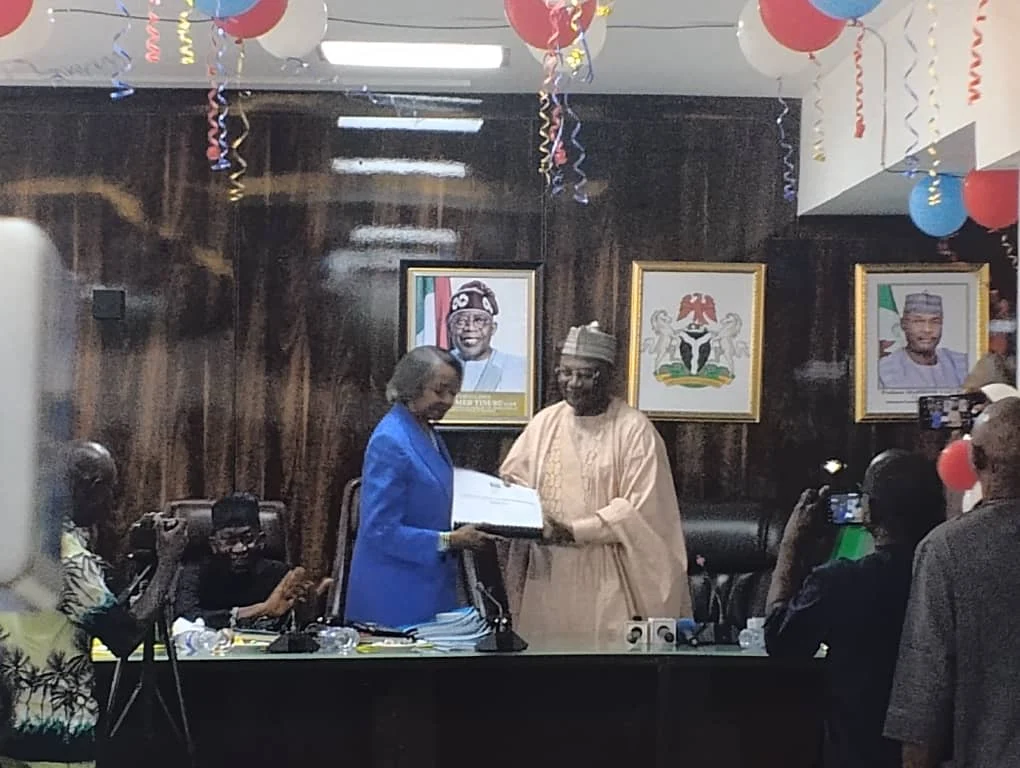
    The formal handover ceremony took place on Tuesday at the INEC headquarters in Abuja during a meeting with Resident Electoral Commissioners (RECs).

    The transition follows Professor Yakubu’s decision to proceed on terminal leave after completing his two-term tenure as head of the Commission.

    Mrs. Agbamuche-Mbu, one of INEC’s longest-serving National Commissioners, currently chairs the Legal Services, Clearance, and Complaints Committee (LSCCC).

    A lawyer with over three decades of experience, she holds a Master of Laws (LL.M) degree in Commercial and Corporate Law from Queen Mary and Westfield College, University of London.

    In a brief ceremony, Professor Yakubu formally handed over documents to Mrs. Agbamuche-Mbu, signifying the official transfer of leadership.

    INEC, in a statement, said the handover was part of its tradition of ensuring administrative continuity and institutional stability.

    Professor Yakubu, who was first appointed by former President Muhammadu Buhari in November 2015 and reappointed for a second term in 2020, is the longest-serving INEC Chairman since Nigeria’s return to democratic rule.

    His tenure witnessed landmark electoral innovations, including the introduction of the Bimodal Voter Accreditation System (BVAS) and the INEC Result Viewing (IReV) portal — two reforms widely credited with improving transparency and credibility in Nigeria’s electoral process.

    Critics observe however, that while the huge investment in technology aided the voting process, the outcome of elections remained quite controversial due to the failure of the electoral body to deploy for the outcome.

    The smooth transition comes as the Commission continues with ongoing voter registration exercises in the Federal Capital Territory (FCT) and prepares for off-cycle governorship elections in key states.

    Meanwhile, credible reports suggest that President Bola Ahmed Tinubu is set to nominate Professor Joash Amupitan (SAN) as the substantive INEC Chairman.

    The nomination, according to sources, may be ratified at a scheduled Council of State meeting on Thursday.

    Until then, Mrs. Agbamuche-Mbu will oversee the affairs of the Commission in an acting capacity, ensuring that ongoing electoral operations remain uninterrupted.

    Her appointment is seen as a continuation of INEC’s commitment to professionalism, gender inclusion, and effective succession planning.

    Further details about the handover and the anticipated presidential nomination are expected in the coming days.

  • Nigeria/Morocco Strengthen Ties to Deepen AI-based Weather Collaboration

    Nigeria/Morocco Strengthen Ties to Deepen AI-based Weather Collaboration

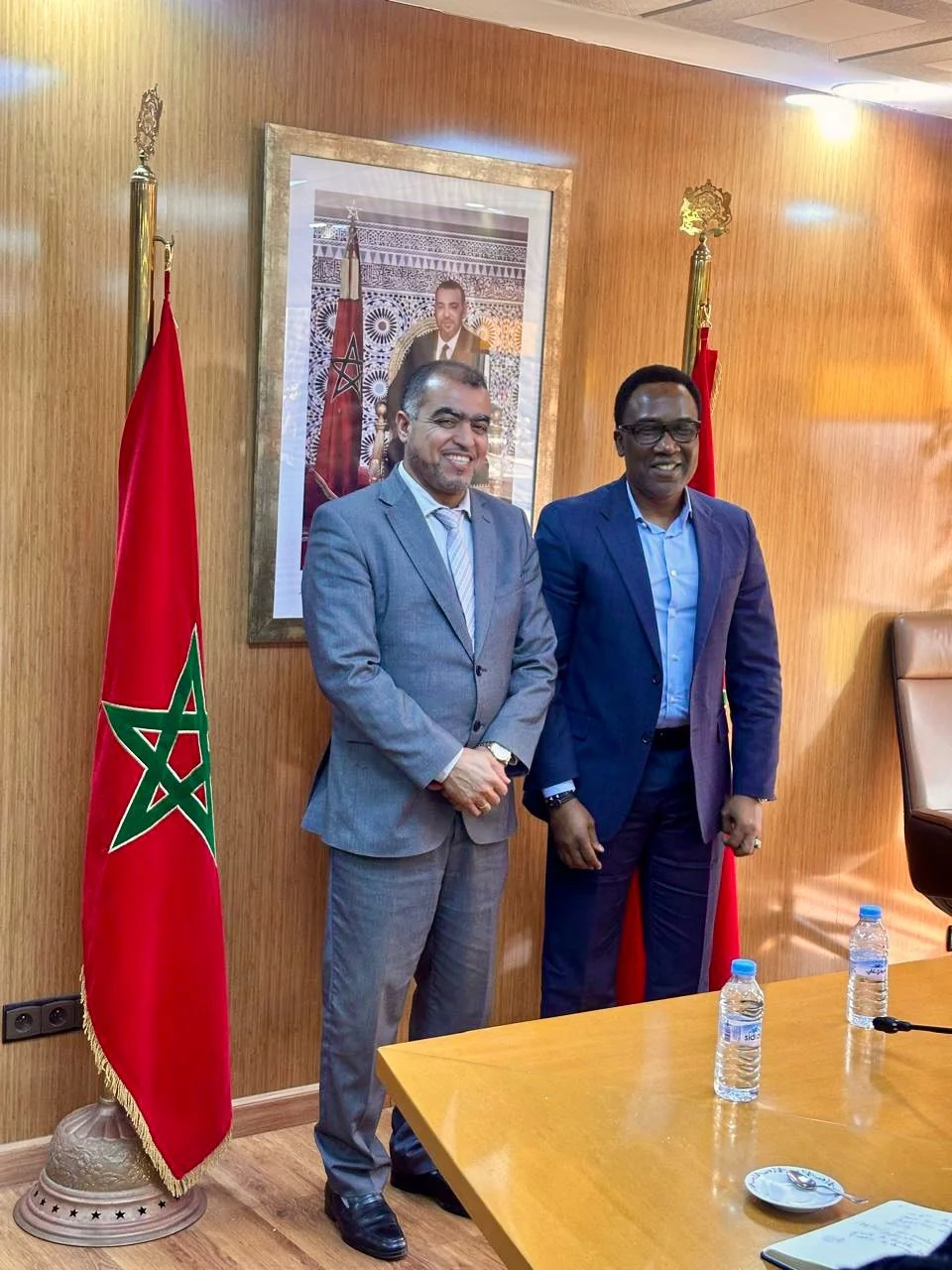
    The Director-General of the Nigerian Meteorological Agency (NiMet), Prof. Charles Anosike, has paid a working visit to his Moroccan, Mohammed Dhikissi.

    It was revealed that the visit is part of efforts to deepen bilateral collaboration on AI-driven weather forecasting and early warning systems.

    The visit took place on the sidelines of the ongoing United Nations Systematic Observation Financing Facility (SOFF) workshop for Peer Advisors and Implementing Entities in Casablanca.

    The SOFF workshop is one of the programmes designed to strengthen technical cooperation between Nigeria and Morocco in advancing climate services, data management, and predictive meteorology.

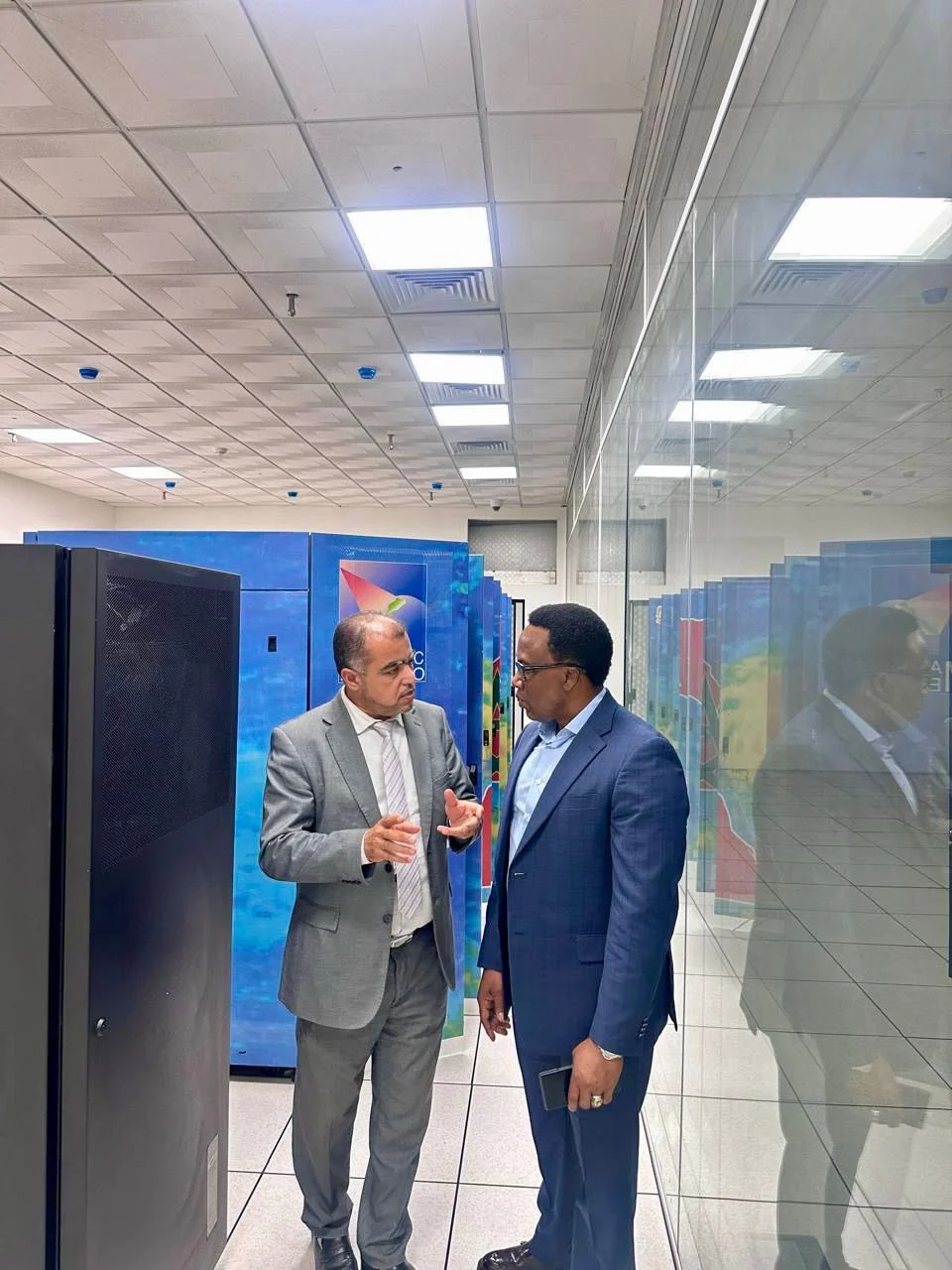
    During the meeting, Prof. Anosike and his Moroccan counterpart discussed areas of mutual interest, including joint research on AI-enabled weather models, capacity building for meteorologists, and the exchange of best practices for enhancing regional weather observation networks.

    He emphasized that leveraging AI technologies in meteorology would significantly improve the accuracy of forecasts and the timeliness of climate-related warnings, thereby enhancing resilience in sectors such as agriculture, transportation, and disaster management across Africa.

    The NiMet DG also highlighted the importance of regional partnerships in addressing the growing impacts of climate change, stressing that “Africa’s future in climate resilience depends on collaboration, innovation, and the intelligent use of technology.”

    Prof. Anosike and Mr. Dhikissi

    Morocco’s Directorate of General Meteorology, renowned for its advancements in modern forecasting systems and climate services, expressed readiness to work closely with NiMet to develop a framework for continuous technical exchange and joint innovation in weather prediction and climate adaptation.

    The visit is expected to pave the way for a stronger partnership between both institutions under the broader framework of the World Meteorological Organization (WMO), supporting the African continent’s push towards smarter, AI-enabled weather and climate solutions.

  • Rivers secretariat inferno: No casualty says head of service 

    Rivers secretariat inferno: No casualty says head of service 

    The Rivers Head of Service, Dr Inyingi Brown, has confirmed that there were no casualties during a fire incident at the state secretariat complex.

    Brown disclosed this to newsmen at the scene of the fire incident on Monday in Port Harcourt.

    She said that the state fire service and other relevant agencies responded promptly to contain the inferno.

    Brown commended the timely response of the state fire service, Renaissance, federal fire service, and the military, who all sent their fire trucks to the scene.

    “We thank God Almighty, and also commend Gov. Siminalayi Fubara, for being proactive in rehabilitating the fire service before this time.

    ‘’If not for his investment in the fire service, this situation would have been worse,” she stressed.

    She disclosed that no life was lost, explaining that the state medical service was on ground to curtail any emergency.

    Brown explained that preliminary reports suggested that the fire might have been as a result of electrical faults and urged the civil servants to always switch off all electrical appliances at the close of work.

    “We urge all civil servants to take responsibility for safety; put off our sockets and our lights.

    Not just putting off the sockets, but unplug them to ensure there is no residual charge because these buildings are heritage buildings and we don’t want anything to happen to them,” she said.

    Brown further assured that Fubara was working on measures to refurbish the secretariat buildings, which would be made known soon.