The Independent National Electoral Commission (INEC) says its to commence Continuous Voter Registration (CVR) in 811 centres nationwide.
Sam Olumekun, INEC National Commissioner and Chairman, Information and Voter Education Committee, disclosed this in a statement issued after the commission’s regular meeting in Abuja.
Olumekun stated that for easy identification, INEC would be deploying an online CVR Live Locator to assist citizens locate their registration centres nationwide.
He noted that as earlier announced by the INEC, the CVR would resume on Aug. 18 with the online pre-registration, while the in-person registration option would follow a week later on Aug. 25.
“Thereafter, the two processes will continue simultaneously for a year until Aug. 30.
“The exercise will hold in 811 centres made up of our 774 Local Government, 36 States and FCT offices nationwide from 9am to 3p.m (Monday to Friday) every week with the exception of national public holidays.
“The locator will go live a day to the commencement of the CVR on Aug.17, 2025 and can be accessed at the following address https://cvr.inecnigeria.org/locator,’’ he said.
Olumekun added that the commission on Thursday uploaded a 38-page document to its website and other official online platforms indicating the addresses of the 811 in-person registration centres nationwide.
“Similarly, dedicated telephone numbers have been given for each state of the federation to serve as help desk for citizens that require further clarification.
“The procedure for both the online and in-person registrations remains the same as was the case in 2022.
“Detailed information on the process, including video clips, will once again be released by the commission next week,” Olumekun said.
The national commissioner also disclosed that after the July 23 update on requests for party registration, the commission had received eight more letters of intent from associations seeking registration as political parties.
This according to him brought the number received so far to 151.
He noted that details of the latest requests, indicating their proposed names, acronyms, logos, addresses and interim leaderships of the associations, had also being uploaded to the commission website and other online platforms for public information.
“Having created the portal for party registration, the commission has commenced the shortlisting of the associations that meet the requirements to proceed to the application stage.
“Details will be released immediately after the 16 bye-elections in 12 states scheduled for Saturday Aug. 16. Olumekun reassured Nigerians that the commission would continue to keep citizens informed on all its activities.
Mr Peter Ugwu, Chairman of Labour Party in the FCT, has called on the Independent National Electoral Commission (INEC) to upload its candidates for the FCT Area Council elections scheduled for Feb.26, 2026 on its portal.
Ugwu said this when members of the party staged a peaceful protest to INEC office on Wednesday in Abuja.
He said that INEC’s delay in doing the needful was distorting the party’s arrangements towards the forthcoming election.
“We, in the FCT, conducted primaries and elected candidates for this election. Sadly, while the names of candidates of other political parties have been uploaded on the INEC portal, ours is not. INEC should correct this anomaly.
“We came to appeal to the national chairman of INEC, Prof. Mahmood Yakubu to upload our candidates names for the FCT Area Council elections that will be coming up on February 26, 2026.
“We plead with INEC to do it very fast, so that we will join other political parties to make sure that this election is conducted properly and successfully,” he said.
Mrs Success Onyeze, FCT Women Leader and the party’s aspirant for the chairmanship position at the Abuja Municipal Area Council (AMAC), Hon. Kingsley Okeke said the party’s primary election was free and fair.
According to them, the party members were surprised not to see their candidates’ names on INEC portal, which is why they were at the INEC office to register their grievances.
“We have contained our crowd, because we are peaceful people. We know Labour Party as a peaceful party.We have come to appeal to Prof. Yakubu to do the right thing.
“Barr. Julius Abure remains the national chairman of the Labour Party, and we are here peacefully to plead that our names are uploaded for the forthcoming election so that we can represent our people.
“We know the other parties are afraid of Labour Party.
“It is obvious that the Labour Party owns FCT and the FCT belongs to the Labour Party.We are appealing to INEC chairman to hereby upload our candidates because LP is a registered party and it is legally recognised,” they said.
He appealed to INEC to adhere to the constitution of the land.
In his response, INEC’s National Commissioner, who represented the Chairman, Abdulahi Zuru promised that the message of the protesters would be communicated to the leadership of the commission.
The Nigerian Army has added a new layer to its specialised formations as the 82 Division on Saturday, graduated 120 personnel for special intervention mission.
The exercise was executed as part of the its special Company Strength Training at the Division’s Training School, Enugu.
Speaking at the culmination of the training at the Division’s Shooting Range in Udi near Enugu, the General Officer Commanding (GOC) of the Division, Maj.-Gen. Oluyemi Olatoye, commended the graduating personnel for their resilience and commitment.
Olatoye, who is also the Commander, Joint Task Force South-East, code-named “Operation UDO KA”, said that intensive eight-week combat training was designed to enhance personnel expertise for both conventional and asymmetric warfare.
The GOC said that the training, which was an initiative of the Chief of Army Staff (COAS), Lt.-Gen. Olufemi Oluyede, aligned with the COAS Command Philosophy.
Olatoye said that the COAS Command Philosophy was aimed to consolidate the transformation of the Nigerian Army to a well-motivated and combat-ready force that could effectively discharge its constitutional responsibilities.
He added that the training was part of the Nigerian Army’s ongoing efforts to enhance professionalism, leadership and ensure combat readiness across all theatres of operation.
The GOC urged the graduates to apply the skills and knowledge acquired as they embarked on future tasks.
He noted that the Division remained committed in building a formidable force through rigorous training, strategic leadership and unwavering dedication to national service.
Earlier, the Division Training Officer, Brig.-Gen. M.J. Abubakar, lauded the personnel for their exceptional endurance, teamwork and fighting spirit.
Abubakar emphasised that the training was designed to simulate real-world combat scenarios, with a strong focus on jungle warfare, counter-insurgency operations and internal security tactics.
He noted that the graduating soldiers had been scheduled for deployment to a special intervention mission where they would apply the acquired skills in support of national security objectives.
The event featured demonstrations on rifle stripping and assembly, armed combat drills, presentation of certificates.
The Police Command in Niger, says it has arrested a 10-man syndicate in Minna suspected to specialised in international human trafficking.
The syndicate is believed to be acting as travel agents under false pretense and trafficking of unsuspecting victims to different countries.
This is contained in a statement by its Public Relations officer, SP Wasiu Abiodun in Minna on Wednesday.
According to Abiodun, the suspects were arrested on July 18, at about 12.30pm based on credible intelligence received on their activities along 123 Quarters, Minna.
The suspects include: Sokou Doumbia, Thiarno Balbe, Hashimu Dauda-Kolo, Usman Doumbia, Musa Konate, Lamine Watara, Racine Diouf, Adamu Zarbu, Alhassan Konde, and Dango Aminatu.
“They were discovered to be citizens of various neighbouring West African Countries and could basically speak French, except their Nigerian collaborator, Dauda-Kolo who provides accommodation for the syndicate in Minna and one other.
“The operation also led to the rescue of 36 youths of different countries such as Senegal, Cote d’Ivoire, Mali, Burkina-Faso and Guinea without any documents,” he stated.
During interrogation, they claimed that they had come to Nigeria for an online business.
The statement said all the suspects and the victims were transferred to the Interpol for further investigation and other necessary actions.
Nasarawa State Gov. Abdullahi Sule has urged stakeholders, especially APC governorship aspirants, not to overheat the polity but to follow due process.
He gave the advice during a stakeholders’ meeting of the All Progressives Congress (APC) in Nasarawa West Senatorial Zone held in Keffi on Sunday.
The governor said he would announce his preferred successor in 2027 at the appropriate time, without fear or favour.
Sule promised to ensure justice and fairness during the party’s primaries for the progress and development of the APC in the state.
Irked by current tussles, the Nigerian Medical Association (NMA), has called for adherence to the laid down process of appointment of Executives of the Federal Neuro-Psychiatric Hospital, Yaba.
Its Lagos State Chairman, Dr Babajide Saheed, in a statement on Monday, said the institution is on the verge of administrative collapse due to the emerging crisis over the appointment of Acting Medical Director.
According to him, NMA is duty-bound to speak on behalf of its members and the broader healthcare community when actions within the system undermine integrity, efficiency, and the well-being of patients and professionals.
Saheed commended the Minister of State for Health, Dr Adekunle Salako and the Federal Ministry of Health for their initial steps in responding to the staff’s concern.
“We are compelled to register our strong dissatisfaction with the decision to retain Dr Olugbenga Owoeye—whose tenure as Medical Director has expired—as Acting Medical Director.
“This move is deeply concerning. A second-term appointment must be earned on merit,” Saheed said.
He urged the Ministry to deliver the health mandate of President Bola Tinubu by prioritising institutional stability, staff welfare, and patient-centred care.
The NMA leader further appealed to the Ministry to avoid decisions not in tandem with the provisions of Public Service Rules and hence crisis-proned.
He emphasised that the Association would continue to engage and collaborate with relevant authorities to ensure adherence to laid down processes.
“NMA demands the immediate reversal of Dr Owoeye’s appointment as Acting Medical Director.
“Appointment of the ‘next’ most senior and competent officer as acting medical director pending the appointment of substantive medical director in line with public service rules and established circulars (SGF.50/S.II/C.2/268)
“An open, transparent, and merit-driven process for the selection of a substantive medical director,” he said.
Saheed called for further engagement with NMA and MDCAN to ensure that the situation does not degenerate into a full-blown crisis.
According to him, NMA stands firm in its conviction that leadership in healthcare institutions must reflect merit, accountability, and service to the people.
“The health of Nigerians is not a bargaining chip. It is a sacred responsibility that must be safeguarded by all of us,” Saheed said.
The News Agency of Nigeria reports that Federal Neuro-Psychiatric Hospital, Yaba, is an institution that is the pride of mental health care in Nigeria.
The Medical and Dental Council of Nigeria (MDCN) has approved an increase in the admission quota for the MBBS programme at the University of Abuja (UniAbuja).
The council raised the quota from 75 to 200, following a rigorous re-accreditation process and in line with efforts to expand access to medical education in Nigeria.
The MDCN decision is contained in a statement issued on Saturday in Abuja by the Acting Director of Information and University Relations, Dr. Habib Yakoob.
Yakoob said the announcement was made by the Registrar of the Council, Prof. Fatima Kyari, following a rigorous and objective re-accreditation exercise conducted at the university by a 17-member MDCN team.
Kyari commended the university’s efforts in improving its facilities while emphasising the need for further development in several critical areas.
She highlighted areas requiring attention, including the number and capacity of academic staff, pathology laboratories, transportation, and clinical skills support.
Kyari noted that the increase in quota was based on a resource-based carrying capacity model.
“When we talk about quota, we are referring to the resource-based carrying capacity.
“For a quota of 150 students, you need 450 bed spaces for clinical training. You currently have 360.
“For 200, you need 600. However, we want to align with your growth aspirations.
“The nation needs more doctors, and as Abuja is the capital, it should rise to the occasion. So, we are giving you 200,” she explained.”
She added that the council would continue to monitor the University’s compliance and provide support as it built further capacity and infrastructure.
“We are not just here to point out what is available or lacking. We are here to encourage the university to keep striving toward meeting all required standards,” Kyari said.
She also noted that the quota upgrade aligned with the Federal Government’s broader goal of expanding access to medical education and addressing the national shortage of doctors.
“The Coordinating Minister of Health and Social Welfare has laid out a bold four-point agenda under the Nigeria Health Sector Renewal Investment Initiative (NHSRII).
“At the heart of this agenda is the strengthening of our healthcare workforce, from training to retention, as a critical driver for achieving universal health coverage and improved health outcomes,” she said.
The re-accreditation process, she emphasised, was guided by standards such as infrastructure adequacy, faculty strength, student-to-resource ratio, clinical training exposure, and governance of the medical school.
Responding to the announcement, the Acting Vice-Chancellor of the University, Prof. Patricia Lar, expressed gratitude to the MDCN.
“The joy we feel regarding this announcement is boundless. We opened all our doors, there was no cover-up.
“We did our best, and the constructive feedback from the MDCN will push us to aim even higher,” she said.
Lar affirmed the University’s commitment to continuous growth and excellence in medical education.
“We have been working tirelessly to grow the University and ensure our College of Health Sciences meets global standards.
“I am proud to be leading the University at this critical moment.
“Even if I am no longer in office when my tenure ends, I am confident that a solid foundation has been laid and progress will continue,” she added.
MBBS or Bachelor of Medicine and Bachelor of Surgery is the certificate awarded to graduating medical students and students dental surgery.
… as Opposition Realignment Intensifies Ahead of 2027 Elections
As Nigeria begins to gear up for the next general elections, opposition political parties are accelerating efforts to form alliances capable of challenging the dominance of the ruling All Progressives Congress (APC).
Widespread public dissatisfaction with both the APC and the Peoples Democratic Party (PDP) has prompted fresh political realignments across the country. In response to this growing sentiment, the Kano State chapter of the African Democratic Congress (ADC) is set to host a high-level political meeting tomorrow aimed at midwifing the convergence of several political blocs into its fold.
Party insiders confirm that the meeting will mark the formal emergence of the ADC as a coalition platform, bringing together defectors from the PDP, the Congress for Progressive Change (CPC) bloc within the APC, and a faction of the Labour Party (LP).
The move aligns with a national directive issued to all ADC state chapters to oversee the integration of coalition partners as part of a broader strategy to reposition the party ahead of the 2027 elections.
The meeting is scheduled to take place at Mumbayyu House in Kano at 10:00 a.m. and will be convened by the Kano State Chairman of the ADC, Alhaji Musa Shaibu Ungogo.
According to sources within the party, the key objective of the gathering is to proclaim the formal merger of the coalition groups into the ADC, laying the foundation for a revitalized political force in Kano State and beyond.
Further developments are expected to emerge following the conclusion of Tuesday’s meeting.
The planned convergence of opposition blocs into the African Democratic Congress (ADC) in Kano reflects growing disillusionment with Nigeria’s two dominant parties the APC and the PDP.
As the 2027 general elections approach, many Nigerians are seeking alternatives amid ongoing economic hardship, insecurity, and perceived governance failures.
Inside Nigeria’s Silent Billion-Naira Welfare Machine …all activities shrouded in mystery except for a few press releases.
By
Carol Ameh
Several months after Nigeria’s premier poverty alleviation agency, the National Social Investment Programme Agency (NSIPA), was thrown into disarray by allegations of financial mismanagement, the silence is deafening. Save for sporadic press releases and brief mentions in presidential communiqués, the agency has withdrawn behind a veil of secrecy. For a government body charged with disbursing billions of naira meant for the country’s most vulnerable citizens, the lack of transparency has raised serious concerns.
At the centre of the storm is the abrupt suspension of the agency’s former CEO, Halima Shehu, in January 2024, following allegations of financial malfeasance. She was barely three months into her tenure, having been confirmed by the Senate in October 2023. Her removal was the beginning of a domino effect. Within a week, the Minister of Humanitarian Affairs and Poverty Alleviation, Betta Edu, was also suspended over allegations of financial impropriety.
In response, President Bola Ahmed Tinubu suspended all activities under the NSIPA umbrella to facilitate a thorough investigation. Dr. Akindele Egbuwalo, previously the National N-POWER Program Manager, was appointed in an acting capacity. Seven months later, in June 2024, the President announced a new slate of leadership for the agency, with Badamasi Lawal taking over as the substantive Chief Executive Officer.
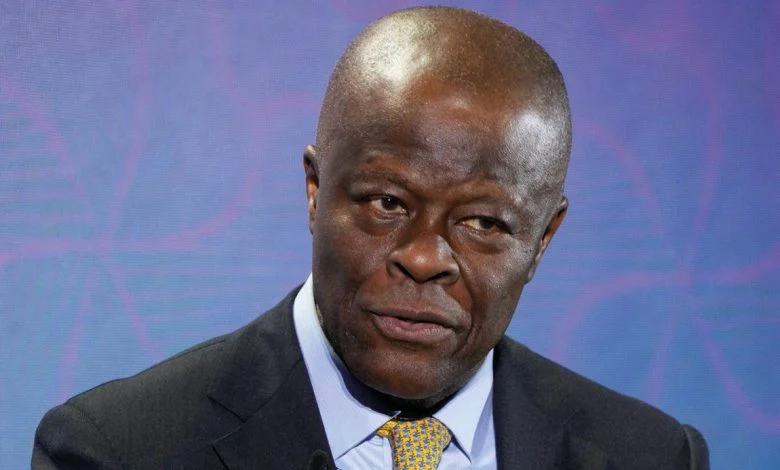
Dr. Badamasi Lawal Chiranchi, NSIPA CEO
According to a statement from the presidency, the move aimed to “ensure the effectiveness of humanitarian and social development programmes” and “guarantee that Nigerians, especially vulnerable groups, are the exclusive and direct beneficiaries of his administration’s reconfigured welfare programmes.”
Alongside Lawal’s appointment, other strategic placements were made, including Funmilola Olotu as Programme Manager for the National Social Safety-Net Coordinating Office; Aishat Alubankudi for Grants for Vulnerable Groups; Princess Aderemi Adebowale for the Home Grown School Feeding Programme; and Abdullahi Alhassan Imam for the National Cash Transfer Office.
Despite these reshuffles and reassurances, little is known about what exactly goes on within NSIPA. Journalists who have attempted to investigate have met stonewalls. Officials routinely decline interview requests, and attempts to obtain budget breakdowns or programme audits through the Freedom of Information Act have been ignored or denied.
Established in 2016 by the Muhammadu Buhari administration, the National Social Investment Programmes (NSIPs) were meant to address widespread poverty and hunger across the country. The agency was tasked with four core initiatives: the N-Power programme, Conditional Cash Transfers (CCT), the Government Enterprise and Empowerment Programme (GEEP), and the National Home-Grown School Feeding Programme (HGSFP).
The NSIPs were initially praised for their ambition and reach. Since inception, over 4 million beneficiaries have been recorded across the country. However, the schemes have frequently been accused of inefficiencies, poor coordination, and, increasingly, corruption.
The N-Power programme was designed to empower Nigerian youth between the ages of 18 and 35 with employable skills and monthly stipends of N30,000. The Conditional Cash Transfer scheme provides cash assistance to the poorest households, while the GEEP programme offers microloans between N10,000 and N100,000 to traders, artisans, and farmers. The HGSFP aims to boost school enrollment and improve nutrition for primary school children while supporting local food production through farm-to-table sourcing.
But reports of “ghost beneficiaries,” misdirected payments, and nepotism in programme enrolment have plagued these efforts. In 2023, Ms. Betta Edu, the minister suspended the N-Power programme amid allegations of massive irregularities. That same year, NSIPA was allocated over N500 billion in the national budget, a sum that many critics say lacks transparent accounting to date.
As part of the sweeping reforms in early 2024, President Tinubu appointed a six-member Special Presidential Panel led by Minister of Finance and Coordinating Minister of the Economy, Wale Edun. The panel, composed of high ranking ministers, was tasked with auditing and reviewing the NSIPs’ operational framework. It recommended the following: Placing the programmes under a steering committee led by the Finance Minister; a comprehensive operational and financial audit of NSIPA and amending the NSIPA Establishment Act to fix structural gaps that enabled previous abuses.
Chief Wale Edun, Minister of Finance and Coordinating Minister of the Economy
One of the most significant developments during this period was the President’s request in July 2023 for an $800 million loan from the World Bank to expand the National Social Safety Net Programme (NASSP). This initiative aims to offer shock responsive financial support to vulnerable Nigerians affected by the removal of fuel subsidies.
According to the President, the funds would be disbursed digitally to beneficiaries’ accounts or mobile wallets, an effort aimed at improving transparency and encouraging economic participation in the informal sector. The National Assembly approved the loan, but it’s unclear how much of it has been disbursed or how many have benefited so far. The overlap and ambiguity between NASSP and NSIPA’s mandate only adds to the confusion.
In a move that calls attention to both the high stakes and institutional distrust surrounding NSIPA, President Tinubu sent an executive bill to the National Assembly in October 2023, seeking to move the supervision of the social investment programmes from the Ministry of Humanitarian Affairs directly to the Presidency. The bill passed second reading in the Senate and is currently under review.
A separate but related amendment, submitted in November 2024, seeks to make the National Social Register the primary tool for identifying and targeting beneficiaries. These reforms could centralize control, potentially reducing corruption or concentrate too much unchecked power, depending on how implementation unfolds.
Critics argue that beyond legislation, the real test will be political will and operational transparency. “It’s not enough to appoint new faces or amend laws,” said a policy analyst at BudgIT, a civic organization that promotes fiscal transparency. “We need to see clear reports, measurable results, and regular audits. Right now, NSIPA is a black box.”
In May 2025, the Federal Government released over N10 billion for the Renewed Hope Conditional Cash Transfer scheme, benefiting more than 411,000 households across all 36 states and the FCT. In addition, the NSIPA announced plans to launch new programmes to empower 1.8 million Nigerians a potentially massive intervention if delivered effectively.
But again, specifics are scant. Who qualifies? How are they chosen? What mechanisms ensure that the money reaches its intended recipients?
No official audit has yet been published regarding the N10 billion disbursement. Civil society groups continue to call for full transparency, particularly in how digital payments are tracked and verified.
Meanwhile, state-level monitoring remains weak. Several local governments report that they have not received adequate guidance or data-sharing from the federal agency to effectively coordinate implementation or vet beneficiaries.
The silence surrounding NSIPA is not just about bureaucratic inefficiency, it reflects a deeper, systemic resistance to transparency in Nigeria’s public institutions. For an agency that handles multi-billion-naira interventions and serves as a lifeline for millions, the current opacity is not just unacceptable; it is dangerous. With a fragile economy, increasing poverty, and billions at stake, Nigerians deserve to know what’s really happening behind NSIPA’s closed doors. As more funds are allocated and new programmes launched under the guise of “Renewed Hope,” Nigerians have a right to know: Where is the money going? Who is watching the watchers? And perhaps most urgently, what exactly is NSIPA hiding from the press?
Puzzle Craft PR & Communications, a newly established public relations and communications firm, has commenced operations in Abuja.
The company offers a range of services focused on brand visibility, reputation management, and stakeholder engagement. Its client base includes individuals and organisations from various sectors, such as corporate, political, faith-based, and non-profit.
The launch event, held in Garki Area 1, Abuja, included an introduction to the company’s leadership team and its areas of operation.
Speaking at the event, the Chief Executive Officer and Principal Consultant,, Mrs. Beatrice Izeagbe Okpara, said the firm was set up to address communication challenges using structured and research-informed approaches.
“We help political figures, movements, and institutions communicate with clarity, credibility, and strategic intent. But our work extends well beyond that; we support businesses, executives, and organisations in shaping narratives and managing relationships with their stakeholders,” said Mrs Okpara.
According to the company, its services include brand strategy, corporate communications, crisis and reputation management, digital public relations, content development, event communications, and executive visibility.
It also works in internal communications, leadership messaging, and employer engagement. These services are supported by research and digital analysis tools.
“At Puzzle Craft PR & Communications, we help brands find their voice, shape their story, and own their spotlight. Our communication solutions aim to spark influence, inspire trust, and drive long-term impact,” Mrs Okpara said.
The Team
The team includes Chief Operating Officer, Mr Chidiebere Norbert, and Director, Stakeholder Engagement & Strategic Partnerships, Mr Dahiru Gani Ali. The firm also employs specialists in digital media, public relation, research, copywriting, and design.
“We transform legacy publicity models by blending proven methods with digital innovation powered by analytics, media intelligence, and forward-thinking tech solutions,” Mr. Norbert stated.
The firm is currently working with clients in the financial, medical and lifestyle sectors and is considering future engagements in education, technology, and civil society.
____________________________________
For media inquiries or further information, please contact
Puzzle Craft PR & Communications No. 8 Bichi Close, Off Sokoto Street Garki Area 1, Abuja, Nigeria Phone: +234 810 602 2149 Email: Beatrice@puzzlecraftng.com Website: www.puzzlecraftng.com